

P0452 on 2006-2010 Hummer H3: EVAP Pressure Sensor Causes and Fixes
This code almost always points to a failed Fuel Tank Pressure (FTP) sensor. On the H3, you can often replace this sensor in under an hour by removing the driver's side rear wheel well liner, avoiding the need to drop the fuel tank. Expect to pay $40-$85 for a new sensor.
- P0452 on an H3 is an electrical fault code for the Fuel Tank Pressure (FTP) sensor, not an EVAP system leak.
- The most likely cause is a failed FTP sensor itself.
- SAVE TIME AND MONEY: You can replace the sensor by removing the driver's side rear wheel well liner, which is much easier than dropping the fuel tank.
- Verify your model year before buying a part: use P/N 16238399 for 2006-2008 models and P/N 13502903 for 2009-2010 models.
- This is a DIY-friendly repair that can be done in under an hour.
What's Unique About the 2006-2010 Hummer H3
For most vehicles, replacing the Fuel Tank Pressure (FTP) sensor is a major job that requires dropping the fuel tank. However, on the Hummer H3 and its platform mates (Chevy Colorado/GMC Canyon), owners have discovered a significant shortcut. The sensor can typically be accessed by simply removing the plastic liner in the driver's side rear wheel well. This turns a difficult, multi-hour repair into a job that can often be completed in less than an hour with basic tools, saving significant time and labor costs.
Symptoms You May Notice
- Check Engine Light is on
- Message on Driver Information Center (DIC) to "tighten fuel cap".
- Possible faint fuel smell (rare).
- Failure to pass an emissions inspection
- Replacing the EVAP purge or vent solenoid. These components are part of the EVAP system but are not directly related to the P0452 circuit code. A failure in these parts would set different trouble codes (e.g., P0443, P0446, P0449).
Most Likely Causes
- Failed Fuel Tank Pressure (FTP) Sensor 🔴 High Probability → Shop Fuel Tank The sensor is an electronic component that can fail over time due to age and heat cycles. Its location on top of the fuel tank exposes it to the elements, which can accelerate wear. An internal short circuit is the most common failure mode leading to the 'low input' voltage reading.
How to confirm: After confirming the wiring is intact, the most definitive test is to replace the sensor. With the key on and engine off, a scan tool should show a voltage reading from the sensor; a reading near zero volts (specifically under 0.1V for 5+ seconds) strongly suggests a failed sensor.
Typical fix: Replace the Fuel Tank Pressure sensor. This is a small, push-in component located on the fuel pump module on top of the gas tank.
Est. part cost: $40-$85 - Damaged Wiring or Connector 🟡 Medium Probability The wiring harness leading to the top of the fuel tank is susceptible to damage from road debris, corrosion from salt and moisture, or chafing against the frame or body. The signal wire can break near the connector from vibration and exposure.
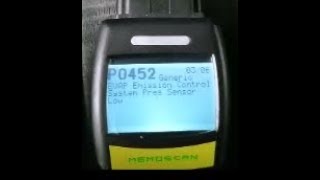
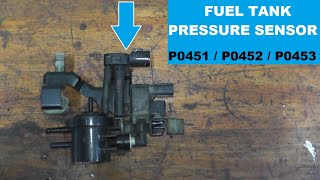
How to confirm: Visually inspect the wiring harness running to the FTP sensor for any breaks, chafing, or corrosion. Check the connector itself for corroded or bent pins. Use a multimeter to test for a 5-volt reference signal and a good ground at the connector with the ignition on. One owner on a GM truck forum 🎬 See how to test and replace the sensor using a multimeter. found a broken signal wire right near the FTP sensor connector after pulling the harness down to inspect it.
Typical fix: Repair the damaged section of wire with a butt splice and heat shrink, or replace the connector pigtail if the connector itself is damaged.
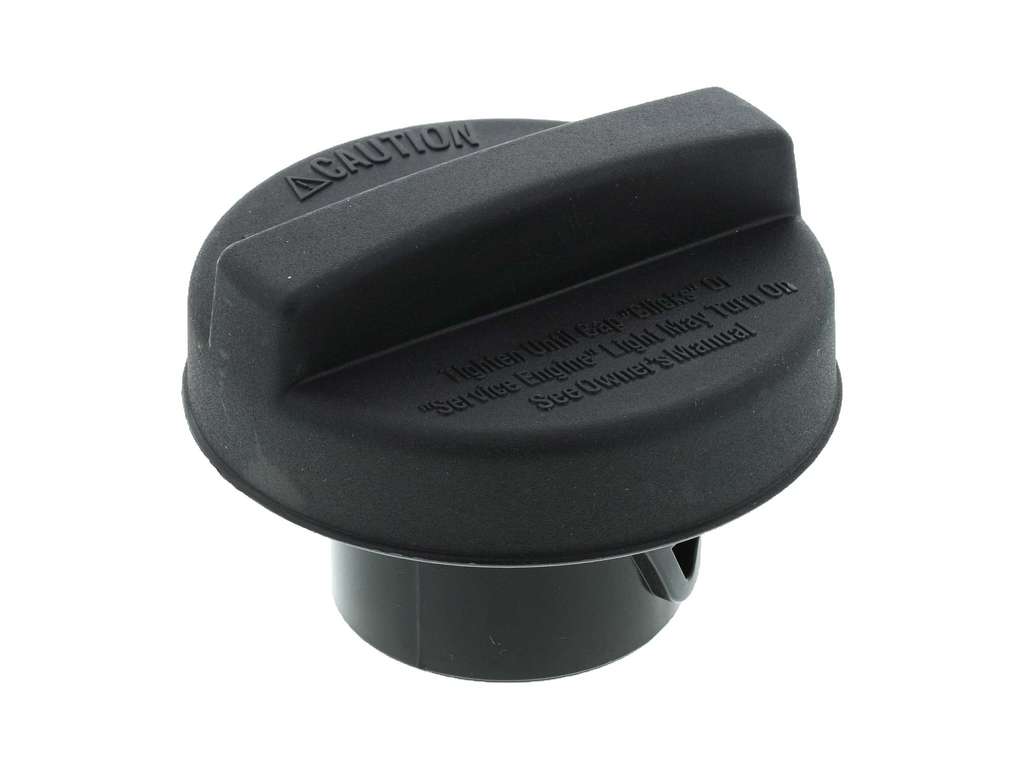
Est. part cost: $10-$30 - Loose or Worn Gas Cap ⚪ Low Probability → Shop Fuel Tank Cap While a bad gas cap usually causes leak codes (like P0442 or P0455), it's a simple and free check. An extremely poor seal could theoretically contribute to erratic sensor readings, but it's not the primary cause for a 'low input' circuit code. Some owners report the code appears after replacing the gas cap, suggesting the act of replacement may have disturbed wiring or the system is re-testing.
How to confirm: Ensure the gas cap is tightened until it clicks at least once. Inspect the rubber O-ring on the cap for cracks, stiffness, or damage.
Typical fix: Replace the gas cap if the seal is compromised.
Est. part cost: $15-$30
Rare But Worth Checking
- Faulty Engine Control Module (ECM): This is extremely rare. The ECM should only be considered if you have definitively proven that the sensor and its entire wiring circuit are in perfect condition. The internal circuit that reads the sensor's voltage can fail, but this is a last resort diagnosis.
- Damaged Fuel Pump Module O-ring: → Shop Fuel Pump If the code P0452 appears immediately after a fuel pump replacement, it's possible the large O-ring that seals the fuel pump module to the tank was not seated correctly, creating a large leak that the sensor cannot properly read. However, this would typically be accompanied by a strong fuel smell.
Diagnosis Steps
- Read the Code: Use an OBD-II scanner to confirm P0452 is the only code present. If other EVAP codes are stored, diagnose them first.
- Check the Gas Cap: Ensure your gas cap is tight and the seal is in good condition. Clear the code and drive for a few days to see if it returns. This is a long shot but costs nothing.
- Access the Sensor: The easiest way is to remove the driver's side rear wheel and the plastic wheel well liner. This should expose the top of the fuel tank and the fuel pump module where the sensor is located. You can reach in above the frame to access the sensor and its connector.
- Inspect the Connector and Wiring: Disconnect the FTP sensor. This may need to be done by feel. Inspect the connector and pins for any signs of corrosion, moisture, or damage. As reported by some GM owners, carefully pull the harness down and inspect the wires right near the connector for a break, which can be repaired with a butt splice.
- Test the Circuit: With the connector unplugged and the ignition ON (engine off), use a multimeter to test the terminals in the harness-side connector. You should find: ~5 volts (reference voltage on terminal 3), a good ground (on terminal 2), and a signal wire.
- Test the Sensor (Indirectly): If the 5V reference and ground are present, the wiring is likely okay. Plug the connector back in. Using a scan tool's live data function, monitor the FTP sensor voltage with the fuel cap removed. It should read between 1.3-1.7V. If it is stuck at or near zero (e.g., 0.1V), the sensor has failed.
- Replace the Sensor: If the sensor is confirmed bad, it typically pulls straight out of the fuel pump module. A small amount of silicone grease on the new sensor's O-ring can ease installation. Push the new sensor firmly into place and reconnect the electrical connector. One owner noted you can do this in 15 minutes without even removing the wheel, just the liner. 🎬 Watch this walkthrough of the H3 fuel pressure sensor replacement.
- Clear Code and Verify: Clear the P0452 code with your scanner and perform a drive cycle to ensure the Check Engine Light does not return.
Parts You'll Likely Need
- Fuel Tank Pressure Sensor (2006-2008)
(OEM #16238399)— This is the most common failure point for a P0452 code. This specific part number fits the 2006, 2007, and 2008 model years. It is a widely used GM part, also fitting many Silverado and other trucks of the era.
Trusted brands: ACDelco (OEM), Bosch, NTK, Wells, NGK
OEM price range: $55-$75
Aftermarket price range: $30-$60 - Fuel Tank Pressure Sensor (2009-2010)
(OEM #13502903)— For the 2009 and 2010 model years, GM used a different sensor. This is the correct OEM part for these later H3 and H3T models.
Trusted brands: ACDelco (OEM), NGK, Wells, Walker Products
OEM price range: $50-$85
Aftermarket price range: $40-$65
Platform-Specific Known Issues
- The ability to access the FTP sensor through the driver's side rear wheel well is a significant, time-saving quirk of the H3 platform, as documented by owners in enthusiast forums.
- One owner on HummerForums.com confirms the repair can be done in 15 minutes by just removing the fender liner, without even taking the wheel off.
Mechanic-Grade Diagnostic Values
- FTP Sensor Voltage (KOEO, Scan Tool) — expected: 1.3 - 1.7 Volts with fuel cap removed. Failure: A reading below 0.1 Volts for more than 5 seconds, which triggers the code.
- 5-Volt Reference Circuit (at connector) — expected: 4.8 - 5.2 Volts (Terminal 3 to Ground). Failure: Voltage below 4.8V indicates a short to ground or an open/high resistance in the circuit.
- Low Reference Circuit Resistance (at connector) — expected: Less than 5.0 Ohms (Terminal 2 to Chassis Ground). Failure: Resistance greater than 5.0 Ohms indicates an open or high resistance in the ground circuit.
Scan Tool Commands That Help
- Tech2 / GDS2 (or equivalent professional scanner): Purge/Seal function combined with Quick Snapshot — To test for an intermittently failing sensor. By commanding the EVAP system to purge (e.g., to 20%) while recording a snapshot of the FTP sensor data, a technician can plot the results and look for erratic voltage drops or spikes that indicate a faulty sensor, rather than a consistent wiring fault.
Wiring & Ground Locations
- FTP Sensor Connector — On top of the fuel pump module, accessible through the driver's side rear wheel well.. This is where all circuit tests are performed. Terminal 2 is the Low Reference (ground) and Terminal 3 is the 5-Volt Reference. The signal wire is the third pin.
- G120 — On the left lower inner wheel well, near the engine mount.. This is a primary chassis ground point near the front of the vehicle that serves multiple engine-related components. A poor connection here could cause various electrical issues.
- Rear Crossmember Ground — On the rear crossmember of the frame.. This ground point is used by the fuel pump module. Since the FTP sensor is part of the fuel pump assembly, a poor connection at this ground could potentially affect the sensor's reference circuit.
Real Owner Repair Stories
- GM-Trucks.com forum user (2018 GMC Sierra (similar GM EVAP architecture)) — P0452 code (fuel tank pressure sensor reading lower than expected voltage).
❌ Tried (didn't work) Initial diagnosis pointed towards replacing the FTP sensor, but the owner tested the sensor itself and found it was good.
✅ What actually fixed it Found a broken signal wire in the harness very close to the FTP sensor connector. The harness was pulled down from the top of the tank for inspection, and the broken wire was repaired with a butt splice, which resolved the code.
"I Checked Everything" — The Actual Cause
- Because P0452 is a circuit-low electrical code, not a leak code, a smoke test will almost always come back clean. The problem is not a physical leak of vapor but a fault in the electrical circuit that reports the pressure. A common scenario is performing a smoke test, finding no leaks, and then discovering the actual cause is a broken signal wire near the sensor connector or an internally shorted sensor, neither of which a smoke test can identify.
OEM Part Supersession History
Multiple (e.g., 12219388, 16257276)→16238399— Part consolidation and revision over time.
Heads up: This part is for 2006-2008 models and is not compatible with 2009-2010 models.13502510→13502903— Part revision.
Heads up: This part is for 2009-2010 models and is not compatible with 2006-2008 models.
Model Year Variations Within This Range
- 2006-2008 vs 2009-2010: The Fuel Tank Pressure (FTP) sensor part number changed. 2006-2008 models use part number 16238399, while 2009-2010 models use part number 13502903. The parts are not interchangeable.
Diagnostic Flowchart
Other Known Issues on This Vehicle
Issues unrelated to this code that are worth knowing about as an owner of this generation:
- Cracked Radiator 🔴 High — Very common, especially on 2007-2008 models. The plastic end tanks crack, often at the top seam, leading to coolant leaks. Some owners report the radiator body rubs on the frame, causing stress fractures. (Ref: While no recall exists, GM issued engineering bulletin #PIE0354 to gather data on coolant leaks from the radiator.)
- GM Passlock II Anti-Theft Failure 🟠 Medium — A widespread and highly frustrating issue where the sensor in the ignition lock cylinder fails, preventing the vehicle from starting for a mandatory 10-minute lockout period. It is intermittent at first but typically worsens over time. (Ref: No recall was issued, but the common fix is replacing the ignition switch/lock cylinder. Some owners have found temporary workarounds, like waiting a few seconds in the 'ON' position before cranking.)
- Front Differential Mounting Bushing Failure 🟠 Medium — The rubber bushings that mount the front differential to the crossmember wear out, causing a clunking or popping noise from the front end, especially when shifting or accelerating.
- Valve Seat/Cylinder Head Issues (3.5L & 3.7L I5) 🔴 High — Particularly noted on 2006-2007 models, the valve seats can wear prematurely, leading to a loss of compression, misfires (P0300), and eventual engine failure. This often requires cylinder head replacement or rebuilding.
- Blower Motor Resistor/Harness Failure 🟡 Low — A common issue where the HVAC fan only works on the highest setting. This is caused by the blower motor resistor failing due to overheating, which often melts the connector harness as well.
Used vs. New Parts: Buying Guide for This Vehicle
When a used part is the smart pick: For this specific repair, using a used Fuel Tank Pressure (FTP) sensor is not recommended. It is an inexpensive electronic component, and the labor to access it (even with the wheel well shortcut) makes it unwise to risk installing a part with an unknown history.
What to inspect on the donor part:
- Not applicable as used parts are not recommended.
OEM-only on this vehicle (don't cheap out):
- While not strictly 'OEM-only', using a high-quality new part is critical. The cost savings of a cheap, unbranded sensor are negligible compared to the potential for premature failure and repeating the labor.
Aftermarket brands forum-validated for this vehicle:
- ACDelco (OEM)
- Bosch
- NTK / NGK
Brands owners have reported issues with on this vehicle:
- Generic, unbranded 'white-box' sensors from online marketplaces should be avoided due to inconsistent quality control.
Real Owner Stories
Aggregated from forums and TSBs cited above. Mileages and costs reflect what owners reported in those sources.
Hummer H3
Symptoms: The P0452 trouble code was present.
What fixed it: Found and repaired a broken signal wire right near the FTP sensor connector after pulling the harness down for inspection.
Source hint: GM-Trucks.com - Fuel Tank Pressure Sensor (P0452) - Troubleshooting & Recalls
Hummer H3
Symptoms: Check Engine Light with code P0452.
What fixed it: Replaced the Fuel Tank Pressure (FTP) sensor by accessing it through the left rear wheel well, which avoided having to drop the fuel tank.
Source hint: HummerForums.com - P0452 code Fuel pressure sensor replacement tip
Hummer H3
Symptoms: Needed to replace the FTP sensor to clear a P0452 code.
What fixed it: The owner replaced the sensor in 15 minutes by only removing the fender liner, without even taking the wheel off.
Source hint: HummerForums.com, as cited in vehicle_specific_issues
Related OBD-II Codes
Frequently Asked Questions
Do I have to drop the fuel tank to replace the Fuel Tank Pressure (FTP) sensor on my Hummer H3?
How quickly can the FTP sensor be replaced on an H3?
What voltage should a good FTP sensor show on a scan tool for my H3?
What voltage reading confirms the FTP sensor has failed?
My H3 is showing a "tighten fuel cap" message. Is this related to the P0452 code?
Could a loose gas cap cause the P0452 code?
How do I test the wiring going to the FTP sensor?
Helpful Videos
We Have This Part in Stock


The information in this article is provided for general reference and educational purposes only. Vehicle specifications, procedures, and part compatibility can vary by production date, trim level, and region. Always consult your vehicle's factory service manual and verify part numbers before purchasing or performing repairs. Safety-critical components such as airbags, seat belts, and braking systems should be installed by a qualified professional.
- Hummer H3:
- 🧭 Diagnostic Flowchart
- 🎬 Helpful Videos
- 🛍️ Shop This Part
- What's Unique About the 2006-2010 Hummer H3
- Symptoms You May Notice
- Most Likely Causes
- Rare But Worth Checking
- Diagnosis Steps
- Parts You'll Likely Need
- Platform-Specific Known Issues
- Mechanic-Grade Diagnostic Values
- Scan Tool Commands That Help
- Wiring & Ground Locations
- Real Owner Repair Stories
- "I Checked Everything" — The Actual Cause
- OEM Part Supersession History
- Model Year Variations Within This Range
- Other Known Issues on This Vehicle
- Used vs. New Parts: Buying Guide for This Vehicle
- Real Owner Stories
- Hummer H3
- Hummer H3
- Hummer H3
- Related OBD-II Codes
- Frequently Asked Questions
- 🎟️ Get 5% Off