

P0452 on 2007-2018 Nissan Altima: Causes and Fixes for EVAP Pressure Sensor Low Input
P0452 on a Nissan Altima almost always points to a faulty EVAP Fuel Tank Pressure Sensor or its wiring. The sensor itself is the most common failure point. Expect to pay between $40 and $185 for a replacement part.
- P0452 specifically indicates an electrical circuit problem (low voltage), not a physical leak in the EVAP system.
- The most likely culprit is a failed EVAP Fuel Tank Pressure Sensor.
- Before replacing the sensor, check its connector for 5V power, good ground, and any signs of corrosion or damage, especially in rust-belt states.
- This is a relatively simple DIY repair for those comfortable working under the rear of the vehicle.
- Do not waste money replacing the gas cap for this specific code.
What's Unique About the 2007-2018 Nissan Altima
For the 2007-2018 Altima, which spans the fourth (L32) and fifth (L33) generations, the P0452 code is a straightforward electrical fault code. Unlike leak-related EVAP codes (like P0455 or P0456) that can be caused by a loose gas cap, P0452 specifically points to the sensor's circuit. Owners often find that the issue is the sensor itself, which is located on the EVAP canister at the rear of the vehicle, typically near the driver's side rear wheel. Its exposed location makes the wiring and connector susceptible to corrosion from road salt and moisture, which is the second most likely cause after sensor failure.
Generation note: This guide covers the fourth generation (2007-2012) and fifth generation (2013-2018) Nissan Altima. The location and general function of the EVAP pressure sensor are similar across these generations, though the specific part number for the sensor may differ. The diagnostic approach is identical for both generations.
Symptoms You May Notice
- Check Engine Light is on
- Inability to pass an emissions/smog test
- Possible faint fuel smell (rare)
- Difficulty refueling (fuel pump nozzle clicks off repeatedly) 🎬 See this guide for locating all Altima emission components, though this is more common with other EVAP issues.
- Replacing the gas cap. While a loose or faulty gas cap can cause other EVAP codes (like P0455 or P0456 for leaks), it does not cause a P0452 'low input' circuit code.
- Replacing the EVAP canister purge valve or vent solenoid. These components can cause other EVAP codes, but they are not directly related to the pressure sensor's electrical circuit fault indicated by P0452.
Most Likely Causes
- Faulty EVAP Fuel Tank Pressure Sensor (FTPS) 🔴 High Probability → Shop Fuel Tank Sensors can fail internally over time due to age, heat cycles, and exposure to fuel vapors, causing them to send an incorrect low voltage signal or no signal at all.
How to confirm: With the key on and engine off, use a multimeter to check the sensor's output voltage on the signal wire. It should be within the manufacturer's specified range (typically not near zero volts). You can also check for a 5V reference and good ground at the connector.
Typical fix: Replace the EVAP Fuel Tank Pressure Sensor. This is the most common resolution reported by owners.
Est. part cost: $40-$185 - Wiring or Connector Issue 🟡 Medium Probability The sensor and its wiring are located under the vehicle near the rear wheel, exposed to moisture, road salt, and debris. This can lead to corrosion on the connector pins (green or white crust) or damage to the wires (chafing, breaking, or shorting to ground).
How to confirm: Visually inspect the wiring harness and connector leading to the pressure sensor for any signs of physical damage, corrosion, or loose pins. Wiggle the harness while monitoring voltage to see if the reading changes. Perform a continuity test and check for a short to ground on the signal wire between the sensor and the ECM.
Typical fix: Repair the damaged section of the wiring harness or clean/replace the connector. Dielectric grease should be applied to the new connection to prevent future corrosion.
Est. part cost: $5-$50
Rare But Worth Checking
- Faulty Engine Control Module (ECM): This is extremely rare. Before condemning the ECM, all other possibilities, including the sensor and wiring, must be exhaustively tested and ruled out. An ECM can sometimes misinterpret a valid signal as low voltage.
- Pinched or Blocked EVAP Vapor Line: While less common for a P0452 specifically, a pinched or physically blocked vapor line between the tank and the sensor could potentially create a vacuum condition that the sensor reads as an abnormally low (but not necessarily zero) voltage. This is worth a visual inspection if sensor and wiring tests are inconclusive.
Diagnosis Steps
- Retrieve the code with an OBD-II scanner to confirm P0452 is present and note any other codes.
- Inspect the gas cap to ensure it is tight, although this is not a likely cause.
- Locate the EVAP canister and the fuel tank pressure sensor. On the Altima, this is typically at the rear of the vehicle, near the driver's side rear wheel, mounted directly on the canister.
- Visually inspect the sensor's electrical connector and wiring harness. Look for green/white corrosion on the pins, chafed or broken wires, and signs of moisture intrusion.
- With the ignition on, engine off, disconnect the sensor. Use a multimeter to verify that the connector is receiving a 5-volt reference signal and has a good ground.
- If power and ground are present, reconnect the sensor and back-probe the signal wire. Check the voltage. A reading near 0 volts strongly indicates a faulty sensor or a direct short to ground in the signal wire. A normal reading at atmospheric pressure should be around 2.5V.
- If the wiring appears intact and power/ground are confirmed, the most probable cause is a failed fuel tank pressure sensor.
- Replace the fuel tank pressure sensor, apply dielectric grease to the connector, clear the code, and drive the vehicle to see if the code returns.
Parts You'll Likely Need
- EVAP Fuel Tank Pressure Sensor
(OEM #22365-1TV1D (supersedes 22365-AM60A, 22365-AM601, 22365-JA10A, 22365-JA10B, 22365-1TV0A/B))— This sensor is the most common point of failure for a P0452 code, as it directly measures the pressure that the code reports as being out of range electrically.
Trusted brands: Nissan (Genuine), Bosch, NTK, Duralast, Standard Motor Products (SMP)
OEM price range: $180-$270
Aftermarket price range: $40-$100
Platform-Specific Known Issues
- Connector Corrosion in Salt Belt Regions: Owners in areas with heavy road salt use report a higher incidence of the P0452 code being caused by corrosion within the sensor's electrical connector rather than sensor failure itself. A thorough cleaning of the pins and applying dielectric grease is often a successful first-step repair.
Mechanic-Grade Diagnostic Values
- EVAP Fuel Tank Pressure Sensor Signal Voltage (Key On, Engine Off) — expected: 0.5V to 4.5V. A typical reading at atmospheric pressure is around 2.5V.. Failure: A voltage reading below 0.22V indicates a low input condition, triggering P0452.
- Signal Wire Resistance to Ground — expected: Effectively infinite resistance (Megaohms, MΩ).. Failure: A reading near 0 Ω indicates a short to ground in the signal wire.
- Signal Wire Continuity (from sensor connector to ECM) — expected: Less than 1.0 Ω.. Failure: An infinite or very high resistance reading (OL) indicates an open circuit in the signal wire.
Scan Tool Commands That Help
- Professional Scan Tool (e.g., Nissan CONSULT, Autel, Snap-on): EVAP System Test / Purge Solenoid Activation — While monitoring the live data from the EVAP pressure sensor's voltage, you can command the purge solenoid to open. This should cause a small change in pressure (and therefore voltage) in the system. If the voltage does not change, it suggests the sensor is not responding, confirming it may be faulty.
Wiring & Ground Locations
- ECM Ground Pins — At the Engine Control Module (ECM) connector, which is located in the engine compartment. For the 2007 model, specific ground pins are 107, 108, 111, and 112.. A poor ground connection at the ECM can cause incorrect readings from various sensors, including the EVAP pressure sensor. Verifying these grounds is a crucial step in diagnosing complex electrical issues.
- M57 — A primary body ground connection located behind the left end of the dashboard.. Many interior and dash-related components ground at M57. While not the primary ground for the EVAP sensor itself, it is a key ground point for the Body Control Module (BCM) and other systems that communicate on the CAN bus, making its integrity important for overall vehicle electronics.
- Nissan Wire Color Codes — Found in factory service manual wiring diagrams.. Nissan wire colors are designated by letters (e.g., B=Black, L=Blue, W=White). A two-color wire is shown with the base color first, followed by a slash and the stripe color (e.g., L/W is a Blue wire with a White stripe). Knowing this is essential for correctly identifying the 5V reference, ground, and signal wires at the sensor connector.
OEM Part Supersession History
22365-AM60A, 22365-AM601, 22365-JA10A, 22365-JA10B, 22365-1TV0A, 22365-1TV0B, 22365-1TV1B, 22365-1TV1C→22365-1TV1D— Standard part evolution for improved reliability, material changes, or supplier changes over the long production run of vehicles using this sensor.
Heads up: The newest part number, 22365-1TV1D, is the correct and backward-compatible service replacement for all the previous numbers listed for this vehicle application. Using an older, new-old-stock part is not recommended as it may lack the design improvements of the latest revision.
Diagnostic Flowchart
Other Known Issues on This Vehicle
Issues unrelated to this code that are worth knowing about as an owner of this generation:
- Continuously Variable Transmission (CVT) Failure 🔴 High — Very common, especially in 2013-2017 models. Symptoms like shuddering, hesitation, and whining can appear before 100,000 miles. Failures are less frequent on 2018+ models but regular fluid changes (every 30k miles) are critical. (Ref: Multiple TSBs exist, including NTB16-110p and NTB19-076A, which address judder and specific diagnostic codes like P17F0, P17F1, P0776. Nissan also extended the warranty for early models due to the high failure rate.)
- Electronic Steering Column Lock (ESCL) Failure 🔴 High — Extremely common on 2009-2010 models. The failure prevents the car from starting, leaving the driver stranded. The 'key' warning light on the dash is a primary indicator. (Ref: Nissan issued a voluntary service campaign (PC516 / NTB17-018) to replace the faulty ESCL unit at no charge. The replacement part eliminates the steering lock function entirely.)
- Rear Subframe Corrosion 🔴 High — Common in vehicles operated in the 'salt belt'. Severe rust can compromise the structural integrity of the rear suspension mounting points. While more documented on the prior generation, the L32 (2007-2012) is also known for this issue. (Ref: Nissan previously had a recall and warranty extension (P5216) for the 2002-2005 Altima, but no formal campaign covers the 2007-2018 models despite similar issues being reported by owners.)
- Delayed Engagement ('Morning Sickness') in CVT 🟠 Medium — Common in 2013-2018 models, especially on cold starts. The vehicle may have a 3-5 second delay before engaging Drive. This is often caused by old/incorrect fluid or outdated TCM software. (Ref: TSB NTB16-054 provides a software update for the Transmission Control Module (TCM) to address this specific cold-start delay.)
- Melting Dashboard 🟡 Low — Reported on 4th generation models (2007-2012), particularly the 2008 Altima, in hot climates. The dashboard surface can become sticky and melt under sun exposure.
Used vs. New Parts: Buying Guide for This Vehicle
When a used part is the smart pick: A used sensor is a high-risk, low-reward choice. Given that new aftermarket sensors are affordable (starting around $40), a used part should only be considered as a temporary, last-resort option to get the vehicle through an inspection if a new part is unavailable.
Donor-vehicle mileage cap: roughly under 80000 miles for the part to have meaningful remaining life.
What to inspect on the donor part:
- Visually inspect the plastic housing for any cracks or heat damage.
- Check the electrical connector pins for any signs of green or white corrosion.
- If possible, source the part from a vehicle in a dry, salt-free climate to minimize the risk of corrosion.
- Ask for the donor vehicle's VIN to confirm it did not have any open EVAP-related codes.
OEM-only on this vehicle (don't cheap out):
- For this specific repair, OEM is not strictly necessary. Quality aftermarket brands are a viable option.
Aftermarket brands forum-validated for this vehicle:
- Bosch
- NTK / NGK
- Standard Motor Products (SMP)
- Duralast
Brands owners have reported issues with on this vehicle:
- No-name, unbranded parts from online marketplaces should be avoided as their internal electronics may not meet OEM specifications for voltage accuracy and durability.
Real Owner Stories
Aggregated from forums and TSBs cited above. Mileages and costs reflect what owners reported in those sources.
Nissan Altima (in salt belt region)
Symptoms: Check Engine Light with code P0452.
What fixed it: A thorough cleaning of the corroded pins on the sensor's electrical connector and applying dielectric grease resolved the code without replacing the sensor.
Source hint: vehicle_specific_issues section titled 'Connector Corrosion in Salt Belt Regions'
2010 Nissan Altima
Symptoms: Owner was informed their rear subframe was rusted out.
What fixed it: The owner declined a $5,000 dealer quote and had the subframe replaced at an independent shop.
Cost: $1200-$1200
Source hint: Reddit r/altima
2012 Nissan Altima
Symptoms: Vehicle had a rusted subframe, noted as a 'super common problem' for Nissans in the rust belt.
What fixed it: The community recommended sourcing a used subframe from a rust-free state and having an independent shop perform the replacement.
Source hint: BobIsTheOilGuy.com
Related OBD-II Codes
Frequently Asked Questions
Where is the EVAP fuel tank pressure sensor located on my 2007-2018 Altima?
I live in a snowy or coastal area. Is there anything specific I should check for a P0452 code?
What voltage should I expect from the fuel tank pressure sensor's signal wire?
Is a loose gas cap a common cause for the P0452 code on this car?
My Altima has a severely rusted rear subframe. Could this be related to my P0452 code?
Are there any recalls or TSBs that address the P0452 code directly?
What other Nissan or Infiniti vehicles share this same P0452 problem?
Helpful Videos
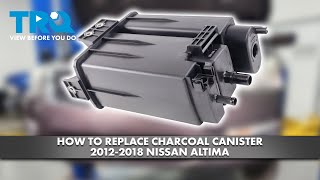
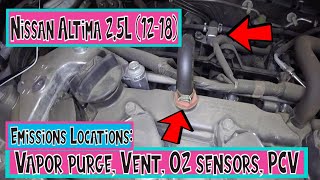

We Have This Part in Stock

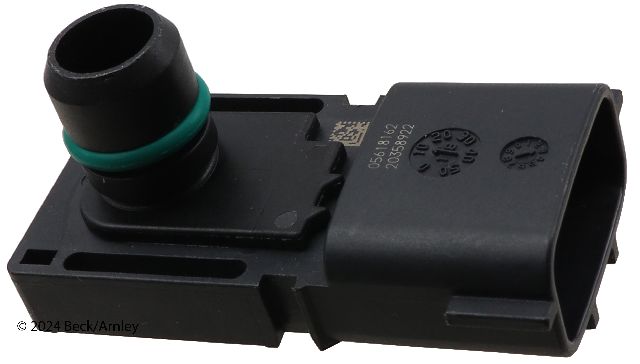

The information in this article is provided for general reference and educational purposes only. Vehicle specifications, procedures, and part compatibility can vary by production date, trim level, and region. Always consult your vehicle's factory service manual and verify part numbers before purchasing or performing repairs. Safety-critical components such as airbags, seat belts, and braking systems should be installed by a qualified professional.
- Nissan Altima:
- 🧭 Diagnostic Flowchart
- 🎬 Helpful Videos
- 🛍️ Shop This Part
- What's Unique About the 2007-2018 Nissan Altima
- Symptoms You May Notice
- Most Likely Causes
- Rare But Worth Checking
- Diagnosis Steps
- Parts You'll Likely Need
- Platform-Specific Known Issues
- Mechanic-Grade Diagnostic Values
- Scan Tool Commands That Help
- Wiring & Ground Locations
- OEM Part Supersession History
- Other Known Issues on This Vehicle
- Used vs. New Parts: Buying Guide for This Vehicle
- Real Owner Stories
- Nissan Altima (in salt belt region)
- 2010 Nissan Altima
- 2012 Nissan Altima
- Related OBD-II Codes
- Frequently Asked Questions
- 🎟️ Get 5% Off