

P0452 on 2005-2010 Pontiac G6 3.9L: EVAP Sensor Low Voltage Causes and Fixes
Code P0452 on a Pontiac G6 almost always points to a failed Fuel Tank Pressure (FTP) sensor. This sensor is located on top of the fuel tank, which must be dropped for access, making the repair labor-intensive. Before dropping the tank, inspect the wiring harness near the sensor for corrosion, a known issue. Expect to pay $250-$500 for a professional repair.
- P0452 on a G6 means the Fuel Tank Pressure (FTP) sensor circuit has low voltage, almost always read as near-zero volts by the ECM.
- The most likely cause is a failed FTP sensor, but corroded wiring at the sensor connector is also a strong possibility.
- The biggest challenge is the repair itself: the fuel tank must be removed to access the sensor, making it a difficult and labor-intensive DIY job.
- Before committing to the repair, check for 5V reference and ground at the sensor connector to rule out a simpler wiring issue.
- Do not replace other EVAP components like the purge or vent valve for this specific code, as they are unlikely to be the cause.
What's Unique About the 2005-2010 Pontiac G6
For the Pontiac G6 and its Epsilon platform mates (Chevy Malibu, Saturn Aura), the most significant challenge with a P0452 code is the physical location of the Fuel Tank Pressure (FTP) sensor. Unlike some other GM vehicles that have an access panel under the rear seat, the G6 requires the entire fuel tank to be lowered to reach the sensor, which is mounted on the fuel pump module. This turns a simple sensor replacement into a much more involved and labor-intensive job.
Symptoms You May Notice
- Check Engine Light is on.
- Possible faint fuel smell.
- In rare cases, difficulty starting the engine or reduced fuel economy.
- Difficulty refueling (fuel pump nozzle clicks off frequently).
- Replacing the EVAP canister purge valve or vent solenoid. While these are common EVAP system failure points, they typically set different codes (like P0443, P0446, or P0449) related to flow or vent control, not a specific sensor circuit low voltage code.
Most Likely Causes
- Faulty Fuel Tank Pressure (FTP) Sensor 🔴 High Probability → Shop Fuel Tank The sensor itself is a common failure point on many GM vehicles from this era. It is subjected to constant pressure changes and fuel vapor exposure, and the internal electronics fail, causing the signal to short to ground internally.
How to confirm: Using a scan tool, observe the FTP sensor voltage with the ignition on and engine off. A reading below 0.1 volts points to a faulty sensor or circuit. The definitive test is to check for 5V reference and good ground at the sensor connector. If power and ground are present, the sensor is bad.
Typical fix: Replace the Fuel Tank Pressure sensor. This requires dropping the fuel tank to access the sensor on top of the fuel pump module. 🎬 Watch: How to replace the sensor on this platform.
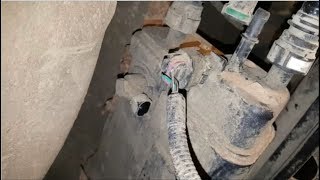
Est. part cost: $50-$105 - Damaged Wiring or Poor Connection 🟡 Medium Probability The wiring harness leading to the fuel tank is exposed to road debris, moisture, and corrosion. The connector itself or the wires leading to it can corrode, causing an open or short in the signal, ground, or reference voltage wire. This is a known issue on similar GM platforms.
How to confirm: Visually inspect the wiring harness and the sensor connector for green or white corrosion, or broken wires. With the sensor disconnected and ignition on, use a multimeter to check for 5-volt reference and a good ground at the connector. If either is missing, the wiring is the problem. A user on GM-Trucks.com with a similar P0452 issue found a broken signal wire right at the connector. 🎬 See how to find and repair broken sensor wiring.
Typical fix: Repair the damaged section of the wiring harness or clean/replace the connector pigtail. Use heat-shrink butt connectors for a weather-resistant repair.
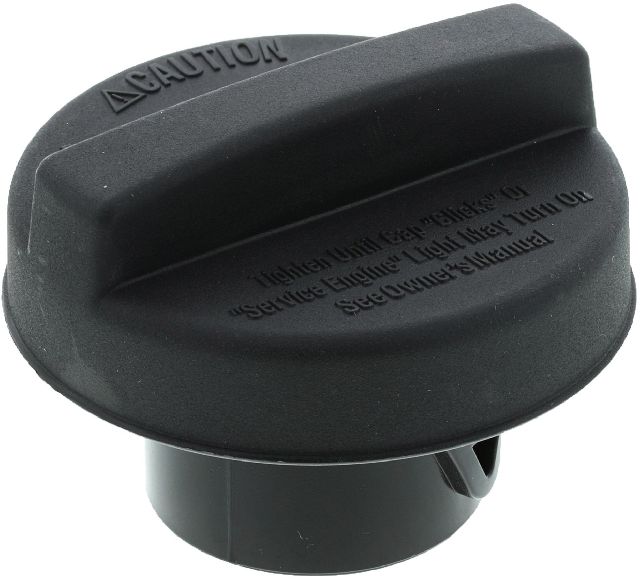
Est. part cost: $10-$30 - Loose or Faulty Gas Cap ⚪ Low Probability → Shop Fuel Tank Cap While a loose gas cap typically sets a large leak code like P0455, it can sometimes contribute to erratic pressure readings. However, for a specific low-voltage code like P0452, it's an unlikely root cause but is simple to check.
How to confirm: Ensure the gas cap is tightened until it clicks. Inspect the cap's seal for cracks or damage. Clear the code and see if it returns.
Typical fix: Tighten or replace the gas cap.
Est. part cost: $15-$30
Rare But Worth Checking
- Faulty Engine Control Module (ECM): This is extremely rare. The ECM should only be considered after the sensor, wiring, and connections have been thoroughly tested and proven to be good. The service manual lists this as a final possibility if all other circuit tests pass.
- Leaky Gasket at the Fuel Pump Module: → Shop Fuel Pump A degraded or improperly seated gasket for the fuel pump assembly can cause a leak in the EVAP system. While this typically throws a leak code (P0455, P0442), it can sometimes cause erratic FTP sensor readings that might trigger a P0452 in rare instances.
Diagnosis Steps
- Check the Gas Cap: Ensure it is tight and the rubber seal is not cracked or worn. Clear codes and drive to see if the light returns.
- Scan Tool Data: Connect an OBD-II scanner. With the ignition on (engine off), view the live data for the 🎬 Watch: How to diagnose P0452 using scan tool data. Fuel Tank Pressure (FTP) sensor. The voltage should be around 1.5V with the gas cap off. A reading near zero (below 0.1V) strongly suggests a circuit issue or failed sensor.
- Inspect Wiring (Partial Access): Before dropping the tank, try to reach above it to inspect the sensor connector and nearby wiring if possible. Look for obvious corrosion or damage, which is a known failure point.
- Test the Sensor Connector: This is the most critical step. Drop the fuel tank to access the connector on top. Disconnect it. With the ignition on, use a multimeter to test the terminals on the harness side. You should find: one terminal with ~5 volts (reference), one with 0 volts (ground), and a third for the signal.
- Determine the Fault: If you have 5V and a good ground, the wiring is okay, and the FTP sensor itself has failed. If you are missing the 5V reference or ground, you have a wiring problem between the ECM and the sensor that needs to be traced and repaired.
- Replace the Component: If the sensor is confirmed bad, replace it. If the wiring is bad, repair the open or shorted circuit, paying close attention to the area near the connector.
Parts You'll Likely Need
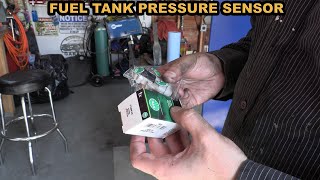
- Fuel Tank Pressure Sensor
(OEM #13502903 (supersedes 13502510))— This is the most common cause for a P0452 code, as the sensor fails internally, causing the voltage signal to drop to near zero.
Trusted brands: ACDelco (OEM), Bosch, NTK, Standard Motor Products
OEM price range: $80-$105
Aftermarket price range: $50-$75
Related Codes That Often Appear With This One
- P0453 — This code is for "Fuel Tank Pressure Sensor Circuit High Voltage". Seeing it alongside P0452 can indicate an intermittent wiring problem or a failing sensor that is fluctuating between open and shorted states.
- P0451 — This code means "Fuel Tank Pressure Sensor Performance". It can be set if the sensor's readings are erratic or don't match the expected values during an EVAP system test, which can happen if the sensor is failing.
Platform-Specific Known Issues
- The primary issue for the 2005-2010 Pontiac G6 is the requirement to drop the fuel tank to access the FTP sensor, which significantly increases labor time and cost compared to other vehicles with an access panel.
- Corrosion on the FTP sensor connector pins or in the wiring harness near the connector is a specific, documented failure mode that should be checked before replacing the sensor.
Mechanic-Grade Diagnostic Values
- FTP Sensor Voltage (KOEO, Gas Cap Off) — expected: 1.3V - 1.7V (typically ~1.5V). Failure: A reading less than 0.1V for more than 5 seconds triggers the code.
- FTP Sensor 5V Reference Circuit (at connector, KOEO) — expected: 4.8V - 5.2V. Failure: Voltage below 4.8V indicates a short to ground or open/high resistance in the circuit. Voltage above 5.2V indicates a short to voltage.
- FTP Sensor Low Reference (Ground) Circuit (at connector, Ignition OFF) — expected: Less than 5.0 Ohms to a known good ground. Failure: Resistance greater than 5.0 Ohms indicates an open or high resistance in the ground circuit.
- FTP Sensor Signal Circuit Jumper Test (at connector, KOEO) — expected: Greater than 4.7V on scan tool. Failure: With a jumper between the 5V reference and signal wires, a reading below 4.7V indicates a short to ground or open in the signal wire.
Hidden / Shadow Codes Worth Checking
- Type B DTC: P0452 is classified as a Type B DTC. This means the Check Engine Light will illuminate and the code will be stored after the fault is detected on two consecutive drive cycles. (see via Standard OBD-II scanner, Service Manual Information)
Scan Tool Commands That Help
- GM Tech2 / GDS2: EVAP Service Bay Test — This function allows a technician to force the vehicle's ECM to run a complete EVAP system self-test in the service bay, without needing to perform a lengthy, specific drive cycle. It commands the purge and vent solenoids to check system integrity and sensor response, which can help verify a fix or diagnose an intermittent issue.
- Professional Scan Tool: Purge/Seal — This command seals the EVAP system by closing the vent solenoid and then allows the technician to command the purge solenoid ON to create a vacuum. While monitoring the FTP sensor voltage, this can confirm if the sensor is responding to pressure changes, helping to differentiate a stuck sensor from a circuit fault.
Wiring & Ground Locations
- FTP Sensor Connector — On top of the fuel pump module, which is on top of the fuel tank. The tank must be dropped for access.. This is the primary connection point for the sensor. Corrosion or damage here is a common cause of the P0452 code. The pins are: Pin A (Low Reference/Ground), Pin B (Signal), Pin C (5V Reference). Wire colors are typically Gray (Ground), Dark Green (Signal), and Tan (5V Reference).
- G105 — On a transmission stud, on the left rear side of the engine compartment, below the upper coolant hose.. This is a major engine ground point. While not the direct ground for the FTP sensor circuit, a poor connection here can cause various electrical issues and erratic sensor readings throughout the engine management system.
- ECM (Engine Control Module) — Left side of the engine compartment.. The ECM provides the 5V reference and ground for the FTP sensor and interprets its signal voltage. All three sensor wires terminate at the ECM.
Real Owner Repair Stories
- YouTube channel 'XLR8 Auto' (2009 Pontiac G5 GT (mechanically similar Delta platform relative to the G6)) — Check Engine Light with code P0452.
❌ Tried (didn't work) The owner suspected the sensor but tested the wiring first.
✅ What actually fixed it The video documents finding all three wires to the FTP sensor were damaged and corroded near the EVAP canister area under the car. The fix was to cut out the bad section of wiring and splice in new wires using butt connectors, which resolved the code without replacing the sensor itself. - NHTSA ODI #10086891 (Pontiac Grand Prix) — An owner reported that while hesitation and surging were present, the Service Engine Soon lamp illuminated with code P0452 for the fuel tank pressure sensor.
OEM Part Supersession History
13502510→13502903— Standard part revision and consolidation by the manufacturer.
Heads up: None found. The new part number (13502903) is a direct, backward-compatible replacement for the original.
Model Year Variations Within This Range
- 2005-2010: No significant variations were found regarding the cause or repair of code P0452 for the 3.9L V6 engine within this generation. The FTP sensor part number and diagnostic procedure appear consistent.
Diagnostic Flowchart
Other Known Issues on This Vehicle
Issues unrelated to this code that are worth knowing about as an owner of this generation:
- Sudden Loss of Electric Power Steering (EPS) 🔴 High — Very common across all model years. Can occur at any mileage. (Ref: NHTSA Recalls 14V153, 14116, 15V064. GM offered extended warranty coverage and replacement of the torque sensor or entire steering column.)
- 4T65E/4T45E Automatic Transmission Failure 🔴 High — Common, especially over 100,000 miles. Symptoms include harsh shifting, slipping, or complete loss of forward gears. (Ref: Multiple TSBs exist for shift quality issues. Common failures include shift solenoids and torque converters.)
- BCM Connector Corrosion/Poor Contact 🟠 Medium — A well-documented issue causing a wide range of bizarre electrical problems (e.g., tail lights not working, random warnings). (Ref: NHTSA Recall 14V252 addresses voltage fluctuations in the Brake Apply Sensor (BAS) circuit due to BCM connection resistance.)
- Shift Cable Failure 🟠 Medium — The plastic tabs on the transmission shift cable end can fracture, preventing the vehicle from being shifted into the correct gear or from being started. (Ref: NHTSA Recall 12V460.)
- Front Wheel Hub Bearing Failure 🟡 Low — A common weight item, often failing prematurely. Symptoms include a loud humming or 'helicopter' noise that changes with speed and turning.
Used vs. New Parts: Buying Guide for This Vehicle
When a used part is the smart pick: A used part is a smart choice for the wiring harness pigtail. If your FTP sensor connector is corroded or damaged, sourcing a clean pigtail from a junkyard vehicle is an effective and low-cost repair.
Donor-vehicle mileage cap: roughly under 120000 miles for the part to have meaningful remaining life.
What to inspect on the donor part:
- For a wiring pigtail, inspect for any signs of green or white corrosion on the pins.
- Ensure the plastic connector is not brittle or cracked.
- Check that the locking tab clicks securely.
- Cut the pigtail with at least 6-8 inches of wire to give you plenty of room to splice.
OEM-only on this vehicle (don't cheap out):
- Fuel Tank Pressure (FTP) Sensor
Aftermarket brands forum-validated for this vehicle:
- ACDelco (OEM)
- Bosch
- NTK / NGK
- Standard Motor Products (SMP)
Brands owners have reported issues with on this vehicle:
- Unbranded, 'white-box' parts from online marketplaces. Given the high labor cost to drop the fuel tank for this repair, using a low-quality sensor to save a small amount of money is a significant risk that could lead to repeating the job.
Real Owner Stories
Aggregated from forums and TSBs cited above. Mileages and costs reflect what owners reported in those sources.
2001 Pontiac Bonneville
Symptoms: Check Engine Light was on with a P0452 code, indicating a circuit fault.
What fixed it: Replacing the fuel tank pressure sensor resolved the issue.
Source hint: GM Forum - 'P0452 evap pressure sensor circuit fault fixes?'
Chevy Trailblazer
Symptoms: The P0452 code was present due to heavy corrosion found on the FTP sensor's electrical connector.
What fixed it: Cleaning the corrosion from the electrical connector resolved the code without needing to replace the sensor.
Source hint: YouTube - 'PO452 Fix! .....Fuel tank Pressure regulator.' by Fixing With Passion
Pontiac G5
Symptoms: Vehicle had a P0452 code, which on this platform is very commonly caused by wiring problems.
What fixed it: The code was fixed by repairing damaged wires located near the EVAP canister.
Source hint: YouTube - 'How To Fix P0452 With A Fuel Tank Pressure Sensor Chevy Cobalt And Pontiac G5' by XLR8 Auto
Related OBD-II Codes
Frequently Asked Questions
Do I have to drop the fuel tank to replace the Fuel Tank Pressure (FTP) sensor on my 2005-2010 G6?
My scan tool shows the FTP sensor voltage is near zero. Does this automatically mean the sensor is bad?
I replaced the FTP sensor and the gas cap, but my P0452 code came back. What should I check next?
How likely is a loose gas cap to cause the P0452 code on my G6?
Are other GM cars like the Chevy Malibu or Saturn Aura known for this same P0452 problem?
What is the most common reason for a P0452 code on the 3.9L G6?
Helpful Videos
We Have This Part in Stock


The information in this article is provided for general reference and educational purposes only. Vehicle specifications, procedures, and part compatibility can vary by production date, trim level, and region. Always consult your vehicle's factory service manual and verify part numbers before purchasing or performing repairs. Safety-critical components such as airbags, seat belts, and braking systems should be installed by a qualified professional.
- Pontiac G6:
- 🧭 Diagnostic Flowchart
- 🎬 Helpful Videos
- 🛍️ Shop This Part
- What's Unique About the 2005-2010 Pontiac G6
- Symptoms You May Notice
- Most Likely Causes
- Rare But Worth Checking
- Diagnosis Steps
- Parts You'll Likely Need
- Related Codes That Often Appear With This One
- Platform-Specific Known Issues
- Mechanic-Grade Diagnostic Values
- Hidden / Shadow Codes Worth Checking
- Scan Tool Commands That Help
- Wiring & Ground Locations
- Real Owner Repair Stories
- OEM Part Supersession History
- Model Year Variations Within This Range
- Other Known Issues on This Vehicle
- Used vs. New Parts: Buying Guide for This Vehicle
- Real Owner Stories
- 2001 Pontiac Bonneville
- Chevy Trailblazer
- Pontiac G5
- Related OBD-II Codes
- Frequently Asked Questions
- 🎟️ Get 5% Off