

P0453 on 2010-2014 Lexus RX350: EVAP Pressure Sensor High Input Causes and Fixes
On a 2010-2014 RX350, P0453 is most often caused by a fuel-saturated charcoal canister due to overfilling the gas tank, or a failed fuel tank pressure sensor. This is a known issue covered by Lexus TSB L-SB-0017-14. Replacing the canister assembly is a common, but costly, fix.
- P0453 on a 2010-2014 RX350 indicates a high voltage signal from the fuel tank pressure sensor.
- A Lexus TSB specifically links this code to liquid fuel saturating the charcoal canister, often from overfilling the fuel tank.
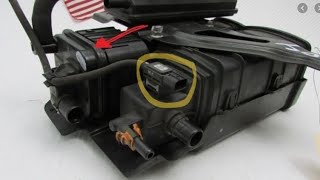
- The fuel tank pressure sensor is integrated into the charcoal canister assembly (Part No. 77740-0E030), so a failure of either component requires replacing the entire unit.
- Before replacing the expensive canister, always inspect the wiring harness for damage, as this can be an overlooked cause.
- Do not 'top off' the fuel tank after the pump clicks off to prevent this issue from recurring.
What's Unique About the 2010-2014 Lexus RX350
For this specific generation of the Lexus RX350, the P0453 code is strongly linked to a known issue outlined in a Technical Service Bulletin (TSB L-SB-0017-14). The problem is often not just a simple sensor failure, but rather liquid gasoline contaminating the charcoal canister. This contamination is frequently caused by the driver's habit of 'topping off' the fuel tank after the pump automatically shuts off. This forces raw fuel into the EVAP system, which is only designed for vapor, leading to canister saturation, high pressure, and the P0453 code. The FTP sensor is integrated into the charcoal canister assembly, meaning the entire unit must be replaced if either the sensor fails or the canister is saturated.
Diagnostic Flowchart
Tap your situation to follow the diagnostic path that matches what you're seeing on this vehicle.
Symptoms You May Notice
- Check Engine Light is on
- Intermittent rough idle, especially at operating temperature.
- Possible fuel odor.
- Difficulty starting after refueling (rare).
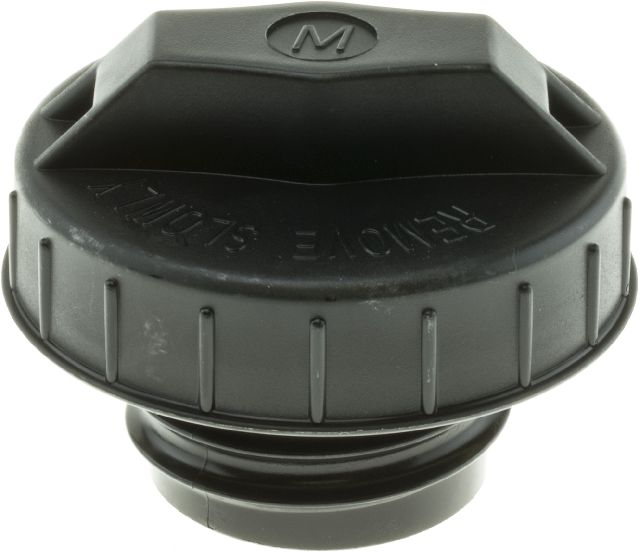
- Replacing the gas cap. A faulty gas cap typically causes a leak code like P0455 or P0456, not a high-pressure code like P0453.
Most Likely Causes
- Charcoal Canister Saturated with Liquid Fuel 🔴 High Probability → Shop Vapor Canister A known issue documented in Lexus TSB L-SB-0017-14 points to liquid fuel entering the EVAP system, often from overfilling the fuel tank. This saturates the canister, preventing it from managing vapors correctly and causing a high-pressure reading. The FTP sensor is part of the canister assembly, so this physical damage necessitates replacing the whole unit.
How to confirm: Disconnect the vent line from the charcoal canister and check for the presence of raw fuel. The canister may also feel heavy or have a strong fuel smell. 🎬 See how to test and replace an EVAP canister. The TSB outlines a specific diagnostic procedure for technicians to confirm the issue.
Typical fix: Replace the charcoal canister assembly. It is also critical to advise the vehicle owner to stop overfilling the fuel tank to prevent a recurrence. The TSB also notes that in some cases, the fuel tank sub-assembly may need replacement.
Est. part cost: $315-$540 - Faulty Fuel Tank Pressure (FTP) Sensor 🟡 Medium Probability → Shop Fuel Tank The FTP sensor is integrated into the charcoal canister assembly on this model. An internal short circuit within the sensor can cause it to send a constant high voltage signal to the ECM, triggering the P0453 code even if the canister is not saturated.
How to confirm: Use a scan tool to monitor the FTP sensor's voltage with the key on and engine off. A reading consistently above 4.5 volts indicates a likely sensor or wiring fault. 🎬 Watch: How to diagnose P0453 codes using a scan tool. You can also test the sensor's reference voltage (typically 5V) and ground connection at the connector.
Typical fix: Replace the entire charcoal canister assembly, as the sensor is not sold separately by Lexus.
Est. part cost: $315-$540 - Wiring Harness or Connector Issue ⚪ Low Probability The wiring harness leading to the charcoal canister is located under the vehicle and is susceptible to damage from road debris, moisture, and rodents.
How to confirm: Visually inspect the wiring and connector leading to the FTP sensor (on the canister) for any signs of corrosion, damage, or loose pins. With the sensor unplugged, check the signal wire for a short to power; the voltage should be low, not high. One owner on ClubLexus found that wires had been ripped apart from the factory tape inside the trunk area, causing the code.
Typical fix: Repair the damaged section of the wiring harness or clean/replace the connector.
Est. part cost: $5-$50 - Blocked EVAP Vent Hose or Valve ⚪ Low Probability
How to confirm: Inspect the various hoses of the EVAP system for kinks, blockages, or collapses that could trap pressure. Test the canister vent valve (part of the canister assembly) to ensure it is not stuck closed, which can be done with a capable scan tool.
Typical fix: Clear the blockage or replace the faulty hose. If the vent valve is stuck, the entire charcoal canister assembly must be replaced.
Est. part cost: $20-$100
Rare But Worth Checking
- Faulty Powertrain Control Module (PCM): This is extremely rare. The PCM should only be considered after all other possibilities, including the canister assembly, wiring, and hoses, have been exhaustively tested and ruled out. One owner on a Tundra forum replaced the ECU as a last resort for a persistent P0453, but the code immediately returned, indicating it was not the fault.
Diagnosis Steps
- Read the code with an OBD-II scanner and check for any other stored codes.
- Using the scanner's live data function, observe the Fuel Tank Pressure sensor voltage. With the key on and engine off, a normal reading is around 2.5V-3.5V. A reading stuck high (e.g., above 4.5V) confirms the fault condition.
- Perform a visual inspection of the EVAP system, focusing on the charcoal canister (located near the rear of the vehicle, often near the spare tire) and its associated hoses and wiring.
- Following the guidance in TSB L-SB-0017-14, disconnect the fuel tank vent line from the charcoal canister and inspect for any signs of liquid fuel. If fuel is present, the canister is saturated and must be replaced.
- If no fuel is found, inspect the FTP sensor's electrical connector on the canister for corrosion or damage. Test the sensor's circuit for a 5-volt reference, a good ground, and check the signal wire for a short to power. A ClubLexus user traced a similar issue to damaged wires in the trunk.
- If the wiring is intact and the canister is not saturated with fuel, the FTP sensor itself has likely failed internally. Since it is integrated with the canister, the entire assembly must be replaced.
Parts You'll Likely Need
- Charcoal Canister Assembly
(OEM #77740-0E030)— This is the primary fix identified in TSB L-SB-0017-14 for the 2010-2014 RX350 when P0453 is caused by fuel saturation. It is also the required part if the integrated Fuel Tank Pressure sensor fails, as the sensor is not sold separately. This part number supersedes the older part number 77740-48160.
Trusted brands: Lexus (Genuine OEM)
OEM price range: $304-$434
Aftermarket price range: $250-$380 - Fuel Tank Pressure Sensor — The sensor itself can fail, but for this vehicle, it is integrated into the charcoal canister assembly (77740-0E030) and is not available as a separate part from Lexus. Therefore, a failed sensor requires the replacement of the entire canister assembly. While aftermarket sensors are sold, they cannot be used without replacing the entire canister assembly.
Trusted brands: Denso, Bosch
OEM price range: $80-$150
Aftermarket price range: $40-$90
Technical Service Bulletins (TSBs) & Recalls
- L-SB-0017-14: MIL 'ON' with DTC P0453 due to liquid fuel in the Evaporative Emissions system (EVAP system).
Platform-Specific Known Issues
- Lexus issued Technical Service Bulletin L-SB-0017-14 for some 2010-2014 RX350 vehicles that exhibit a P0453 code and an intermittent rough idle. The bulletin identifies the cause as liquid fuel in the EVAP system and prescribes replacing the charcoal canister and potentially the fuel tank sub-assembly. The TSB applies to vehicles built before specific VINs and notes that for the 2010 model year, the charcoal canister replacement may be covered under the powertrain warranty.
Mechanic-Grade Diagnostic Values
- FTP Sensor Signal Voltage (Key On, Engine Off) — expected: Approximately 3.0V to 3.5V.. Failure: A reading stuck high (above 4.5V) or a constant 5V indicates a short to power or internal sensor failure. A reading near 0V suggests an open circuit.
- FTP Sensor 5V Reference Voltage — expected: Approximately 5 volts at the sensor connector with key on.. Failure: Significantly lower or no voltage indicates a wiring or PCM issue upstream of the sensor.
- FTP Sensor Manual Vacuum Test — expected: Voltage should decrease from the baseline as a vacuum is applied with a hand pump.. Failure: If the voltage does not change when a vacuum is applied, the sensor is faulty.
Scan Tool Commands That Help
- Toyota Techstream: Active Test: Activate the VSV for Evap Control — This command, mentioned in TSB L-SB-0017-14, is used to cycle the purge valve with the engine running. If the vehicle runs rough or nearly stalls, it confirms the presence of liquid fuel in the EVAP system, pointing to a saturated canister.
- Toyota Techstream: Utility: Automatic EVAP System Check — This is the confirmation step used after a repair. After clearing DTCs, running this automated test verifies the entire EVAP system is functioning correctly and that no pending codes are set.
Wiring & Ground Locations
- FTP Sensor Connector — On the charcoal canister assembly (Part #77740-0E030), located at the rear of the vehicle, near the fuel tank.. This is the primary connection point to inspect for corrosion, damage, or a short to power on the signal wire, which directly causes a P0453 code.
- Chassis Ground — The FTP sensor circuit grounds to the vehicle chassis. A common practice for ensuring a good ground is to connect to a clean, unpainted metal point on the vehicle frame near the component.. A poor or intermittent ground can cause the sensor's signal voltage to float high, leading to an erroneous P0453 code.
- BECU (Body Electronic Control Unit) — Under the driver's dash, attached to the right side of the driver's dash fuse box.. While the FTP sensor signals the ECM, related body control wiring passes through this area, which can be a site for harness damage or shorts if other electrical work has been performed.
OEM Part Supersession History
77740-48160→77740-0E030— Updated part from the manufacturer. This is a common practice to address issues or make improvements.77001-0E031→77001-0E032— Updated Fuel Tank Sub-Assembly part number, as noted in TSB L-SB-0017-14.
Model Year Variations Within This Range
- 2010 only: According to TSB L-SB-0017-14, for the 2010 model year only, the charcoal canister replacement for this issue may be covered under the Lexus Powertrain Warranty (84 months/70,000 miles). For later models, it typically falls under the shorter Basic Warranty.
- 2010-2012 vs 2013-2014: The RX350 received a facelift for the 2013 model year, which included exterior and minor interior changes. While the core engine and EVAP system components remained the same, there were minor updates to transmission software and interior electronics.
Helpful Videos

We Have This Part in Stock


The information in this article is provided for general reference and educational purposes only. Vehicle specifications, procedures, and part compatibility can vary by production date, trim level, and region. Always consult your vehicle's factory service manual and verify part numbers before purchasing or performing repairs. Safety-critical components such as airbags, seat belts, and braking systems should be installed by a qualified professional.
- Lexus RX350:
- 🧭 Diagnostic Flowchart
- 🎬 Helpful Videos
- 🛍️ Shop This Part
- What's Unique About the 2010-2014 Lexus RX350
- Symptoms You May Notice
- Most Likely Causes
- Rare But Worth Checking
- Diagnosis Steps
- Parts You'll Likely Need
- Technical Service Bulletins (TSBs) & Recalls
- Platform-Specific Known Issues
- Mechanic-Grade Diagnostic Values
- Scan Tool Commands That Help
- Wiring & Ground Locations
- OEM Part Supersession History
- Model Year Variations Within This Range
- 🎟️ Get 5% Off