

P0455 on 2011-2013 Acura TSX: EVAP Large Leak Causes and Fixes
For a 2011-2013 Acura TSX, a P0455 code is most often caused by a loose or faulty gas cap. A genuine OEM replacement cap is an inexpensive first step and often solves the problem. This is a known issue addressed by Acura TSB 14-006, which advises replacing the original cap (with a black gasket) with an updated version (with a brown gasket).
- P0455 signifies a large leak in the EVAP (emissions) system.
- The most likely cause on a 2011-2013 TSX is a faulty gas cap, a known issue addressed by Acura TSB 14-006.
- Always start by tightening the gas cap. If the light returns, replace the cap with a genuine OEM part (17670-TR0-A11 or its successor) for the highest chance of success.
- If a new OEM cap doesn't fix it, the next most likely causes are the purge valve or a cracked hose, which can be found with a smoke test.
What's Unique About the 2011-2013 Acura TSX
On the second-generation Acura TSX, the P0455 code is so commonly linked to the gas cap that Acura issued a Technical Service Bulletin (TSB 14-006). The TSB notes that the original fuel fill cap gasket can create too much friction, sometimes described as a "stick-slip feeling," preventing a proper seal even when tightened. The official fix involves replacing the cap (with a black gasket) with an updated part that has a brown gasket.
Diagnostic Flowchart
Tap your situation to follow the diagnostic path that matches what you're seeing on this vehicle.
Symptoms You May Notice
- Check Engine Light is on
- A message to "Check Fuel Cap" or "TIGHTEN FUEL CAP" may appear on the Multi-Information Display (MID)
- A faint smell of gasoline, especially near the rear of the vehicle
- Slightly reduced fuel economy
- Difficulty starting immediately after refueling 🎬 Watch: A breakdown of P0455 symptoms and common repairs. (a potential sign of a stuck-open purge valve)
- Replacing oxygen sensors, which are part of the exhaust system and unrelated to the EVAP system.
- Immediately assuming a complex leak source before replacing the gas cap with a genuine OEM part, as per TSB 14-006.
Most Likely Causes
- Loose or Faulty Fuel Filler Cap (Gas Cap) 🔴 High Probability → Shop Fuel Tank Cap Acura issued TSB 14-006 specifically for this issue on 2011-2013 TSX models, indicating the original cap's gasket can fail to seal properly. This is the most common cause, and many owners on forums report that using a cheap aftermarket cap fails to fix the issue, while a genuine OEM cap does.
How to confirm: First, ensure the cap is tightened until it clicks several times. If the light returns, inspect the cap's rubber seal for cracks, stiffness, or damage. Per TSB 14-006, the faulty original caps have a black gasket; the updated replacement part has a brown gasket.
Typical fix: Replace the fuel filler cap with a new genuine OEM part (17670-TR0-A11, which may be superseded by 17670-T3W-A01).
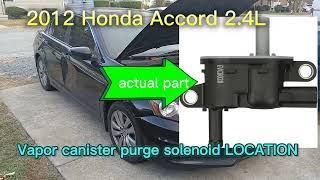
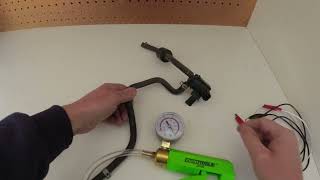
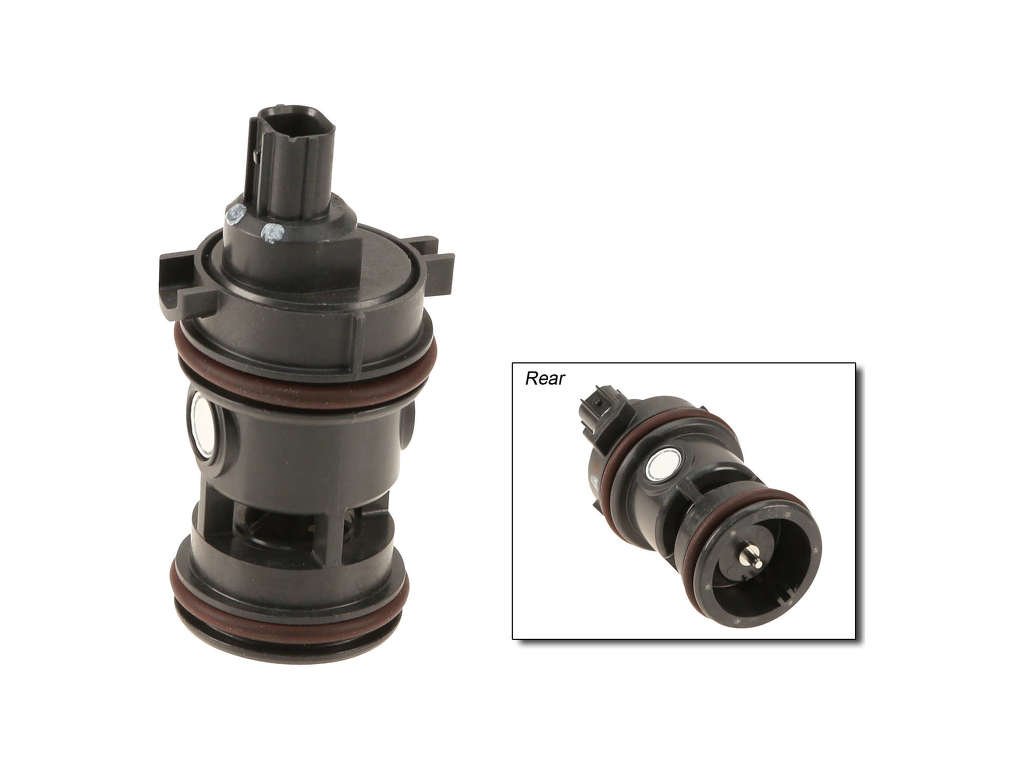
Est. part cost: $25-$45 - EVAP Canister Purge Valve Failure 🟡 Medium Probability → Shop Vapor Canister The purge valve, located on the intake manifold in the engine bay, 🎬 Watch: See the exact location of the purge solenoid. controls the flow of fuel vapors to the engine. It can get stuck open, creating a large leak. This is a common failure point on many Honda/Acura vehicles.
How to confirm: With the engine off, remove the valve and try to blow through it. If air passes through, it's stuck open and needs replacement. A stuck-open purge valve can also cause rough starting right after refueling. A mechanic can also command it open and closed with a scan tool to test functionality.
Typical fix: Replace the EVAP canister purge valve.
Est. part cost: $60-$150 - Cracked or Disconnected EVAP Hose 🟡 Medium Probability Rubber hoses in the EVAP system can become brittle and crack over time due to heat and age, creating leaks. This is especially true for hoses in the engine bay.
How to confirm: Visually inspect all accessible EVAP hoses, from the engine bay to the canister near the fuel tank, for visible cracks or disconnections. A smoke test is the most effective way to find a hard-to-see leak, as recommended by mechanics and experienced owners on forums.
Typical fix: Replace the cracked or damaged hose section.
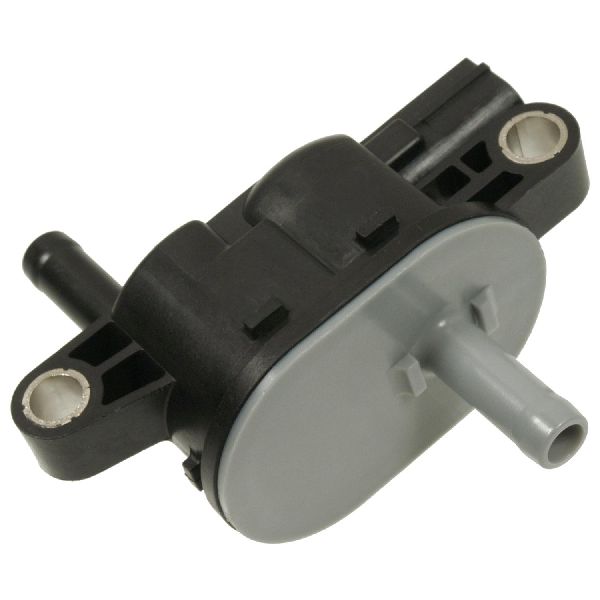
Est. part cost: $10-$50 - EVAP Canister Vent Solenoid/Valve Failure ⚪ Low Probability → Shop Vapor Canister This valve, located near the charcoal canister under the car, is normally open to allow air into the system but closes during self-tests. If it fails to close (gets stuck open), it will cause a large leak code.
How to confirm: This component can be tested by applying 12V power to see if it actuates (clicks) and closes. A smoke test will show smoke exiting a faulty, stuck-open vent valve.
Typical fix: Replace the EVAP vent solenoid.
Est. part cost: $65-$100
Rare But Worth Checking
- Cracked EVAP Charcoal Canister: → Shop Vapor Canister The canister itself can develop cracks from road debris or age, creating a leak. This is less common than valve or hose failures but will be found with a smoke test.
- Leaking Fuel Tank or Filler Neck: → Shop Fuel Tank Rust or physical damage can cause a leak in the fuel tank or the metal filler neck that the gas cap screws into. This is uncommon but will definitely cause a P0455 code and is a more serious repair.
Diagnosis Steps
- Read the code with an OBD-II scanner to confirm P0455 is present.
- Tighten the gas cap until it clicks multiple times. Clear the code and drive for a few days to see if it returns.
- If the code returns, remove and inspect the gas cap's seal. Per TSB 14-006, if the gasket is black, replace it with the updated OEM cap (part #17670-TR0-A11 or its successor) which has a brown gasket. Avoid aftermarket caps as many owners report they do not solve the problem.
- Visually inspect the EVAP purge solenoid (on the intake manifold) and its connected hoses in the engine bay for any obvious cracks or loose connections.
- Visually inspect the EVAP canister and vent solenoid under the vehicle (near the driver's side rear wheel) for damage or loose hoses.
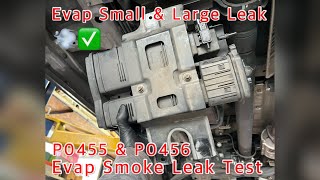
- If no visual faults are found, a professional smoke test is the definitive next step. This involves injecting smoke into the EVAP system and watching where it escapes, 🎬 Watch: How to use a smoke machine for leak testing. pinpointing the exact location of the leak.
Parts You'll Likely Need
- Fuel Filler Cap
(OEM #17670-TR0-A11 (superseded by 17670-T3W-A01))— This is the most frequent cause, as documented by Acura TSB 14-006. The original gasket material fails, preventing a proper seal. Owner forums strongly recommend OEM over aftermarket for this part.
Trusted brands: Acura (OEM), Stant (some users report success, others do not), Gates
OEM price range: $25-$45
Aftermarket price range: $15-$25 - EVAP Canister Purge Valve
(OEM #36162-RRA-A01)— A common failure point that gets stuck open, creating a constant vacuum leak within the EVAP system. It is located on the intake manifold.
Trusted brands: Acura (OEM), Dorman, Standard Motor Products (SMP)
OEM price range: $65-$90
Aftermarket price range: $40-$70
Related Codes That Often Appear With This One
- P0456 — P0456 indicates a 'very small leak'. The same faulty component, like a failing gas cap seal, can sometimes be interpreted by the ECU as either a large or small leak, or both intermittently. The official Acura TSB 14-006 addresses both codes for the same root cause.
- P0442 — This code indicates a 'small leak'. It can appear alongside P0455 if there are multiple leak sources or if a single leak's severity is borderline in the ECU's diagnostics.
Technical Service Bulletins (TSBs) & Recalls
- Service Bulletin 14-006 (dated 2014-02-18): Addresses the MIL coming on with DTC P0455 and/or P0456. States the possible cause is 'The fuel fill cap gasket creates too much friction, preventing the cap from sealing properly.' The corrective action is to inspect and, if necessary, replace the cap with part #17670-TR0-A11.
Platform-Specific Known Issues
- Acura TSB 14-006: Acura Technical Service Bulletin 14-006, issued February 18, 2014, directly addresses P0455 and P0456 codes on the 2011-2013 TSX. It identifies a faulty fuel fill cap gasket that creates too much friction ('stick-slip feeling') and prevents a proper seal. The fix is to replace the original cap (black gasket) with an updated one (brown gasket), part number 17670-TR0-A11.
- Owner Experience: OEM vs. Aftermarket Gas Cap: → Shop Fuel Tank Cap A common story on forums like AcuraZine and Reddit involves an owner getting a P0455 code, replacing the gas cap with a cheap part from an auto parts store, and having the code return. The issue is only resolved after purchasing a genuine OEM Acura cap. One user on AcuraZine with a 2007 RDX (which shares the issue) noted: 'I have replaced the gas cap, but it's an auto zone part so I'm thinking about buying an oem... Even after these changes, the check gas cap error comes back.'
Mechanic-Grade Diagnostic Values
- EVAP Canister Purge Valve resistance — expected: Approximately 33 ohms at room temperature. Failure: A reading significantly higher or lower than 33 ohms, or an open circuit (infinite resistance).
- EVAP Canister Vent Shut Valve resistance — expected: Approximately 25-30 ohms at room temperature. Failure: A reading outside this range indicates a faulty solenoid coil.
Scan Tool Commands That Help
- Honda Diagnostic System (HDS): EVAP FUNCTION TEST — This is a comprehensive, automated test sequence run by the dealer-level scan tool to check the entire EVAP system's integrity, including the function of the purge valve, vent valve, and pressure sensor. It should be used after initial visual checks and gas cap replacement have failed to resolve the code.
- Honda Diagnostic System (HDS): EVAP CVS ON / EVAP CVS OFF — This command manually actuates (closes/opens) the Canister Vent Shut (CVS) valve. A technician uses this during a smoke test or vacuum test to seal the system, allowing them to isolate and pinpoint the exact location of a leak.
Wiring & Ground Locations
- G301 — Located at the left side of the front passenger's footwell area, behind the kick panel.. This is a major grounding point for several interior and engine compartment components. While not exclusive to the EVAP system, a corroded or loose G301 can cause intermittent electrical issues for various sensors and solenoids, potentially including the EVAP valves, leading to false codes.
Real Owner Repair Stories
- AcuraZine Forum User (4th Gen Acura TL (shares EVAP components with TSX)) — Recurring P0455 and P0456 codes.
❌ Tried (didn't work) Replacing the gas cap., Replacing a rubber hose., Replacing the purge valve with an aftermarket part from an auto parts store.
✅ What actually fixed it The user tested the aftermarket purge valve and found it was working, leading them to believe a smoke test was the next necessary step to find a different leak. This highlights the common issue where non-OEM parts may not resolve the problem, even if they appear functional.
"I Checked Everything" — The Actual Cause
- In cases where a smoke test reveals no leaks, the root cause can be a faulty Fuel Tank Pressure (FTP) sensor. The sensor may hold pressure correctly but send an incorrect voltage reading to the ECU, making the computer believe there is a large leak when there isn't one. This is an electronic failure, not a physical leak, so a smoke test will come back clean.
OEM Part Supersession History
17670-TR0-A11→17670-T3W-A01— Updated gasket design to prevent the 'stick-slip' feeling and ensure a better seal, as noted in TSB 14-006.
Model Year Variations Within This Range
- 2011-2013: The EVAP Canister Purge Valve part number differs between the 4-cylinder (K24) and V6 (J35) engines. The 4-cylinder model uses part number 36162-RRA-A01. The V6 model uses part number 36162-RMX-A01. While they perform the same function, their fitment and possibly electrical connectors may vary.
Helpful Videos

We Have This Part in Stock


The information in this article is provided for general reference and educational purposes only. Vehicle specifications, procedures, and part compatibility can vary by production date, trim level, and region. Always consult your vehicle's factory service manual and verify part numbers before purchasing or performing repairs. Safety-critical components such as airbags, seat belts, and braking systems should be installed by a qualified professional.
- Acura TSX:
- 🧭 Diagnostic Flowchart
- 🎬 Helpful Videos
- 🛍️ Shop This Part
- What's Unique About the 2011-2013 Acura TSX
- Symptoms You May Notice
- Most Likely Causes
- Rare But Worth Checking
- Diagnosis Steps
- Parts You'll Likely Need
- Related Codes That Often Appear With This One
- Technical Service Bulletins (TSBs) & Recalls
- Platform-Specific Known Issues
- Mechanic-Grade Diagnostic Values
- Scan Tool Commands That Help
- Wiring & Ground Locations
- Real Owner Repair Stories
- "I Checked Everything" — The Actual Cause
- OEM Part Supersession History
- Model Year Variations Within This Range
- 🎟️ Get 5% Off