

P0455 on 2009-2016 Audi A4: EVAP Gross Leak Causes and Fixes
For a 2009-2016 Audi A4 with the 2.0T engine, a P0455 code is most often caused by a faulty EVAP Purge Valve (N80) or a loose/bad gas cap. The N80 valve is a well-documented failure item on this platform and is a relatively inexpensive and easy part to replace, often solving the issue in under 15 minutes.
- Always check your gas cap first. Make sure it's tight and the seal is intact before buying any parts.
- The most likely part to have failed on a 2009-2016 Audi A4 is the N80 EVAP Purge Valve, located in the engine bay.
- This code will not prevent you from driving the car, but it will cause an automatic failure on an emissions test.
- If the gas cap and N80 valve are not the cause, a smoke test is the best way to find the leak without guessing.
What's Unique About the 2009-2016 Audi A4
The 2009-2016 Audi A4 (B8 generation) with the 2.0T engine is particularly known for failures of the EVAP Purge Solenoid, commonly called the N80 valve. While a loose gas cap is a universal cause for this code, many Audi owners in forums report that the N80 valve is the primary culprit for P0455, even without other codes present. The valve's internal diaphragm can fail or it can become stuck open, creating a constant vacuum leak that the system detects.
Symptoms You May Notice
- Check Engine Light is on
- A noticeable smell of fuel, particularly around the gas cap area or rear of the car.
- Slightly rough idle or hesitation, especially after refueling.
- Difficulty starting the engine immediately after filling the gas tank. 🎬 Watch: Why your Audi struggles to start after refueling.
- A faint 'whoosh' or air sputtering sound from under the car after turning it off as pressure equalizes.
- Replacing the oxygen sensors or other unrelated emissions components before checking the simple EVAP system parts.
- Assuming the charcoal canister is bad before performing a smoke test to confirm the leak location. Canisters are expensive and far less likely to fail than the N80 valve or gas cap.
Most Likely Causes
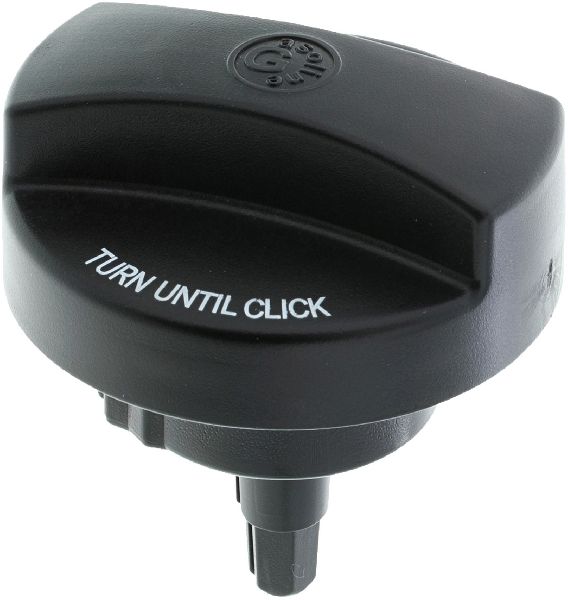
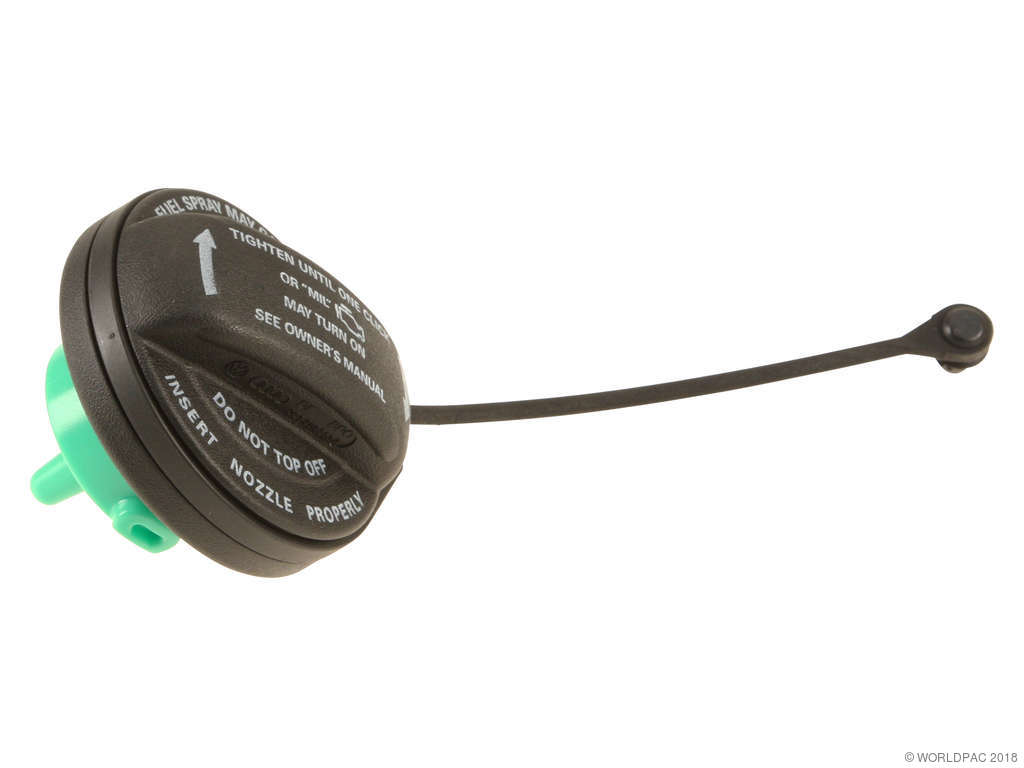
- Loose or Faulty Gas Cap 🔴 High Probability → Shop Fuel Tank Cap This is the most common cause for a P0455 code on any vehicle. The rubber seal on the cap can crack or degrade over time, preventing a proper seal. Many owners report solving the code simply by replacing the cap.
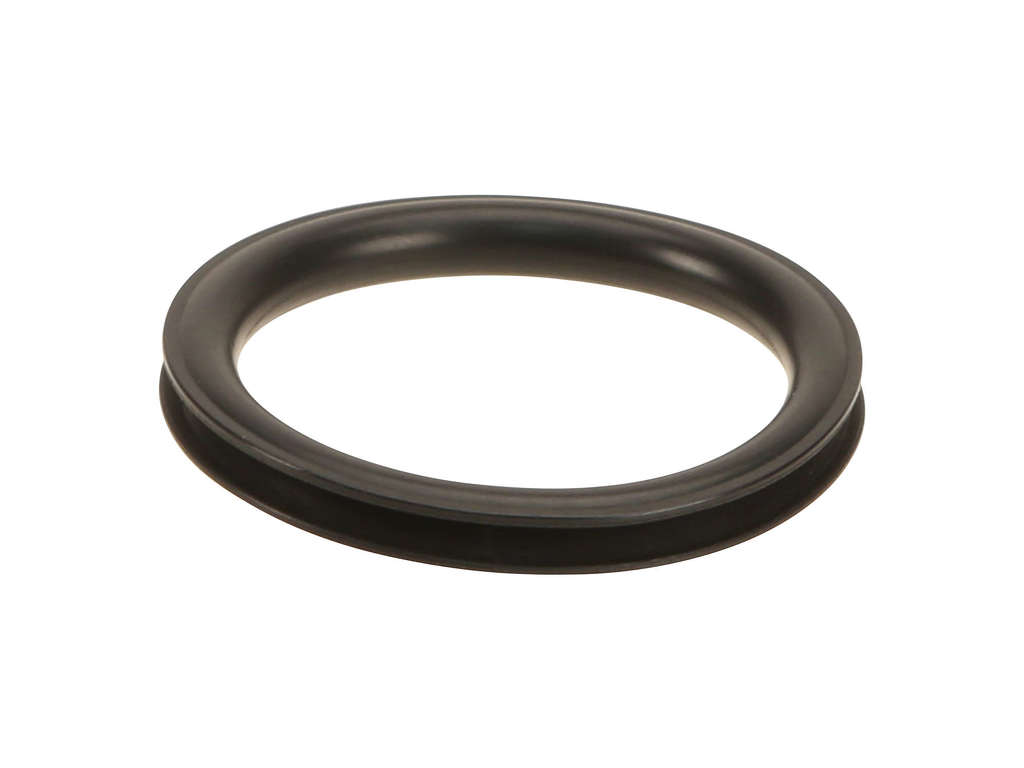
How to confirm: Ensure the gas cap is tightened until it clicks at least three times. Inspect the rubber O-ring on the cap for any cracks, stiffness, or damage. A new OEM cap is a cheap and effective diagnostic step.
Typical fix: Tighten the cap. If the seal is damaged or the code returns after clearing, replace the gas cap with a new OEM part (Part No. 8K0201550N).
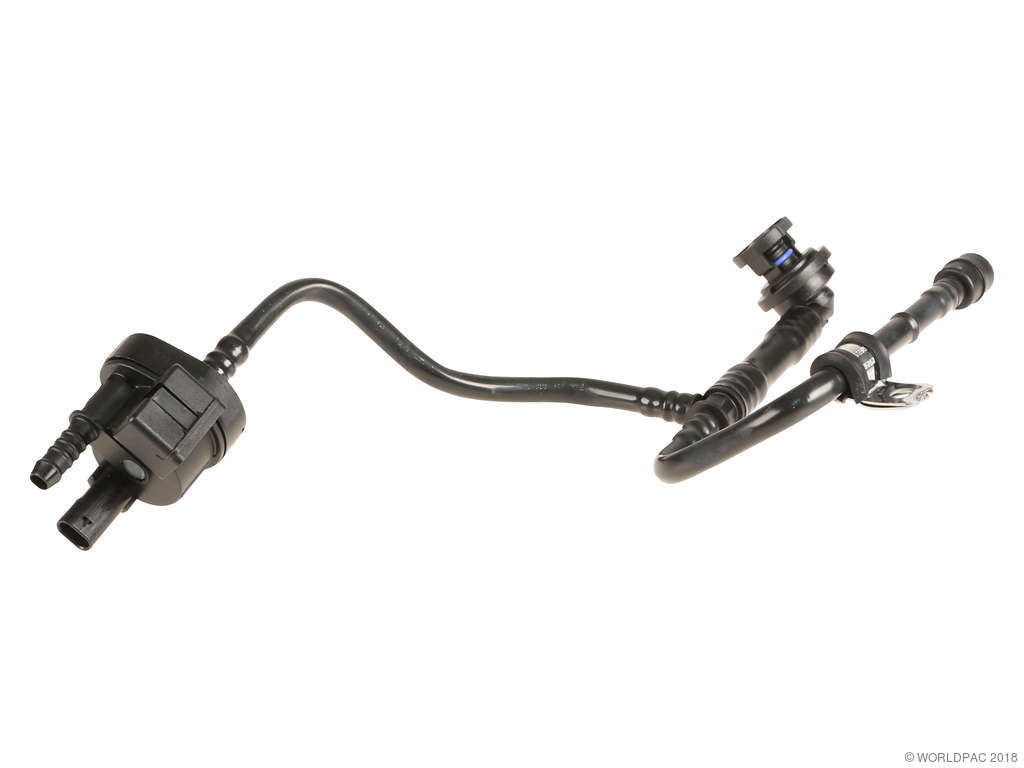
Est. part cost: $25-$50 - Faulty EVAP Purge Valve (N80 Valve) 🔴 High Probability → Shop Vapor Canister This is a very common failure point on VW and Audi vehicles of this era, especially the 2.0T engine. The internal components can fail, causing the valve to stick open and create a large leak.
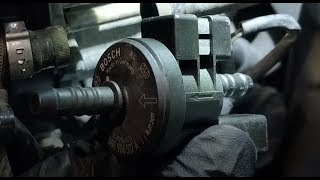
How to confirm: Remove the valve (located in the engine bay, near the intake manifold) and try to blow through it. If air passes through, the valve is stuck open and has failed. A working valve should be closed when no power is applied. Advanced diagnosis can be done with VCDS by running basic settings for group 070; a failure here points to the N80 valve.
Typical fix: Replace the N80 valve. This is a simple repair that typically involves removing two hose clamps and an electrical connector. It often takes less than 15 minutes. 🎬 See this step-by-step N80 purge valve replacement walkthrough.
Est. part cost: $20-$60 - Cracked or Disconnected EVAP Hoses 🟡 Medium Probability Over time, the plastic and rubber hoses in the engine bay and under the car can become brittle and crack due to heat and age. A line under the passenger side is known to get pinched or damaged if the car is lifted improperly.
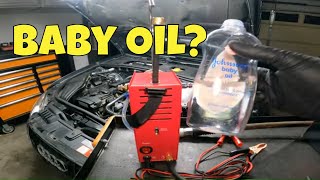
How to confirm: Visually inspect all accessible EVAP lines for obvious cracks or disconnections. For hard-to-see leaks, a smoke test is the most effective diagnostic method. This involves injecting smoke into the EVAP system (often through the purge valve line) and looking for where it escapes. 🎬 Watch: How to use a smoke tester to find leaks.
Typical fix: Replace the cracked or broken section of hose. This may require specific OEM-style clamps.
Est. part cost: $10-$100
Rare But Worth Checking
- Faulty Leak Detection Pump (LDP) / EVAP System Integrity Monitor (ESIM): → Shop Evaporative Emissions System Leak Detection Pump The LDP (or newer ESIM switch) is responsible for pressurizing the system for the leak test. A failure in the pump itself or its wiring (such as a bad ground or corrosion) can prevent the test from running correctly, sometimes triggering a P0455 code. The LDP is located in the left rear wheel housing, behind the liner, making it susceptible to road salt and moisture. Audi has issued warranty extensions for this part on some models.
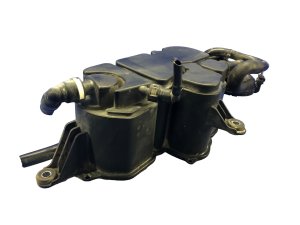
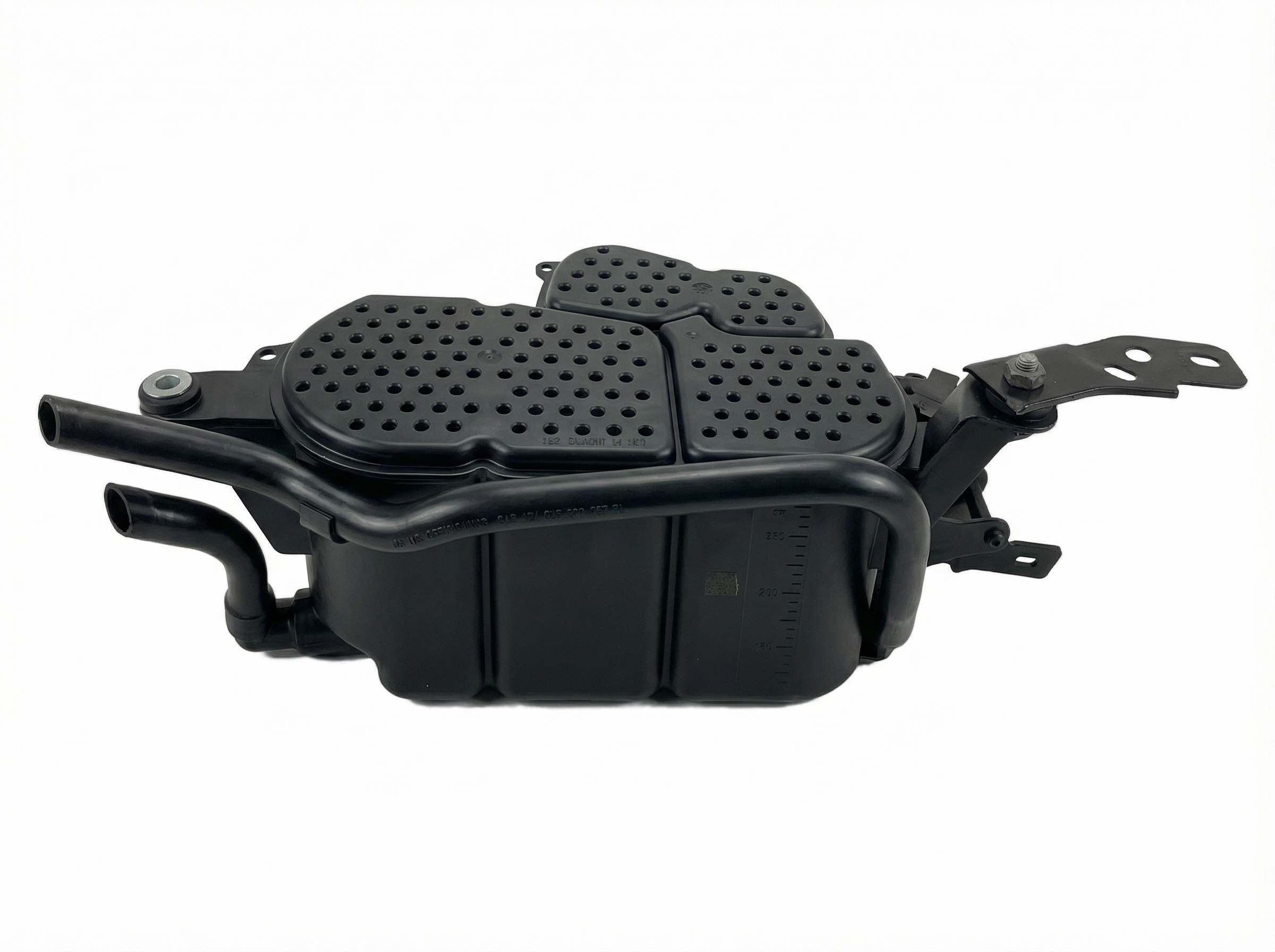
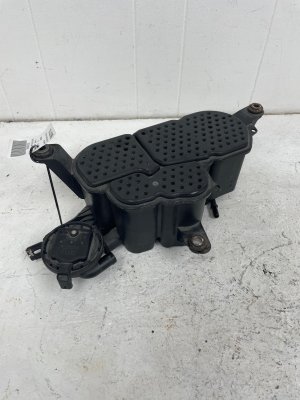
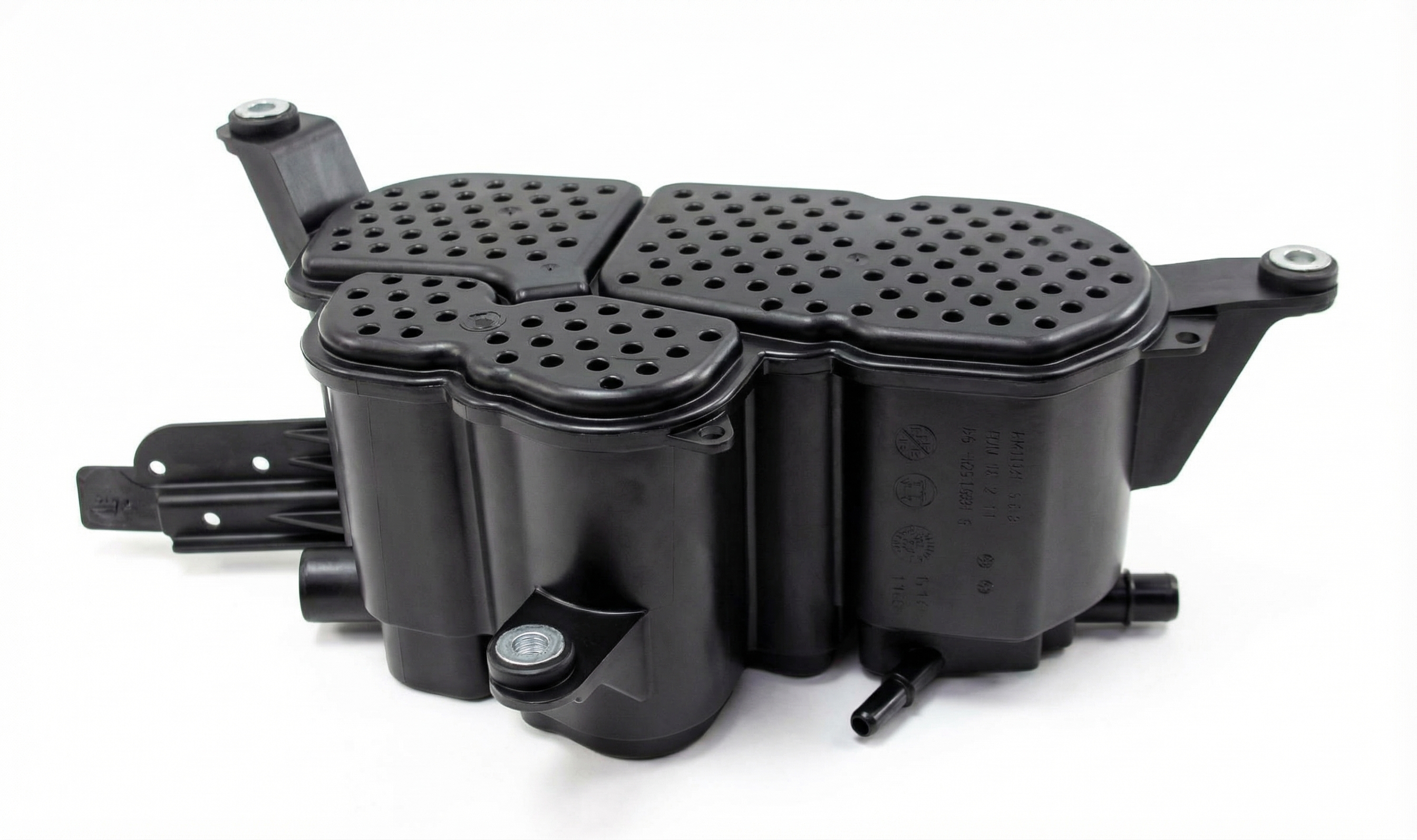
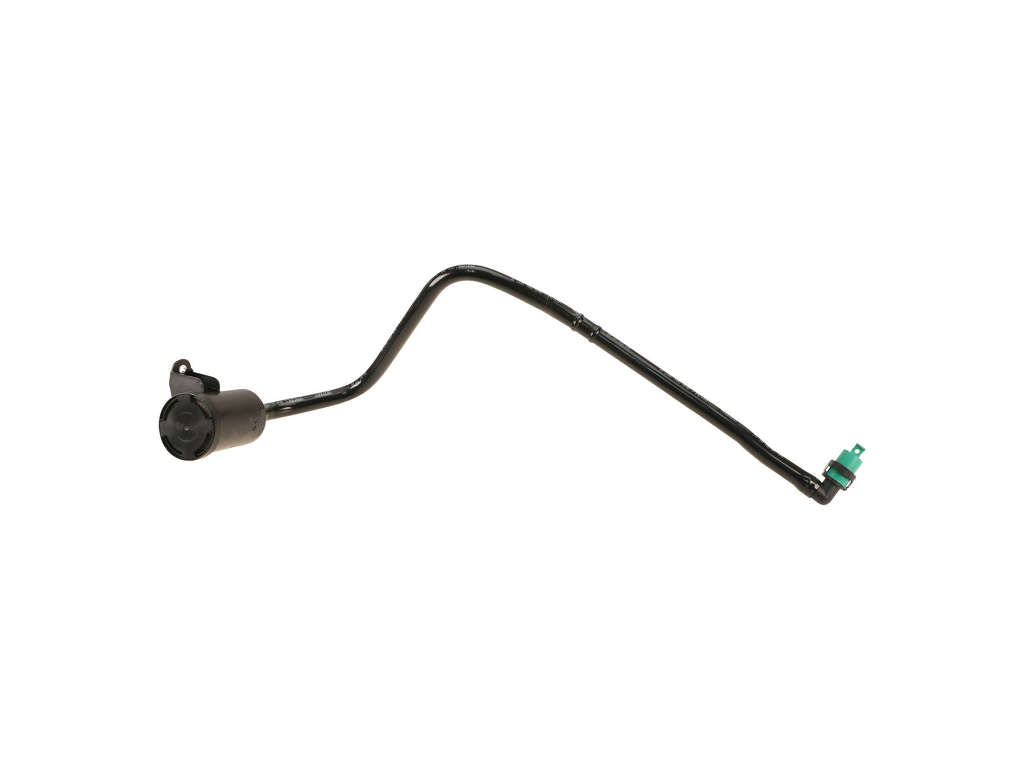
- Cracked Charcoal Canister: → Shop Vapor Canister The charcoal canister, located near the fuel tank in the rear of the vehicle, can develop cracks from road debris or age, causing a large leak. This is often accompanied by a strong fuel smell near the rear wheel well or trunk. Replacement can be costly, so a smoke test is highly recommended to confirm the canister is the source of the leak before replacing it.
- Damaged Fuel Filler Neck: → Shop Fuel Filler Neck Corrosion or damage to the metal tube leading to the gas tank can prevent the gas cap from sealing properly, causing a leak. This should be visually inspected when checking the gas cap.
Diagnosis Steps
- Read the code with an OBD-II scanner to confirm P0455 is present.
- Check the gas cap. Remove it, inspect the seal for damage, and reinstall it, ensuring it clicks several times. Clear the code and drive. If the light returns, consider replacing the gas cap as a cheap first step.
- If the light returns, locate the N80 Purge Valve in the engine bay. On the 2.0T, it's a small solenoid near the coolant expansion tank with two hoses and an electrical connector.
- Disconnect the N80 valve and attempt to blow air through it. If air passes freely, the valve has failed and needs to be replaced.
- (Advanced) If you have VCDS/VAG-COM, run the EVAP system basic settings test (Group 070). If the test fails, clamp the hose between the N80 and the intake manifold and re-run it. If it now passes, the N80 valve is confirmed to be the leak source.
- If the N80 valve is good, visually inspect all visible EVAP hoses in the engine bay and under the car for cracks or loose connections. Pay special attention to the line running under the passenger side that can be damaged by car lifts.
- If no visible leaks are found, the most definitive next step is to perform a smoke test. This involves injecting smoke into the system and looking for where it escapes, which can pinpoint cracks in hoses, the charcoal canister, or the fuel tank seals.
Parts You'll Likely Need
- EVAP Purge Valve (N80 Valve)
(OEM #06H906517B (supersedes 06H906517H, 06H906517T))— This is a very common failure item on the 2009-2016 Audi A4 2.0T that directly causes a P0455 code when it sticks open.
Trusted brands: Bosch (OEM), Pierburg, Genuine VW/Audi
OEM price range: $40-$60
Aftermarket price range: $20-$40 - Fuel Cap
(OEM #8K0201550N (supersedes 8K0201550F, 8T0201550B))— A worn-out gas cap seal is the simplest and a very common cause for a large EVAP leak. It's an inexpensive and easy part to replace as a first step.
Trusted brands: Genuine Audi (OEM), Blau, Carquest
OEM price range: $30-$50
Aftermarket price range: $15-$25
Related Codes That Often Appear With This One
- P0441 — Stands for 'EVAP System Incorrect Purge Flow'. This code frequently appears with P0455 when the N80 purge valve is stuck open or closed, directly pointing to a valve failure as the root cause.
- P0442 — Stands for 'EVAP System Leak Detected (Small Leak)'. Sometimes a problem can initially register as a small leak before worsening and triggering the large leak code P0455.
- P0456 — Stands for 'EVAP System Leak Detected (Very Small Leak)'. Similar to P0442, this may appear before a leak worsens to the 'gross leak' level of P0455.
Technical Service Bulletins (TSBs) & Recalls
- Audi TSB 20-11-12: While not directly for P0455, this TSB addresses software updates for the ECM to improve diagnosis of the EVAP system, including the Leak Detection Pump (LDP). In some cases, an ECM update may be required to properly diagnose recurring EVAP codes.
Platform-Specific Known Issues
- The N80 purge valve is a known weak point on the 2.0T engine used in the B8 A4, with many owners in forums reporting it as the direct fix for P0455.
- Improperly lifting the vehicle can pinch and crack an EVAP line that runs under the passenger side, creating a hard-to-find leak.
Mechanic-Grade Diagnostic Values
- N80 Purge Valve Coil Resistance — expected: 15 to 25 Ohms. Failure: A reading of infinite resistance (Open Line/OL) or significantly lower than 15 Ohms indicates a failed coil.
- N80 Purge Valve Power Supply Voltage — expected: Battery voltage at one pin of the connector with key on, engine off.. Failure: No voltage suggests a wiring or fuse issue upstream of the valve.
Scan Tool Commands That Help
- VCDS (VAG-COM) or OBDeleven: Basic Settings - Group 070 or 071 (Evaporative Emission Control Test) — This command initiates a full EVAP system self-test, cycling the N80 valve and LDP to check for leaks. It is the definitive software-based step to confirm system integrity after physical parts have been checked. The tool will report 'EVAP OK' or 'EVAP Not OK'. You can also use the Output Test function to make the N80 valve click on command to verify it is receiving a signal and actuating.
Wiring & Ground Locations
- Leak Detection Pump (LDP) (V144) — In the left rear wheel housing, behind the wheel well liner.. The LDP and its wiring are located in an area exposed to road spray, salt, and debris, making them prone to corrosion. A bad ground or corroded connector here can cause various EVAP codes, including P0455, by preventing the pump from running the leak test correctly.
- G12 / G26 Ground Points — G12 is in the left rear of the engine compartment. G26 is located under the power steering reservoir.. These are major ground points in the engine bay for various components, including the ECM which controls the EVAP system. Poor grounding at these locations can cause erratic behavior and false codes from multiple systems, including emissions.
- N80 Valve Connector — On the N80 valve itself, in the engine bay near the coolant expansion tank.. This 2-pin connector provides power and the control signal from the ECM. Pin 1 should have battery voltage (power), and Pin 2 is the ground signal from the ECM. Checking for voltage here is a key step before condemning the valve itself.
Real Owner Repair Stories
- Audi Revolution forum user (Audi A4 (B7, but directly applicable to B8)) — P0455 code, plus a noticeable 'light throttle sluggishness' or laggy pedal response.
❌ Tried (didn't work) Clearing the code., Tightening the gas cap (code returned the next day).
✅ What actually fixed it Replacing the N80 Purge Valve. The user confirmed that after replacement, the sluggish throttle response was also gone. - Ross-Tech forum user (2009 Audi A4 2.0T Quattro) — Recurring P2404 code (EVAP System Leak Detection Pump Sense Circuit Range/Performance), which is closely related to P0455.
❌ Tried (didn't work) Dealer replaced corroded wiring for the Leak Detection Pump (LDP)., Dealer replaced the LDP itself., Dealer then replaced the charcoal canister, claiming it was full of fuel.
✅ What actually fixed it The thread was a request for help after multiple expensive dealer repairs failed to solve the recurring EVAP code, highlighting how even professional shops can misdiagnose the system by replacing parts without confirming the root cause. This serves as a cautionary tale to diagnose thoroughly before replacing expensive components like the LDP or charcoal canister.
"I Checked Everything" — The Actual Cause
- A stuck-open N80 purge valve can be the source of the leak, but a smoke test might not find it. The valve's purpose is to open and allow vapors into the intake manifold. If it's stuck open, it creates a vacuum leak directly into the engine. If a technician introduces smoke downstream of the N80, the test will appear clean because the leak path is *through* the valve itself. The correct test is to disconnect the N80 and attempt to blow through it; if air passes, it has failed internally.
- A Ross-Tech forum expert noted that it's possible for the VCDS N80 test (Basic Settings Group 070) to pass even with a mechanically stuck-open valve or a missing gas cap. This can lead to confusion and may trigger secondary codes related to the MAP sensor due to the unmetered air entering the intake manifold.
OEM Part Supersession History
06H906517H / 06H906517T→06H906517B— Part revision and improvement by the manufacturer.
Heads up: While other valves like 06E906517A are used on many VW/Audi engines, the 2.0T in the B8 A4 typically uses the 06H... series. Using the wrong series valve may result in incorrect flow rates, even if it physically fits. Always verify the part number with the vehicle's VIN.
Model Year Variations Within This Range
- 2009-2012 (B8) vs 2013-2016 (B8.5): The B8.5 facelift introduced significant cosmetic changes, a revised MMI system, and switched from hydraulic to electromechanical power steering. While some drivetrain components were updated to be more reliable (e.g., thermostat, DSG mechatronics), the fundamental design and common failure points of the 2.0T engine's EVAP system (N80 valve, gas cap) remained consistent across the B8 and B8.5 generations.
Diagnostic Flowchart
Real Owner Stories
Aggregated from forums and TSBs cited above. Mileages and costs reflect what owners reported in those sources.
2011 Audi A4 2.0T
Symptoms: Check engine light came on, accompanied by the car shaking a little while idling.
What fixed it: Tightening the loose gas cap did not immediately turn off the check engine light. Another user suggested checking the gas cap O-ring for cracks and replacing it with a junkyard part.
Cost: $5
Source hint: reddit.com - Engine Code P0455 : r/Audi
Audi A4 (B7/B8 Platform)
Symptoms: Hard starting after fueling and a laggy throttle response.
What fixed it: Replaced the N80 purge valve with a new part from the dealer.
Cost: $18
Source hint: AudiForums: p0455 code evap control leak problem?!?!
Audi A4 B7
Symptoms: Sluggishness on light throttle along with the MIL (Malfunction Indicator Lamp) turning on.
What fixed it: Diagnosed and replaced the N80 valve, which completely resolved the sluggishness.
Source hint: Audi Revolution: P0455-EVAP System-Large Leak Detected- MIL ON - B7 A4
Audi A4
Symptoms: EVAP code triggered by a vacuum leak from a hose.
What fixed it: Replaced the entire leaking EVAP hose/unit.
Source hint: YouTube comment by MechaniCole
Related OBD-II Codes
Frequently Asked Questions
Is there a TSB for the P0455 code on my 2009-2016 Audi A4?
Why does my B8 A4 have a rough idle and difficulty starting immediately after I get gas?
How can I test the N80 purge valve on my 2.0T engine?
I tightened my gas cap, but the P0455 code came back. What is the exact part number for a replacement?
Could lifting my Audi A4 at a shop cause a P0455 code?
Helpful Videos
Used OEM Parts in Stock

New Aftermarket Parts Available


The information in this article is provided for general reference and educational purposes only. Vehicle specifications, procedures, and part compatibility can vary by production date, trim level, and region. Always consult your vehicle's factory service manual and verify part numbers before purchasing or performing repairs. Safety-critical components such as airbags, seat belts, and braking systems should be installed by a qualified professional.
- Audi A4:
- 🧭 Diagnostic Flowchart
- 🎬 Helpful Videos
- 🛍️ Shop This Part
- What's Unique About the 2009-2016 Audi A4
- Symptoms You May Notice
- Most Likely Causes
- Rare But Worth Checking
- Diagnosis Steps
- Parts You'll Likely Need
- Related Codes That Often Appear With This One
- Technical Service Bulletins (TSBs) & Recalls
- Platform-Specific Known Issues
- Mechanic-Grade Diagnostic Values
- Scan Tool Commands That Help
- Wiring & Ground Locations
- Real Owner Repair Stories
- "I Checked Everything" — The Actual Cause
- OEM Part Supersession History
- Model Year Variations Within This Range
- Real Owner Stories
- 2011 Audi A4 2.0T
- Audi A4 (B7/B8 Platform)
- Audi A4 B7
- Audi A4
- Related OBD-II Codes
- Frequently Asked Questions
- 🎟️ Get 5% Off