

P0455 on 2007-2015 Audi Q7: Causes and Fixes for a Large EVAP Leak
For a 2007-2015 Audi Q7, a P0455 code is most often caused by a loose or faulty gas cap. Before buying any parts, ensure the cap is tight and the seal is intact. If that's not the issue, the N80 purge valve is the next most likely culprit, costing around $30-$60 for a DIY replacement. Accessing it on some Q7 engines requires removing the air intake assembly for better access.
- Always check the gas cap first for a P0455 code. Make sure it's tight and the seal isn't cracked.
- The second most likely culprit on a 2007-2015 Audi Q7 is a faulty N80 purge valve, which is a relatively inexpensive and accessible part to replace.
- Do not replace expensive components like the charcoal canister without confirming the leak source, preferably with a smoke test.
- This code indicates an emissions system issue and will not harm your engine, but it will cause you to fail an emissions inspection.
What's Unique About the 2007-2015 Audi Q7
The first-generation Audi Q7 (Type 4L) shares its PL71 platform and many components with the Volkswagen Touareg and Porsche Cayenne, which can also experience similar EVAP issues. The Q7 uses a Leak Detection Pump (LDP), also called the V144, to pressurize the system for testing, which is a common VW/Audi method. While the causes are similar to other vehicles, specific components like the N80 purge valve are known failure points on many Volkswagen and Audi vehicles of this era. Owners often find that after checking the gas cap, the N80 valve is the next logical and cost-effective part to inspect or replace before moving on to more complex diagnostics like a smoke test.
Symptoms You May Notice
- Check Engine Light is on
- A noticeable smell of fuel, especially around the rear of the vehicle or near the gas cap
- Difficulty starting the engine immediately after refueling
- Slightly reduced fuel economy
- Rough or unstable idle if the purge valve is stuck open
- Audible 'hissing' sound from the leak area if the leak is large enough
- Replacing the charcoal canister before performing a smoke test. The canister is expensive and often not the cause of the leak, even though it's part of the system.
- Replacing the fuel tank pressure sensor. While possible, a sensor failure is less common than a physical leak and would typically be accompanied by other diagnostic codes.
- Replacing the ECM. In one documented case, an owner replaced the gas cap, purge valve, and even the ECM, only for the P0455 code to persist, indicating the leak was elsewhere in the system.
Most Likely Causes
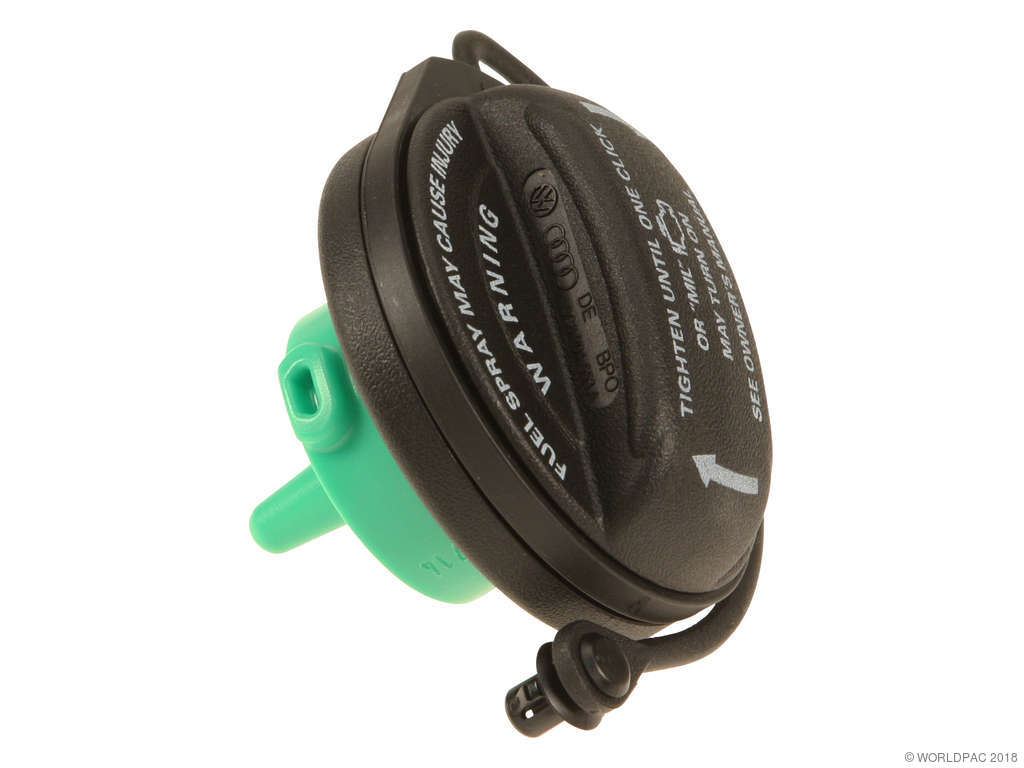
- Loose or Faulty Gas Cap 🔴 High Probability → Shop Fuel Tank Cap This is the most common cause for a P0455 code on any vehicle. The rubber seal on the cap can crack and degrade over time, preventing a proper seal. A temporary seal can even be made with a plastic bag to test this theory.
How to confirm: Ensure the gas cap is tightened until it clicks at least three times. Visually inspect the cap and its rubber O-ring for any cracks, brittleness, or damage.
Typical fix: Tighten or replace the gas cap.
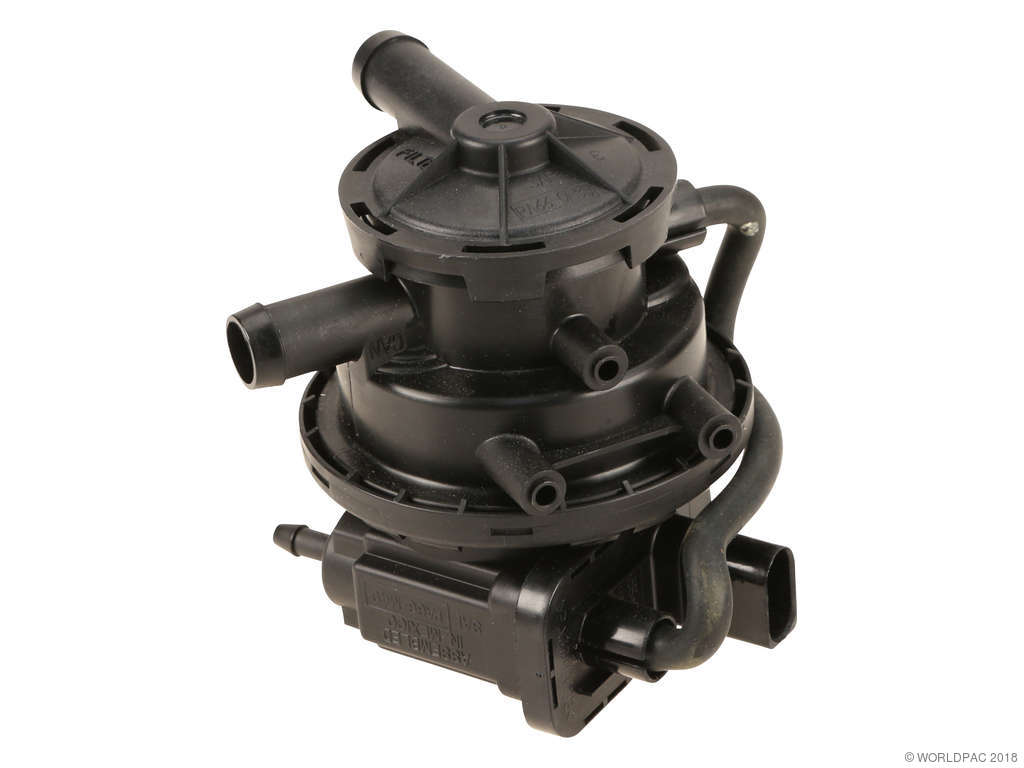
Est. part cost: $20-$50 - Faulty EVAP Purge Valve (N80 Valve) 🟡 Medium Probability → Shop Vapor Canister The purge valve (solenoid) is a common failure point on Volkswagen and Audi vehicles. It can get stuck open internally, creating a constant vacuum leak that the system interprets as a large leak, even with no external signs of failure.
How to confirm: With the engine running, disconnect the hose from the valve and check for suction; there should be none at idle. Alternatively, remove the valve and try to blow through it; if air passes, it's stuck open and faulty. A VAG-COM/VCDS scan tool can also run a basic settings test on Group 070 or 071 to check its function.
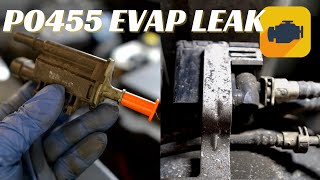
Typical fix: Replace the N80 purge valve. 🎬 See this walkthrough on diagnosing and replacing the N80 valve. On the Q7, it is located at the rear of the engine, often on the passenger side. Access can be tight, and removing the air intake assembly is often required to reach it.
Est. part cost: $30-$80 - Cracked or Disconnected EVAP Hoses 🟡 Medium Probability Rubber and plastic hoses become brittle over time due to heat and age, leading to cracks and leaks. Connections can also become loose, particularly where they connect to the purge valve or charcoal canister.
How to confirm: Visually inspect all accessible EVAP lines in the engine bay and around the charcoal canister for obvious signs of cracking, perishing, or disconnection. A smoke test is the most definitive way to find a hard-to-see leak.
Typical fix: Replace the damaged section of hose or reconnect a loose line.
Est. part cost: $10-$50 - Faulty Leak Detection Pump (LDP) or Vent Valve ⚪ Low Probability → Shop Evaporative Emissions System Leak Detection Pump The LDP and vent valve are located near the charcoal canister at the rear of the vehicle, under the right rear wheel housing liner, and are exposed to the elements, which can lead to failure. The vent valve can get stuck open, which the system will see as a large leak during its self-test.
How to confirm: This is more difficult to diagnose without a proper scan tool like VCDS that can command the valve to close. A smoke test will show smoke exiting the vent valve if it's stuck open. A VCDS output test can also check LDP operation with the key on, engine off.
Typical fix: Replace the faulty vent valve or LDP assembly.
Est. part cost: $100-$250
Rare But Worth Checking
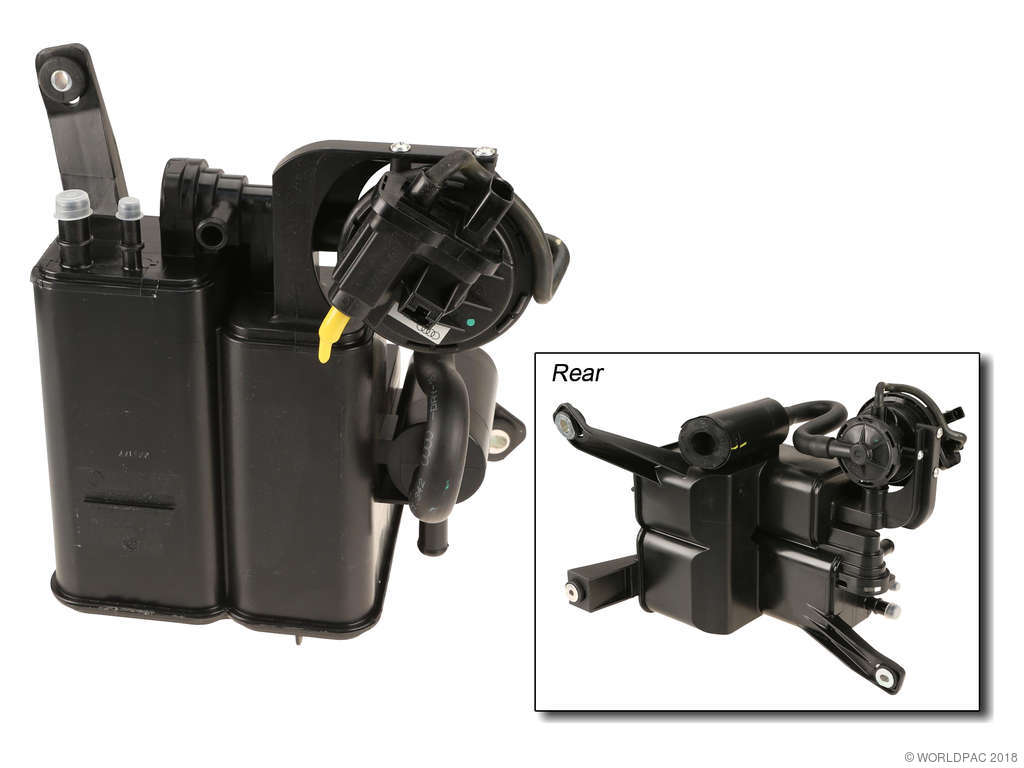
- Cracked Charcoal Canister: → Shop Vapor Canister Overfilling the fuel tank ('topping off') can saturate the charcoal canister with liquid fuel, causing it to fail. Physical damage from road debris can also crack the canister housing.
- Damaged Fuel Filler Neck: → Shop Fuel Filler Neck Corrosion or damage to the metal neck where the gas cap seals can prevent a proper seal, even with a new cap.
- Faulty Fuel Pump Flange: → Shop Fuel Pump There was a recall for some 2013-2017 Q7 models where the fuel pump flange could crack and leak fuel, which could also manifest as an EVAP system leak.
Diagnosis Steps
- Check the gas cap. Ensure it is present, tightened until it clicks, and the seal is not cracked or worn.
- Clear the code with an OBD-II scanner and drive the vehicle for a few days to see if the code returns. The EVAP monitor runs under specific conditions, so it may take time.
- If the code returns, perform a thorough visual inspection of all visible EVAP hoses and lines in the engine bay for cracks or disconnections.
- Locate the N80 purge valve in the engine bay (rear of the engine, may require removing air intake). Test it by checking for vacuum at idle or by removing it and attempting to blow through it. If it flows air, it is bad.
- Inspect the area around the charcoal canister (typically near the fuel tank, under the right rear wheel well) for any damaged hoses or a cracked canister.
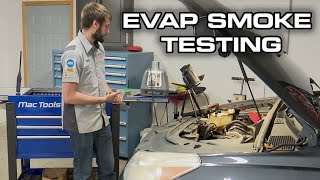
- If the leak source is still not found, the most effective next step is to have a smoke test performed. This involves injecting harmless, visible smoke into the EVAP system to quickly and accurately pinpoint the source of the leak. 🎬 Watch: How to perform a smoke test to find leaks.
Parts You'll Likely Need
- Fuel Cap
(OEM #7L8201550D (superseded by 7L8201550N))— This is the most frequent and simplest fix for a P0455 code. The seal degrades over time, causing a large leak.
Trusted brands: Audi (OEM), Stant, Blau
OEM price range: $40-$60
Aftermarket price range: $20-$40 - EVAP Purge Valve / Solenoid (N80)
(OEM #06E906517A)— A very common failure point on Audi/VW vehicles. It gets stuck open, causing a leak that triggers the P0455 code and can also cause rough idle or starting issues.
Trusted brands: Bosch, Pierburg, VNE
OEM price range: $60-$100
Aftermarket price range: $30-$60 - Leak Detection Pump (LDP)
(OEM #7L0906243A / 7L0906243D / 8K0906253N (part numbers vary by year/engine))— If the gas cap and purge valve are confirmed good, the LDP is the next component to inspect. It is responsible for pressurizing the system for the leak test and can fail due to its exposed location.
Trusted brands: Audi (OEM), APA/URO Parts, Standard Motor Products
OEM price range: $350-$410
Aftermarket price range: $50-$100
Related Codes That Often Appear With This One
- P0442 — This code for a 'Small EVAP Leak' can appear alongside P0455 if the system's leak detection parameters are met for both conditions at different times, or if a component is failing intermittently.
- P0441 — This code indicates 'Incorrect Purge Flow' and often points directly to a faulty N80 purge valve, which can also be a cause of P0455 if it's stuck open.
Platform-Specific Known Issues
- N80 Valve Location and Access: On many Q7 engines, particularly the 3.6L and 4.2L V8, the N80 purge valve is located at the very back of the engine on the passenger side. Forum members on AudiWorld note that while it's a simple part to replace, access is very tight. The consensus is that removing the air intake assembly makes the job significantly easier, turning a frustrating task into a more manageable one.
Mechanic-Grade Diagnostic Values
- N80 Purge Valve Coil Resistance — expected: 15 to 25 Ohms. Failure: A reading of 'OL' (open circuit) or a value significantly outside the specified range indicates a failed coil.
- N80 Purge Valve Connector Voltage (Key On) — expected: Pin 1 should have battery voltage (~12V). Pin 2 is the ground signal from the ECM.. Failure: No voltage at Pin 1 suggests a wiring or fuse issue upstream. The ECM provides a ground to Pin 2 to activate the valve.
- Leak Detection Pump (LDP) Connector Voltage (Key On) — expected: A forum user reported readings of T1 = 0.06V, T2 = 5.92V, T3 = 13.75V on their vehicle.. Failure: Significant deviation from these values could indicate a wiring or ECM issue, though these specific values are from a single user and may vary.
Scan Tool Commands That Help
- VCDS (VAG-COM): Engine (01) -> Basic Settings -> Group 070 / 071 — This command initiates the EVAP system leak test. The system will seal and the LDP will run to check for pressure loss. The display will show the test status, such as 'EVAP System OK' or 'Large Leak Detected', providing a definitive pass/fail result without waiting for a full drive cycle.
- VCDS (VAG-COM): Engine (01) -> Output Tests — This function allows you to individually cycle components like the N80 Purge Valve and the Leak Detection Pump (LDP) with the key on and engine off. You can listen for the component to click or activate, confirming the wiring and the component's electrical function are intact.
- VCDS (UDS Protocol, newer models): Basic Settings -> IDE00553 (Automatic test sequence) — On newer control modules using the UDS protocol, this command can be used to trigger the EVAP self-test sequence. It may be necessary for forcing readiness monitors to run after a repair.
Wiring & Ground Locations
- N80 Purge Valve — Located in the engine compartment, at the right rear of the engine, often tucked under the intake assembly.. This is a primary failure point. Knowing its location is critical for testing and replacement. The connector has two pins: one for battery voltage and one for a ground signal from the ECM.
- LDP (V144) and Charcoal Canister — Located together under the wheel housing liner in the right rear wheel housing, outside of the cabin.. This assembly is exposed to road debris and moisture, making it a potential source of leaks or electrical failure. The LDP is responsible for pressurizing the system for the test that triggers P0455.
- G609 / G608 — Ground connection points located in the plenum chamber (the area below the windshield).. The engine control module and other related electronics may use these grounds. A corroded or loose ground here can cause a variety of intermittent electrical issues, including faulty sensor readings or component activation.
- G685 — Ground connection on the right front long member (frame rail) in the engine compartment.. This is a key grounding point for components on the right side of the engine bay. Poor grounding can affect the operation of EVAP system components.
Real Owner Repair Stories
- Audi Revolution forum user (Audi A4 (B7 platform, similar EVAP components)) — P0455 code, slight sluggishness on light throttle.
❌ Tried (didn't work) Clearing the code., Re-tightening the gas cap.
✅ What actually fixed it The N80 purge valve was replaced. The user bench-tested the old valve by applying 5psi of air and found it leaked through easily. The new valve held the same pressure perfectly, confirming the old part had failed internally despite looking fine externally. - AudiWorld forum user (Audi (model not specified, but LDP system)) — Persistent CEL with code 009220 (related to LDP circuit) and P0455.
❌ Tried (didn't work) Replacing the gas cap., Replacing the N80 valve.
✅ What actually fixed it The user noted that the Check Engine Light would stay off for weeks or months after simply removing the hoses from the Leak Detection Pump (LDP), cleaning them, and reinstalling. This suggests the final root cause was likely an intermittent electrical connection at the LDP or a failing LDP unit itself, rather than a constant physical leak.
OEM Part Supersession History
06E906517→06E906517A— Revision to improve reliability and performance of the N80 purge valve.
Heads up: The newer 'A' revision is a direct replacement for the older part and should always be used.
Model Year Variations Within This Range
- 2007-2015: While the general EVAP system layout is consistent, the Q7 was available with multiple engines (3.6L FSI, 4.2L FSI, 3.0T TFSI, 3.0L TDI). The exact routing of EVAP hoses and access to components like the N80 valve may differ slightly between these engines. However, the primary components (N80, LDP, Canister) and their locations (N80 in engine bay, LDP/Canister at right rear wheel) remain the same.
Diagnostic Flowchart
Other Known Issues on This Vehicle
Issues unrelated to this code that are worth knowing about as an owner of this generation:
- Timing Chain Guide/Tensioner Failure (4.2L V8 & 3.2L V6) 🔴 High — Can occur as early as 60,000 miles, but more common between 80,000-150,000 miles. Characterized by a startup rattle. Lack of frequent oil changes with correct spec oil exacerbates the issue.
- Panoramic Sunroof Drain Leaks 🟠 Medium — Common across the generation. Clogged or broken drain tubes allow water to leak into the cabin, often affecting headliners, carpets, and electronics in the trunk area. A related recall (69P1) was issued for water potentially corroding the side head airbag inflator canister. (Ref: Recall 69P1)
- Carbon Buildup on Intake Valves (FSI/TFSI Engines) 🟠 Medium — A known issue with direct-injection engines (3.6L FSI, 4.2L FSI, 3.0T TFSI). Buildup can cause misfires, rough idle, and loss of power, typically requiring cleaning (walnut blasting) every 60,000-80,000 miles.
- MMI System Failures 🟡 Low — The Multi Media Interface (MMI) can suffer from black screens, random shutdowns, or non-responsive controls. Often caused by liquid spills on the center console control board or failures within the screen mechanism or fiber optic loop.
- Excessive Oil Consumption (3.0T & 4.2L V8) 🟠 Medium — Some engines, particularly the 3.0T and 4.2L TDI, are known for consuming oil. This can be due to PCV system issues or piston ring wear.
- Air Suspension Failures 🟠 Medium — For models equipped with adaptive air suspension, failures of the compressor or airbags are common as the vehicle ages, leading to a loss of ride height and a warning light on the dash.
Used vs. New Parts: Buying Guide for This Vehicle
When a used part is the smart pick: For non-electronic, non-wear items, a used part can be a good value. A used charcoal canister from a low-mileage donor vehicle is a viable option, provided it is inspected for cracks and is not saturated with fuel. Hoses and the fuel filler neck can also be sourced used if in excellent condition.
Donor-vehicle mileage cap: roughly under 80000 miles for the part to have meaningful remaining life.
What to inspect on the donor part:
- For charcoal canisters: Ensure there are no visible cracks on the plastic housing and no smell of raw fuel, which indicates saturation.
- For hoses: Squeeze the hose to ensure the rubber is still pliable and not hard or brittle. Check for any surface cracking.
- For filler necks: Inspect the sealing surface for rust, pitting, or deformation that would prevent a gas cap from sealing.
OEM-only on this vehicle (don't cheap out):
- Leak Detection Pump (LDP): This is a relatively complex electro-mechanical part. While aftermarket versions exist, OEM or the original supplier (e.g., Bosch) is recommended for reliability to avoid repeat diagnostics.
Aftermarket brands forum-validated for this vehicle:
- Bosch: Bosch is the original equipment manufacturer (OEM) for the N80 purge valve (06E906517A). Buying a Bosch-branded part is equivalent to getting a genuine part without the dealership markup.
Brands owners have reported issues with on this vehicle:
- Unbranded/white-box electronic parts: Avoid generic, no-name N80 valves and LDPs from online marketplaces. Forum discussions and mechanic experience frequently show these parts have high premature failure rates due to incorrect internal tolerances or materials.
Real Owner Stories
Aggregated from forums and TSBs cited above. Mileages and costs reflect what owners reported in those sources.
2009 Audi Q7 3.6L
Symptoms: P0455 code present; owner seeking tips for replacement due to tight access on the passenger side of the engine.
What fixed it: Replacement of the N80 Purge Valve.
Source hint: AudiWorld: In a 2018 thread, 'N80 Purge Valve for 09 Q7 3.6'
2007 Audi Q7
Symptoms: P0455 code; owner attempted to replace the solenoid.
What fixed it: Replaced the solenoid (N80 valve).
Source hint: owner_reports: 2007 Audi Q7 owner replaced the solenoid
Related OBD-II Codes
Frequently Asked Questions
Where is the N80 purge valve located on my Audi Q7 with the 3.6L or 4.2L engine?
Can I use a VAG-COM or VCDS tool to diagnose the P0455 code on my Q7?
Is there a recall for water leaks that might affect the electronics related to my EVAP system?
Where is the Leak Detection Pump (LDP) located on the Audi Q7?
How can I test if my N80 valve is the cause of the large leak code?
Helpful Videos

Used OEM Parts in Stock
New Aftermarket Parts Available


The information in this article is provided for general reference and educational purposes only. Vehicle specifications, procedures, and part compatibility can vary by production date, trim level, and region. Always consult your vehicle's factory service manual and verify part numbers before purchasing or performing repairs. Safety-critical components such as airbags, seat belts, and braking systems should be installed by a qualified professional.
- Audi Q7:
- 🧭 Diagnostic Flowchart
- 🎬 Helpful Videos
- 🛍️ Shop This Part
- What's Unique About the 2007-2015 Audi Q7
- Symptoms You May Notice
- Most Likely Causes
- Rare But Worth Checking
- Diagnosis Steps
- Parts You'll Likely Need
- Related Codes That Often Appear With This One
- Platform-Specific Known Issues
- Mechanic-Grade Diagnostic Values
- Scan Tool Commands That Help
- Wiring & Ground Locations
- Real Owner Repair Stories
- OEM Part Supersession History
- Model Year Variations Within This Range
- Other Known Issues on This Vehicle
- Used vs. New Parts: Buying Guide for This Vehicle
- Real Owner Stories
- 2009 Audi Q7 3.6L
- 2007 Audi Q7
- Related OBD-II Codes
- Frequently Asked Questions
- 🎟️ Get 5% Off