

P0455 on 2005-2013 BMW 3-Series: EVAP Large Leak Causes and Fixes
For a 2005-2013 BMW 3-Series, a P0455 code is most often caused by a loose or faulty gas cap (part #16117222391). If the cap is secure, the next most likely culprit is a failed DMTL pump (Bosch #0261222018 / BMW #16137193479). A new gas cap costs around $30, while a DMTL pump replacement can range from $90 for an OEM-equivalent part to over $200, with DIY difficulty being low for both.
- Always check your gas cap first for a P0455 code. Make sure it's tight; if it's old, replace it before attempting more complex repairs.
- If the gas cap isn't the issue, the next most likely culprit on a 2005-2013 3-Series is the DMTL pump, located near the charcoal canister in the rear driver's side wheel well area.
- A smoke test is the most reliable method to pinpoint the exact location of a large EVAP leak if it's not the gas cap.
- This code does not affect vehicle safety or performance, but it will cause an automatic failure on an emissions test.
What's Unique About the 2005-2013 BMW 3-Series
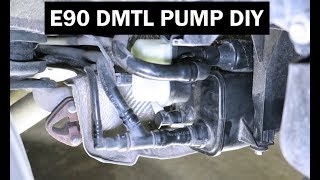
On this generation of BMWs (E9x, early F30), the EVAP system uses a specific component called a Diagnosis Module Tank Leakage (DMTL) pump to pressurize the system for leak testing. While many cars use engine vacuum for this test, BMW's use of the DMTL pump makes it a very common failure point 🎬 Watch: Learn how the BMW DMTL system works and fails. specific to the brand that leads to a P0455 code. Owners and technicians frequently pinpoint either the gas cap or this specific pump as the source of the large leak.
Generation note: This range primarily covers the E90, E91, E92, and E93 generation (2005-2013). It also includes the first two years of the F30 sedan generation (2012-2013). For the P0455 code, the primary causes, particularly the gas cap and DMTL pump, are common across both generations within this year range, as they share similar EVAP system designs and components.
Symptoms You May Notice
- Check Engine Light is on
- A faint smell of fuel, especially around the gas cap area or rear of the car.
- A whooshing sound after filling the gas tank if the cap is not sealed properly
- A 'Check Fuel Cap' warning message may appear on the instrument cluster before the Check Engine Light illuminates.
- Vehicle will fail an emissions inspection.
- Replacing the purge valve when the gas cap or DMTL pump is the actual issue. While the purge valve can fail, the gas cap and DMTL pump are more probable first points of failure for a large leak code on this platform.
Most Likely Causes
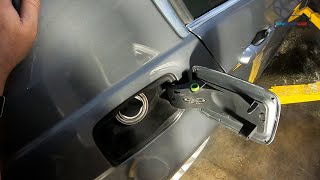
- Loose or Faulty Gas Cap 🔴 High Probability → Shop Fuel Tank Cap The gas cap is used frequently and its rubber O-ring can wear out, crack, or become hard over time, preventing a proper seal. This is the most common and inexpensive cause for a P0455 code on any vehicle, including this 3-Series.
How to confirm: First, ensure the gas cap is tightened until it clicks. If the light returns, remove the cap and inspect the rubber seal for any visible cracks, tearing, or deformities. A hissing sound from the cap area after a drive cycle test can also indicate a leak. Many owners recommend replacing the cap as a first step due to its low cost and high probability of being the culprit.
Typical fix: Replace the gas cap. It's an inexpensive and simple first step in diagnosis. Ensure you use a genuine OEM or high-quality equivalent, as poorly made aftermarket caps can also fail to seal.
Est. part cost: $20-$40 - Failed DMTL Pump (Leak Diagnosis Pump) 🔴 High Probability → Shop Evaporative Emissions System Leak Detection Pump The DMTL pump is a known failure point on many BMW models, including the E9x and early F30 3-Series. The pump contains a small motor that can wear out or the electronics can fail, preventing the EVAP system from pressurizing correctly for its self-test.
How to confirm: The DMTL pump is located in the rear passenger side of the car, attached to the charcoal canister, accessible by removing the rear wheel and fender liner or an under-bumper panel. Diagnosis often requires a BMW-specific scan tool like INPA or ISTA to run the EVAP leak test. A mechanic can also perform a smoke test to see if smoke leaks from the pump itself. Sometimes, related BMW-specific codes like P1447 or 2A17/2B3A will accompany P0455, pointing directly to the pump.
Typical fix: Replace the DMTL pump. This is a common DIY repair detailed in many online forums and videos. It involves raising the rear of the vehicle, removing the passenger rear wheel and fender liner, disconnecting three hoses and one electrical connector, and swapping the unit.
Est. part cost: $90-$220 - Cracked or Disconnected EVAP Hoses 🟡 Medium Probability The plastic and rubber hoses in the EVAP system become brittle over time due to heat and age, leading to cracks. This is especially true for the lines near the engine, like the purge valve hose, and the lines around the charcoal canister in the rear.
How to confirm: A visual inspection of all accessible EVAP lines from the engine bay to the rear charcoal canister may reveal obvious cracks or disconnections. A smoke test is the most effective way to find a leak in a hose that isn't easily visible. A common point of failure is the plastic line connecting to the purge valve in the engine bay, which can become brittle and break when handled.
Typical fix: Replace the cracked or broken section of hose. Some hoses are pre-formed and must be replaced with the specific BMW part.
Est. part cost: $30-$100
Rare But Worth Checking
- Cracked Charcoal Canister: → Shop Vapor Canister The plastic housing of the charcoal canister can develop cracks over time, creating a large leak. This is less common than a bad pump or cap but is a definite possibility. A smoke test is the best way to confirm a leak from the canister body.
- Faulty Fuel Tank Vent Valve / Purge Valve: → Shop Vapor Canister The purge valve (located in the engine bay) can get stuck open, creating a permanent leak. This often throws other codes like P0441 (Incorrect Purge Flow) along with P0455.
- Leaking Fuel Pump or Level Sensor Seal: → Shop Fuel Pump The seals for the fuel pump and sending unit are located under the rear seat cushion. If these seals fail, they can create a large EVAP leak and a strong fuel smell inside the cabin. This is a known issue that requires removing the rear seat to inspect the top of the fuel tank.
Diagnosis Steps
- Check the Gas Cap: Ensure it is tight and clicks. If it's an old cap, consider replacing it as the first, most affordable step. Inspect the seal for cracks.
- Scan for Other Codes: Use an OBD-II scanner to check for any other pending or stored codes that could point to a specific component, such as the purge valve (P0441) or DMTL pump (P1447, 2A17, 2B3A).
- Visual Inspection: Inspect the visible EVAP hoses in the engine bay near the purge valve and under the rear of the car near the charcoal canister for any obvious cracks, damage, or disconnections.
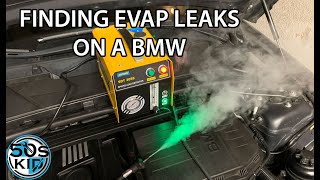
- Perform a Smoke Test: This is the 🎬 Watch: A complete guide to diagnosing EVAP leaks on the E90. most effective way to find the source of the leak. A common DIY and professional method is to disconnect the EVAP line from the purge valve in the engine bay and introduce smoke there, as it's easily accessible. Watch for smoke escaping from the gas cap, DMTL pump, charcoal canister, or any connecting hoses.
- Test the DMTL Pump: If you have a capable scan tool (INPA/ISTA), you can command the DMTL pump to run and test the system. If the pump doesn't run or the system fails the test immediately, and a smoke test shows no other leaks, the pump is likely faulty.
- Inspect Under-Seat Components: If a fuel smell is present inside the car, remove the rear seat cushion and inspect the seals for the fuel pump and fuel level sending unit for any signs of leaks or deterioration.
Parts You'll Likely Need
- Fuel Tank Cap
(OEM #16117222391)— This is the most common failure point for a P0455 code due to the seal wearing out over time. It is the easiest and cheapest part to replace first.
Trusted brands: Genuine BMW, Blau
OEM price range: $30-$40
Aftermarket price range: $20-$30 - EVAP Leak Detection Pump (DMTL)
(OEM #16137193479)— This pump is a known high-failure item on BMWs of this era and is the second most likely cause of a P0455 code after the gas cap. The Bosch OEM-equivalent is a popular, more affordable choice.
Trusted brands: Bosch (0261222018), Genuine BMW
OEM price range: $180-$270
Aftermarket price range: $90-$150
Related Codes That Often Appear With This One
- P0456 — If a P0455 (large leak) is present with a P0456 (small leak), it could indicate multiple leak points or an intermittent issue with a component like the DMTL pump or vent valve.
- P1447 — This is a BMW-specific code for 'DMTL Pump Current Too High,' which points directly to a failing DMTL pump as the cause of the EVAP system fault.
- 2B3A — This is another BMW-specific fault code that translates to 'DMTL, system fault'. It strongly indicates a problem with the DMTL pump itself or its immediate connections, making it a valuable clue when seen with P0455.
- 2A17 — This is a BMW-specific fault code for 'DMTL, system fault,' functionally identical to 2B3A. It points to a failure in the DMTL pump assembly and is a very common companion code to P0455.
Technical Service Bulletins (TSBs) & Recalls
- SI B 16 01 07: Details the official BMW procedure for connecting a smoke machine to test the evaporative system on vehicles equipped with a DMTL pump.
Platform-Specific Known Issues
- DIY DMTL Pump Replacement Experience: → Shop Evaporative Emissions System Leak Detection Pump A user on the E90post forum described getting an error for the DMTL pump, clearing it, and having it return. They confirmed the fix is to replace the pump, which is located behind the rear passenger-side bumper and accessible by removing a panel. The process is described as straightforward and not requiring removal of the entire charcoal canister.
- YouTube DIY Guides Confirm Ease of Repair: Multiple YouTube videos provide step-by-step guides for replacing the DMTL pump on an E90/E92. The process typically takes around 30 minutes and involves removing the rear passenger wheel and liner, unclipping three hoses and one electrical connector, and swapping the pump which is attached to the charcoal canister.
Mechanic-Grade Diagnostic Values
- Fuel Tank Vent Valve (Purge Valve) Solenoid Resistance — expected: 27-30 Ohms. Some sources state a wider range of 35-45 Ohms.. Failure: Infinite resistance (open circuit) or zero resistance (short circuit) indicates a failed solenoid.
- DMTL Pump Connector (X17140) Voltage — expected: 12V+ at Pin 4 (Red/White wire) when the DME main relay (KL87) is active (ignition on or shortly after ignition off).. Failure: No voltage at Pin 4 suggests a wiring or fuse (F17) issue upstream of the pump.
Hidden / Shadow Codes Worth Checking
- 2A17: DMTL System Fault. This is a common BMW-specific code that directly points to a failure of the DMTL pump assembly. (see via BMW-specific diagnostic software like INPA, ISTA, or capable aftermarket scanners (e.g., Launch, Autel).)
- 2A18: DMTL Pump Heater Circuit Open. This code (equivalent to P240A) specifically indicates a problem with the heater element within the DMTL pump assembly or its wiring. (see via BMW-specific diagnostic software like INPA or ISTA.)
Scan Tool Commands That Help
- ISTA/INPA: DMTL System Test (or similar name under DME > System Tests) — This command manually activates the DMTL pump to pressurize the fuel system, allowing a technician to confirm if the pump motor is functional and if the system can hold pressure, which is crucial for diagnosing a P0455 without a smoke machine.
Wiring & Ground Locations
- X17140 — The 4-pin electrical connector at the DMTL pump, located behind the rear passenger-side wheel liner.. This is the primary connection point for testing power and ground signals to the DMTL pump. Pin 4 is power, Pin 1 is pump motor ground, Pin 2 is heater ground, and Pin 3 is valve ground.
- Engine Ground Strap — One primary engine ground strap connects the driver's side engine mount bracket to the chassis. Another is often found on the passenger side from the exhaust manifold to the strut tower.. While not a direct cause of P0455, a corroded or loose main engine ground can cause a myriad of electrical issues and seemingly unrelated fault codes. Verifying main grounds is a good practice when diagnosing any electrical fault.
Real Owner Repair Stories
- BMW Repair Guide YouTube Channel (2011 BMW 335i (E90)) — Service Engine Soon light with EVAP leak fault codes.
❌ Tried (didn't work) Gas cap was checked and confirmed to be good., Smoke test introduced at the engine bay purge valve did not initially show a leak.
✅ What actually fixed it After removing the rear seat, smoke was seen pouring out from the fuel level sensor's sealing O-ring on the top of the gas tank. Replacing the inexpensive O-ring resolved the large leak. - e90post forum user (2008 BMW 328i (E90) with N51 SULEV engine) — Check Engine Light with P0455 and other EVAP codes.
❌ Tried (didn't work) Initial diagnosis pointed to common EVAP components.
✅ What actually fixed it The dealership replaced the entire fuel tank and fuel pump assembly under the SULEV 15-year/150,000-mile emissions warranty, which covers the sealed fuel system components. The owner only paid the initial diagnostic fee, which was waived upon warranty confirmation.
"I Checked Everything" — The Actual Cause
- In a documented case, a smoke test performed from the engine bay did not immediately reveal a leak. However, upon removing the rear seat base, the leak became obvious as smoke was billowing from the fuel level sensor's seal on top of the fuel tank. This is missed because the smoke takes time to fill the cabin and may not be visible from underneath the car.
OEM Part Supersession History
16136752551→16136764191, then 16137193479— Component revision and improvement by the manufacturer (Bosch/BMW).
Model Year Variations Within This Range
- All years with N51 engine: Vehicles equipped with the N51 engine are designated as SULEV (Super Ultra Low Emission Vehicle) and have an extended emissions warranty of 15 years or 150,000 miles in certain states. This warranty often covers the entire fuel system, including the fuel tank, fuel pump, DMTL pump, and charcoal canister. Owners with a P0455 on an N51-equipped car should check with a BMW dealer for potential warranty coverage before paying for repairs.
- 2009-2013 (LCI models): The Life Cycle Impulse (LCI) refresh (starting 2009 for sedans) primarily involved cosmetic updates and engine changes (like the N54 to N55 transition). For the EVAP system, the core components like the DMTL pump and charcoal canister remained largely the same, and the causes for P0455 are consistent between pre-LCI and LCI models within this vehicle range.
Diagnostic Flowchart
Other Known Issues on This Vehicle
Issues unrelated to this code that are worth knowing about as an owner of this generation:
- Electric Water Pump and Thermostat Failure 🔴 High — Very common failure, typically between 60,000 and 100,000 miles. Failure can be sudden and lead to overheating.
- Oil Filter Housing Gasket (OFHG) Leak 🔴 High — Extremely common leak on all N-series inline-six engines. The gasket hardens and leaks oil, often onto the serpentine belt, which can cause belt failure and severe engine damage.
- Valve Cover and Gasket Leak 🟠 Medium — Common oil leak due to gasket degradation or the plastic valve cover itself cracking from heat cycles. Can cause oil to leak onto the exhaust manifold (burning smell) or into spark plug wells (misfires).
- N54: High-Pressure Fuel Pump (HPFP) Failure 🔴 High → Shop Fuel Pump — A notorious issue on the twin-turbo N54 engine, leading to long cranks, limp mode, and stalling. So common that BMW issued an extended warranty (10 years/120,000 miles). (Ref: SI B13 03 09 (Warranty Extension))
- N54: Turbocharger Wastegate Rattle / Failure 🔴 High → Shop Turbocharger — Very common on the N54 engine. Wear in the wastegate actuator rod causes a distinct rattling noise, especially on deceleration, and can lead to low boost fault codes. Often requires turbocharger replacement. (Ref: Warranty was extended for this issue on many vehicles.)
- N52: VANOS Solenoid Failure 🟡 Low — Common around 70,000+ miles. Clogged or failed solenoids cause rough idle, hesitation, and VANOS-related fault codes. Relatively easy and inexpensive to clean or replace.
- N52: Hydraulic Lifter Ticking ('HVA Tick') 🟡 Low — Common on pre-2009 N52 engines, especially those used for short trips. Causes a ticking noise from the top of the engine, particularly when cold. BMW later updated the cylinder head design to resolve it.
Used vs. New Parts: Buying Guide for This Vehicle
When a used part is the smart pick: Used parts are generally not recommended for fixing a P0455 code on this vehicle. The primary culprits are rubber seals (gas cap), plastic components exposed to fuel vapor (canister, hoses), and electro-mechanical pumps (DMTL). These parts degrade with age and heat cycles, so a used part from a donor vehicle is likely to have a very limited remaining lifespan and may not even fix the problem.
Donor-vehicle mileage cap: roughly under 50000 miles for the part to have meaningful remaining life.
What to inspect on the donor part:
- For a DMTL pump, visually inspect the plastic housing for any cracks or heat stress.
- Check that the electrical connector pins are not corroded or bent.
- For hoses, ensure they are still pliable and not hardened or brittle.
- Avoid parts from vehicles that show significant underbody corrosion, as this accelerates the degradation of plastic and rubber components.
OEM-only on this vehicle (don't cheap out):
- Gas Cap: While aftermarket caps exist, many owners report sealing issues. Given the low cost of an OEM cap, it is the most reliable choice to eliminate it as a variable.
- DMTL Pump: The OEM supplier is Bosch. Buying a Bosch-branded pump is identical to the Genuine BMW part but often significantly cheaper. Avoid no-name brands as their internal motors and seals are of questionable quality.
Aftermarket brands forum-validated for this vehicle:
- Bosch (for the DMTL Pump)
Brands owners have reported issues with on this vehicle:
- Unbranded or 'white-box' gas caps and DMTL pumps from online marketplaces are frequently reported to fail quickly or not seal properly out of the box.
Real Owner Stories
Aggregated from forums and TSBs cited above. Mileages and costs reflect what owners reported in those sources.
BMW E90 3-Series
Symptoms: The user described getting an error for the DMTL pump, clearing it, and having the code return.
What fixed it: Replaced the DMTL pump located behind the rear passenger-side bumper. The owner noted the process was straightforward and did not require removing the entire charcoal canister.
Source hint: e90post.com: 'Please Help: Need DIY for DMTL replacement.'
BMW E90/E92 3-Series
Symptoms: Check Engine Light on with P0455; confirmed through video guides that the DMTL pump is a common failure point.
What fixed it: Replaced the DMTL pump by removing the rear passenger wheel and liner, then unclipping three hoses and one electrical connector.
Source hint: YouTube DIY Guides Confirm Ease of Repair
Related OBD-II Codes
Frequently Asked Questions
Where is the DMTL pump located on my E9x 3-Series?
Is there an official BMW procedure for testing the EVAP system for a P0455 code?
Which BMW-specific scan tools should I use to diagnose the DMTL pump?
Can I just replace the gas cap to fix P0455 on my 3-Series?
What are the common BMW-specific codes that appear alongside P0455?
Why does my 3-Series smell like fuel inside the cabin?
Helpful Videos

The information in this article is provided for general reference and educational purposes only. Vehicle specifications, procedures, and part compatibility can vary by production date, trim level, and region. Always consult your vehicle's factory service manual and verify part numbers before purchasing or performing repairs. Safety-critical components such as airbags, seat belts, and braking systems should be installed by a qualified professional.
- BMW 3-Series:
- 🧭 Diagnostic Flowchart
- 🎬 Helpful Videos
- What's Unique About the 2005-2013 BMW 3-Series
- Symptoms You May Notice
- Most Likely Causes
- Rare But Worth Checking
- Diagnosis Steps
- Parts You'll Likely Need
- Related Codes That Often Appear With This One
- Technical Service Bulletins (TSBs) & Recalls
- Platform-Specific Known Issues
- Mechanic-Grade Diagnostic Values
- Hidden / Shadow Codes Worth Checking
- Scan Tool Commands That Help
- Wiring & Ground Locations
- Real Owner Repair Stories
- "I Checked Everything" — The Actual Cause
- OEM Part Supersession History
- Model Year Variations Within This Range
- Other Known Issues on This Vehicle
- Used vs. New Parts: Buying Guide for This Vehicle
- Real Owner Stories
- BMW E90 3-Series
- BMW E90/E92 3-Series
- Related OBD-II Codes
- Frequently Asked Questions
- 🎟️ Get 5% Off