

P0455 on 2004-2010 BMW X3: EVAP Large Leak Causes and Fixes
For a 2004-2010 BMW X3, a P0455 code is most often caused by a loose or worn-out gas cap. If that's not the issue, the next most likely culprit is a failed DMTL pump located near the rear passenger wheel. A new gas cap is about $25, while a replacement Bosch DMTL pump can cost between $85 and $150.
- Start with the simplest fix: check that your gas cap is tight. If it's old, replace it. This solves the problem a majority of the time.
- If the gas cap isn't the issue, the DMTL pump (located behind the rear passenger wheel well liner) is the next most likely part to have failed.
- A smoke test is the fastest and most accurate way to diagnose the exact location of the leak if it's not the gas cap.
- You can continue to drive the vehicle with a P0455 code, but you will not pass an emissions inspection until it is repaired.
What's Unique About the 2004-2010 BMW X3
The 2004-2010 BMW X3 (E83 generation) uses a specific component called a Diagnostic Module for Tank Leakage (DMTL) pump to test the EVAP system for leaks. Unlike some other manufacturers' systems that use vacuum, the DMTL pump pressurizes the system with a small amount of air to check for pressure loss. This DMTL pump itself is a known failure point on BMWs of this era, with the internal motor failing or the plastic housing developing cracks from exposure to road salt and debris. It is a frequent cause of EVAP leak codes like P0455, second only to the gas cap.
Symptoms You May Notice
- Check Engine Light is on
- A faint smell of fuel, especially around the rear of the vehicle or after refueling
- A gas cap that doesn't click when tightened or feels loose
- A 'Check Gas Cap' message on the instrument cluster (on some models)
- Replacing the charcoal canister when the DMTL pump is the actual issue. The pump is often attached to the canister but is a separate, and more common, failure point.
- Immediately assuming a complex leak exists before properly checking or replacing the gas cap. A faulty gas cap accounts for a very high percentage of P0455 codes.
- Replacing parts without performing a smoke test. A smoke test is the most definitive way to locate the physical source of a leak and prevent throwing unnecessary parts at the problem.
Most Likely Causes
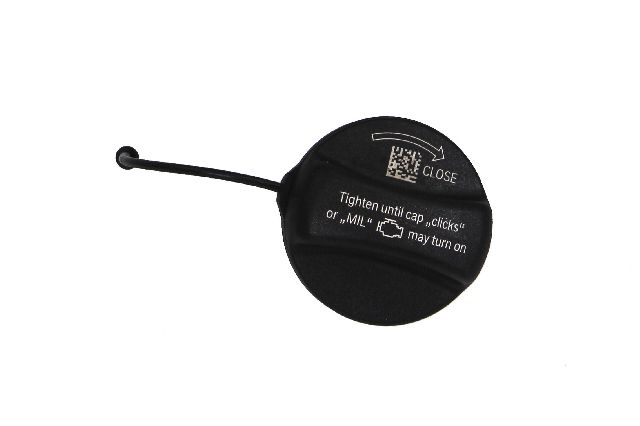
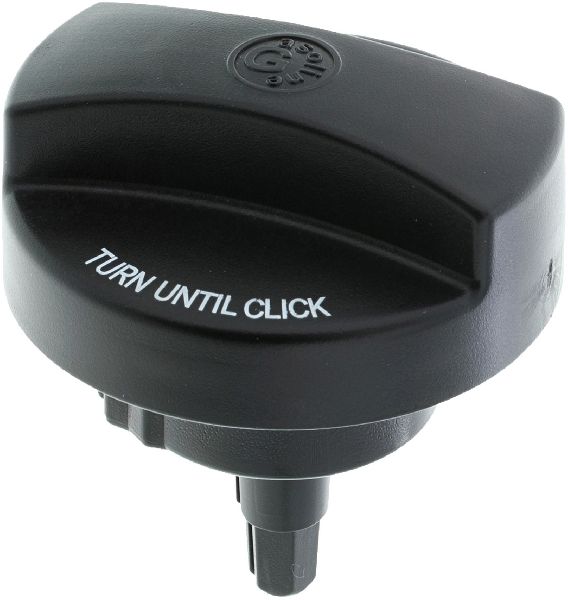
- Loose, Damaged, or Incorrect Gas Cap 🔴 High Probability → Shop Fuel Tank Cap The gas cap seal is a rubber component that degrades over time with every fill-up. It is the most frequently used part of the EVAP system and is exposed to the elements, causing the seal to crack or harden. This accounts for over 30% of P0455 cases.
How to confirm: Ensure the cap is tightened until it clicks several times. Inspect the rubber O-ring on the cap for any cracks, tearing, or signs of hardening. A broken tether is a good sign the cap is old and should be replaced.
Typical fix: Replace the gas cap. This is an inexpensive and easy first step. Use a genuine BMW or OEM-spec cap for best results.
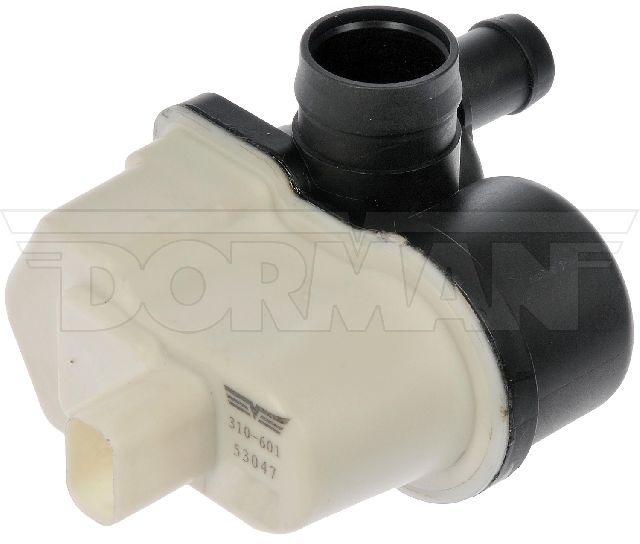
Est. part cost: $20-$40 - Failed DMTL (Leak Detection) Pump 🟡 Medium Probability → Shop Evaporative Emissions System Leak Detection Pump The DMTL pump is a small electric motor and pump assembly that lives under the car. Exposure to road salt, moisture, and dirt can lead to electrical failure or cracks in the plastic housing over time. It's a very common failure item on BMWs of this generation.
How to confirm: The DMTL pump is located behind the passenger-side rear wheel well liner, mounted to the charcoal canister. A visual inspection may reveal cracks in the pump housing. A definitive diagnosis often requires a BMW-specific scan tool to run the EVAP leak test or a smoke test to see if the pump itself is leaking.
Typical fix: Replace the DMTL pump assembly. It is typically mounted to the charcoal canister with three screws.
Est. part cost: $85-$150 - Stuck-Open or Leaking EVAP Purge Valve ⚪ Low Probability → Shop Vapor Canister The purge valve (called the Tankentlüftungsventil or TEV by BMW) can get stuck open due to carbon buildup or age, creating a constant leak path from the EVAP system to the intake manifold.
How to confirm: The purge valve is located in the engine bay, under the intake manifold cover. You can test it by removing it and trying to blow through it; when unpowered, it should be closed and not allow air to pass. A smoke test will also quickly show a leak from a stuck-open valve.
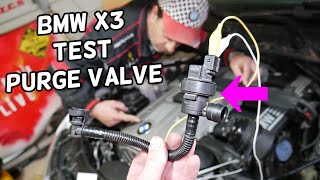
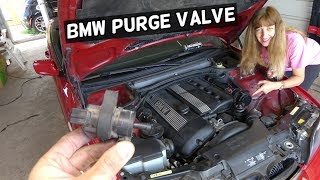
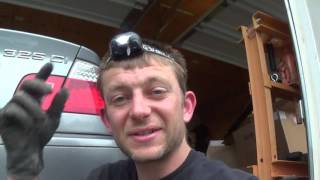
Typical fix: Replace the EVAP purge valve. 🎬 See this guide for removing and replacing the purge valve.
Est. part cost: $40-$90 - Cracked or Disconnected EVAP Hoses ⚪ Low Probability The plastic and rubber hoses in the EVAP system become brittle with age and heat cycles, leading to cracks, especially at connection points near the engine or the DMTL pump.
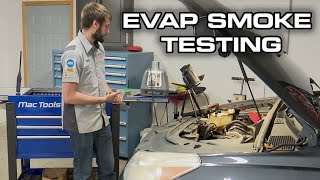
How to confirm: A visual inspection may reveal obvious cracks or disconnected lines. However, the most effective way to find a hose leak is with a smoke test, which will force smoke through the system and make any leaks visible. 🎬 Watch: How to perform a smoke test to find leaks.
Typical fix: Replace the specific section of cracked hose.
Est. part cost: $15-$50
Rare But Worth Checking
- Cracked Charcoal Canister: → Shop Vapor Canister The canister itself can develop a hairline crack from age or road debris impact. This is usually found during a smoke test when smoke is seen emitting from the body of the canister itself.
- Leaking Fuel Tank Filler Neck: → Shop Fuel Tank Corrosion or rust can develop on the metal filler neck where the gas cap seals, preventing a proper seal even with a new cap. Clean the sealing surface thoroughly when inspecting.
- Leaking Fuel Pump or Level Sensor Gasket: → Shop Fuel Pump The gaskets for the fuel pump and level sensor assemblies, located under the rear seat, can dry out and leak vapor, triggering a P0455 code. This is often accompanied by a strong fuel smell inside the cabin.
Diagnosis Steps
- Check the Gas Cap: Remove, inspect the seal for damage, and reinstall it, ensuring it clicks 3-4 times. Clear the code with a scanner and drive for a few days to see if it returns. If the seal is visibly bad, replace the cap with an OEM part.
- Visual Inspection: Look for any obviously cracked, disconnected, or damaged EVAP hoses in the engine bay near the purge valve and around the charcoal canister/DMTL pump area at the rear of the vehicle.
- Perform a Smoke Test: This is the most effective way to find the source of a large leak. Introduce smoke into the system via the purge valve's service port. Watch for smoke coming from the gas cap, DMTL pump, hoses, purge valve, or charcoal canister.
- Test the Purge Valve: Disconnect the valve. With the engine off, it should be closed. Try to blow through it. If air passes, the valve is stuck open and needs to be replaced.
- Inspect the DMTL Pump: During a smoke test, check the DMTL pump housing and its connections for any signs of smoke. If you have a capable scan tool (like ISTA/INPA), you can command the DMTL pump to run and listen for its operation.
- Inspect Filler Neck: If the gas cap is new and the code persists, carefully inspect the top of the fuel filler neck for rust or damage that could prevent a good seal.
Parts You'll Likely Need
- Gas Cap
(OEM #16117222391)— This is the most common cause of a P0455 code due to the seal wearing out over time.
Trusted brands: Genuine BMW, Blau, CRP
OEM price range: $30-$40
Aftermarket price range: $20-$30 - EVAP Leak Detection Pump (DMTL)
(OEM #16137193479 (Bosch P/N: 0261222018))— This pump is the second most common failure point on the E83 X3 for EVAP leaks. The internal motor fails or the plastic housing cracks.
Trusted brands: Bosch (OEM), Genuine BMW
OEM price range: $180-$220
Aftermarket price range: $85-$150 - EVAP Purge Valve
(OEM #13907572236)— Can become stuck open, creating a permanent leak in the EVAP system. Often throws P0441 as well.
Trusted brands: Bosch (OEM), Genuine BMW
OEM price range: $70-$90
Aftermarket price range: $40-$60
Related Codes That Often Appear With This One
- P0442 (EVAP System Small Leak Detected) - May appear before or alongside P0455 as a leak worsens.
- P0441 (EVAP System Incorrect Purge Flow) - Often points towards a faulty purge valve.
- 2A17 (DMTL, system fault) - A BMW-specific code indicating an electrical failure of the DMTL pump itself.
Platform-Specific Known Issues
- Owner Experience: The Multi-Step P0455 Fix: A common story on forums like Bimmerfest and Xoutpost involves a sequence of repairs. An owner gets P0455, replaces the gas cap, and the light returns a week later. They then perform a smoke test which reveals a cracked DMTL pump housing. After replacing the DMTL pump, the code is finally resolved. This highlights the importance of moving past the gas cap to a smoke test if the code returns.
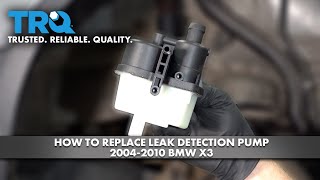
- DIY Note: Accessing the DMTL Pump: → Shop Evaporative Emissions System Leak Detection Pump Owners confirm the DMTL pump is located behind the passenger side (right rear) wheel well liner. Access requires jacking the vehicle, removing the wheel, and removing the plastic liner. 🎬 See this walkthrough on how to replace the DMTL pump. The pump itself is held to the charcoal canister by three Phillips or Torx screws and can be replaced independently of the more expensive canister.
Mechanic-Grade Diagnostic Values
- EVAP Purge Valve (TEV) Solenoid Coil Resistance — expected: Approximately 28-32 Ohms. Failure: A significantly higher reading or an open circuit (infinite resistance) indicates a bad coil. A reading within spec does not guarantee the valve isn't mechanically stuck.
- DMTL Pump Motor Current Draw — expected: The DME monitors the pump's current draw during the test cycle. It first measures a reference current by pumping through a tiny, known-size orifice (0.5mm). It then pressurizes the tank and expects the current to rise and stabilize above that reference point.. Failure: If the current draw does not increase as expected, it indicates a leak in the system (P0455). If the pump motor has an internal electrical fault (e.g., short), it can cause a high current draw, triggering a specific DMTL fault code like 2A17.
Hidden / Shadow Codes Worth Checking
- 2A17 (DME: DMTL, system fault): This is a BMW-specific code indicating a fault within the DMTL pump module itself, often an electrical failure of the pump motor or its internal switch. It frequently accompanies a generic P0455 code. (see via BMW-specific scan tools like ISTA, INPA, or higher-end aftermarket scanners (Foxwell, Autel).)
- P1447 (DMTL module failure): Another manufacturer-specific code pointing directly to a DMTL pump failure. This was reported by an owner using a generic OBD-II scanner with enhanced code reading capabilities. (see via Some generic OBD-II scanners with manufacturer-specific code libraries.)
- 27CC / 27CD: These are older BMW-specific fault codes reported on a 2004 model for 'DMTL - leakage' and 'DMTL module failure' respectively, pointing to the same issues as P0455 and 2A17. (see via BMW-specific scan tools (ISTA/INPA).)
Scan Tool Commands That Help
- ISTA/INPA: EVAP System Test Plan / Leak Test Activation — This is the factory-approved method to command the entire EVAP leak test sequence. The software will command the DMTL pump to run, measure the reference leak, pressurize the system, and report back whether the system is sealed or has a small/large leak. This is the most definitive way to confirm the system's integrity after a repair, without waiting for the car's own passive test.
- ISTA/INPA or capable bidirectional scanner: Activate Purge Valve (TEV) — This command allows you to manually open and close the purge valve while the engine is off. You can use this to check for an audible click from the valve and to seal the system for a smoke test without having to physically disconnect and plug lines.
Wiring & Ground Locations
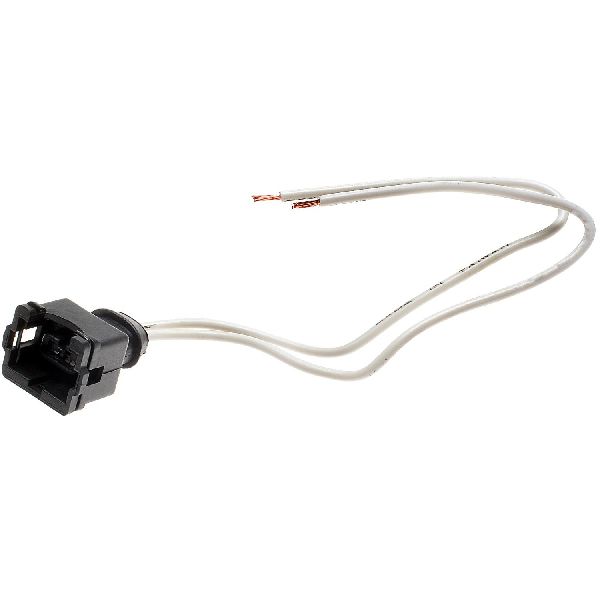
- DMTL Pump Connector (X1714 on some models) — On the DMTL pump body, accessed by removing the passenger side rear wheel and wheel well liner.. This 4-pin connector provides power and ground to the DMTL pump. Corrosion here can cause intermittent power and trigger DMTL fault codes. Pin 4 (Red/White wire) should have 12V+ with the ignition on. The other pins are for the pump motor, changeover valve, and heater, which are ground-switched by the DME.
- Chassis Ground Points — Multiple ground straps connect the engine/drivetrain to the chassis. A key one is often located on the passenger side of the engine bay.. While not a direct cause of P0455, poor overall vehicle grounding can cause a wide range of bizarre electrical issues and fault codes. Ensuring the main engine-to-chassis ground straps are clean and tight is a crucial preventative maintenance step on aging BMWs.
Real Owner Repair Stories
- Car Talk Community Forum User (2004 BMW 325i (E46, similar system)) — Recurring Service Engine Soon light, codes 27CC (DMTL - leakage) and 27CD (DMTL module failure).
❌ Tried (didn't work) Dealer replaced the DMTL pump 4 times under warranty., Smoke test performed by dealer, which found no leaks., Gas cap checked., Replacing an 'arresting valve'.
✅ What actually fixed it The story highlights a pattern of repeated DMTL pump failure, suggesting an underlying cause was being missed. The user suspected fuel was getting into the pump, possibly from a saturated charcoal canister due to overfilling the fuel tank, which can damage the pump motor over time. The final fix was not posted, but the story is a classic example of a deeper issue causing repeat component failure. - Bimmerpost Forum User 'mgh024' (2008 BMW 328i (E90, similar system)) — Recurring 2A17 (DME: DMTL, system fault) code.
❌ Tried (didn't work) Replaced DMTL pump in July 2021., Replaced DMTL pump again in April 2023., The code returned again shortly after the second replacement.
✅ What actually fixed it The user discovered a wiring issue. After cleaning the copper wires and using proper connectors for the Red/White power wire at the DMTL pump connector, the code was cleared and did not return. This indicates a poor electrical connection was the root cause, not repeated failure of the pump itself.
"I Checked Everything" — The Actual Cause
- In a documented case on a similar BMW, a dealer performed a smoke test and found no leaks, yet the DMTL pump failed repeatedly. The likely, though unconfirmed, cause was a saturated charcoal canister (often from over-topping the fuel tank) which allows liquid fuel into the vapor system, destroying the delicate DMTL pump motor over time. The smoke test would not reveal this type of failure.
- A faulty electrical connection to the DMTL pump can cause the 2A17 system fault code without there being any physical leak in the EVAP system. In this scenario, a smoke test would come back clean because the system is sealed, but the DME flags a fault because it cannot properly communicate with or power the pump.
OEM Part Supersession History
16136752551, 16136764191→16137193479— Standard part evolution and consolidation for multiple BMW models.
Heads up: The newest part number, 16137193479, is the correct and backward-compatible replacement for the older numbers on the E83 X3. Using the older part numbers is not recommended as they may be from older, less reliable production batches.
Model Year Variations Within This Range
- 2004-2006 vs 2007-2010: The primary difference is the engine (M54 vs N52). While the EVAP system's core principle with the DMTL pump remains the same, some hose routing and the specific purge valve part number may differ. The M54 is known for PCV system issues that can sometimes be confused with EVAP problems, while the N52 has a more complex valvetrain but a generally similar EVAP component layout.
Diagnostic Flowchart
Other Known Issues on This Vehicle
Issues unrelated to this code that are worth knowing about as an owner of this generation:
- Transfer Case Actuator Gear Failure 🔴 High — Very common, especially on pre-LCI models. Symptoms include the 4x4, ABS, and Brake warning light trifecta, and a clicking/grinding noise from under the car after shutdown. (Ref: No recall, but a well-known issue. The internal plastic gear strips. Aftermarket metal and carbon fiber replacement gears are widely available.)
- Panoramic Sunroof Cassette/Mechanism Failure 🟠 Medium — Extremely common. The plastic guides and cables in the sunroof mechanism break, causing the sunroof to jam, operate slowly, or not close. (Ref: No recall. Repair involves purchasing a rebuild kit (e.g., BMW P/N 54107199478) and replacing the broken plastic parts, which is a labor-intensive job.)
- Valve Cover and Oil Filter Housing Gasket Leaks 🟠 Medium — Almost guaranteed to occur. The rubber gaskets for the valve cover and the oil filter housing become hard and brittle with age and heat, leading to significant oil leaks. Typically occurs between 70,000 and 100,000 miles.
- Window Regulator Failure 🟡 Low — Common failure. The plastic clips that hold the window to the regulator break, or the cable snaps, causing the window to fall into the door.
Used vs. New Parts: Buying Guide for This Vehicle
When a used part is the smart pick: For this repair, buying used parts is generally not recommended. The primary failure components (gas cap seal, DMTL pump motor, plastic hoses) are all wear-and-tear items. A used part from a junkyard is likely to have similar age and exposure, offering a very short remaining service life.
Donor-vehicle mileage cap: roughly under 50000 miles for the part to have meaningful remaining life.
What to inspect on the donor part:
- If considering a used DMTL pump, inspect the plastic housing for any chalkiness, discoloration, or hairline cracks, especially around the mounting tabs and hose connections.
- Check the date code on the part if visible; a newer part is always preferable.
- Ensure the electrical connector pins are clean, straight, and free of any green or white corrosion.
OEM-only on this vehicle (don't cheap out):
- Gas Cap: While aftermarket caps exist, the Genuine BMW or OEM (Blau, CRP) caps are known to seal correctly. Poorly fitting aftermarket caps are a common source of recurring P0455 codes.
Aftermarket brands forum-validated for this vehicle:
- Bosch: Bosch is the Original Equipment Manufacturer (OEM) for the DMTL pump (P/N 0261222018) and the purge valve. Buying the Bosch-branded part is identical to the Genuine BMW part but often costs significantly less.
Brands owners have reported issues with on this vehicle:
- Unbranded, no-name DMTL pumps and purge valves from online marketplaces. Forum users report high failure rates and incorrect fitment with ultra-cheap electronic components. While they may work initially, their longevity is highly questionable.
Real Owner Stories
Aggregated from forums and TSBs cited above. Mileages and costs reflect what owners reported in those sources.
2008 BMW X3 3.0si
Symptoms: Check Engine Light (P0455) remained on even after installing a new gas cap.
What fixed it: A smoke test revealed a leak at the DMTL pump seal; replacing the Bosch OEM pump and its grommet resolved the issue.
Source hint: bimmerfest.com - A user with a 2008 X3 3.0si documented their P0455 journey
2004-2010 BMW X3 (E83)
Symptoms: P0455 code; replaced the gas cap but the light returned a week later.
What fixed it: A smoke test revealed a cracked DMTL pump housing; replacing the DMTL pump finally resolved the code.
Source hint: vehicle_specific_issues: Owner Experience: The Multi-Step P0455 Fix
2004-2006 BMW X3 3.0i
Symptoms: P0455 code with a leak that was not visually obvious during initial inspection.
What fixed it: Finding and replacing a cracked hose identified during a smoke test.
Source hint: xoutpost.com - Multiple threads in the E83 forum discuss P0455
Related OBD-II Codes
Frequently Asked Questions
Where is the DMTL pump located on my 2004-2010 BMW X3?
I replaced my gas cap but the P0455 code came back. What should I check next?
Can I test the EVAP purge valve (TEV) myself?
Is there a specific gas cap I should use for my X3?
What is the 'trifecta' of lights mentioned in the common issues for this model?
Does the 2007-2010 X3 share EVAP components with the 3-Series?
Helpful Videos
We Have This Part in Stock


The information in this article is provided for general reference and educational purposes only. Vehicle specifications, procedures, and part compatibility can vary by production date, trim level, and region. Always consult your vehicle's factory service manual and verify part numbers before purchasing or performing repairs. Safety-critical components such as airbags, seat belts, and braking systems should be installed by a qualified professional.
- BMW X3:
- 🧭 Diagnostic Flowchart
- 🎬 Helpful Videos
- 🛍️ Shop This Part
- What's Unique About the 2004-2010 BMW X3
- Symptoms You May Notice
- Most Likely Causes
- Rare But Worth Checking
- Diagnosis Steps
- Parts You'll Likely Need
- Related Codes That Often Appear With This One
- Platform-Specific Known Issues
- Mechanic-Grade Diagnostic Values
- Hidden / Shadow Codes Worth Checking
- Scan Tool Commands That Help
- Wiring & Ground Locations
- Real Owner Repair Stories
- "I Checked Everything" — The Actual Cause
- OEM Part Supersession History
- Model Year Variations Within This Range
- Other Known Issues on This Vehicle
- Used vs. New Parts: Buying Guide for This Vehicle
- Real Owner Stories
- 2008 BMW X3 3.0si
- 2004-2010 BMW X3 (E83)
- 2004-2006 BMW X3 3.0i
- Related OBD-II Codes
- Frequently Asked Questions
- 🎟️ Get 5% Off