

P0455 on 2007-2013 BMW X5 (E70): EVAP Large Leak Causes and Fixes
For a 2007-2013 BMW X5 (E70), a P0455 code is most often caused by a loose or faulty gas cap. If a new gas cap doesn't fix it, the next most likely causes are a failed Fuel Tank Vent Valve (purge valve) or the EVAP system's Leak Detection Pump (DMTL), a known failure point on this platform.
- P0455 on a 2007-2013 X5 means a large leak has been detected in the EVAP system.
- Always check, tighten, and if necessary, replace the gas cap first. It's the cheapest and most common fix.
- If the gas cap isn't the issue, the two most likely culprits are the Fuel Tank Vent (Purge) Valve in the engine bay or the DMTL pump in the right rear wheel well.
- The vehicle is safe to drive with this code, but it will not pass an emissions inspection.
- A smoke test is the most reliable way to find the exact location of the leak if it's not one of the common components.
What's Unique About the 2007-2013 BMW X5
The 2007-2013 BMW X5 (E70 generation) uses a specific Diagnostic Module for Tank Leakage (DMTL) system to test for EVAP leaks. Instead of using engine vacuum to test the system, the DMTL module has a small, dedicated air pump to pressurize the tank and measure for pressure loss. The ECM monitors the pump motor's operating current as the measurement for detecting leaks. While the common gas cap issue still applies, failures often point to this unique DMTL pump or the fuel tank vent valve, which are known failure points on this platform.
Symptoms You May Notice
- Check Engine Light is on
- A 'Check Fuel Cap' warning may appear on the dashboard
- A faint to strong smell of gasoline, especially around the rear of the vehicle or after parking in a garage
- Difficulty filling the fuel tank (gas pump nozzle clicks off repeatedly)
- Audible 'whoosh' of air when opening the gas cap, indicating the system is not sealed
- Replacing other components before checking or replacing the gas cap. Always start with the simplest and most common fix.
- Replacing the DMTL pump without performing a smoke test first. A cracked hose near the pump could be the actual issue, not the pump itself.
Most Likely Causes
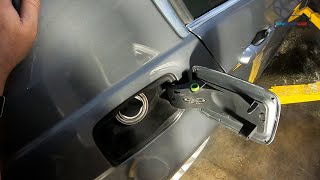
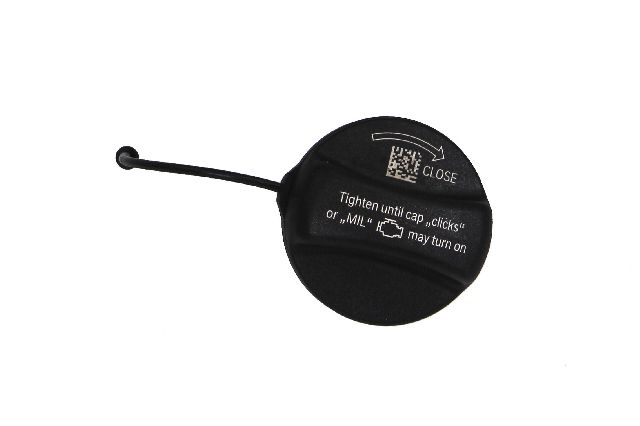
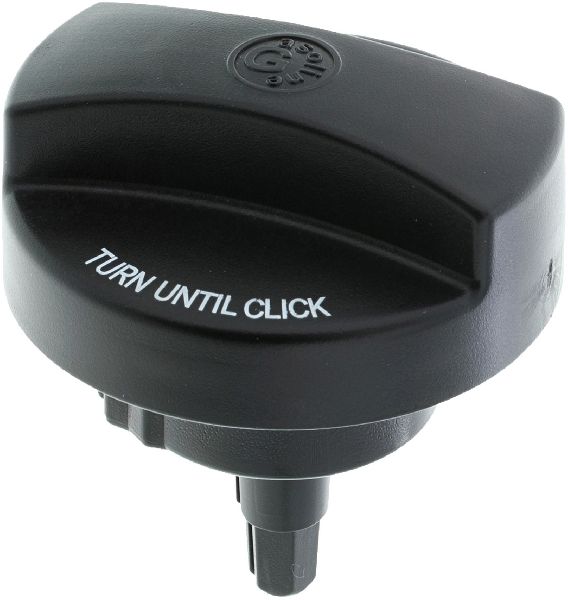
- Loose or Faulty Gas Cap 🔴 High Probability → Shop Fuel Tank Cap The rubber O-ring seal on the gas cap can crack, harden, and fail over time, preventing a proper seal. This is the most common and simplest cause for P0455 on any vehicle.
How to confirm: First, ensure the cap is tightened until it clicks multiple times. If the light returns, visually inspect the cap's rubber gasket for cracks, tearing, or brittleness. A cracked cap is a definite failure. Also, ensure the tether is not caught under the cap, preventing a seal.
Typical fix: Replace the gas cap with a new OEM or high-quality aftermarket part. After replacement, the code may take a few drive cycles to clear on its own, or you can clear it with a scanner.
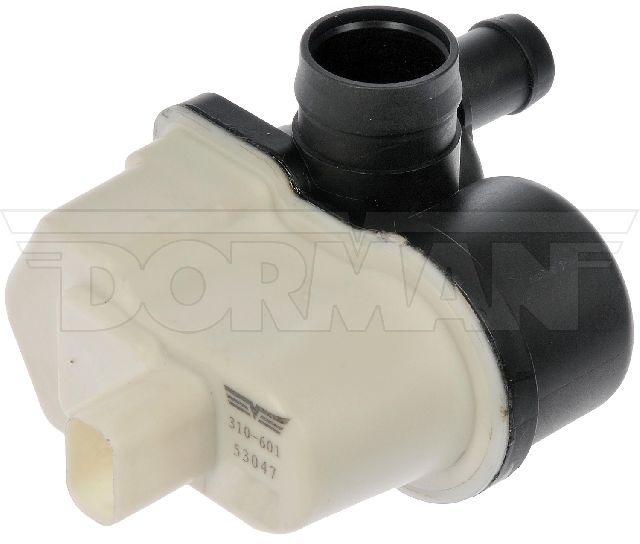
Est. part cost: $25-$50 - Faulty Fuel Tank Vent Valve (Purge Valve) 🟡 Medium Probability → Shop Fuel Tank This solenoid valve, which controls the flow of stored fuel vapors to the engine, can get stuck open, creating a permanent large leak. It's a common failure item on many BMWs of this era.
How to confirm: The valve is located in the engine bay. With the engine off, remove the valve and try to blow through it; if air passes, it's stuck open and has failed. A multimeter can be used to check the resistance of the valve's coil; a healthy valve on an N52 engine should have a resistance of around 28 ohms.
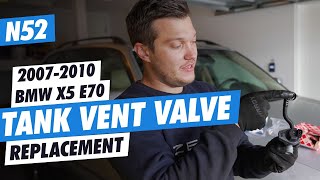
Typical fix: Replace the fuel tank vent valve. The associated plastic lines can become brittle, so care should be taken during removal and replacement. 🎬 Watch this DIY walkthrough for replacing the N52 vent valve.
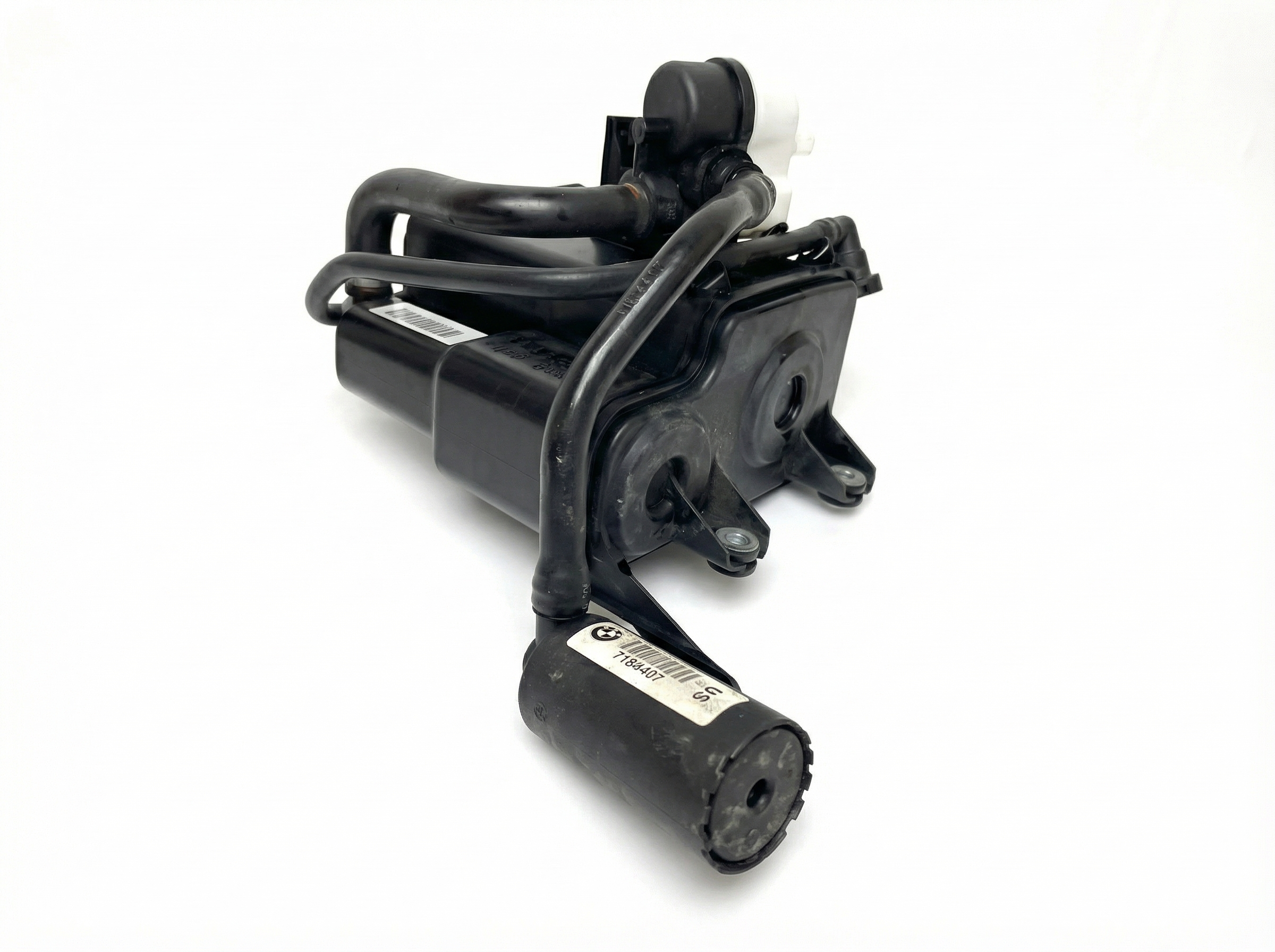
Est. part cost: $70-$120 - Failed Leak Detection Pump (DMTL) 🟡 Medium Probability → Shop Evaporative Emissions System Leak Detection Pump The DMTL pump is a key component of the BMW-specific EVAP test system and is a known weak point. The internal motor can fail, or the plastic housing and seals can crack and degrade, causing a leak.
How to confirm: The pump is located in the right rear wheel well, next to the charcoal canister. Diagnosis requires a capable BMW-specific scan tool (like INPA or ISTA) to run the EVAP leak test function. During the test, you should hear the small pump motor running. If the pump doesn't run, makes grinding noises, or the system fails the test immediately, the DMTL pump is the primary suspect. A smoke test is the ultimate confirmation; smoke injected into the system will be seen leaking from the pump assembly if it's faulty.
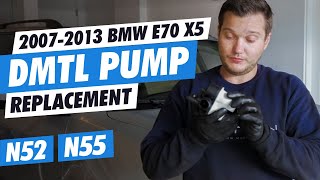
Typical fix: Replace the DMTL pump assembly. This requires removing the right rear wheel and fender liner for access. 🎬 See how to access and replace the DMTL pump yourself.
Est. part cost: $150-$250 - Cracked or Disconnected EVAP Hoses ⚪ Low Probability Rubber and plastic hoses throughout the system can become brittle with age and heat, leading to cracks. This is not specific to the X5 but is a possibility on any aging vehicle, especially on lines near the engine or exposed under the car.
How to confirm: A visual inspection may reveal obvious cracks, especially on hoses in the engine bay. However, a smoke test is the most effective way to find hidden leaks in the EVAP lines between the engine and the fuel tank. BMW Service Information Bulletin (SIB) 16 01 07 provides official guidance on connecting a smoke machine to the DMTL port for accurate testing.
Typical fix: Replace the specific section of cracked hose.
Est. part cost: $20-$100
Rare But Worth Checking
- Cracked Charcoal Canister: → Shop Vapor Canister The charcoal canister can crack from physical damage (road debris) or sometimes from consistently over-filling the fuel tank, which floods it with raw fuel, degrading the charcoal and housing. A smoke test will reveal leaks from the canister body.
- Damaged Fuel Filler Neck: → Shop Fuel Filler Neck Rust or damage to the metal filler neck where the gas cap seals can prevent a proper seal, even with a new cap. This is more common in regions with heavy road salt use. A visual inspection of the sealing surface is necessary.
- Leaking Fuel Pump Assembly Seal: → Shop Fuel Pump The large O-ring that seals the fuel pump/sending unit assembly to the top of the fuel tank can fail, creating a leak. This is less common but can be a source for a large leak code and a strong fuel smell, especially after filling the tank.
- Faulty Fuel Tank Pressure Sensor: → Shop Fuel Tank A malfunctioning fuel tank pressure sensor can, in some cases, incorrectly report pressure values to the ECM, leading to a false P0455 code. This is an uncommon cause but can happen if the sensor's readings are erratic or biased.
Diagnosis Steps
- Read the code with an OBD-II scanner to confirm P0455. If possible, use a BMW-specific scanner (ISTA/INPA) to check for more detailed shadow codes like 2A15 or 2A17.
- Inspect the gas cap. Ensure it is tight (3 clicks). Check the rubber seal for cracks or damage. Ensure the tether isn't trapped underneath. If in doubt, replace it as it's the cheapest and most common fix.
- Clear the code and drive for a few days. The EVAP monitor runs under specific conditions (fuel level between 15-85%, moderate ambient temperature), so it may take time for the light to return if the fault persists.
- If the code returns, perform a visual inspection of all accessible EVAP hoses in the engine bay for obvious cracks or disconnections, particularly around the purge valve.
- Locate the Fuel Tank Vent Valve (Purge Valve) in the engine bay. With the engine off, disconnect it and attempt to blow air through it. If air passes, the valve is stuck open and must be replaced.
- If a BMW-specific scan tool (INPA, ISTA) is available, run the DMTL system test plan. This will command the pump on and report its status, which can confirm a failed pump motor or electrical fault directly. The test measures the pump's current draw; a large leak is flagged if the reference amperage is not achieved.
- If the above steps do not reveal the issue, a professional smoke test is the definitive next step. Per BMW SIB 16 01 07, the smoke machine should be connected to the fresh air inlet of the DMTL pump 🎬 Watch a professional demonstration of BMW EVAP system leak diagnosis. for the most accurate test.
- During the smoke test, pay close attention to the DMTL pump area (right rear wheel well), the charcoal canister, all hose connection points, and the top of the fuel tank around the fuel pump seal.
Parts You'll Likely Need
- Fuel Cap
(OEM #16117222391)— This is the most frequent cause of P0455 due to the seal wearing out over time.
Trusted brands: Genuine BMW, Blau, Stant
OEM price range: $40-$50
Aftermarket price range: $20-$35 - Fuel Tank Vent Valve (Purge Valve)
(OEM #13907618643 (for N52), 13907636156 (for N55))— This valve frequently gets stuck open, creating a large leak in the system. Part number varies by engine.
Trusted brands: Bosch, Genuine BMW
OEM price range: $90-$120
Aftermarket price range: $60-$90 - Leak Detection Pump (DMTL)
(OEM #16137193479)— The pump motor or its integrated seals can fail, causing the system's self-test to fail. This is a very common failure on the E70 platform.
Trusted brands: Bosch (OEM manufacturer), Genuine BMW
OEM price range: $200-$250
Aftermarket price range: $150-$200
Related Codes That Often Appear With This One
- P0456 — P0456 indicates a 'small leak'. Sometimes a degrading component can trigger small and large leak codes at different times as the failure progresses.
- P0442 — This is another code for a 'medium leak', and can appear for the same reasons as P0456.
- P2402 — This is a BMW-specific code that often points directly to a fault in the DMTL pump's control circuit or an electrical issue with the pump itself.
- 2A15, 2A16, 2A17 — These are BMW-specific fault codes for small, medium, and system faults within the DMTL system. They are more specific than generic P-codes and can be read with tools like INPA or ISTA.
Technical Service Bulletins (TSBs) & Recalls
- BMW SIB 16 01 07: This Service Information Bulletin provides the official procedure for smoke testing the EVAP system on vehicles equipped with a DMTL pump. It specifies using a special adapter (P/N 83 30 0 433 207) to connect the smoke machine to the pump's fresh air filter inlet to avoid disturbing the system and ensure an accurate diagnosis.
Platform-Specific Known Issues
- Real-World DMTL Pump Failure and DIY: → Shop Evaporative Emissions System Leak Detection Pump Multiple owners on forums like Xoutpost.com and in YouTube DIY videos have documented the process of replacing the DMTL pump. The job requires removing the passenger rear wheel and fender liner. A common challenge is that the three T20 Torx screws holding the pump to the charcoal canister are difficult to access and often self-tap into the plastic, requiring some force to install the new pump.
- Fuel Pump Connector Melt: → Shop Fuel Pump In a thread on Xoutpost.com, a user chasing a P1434 code (BMW-specific equivalent for DMTL issue) ultimately found the problem was not the DMTL pump but melted plastic around the fuel pump electrical connector on top of the tank. This was causing a vapor leak. The user noted that early E70 firmware might have sent too much
Mechanic-Grade Diagnostic Values
- DMTL pump reference current draw — expected: 20-30 mA. Failure: If the pump is testing for a large leak, the amperage value will not be achieved. If the system is sealed, the amperage will be higher than the reference value.
- Fuel Tank Vent (Purge) Valve Coil Resistance (N52 Engine) — expected: ~28 Ohms. Failure: A significantly higher or infinite resistance reading indicates a failed coil in the valve.
- Low-Pressure Fuel Sensor (N55 Engine) — expected: ~98-101.5 psi (680-700 kPa). Failure: While not a direct cause of P0455, this value is useful for overall fuel system health. An inaccurate sensor could theoretically contribute to system diagnostic confusion.
- Fuel Tank Pressure Sensor Voltage (General) — expected: Operating range between 0.5V and 4.5V. With no pressure in the system, it should read around 0.5V.. Failure: A reading of 0V or a static voltage that doesn't change with pressure indicates a faulty sensor or wiring.
Hidden / Shadow Codes Worth Checking
- 2A15: DMTL, Tank-venting system, minor leak (leakage > 1.0 mm). This is the BMW-specific equivalent of P0456 (small leak). (see via BMW-specific scan tools like ISTA, INPA, or advanced scanners like Foxwell/Autel.)
- 2A16: DMTL, Tank-venting system, major leak (leakage > 2.0 mm). This is a BMW-specific code corresponding to P0455. (see via BMW-specific scan tools like ISTA, INPA, or advanced scanners.)
- 2A17: DMTL, system fault. This code indicates an issue with the DMTL pump's operation itself, such as an electrical fault or the pump motor drawing incorrect current during its self-test. (see via BMW-specific scan tools like ISTA, INPA, or advanced scanners.)
Scan Tool Commands That Help
- ISTA (Integrated Service Technical Application): EVAP System Test Plan (ABL-DIT-A1600_DMTL) — This is the guided, dealer-level diagnostic procedure. It will automatically run the DMTL pump through its test phases, measure current, and report the status (pass/fail) or identify the specific type of leak detected. Use this after checking the gas cap to definitively test the entire sealed system.
- INPA (INterpa): Activate DMTL Pump / Read Status — For more direct control, INPA can be used to manually activate the DMTL pump, heater, and valve to check for function. You can listen for the pump running and observe status values. This is useful for confirming if the pump is receiving a signal and is mechanically operational before proceeding to a smoke test.
Wiring & Ground Locations
- X1714 — The electrical connector on the DMTL pump itself, located in the right rear wheel well.. This is the primary connection point for testing. Pin 4 (Red/White) is power, Pin 1 (Brown/Blue) is the ground-switched control for the pump motor, Pin 2 is for the heater, and Pin 3 is for the valve. Checking for power and signal at these pins can diagnose a wiring issue versus a failed pump.
- Engine Ground Strap — On the N55 engine, one primary ground strap is located on the driver's side, connecting the engine block to the chassis, accessible by removing the driver's side front wheel and inner fender liner.. While not a direct cause, a corroded or loose engine ground strap can cause a myriad of strange electrical issues and fault codes across multiple systems. If you are experiencing other seemingly unrelated electrical gremlins along with the P0455, it is worth inspecting the main ground connections.
Real Owner Repair Stories
- Bimmerpost Forum User (BMW 335i (E92)) — Service Engine Soon light with codes 2A15 and 2A16.
❌ Tried (didn't work) Replacing the gas cap.
✅ What actually fixed it The user reported that after trying the gas cap, the issue was finally resolved by replacing the DMTL pump module itself. They noted that the fault codes made it seem like there was a physical leak, but the root cause was a false reading from the failing DMTL module. - Bimmerpost Forum User (BMW 135i) — Service Engine Soon light with DMTL fault code 2A15.
❌ Tried (didn't work) A smoke test was performed and no leaks were found in the lines., The dealer initially suspected a leak in the system.
✅ What actually fixed it The dealer replaced the DMTL pump as a test, and the system passed the subsequent leak test. The final diagnosis was a faulty DMTL pump module causing an internal fault, not an external leak.
"I Checked Everything" — The Actual Cause
- In several documented cases on forums, a P0455 or related BMW code (2A15, 2A17) was present, but a smoke test revealed no leaks. The ultimate cause was an internally-faulty DMTL pump that was either failing its own electrical self-test or had a cracked housing that only leaked under the specific pressure/vacuum created by the pump itself during its test cycle.
OEM Part Supersession History
16136752551, 16136764191→16137193479— Standard part evolution and design updates by BMW/Bosch.
Heads up: The newest part number, 16137193479, is backward compatible with vehicles that used the older numbers. It is the correct replacement for the entire E70 X5 range.13902366609→13907636156— Part revision for the N55 engine's Fuel Tank Vent (Purge) Valve.
Heads up: This applies to the N55 engine found in 2011-2013 X5 models. Using the correct, updated part number is crucial for proper fit and function.
Model Year Variations Within This Range
- 2007-2010 (Pre-LCI) vs 2011-2013 (LCI): The primary difference affecting this code is the engine and associated Fuel Tank Vent (Purge) Valve. Pre-LCI models typically used the N52 6-cylinder or N62 V8 engines, while LCI models used the N55 6-cylinder or N63 V8. The purge valve is engine-specific. For example, the N52 uses P/N 13907618643, while the N55 uses P/N 13907636156.
Diagnostic Flowchart
Other Known Issues on This Vehicle
Issues unrelated to this code that are worth knowing about as an owner of this generation:
- N63 V8 Engine Issues (xDrive50i) 🔴 High — Very common, especially on pre-update (N63TU) engines from 2008-2013. Issues can start as early as 30,000 miles. (Ref: BMW Customer Care Package (CCP) issued in 2014 addressed timing chains, injectors, and oil consumption.)
- Electric Water Pump Failure (N52/N55 Inline-6) 🔴 High — Common failure item, typically between 60,000 and 100,000 miles. Failure is often sudden and can cause rapid overheating.
- Oil Leaks (All Engines) 🟠 Medium — Very common with age. Valve cover gaskets, oil filter housing gaskets, and oil pan gaskets are frequent leak points.
- Panoramic Sunroof Drain Clogs 🟠 Medium — Common, especially if parked outdoors under trees. Clogged drains lead to water leaking into the cabin, potentially damaging sensitive electronics in the floor and pillars.
- Transfer Case Actuator Gear Failure (xDrive models) 🟠 Medium — A plastic gear inside the transfer case actuator motor wears out, typically between 90,000-120,000 miles, causing 4x4, ABS, and Brake warning lights.
- Tail Light Assembly Seal Failure 🟡 Low — Common on older E70s. The seals on the inner tail light units (on the tailgate) fail, allowing moisture inside and causing the LEDs to fail.
Used vs. New Parts: Buying Guide for This Vehicle
When a used part is the smart pick: A used charcoal canister can be a good value, as they are not typically a wear item unless physically damaged or saturated with fuel from overfilling. Hoses and plastic lines can also be sourced used if they are in good visual condition with no cracks.
Donor-vehicle mileage cap: roughly under 80000 miles for the part to have meaningful remaining life.
What to inspect on the donor part:
- For a charcoal canister, ensure there are no visible cracks or signs of fuel saturation.
- Check the date code on the part if possible; newer is better.
- Inspect all plastic and rubber components for brittleness or cracking before purchase.
OEM-only on this vehicle (don't cheap out):
- DMTL Pump
- Fuel Cap
- Fuel Tank Vent Valve (Purge Valve)
Aftermarket brands forum-validated for this vehicle:
- Bosch is the Original Equipment Manufacturer (OEM) for the DMTL pump and Fuel Tank Vent Valve. Buying a Bosch-branded part is equivalent to Genuine BMW but often at a lower cost.
Brands owners have reported issues with on this vehicle:
- Avoid unbranded, no-name electronic components like pumps and valves from online marketplaces. Failure of these parts is common and can lead to repeated repairs.
Real Owner Stories
Aggregated from forums and TSBs cited above. Mileages and costs reflect what owners reported in those sources.
2008 BMW X5 4.8i
Symptoms: Large EVAP leak detected (P0455).
What fixed it: Replacement of the DMTL pump (Leak Down Pump). The owner noted the T20 Torx screws were difficult to access.
Source hint: Xoutpost.com thread titled 'DIY: Replacing DMTL – Leak Down Pump, LDP – EVAP System'
2008 BMW X5 3.0si
Symptoms: Check engine light with EVAP system codes.
What fixed it: Replacement of the DMTL pump; the process involved removing the right rear wheel and fender liner.
Source hint: YouTube - 'DIY E70 BMW X5 DMTL Pump replacement' by 'koolbreez'
Early E70 BMW X5
Symptoms: Chasing a P1434 code (BMW-specific DMTL issue) and vapor leaks.
What fixed it: Found melted plastic around the fuel pump electrical connector on top of the fuel tank, which was causing the vapor leak.
Source hint: Xoutpost.com thread regarding P1434 and fuel pump connector melt
Related OBD-II Codes
Frequently Asked Questions
How do I properly perform a smoke test on my E70 X5 according to BMW guidelines?
Where is the Leak Detection Pump (DMTL) located on the 2007-2013 BMW X5?
Can I test the Fuel Tank Vent Valve on my N52 engine with a multimeter?
Why does the gas pump nozzle keep clicking off when I try to fill my X5?
What specific BMW software should be used to diagnose the DMTL pump?
Is it true that the mounting screws for the DMTL pump are difficult to remove?
Helpful Videos
Used OEM Parts in Stock
New Aftermarket Parts Available


The information in this article is provided for general reference and educational purposes only. Vehicle specifications, procedures, and part compatibility can vary by production date, trim level, and region. Always consult your vehicle's factory service manual and verify part numbers before purchasing or performing repairs. Safety-critical components such as airbags, seat belts, and braking systems should be installed by a qualified professional.
- BMW X5:
- 🧭 Diagnostic Flowchart
- 🎬 Helpful Videos
- 🛍️ Shop This Part
- What's Unique About the 2007-2013 BMW X5
- Symptoms You May Notice
- Most Likely Causes
- Rare But Worth Checking
- Diagnosis Steps
- Parts You'll Likely Need
- Related Codes That Often Appear With This One
- Technical Service Bulletins (TSBs) & Recalls
- Platform-Specific Known Issues
- Mechanic-Grade Diagnostic Values
- Hidden / Shadow Codes Worth Checking
- Scan Tool Commands That Help
- Wiring & Ground Locations
- Real Owner Repair Stories
- "I Checked Everything" — The Actual Cause
- OEM Part Supersession History
- Model Year Variations Within This Range
- Other Known Issues on This Vehicle
- Used vs. New Parts: Buying Guide for This Vehicle
- Real Owner Stories
- 2008 BMW X5 4.8i
- 2008 BMW X5 3.0si
- Early E70 BMW X5
- Related OBD-II Codes
- Frequently Asked Questions
- 🎟️ Get 5% Off