

P0455 on 2010-2017 Cadillac Escalade: EVAP Large Leak Causes and Fixes
For a 2010-2017 Cadillac Escalade, code P0455 most often means you have a loose gas cap or a bad EVAP canister vent solenoid. First, tighten the gas cap and clear the code. If it returns, the vent solenoid, located near the spare tire, is the next most likely culprit, costing around $30-$70 for an aftermarket part. A faulty purge valve in the engine bay is another common cause.
- P0455 on your Escalade means a large leak is detected in the EVAP (emissions) system.
- Always check your gas cap first. Make sure it's tight and the seal isn't cracked. This is the easiest and most common fix.
- The second most likely cause is a failed EVAP canister vent solenoid, located near the spare tire.
- Other potential causes include the purge valve in the engine bay or a cracked hose, which can be found with a smoke test.
- You can safely drive the vehicle, but you will not pass an emissions inspection until the leak is fixed.
What's Unique About the 2010-2017 Cadillac ESCALADE
On these GMT900 and K2XX platform trucks, including the Escalade, the EVAP system components, particularly the vent solenoid, are common failure points. Their location near the rear of the vehicle exposes them to road debris and moisture, leading to cracks and electrical failures. Additionally, General Motors has issued technical service bulletins for this platform related to fuel odors and EVAP leaks, pointing towards known issues with system components beyond just a simple loose gas cap.
Diagnostic Flowchart
Tap your situation to follow the diagnostic path that matches what you're seeing on this vehicle.
Generation note: This range covers two Escalade generations: the 3rd Gen (2010-2014, GMT900 platform) and the 4th Gen (2015-2017, K2XX platform). While the EVAP system design and function are similar, the specific part numbers and designs for components like the vent and purge solenoids differ between these generations. Always verify the part number for your specific model year.
Symptoms You May Notice
- Check Engine Light is on
- A message on the dash to "Tighten Gas Cap".
- A noticeable fuel smell, especially after refueling or while idling.
- Difficulty filling the fuel tank (gas pump nozzle clicks off repeatedly). This is often a sign of a blocked vent path, possibly from a failed charcoal canister sending pellets into the lines.
- A loud 'whoosh' of air releasing when you open the gas cap. This indicates the system is holding pressure and not venting properly, often pointing to a stuck-closed purge valve rather than a leak.
- Replacing the purge valve in the engine bay when the more common failure is the vent solenoid at the rear of the vehicle.
- Replacing the entire charcoal canister when only the attached vent solenoid is faulty.
- Replacing EVAP components when the issue is charcoal pellets from a previously failed canister clogging the lines. The lines must be cleared out.
Most Likely Causes
- Loose, Damaged, or Incorrect Gas Cap 🔴 High Probability → Shop Fuel Tank Cap This is the most common cause for a P0455 on any vehicle. The cap's seal can degrade over time or it may simply not have been tightened properly after refueling. Using a non-OEM cap can also cause sealing issues.
How to confirm: Inspect the gas cap for cracks or a worn, brittle seal. Ensure it is tightened until it clicks at least once. If the cap looks worn, replacement is a cheap and easy first step. If you hear a loud whoosh of pressure when removing the cap, the cap is likely sealing correctly and the issue is elsewhere.
Typical fix: Tighten or replace the fuel filler cap with a quality OEM or aftermarket part.
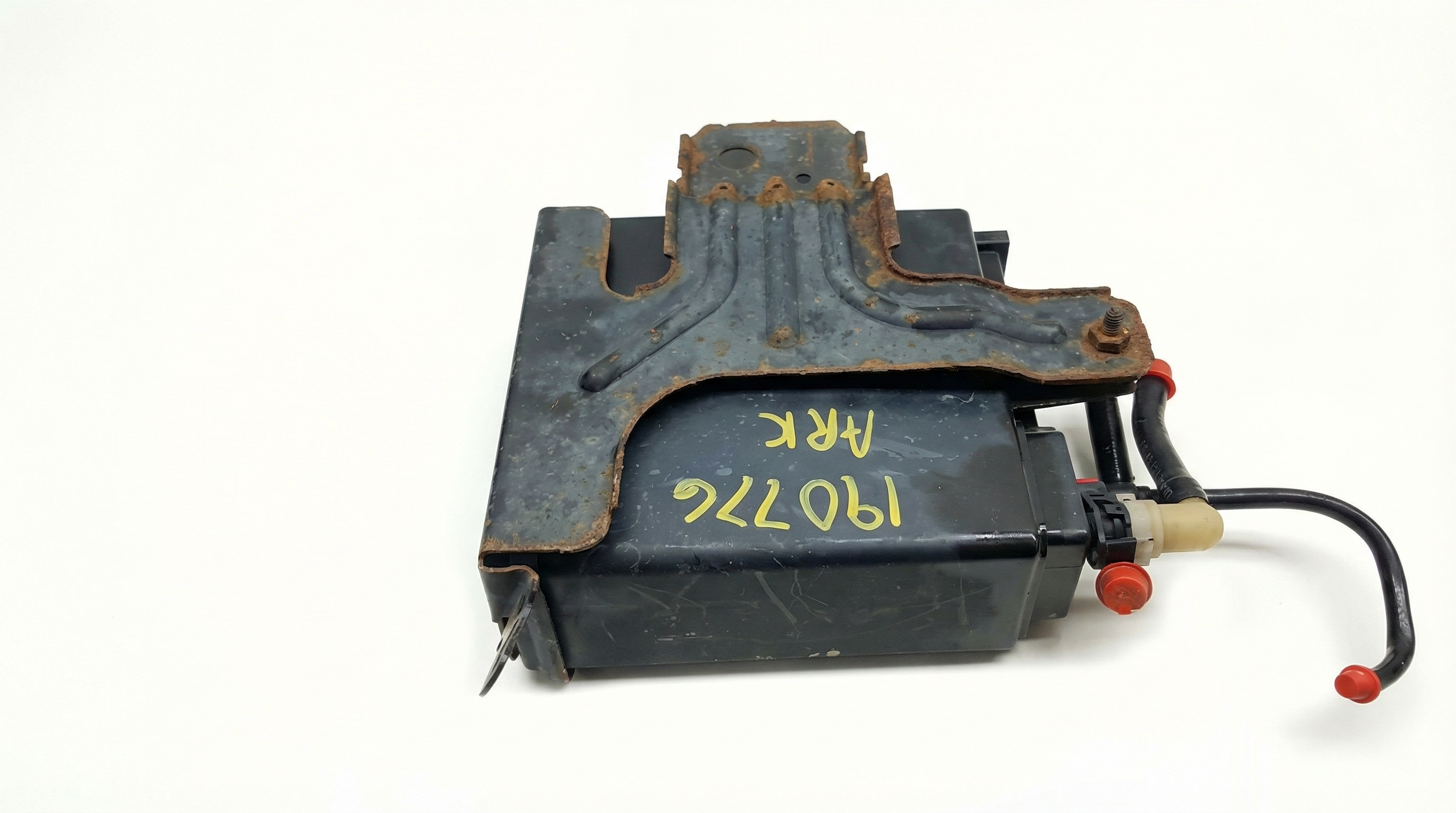
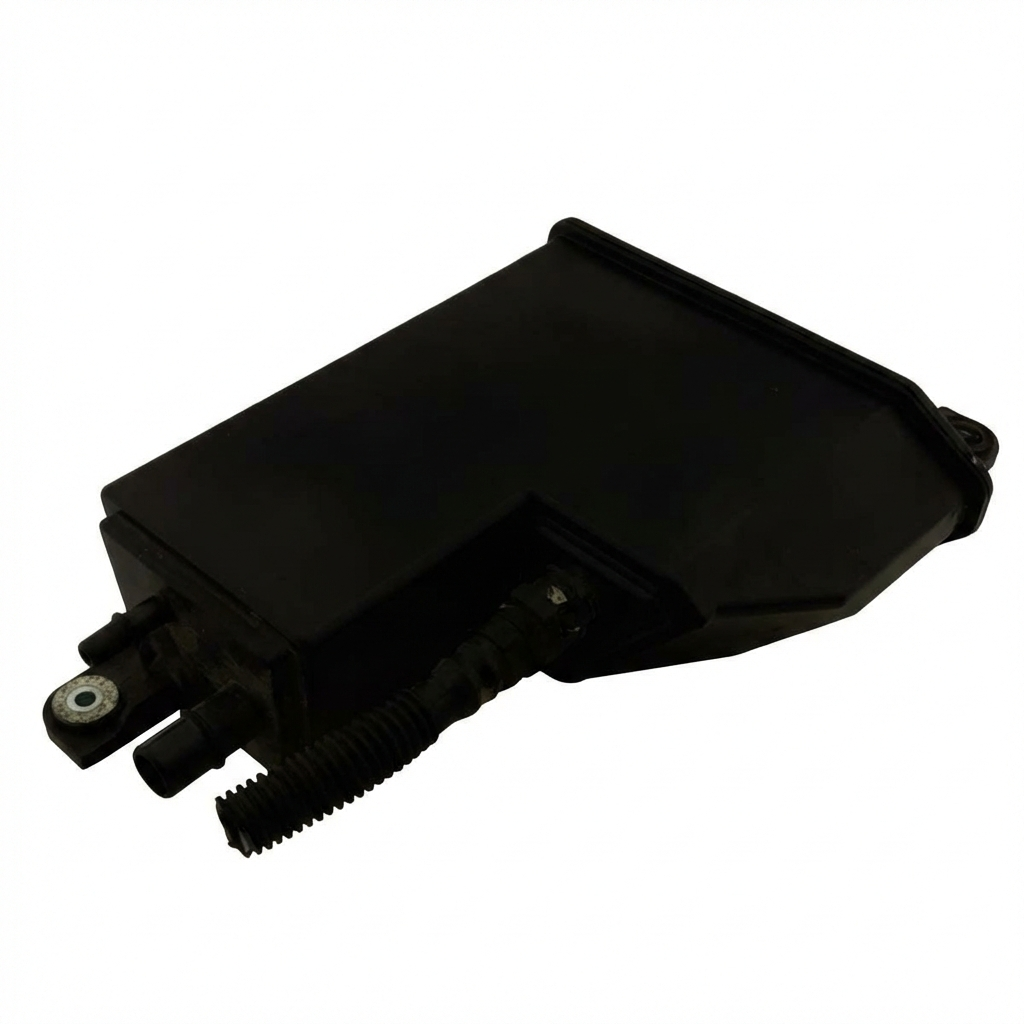
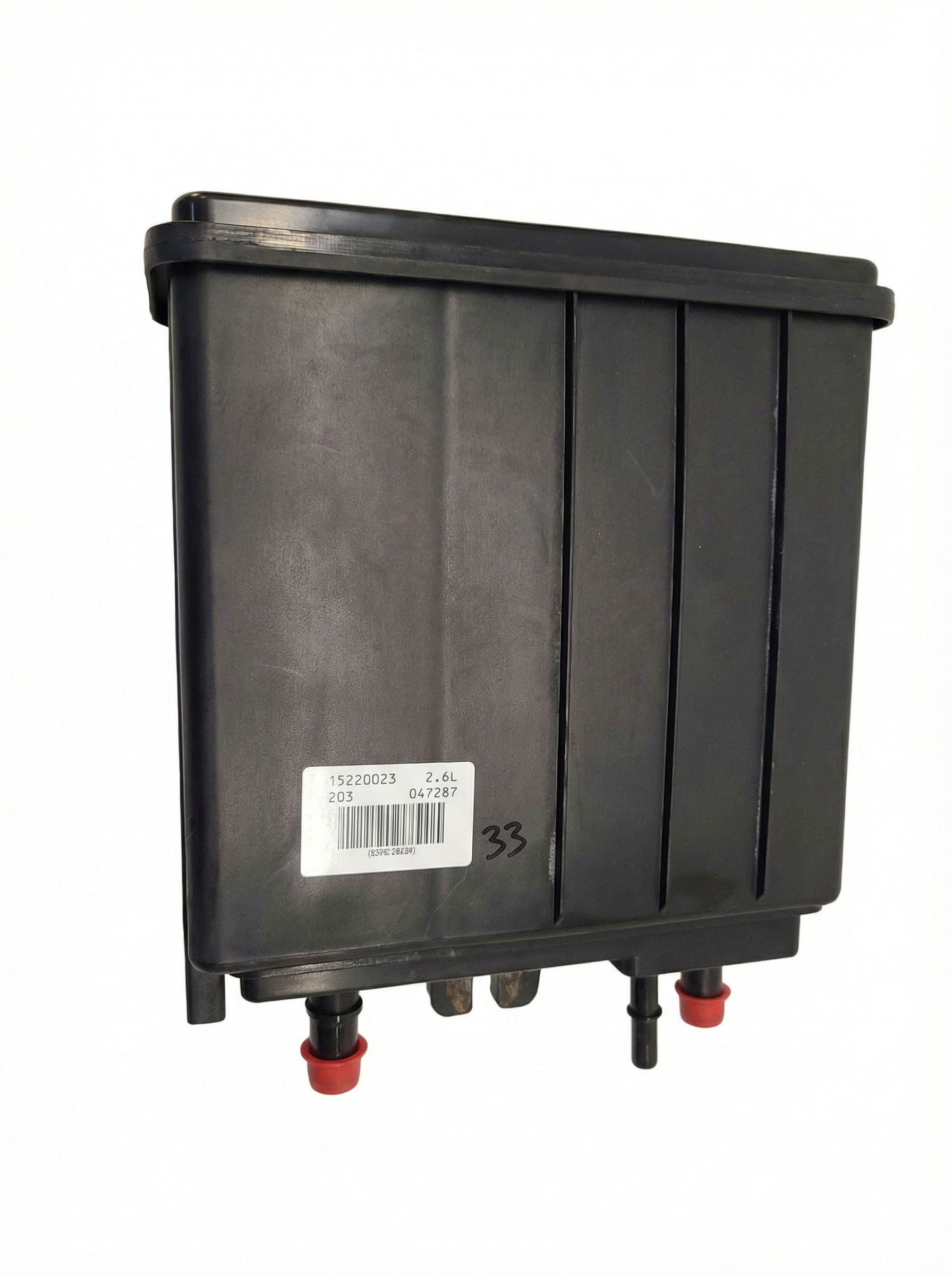
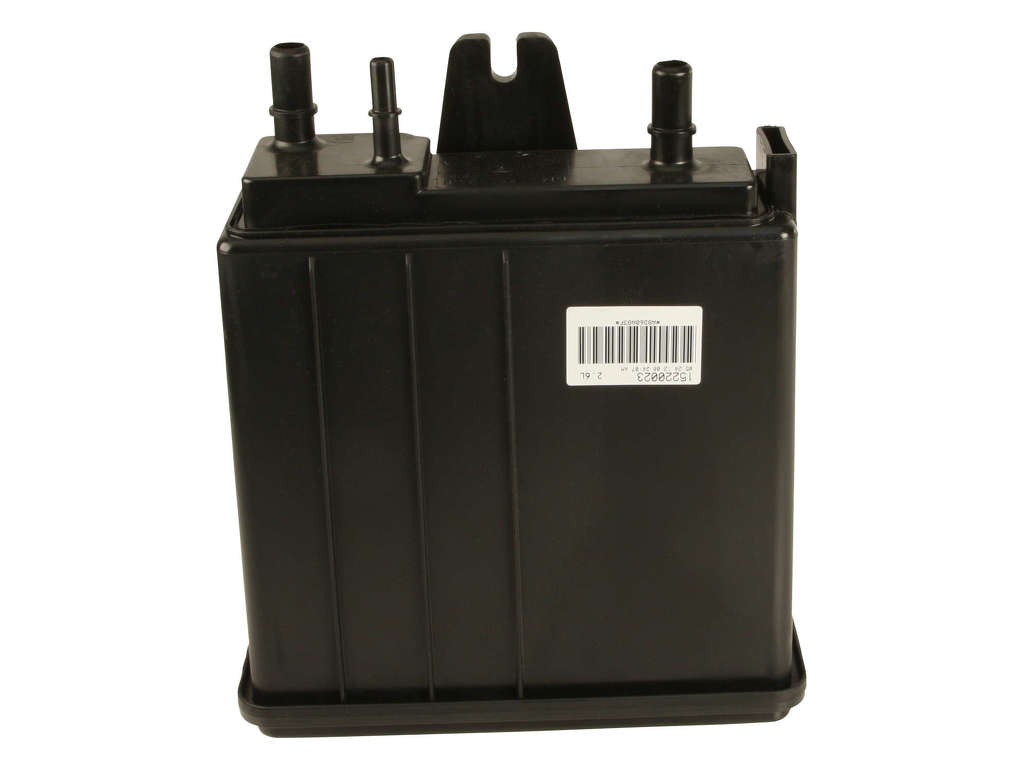
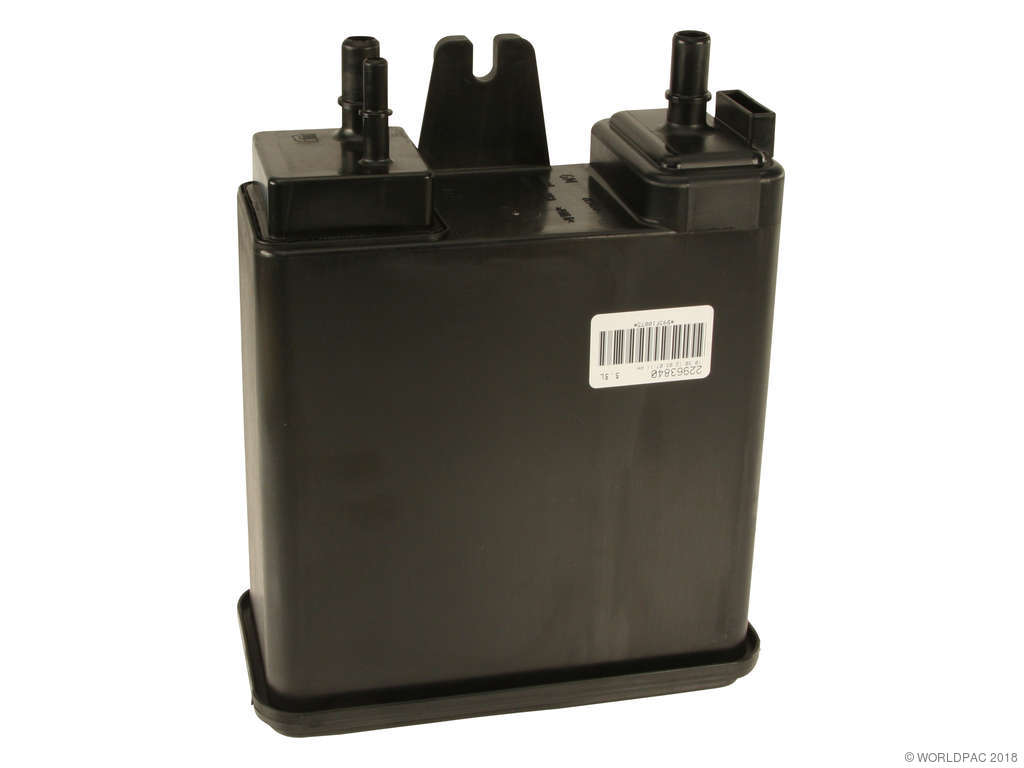
Est. part cost: $15-$30 - Faulty EVAP Canister Vent Solenoid 🔴 High Probability → Shop Vapor Canister This is a very common failure item on GM trucks and SUVs of this era. The solenoid gets stuck open or fails electronically, creating a large leak condition. Its location near the spare tire exposes it to the elements, leading to corrosion and damage.
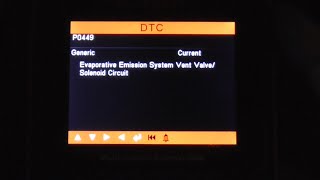
How to confirm: The vent solenoid is normally open. A smoke test is the best confirmation; with the solenoid commanded closed by a scan tool (or by applying 12V power to its terminals), smoke will be seen exiting the vent filter if it's stuck open. This is often accompanied by code P0449.
Typical fix: Replace the EVAP canister vent solenoid. It is located on or near the charcoal canister by the spare tire. The part often comes with a new filter box and hose.
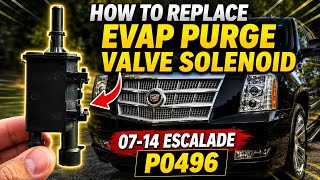
Est. part cost: $30-$70 - Faulty EVAP Purge Valve/Solenoid 🟡 Medium Probability → Shop Vapor Canister The purge valve, located on the engine's intake manifold, can get stuck open, creating a constant vacuum leak from the engine into the EVAP system, which the computer interprets as a large leak.
How to confirm: The purge valve is normally closed. Remove the valve (located in the engine bay) and try to blow through it. If air passes through, it is stuck open and needs to be replaced. A stuck open purge valve can also sometimes cause a rough idle or hard starting after refueling.
Typical fix: Replace the purge valve. This is typically a simple, one-bolt, two-hose connection in the engine compartment.
Est. part cost: $25-$60 - Cracked or Disconnected EVAP Hose ⚪ Low Probability Hoses, especially the lines connected to the charcoal canister and filler neck, can become brittle and crack over time. In some cases, a hose can be accidentally disconnected during other maintenance, like a fuel pump replacement.
How to confirm: Perform a visual inspection of all accessible EVAP lines. A smoke test is the most effective way to pinpoint a leak in a hose or connection. GM TSB 21-NA-124 specifically advises checking all line connections first.
Typical fix: Replace the cracked section of hose or re-secure the connection.
Est. part cost: $10-$50
Rare But Worth Checking
- Cracked EVAP Charcoal Canister: → Shop Vapor Canister The plastic housing of the canister itself can develop cracks. More significantly, an old canister can break down internally, sending activated charcoal pellets into the EVAP lines, causing blockages, fueling issues, and setting codes. If this happens, the lines must be blown out with compressed air when the canister is replaced.
- Leaking Fuel Tank or Filler Neck: → Shop Fuel Tank As mentioned in TSB #15-NA-019, a fracture in the fuel filler neck recirculation line connector can cause a fuel odor and set P0455. This requires replacing the fuel tank filler vent hose assembly. A smoke test is the best way to identify a leak from the tank or filler neck area.
- Faulty Fuel Tank Pressure Sensor: → Shop Fuel Tank A malfunctioning sensor can incorrectly report a large leak to the ECM. This is uncommon and usually accompanied by other sensor-specific fault codes. A scan tool can be used to monitor the sensor's voltage to check for plausible readings.
- Damaged Fuel Pump Module Gasket: → Shop Fuel Pump The large O-ring that seals the fuel pump module to the top of the fuel tank can become brittle, torn, or dislodged, especially after a fuel pump replacement. This creates a large leak that can be difficult to find without a smoke test.
Diagnosis Steps
- Check the gas cap. Remove it, inspect the seal for cracks or damage, and reinstall it, making sure it clicks several times. If there's a loud whoosh of pressure, the cap is likely good.
- Clear the code with an OBD-II scanner and drive for a few days to see if it returns. The EVAP monitor often takes several drive cycles to run.
- If the code returns, follow the diagnostic order from GM TSB #21-NA-124: First, perform a visual inspection of all accessible EVAP hoses and lines between the engine bay and the fuel tank, looking for obvious cracks or disconnections.
- Next, inspect and test the EVAP canister vent solenoid near the spare tire. Inspect for damage or corrosion. To test, apply 12V power to the solenoid's terminals; you should hear a click. If it doesn't click, or if it still allows air/smoke to pass when energized, it is faulty.
- Then, test the purge valve in the engine bay. With the engine off, disconnect the valve and attempt to blow through it. If air passes, the valve is stuck open and faulty.
- If the cause is still not apparent, the most effective diagnostic step is to have a smoke test performed. This involves injecting low-pressure smoke into the EVAP system (often via the service port) to visually identify the source of the leak from any component, hose, or gasket.
Parts You'll Likely Need
- EVAP Canister Vent Solenoid (2010-2014)
(OEM #23481275 (supersedes 25932571, 20995471, and others))— This is a frequent failure point on GMT900 trucks and a primary cause of P0455. It gets stuck open, creating a large leak.
Trusted brands: ACDelco, Dorman (911-070)
OEM price range: $40-$60
Aftermarket price range: $30-$50 - EVAP Canister Vent Solenoid (2015-2017)
(OEM #84629805 (or ACDelco 214-2324))— The K2XX platform uses a different design, but it remains a common failure point for the same reasons (stuck open, electrical failure).
Trusted brands: ACDelco, Dorman (911-032)
OEM price range: $50-$80
Aftermarket price range: $40-$60 - EVAP Canister Purge Valve
(OEM #12610560 (2010-2014) / 12690512 (2015-2017))— This valve can stick open, causing a leak. It's a common cause, though less frequent than the vent solenoid. Part numbers differ by generation.
Trusted brands: ACDelco, Standard Motor Products
OEM price range: $45-$70
Aftermarket price range: $25-$60
Related Codes That Often Appear With This One
- P0442 — P0442 is for a 'small' EVAP leak. It can appear alongside P0455 if the system has multiple leaks or if the size of the leak is borderline between small and large. TSBs #21-NA-124 and #15-NA-019 both mention P0442 and P0455 occurring for the same root causes.
- P0449 — P0449 specifically indicates a fault in the EVAP vent solenoid valve control circuit. If you have P0455 and P0449 together, it's a very strong indicator that the vent solenoid or its wiring is the problem.
Technical Service Bulletins (TSBs) & Recalls
- 21-NA-124: Provides diagnostic tips for testing EVAP leaks related to DTCs P0442 and/or P0455, recommending a specific order of operations: check lines, then vent valve, then purge valve.
- 15-NA-019: Addresses a fuel odor concern that may be accompanied by P0442 or P0455 codes, caused by a fracture of the gasoline filler neck recirculation line connector.
Platform-Specific Known Issues
- TSB #15-NA-019: Fuel Odor from Filler Neck Fracture: This TSB notes that a strong fuel odor and codes P0455/P0442 can be caused by a fracture in the gasoline filler neck recirculation line connector. The fix is to inspect and, if damaged, replace the entire fuel tank filler vent hose assembly (Part No. 22802074 for 2013-2014 Escalade).
- TSB #21-NA-124: Official Diagnostic Procedure: This bulletin provides a clear diagnostic hierarchy for technicians chasing P0455/P0442 leaks: 1. Check all EVAP line connections for security and damage. 2. Test the vent valve for a stuck-open condition. 3. Test the purge valve. This indicates the most likely failure points according to GM.
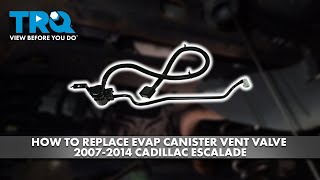
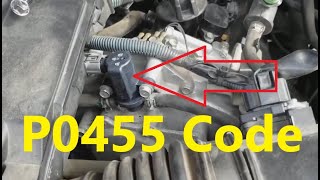
- DIY Smoke Test and Vent Valve Diagnosis: A YouTube video for an Escalade with P0455 demonstrates a successful DIY repair. The owner built a simple smoke machine and energized the vent solenoid with a 12V source. When smoke continued to leak from the vent, it confirmed the solenoid was bad and needed replacement, which fixed the code.
Mechanic-Grade Diagnostic Values
- Fuel Tank Pressure (FTP) Sensor Voltage — expected: Approximately 1.5V with the gas cap off (at atmospheric pressure). The range is typically 0.1V (high pressure) to 4.9V (high vacuum).. Failure: Voltage is stuck high or low and does not change when pressure/vacuum is applied to the system.
- EVAP Canister Vent Solenoid Resistance (2010-2014 GMT900) — expected: Approximately 20.2 Ohms.. Failure: A significantly different reading, or an open/short circuit (infinite or zero ohms), indicates a failed solenoid coil.
- EVAP Canister Purge Solenoid Resistance (2010-2014 GMT900) — expected: 14 to 38 Ohms.. Failure: A reading outside this range, or an open circuit, points to a faulty solenoid coil.
Scan Tool Commands That Help
- GM GDS2 / Tech2 or equivalent professional scanner: EVAP Purge/Seal — This bidirectional command allows a technician to manually close the vent solenoid and open the purge solenoid to see if the system can pull a vacuum. Watching the Fuel Tank Pressure (FTP) sensor data during this test confirms if the purge path is working. If no vacuum is created, it could indicate a stuck-closed purge solenoid or a blockage.
- GM GDS2 / Tech2 or equivalent professional scanner: EVAP Vent Solenoid Control — This command manually closes the normally-open vent solenoid. This is essential for performing a smoke test, as it seals the system. It can also be used without a smoke machine; by closing the vent and watching the FTP sensor, a technician can see if pressure naturally builds in the tank from fuel vapor, which confirms the system's integrity and that there are no large leaks.
Wiring & Ground Locations
- Fuse 14 (TCH BATT) — Located in the underhood fuse block on the driver's side of the engine compartment.. This 10A fuse provides the 12V power to the EVAP Vent Valve Solenoid. If this fuse is blown, the solenoid cannot close during a system self-test, which will prevent the system from sealing and immediately cause a P0455 leak code.
- G103 — On the front of the right-side (passenger side) cylinder head.. This is a primary engine ground. While not specific to the EVAP system, a poor connection here can cause erratic voltage and unpredictable behavior from the Engine Control Module (ECM) and the components it controls, including the EVAP solenoids and sensors.
Real Owner Repair Stories
- YouTube channel 'Steve's DIYs' (2008 Cadillac Escalade (similar GMT900 platform)) — Check Engine Light with code P0455.
❌ Tried (didn't work) The owner had previously replaced the purge valve twice for other issues.
✅ What actually fixed it The owner built a DIY smoke machine and introduced smoke into the EVAP system. After commanding the vent solenoid closed with a 12V power source, he saw smoke leaking directly from the vent valve assembly itself. Replacing the EVAP canister vent valve resolved the P0455 code. - YouTube channel 'South Main Auto Repair' (2008 Pontiac Torrent (similar GM EVAP system logic)) — Check Engine Light with code P0455, 'Gross EVAP Leak'.
❌ Tried (didn't work) A less experienced technician might immediately suspect a large physical leak or a bad vent solenoid.
✅ What actually fixed it A professional technician used a scan tool's 'Purge/Seal' function and observed that the system was not pulling a vacuum. Instead of a leak, he correctly diagnosed a stuck-closed purge solenoid. The ECM commanded the purge, saw no change in fuel tank pressure, and incorrectly interpreted the lack of vacuum as a large leak. Tapping the solenoid with a screwdriver temporarily freed it. Replacing the faulty purge solenoid fixed the problem.
"I Checked Everything" — The Actual Cause
- A P0455 code can be set even if a smoke test shows no leaks. This can happen if the EVAP purge solenoid is stuck closed. During the EVAP self-test, the ECM commands the purge solenoid to open to draw a vacuum on the fuel tank. If the solenoid fails to open, no vacuum is created. The ECM cannot distinguish between a massive leak that prevents vacuum from forming and a blockage that prevents vacuum from being drawn in the first place. It defaults to logging a P0455 'large leak' code. This is often missed because a smoke test will pass perfectly, as the system is sealed. The true cause is a faulty (stuck-closed) purge solenoid.
OEM Part Supersession History
Multiple, including 25932571, 20995471, 15893884, 10382080→23481275— GM regularly updates service parts to integrate new materials, technologies, or design improvements to enhance reliability.
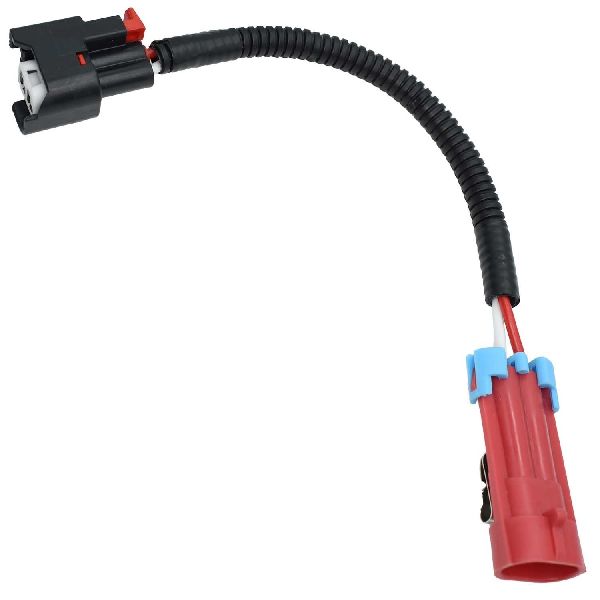
Heads up: For some vehicle applications, replacing an older vent solenoid with the updated 23481275 part requires a new wiring harness connector. It is critical to verify with a VIN if this adapter harness is needed for the specific vehicle being repaired.
Model Year Variations Within This Range
- 2010-2014 vs 2015-2017: The 2015 model year marked the switch from the GMT900 to the K2XX platform. This included a new direct-injected engine (420 hp vs 403 hp) and significant changes to components. The EVAP vent and purge solenoids have different designs and part numbers between these two generations.
- 2010-2014 (GMT900): Within the GMT900 generation, there were running changes to the EVAP vent solenoid. Later replacement parts (like OEM #23481275) may require a new wiring connector adapter harness, as the original vehicle-side connector may not be compatible with the updated solenoid design.
Helpful Videos

Used OEM Parts in Stock
New Aftermarket Parts Available


The information in this article is provided for general reference and educational purposes only. Vehicle specifications, procedures, and part compatibility can vary by production date, trim level, and region. Always consult your vehicle's factory service manual and verify part numbers before purchasing or performing repairs. Safety-critical components such as airbags, seat belts, and braking systems should be installed by a qualified professional.
- Cadillac ESCALADE:
- 🧭 Diagnostic Flowchart
- 🎬 Helpful Videos
- 🛍️ Shop This Part
- What's Unique About the 2010-2017 Cadillac ESCALADE
- Symptoms You May Notice
- Most Likely Causes
- Rare But Worth Checking
- Diagnosis Steps
- Parts You'll Likely Need
- Related Codes That Often Appear With This One
- Technical Service Bulletins (TSBs) & Recalls
- Platform-Specific Known Issues
- Mechanic-Grade Diagnostic Values
- Scan Tool Commands That Help
- Wiring & Ground Locations
- Real Owner Repair Stories
- "I Checked Everything" — The Actual Cause
- OEM Part Supersession History
- Model Year Variations Within This Range
- 🎟️ Get 5% Off