

P0455 on 2020-2023 Cadillac XT6: EVAP Large Leak Causes and Fixes
For a 2020-2023 Cadillac XT6, P0455 is most often caused by a loose or faulty gas cap. If tightening or replacing the cap doesn't solve it, the EVAP purge or vent valve is the next likely culprit. A new OEM gas cap is under $40, and a purge valve is a common, relatively inexpensive repair.
- P0455 indicates a large leak in the evaporative emissions system.
- Always check the gas cap first. Ensure it is tight and the seal is not cracked or worn. This is the most common and cheapest fix.
- If the gas cap is not the issue, the EVAP purge valve (in the engine bay) or the vent valve (near the fuel tank) are the next most likely culprits, a very common issue on GM's 3.6L V6.
- While some parts are easy to replace for a DIYer, the most accurate way to find a leak that isn't obvious is with a professional smoke test.
- You can continue to drive the vehicle, but it will not pass an emissions test and may have remote start disabled.
What's Unique About the 2020-2023 Cadillac XT6
While the causes for P0455 on the Cadillac XT6 are typical for many GM vehicles, GM has issued a Technical Service Bulletin (TSB #21-NA-124) that applies directly to the 2020-2023 model years. This TSB provides technicians with a specific diagnostic hierarchy: first, check all EVAP line connections for proper seating and damage, then investigate the vent valve for being stuck open, and finally, check the purge valve. This suggests that while a gas cap is a common issue, the manufacturer has identified that connection issues and valve failures are frequent enough to warrant a specific diagnostic order, prioritizing a methodical smoke test over simply replacing parts.
Diagnostic Flowchart
Tap your situation to follow the diagnostic path that matches what you're seeing on this vehicle.
Symptoms You May Notice
- Check Engine Light is on
- Possible faint fuel odor
- Remote start feature may be disabled
- Difficulty starting or rough idle, especially after refueling (less common)
- Replacing the charcoal canister when the vent solenoid is the actual problem.
- Replacing the fuel tank pressure sensor, which is less likely to cause a large leak code than a mechanical failure like a stuck valve.
- Assuming a passed smoke test 🎬 See what to check when the gas cap isn't the problem. means no EVAP problem. A broken wire to the vent valve can prevent the self-test from running, triggering a P0455 code even with no physical leak.
Most Likely Causes
- Loose, Damaged, or Incorrect Fuel Cap 🔴 High Probability → Shop Fuel Tank Cap This is the most frequent cause for any P0455 code. The seal on the cap can wear out, or the cap may not have been tightened properly after refueling.
How to confirm: Ensure the gas cap is tightened until it clicks several times. Inspect the rubber seal on the cap for cracks, stiffness, or damage. An incorrect aftermarket cap can also cause sealing issues. The correct OEM part is the best replacement.
Typical fix: Tighten or replace the fuel cap.
Est. part cost: $20-$40 - Faulty EVAP Purge Valve/Solenoid 🟡 Medium Probability → Shop Vapor Canister This is a very common failure point on modern GM vehicles, including those on the C1XX platform. The valve is commanded to open and close frequently and can become stuck open, creating a permanent vacuum leak that the system detects. A stuck-closed valve can also illogically trigger a P0455 because the ECM expects a pressure change during the test that never happens, leading it to assume a large leak exists.
How to confirm: The purge valve is normally closed. With the engine off, remove the valve (located in the engine bay, often on the intake manifold) and try to blow through it. If air passes through, it is stuck open and faulty. A scan tool can also command the valve to cycle while observing system pressure.
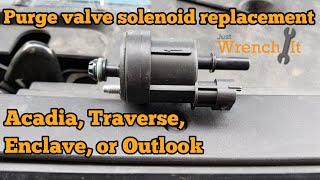
Typical fix: Replace the EVAP purge valve. For the 3.6L V6, this part is often tucked behind the engine. 🎬 Watch: Step-by-step purge valve replacement on a GM 3.6L engine.
Est. part cost: $30-$80 - Faulty EVAP Vent Valve/Solenoid 🟡 Medium Probability → Shop Vapor Canister Located near the charcoal canister at the rear of the vehicle, this valve is exposed to road debris and moisture. It can fail to close when commanded, preventing the EVAP system from sealing for its pressure test. Wiring to this valve can also break, often inside the insulation near the connector, which is a known issue on some GM vehicles.
How to confirm: A smoke test is the most effective method. Smoke is introduced into the EVAP system, and if it escapes from the vent valve (when it should be commanded closed), the valve is faulty. A scan tool is needed to command the valve closed during the test.
Typical fix: Replace the EVAP vent valve.
Est. part cost: $25-$50
Rare But Worth Checking
- Cracked or Disconnected EVAP Hose: Hoses can become brittle over time or get damaged. TSB 21-NA-124 specifically calls out checking for unseated tube connections as a primary step. A visual inspection is a good first step, but a smoke test is the definitive way to find a small crack or loose connection.
- Cracked EVAP Charcoal Canister: → Shop Vapor Canister The plastic housing of the canister can develop cracks from road debris impact or age, creating a large leak. Replacement can be costly, with the part alone costing over $300.
- Damaged Fuel Filler Neck: → Shop Fuel Filler Neck Rust or damage on the filler neck surface can prevent the gas cap from creating a proper seal, leading to a leak.
Diagnosis Steps
- Check the gas cap. Remove it, inspect the seal for damage, and reinstall it, ensuring it clicks multiple times. Clear the code and see if it returns after a few drive cycles. This is the most common fix.
- If the code returns, perform a thorough visual inspection of all accessible EVAP hoses and lines running from the engine bay to the fuel tank, looking for obvious cracks or disconnections, paying special attention to connection points as noted in TSB 21-NA-124.
- Locate the EVAP purge solenoid in the engine bay. With the engine off, disconnect it and attempt to blow through it. If air passes, the valve is stuck open and must be replaced.
- If the gas cap and purge valve are good, the next step is a professional smoke test. A machine fills the EVAP system with a harmless, visible smoke under low pressure.
- Using a bi-directional scan tool, command the EVAP vent valve closed. Observe for smoke leaking from any component, such as the vent valve itself, the charcoal canister, fuel filler neck, or any hoses. The source of the smoke is the source of the leak.
- If no smoke is found, test the vent valve wiring. A common failure is a broken wire inside the insulation near the connector, which won't be visually apparent but will prevent the valve from closing for the system test.
Parts You'll Likely Need
- Fuel Cap
(OEM #ACDelco GT334 (GM 20971566))— This is the most common failure point, either from a worn seal or not being tightened correctly. Using an OEM cap is highly recommended for proper sealing.
Trusted brands: ACDelco, GM Genuine Parts
OEM price range: $25-$40
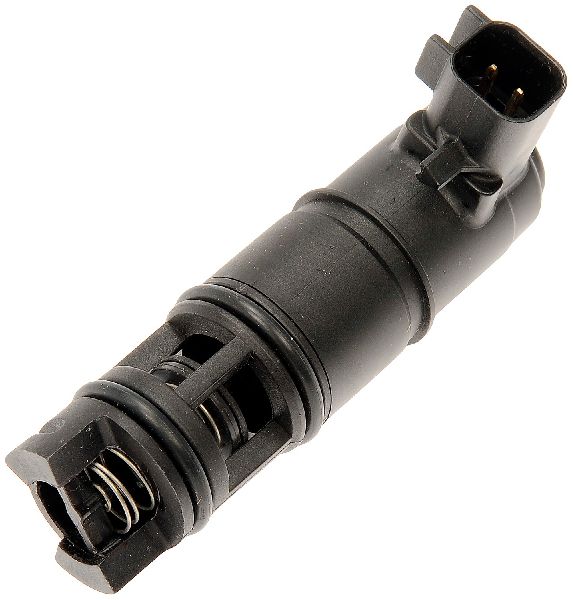
Aftermarket price range: $15-$25 - EVAP Vapor Canister Purge Valve
(OEM #ACDelco 214-2317 (GM 12690582, 12630282))— A very common failure item on GM vehicles with the 3.6L V6 engine. It gets stuck open or closed, causing a leak code.
Trusted brands: ACDelco, Dorman, Standard Motor Products
OEM price range: $40-$70
Aftermarket price range: $25-$50 - EVAP Vapor Canister Vent Valve Solenoid
(OEM #ACDelco 214-2149 (GM 23481275) - Verify with VIN)— This valve fails to close, preventing the system from sealing itself for the required pressure test. Its location near the rear of the vehicle makes it susceptible to damage.
Trusted brands: ACDelco, Dorman, Standard Motor Products (SMP)
OEM price range: $35-$60
Aftermarket price range: $20-$45
Related Codes That Often Appear With This One
- P0442 — This code indicates a small EVAP leak. It can appear alongside P0455 if the system has multiple leaks or if a leak is borderline between small and large. The official TSB for the XT6, #21-NA-124, explicitly groups these two codes 🎬 Watch: Diagnostic guide for these common GM EVAP codes. for the same diagnostic procedure.
- P0496 — This code indicates 'EVAP Flow During a Non-Purge Condition,' which almost always points directly to a faulty EVAP purge valve that is stuck open.
- P0449 — This code points to a fault in the EVAP Vent Solenoid Control Circuit. Seeing this with P0455 is a strong indicator that the vent solenoid or its wiring is the root cause.
Technical Service Bulletins (TSBs) & Recalls
- Bulletin #21-NA-124: Provides diagnostic tips and a specific testing hierarchy for technicians to follow when diagnosing DTCs P0442 and/or P0455 on 2020-2023 models. It emphasizes checking connections before replacing parts.
Mechanic-Grade Diagnostic Values
- EVAP Purge Valve Solenoid Resistance — expected: 15 to 38 ohms (General Motors). Failure: A reading significantly outside this range suggests a faulty internal coil.
- EVAP Vent Valve Solenoid Resistance — expected: 20 to 65 ohms (General Motors). Failure: A reading outside this range indicates a damaged solenoid winding.
- Fuel Tank Pressure (FTP) Sensor Voltage (Key On, Engine Off, atmospheric pressure) — expected: ~1.4V to 2.5V. Failure: A reading stuck high (near 5V) or low (near 0V) indicates a sensor or wiring fault. The voltage should decrease as vacuum is applied during a test.
Scan Tool Commands That Help
- GDS2 (or equivalent professional scan tool): EVAP Service Bay Test / Functional Test — This is an automated test routine that commands the EVAP system through a test cycle to confirm a leak. It will provide a 'Pass' or 'Fail' result, often specifying the leak size. Note: This test has preconditions, such as the fuel level being between 15-85% and engine coolant temperature being below a certain threshold (e.g., <158°F).
- GDS2 (or equivalent professional scan tool): Output Control > EVAP Purge/Seal — This function allows a technician to manually command the vent valve to close (seal) and the purge valve to open, while monitoring the Fuel Tank Pressure (FTP) sensor data. This is used to confirm if the valves are responding to commands and if the system can build a vacuum.
When the Usual Fixes Don't Work
- While a smoke test is the standard procedure for P0455, a 'pass' on the smoke test does not guarantee the absence of a fault. In cases where no leak is found, the root cause can be a faulty Fuel Tank Pressure (FTP) sensor. The vehicle's computer may trigger the P0455 code because it commands the EVAP system to seal and create a vacuum but sees no corresponding change in pressure from the FTP sensor. The system's logic interprets this lack of change not as a sensor failure, but as a leak so massive that a vacuum cannot be established, leading to a misdiagnosis if the technician only focuses on finding a physical leak.
OEM Part Supersession History
10382080, 20995471, 25932566, and others→23481275— Part consolidation and design updates over many model years.
Heads up: Part 23481275 is a widely used GM vent valve. While it is listed for the XT6 platform, always verify fitment with a VIN as connector or hose orientation may have changed on older superseded parts.
Model Year Variations Within This Range
- 2020 vs 2021-2023: The estimated replacement cost for the Fuel Tank Pressure (FTP) Sensor is noted to be significantly different for the 2020 model year compared to later years. RepairPal estimates a range of $344-$458 for the 2020 XT6, while the 2021-2023 models are estimated at $539-$745, suggesting a difference in the part itself or the labor involved.
Helpful Videos
Used OEM Parts in Stock
New Aftermarket Parts Available


The information in this article is provided for general reference and educational purposes only. Vehicle specifications, procedures, and part compatibility can vary by production date, trim level, and region. Always consult your vehicle's factory service manual and verify part numbers before purchasing or performing repairs. Safety-critical components such as airbags, seat belts, and braking systems should be installed by a qualified professional.
- Cadillac XT6:
- 🧭 Diagnostic Flowchart
- 🎬 Helpful Videos
- 🛍️ Shop This Part
- What's Unique About the 2020-2023 Cadillac XT6
- Symptoms You May Notice
- Most Likely Causes
- Rare But Worth Checking
- Diagnosis Steps
- Parts You'll Likely Need
- Related Codes That Often Appear With This One
- Technical Service Bulletins (TSBs) & Recalls
- Mechanic-Grade Diagnostic Values
- Scan Tool Commands That Help
- When the Usual Fixes Don't Work
- OEM Part Supersession History
- Model Year Variations Within This Range
- 🎟️ Get 5% Off