

P0455 on 2005-2010 Chevrolet Cobalt: EVAP Large Leak Causes and Fixes
For a 2005-2010 Cobalt, code P0455 is most often caused by a loose or faulty gas cap, a bad EVAP purge valve on the engine, or a faulty vent valve at the rear. If those are fine, check for rusted-out EVAP lines under the car, a known and widespread issue on this platform. A new gas cap is under $25, while a purge valve is about $25-$50 and is an easy DIY fix.
- Always check the gas cap first; it's the easiest and most common fix for P0455.
- The second most likely culprit is the EVAP purge valve on top of the engine, which is inexpensive and easy for a DIYer to replace in under 30 minutes.
- If the cap and purge valve are good, suspect a rusted-out EVAP line under the car, a known weak point on the Cobalt.
- A smoke test is the fastest way to find the exact location of a leak if it's not obvious from a visual inspection.
- If you also have a P0449 code, the vent solenoid is the problem. If you have a P0496, the purge solenoid is the problem.
What's Unique About the 2005-2010 Chevrolet Cobalt
While the P0455 code is common across many vehicles, the 2005-2010 Cobalt and its platform mates (Pontiac G5, Saturn Ion) have a specific, notorious weakness: the metal EVAP and fuel lines that run underneath the car are prone to rusting through. This happens where factory foam insulation traps moisture against the lines, especially on the driver's side near the rear wheel well and exhaust path. This issue can cause a persistent P0455 code that won't be solved by replacing the gas cap or common valves. Additionally, GM issued technical bulletins for this platform related to false P0455 codes that could sometimes be fixed with a computer reflash (PIP4078A), particularly for 2007 models.
Symptoms You May Notice
- Check Engine Light is on
- A "Check Gas Cap" message may appear on the driver information center (DIC)
- A distinct smell of raw fuel, especially around the rear of the vehicle or after refueling
- In rare cases, a slightly rough idle or difficulty starting immediately after refueling, which can point specifically to a stuck-open purge valve
- Replacing the Fuel Tank Pressure (FTP) sensor. While possible, this sensor is more likely to set its own specific codes (like P0452 or P0453) if it fails. It is rarely the cause of a P0455 leak code on its own, though some forum users have reported it as a fix.
Most Likely Causes
- Loose, Damaged, or Incorrect Gas Cap 🔴 High Probability → Shop Fuel Tank Cap This is the most common cause for any vehicle. The rubber O-ring on the cap can dry out and crack over time, preventing a proper seal. Aftermarket caps are a frequent source of problems.
How to confirm: Ensure the cap is tightened until it clicks at least once. Inspect the rubber seal for cracks, stiffness, or damage. An incorrect aftermarket cap can also cause this. Check the fuel filler neck for rust or damage where the cap seals.
Typical fix: Tighten the cap. If the seal is bad or the cap is incorrect, replace it with a new OEM-spec gas cap. The ACDelco GT284 is a common OEM replacement.
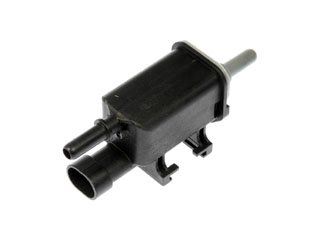
Est. part cost: $15-$30 - Faulty EVAP Purge Solenoid Valve 🔴 High Probability → Shop Vapor Canister This is a very common failure item on GM vehicles of this era. The valve can get stuck open, creating a constant vacuum leak into the intake manifold, which can also trigger a P0496 code.
How to confirm: The purge valve is located on top of the engine, under the plastic "Ecotec" cover. Remove the valve (it slides off a bracket) and try to blow through it. It is a normally-closed valve, so if you can blow through it at all, it has failed 🎬 Watch: How to test and replace the purge valve and needs to be replaced.
Typical fix: Replace the EVAP purge solenoid valve. This is a simple repair that takes about 15 minutes with basic tools. The OEM part is GM 12597567 or ACDelco 214-1680. Dorman offers a popular aftermarket version, 911-032.
Est. part cost: $25-$50 - Rusted or Cracked EVAP Lines 🟡 Medium Probability The metal EVAP lines on the Cobalt chassis are known to rust out, particularly under a section of foam insulation near the rear driver's side wheel and exhaust. This creates a significant leak that is a common source of P0455 on these cars, especially in the rust belt.
How to confirm: Visually inspect the metal lines running from the engine bay to the fuel tank. Pay close attention to the area under the car, on the driver's side, where the lines might be covered in insulation. If significant rust or a visible hole is found, this is the cause. A smoke test will quickly reveal a leak from this area.
Typical fix: The damaged section of the line must be replaced. Do not attempt to patch. Repair kits with flexible nylon or nickel-copper lines are available to bypass the rusted metal section (e.g., Dorman 800-850). This is a more involved repair due to proximity to the fuel line. 🎬 See how to replace rusted EVAP and fuel lines
Est. part cost: $50-$100 for a line repair kit - Faulty EVAP Vent Solenoid / Valve 🟡 Medium Probability → Shop Vapor Canister Located at the rear of the car near the charcoal canister, this valve can get stuck open or closed due to dirt, debris, or internal failure. Its location exposes it to road salt and debris.
How to confirm: The vent valve is normally open. A scan tool that can command the valve closed is needed for a definitive test. During a smoke test, if smoke exits the vent valve assembly when it is commanded closed, the valve is faulty. This part is often associated with code P0449.
Typical fix: Replace the EVAP vent solenoid. It is located near the charcoal canister at the rear of the vehicle. The OEM part is GM 22865590, often sold as ACDelco 214-2149 or Dorman 911-140.
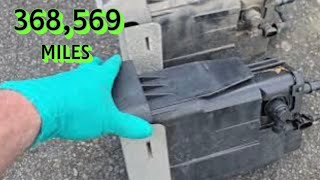
Est. part cost: $40-$60 - Cracked EVAP Charcoal Canister ⚪ Low Probability → Shop Vapor Canister The canister is a plastic box located at the rear of the vehicle, near the vent solenoid. It can be cracked by road debris or impact, causing a large leak.
How to confirm: Visually inspect the canister for any cracks or physical damage. A smoke test will show smoke billowing out of any cracks.
Typical fix: Replace the charcoal canister assembly. A common part number is Dorman 994-478.
Est. part cost: $100-$200
Rare But Worth Checking
- Damaged Fuel Filler Neck: → Shop Fuel Filler Neck The metal neck where the gas cap screws on can become corroded or bent, preventing the cap from sealing properly. Check this area if a new gas cap doesn't solve the problem.
- ECM Software Glitch: GM issued a Preliminary Information Bulletin (PIP4078A) for 2007 models where the ECM could falsely set a P0455. The fix was to reprogram the ECM with updated software. This is rare but worth considering if no physical leak can be found after extensive testing.
Diagnosis Steps
- Check the gas cap. Remove it, inspect the seal for cracks, and reinstall it, making sure it clicks several times. Clear the code and drive for a few days to see if it returns.
- If the code returns, locate the EVAP purge valve on top of the engine under the plastic cover. Disconnect it and try to blow through it. If air passes, it's bad and needs to be replaced.
- Visually inspect all accessible EVAP hoses in the engine bay for cracks or disconnections.
- Raise the vehicle safely and inspect the EVAP vent solenoid and charcoal canister near the fuel tank for any visible damage. The vent solenoid is a common failure point.
- Carefully inspect the hard metal EVAP lines that run along the driver's side of the underbody. Peel back any foam insulation and check for severe rust or flaking, which is a very common failure on Cobalts.
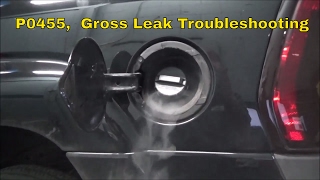
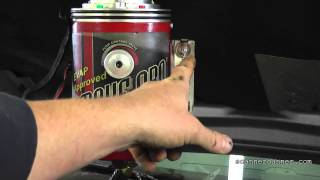
- If no obvious leak is found, the most effective next step is to have the system professionally smoke tested. A machine fills the EVAP system with a harmless, visible smoke. The leak will be wherever smoke escapes. 🎬 Watch: How to perform a professional EVAP smoke test
- Using a capable scan tool, command the vent and purge solenoids on and off to verify their operation.
Parts You'll Likely Need
- EVAP Canister Purge Solenoid Valve
(OEM #12597567)— This is a very frequent failure point on the Cobalt. It gets stuck open, causing a large leak that the computer detects. Often throws P0496 as well.
Trusted brands: ACDelco (214-1680), Dorman (911-032)
OEM price range: $35-$50
Aftermarket price range: $25-$40 - Gas Cap
(OEM #GT284)— The seal fails over time, or the ratchet mechanism wears out. This is the simplest and most common cause of P0455.
Trusted brands: ACDelco
OEM price range: $20-$30
Aftermarket price range: $15-$25 - EVAP Vent Solenoid Valve
(OEM #22865590)— Located in a vulnerable spot, this valve fails from dirt and corrosion, getting stuck open or closed. Often throws P0449 as well.
Trusted brands: ACDelco (214-2149), Dorman (911-140)
OEM price range: $45-$60
Aftermarket price range: $35-$50 - EVAP Line Repair Kit — Needed to fix the common issue of rusted-out metal EVAP lines under the car. These kits provide flexible line to bypass the damaged section.
Trusted brands: Dorman (800-850), Inline Tube
OEM price range: N/A
Aftermarket price range: $50-$100
Related Codes That Often Appear With This One
- P0442 — P0442 indicates a small EVAP leak. You might see this code intermittently before the leak worsens and triggers the P0455 for a large leak.
- P0449 — This code specifically points to a fault in the EVAP vent solenoid valve circuit. If you see P0455 and P0449 together, the vent solenoid is almost certainly the problem.
- P0496 — This code indicates 'EVAP Flow During a Non-Purge Condition,' which almost always points to a purge valve that is stuck open. If you see it with P0455, the purge valve is the prime suspect.
Technical Service Bulletins (TSBs) & Recalls
- PIP4078A: Intermittent P0455 Set, No Leak Found - This Preliminary Information Bulletin from GM addressed situations on 2007 models where a P0455 code would set without any detectable physical leak. The recommended fix was to reprogram the Engine Control Module (ECM) with updated software. This should be considered a last resort after all physical leak checks have been exhausted.
Platform-Specific Known Issues
- The metal EVAP lines running along the chassis are highly susceptible to rust, especially where they are covered by factory insulation. A leak in this line is a common cause of P0455 on Cobalts that have been driven in winter climates.
- GM Preliminary Information Bulletin #PIP3746A suggests inspecting the EVAP pipe connection at the fuel tank for leaks on 2006-2007 models.
- GM Preliminary Information Bulletin #PIP4078A notes that some 2007 models may require an ECM reprogram to correct a false P0455 code.
Mechanic-Grade Diagnostic Values
- Fuel Tank Pressure (FTP) Sensor Voltage at atmospheric pressure (Key On, Engine Off, sensor unplugged or system open) — expected: ~1.55 Volts. Failure: A reading of 0V or maxed out near 5V (e.g., 4.80V) indicates a faulty sensor or wiring issue. A 2006 Cobalt with an internally shorted sensor showed a constant 4.80V when plugged in.
Scan Tool Commands That Help
- Tech2, GDS2, or capable aftermarket scanner: EVAP System Test: Command Vent Valve/Solenoid Closed — This is the first step in performing a smoke test. The vent valve is normally open, so it must be commanded closed to seal the system and allow it to be pressurized with smoke to find a leak.
- Tech2, GDS2, or capable aftermarket scanner: EVAP Purge/Seal — This function on a GM scan tool initiates the onboard diagnostic test sequence, closing the vent valve and opening the purge valve to draw a vacuum on the tank, then sealing the system to monitor for vacuum decay, which is how the ECM detects the leak in the first place.
Wiring & Ground Locations
- G103 / G105 — On the engine block, typically near the transmission bellhousing or starter motor area.. The Engine Control Module (ECM) and its sensors, including the EVAP solenoids, rely on clean engine grounds. A corroded or loose ground at this location can cause erratic voltage and unpredictable behavior from any ECM-controlled component, potentially leading to false EVAP codes or solenoids failing to operate correctly.
- EVAP Purge Solenoid Connector — On the EVAP purge solenoid, located on the driver's side of the engine, mounted to the cylinder head.. The two pins are for the 12V ignition supply and the ground-side control from the ECM. A TSB for similar models noted that the wiring harness could chafe against the solenoid's metal mounting bracket, causing a short. Checking for 12V with key-on and for a pulsing ground signal from the ECM with a multimeter during a purge command can diagnose circuit issues.
Real Owner Repair Stories
- YouTube video from a Cobalt SS owner (Chevrolet Cobalt SS (GM Delta Platform)) — P0455 gross EVAP leak code.
❌ Tried (didn't work) The owner immediately suspected the common platform issue rather than starting with the gas cap or valves.
✅ What actually fixed it The rusted-through metal EVAP line under the car was replaced with a nylon line repair kit. The video clearly shows the original line completely disintegrated under the factory foam insulation near the rear wheel. - CobaltSS.net forum user 'Hockeyman' (2007 Chevrolet Cobalt) — P0455 code and a "check gas cap" message on the DIC.
❌ Tried (didn't work) A smoke test performed at the dealership found no leaks in the EVAP system.
✅ What actually fixed it The dealer technician informed the owner about a GM technical bulletin (PIP4078A) for 2007 models where the ECM could set a false P0455 code. The recommended fix was an ECM reflash. The owner, having an aftermarket tune, was hesitant but this pointed to the root cause being software sensitivity, not a physical leak.
"I Checked Everything" — The Actual Cause
- A known issue for the 2007 Cobalt, documented in GM bulletin PIP4078A, involves the ECM being overly sensitive and triggering a P0455 code even when no leak is present. In these cases, a smoke test will pass, and the only resolution is to have a GM dealer reprogram the ECM with updated software to adjust the test's sensitivity.
When the Usual Fixes Don't Work
- While the most common advice for P0455 on any car is to check the gas cap first, for the 2005-2010 Cobalt this can be misleading. Due to a design flaw where foam insulation traps moisture, the metal EVAP lines under the car are extremely prone to rusting completely through. Many owners will waste time and money on gas caps and solenoids only to find the true cause is a large, visible hole in the underbody EVAP line that requires a more involved repair with a line kit. For this specific car, a visual inspection of the underbody lines should be performed early in the diagnostic process, especially for vehicles in the rust belt.
OEM Part Supersession History
12597567 (Purge Solenoid)→12606684, then 12735397— Standard part evolution and minor design updates by the manufacturer.
Heads up: These part numbers, along with service replacements like ACDelco 214-1680 and Dorman 911-032, are generally interchangeable for this application.19177699 (Vapor Canister)→19259320— Part update/consolidation.
Heads up: CRITICAL: This part is for vehicles with Federal Emissions (RPO code FE1). It is NOT compatible with California Emissions (RPO code NE1) vehicles, which use a different EVAP system and canister. Installing the wrong one will result in persistent check engine lights.
Model Year Variations Within This Range
- 2007: A specific software sensitivity issue exists for this model year. GM issued Preliminary Information Bulletin PIP4078A advising that a false P0455 code could be set with no actual leak present. The official fix is an ECM software update from a GM dealer.
- 2005-2010: Vehicles were manufactured with two different emissions systems: Federal (FE1) and California (NE1). The vapor canister and some related plumbing are different between these two systems and are not interchangeable. Check the vehicle's RPO code sticker before ordering a replacement canister.
Diagnostic Flowchart
Other Known Issues on This Vehicle
Issues unrelated to this code that are worth knowing about as an owner of this generation:
- Electric Power Steering (EPS) Failure 🔴 High — Extremely common across all model years, leading to multiple recalls. Can occur at any mileage. (Ref: Recalls: 10V073000, 14V153000. GM campaign N100023.)
- Ignition Switch Failure 🔴 High — Widespread, especially in 2005-2007 models. A heavy keychain could cause the switch to move out of the 'Run' position, shutting off the engine and disabling airbags. (Ref: Recalls: 14V047000, 14E021000. GM campaigns 14113, 14133.)
- Timing Chain Tensioner/Guide Failure 🟠 Medium — Common on the 2.2L Ecotec engine, often presenting as a rattling noise on cold starts. Typically occurs after 80,000 miles. If ignored, can lead to catastrophic engine damage.
- Fuel Line and Brake Line Rust 🔴 High — Very common in regions using road salt. Lines rust under the car, particularly where they are held by plastic clips or covered by insulation, leading to fuel or brake fluid leaks.
- Shifter Cable / Key Stuck in Ignition 🟡 Low — Common issue where the shifter cable fails, preventing the key from being removed from the ignition.
Used vs. New Parts: Buying Guide for This Vehicle
When a used part is the smart pick: For this repair, a used part can be a cost-effective choice for large, durable components like the plastic charcoal canister body or the fuel filler neck, provided they are inspected carefully.
Donor-vehicle mileage cap: roughly under 100000 miles for the part to have meaningful remaining life.
What to inspect on the donor part:
- For a charcoal canister, check for any signs of liquid fuel saturation, which indicates the donor car was frequently overfilled and the canister may be ruined.
- Inspect all plastic components for brittleness, stress fractures, or cracks from age and heat.
- Ensure all hose connection ports are intact and not broken or cracked.
- For a fuel filler neck, confirm the gas cap sealing surface is smooth and free of deep rust or deformation.
OEM-only on this vehicle (don't cheap out):
- No part for this specific repair is strictly 'OEM-only', but new electronic components (purge and vent solenoids) are strongly recommended over used ones due to their high failure rate and the low cost of new replacements.
Aftermarket brands forum-validated for this vehicle:
- Dorman (e.g., 911-032 Purge Valve, EVAP line repair kits)
- Standard Ignition (SMP)
- ACDelco (OEM supplier)
Real Owner Stories
Aggregated from forums and TSBs cited above. Mileages and costs reflect what owners reported in those sources.
2009 Chevrolet Cobalt SS
Symptoms: Check Engine Light (CEL) with code P0455 and a 'Check Gas Cap' message appearing on the driver information center.
What fixed it: The owner replaced the gas cap with a new one from the dealer.
Source hint: Cobalt SS Network: CEL P0455 Help!!!
Chevrolet Cobalt SS
Symptoms: Persistent P0455 code caused by severe rust on the metal fuel and EVAP lines, particularly where factory insulation trapped moisture against the chassis.
What fixed it: Replaced the original rusted metal lines with a nylon line kit from Inline Tube.
Source hint: YouTube: Rusty Fuel and Evap (P0455) Lines Get Replaced on GM's Delta Platform (Cobalt SS)
2007 Chevrolet Cobalt
Symptoms: Chasing P0455 and P0446 codes; suspected issues with the fuel filler neck and vapor canister wiring.
What fixed it: Checking for rust holes in the fuel filler neck behind the gas cap and inspecting for rotted wires on the vapor canister sensor.
Source hint: Reddit r/ChevyCobalt: Chasing after P0455 and P0446
Chevrolet Cobalt
Symptoms: P0455 code present; owner advised to inspect the black box near the gas tank.
What fixed it: Inspecting the fuel tank pressure sensor located on the side of the EVAP charcoal canister.
Source hint: Chevy Cobalt Forum: p0455
Related OBD-II Codes
Frequently Asked Questions
My 2007 Cobalt has a P0455 but the mechanic can't find a leak. Is there a software fix?
I'm getting a 'Check Gas Cap' message on my DIC. Which replacement cap should I use for my Cobalt?
Where are the EVAP lines most likely to rust on a Cobalt SS?
How can I test the purge valve on my Ecotec engine myself?
Is there a specific TSB for EVAP connection leaks on 2006-2007 Cobalts?
What part should I check if I have both P0455 and P0496 codes?
Helpful Videos
Used OEM Parts in Stock
New Aftermarket Parts Available


The information in this article is provided for general reference and educational purposes only. Vehicle specifications, procedures, and part compatibility can vary by production date, trim level, and region. Always consult your vehicle's factory service manual and verify part numbers before purchasing or performing repairs. Safety-critical components such as airbags, seat belts, and braking systems should be installed by a qualified professional.
- Chevrolet Cobalt:
- 🧭 Diagnostic Flowchart
- 🎬 Helpful Videos
- 🛍️ Shop This Part
- What's Unique About the 2005-2010 Chevrolet Cobalt
- Symptoms You May Notice
- Most Likely Causes
- Rare But Worth Checking
- Diagnosis Steps
- Parts You'll Likely Need
- Related Codes That Often Appear With This One
- Technical Service Bulletins (TSBs) & Recalls
- Platform-Specific Known Issues
- Mechanic-Grade Diagnostic Values
- Scan Tool Commands That Help
- Wiring & Ground Locations
- Real Owner Repair Stories
- "I Checked Everything" — The Actual Cause
- When the Usual Fixes Don't Work
- OEM Part Supersession History
- Model Year Variations Within This Range
- Other Known Issues on This Vehicle
- Used vs. New Parts: Buying Guide for This Vehicle
- Real Owner Stories
- 2009 Chevrolet Cobalt SS
- Chevrolet Cobalt SS
- 2007 Chevrolet Cobalt
- Chevrolet Cobalt
- Related OBD-II Codes
- Frequently Asked Questions
- 🎟️ Get 5% Off