

P0455 on 2005-2009 Chevrolet Equinox: EVAP Large Leak Causes and Fixes
For a first-generation (2005-2009) Equinox, code P0455 most often means you have a loose, worn, or non-OEM gas cap. If a new, genuine OEM cap doesn't fix it, the next most likely culprit is a failed EVAP Vent Solenoid located near the charcoal canister under the vehicle. Avoid aftermarket gas caps as they are a known cause of this code on this platform.
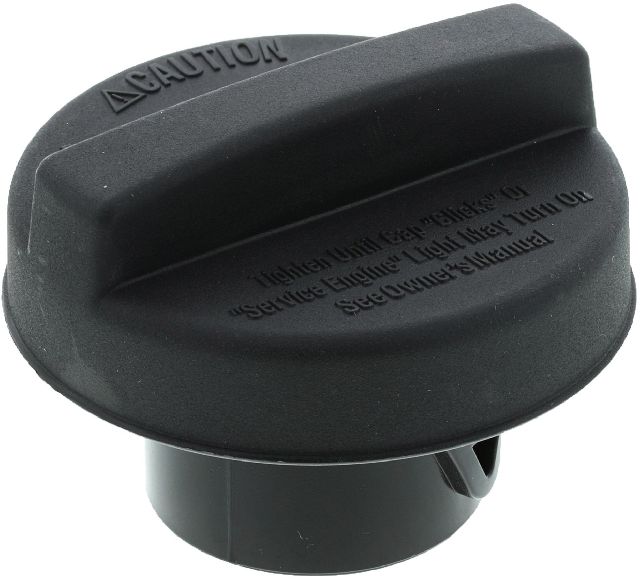
- Start with the simplest fix: Check that your gas cap is tight. If the light returns, replace it with a genuine ACDelco cap, as aftermarket versions are a known problem for this code.
- If a new OEM gas cap doesn't solve the issue, the EVAP Vent Solenoid (under the car by the canister) is the next most likely part to have failed.
- Do not replace multiple parts randomly. If the gas cap doesn't fix it, the most efficient next step is a smoke test to find the exact source of the leak, which can save you time and money.
- This code is not a mechanical emergency and will not harm your engine, but it will prevent you from passing an emissions test.
What's Unique About the 2005-2009 Chevrolet Equinox
On the 2005-2009 Equinox and its Pontiac Torrent twin, the EVAP system components are fairly standard for GM vehicles of this era. However, owner experiences frequently highlight that these vehicles are particularly sensitive to the gas cap's seal, and aftermarket caps are a common source of the P0455 code, even when new. The EVAP vent solenoid, located under the vehicle near the spare tire, is also a frequent failure point due to its exposure to road debris, dirt, and moisture, which can cause it to stick open or fail electrically.
Symptoms You May Notice
- Check Engine Light is on
- A faint smell of gasoline, especially around the rear of the vehicle
- No noticeable impact on engine performance or drivability
- Difficulty starting immediately after refueling (this strongly suggests a stuck-open purge valve)
- Replacing the purge valve when the vent valve is the actual problem.
- Replacing multiple EVAP components without performing a smoke test to pinpoint the leak's exact location.
- Using a cheap aftermarket gas cap, which often fails to seal properly and can cause the code to return.
Most Likely Causes
- Loose, Damaged, or Incorrect Gas Cap 🔴 High Probability → Shop Fuel Tank Cap The seal on the gas cap can degrade over time. This platform is known to be sensitive, and aftermarket caps often do not seal correctly, triggering a leak code.
How to confirm: First, ensure the cap is tight (at least three clicks). Inspect the cap's rubber O-ring for cracks, stiffness, or damage. Check if the cap is an aftermarket brand. A definitive test is to have a smoke test performed; many shops find that even new aftermarket caps will leak smoke.
Typical fix: Replace the gas cap with a new, genuine OEM (ACDelco) part. This is the cheapest and most common fix.
Est. part cost: $15-$30 - Faulty EVAP Vent Valve Solenoid 🟡 Medium Probability → Shop Vapor Canister Located under the vehicle near the charcoal canister, this solenoid is exposed to road grime, salt, and moisture, which can cause it to fail, often by sticking open.
How to confirm: A mechanic can command the valve closed with a scan tool while performing a smoke test. A DIY method involves removing the valve and testing it with a 12V power source to see if the plunger actuates. If it's stuck open or doesn't click, it needs replacement.
Typical fix: Replace the EVAP vent valve solenoid. 🎬 See this walkthrough for replacing the vapor canister vent valve. The part is often sold as a kit with a new harness pigtail if corrosion is an issue.
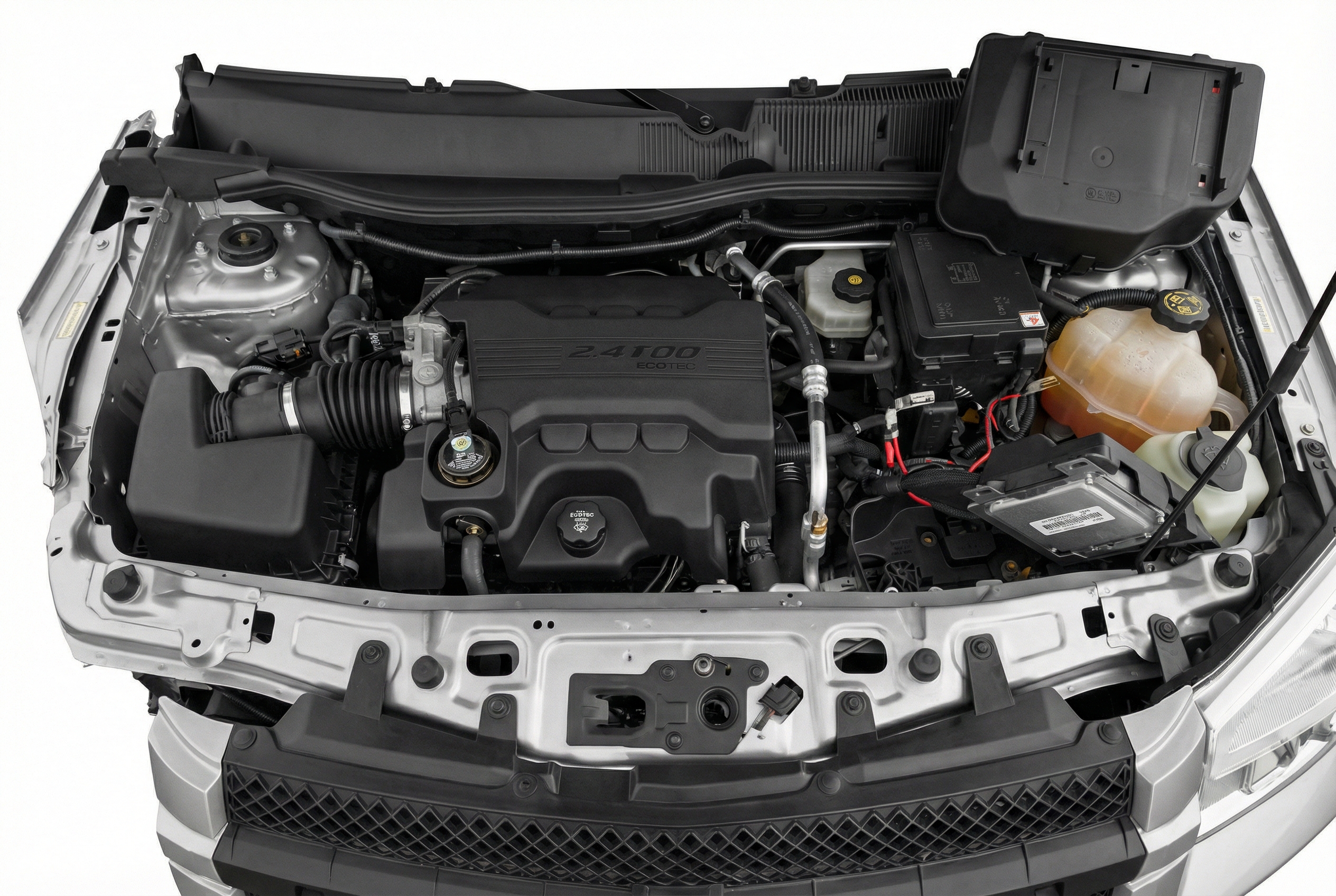
Est. part cost: $25-$50 - Faulty EVAP Purge Valve Solenoid ⚪ Low Probability → Shop Vapor Canister This valve, located in the engine bay on top of the intake manifold, can get stuck open or closed. While it fails, it's slightly less common for a P0455 than the vent valve. A stuck-open valve can sometimes cause rough running or starting issues after a fill-up.
How to confirm: Remove the valve (located on the engine). With the engine off, try to blow through it. If air passes through, it is stuck open and is faulty. A stuck-closed valve will prevent the system from pulling a vacuum during its test, which can also trigger P0455.
Typical fix: Replace the purge valve solenoid. This is a very easy repair, typically taking only a few minutes. 🎬 Watch: How to replace the EVAP purge solenoid yourself.
Est. part cost: $25-$45 - Cracked or Disconnected EVAP Hoses/Lines ⚪ Low Probability
How to confirm: A visual inspection may reveal obvious cracks or disconnections, especially around the charcoal canister or purge valve. A definitive diagnosis requires a smoke test, which forces smoke into the EVAP system to reveal the exact location of any leaks. 🎬 Watch: A professional diagnosis of the P0455 code on this model. TSB 21-NA-124 specifically advises checking for unseated lines first.
Typical fix: Replace the damaged section of hose or reconnect the line.
Est. part cost: $10-$50
Rare But Worth Checking
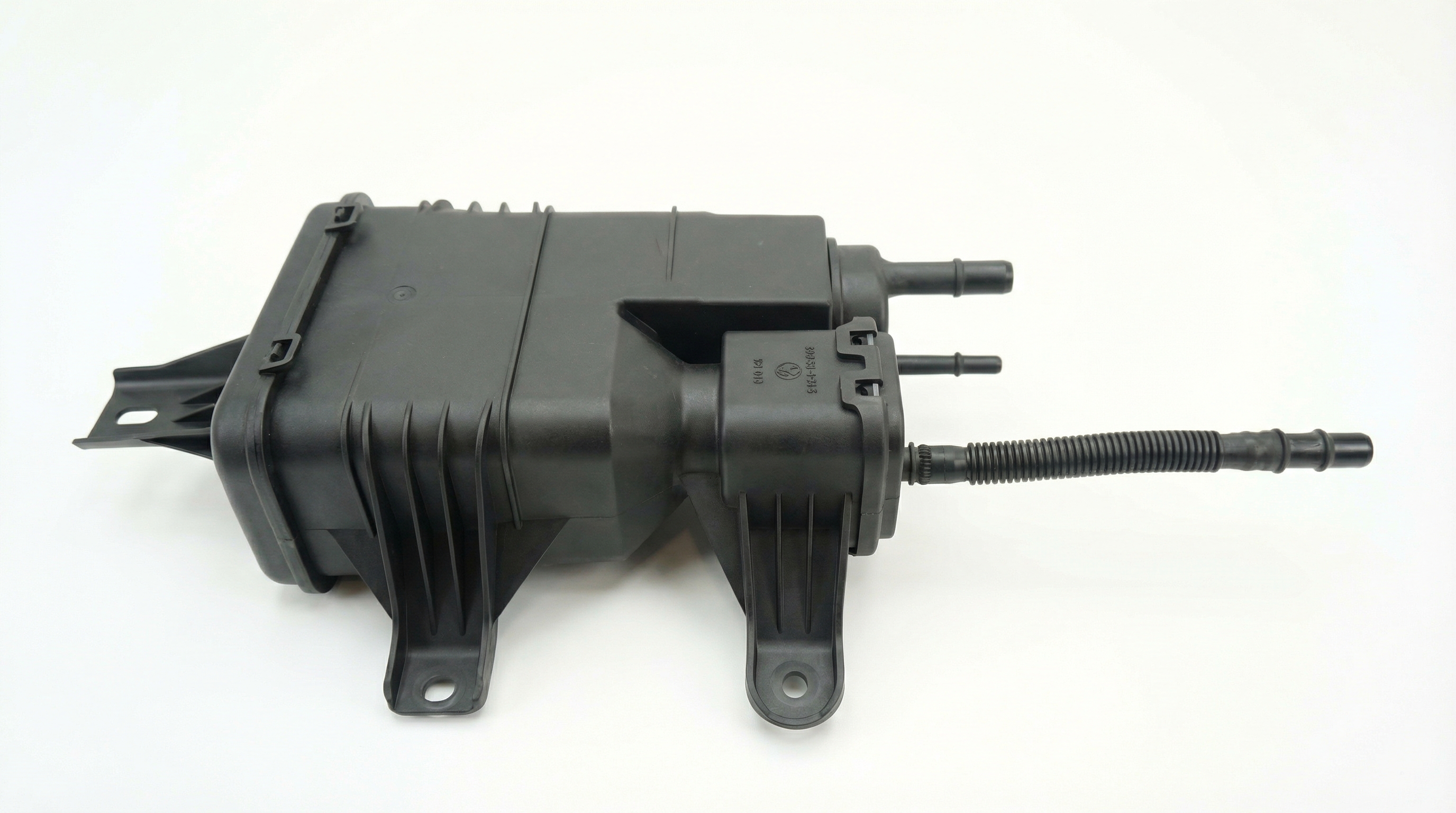
- Cracked EVAP Charcoal Canister: → Shop Vapor Canister The plastic housing of the canister can develop cracks from age or impact from road debris, creating a large leak. This is usually found with a smoke test. Over-filling the gas tank can also saturate the canister with raw fuel, causing it to fail.
- Leaking Fuel Tank Filler Neck: → Shop Fuel Tank Corrosion can cause the metal filler neck (where you insert the gas nozzle) to rust through, creating a large leak. This is more common in regions that use road salt. Inspect the area where the gas cap seats for bubbling paint, rust, or pitting. A forum for the Pontiac Torrent mentioned this as a possible cause found via smoke test.
- Faulty Fuel Tank Pressure (FTP) Sensor: → Shop Fuel Tank In rare cases, the sensor that monitors pressure in the system can fail, tricking the computer into thinking there is a leak when the system is actually sealed. This is typically diagnosed after a smoke test finds no leaks and all valves have been tested. One owner of a similar GM vehicle reported this as the final fix after replacing all other common parts.
Diagnosis Steps
- Check the Gas Cap: Ensure it is tight and clicks at least three times. Inspect the seal for any cracks or wear. If it's an aftermarket cap, replace it with an OEM part first as a cheap and effective diagnostic step.
- Clear the Code: After tightening/replacing the cap, clear the code with an OBD-II scanner and drive for a few days to see if it returns.
- Visual Inspection: If the code returns, visually inspect all accessible EVAP hoses in the engine bay and under the vehicle for obvious cracks, disconnections, or damage. Pay special attention to the filler neck for signs of rust or damage.
- Test the Purge Solenoid: Locate the purge solenoid on the engine. Disconnect it and try to blow through it. If air passes, it's stuck open and needs to be replaced. Also check for difficulty starting after refueling, a classic symptom.
- Test the Vent Solenoid: Locate the vent solenoid near the charcoal canister under the vehicle. It is a normally open valve. A scan tool can command it closed for testing. Without a scan tool, it can be removed and tested with a 12V power source to confirm it actuates (you should hear a click).
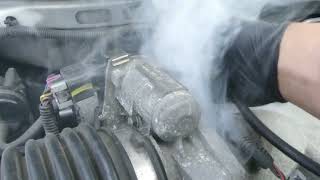
- Perform a Smoke Test: This is the most effective way to find leaks and avoid unnecessary parts replacement. A smoke machine is connected to the EVAP system, and smoke will visibly exit from any leak points, such as cracked hoses, a faulty canister, a bad filler neck, or even a faulty new aftermarket gas cap.
Parts You'll Likely Need
- Fuel Tank Cap
(OEM #GT284 (ACDelco), GM #15832227)— This is the most common cause of P0455. The original seal wears out, and aftermarket caps are notoriously unreliable on this model.
Trusted brands: ACDelco
OEM price range: $20-$30
Aftermarket price range: $10-$20 - Vapor Canister Vent Valve Solenoid
(OEM #214-2149 (ACDelco), GM #25932571)— This part frequently fails due to its exposed location under the vehicle, causing it to stick open and create a large leak.
Trusted brands: ACDelco, Standard Motor Products, Dorman
OEM price range: $30-$45
Aftermarket price range: $20-$35 - Vapor Canister Purge Valve
(OEM #214-1105 (ACDelco), GM #12581282)— Less common than the vent valve, but can stick open and cause a large leak code.
Trusted brands: ACDelco, Standard Motor Products
OEM price range: $25-$45
Aftermarket price range: $20-$35
Related Codes That Often Appear With This One
- P0442 — P0442 indicates a small EVAP leak. If both codes are present, it may point to a single fault that is on the border between small and large, or multiple leaks of different sizes. GM TSB 21-NA-124 addresses diagnosing these codes together, advising a check of all line connections before component replacement.
- P0449 — P0449 indicates an electrical fault in the EVAP vent valve circuit. If the valve is both electrically faulty and stuck open, you will see P0449 and P0455 together. This strongly points to the vent solenoid or its wiring as the culprit.
- P0496 — P0496 indicates incorrect purge flow, almost always caused by a purge valve solenoid that is stuck open or leaking. If seen with P0455, the purge valve is a very high probability cause.
Technical Service Bulletins (TSBs) & Recalls
- 21-NA-124: Diagnostic tip for technicians when P0442 and/or P0455 are set. It advises a specific order of operations: 1) Investigate all EVAP lines for proper seating and damage. 2) Investigate the vent valve for malfunction (stuck open). 3) Investigate the purge valve. This prioritizes checking for simple connection issues before replacing parts.
- PIE0528: An older engineering bulletin where GM was investigating EVAP canister performance related to codes including P0455, indicating a known area of concern. This bulletin is now obsolete.
Platform-Specific Known Issues
- source — A common story on forums involves owners trying to fix a recurring P0455 by replacing parts one by one. A 2008 Equinox owner on equinoxforum.com described replacing the OEM gas cap, then the purge valve, then the vent solenoid and charcoal canister, only to have the light return each time. This highlights the frustration and expense that can be avoided by performing a proper smoke test after the gas cap replacement fails to solve the issue.
Mechanic-Grade Diagnostic Values
- EVAP Purge Valve Solenoid Resistance — expected: 15 to 30 Ohms. Failure: A reading far outside this range, or infinite (open circuit), indicates a faulty solenoid coil.
- EVAP Vent Valve Solenoid Connector Voltage — expected: Battery voltage (~12V) on the power feed wire (typically Red/White) with the ignition ON.. Failure: No voltage points to a blown fuse (e.g., EMISS 10A fuse) or an open circuit in the wiring.
- Fuel Tank Pressure (FTP) Sensor Voltage (Key On, Engine Off) — expected: Approximately 1.5 Volts with the gas cap removed (system at atmospheric pressure).. Failure: A reading that is significantly different (e.g., high voltage or showing a vacuum) when the system is open to the air suggests a faulty sensor.
Scan Tool Commands That Help
- Tech2 / GDS2 (or equivalent professional scanner): EVAP Vent Solenoid Control (ON/OFF) — This is a critical bidirectional command used during a smoke test. The vent solenoid is normally open, so smoke will just exit through it. This command forces the valve closed, sealing the system and allowing the smoke to build pressure and reveal leaks elsewhere.
- Tech2 / GDS2 (or equivalent professional scanner): EVAP Service Bay Test — This is an automated test that commands the entire EVAP system through a test cycle. It closes the vent valve, opens the purge valve to apply engine vacuum, and monitors the FTP sensor to see if the system holds vacuum. It's used to verify a repair or diagnose an intermittent fault without a smoke machine.
Wiring & Ground Locations
- EMISS Fuse — In the underhood fuse block. On a 2006 model, this is a 10A fuse. On some later models like the 2008, it may be labeled differently (e.g., fuse #16).. This fuse provides power to the EVAP canister vent solenoid. If it's blown, the solenoid cannot be commanded closed, creating a permanent large leak condition that will set P0455 or P0449.
- EVAP Vent Solenoid Connector — Under the vehicle, on the vent solenoid which is attached to the charcoal canister, located near the front of the fuel tank.. This 2-wire connector is the primary test point for the vent solenoid. The Red/White wire is the 12V power feed from the fuse. The other wire is the control wire that the ECM grounds to activate the solenoid. Corrosion here is common and can cause a circuit fault (P0449) or prevent the valve from closing.
- G101 — Ground point located at the left front of the engine compartment.. This is a primary engine bay ground. While not directly tied to the rear-mounted vent solenoid, it provides the ground reference for the ECM and engine-bay-mounted components like the purge solenoid. A poor ground can cause erratic behavior and false codes.
Real Owner Repair Stories
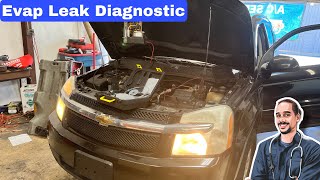
- Alex The Car Dr YouTube Channel (Chevrolet Equinox (first generation)) — P0455 (Large EVAP Leak)
❌ Tried (didn't work) The customer had already replaced the gas cap with a new aftermarket one, but the code persisted.
✅ What actually fixed it The diagnosis revealed two problems. First, the new aftermarket gas cap was faulty and leaked profusely during a smoke test. After swapping to a known-good OEM cap, the smoke test then revealed a second, smaller leak from a cracked hose nipple on the charcoal canister itself. The final fix required both a genuine OEM gas cap AND repairing the cracked canister hose connection. - Chevy Equinox Forum user 'Galileo' (2005 Chevrolet Equinox) — P0455 code
❌ Tried (didn't work) Performing a DIY smoke test without a scan tool.
✅ What actually fixed it The user did not post a final fix, but provided a critical diagnostic insight: during their DIY smoke test, smoke immediately exited from a vent under the vehicle. They correctly questioned how the system could detect a leak if this vent is always open. This highlights the fact that the EVAP vent valve is normally open and MUST be commanded closed with a scan tool for a smoke test to be effective, a detail many DIYers miss.
"I Checked Everything" — The Actual Cause
- In cases where a thorough smoke test reveals no leaks and the gas cap, purge valve, and vent valve have all been verified as good, the root cause can be a faulty Fuel Tank Pressure (FTP) sensor. The sensor can fail in a way that it sends an incorrect voltage signal to the ECM, essentially 'lying' and reporting a large leak when the system is perfectly sealed. This is an electrical failure, not a physical leak, which is why a smoke test will come back clean. Diagnosis requires checking the sensor's voltage output against specifications.
Model Year Variations Within This Range
- 2005 only: A specific Technical Service Bulletin (TSB 05-06-04-059) was issued for the 2005 model year. It addresses a restricted EVAP vent hose located near the fuel filler pipe that can become blocked, causing a P0446 (Vent Control Circuit) code and making the vehicle difficult to refuel. While P0446 is a different code, a severe restriction can sometimes affect the system's ability to test properly and could be related to a P0455 investigation.
Diagnostic Flowchart
Other Known Issues on This Vehicle
Issues unrelated to this code that are worth knowing about as an owner of this generation:
- Intake Manifold Gasket Failure 🔴 High — Extremely common. The original nylon/plastic gaskets degrade from exposure to Dex-Cool coolant and heat, typically failing between 60,000 and 120,000 miles. This can cause vacuum leaks (P0171, P0300) and/or coolant leaks.
- Head Gasket Failure 🔴 High — Common, and often occurs subsequent to or concurrently with intake manifold gasket failure due to overheating events. This is a major, costly repair.
- HVAC Blend/Mode Door Actuator Failure 🟠 Medium — Very common. Owners report a loud clicking/ticking sound from the dashboard, or the inability to switch between hot/cold air or change vent positions (floor/dash/defrost). The plastic gears inside the actuator fail.
- Power Steering Issues 🟠 Medium — Frequently reported. Issues include whining noises from the pump, intermittent loss of power assist, and leaks from the lines or rack and pinion assembly.
- Difficult Rear Spark Plug Access 🟡 Low — This is a design issue, not a failure. The rear bank of cylinders (1, 3, 5) is tucked against the firewall, making spark plug replacement notoriously difficult and labor-intensive. Many owners and shops tilt the engine forward to gain access.
Used vs. New Parts: Buying Guide for This Vehicle
When a used part is the smart pick: For this repair, used parts are generally not recommended for solenoids but can be considered for structural components. A used charcoal canister or fuel filler neck from a low-mileage, non-corroded donor vehicle (from a dry climate) can be a cost-effective option if thoroughly inspected.
Donor-vehicle mileage cap: roughly under 80000 miles for the part to have meaningful remaining life.
What to inspect on the donor part:
- For a charcoal canister, inspect all plastic hose nipples for hairline cracks or brittleness.
- For a fuel filler neck, check for any signs of rust, pitting, or flaking paint, especially on the sealing surface where the gas cap sits.
- Ensure the donor vehicle has no stored EVAP codes in its history.
- Avoid parts from vehicles that show signs of significant underbody corrosion or impact damage near the fuel tank.
OEM-only on this vehicle (don't cheap out):
- Fuel Tank Cap: Aftermarket gas caps are a widely documented cause of P0455 on this vehicle. Always use a genuine OEM (ACDelco) cap.
Aftermarket brands forum-validated for this vehicle:
- ACDelco (OEM)
- Standard Motor Products (SMP)
- Dorman (Often includes helpful harness adapters if the original connector is corroded)
Brands owners have reported issues with on this vehicle:
- Unbranded or 'white-box' gas caps and solenoids from online marketplaces have a high failure rate and often do not meet the precise sealing requirements of the GM EVAP system.
Real Owner Stories
Aggregated from forums and TSBs cited above. Mileages and costs reflect what owners reported in those sources.
2008 Chevrolet Equinox 3.4L V6 — 58000 miles
Symptoms: Reoccurring P0455 code despite replacing multiple parts.
What fixed it: The owner replaced the gas cap, purge valve, vent solenoid, and charcoal canister, but the light returned, illustrating the need for a smoke test to find the actual leak.
Source hint: EquinoxForum.net (2022-01-18) thread titled '2008 equinox 3.4 reoccurring p0455'
2005 Chevrolet Equinox 3.4L V6
Symptoms: Recurring P0455 code; owner performed a manual test on the purge valve.
What fixed it: The owner removed the purge valve and attempted to blow through it; since they could not blow through it, they correctly identified that the purge valve was not the cause of the leak.
Source hint: Reddit r/MechanicAdvice (2017-08-17): 'EVAP code P0455 2005 Chevrolet Equinox'
2006 Chevrolet Equinox 3.4L V6
Symptoms: P0455 code persisted even after replacing the gas cap and EVAP solenoid.
What fixed it: The discussion concluded that a smoke test was necessary to identify the leak because the system's self-test continued to fail.
Source hint: ChevroletForum.com (2018-03-30): '2006 P0455 EVAP issue'
Related OBD-II Codes
Frequently Asked Questions
What does TSB 21-NA-124 recommend for my Equinox if I have a P0455 code?
I replaced my gas cap with one from an auto parts store but the light is still on. What should I do?
Why does my 3.4L Equinox have trouble starting only after I fill up the gas tank?
Where is the EVAP vent valve located on the 2005-2009 Equinox?
Is there a simple way to test the purge valve on my 3.4L V6 engine?
What was the purpose of the PIE0528 engineering bulletin?
Helpful Videos
Used OEM Parts in Stock
New Aftermarket Parts Available


The information in this article is provided for general reference and educational purposes only. Vehicle specifications, procedures, and part compatibility can vary by production date, trim level, and region. Always consult your vehicle's factory service manual and verify part numbers before purchasing or performing repairs. Safety-critical components such as airbags, seat belts, and braking systems should be installed by a qualified professional.
- Chevrolet Equinox:
- 🧭 Diagnostic Flowchart
- 🎬 Helpful Videos
- 🛍️ Shop This Part
- What's Unique About the 2005-2009 Chevrolet Equinox
- Symptoms You May Notice
- Most Likely Causes
- Rare But Worth Checking
- Diagnosis Steps
- Parts You'll Likely Need
- Related Codes That Often Appear With This One
- Technical Service Bulletins (TSBs) & Recalls
- Platform-Specific Known Issues
- Mechanic-Grade Diagnostic Values
- Scan Tool Commands That Help
- Wiring & Ground Locations
- Real Owner Repair Stories
- "I Checked Everything" — The Actual Cause
- Model Year Variations Within This Range
- Other Known Issues on This Vehicle
- Used vs. New Parts: Buying Guide for This Vehicle
- Real Owner Stories
- 2008 Chevrolet Equinox 3.4L V6 — 58000 miles
- 2005 Chevrolet Equinox 3.4L V6
- 2006 Chevrolet Equinox 3.4L V6
- Related OBD-II Codes
- Frequently Asked Questions
- 🎟️ Get 5% Off