

P0455 on 2009-2016 Chevrolet Silverado 3500: EVAP Large Leak Causes & Fixes
For a P0455 code on a 2009-2016 Silverado 3500, the most common causes are a loose gas cap, a faulty EVAP vent solenoid near the fuel tank, or a bad purge valve on the engine. A new gas cap is under $25, while solenoids can range from $30 to $80. A smoke test is the best way to find the exact leak source.
- P0455 indicates a large leak in the EVAP emissions system.
- Always check your gas cap first; a loose or worn-out cap is the most common and cheapest fix.
- The EVAP vent solenoid, located near the spare tire, is a frequent failure point on these trucks and can also make refueling difficult.
- The EVAP purge solenoid on the engine is another likely culprit that can be tested for being stuck open.
- If simple checks don't find the issue, a smoke test is the most reliable way to locate the exact source of the leak.
What's Unique About the 2009-2016 Chevrolet SILVERADO 3500
The 2009-2016 Silverado 3500 spans two truck generations (GMT900 and K2XX), but the core EVAP system design is similar. A frequent issue on these trucks, noted in official GM Technical Service Bulletins, is a faulty EVAP vent solenoid, which can cause this code along with difficulties in filling the fuel tank. Owners often find this part, located near the charcoal canister and spare tire, to be the root cause after ruling out the gas cap. The part number for the vent solenoid may differ between the GMT900 (pre-2014) and K2XX (2014+) generations, so verifying by VIN is crucial.
🎬 Watch: Step-by-step vent solenoid replacement for 2014+ models.Diagnostic Flowchart
Tap your situation to follow the diagnostic path that matches what you're seeing on this vehicle.
Generation note: This range covers the end of the GMT900 generation (2009-2014) and the beginning of the K2XX generation (2015-2016). While many EVAP components are similar, always verify part numbers for your specific model year before purchasing. For example, the EVAP vent solenoid was updated for the K2XX platform. The GMT900 vent solenoid is part number 25932571, while the K2XX part is 23481275.
Symptoms You May Notice
- Check Engine Light is on
- A noticeable smell of fuel, especially around the rear of the truck or when parked.
- The fuel pump nozzle clicks off repeatedly when trying to fill the tank.
- A whooshing sound when removing the gas cap (if the vent is clogged)
- Slightly reduced fuel economy in some cases.
- Replacing the fuel tank pressure sensor. While possible, this sensor is more likely to set its own specific circuit codes and is rarely the cause of a P0455 leak code.
Most Likely Causes
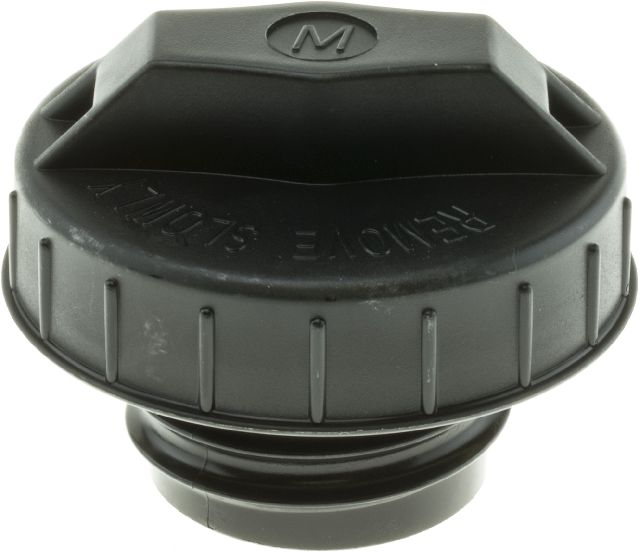
- Loose, Damaged, or Incorrect Gas Cap 🔴 High Probability → Shop Fuel Tank Cap This is the most common cause for a P0455 on any vehicle due to user error or simple wear and tear of the cap's seal. It is often the first and easiest item to check.
How to confirm: Ensure the gas cap is tight (clicks at least once). Inspect the rubber O-ring on the cap for cracks, dirt, or damage. Check the fuel filler neck for rust or debris that could prevent a good seal.
Typical fix: Tighten the cap. If the seal is bad, replace the entire gas cap.
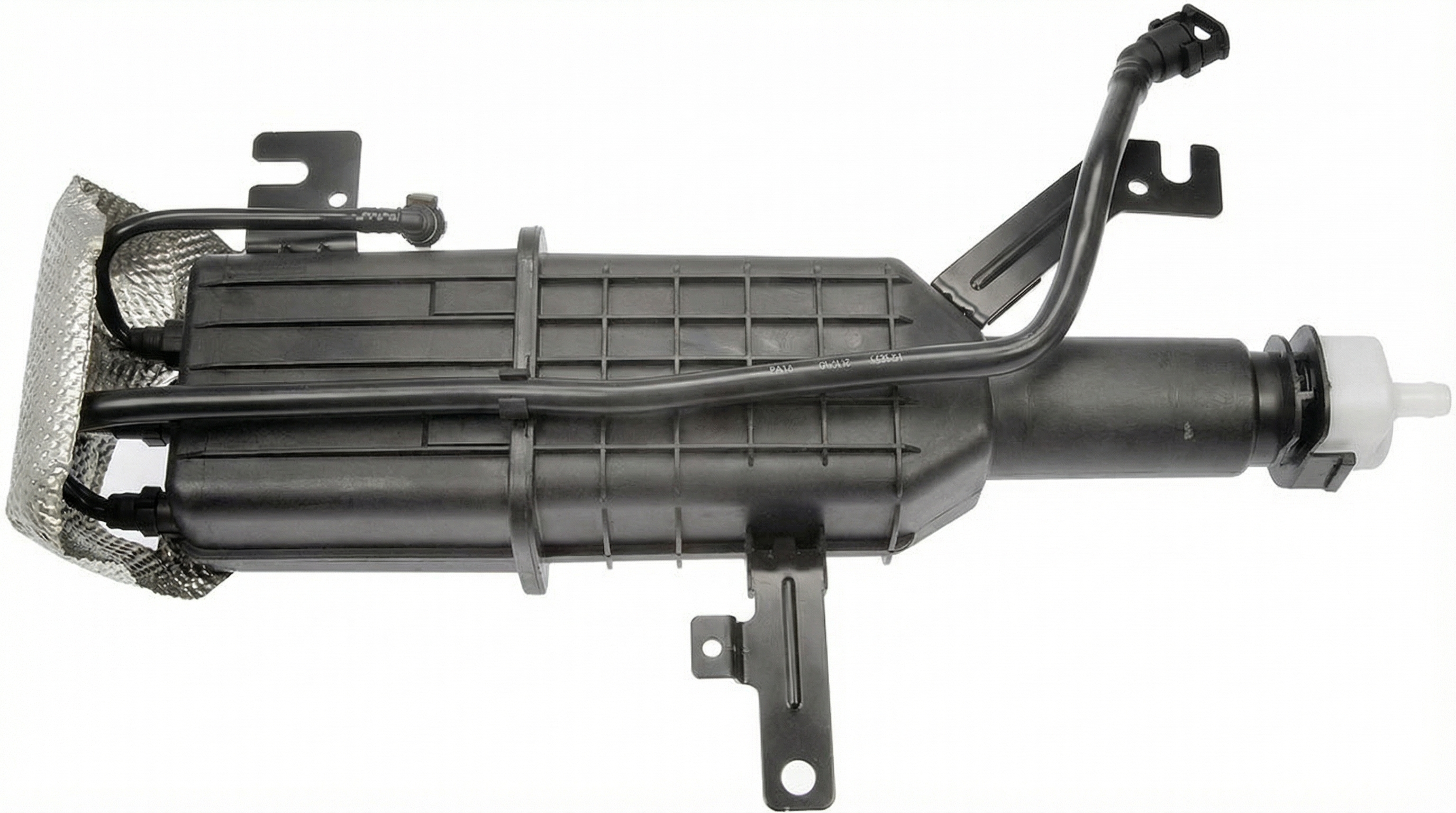
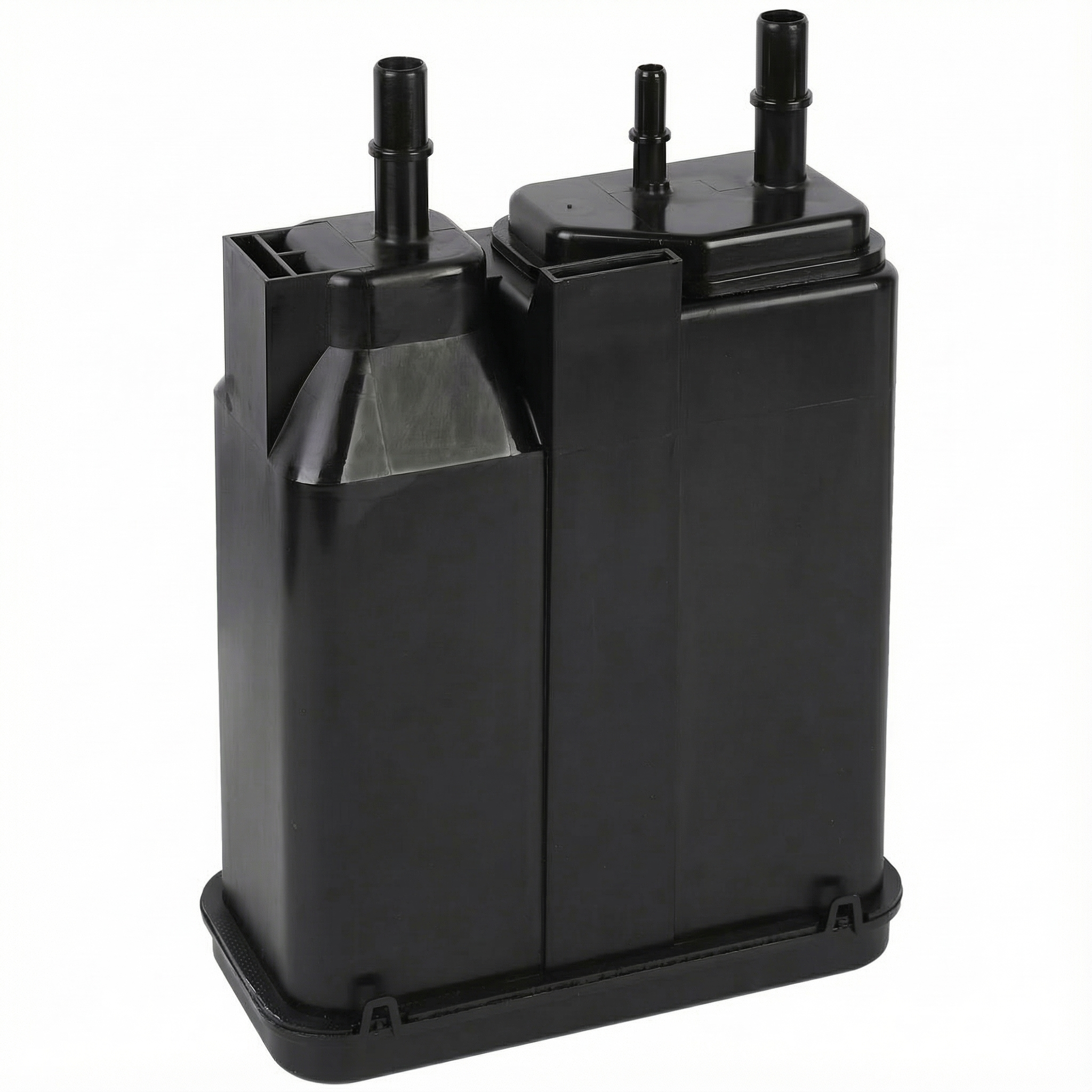
Est. part cost: $15-$40 - Faulty EVAP Vent Valve Solenoid 🔴 High Probability → Shop Vapor Canister This is a well-documented failure point on GM trucks, as cited in TSB #15-06-04-002. The valve gets stuck open, creating a permanent large leak, or gets clogged with dust, causing fueling issues.
How to confirm: The valve is typically located near the charcoal canister by the spare tire. A scan tool can command the valve to close; if it doesn't, it has failed. A smoke test will show smoke billowing out of a stuck-open vent valve. A clogged valve is often the culprit if you have trouble filling the fuel tank.
Typical fix: Replace the EVAP vent valve solenoid assembly. The electrical connector may have changed on replacement parts, sometimes requiring a pigtail adapter.
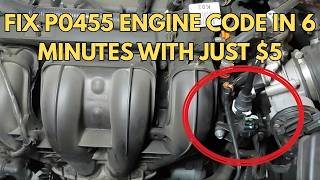
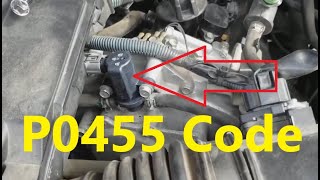
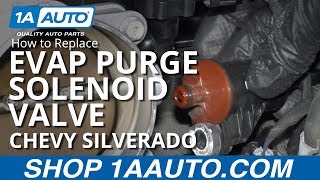
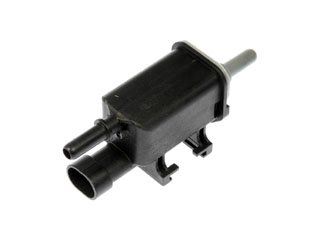
Est. part cost: $30-$80 - Faulty EVAP Purge Valve/Solenoid 🟡 Medium Probability → Shop Vapor Canister This valve, located on the engine's intake manifold, can get stuck open, allowing engine vacuum to constantly pull on the fuel tank, which the ECM interprets as a leak during its test cycle.
How to confirm: With the engine running, disconnect the hose leading from the valve to the charcoal canister. If you feel vacuum suction at idle when the valve should be closed, it is stuck open and needs replacement. A scan tool can also monitor the valve's commanded state versus its actual state.
Typical fix: Replace the purge valve solenoid. This is often a simple repair involving one bolt and two connections.
Est. part cost: $25-$60 - Cracked or Disconnected EVAP Hoses ⚪ Low Probability Over time, the plastic and rubber hoses that make up the EVAP system can become brittle and crack, especially in harsh climates or due to road debris. A user on a Reddit forum noted they left a vent line unattached after a fuel pump replacement, causing the code.
How to confirm: A visual inspection may reveal an obvious break or disconnection. However, the most effective method is a professional smoke test, which forces smoke through the system and makes any leaks visible.
Typical fix: Replace the cracked section of hose or reconnect a loose line. One owner reported fixing rotted metal lines near the tank with rubber fuel line.
Est. part cost: $10-$50
Rare But Worth Checking
- Cracked Charcoal Canister: → Shop Vapor Canister The plastic housing of the charcoal canister can develop cracks from road debris or age, creating a large leak. This is usually found during a smoke test and is less common than the solenoids.
- Damaged Fuel Tank Filler Neck: → Shop Fuel Tank Rust or physical damage can create a hole in the metal filler neck, preventing the gas cap from sealing properly and causing a large leak. One owner on a forum found their metal lines near the tank had rotted off, which was discovered via a smoke test. On other Chevy models with capless systems, a damaged internal seal in the filler neck is a known cause.
Diagnosis Steps
- Check the gas cap. Ensure it is tight and the seal is not cracked or dirty. Clear the code and drive to see if it returns. This is the simplest and most common fix.
- If the code returns, perform a thorough visual inspection of all accessible EVAP hoses running from the engine bay to the fuel tank, looking for obvious cracks or disconnections. Pay close attention to connections made during recent repairs (e.g., fuel pump replacement).
- Locate the EVAP purge valve on the engine's intake manifold. With the engine running at idle, disconnect the line coming from the charcoal canister to the valve. There should be no vacuum felt at the valve's port. If there is, the purge valve is stuck open and must be replaced.
- Locate the EVAP vent solenoid near the charcoal canister (usually mounted to the canister or frame rail by the spare tire). Inspect it and its hoses for damage. You can test it with a scan tool by commanding it closed and seeing if it holds a vacuum.
- The most definitive test is a smoke test. A mechanic will inject low-pressure smoke into the EVAP system's service port. The smoke will exit from the location of the leak, whether it's a hose, the canister, the vent valve, the filler neck, or the gas cap seal.
Parts You'll Likely Need
- EVAP Vent Valve Solenoid
(OEM #ACDelco 23481275 (K2XX, 2014+) or ACDelco 25932571 (GMT900, pre-2014))— This is a very common failure point on these trucks, as confirmed by GM TSBs. It gets stuck open, causing a large leak, or clogs, causing fueling issues. Part numbers superseded multiple times; verify by VIN.
Trusted brands: ACDelco, Dorman (911-099), Standard Motor Products, SKP
OEM price range: $40-$85
Aftermarket price range: $25-$60 - EVAP Purge Valve Solenoid
(OEM #ACDelco 214-2317 (or 12597567 for some models))— Often gets stuck open, allowing un-metered vacuum into the EVAP system, which the computer interprets as a leak. It's located on the engine and is typically an easy replacement.
Trusted brands: ACDelco, Dorman, Standard Motor Products
OEM price range: $35-$60
Aftermarket price range: $20-$40 - Gas Cap
(OEM #ACDelco GT295 (example, verify fitment))— The simplest and most common cause. The seal wears out over time, failing to seal the system.
Trusted brands: ACDelco, Stant, Duralast
OEM price range: $20-$40
Aftermarket price range: $15-$25
Related Codes That Often Appear With This One
- P0442 — This code is for a small EVAP leak. It can appear alongside P0455 if the system has multiple leaks or if a component is failing intermittently. Both codes are mentioned in TSB #21-NA-124 and TSB #15-06-04-002.
- P0449 — This code indicates a problem with the EVAP vent valve solenoid *circuit*. It often appears with P0455 when the vent solenoid has failed electrically, as noted in TSB #15-06-04-002.
- P0446 — This code points to a restriction in the EVAP vent system. It can be triggered along with P0455 if the vent valve is clogged or stuck closed, which also causes difficulty when refueling. This is also mentioned in TSB #15-06-04-002.
Technical Service Bulletins (TSBs) & Recalls
- 15-06-04-002: Notes customer complaints of MIL on, fuel tank hard to fill, and DTCs P0442, P0446, P0455 or P0449. The cause is identified as dirt and dust intrusion into the vent solenoid. The correction is to replace the vent valve with an updated part.
- 21-NA-124: Provides diagnostic tips for testing EVAP leaks related to DTCs P0442 and/or P0455, suggesting it's a recurring issue for which GM has provided updated troubleshooting steps for technicians.
Platform-Specific Known Issues
- TSB #15-06-04-002 specifically addresses an issue on 2011-2015 models where a faulty EVAP vent system can cause P0455 and make the fuel tank hard to fill. The fix involves replacing the EVAP canister vent solenoid valve with a revised part that has improved filtering to prevent dust intrusion.
- TSB #21-NA-124 provides updated diagnostic advice for tracking down EVAP leaks that cause P0455 on models including the 2009 Silverado, indicating this has been a persistent issue requiring refined diagnostic strategies.
- Forum Experience (silveradosierra.com): A user with a 2013 Silverado and P0455 confirmed the symptom of the gas pump repeatedly clicking off. The consensus pointed towards a clogged/failed vent solenoid by the canister.
Mechanic-Grade Diagnostic Values
- EVAP Canister Purge Valve Resistance — expected: 30 to 38 ohms. Failure: A reading outside this range indicates a faulty valve coil.
- EVAP Canister Vent Solenoid Resistance — expected: 48 to 65 ohms. Failure: A reading outside this range, or infinite resistance (open circuit), points to a failed solenoid.
- Fuel Tank Pressure (FTP) Sensor Voltage at Idle — expected: ~1.5 Volts (representing atmospheric pressure). Failure: A reading that is stuck high or low, or does not change when the system is purged, can indicate a sensor or wiring issue. A voltage that drops without the purge valve being commanded on can indicate a stuck-open purge valve.
Scan Tool Commands That Help
- GDS2 (GM Global Diagnostic System 2) / Tech2: EVAP Service Bay Test — This is a comprehensive, automated test that commands the purge and vent valves to seal the system and monitors the FTP sensor to check for leaks. It's the factory-approved method to verify a leak exists before performing a smoke test.
- GDS2 / Tech2: EVAP Purge/Seal — This function allows the technician to manually command the purge and vent solenoids on and off while monitoring the FTP sensor voltage. It is used to isolate a faulty component; for example, commanding the vent valve closed and seeing if the system can hold vacuum when the purge valve is activated.
- GDS2 / Tech2: Vent Solenoid Actuation Test — Used to specifically test the vent solenoid. The technician can command the solenoid on and off to listen for a click and to see if it seals the system (when used with a smoke machine or vacuum gauge). If the solenoid doesn't click or seal, it has failed.
Wiring & Ground Locations
- Fuse F57 (Underhood Fuse Block) — In the main underhood fuse block on K2XX (2014+) models.. This 15A fuse provides power to the EVAP canister vent valve. If this fuse is blown, it will set a circuit code like P0449, but it's a critical power source to check when diagnosing the vent valve.
- EVAP Vent Valve Connector — Under the truck, on the driver's side near the fuel tank, connected to the vent solenoid.. This 2-wire connector is where voltage and resistance tests are performed. One wire (typically Red/Light Green on K2XX) is the fused power supply, and the other (typically White) is the control wire that the ECM grounds to activate the solenoid.
Real Owner Repair Stories
- Reddit user /u/-Not-a_Robot (2014 Silverado) — P0455 code appeared after recent work.
❌ Tried (didn't work) Initial diagnosis was unclear.
✅ What actually fixed it The user had recently replaced the fuel pump themselves and admitted they may have left a vent line unattached. Another user confirmed that a disconnected vent line would absolutely cause a large leak code. - YouTube channel SM Auto Repair LLC (2003 Chevrolet Silverado 4.8L (demonstrates a common GM diagnostic process)) — P0455 EVAP Large Leak Detected.
❌ Tried (didn't work) A smoke test might not have immediately pointed to the purge valve.
✅ What actually fixed it The technician used a scan tool to monitor Fuel Tank Pressure (FTP) sensor voltage at idle. It was dropping from a normal ~1.5V even with the purge valve commanded to 0%. Disconnecting the purge valve line caused the voltage to stabilize, proving the valve was stuck open and leaking vacuum into the system. Replacing the purge valve fixed the issue.
"I Checked Everything" — The Actual Cause
- A Reddit user with a 2017 Silverado reported a P0455 code and difficulty fueling, but their smoke test passed and the system held pressure. A technician suggested the EVAP vent valve's internal spring could be weak, allowing engine vacuum to pull it open during operation (which a static smoke test wouldn't catch), causing the large leak code. The fueling issue pointed to a restriction, suggesting the valve was failing in multiple ways.
OEM Part Supersession History
10382105, 15750484, 22728634→25932571— Part consolidation and design updates for the EVAP Canister Vent Solenoid used on many GMT900 platform vehicles.
Heads up: This part is specific to the pre-2014 GMT900 platform and is not compatible with the 2014+ K2XX trucks, which use a different design.
Model Year Variations Within This Range
- 2009-2014 (GMT900): The EVAP canister vent solenoid is typically part number 25932571. The diagnostic and repair procedures are well-established for this generation.
- 2014-2016 (K2XX): The EVAP system was updated. The vent solenoid is a different part (e.g., 23481275). The system is controlled by a dedicated Fuel Pump Module (FPM) which can be a point of failure for vent valve circuit codes. The fuse for the vent solenoid is located in the underhood block (F57).
Helpful Videos

Used OEM Parts in Stock

New Aftermarket Parts Available


The information in this article is provided for general reference and educational purposes only. Vehicle specifications, procedures, and part compatibility can vary by production date, trim level, and region. Always consult your vehicle's factory service manual and verify part numbers before purchasing or performing repairs. Safety-critical components such as airbags, seat belts, and braking systems should be installed by a qualified professional.
- Chevrolet SILVERADO 3500:
- 🧭 Diagnostic Flowchart
- 🎬 Helpful Videos
- 🛍️ Shop This Part
- What's Unique About the 2009-2016 Chevrolet SILVERADO 3500
- Symptoms You May Notice
- Most Likely Causes
- Rare But Worth Checking
- Diagnosis Steps
- Parts You'll Likely Need
- Related Codes That Often Appear With This One
- Technical Service Bulletins (TSBs) & Recalls
- Platform-Specific Known Issues
- Mechanic-Grade Diagnostic Values
- Scan Tool Commands That Help
- Wiring & Ground Locations
- Real Owner Repair Stories
- "I Checked Everything" — The Actual Cause
- OEM Part Supersession History
- Model Year Variations Within This Range
- 🎟️ Get 5% Off