

P0455 on 2000-2004 Chevrolet Tracker: EVAP Large Leak Causes and Fixes
For a 2000-2004 Chevrolet Tracker, P0455 usually means a loose gas cap or a rusted fuel filler neck. Check the gas cap first—it's a free fix. If that's not it, inspect the filler neck for rust and holes, which is a common problem on these Suzuki-designed vehicles. A new gas cap costs about $15-$30, while a filler neck replacement (like Dorman 577-968) can be more involved but often solves the problem.
- P0455 on a 2000-2004 Tracker indicates a large EVAP system leak.
- Always check the gas cap first. Make sure it's tight and the seal is in good condition.
- The second most likely cause is a rusted-out fuel filler neck. Inspect it carefully for holes.
- Other potential causes include a faulty vent solenoid, purge valve, or cracked hoses, but these are less common on this specific vehicle.
- A smoke test is the most reliable method to pinpoint the exact location of the leak if it's not obvious.
What's Unique About the 2000-2004 Chevrolet TRACKER
The 2000-2004 Chevrolet Tracker is a rebadged Suzuki Vitara/Grand Vitara, meaning its core engineering and many of its parts are of Suzuki design. For this specific code, the platform is particularly susceptible to severe corrosion of the fuel filler neck, a common failure point that leads directly to a large EVAP leak. This is due to the materials and design of the era, especially in regions where road salt is used. While other components can fail, the filler neck and gas cap are the most frequent culprits for this generation of Tracker and its Suzuki counterparts.
Diagnostic Flowchart
Tap your situation to follow the diagnostic path that matches what you're seeing on this vehicle.
Symptoms You May Notice
- Check Engine Light is on
- A noticeable fuel smell, especially around the rear of the vehicle or near the gas cap
- No noticeable impact on drivability
- A 'hissing' sound when removing the gas cap may be absent if there's a large leak, though a hiss can still be present in some cases.
- Replacing the purge valve or vent valve when the actual issue is a rusted filler neck or bad gas cap seal.
- Replacing the gas cap but failing to inspect the filler neck for rust, which prevents the new cap from sealing.
Most Likely Causes
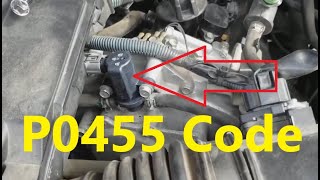
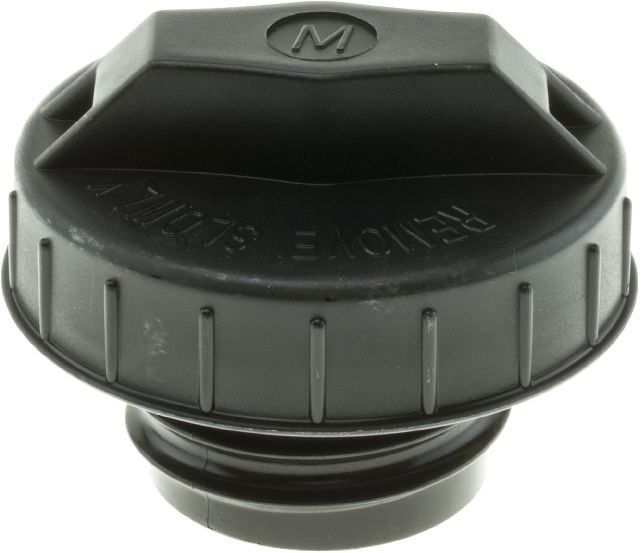
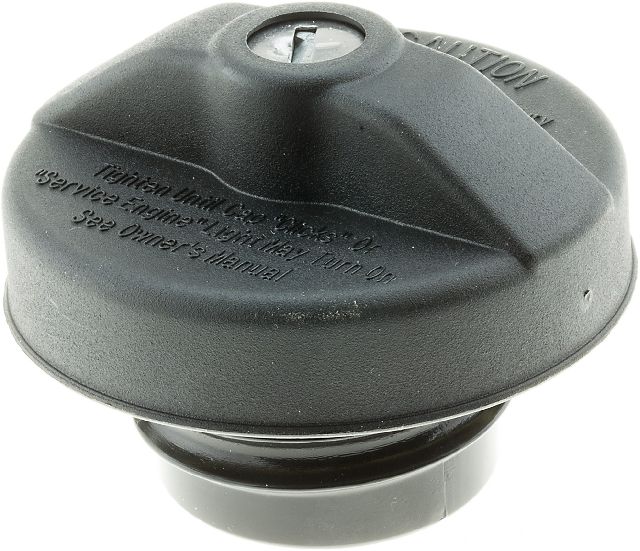
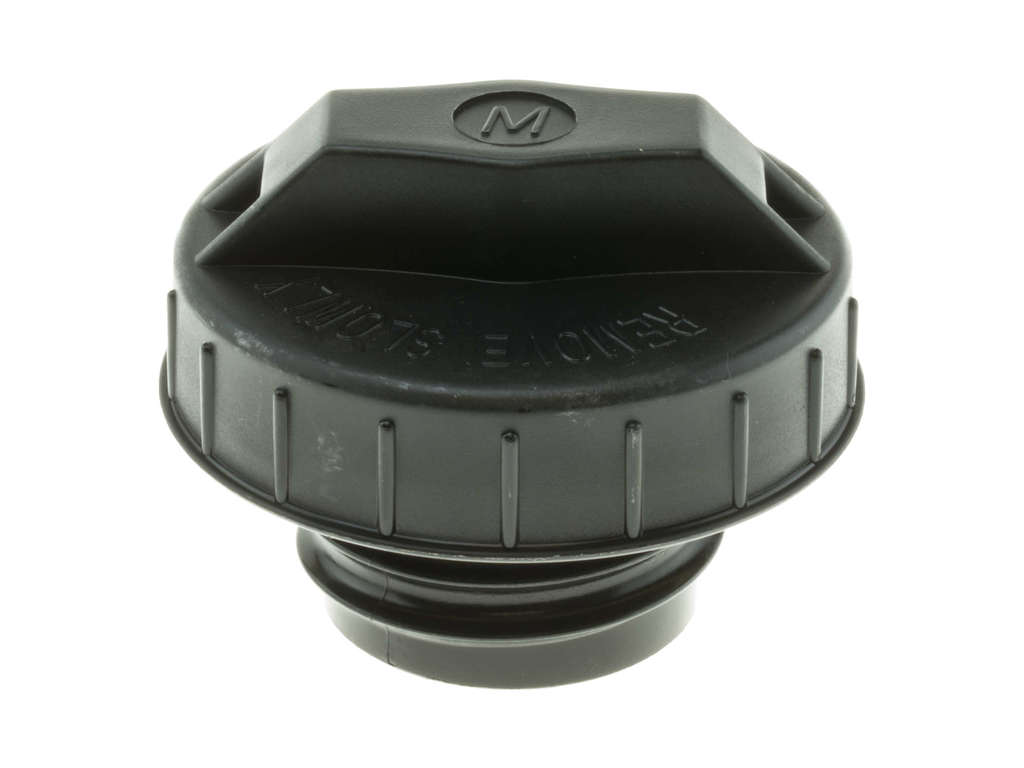
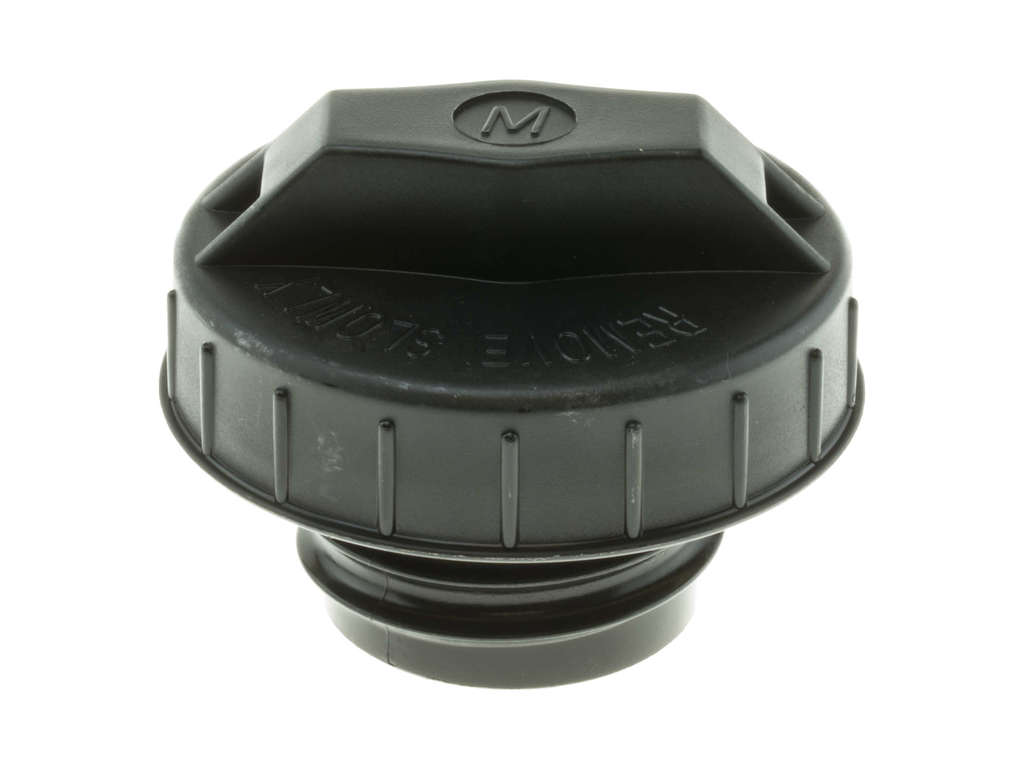
- Loose or Faulty Gas Cap 🔴 High Probability → Shop Fuel Tank Cap This is the most common cause for P0455 on any vehicle because the cap is frequently handled. The rubber seal can degrade, crack, or get lost over time, or the cap may simply not have been tightened correctly. Many owner experiences confirm starting and ending the diagnosis here. 🎬 Watch: A quick walkthrough of this common Chevy gas cap fix.
How to confirm: Inspect the gas cap for any visible cracks or damage to the O-ring seal. Ensure it is tightened until it clicks at least once. If the seal looks worn or brittle, it's best to replace it. A new, quality cap is a cheap and effective first step.
Typical fix: Tighten or replace the gas cap.
Est. part cost: $15-$30 - Rusted or Damaged Fuel Filler Neck 🔴 High Probability → Shop Fuel Filler Neck Vehicles of this era, especially those in regions with road salt, are very prone to rust on the fuel filler neck. A small hole from corrosion, often on the back side or where it meets the gas tank, is large enough to be considered a 'large leak' by the EVAP system. This is a well-documented issue on both the Tracker and its Suzuki Vitara twin.
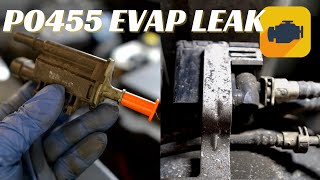
How to confirm: Visually inspect the entire length of the fuel filler neck, from the gas cap opening down to where it connects to the tank. This may require removing the wheel well liner for a clear view. Look for rust, flaking metal, or visible holes. A smoke test will make even a small pinhole obvious. 🎬 See how a smoke machine pinpointed this exact leak.
Typical fix: Replace the fuel filler neck. Aftermarket parts like the Dorman 577-968 or Spectra Premium FN649 are common replacements.
Est. part cost: $50-$150 - Failed EVAP Vent Valve/Solenoid 🟡 Medium Probability → Shop Vapor Canister The vent valve is normally open and closes to allow the system to be pressure-tested. It is often located near the charcoal canister under the vehicle, exposing it to moisture and road debris, which can cause it to fail or get stuck open, creating a permanent large leak.
How to confirm: The valve can be tested with a scan tool that has bi-directional controls. A mechanic can command the valve closed and see if it holds a vacuum or smoke. It can also be removed and tested by applying 12V power to see if the solenoid actuates with an audible click. If it's stuck open, it will allow air to pass through freely when it should be closed.
Typical fix: Replace the EVAP vent valve solenoid. The ACDelco 214-1059 is a potential service part.
Est. part cost: $30-$70 - Cracked or Disconnected EVAP Hoses ⚪ Low Probability Over two decades, the rubber and plastic hoses in the EVAP system can become brittle, crack, or disconnect from their fittings, causing a leak. This can happen anywhere from the engine bay to the charcoal canister near the tank.
How to confirm: A visual inspection of all accessible EVAP lines is the first step. The most definitive way to find a leak is with a smoke test, which forces low-pressure smoke into the EVAP system to reveal the source of the leak from any cracks or loose connections.
Typical fix: Replace the cracked hose or reconnect the loose line.
Est. part cost: $5-$25 - Failed EVAP Purge Valve/Solenoid ⚪ Low Probability → Shop Vapor Canister The purge valve is normally closed and opens to allow fuel vapors into the engine. If it gets stuck open, it can cause a P0455 code. While a common failure on some GM vehicles, it's less frequently the primary cause for a large leak on the Tracker compared to the gas cap and filler neck, but still a possibility.
How to confirm: With the engine off, remove the valve and try to blow through it; it should be closed and not allow air to pass. A scan tool can also command it open and closed to check for proper function. A stuck-open purge valve may sometimes cause a rough idle or difficulty starting immediately after refueling.
Typical fix: Replace the purge valve. Dorman 911-086 is a listed aftermarket part.
Est. part cost: $25-$60
Rare But Worth Checking
- Cracked EVAP Charcoal Canister: → Shop Vapor Canister The plastic housing of the canister can crack from age or impact from road debris. This is best confirmed with a smoke test, as the canister is often located under the vehicle near the fuel tank and a crack may not be obvious.
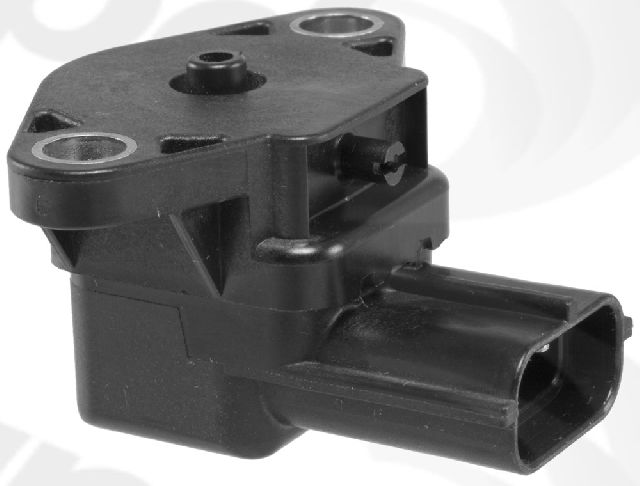
- Faulty Fuel Tank Pressure Sensor: → Shop Fuel Tank The sensor itself can fail and send incorrect readings to the ECM, making the computer believe there is a large leak when there isn't one. This is uncommon and should be considered only after a smoke test reveals no physical leaks.
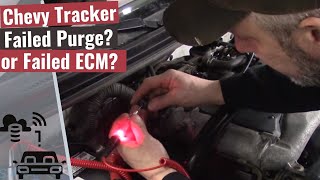
- Faulty Powertrain Control Module (PCM): In very rare cases, the driver circuit within the PCM that controls an EVAP solenoid can short out, leading to a false code. This is extremely unlikely and requires advanced diagnostics to confirm 🎬 Watch: Troubleshooting a rare Tracker purge valve vs. ECM issue. after all other components have been verified as working.
Diagnosis Steps
- Check the Gas Cap: Remove and inspect the gas cap. Ensure the seal is present and not cracked or brittle. Reinstall it and tighten until it clicks several times. Clear the code with a scanner and drive for a few days to see if the EVAP monitor runs and the code returns.
- Visual Inspection of Fuel Filler Neck: This is a critical step for the Tracker. Get a good light and visually inspect the entire metal fuel filler neck for any signs of heavy rust, flaking, or visible holes. Pay special attention to the area where the gas cap seals and the tube bends down towards the tank.
- Perform a Smoke Test: This is the most effective way to find a leak and avoid guessing. A smoke machine is connected to the EVAP system's service port. The system is filled with a harmless, visible smoke under low pressure. Smoke will pour out of any leak, making it easy to spot a cracked hose, bad canister, or rusted filler neck.
- Test the Vent Valve: Locate the vent valve (usually near the charcoal canister by the fuel tank). Check for power at the connector with the key on. If possible, use a scan tool to command it closed and listen for a click. You can also remove it and apply 12V power to see if the solenoid actuates. If it's stuck open, it's faulty.
- Test the Purge Valve: Locate the purge valve in the engine bay, connected to the intake manifold. With the engine off, the valve should be closed and not allow air to pass through. You can test this by removing it and trying to blow through it. A scan tool can also command it to open and close to verify function.
- Inspect Canister and Pressure Sensor: If no other leaks are found, visually inspect the charcoal canister for physical damage or cracks. The fuel tank pressure sensor can be tested by monitoring its voltage on a scan tool while a vacuum is applied to the system, but this is an advanced step usually taken after a smoke test finds no leaks.
Parts You'll Likely Need
- Gas Cap — This is the most common and easiest fix. The seal wears out over time, causing a large leak.
Trusted brands: ACDelco, Stant
OEM price range: $20-$40
Aftermarket price range: $15-$30 - Fuel Tank Filler Neck — Corrosion is a very common failure point on the 2000-2004 Tracker and its Suzuki twin, leading directly to a P0455 code.
Trusted brands: Dorman (p/n: 577-968), Spectra Premium (p/n: FN649)
OEM price range: $70-$120
Aftermarket price range: $50-$150
Related Codes That Often Appear With This One
- P0442 — P0442 indicates a small EVAP leak. Sometimes a deteriorating component, like a pinhole in the filler neck or a failing seal, can cause an intermittent or borderline leak that the ECM may interpret as either small or large at different times. The official GM TSB #21-NA-124 for EVAP leaks lists both P0442 and P0455 together as related codes stemming from similar causes.
Technical Service Bulletins (TSBs) & Recalls
- A general GM bulletin providing diagnostic tips for finding EVAP leaks that cause P0442 (small leak) and P0455 (large leak). It advises checking lines and connections first, followed by the vent valve, and then the purge valve.
Platform-Specific Known Issues
- The Common Diagnostic Path: A Real-World Example: Many owners follow a predictable, and sometimes frustrating, path when diagnosing P0455. An owner on a Chevrolet forum described their experience: the code appeared, so they replaced the gas cap. The light returned. Suspecting a hard-start issue after fill-ups was related, they replaced the purge valve. The light returned. Finally, they replaced the vent valve solenoid and charcoal canister, which solved the problem for a time, illustrating the process of elimination that is often required. This highlights the importance of a smoke test early in the process to avoid replacing multiple parts unnecessarily.
Mechanic-Grade Diagnostic Values
- EVAP Purge Valve (Tank Pressure Control Solenoid) Resistance — expected: 28-36 Ohms at 20°C (68°F). Failure: A reading significantly outside this range (open or shorted) indicates a faulty solenoid coil.
- EVAP Canister Vent Valve Solenoid Resistance — expected: 20-30 Ohms. Failure: A reading outside this range points to a damaged solenoid winding.
- Fuel Tank Pressure (FTP) Sensor Voltage — expected: Approximately 2.5V with key on, engine off, and gas cap removed (at atmospheric pressure). Voltage should decrease with vacuum and increase with pressure.. Failure: Voltage stuck high (near 5V) or low (near 0V), or does not change when pressure/vacuum is applied, indicates a faulty sensor or wiring issue. A missing 5V reference voltage points to a wiring or PCM problem.
Scan Tool Commands That Help
- Tech 2 or similar professional scan tool: EVAP Vent Solenoid Command — Used to manually close the normally-open vent valve. This is the first step before a smoke test to seal the system. It's also used to confirm the solenoid clicks and the control circuit is working.
- Tech 2 or similar professional scan tool: EVAP Purge/Seal Test — This automated test commands the vent valve closed and then opens the purge valve to draw a vacuum on the fuel tank. The technician can monitor the FTP sensor voltage to see if the system can achieve and hold a vacuum, which quickly confirms if a large leak is present.
- Tech 2 or similar professional scan tool: EVAP Purge Solenoid Duty Cycle — Used to manually command the purge solenoid open to varying degrees. This helps verify if the solenoid is physically stuck and if the PCM driver can control it. A technician can check for vacuum at the valve while commanding it open.
Wiring & Ground Locations
- G131 — On the intake manifold.. The EVAP Purge Valve is often located on or near the intake manifold. A poor ground at this location can cause erratic operation or incorrect readings for engine-mounted solenoids and sensors.
- G105 — Right rear side of the engine compartment, near the battery.. This is a major engine compartment ground point. Corrosion or looseness here can affect multiple systems, including power to the EVAP components' control circuits.
- Fuel Tank Pressure (FTP) Sensor Location — On top of the fuel tank, accessible after dropping the tank or through an access panel if available.. The sensor's location makes its wiring susceptible to damage from road debris or corrosion, and its connection is a potential leak point.
- EVAP Canister Vent Solenoid Location — Typically located near the charcoal canister, under the vehicle near the fuel tank. On the 1.6L engine, it is specified as being on the right front inner fender panel, behind the canister.. Its exposed location makes it and its connector vulnerable to moisture, dirt, and physical damage, which can cause it to stick open and trigger a P0455 code.
Real Owner Repair Stories
- South Main Auto Repair YouTube Channel (Chevrolet Tracker (2000-2004 generation), likely 2.5L V6) — Check Engine Light with a code for the EVAP purge control circuit (P0445).
❌ Tried (didn't work) The owner had already replaced other unrelated parts., The mechanic tested the resistance of the original purge solenoid and found it was within spec (approx. 30 ohms), indicating the solenoid coil itself was not shorted or open.
✅ What actually fixed it The Powertrain Control Module (PCM) was faulty. The internal driver circuit for the purge solenoid was shorted to ground, constantly providing a path to ground for the control wire even with the key on and engine off. Replacing the PCM with a used unit corrected the internal short and resolved the code.
"I Checked Everything" — The Actual Cause
- An internally shorted PCM driver for the purge valve. In this scenario, there is no physical leak for a smoke machine to find. The fault is purely electrical, where the PCM's control of a valve is compromised, but the system's physical integrity is intact. A technician confirmed this was the cause on a Chevrolet Tracker after finding the purge control circuit was permanently grounded inside the PCM.
- A stuck-closed EVAP purge valve. The ECM's logic for a P0455 test may involve commanding the purge valve open and expecting to see a pressure drop in the tank via the FTP sensor. If the valve is stuck closed and fails to open, no vacuum is drawn. The ECM interprets this lack of pressure change not as a faulty valve, but as a massive leak that is preventing any vacuum from building, thus setting a P0455. A smoke test would show no leaks because the stuck-closed valve would hold pressure.
When the Usual Fixes Don't Work
- While the most common causes for P0455 on a Tracker are the gas cap and rusted filler neck, advanced electrical faults can mimic a large leak. In one documented case on a Tracker, a P0455-related code was ultimately caused by an internally shorted Powertrain Control Module (PCM). The driver circuit for the purge solenoid was constantly grounded, preventing proper system operation. In this situation, replacing the gas cap, filler neck, and even the purge solenoid itself would not have fixed the problem, and a smoke test would have revealed no leaks. This highlights the need to perform electrical circuit integrity tests when obvious physical leaks are not found.
Model Year Variations Within This Range
- 2000-2004: Component locations and wiring can differ based on the engine (1.6L I4, 2.0L I4, or 2.5L V6). For example, the fuel level sensor input is on PCM connector C1, pin 28 for the 1.6L/2.0L engines, but on pin 12 for the 2.5L engine. Ground locations like G103 can also vary between engines. Always verify component locations with a service manual for the specific engine.
Helpful Videos


We Have This Part in Stock

The information in this article is provided for general reference and educational purposes only. Vehicle specifications, procedures, and part compatibility can vary by production date, trim level, and region. Always consult your vehicle's factory service manual and verify part numbers before purchasing or performing repairs. Safety-critical components such as airbags, seat belts, and braking systems should be installed by a qualified professional.
- Chevrolet TRACKER:
- 🧭 Diagnostic Flowchart
- 🎬 Helpful Videos
- 🛍️ Shop This Part
- What's Unique About the 2000-2004 Chevrolet TRACKER
- Symptoms You May Notice
- Most Likely Causes
- Rare But Worth Checking
- Diagnosis Steps
- Parts You'll Likely Need
- Related Codes That Often Appear With This One
- Technical Service Bulletins (TSBs) & Recalls
- Platform-Specific Known Issues
- Mechanic-Grade Diagnostic Values
- Scan Tool Commands That Help
- Wiring & Ground Locations
- Real Owner Repair Stories
- "I Checked Everything" — The Actual Cause
- When the Usual Fixes Don't Work
- Model Year Variations Within This Range
- 🎟️ Get 5% Off