

P0455 on 2007-2009 Chrysler Aspen: EVAP Large Leak Causes and Fixes
This code indicates a large leak in the evaporative emissions system. The most common cause is a loose or faulty gas cap. If the cap is secure, the next most likely culprits are the EVAP purge solenoid or a cracked hose. A new gas cap is under $25, while other repairs can range from $100 to $300.
- P0455 indicates a large leak in the EVAP system, which is not critical to vehicle operation but will cause an emissions test failure.
- Always check the gas cap first; it's the most common and cheapest fix.
- If the gas cap isn't the issue, the EVAP purge solenoid and system hoses are the next most likely culprits.
- On the Chrysler Aspen specifically, the fuel filler neck and the ESIM switch on the charcoal canister are known potential failure points.
- A smoke test is the most efficient method to find a leak that is not visually apparent.
What's Unique About the 2007-2009 Chrysler Aspen
The 2007-2009 Chrysler Aspen, which shares its platform with the Dodge Durango, uses a specific component called an Evaporative System Integrity Monitor (ESIM) switch, which is attached to the EVAP canister. Some forum discussions for these vehicles point to this ESIM switch as a potential failure point when P0455 is present, sometimes in conjunction with other codes like P0456 or P0457. Another frequently mentioned issue is the fuel filler neck, which can rust or crack, causing a large leak. A symptom that can be linked to EVAP system issues on this platform is the engine stalling shortly after refueling. This specific behavior is documented in NHTSA ODI #11081301, where an owner reported the vehicle stalls for approximately the first five miles after refueling, accompanied by the MIL illuminating with codes P0455 and P0456.
Symptoms You May Notice
- Check Engine Light is on
- A noticeable smell of gasoline, especially around the rear of the vehicle or near the fuel cap.
- A "Check Fuel Cap" or "GAS CAP" message may appear on the instrument cluster.
- Vehicle may stall after refueling.
- Replacing the fuel pump when the issue is a leak in the EVAP system. A forum user reported a dealer replaced the fuel pump, but the P0455/P0456 codes returned because the actual leak was not addressed.
Most Likely Causes
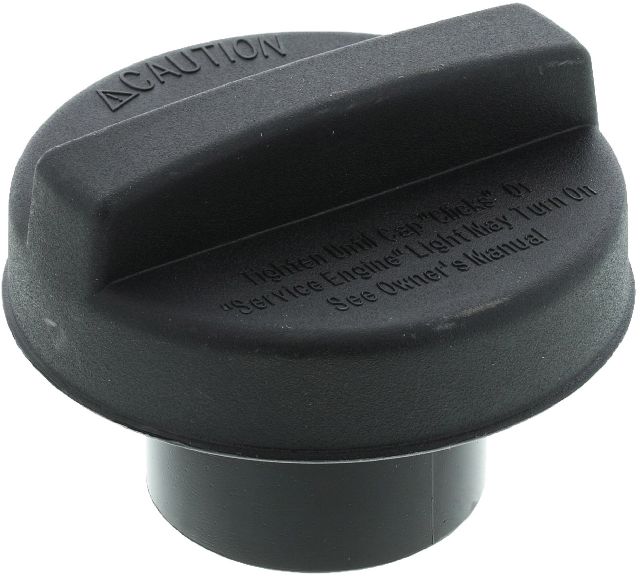
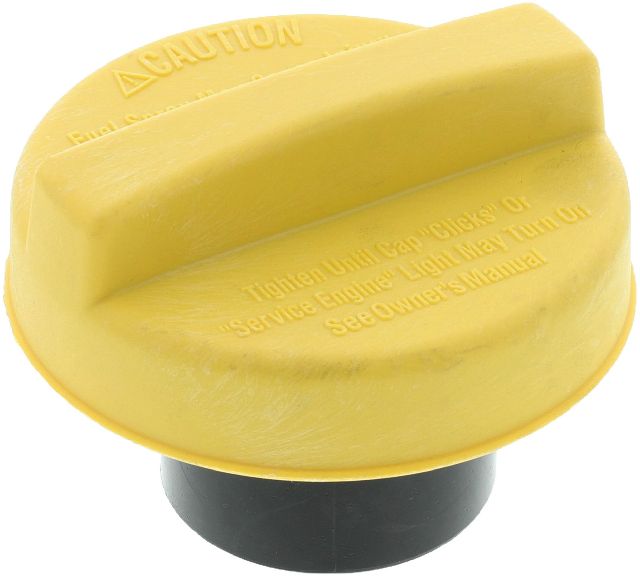
- Loose, Damaged, or Incorrect Gas Cap 🔴 High Probability → Shop Fuel Tank Cap This is the most common cause for a P0455 code on any vehicle, as the cap seal can degrade over time or the cap may not be tightened correctly after refueling. Using a non-OEM or incorrect cap can also cause this issue.
How to confirm: Ensure the gas cap is tightened until it clicks at least once. Inspect the cap's rubber seal for cracks, stiffness, or damage. If the seal is compromised, the cap needs replacement. An OEM Mopar cap is recommended.
Typical fix: Tighten or replace the gas cap.
Est. part cost: $15-$35 - Faulty EVAP Purge Valve/Solenoid 🟡 Medium Probability → Shop Vapor Canister The purge valve can get stuck open, creating a constant vacuum leak that the system interprets as a large leak. This is a common failure point on many Chrysler products of this era. Manufacturer service bulletins, such as TSB Bulletin #1809223 and TSB Bulletin #1807517, note that technicians may find P0455 and P0456 set alongside purge system performance codes like P0441.
How to confirm: The purge valve is located in the engine bay. With the engine off, disconnect the vapor line from the valve and try to blow through it. If air passes through, the valve is stuck open and must be replaced. A vacuum pump can also be used to test its operation.
Typical fix: Replace the EVAP purge valve.
Est. part cost: $30-$75 - Cracked or Disconnected EVAP Hoses 🟡 Medium Probability
How to confirm: Visually inspect all accessible EVAP hoses running from the engine bay to the fuel tank area for cracks, brittleness, or loose connections. A smoke test is the most effective way to find a leak that isn't obvious. A machine injects vaporized smoke into the EVAP system, and the leak is identified wherever smoke escapes.
Typical fix: Replace the damaged section of hose and secure any loose connections.
Est. part cost: $10-$50 - Faulty EVAP Canister Vent Valve or ESIM Switch ⚪ Low Probability → Shop Vapor Canister The vent valve (integrated with the ESIM on this model) is normally open and closes to seal the system for testing. If it fails to close or the switch mechanism fails, it will cause a large leak code. This is a known issue on this platform.
How to confirm: The ESIM/vent valve is located on the charcoal canister near the fuel tank. It can be tested with a capable scan tool that can command the valve to close. A smoke test will show smoke exiting the vent if it is stuck open.
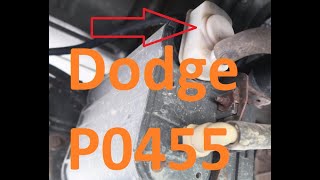
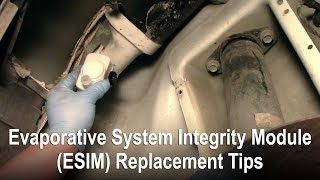
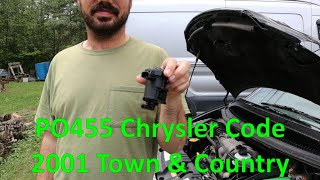
Typical fix: Replace the ESIM/vent valve assembly. This involves lowering the spare tire for access, twisting the old unit out of the charcoal canister, and installing the new one with a new O-ring. 🎬 See these helpful tips for replacing the ESIM unit.
Est. part cost: $50-$100
Rare But Worth Checking
- Cracked or Rusted Fuel Filler Neck: → Shop Fuel Filler Neck Corrosion in areas that use road salt can cause the metal filler neck to rust through, creating a large, permanent leak. This has been reported by Aspen and Durango owners. A smoke test is the best way to confirm a leak in this area. There was a related service bulletin (14-001-12) for fuel spit-back, which involved the filler neck, though not specifically for rust-related leaks.
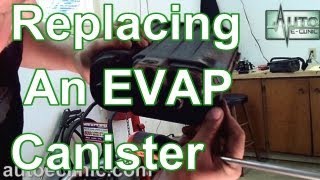
- Cracked EVAP Charcoal Canister: → Shop Vapor Canister The plastic housing of the canister can become brittle and crack from age or road debris impact, causing a significant leak.
- Leaking Fuel Tank or Fuel Pump Gasket: → Shop Fuel Pump Less common, but a leak from the top of the fuel tank or at the fuel pump's sealing gasket will also trigger a P0455 code. In a cross-manufacturer report, NHTSA ODI #11222544 describes a vehicle that failed emissions with codes P0457, P0455, and P0456 after a smoke test found a leaking secondary unit.
Diagnosis Steps
- Check the gas cap. Remove it, inspect the seal for damage, and reinstall it, ensuring it clicks several times. An OEM Mopar cap (Part No. 52124512AA) is recommended if replacement is needed. Clear the code and drive for a few days to see if it returns.
- If the code returns, perform a thorough visual inspection of all EVAP hoses and lines under the hood and underneath the vehicle near the fuel tank. Look for any obvious cracks, disconnections, or signs of damage, particularly around the charcoal canister and purge solenoid.
- Locate the EVAP purge solenoid in the engine bay. Disconnect it and test if it's stuck open by attempting to blow through it. If air passes, it's faulty and needs replacement.
- Inspect the fuel filler neck for any signs of heavy rust or cracks, especially if you live in a region where roads are salted in winter.
- If no obvious faults are found, the most reliable next step is to have a smoke test performed. This test will quickly and accurately pinpoint the source of the leak, whether it's a hairline crack in a hose, a faulty ESIM/vent valve, or a leak at the fuel tank.
Parts You'll Likely Need
- Fuel Cap
(OEM #52124512AA)— This is the most frequent and simplest fix for a P0455 code, due to a worn-out seal or improper tightening. Using an OEM cap is highly recommended.
Trusted brands: Mopar, Stant
OEM price range: $20-$35
Aftermarket price range: $15-$25 - EVAP Purge Solenoid/Valve
(OEM #04891731AC (supercedes 4891731AA))— This valve is a common failure point on Chrysler vehicles, often getting stuck open and causing a leak code.
Trusted brands: Mopar, Dorman, Bosch
OEM price range: $50-$90
Aftermarket price range: $30-$75 - Evaporative System Integrity Monitor (ESIM) / Vent Valve
(OEM #04861963AD)— This component, specific to the Chrysler EVAP system of this era, can fail and get stuck open, preventing the system from sealing for its leak test. It's a common culprit on Aspens and Durangos when the gas cap isn't the issue.
Trusted brands: Mopar, Dorman
OEM price range: $70-$120
Aftermarket price range: $50-$100
Related Codes That Often Appear With This One
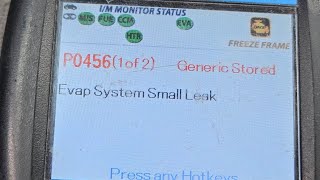
- P0456 — P0456 indicates a 'small leak'. Sometimes a leak can be on the borderline between small and large, or the system may detect both at different times, causing both codes to appear. It's common to see both codes together on this platform.
- P0457 — P0457 specifically means 'Evaporative Emission System Leak Detected (Fuel Cap Loose/Off)'. If the primary cause is the gas cap, this code may appear alongside P0455.
Technical Service Bulletins (TSBs) & Recalls
- TSB 14-001-12: While not directly for P0455, this service bulletin addresses fuel 'spit-back' during refueling, which involves replacing the fuel filler tube. A faulty seal or connection during this repair could potentially introduce a leak, and some owners have reported EVAP codes appearing after this service was performed.
- TSB Bulletin #1809223: This manufacturer bulletin notes that upon investigation of MIL illumination, technicians may find DTCs P0455, P0456, P0440, and P0441 have been set.
- TSB Bulletin #1807517: This bulletin lists P0455 and P0456 as codes that may be found during diagnostic investigations alongside other performance-related DTCs.
Platform-Specific Known Issues
- Stalling After Refueling: Some owners on Chrysler forums have reported an issue where the vehicle stalls immediately after filling the gas tank. This is often linked to a faulty EVAP purge solenoid that is stuck open, allowing excess fuel vapor to flood the engine intake upon startup after refueling. While this may not always throw a P0455 code immediately, it points to a problem within the EVAP system.
- Fuel Filler Neck Corrosion: → Shop Fuel Filler Neck The fuel filler neck is known to be a weak point for rust, especially in the salt belt. A perforation from rust will create a large, permanent leak that sets a P0455 code. A visual inspection and/or smoke test is required to confirm. One owner on a forum had a mechanic diagnose a filler neck leak after a smoke test.
Mechanic-Grade Diagnostic Values
- ESIM Switch Voltage (Key On, Engine Off) — expected: ~4.5-5.0 Volts (switch open, no vacuum). Failure: Voltage significantly lower than 4.5V when the system is at atmospheric pressure, or voltage does not drop to ~0V when vacuum is applied.
- ESIM Switch Resistance — expected: ~1 ohm when closed (under vacuum). Failure: High or infinite resistance (OL) when the switch should be closed.
- Purge Solenoid Connector Voltage (Back-probed, connected) — expected: Voltage reading will be near 0V when the solenoid is commanded OFF by the PCM and will show a duty-cycled voltage when commanded ON.. Failure: Testing an unplugged purge solenoid connector is not a valid test and may show a constant 12V 'float' voltage from the PCM's circuit monitoring. The solenoid must be connected (loaded) to get an accurate reading.
Scan Tool Commands That Help
- Chrysler wiTECH or equivalent professional scan tool: EVAP Monitor Test / Leak Detection Monitor Test — This is a forced, automated test that commands the PCM to run the EVAP leak monitor sequence. It can be used to verify a repair without waiting for a natural drive cycle. The scan tool will report if the test passed or failed, and if a code was set as a result.
- Professional scan tool with bidirectional controls: Command Purge Solenoid OFF and Vent Solenoid/ESIM ON (closed) — To test for a mechanically stuck-open purge valve. With the engine running, command the purge valve off and the vent valve closed. Monitor the fuel tank pressure (FTP) sensor data. If the pressure/vacuum level drops, it indicates the purge valve is leaking vacuum into the EVAP system even though it's commanded closed.
Wiring & Ground Locations
- G114 — Left front of the engine compartment.. This is a primary engine compartment ground point. A poor connection here could potentially affect the operation of engine-bay-mounted EVAP components like the purge solenoid.
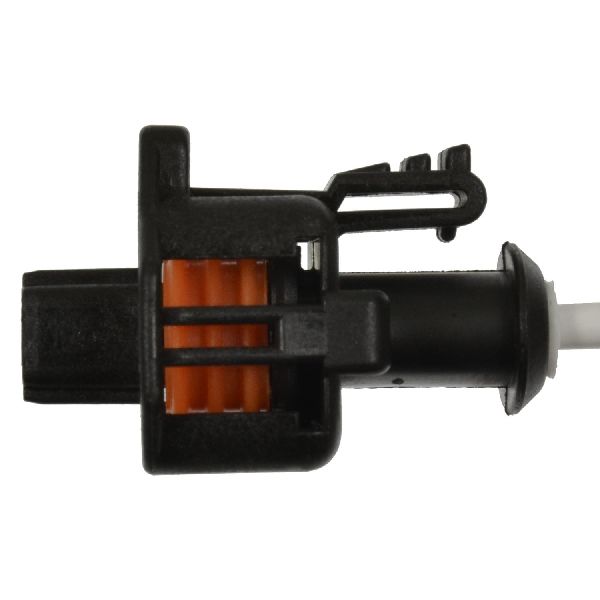
- ESIM Connector — On the EVAP canister, located under the driver's side of the vehicle, along the frame rail between the front and rear doors.. This is the electrical connection for the ESIM switch. The switch sends its open/closed status to the PCM via this connector. Corrosion or damage here will interrupt the signal, leading to fault codes.
- Purge Solenoid Connector — In the engine bay, typically near the intake manifold.. This connector provides power and PCM control to the purge solenoid. A bad connection can prevent the valve from operating correctly, potentially causing it to remain open or closed at the wrong time.
Real Owner Repair Stories
- Chrysler Forum user (2008 Chrysler Aspen) — P0456 code and "Gas Cap" light on the dash.
✅ What actually fixed it The user replaced the Evaporative System Integrity Monitor (ESIM) located on the charcoal canister. The user noted that accessing it required removing some skid plate bolts, but the replacement resolved the code and the dash light. - NHTSA ODI #11081301 — An owner reported that their vehicle stalls for approximately the first 5 miles after refueling. The MIL illuminates with codes P0455 and P0456, then clears by itself after a few days.
- NHTSA ODI #11406732 — An owner of a related Chrysler model reported that several error codes appeared including P0300, P0456, P0455, and P0175, with a mechanic suggesting it could be a manufacturer issue.
OEM Part Supersession History
4861963AA, 4861963AB, 4861963AC→04861963AD— Part has been revised and updated by the manufacturer over time.
Heads up: Part number 04861963AD is the current service part for the ESIM. It also supersedes 4891729AA.
Diagnostic Flowchart
Real Owner Stories
Aggregated from forums and TSBs cited above. Mileages and costs reflect what owners reported in those sources.
Chrysler Aspen — 135000 miles
Symptoms: Check engine light, 'gascap' light on dash, codes P0455 & P0456, loss of speed and poor acceleration immediately after a different repair, problems filling tank (pump shuts off).
What fixed it: The issue was not fully resolved. A new gas cap was tried after a smoke test indicated a leak there, which kept the check engine light off for a few drives, but the 'gascap' light returned.
Source hint: P0455 & p0456 - Chrysler Forum
2007 Chrysler Aspen Hemi — 248000 miles
Symptoms: Engine light came on with two EVAP codes (major and minor leaks). Also experienced stalling after fueling.
What fixed it: Replaced the ESIM (Fuel Leak Detection Switch), which resolved the major EVAP leak code (P0455), though a minor leak code remained.
Source hint: Chrysler Forum: '07 Aspen with EVAP issues'
Related OBD-II Codes
Frequently Asked Questions
Why does my 2007-2009 Chrysler Aspen stall immediately after refueling with a P0455 code?
I have a P0455 code and a 'GAS CAP' message on my Aspen's dash. What gas cap should I buy?
Does TSB 14-001-12 apply to my P0455 code?
My Aspen has a P0455 code and I live in a state that uses road salt. Where should I check for leaks?
How do I test the ESIM switch on my Chrysler Aspen?
Are the EVAP components on my Aspen the same as a Dodge Durango?
Helpful Videos
Used OEM Parts in Stock
New Aftermarket Parts Available


The information in this article is provided for general reference and educational purposes only. Vehicle specifications, procedures, and part compatibility can vary by production date, trim level, and region. Always consult your vehicle's factory service manual and verify part numbers before purchasing or performing repairs. Safety-critical components such as airbags, seat belts, and braking systems should be installed by a qualified professional.
- Chrysler Aspen:
- 🧭 Diagnostic Flowchart
- 🎬 Helpful Videos
- 🛍️ Shop This Part
- What's Unique About the 2007-2009 Chrysler Aspen
- Symptoms You May Notice
- Most Likely Causes
- Rare But Worth Checking
- Diagnosis Steps
- Parts You'll Likely Need
- Related Codes That Often Appear With This One
- Technical Service Bulletins (TSBs) & Recalls
- Platform-Specific Known Issues
- Mechanic-Grade Diagnostic Values
- Scan Tool Commands That Help
- Wiring & Ground Locations
- Real Owner Repair Stories
- OEM Part Supersession History
- Real Owner Stories
- Chrysler Aspen — 135000 miles
- 2007 Chrysler Aspen Hemi — 248000 miles
- Related OBD-II Codes
- Frequently Asked Questions
- 🎟️ Get 5% Off