

P0455 on 2017-2024 Chrysler Pacifica: EVAP Gross Leak Causes and Fixes
On a 2017-2024 Chrysler Pacifica, code P0455 is most often caused by a faulty EVAP Purge Valve on top of the engine or a failed Evaporative System Integrity Monitor (ESIM) and its seal in the driver's side rear wheel well. While Pacificas have a capless fuel system, ensuring the filler flap is clean and sealing is a good first step.
- P0455 on a Pacifica means a large leak in the emissions vapor system.
- Don't look for a gas cap; instead, check the capless fuel filler flap for debris.
- The two most likely culprits are the EVAP purge valve on the engine (easy fix) and the ESIM module in the rear wheel well (harder fix).
- A visual inspection may find the issue, but a smoke test is the definitive way to diagnose the leak's location.
- The car is safe to drive with this code, but you should get it fixed to pass emissions and reduce pollution.
What's Unique About the 2017-2024 Chrysler Pacifica
The Chrysler Pacifica uses a capless fuel filler system, so a 'loose gas cap' isn't a possible cause in the traditional sense. Instead, debris preventing the filler flap from sealing can be an issue. More specifically to this platform, Chrysler uses an Evaporative System Integrity Monitor (ESIM) to test for leaks. This component, along with its seal on the charcoal canister and the purge valve on the engine, are the most frequent failure points for this code on the Pacifica.
Symptoms You May Notice
- Check Engine Light is on
- A noticeable smell of fuel, especially around the rear of the vehicle
- A 'gascap' message may appear on the instrument cluster on some models
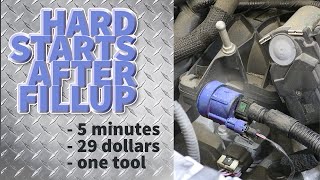
- Difficulty starting the engine, particularly after refueling 🎬 Watch: Why a bad purge valve makes your car hard to start. (a classic sign of a stuck-open purge valve)
- The vehicle may stall for approximately the first 5 miles after refueling, as noted in some Chrysler owner reports like NHTSA ODI #11081301.
- Replacing the fuel tank pressure sensor before confirming a physical leak with a smoke test.
- Assuming the issue is complex without first checking the easy-to-access purge valve on top of the engine.
Most Likely Causes
- Faulty EVAP Purge Valve/Solenoid 🔴 High Probability → Shop Vapor Canister The purge valve is a constantly working solenoid that can get stuck open, creating a permanent leak path from the EVAP system to the intake manifold. This can also cause hard starting after filling the gas tank as raw fuel vapor is drawn into the engine. Manufacturer service bulletins, such as TSB Bulletin #1809223 and TSB Bulletin #1807517, specifically link P0455 and P0441 (Purge System Performance) to EVAP system failures on Chrysler platforms.
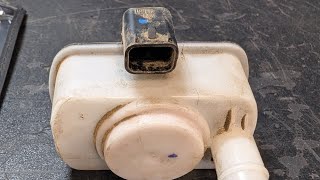
How to confirm: Remove the valve from the top of the engine. With the vehicle off, try to blow through it. If air passes through, the valve is stuck open and has failed. A scan tool can also command the valve to cycle to test its function.
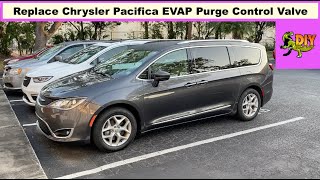
Typical fix: Replace the EVAP purge valve. It is located on top of the engine under the plastic cover (held by two T30 Torx screws 🎬 Watch: A quick walkthrough on replacing the EVAP purge valve.) and is easily accessible with basic tools.
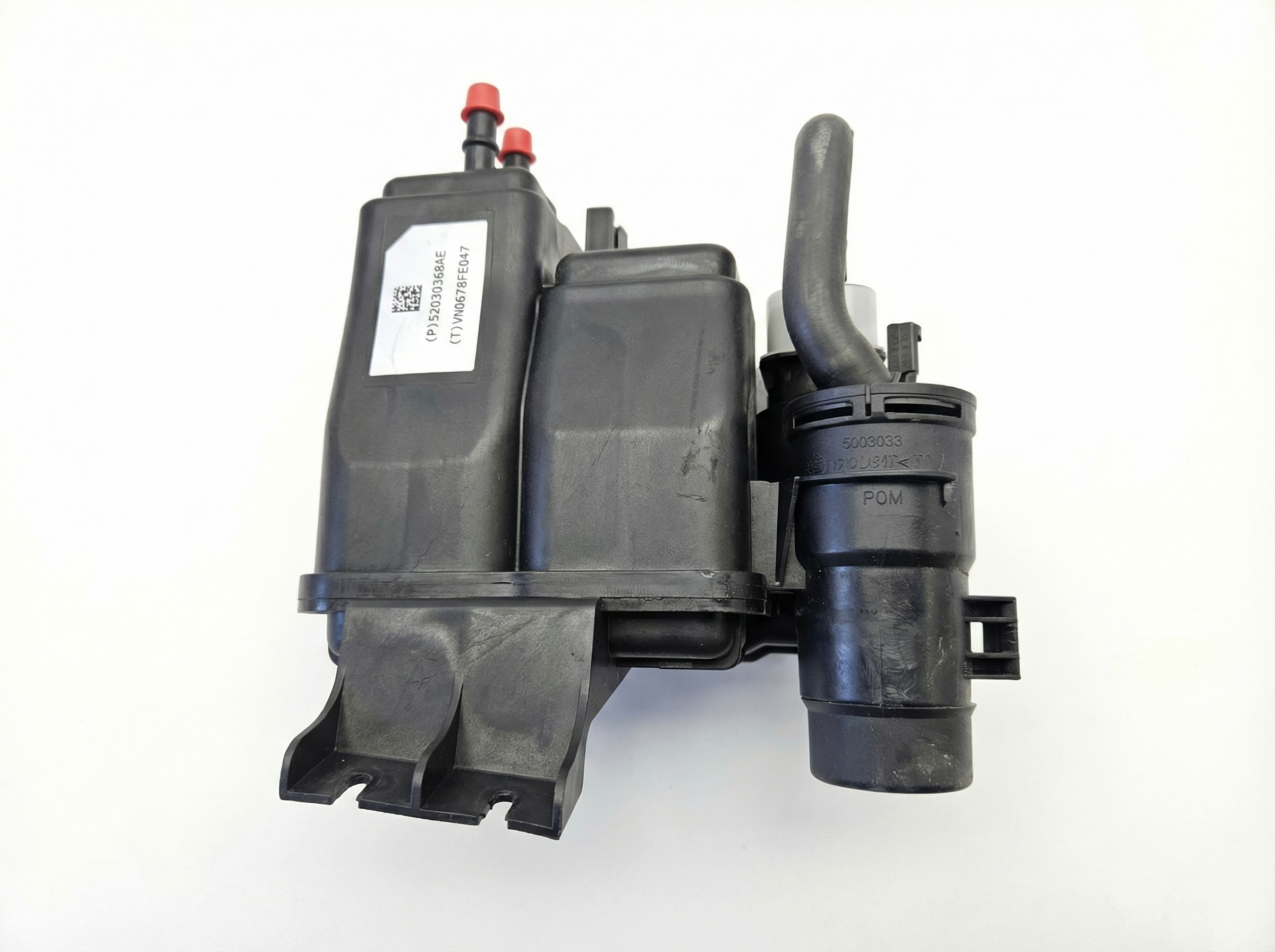
Est. part cost: $25-$75 - Failed Evaporative System Integrity Monitor (ESIM) or Seal 🔴 High Probability → Shop Vapor Canister The ESIM is the component that tests the system for leaks. The unit itself can fail, but more commonly, the rubber O-ring that seals it to the charcoal canister becomes brittle and cracks, creating a leak.
How to confirm: A smoke test is the most effective method. Smoke is injected into the EVAP system, and if it escapes from the ESIM unit or its mounting point on the canister, the part is confirmed bad. This was the confirmed fix on a 2017 Pacifica per a repair invoice.
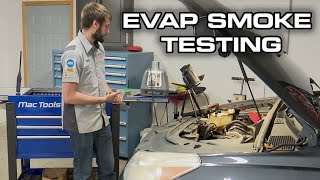
Typical fix: Replace the ESIM and its O-ring seal. The part is located in the driver's side rear wheel well, mounted to the charcoal canister. Access requires removing the wheel and fender liner. The ESIM is removed with a quarter-turn twist. 🎬 See how to smoke test and replace the ESIM unit.
Est. part cost: $40-$100 - Debris in Capless Fuel Filler Flap 🟡 Medium Probability The capless system relies on a spring-loaded flap to seal the tank. Dirt, dust, or fuel residue can prevent this flap from closing completely, creating a large leak.
How to confirm: Visually inspect the fuel filler opening for any debris. Clean the sealing surface and the flap with a clean rag. The white plastic funnel that comes with the vehicle can be used to open the flap for easier cleaning.
Typical fix: Clean the fuel filler neck and flap. If the flap is damaged or the spring is broken, the entire filler neck assembly may need replacement.
Est. part cost: $0 for cleaning, $150-$300 for filler neck replacement - Cracked or Disconnected EVAP Hoses ⚪ Low Probability Plastic and rubber hoses become brittle over time with exposure to heat and fuel vapors, leading to cracks or loose connections. A repair invoice for a 2017 Pacifica noted a disconnected hose under the hood was found along with a bad ESIM.
How to confirm: Visually inspect all accessible EVAP lines, especially at connection points. A smoke test will quickly reveal the location of any hose leaks.
Typical fix: Replace the damaged section of hose or secure the loose connection.
Est. part cost: $10-$50
Rare But Worth Checking
- Cracked Charcoal Canister: → Shop Vapor Canister The canister itself can be damaged by road debris, leading to a crack that causes a large leak. This is uncommon but possible.
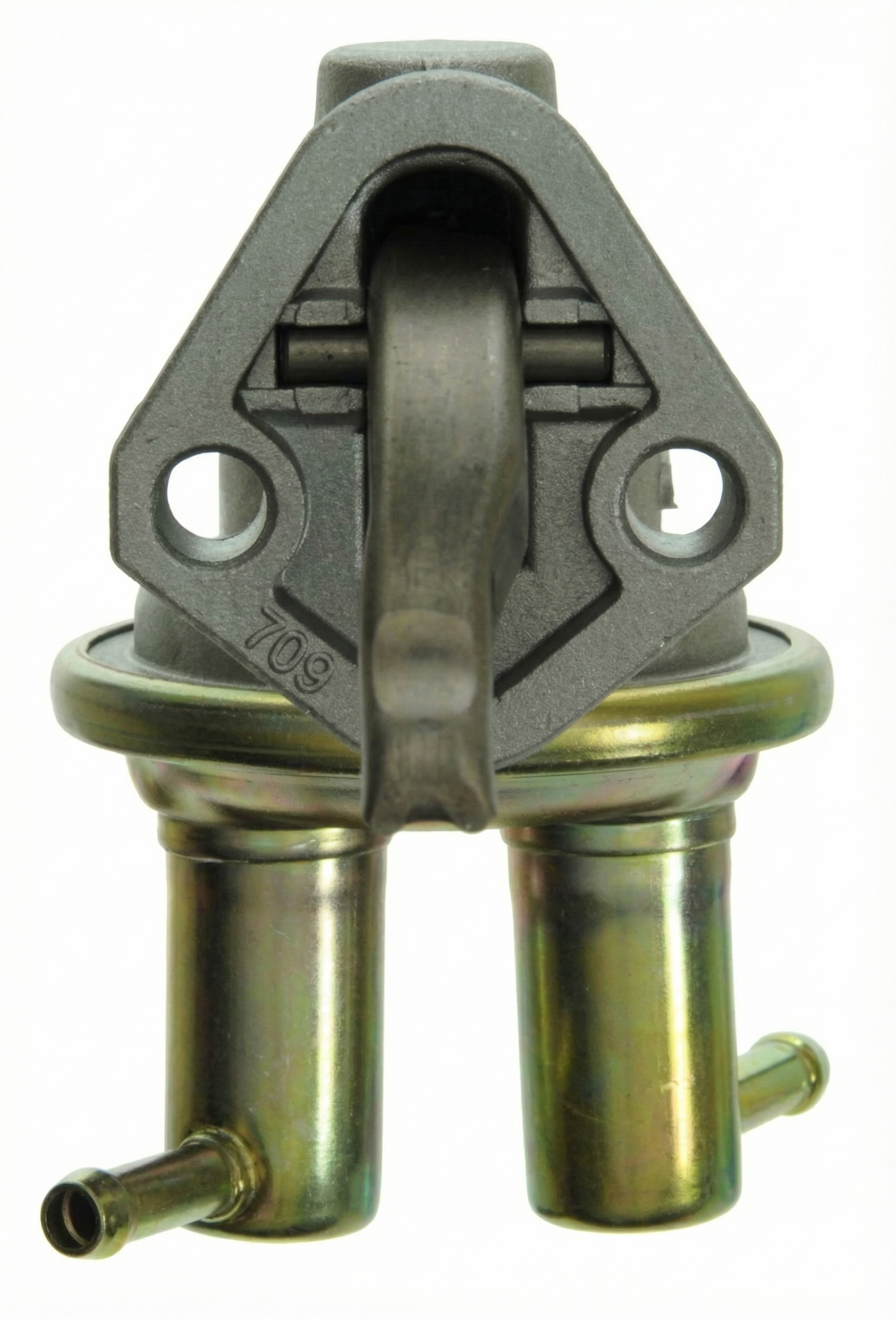
- Cracked Fuel Pump Nipple: → Shop Fuel Pump On older Chrysler/Dodge minivans, a common failure point was a plastic nipple on the fuel pump assembly cracking due to stress from a shrinking EVAP hose, causing P0455/P0456 codes. While less documented on the new Pacifica, it's a known issue in the family lineage that requires dropping the fuel tank to inspect.
- Faulty Fuel Tank Pressure Sensor: → Shop Fuel Tank In rare cases, the sensor that measures pressure in the system can fail and send incorrect data to the PCM, causing a false code. This usually triggers other codes as well.
- Leaking Secondary Unit: NHTSA ODI #11222544 describes a case where a smoke test revealed a leaking secondary unit, requiring the secondary pump to be replaced to clear P0455, P0456, and P0457.
Diagnosis Steps
- Read the code with an OBD-II scanner to confirm P0455 is present.
- Inspect the capless fuel filler neck for any debris or damage that could prevent a proper seal. Clean it thoroughly, using the vehicle's supplied funnel to manipulate the flap.
- Visually inspect the EVAP purge valve and its hoses on top of the engine for any obvious cracks or disconnections.
- Test the purge valve by removing it and attempting to blow through it. If air passes, it's faulty and needs replacement. Also note if the vehicle is hard to start after refueling.
- If the purge valve is good, the next step is a professional smoke test. This involves injecting low-pressure smoke into the EVAP system to find the source of the leak.
- Pay close attention to the driver's side rear wheel well area during the smoke test, as the ESIM module and charcoal canister are common leak points.
- Based on the smoke test results, replace the faulty component (e.g., ESIM, hose, charcoal canister).
- If no leak is found, consider the possibility of a cracked fuel pump nipple, which may require dropping the tank to inspect visually.
Parts You'll Likely Need
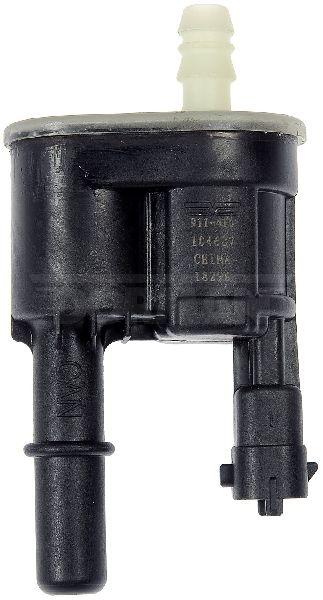
- EVAP Vapor Canister Purge Valve/Solenoid
(OEM #4891735AD)— This is a very common failure point that gets stuck open, causing a large leak and often hard starting after fueling. It's located on top of the engine and is easy to replace.
Trusted brands: Mopar, Standard Motor Products (SMP), Dorman
OEM price range: $40-$75
Aftermarket price range: $25-$50 - Evaporative System Integrity Monitor (ESIM)
(OEM #4861961AA)— This leak detection unit, or more often its O-ring seal, fails and creates a leak. It is the second most likely cause after the purge valve and was the confirmed fix in a documented repair.
Trusted brands: Mopar
OEM price range: $40-$100
Aftermarket price range: $30-$60
Related Codes That Often Appear With This One
- P0456 — P0456 indicates a 'small' EVAP leak. It's common to see both codes if a small leak worsens over time or if the system has multiple leak points. A real-world repair invoice for a 2017 Pacifica showed both P0455 and P0456 present.
- P0457 — This code specifically indicates a leak due to a loose or missing fuel cap. While the Pacifica is capless, a severely malfunctioning filler neck flap could potentially trigger this alongside P0455. Forum posts for older models show all three codes appearing at once.
- P0300 — NHTSA ODI #11406732 reports a vehicle where P0455 and P0456 appeared alongside P0300 (Random Misfire) and P0175 (System Too Rich), suggesting that a large EVAP leak can sometimes impact engine performance and air-fuel ratios.
Technical Service Bulletins (TSBs) & Recalls
- S1908000195RevA — Smog Check Vehicle Inspection Report (VIR) Fails Because Of Permanent Diagnostic Trouble Codes, PDTC
- TSB Bulletin #1809223 — Notes that technicians may find P0455, P0456, P0440, or P0441 set during investigation of engine illumination issues.
- TSB Bulletin #1807517 — Lists P0455 and P0456 among several other codes (like P0335 and P2610) that may be encountered during diagnostic procedures.
Platform-Specific Known Issues
- A repair invoice for a 2017 Pacifica with codes P0455 and P0456 showed the final repair was the replacement of the 'Evaporative System Integrity Monitor Module' after also finding and reconnecting a disconnected hose under the hood cover.
- Multiple owner and mechanic videos identify the ESIM, located in the driver's side rear wheel well, as a common failure point for EVAP codes on this platform.
Mechanic-Grade Diagnostic Values
- Fuel Tank Pressure (FTP) Sensor Voltage (Key On, Engine Off, Capless Flap Open) — expected: ~2.5 Volts (Atmospheric Pressure). Failure: Voltage significantly different from 2.5V, or voltage does not decrease when a slight vacuum is manually applied to the sensor.
- Fuel Tank Pressure (FTP) Sensor Reference Voltage — expected: 5 Volts. Failure: Absence of 5V at the sensor connector indicates a wiring or PCM issue.
- EVAP Purge Valve Solenoid Resistance — expected: ~14-30 Ohms. Failure: Reading is an open circuit (infinite resistance) or far outside the expected range.
- EVAP System Self-Test Pressure/Vacuum — expected: 2 to 3 inches of H2O. Failure: The system is unable to achieve or hold this level of vacuum during a self-test.
Scan Tool Commands That Help
- wiTECH (Chrysler Dealer Tool): Small Leak Verification Test (SLVT) — Mandatory for diagnosing a P0456 (small leak) and is the only dealer-approved method to verify a fix without performing multiple drive cycles. It is extremely useful when P0455 and P0456 are present together.
- Professional Scan Tool: EVAP Purge Solenoid Actuation / On/Off — To functionally test if the purge solenoid is opening and closing on command. Can be used with a vacuum gauge to see if it seals properly.
- Professional Scan Tool: EVAP Vent Solenoid/Valve Actuation / On/Off — This command is required to seal the EVAP system before performing a smoke test. The technician commands the valve closed to trap the smoke inside the system.
- wiTECH (Chrysler Dealer Tool): Forced EVAP Monitor Test — To run the onboard diagnostic monitor on demand in the service bay to confirm a repair, provided all preconditions (like fuel level between 15-85%) are met.
Wiring & Ground Locations
- G917A — Under the battery tray.. A TSB for 2022 models identifies this ground point as being susceptible to water intrusion and corrosion, causing various electrical DTCs. While not directly citing P0455, a poor ground can cause erratic behavior in any related electronic module or sensor, making it a potential, though indirect, cause for false codes.
"I Checked Everything" — The Actual Cause
- On Chrysler systems, a common failure pattern is an internally leaking EVAP purge valve that passes a standard, engine-off smoke test. The valve's diaphragm holds against the low pressure of the smoke machine but will leak engine vacuum when the vehicle is running. The symptom is often a P0455/P0456 code with no leak found during a smoke test. The proper diagnosis is to check for vacuum being pulled through the purge valve with it disconnected and the engine idling; there should be none.
OEM Part Supersession History
68393977AB→68393977AC— Part revision for the vapor canister on PHEV (Hybrid) models.
Heads up: The change point was June 4, 2018. Vehicles built on or after this date use the 'AC' version.52030445AA→68421782AA (Sensor) + 68137864AC (Harness)— The original fuel pressure sensor was discontinued.
Heads up: The new sensor (68421782AA) is not plug-and-play. It requires the separate purchase of a new pigtail harness (68137864AC) which must be spliced into the vehicle's wiring.
Model Year Variations Within This Range
- 2021-2024: A significant facelift occurred for the 2021 model year, including revised styling and a new Uconnect 5 infotainment system. While the core powertrain is the same, module software and wiring could differ from 2017-2020 models.
- 2020-2024: Lower trim levels (L, LX) were rebranded as the Chrysler Voyager starting in 2020, but they are mechanically very similar to the Pacifica for the purpose of this diagnosis.
- 2017-2018 (PHEV): The vapor canister part number for the Pacifica Hybrid changed on June 4, 2018. Pre-change and post-change parts may not be interchangeable.
Diagnostic Flowchart
Other Known Issues on This Vehicle
Issues unrelated to this code that are worth knowing about as an owner of this generation:
- Engine Stalling (Gas Models) 🔴 High — Common enough to trigger two major recalls. One for 2017 models (NHTSA recall U01) due to an engine control software glitch. Another for 2017-2019 models due to a loose battery ground connection. (Ref: Recall U01 / NHTSA 18V049; Recall V57 / NHTSA 19V348)
- Transmission Faults (9-Speed Auto & Hybrid eCVT) 🔴 High — Gas models with the 9-speed automatic are known for harsh/jerky shifting, hesitation, and sometimes premature failure. Hybrid models have a separate, severe issue with the eCVT transmission's internal wiring shorting out, causing sudden engine shutdown. This led to recall 23V-010 and a warranty extension (D-23-07). (Ref: Recall 23V-010 (Hybrid); TSB 21-001-24 (Hybrid))
- Premature Head Gasket Failure 🟠 Medium — A pattern of owner complaints filed with the NHTSA indicates potential for head gasket leaks on the 3.6L Pentastar engine at relatively low mileage (60k-80k miles). Often presents first as a cylinder misfire code.
- Electrical and Infotainment Glitches 🟡 Low — Complaints and recalls exist for issues like the backup camera image remaining on the screen (Recall VE2), faulty cruise control, and delaminating Uconnect touchscreens. (Ref: Recall VE2 / NHTSA 19V899)
Used vs. New Parts: Buying Guide for This Vehicle
When a used part is the smart pick: Used parts can be a cost-effective option for large, structural components like the fuel filler neck assembly, provided it is inspected for cracks and the sealing flap is in good condition. A used charcoal canister body may also be viable if it is free of physical damage.
Donor-vehicle mileage cap: roughly under 60000 miles for the part to have meaningful remaining life.
What to inspect on the donor part:
- For any part with a rubber seal or O-ring (like an ESIM), check that the rubber is pliable and not dry, cracked, or brittle.
- Inspect all plastic hose nipples and connection points for stress fractures or hairline cracks.
- Verify the part number on the donor part matches the original part exactly, unless a known supersession is being used.
OEM-only on this vehicle (don't cheap out):
- Fuel Tank Pressure (FTP) Sensor: Aftermarket sensors can have different voltage scaling, leading to inaccurate readings and persistent codes. Given the complexity of potential part supersessions requiring harness changes, OEM is the safest choice.
- Evaporative System Integrity Monitor (ESIM): This is a sensitive diagnostic component. OEM is strongly recommended to ensure it functions correctly with the vehicle's self-test procedures.
Aftermarket brands forum-validated for this vehicle:
- Standard Motor Products (SMP): Generally regarded in forums as a reliable alternative to Mopar for electrical parts and solenoids like the purge valve.
Brands owners have reported issues with on this vehicle:
- Dorman: Reviews are mixed. Some owners have reported premature failure of Dorman-branded EVAP components, particularly rubber hoses and some valves, which can crack or fail in a short period.
Real Owner Stories
Aggregated from forums and TSBs cited above. Mileages and costs reflect what owners reported in those sources.
2017 Chrysler Pacifica
Symptoms: The vehicle had active P0455 and P0456 codes stored in the system.
What fixed it: Replacement of the Evaporative System Integrity Monitor (ESIM) Module and reconnecting a disconnected hose found under the hood cover.
Source hint: vehicle_specific_issues repair invoice for a 2017 Pacifica
2008 Chrysler Grand Caravan (Platform Mate)
Symptoms: P0455 code; a shop replaced a valve after a smoke test but the code returned shortly after.
What fixed it: A second smoke test at a different shop revealed the actual leak was a cracked fuel pump.
Source hint: Reddit r/MechanicAdvice: '2008 Grand Caravan P0455'
Chrysler Pacifica (3.6L Pentastar)
Symptoms: EVAP codes P0455, P0456, and P0457.
What fixed it: The leak was traced to a cracked nipple on the fuel pump assembly, which required dropping the fuel tank to access.
Source hint: Chrysler Forum: 'Pacifica EVAP problem: codes p0455, p0456, and p0457'
Chrysler Pacifica
Symptoms: The check engine light was on and the vehicle failed an emissions test with codes P0457, P0455, and P0456.
What fixed it: An EVAP system smoke test was performed and found a leaking secondary unit, which required the secondary pump to be replaced (NHTSA ODI #11222544).
Related OBD-II Codes
Frequently Asked Questions
My 2017 Pacifica has P0455 and P0456; what is the most likely culprit based on common repairs?
Why does my Pacifica struggle to start only after I fill up the gas tank?
I fixed the leak, but my Pacifica still shows a 'Permanent' P0455 code. How do I clear it for a smog check?
Can a dirty fuel filler cause a P0455 'Large Leak' code on a 2017-2024 Pacifica?
Where is the EVAP purge valve located on the 3.6L Pentastar engine?
Helpful Videos
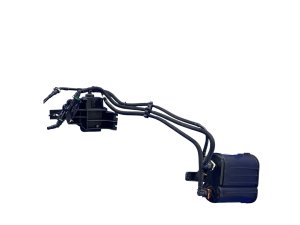
Used OEM Parts in Stock
New Aftermarket Parts Available


The information in this article is provided for general reference and educational purposes only. Vehicle specifications, procedures, and part compatibility can vary by production date, trim level, and region. Always consult your vehicle's factory service manual and verify part numbers before purchasing or performing repairs. Safety-critical components such as airbags, seat belts, and braking systems should be installed by a qualified professional.
- Chrysler Pacifica:
- 🧭 Diagnostic Flowchart
- 🎬 Helpful Videos
- 🛍️ Shop This Part
- What's Unique About the 2017-2024 Chrysler Pacifica
- Symptoms You May Notice
- Most Likely Causes
- Rare But Worth Checking
- Diagnosis Steps
- Parts You'll Likely Need
- Related Codes That Often Appear With This One
- Technical Service Bulletins (TSBs) & Recalls
- Platform-Specific Known Issues
- Mechanic-Grade Diagnostic Values
- Scan Tool Commands That Help
- Wiring & Ground Locations
- "I Checked Everything" — The Actual Cause
- OEM Part Supersession History
- Model Year Variations Within This Range
- Other Known Issues on This Vehicle
- Used vs. New Parts: Buying Guide for This Vehicle
- Real Owner Stories
- 2017 Chrysler Pacifica
- 2008 Chrysler Grand Caravan (Platform Mate)
- Chrysler Pacifica (3.6L Pentastar)
- Chrysler Pacifica
- Related OBD-II Codes
- Frequently Asked Questions
- 🎟️ Get 5% Off