

P0455 on 2001-2010 Chrysler PT Cruiser: EVAP Large Leak Causes and Fixes
For a 2001-2010 PT Cruiser, code P0455 is most often caused by a loose or faulty gas cap. If that's not the issue, suspect cracked EVAP hoses, particularly the small sections in the engine bay near the purge solenoid, or a failed leak detection pump (LDP) or its O-ring near the rear of the vehicle. A new gas cap is under $20, while other repairs can range from $50 to $200.
- Always start with the gas cap. It's the easiest and most common fix for P0455.
- If the gas cap is good, the next most likely culprits are cracked rubber hoses or a faulty Leak Detection Pump (LDP) near the rear wheel.
- A smoke test is the fastest and most accurate way to diagnose a P0455 code if the cause isn't immediately obvious.
- This code will not leave you stranded, but it needs to be fixed to pass an emissions test and reduce fuel vapor pollution.
What's Unique About the 2001-2010 Chrysler PT Cruiser
Chrysler vehicles of this era, including the PT Cruiser, use a specific component called a Leak Detection Pump (LDP) or a Natural Vacuum Leak Detection (NVLD) assembly to test the EVAP system's integrity. This pump, located near the charcoal canister by the fuel tank, can be a common point of failure itself, either through a faulty internal mechanism or a degraded O-ring seal where it mounts to the canister. While a loose gas cap is always the first suspect, these specific Chrysler parts are a frequent cause of P0455 when the gas cap isn't the problem.
Symptoms You May Notice
- Check Engine Light is on
- A noticeable smell of fuel, especially around the gas cap or rear of the vehicle
- Failure to pass an emissions inspection
- Vehicle stalling shortly after refueling (as noted in some Chrysler platforms via NHTSA ODI #11081301)
- Replacing the fuel tank pressure sensor. While this sensor can fail, it is not a common cause for a P0455 leak code and will typically set its own specific trouble codes (e.g., P0452, P0453).
Most Likely Causes
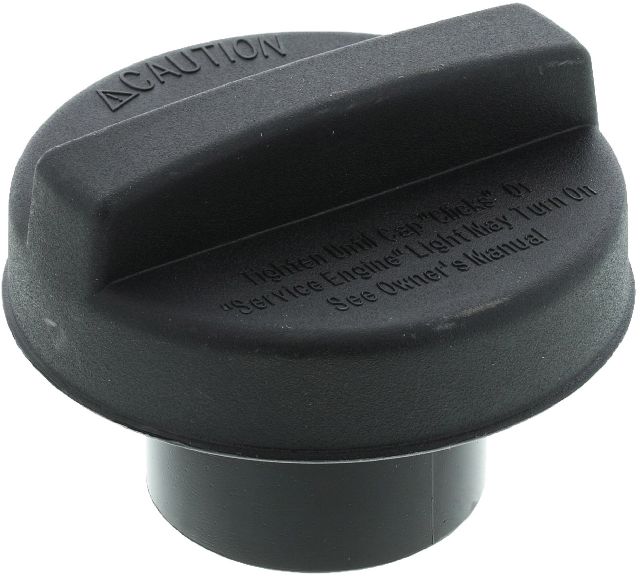
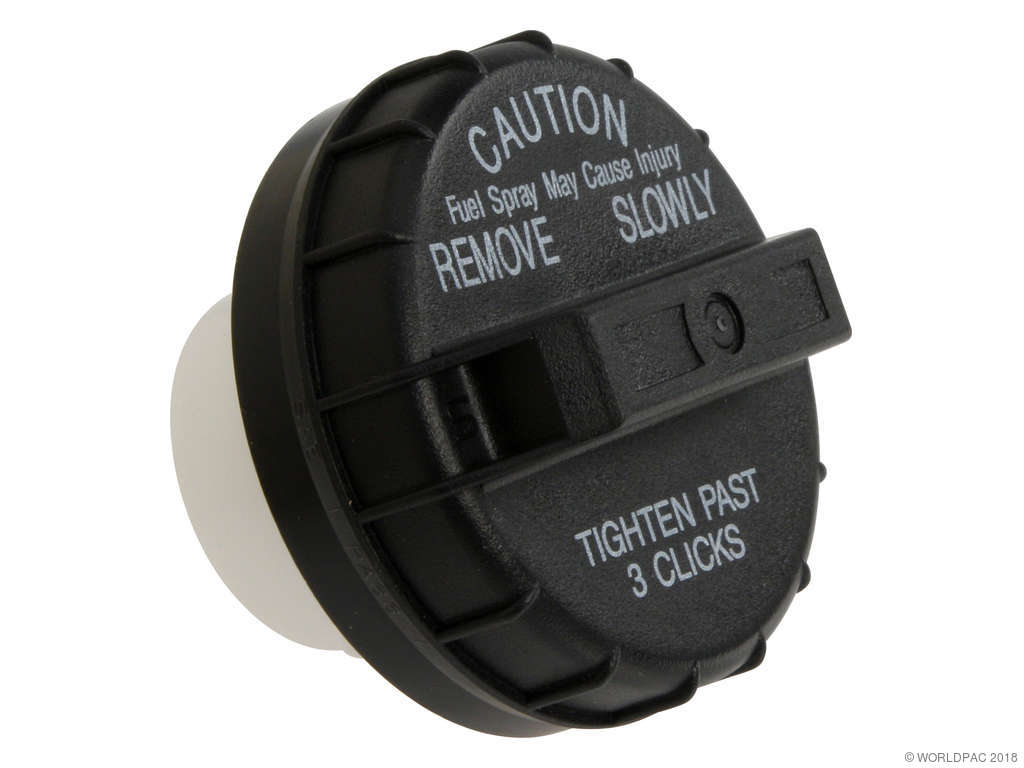
- Loose, Damaged, or Incorrect Gas Cap 🔴 High Probability → Shop Fuel Tank Cap This is the most common cause for P0455 on any vehicle due to user error (not tightening it) or the cap's seal wearing out over time.
How to confirm: Ensure the gas cap is tightened until it clicks at least three times. Inspect the rubber O-ring on the cap for cracks, stiffness, or damage. If it looks worn, it's suspect. A new cap is an inexpensive first step.
Typical fix: Tighten the existing cap or replace it with a new OEM or equivalent part.
Est. part cost: $10-$25 - Cracked or Disconnected EVAP Hoses 🟡 Medium Probability The rubber and plastic hoses in the EVAP system become brittle and crack with age. On the PT Cruiser, a very common failure point is the short rubber hose sections connecting the hard plastic EVAP lines to the purge solenoid in the engine bay.
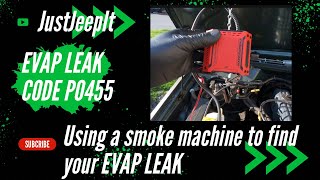
How to confirm: Visually inspect all accessible EVAP lines, paying close attention to the small rubber connectors near the purge solenoid (located in the engine bay, near the firewall). The definitive method is to use a smoke machine, which fills the system with visible vapor to pinpoint the exact location of the leak. 🎬 Watch: How to find an EVAP leak with a smoke tester.
Typical fix: Replace the cracked section of hose. This may involve buying bulk vacuum hose of the correct diameter or a pre-formed OEM hose.
Est. part cost: $15-$60 - Failed Leak Detection Pump (LDP) or Seal 🟡 Medium Probability → Shop Evaporative Emissions System Leak Detection Pump The LDP is a known failure point on many Chrysler products of this era, including post-2002 PT Cruisers. The internal diaphragm can fail, or the O-ring that seals it to the charcoal canister can degrade, creating a large leak. NHTSA ODI #11222544 describes a case where a smoke test identified a leaking secondary unit, requiring a pump replacement to clear the P0455 code.
How to confirm: The LDP is located near the fuel tank, typically attached to the charcoal canister. A smoke test is the best way to confirm a leak at the LDP body or its seal. The pump is often accessed by removing the rear passenger-side wheel and wheel well liner.
Typical fix: Replace the Leak Detection Pump. The new part usually comes with a new O-ring. The Mopar OEM part number is 04891525AB. 🎬 See this teardown and testing of the Leak Detection Pump.
Est. part cost: $40-$110 - Faulty EVAP Purge Solenoid ⚪ Low Probability → Shop Vapor Canister The purge solenoid, located in the engine bay, can get stuck open, creating a constant vacuum leak into the engine that the system interprets as a large leak.
How to confirm: With the engine off, disconnect the hose leading from the solenoid to the canister. There should be no vacuum present. You can also remove the solenoid and try to blow through it; if air passes, it is stuck open and faulty.
Typical fix: Replace the purge solenoid.
Est. part cost: $30-$70
Rare But Worth Checking
- Cracked Charcoal Canister: → Shop Vapor Canister The plastic body of the charcoal canister (located near the fuel tank) can be damaged by road debris or age, causing a large crack and a P0455 code. This is usually obvious during a visual inspection or smoke test.
- Rusted or Damaged Fuel Filler Neck: → Shop Fuel Filler Neck In areas with heavy road salt use, the metal fuel filler neck can rust through, creating a large leak. Inspect the entire neck from the gas cap down to the tank for any signs of corrosion or holes. This can be a common source of leaks on older vehicles in the rust belt.
Diagnosis Steps
- Check the Gas Cap: This is the number one cause. Ensure it is present, tightened until it clicks multiple times, and visually inspect the seal for cracks or damage. Clear the code. If it returns, buy a new OEM-spec cap before proceeding.
- Visual Inspection (Engine Bay): Open the hood and locate the EVAP purge solenoid near the firewall. Carefully inspect the small rubber hoses connected to it. These are a very common failure point and are often cracked or mushy.
- Visual Inspection (Under Vehicle): Safely raise the vehicle and inspect the EVAP hoses running from the front to the rear. Look for obvious cracks, disconnections, or signs of rot. Pay attention to the area around the charcoal canister and LDP/NVLD assembly, located near the fuel tank on the passenger side.
- Perform a Smoke Test: This is the most effective way to find the leak. An automotive smoke machine is connected to the EVAP system's service port. The smoke will exit from any cracks in hoses, the canister, the LDP, or the filler neck, making the leak easy to spot.
- Test the Purge Solenoid: Locate the purge solenoid in the engine bay. With the vehicle off, it should be closed. Disconnect it and try to blow air through; if air passes, it needs to be replaced. 🎬 Watch: 2.4L turbo purge valve location and replacement walkthrough.
- Inspect the Leak Detection Pump (LDP) / NVLD Assembly: If the smoke test points to the rear of the vehicle, pay close attention to the LDP and its O-ring seal on the charcoal canister (2003+ models) or the NVLD assembly (2001-2002 models).
Parts You'll Likely Need
- Gas Cap — This is the most frequent and simplest fix for a P0455 code.
Trusted brands: Mopar, Stant, Gates
OEM price range: $15-$30
Aftermarket price range: $10-$20 - EVAP System Leak Detection Pump
(OEM #04891525AB)— A common failure on Chrysler vehicles of this era (2003+), causing a large leak code when the pump itself or its seal fails.
Trusted brands: Mopar, Dorman, Standard Motor Products
OEM price range: $90-$150
Aftermarket price range: $40-$110 - EVAP Purge Solenoid / Valve — Can get stuck open, causing a leak that the system detects. It's a relatively common and easy-to-replace part in the engine bay.
Trusted brands: Mopar, Standard Motor Products, Bosch
OEM price range: $50-$90
Aftermarket price range: $30-$70 - EVAP Hoses — Rubber hoses, especially the small transition pieces in the engine bay, become brittle and crack over time, creating leaks. This is a very common issue on vehicles over 10 years old.
OEM price range: $20-$80 (for pre-formed sections)
Aftermarket price range: $5-$20 (for bulk hose)
Related Codes That Often Appear With This One
- P0442 — This code indicates a small EVAP leak. Sometimes a leak can be borderline, or the system may detect both a large and small leak condition at different times. It's common to see these codes together.
- P0456 — This code indicates a very small EVAP leak. It's common to see this code alongside P0455, especially on Chrysler systems, as the computer may run different tests that identify leaks of varying sizes.
Platform-Specific Known Issues
- Cracked Engine Bay EVAP Hoses: A very common point of failure is the short (2-3 inch) rubber hoses that connect the plastic EVAP lines to the purge solenoid. Over time, engine heat makes them brittle and they crack, causing a large leak. This is often the cause when the gas cap is not the issue. A user on ChryslerForum noted, 'Remove the airbox under hood and look for plastic tube running horizontal and then having a little piece of 5/16" rubber hose for the transition to vertical. This hose is likely cracked.'
Technical Service Bulletins (TSBs) & Recalls
- TSB Bulletin #1809223: This manufacturer bulletin notes that technicians may find P0455 (EVAP System Large Leak) set alongside P0456, P0440, and P0441 during investigations of check engine light illumination on Chrysler platforms.
- TSB Bulletin #1807517: This bulletin lists P0455 as a potential code that may be set in conjunction with other performance codes, including P0441 and P0456, requiring diagnostic attention to the EVAP system.
Mechanic-Grade Diagnostic Values
- EVAP Canister Purge Valve Resistance — expected: Approximately 14-18 Ohms. Some sources for general Chrysler vehicles suggest a wider range of 30-38 Ohms for certain types.. Failure: A reading of infinity (open circuit) or zero (short circuit) indicates a failed solenoid coil.
Scan Tool Commands That Help
- Chrysler DRB III or equivalent professional scan tool: EVAP System Test / Leak Test — This function allows the technician to command the EVAP system to seal and run its self-test on demand, rather than waiting for the vehicle's drive cycle conditions to be met. It can activate the LDP or seal the vent solenoid to confirm their operation and monitor the fuel tank pressure sensor for a leak.
- Chrysler DRB III or equivalent professional scan tool: Purge Solenoid Actuation — This bidirectional control allows the user to command the purge solenoid to open and close. While monitoring engine RPM or vacuum, a technician can confirm if the solenoid is functioning correctly and not stuck.
Wiring & Ground Locations
- G104 — On the front of the right front fender, inside the engine compartment.. This is a primary engine management ground point. A corroded or loose G104 can cause erratic voltage and sensor readings for multiple components, potentially including the EVAP system solenoids and sensors, leading to false codes or improper operation.
- EVAP Purge Solenoid Connector — Located in the engine bay, typically on the firewall or intake manifold area.. The connector has two pins. One receives switched 12V power from the ASD (Auto Shutdown) relay, and the other is the control wire (ground-side switched) from the Powertrain Control Module (PCM). Checking for power and the control signal at this connector is a key electrical diagnostic step.
- LDP / NVLD Connector — At the Leak Detection Pump or NVLD assembly, near the charcoal canister by the fuel tank.. This 3-wire connector provides power for the pump/solenoid and carries the signal from the internal switch back to the PCM. Corrosion here is common due to its location and can cause LDP/NVLD circuit codes or failure to operate.
Real Owner Repair Stories
- PTCruiserLinks.com Forum User (2005 PT Cruiser) — Persistent P0455 and P0456 codes.
❌ Tried (didn't work) Replaced gas cap with an OEM Mopar part., Replaced the purge solenoid in the engine bay., Replaced the small, cracked vacuum lines in the engine bay.
✅ What actually fixed it After multiple smoke tests showed no leaks, the owner dropped the fuel tank slightly and found a large, age-cracked rubber hose connecting the fuel filler neck to the gas tank. This hose was not easily visible and did not leak fuel, only vapor, making it hard to find. Replacing this filler neck hose resolved the codes. - NHTSA ODI #11406732: An owner reported that after maintaining the vehicle well, several error codes including P0455 and P0456 appeared simultaneously, which a mechanic suggested could be a manufacturer-related issue.
- NHTSA ODI #11081301: One owner experienced stalling for approximately the first 5 miles after refueling, accompanied by P0455 and P0456 codes that would clear themselves after a few days.
"I Checked Everything" — The Actual Cause
- A common scenario where a smoke test shows no leaks is a faulty Leak Detection Pump (LDP) on 2003+ models. The LDP has an internal motor to pressurize the system and a switch to report the pressure. The system can pass a smoke test (which only checks for physical leaks) but still set a P0455 if the LDP motor fails to run when commanded by the PCM. The PCM interprets the lack of pressure build-up as a large leak. The fix is to replace the LDP assembly.
Model Year Variations Within This Range
- 2001-2002 (approx.): These early models use a Natural Vacuum Leak Detection (NVLD) system. Instead of a pump, it uses the natural vacuum created in the fuel tank as the vehicle cools down to test for leaks. The key component is the NVLD assembly, which contains a switch that closes when a certain vacuum is reached. A failure of the NVLD switch or solenoid can cause P0455.
- 2003-2010 (approx.): These later models use a Leak Detection Pump (LDP) system. The PCM actively runs a small pump to pressurize the EVAP system for testing. The LDP assembly contains the pump, a vent solenoid, and a pressure switch. This entire assembly is a common failure point, either through leaks or electrical failure of the pump or switch.
Diagnostic Flowchart
Other Known Issues on This Vehicle
Issues unrelated to this code that are worth knowing about as an owner of this generation:
- Premature Front Control Arm Bushing Failure 🟠 Medium — Extremely common, often failing before 60,000 miles. Causes clunking noises over bumps, steering wheel vibration, and uneven tire wear.
- Timing Belt Replacement (Interference Engine) 🔴 High — The 2.4L engine is an interference design. The timing belt requires replacement at the manufacturer's interval (approx. 100,000 miles) or every 7-10 years. If the belt breaks, catastrophic engine damage (bent valves, damaged pistons) will occur.
- A604/41TE Automatic Transmission Problems 🔴 High — Common on vehicles approaching 100,000 miles. Symptoms include erratic shifting, getting stuck in 'limp mode' (2nd gear only), or complete failure to engage gears. Often related to faulty input/output speed sensors or internal solenoid pack failure.
- Camshaft Position Sensor Failure 🟠 Medium — A common cause for an intermittent or persistent crank-no-start condition, or stalling while driving. Relatively inexpensive part but can leave the driver stranded.
- Multifunction Switch (Turn Signal Stalk) Failure 🟡 Low — A widely reported issue where the turn signals, wipers, or high beams controlled by the stalk operate erratically or fail completely.
Used vs. New Parts: Buying Guide for This Vehicle
When a used part is the smart pick: For this vehicle, sourcing used parts makes sense for large, non-wear components that are expensive new. A used charcoal canister can be a good value if it's visually inspected for cracks and comes from a donor vehicle in a dry climate. Similarly, intact plastic EVAP lines or a rust-free fuel filler neck from a junkyard are viable options.
Donor-vehicle mileage cap: roughly under 120000 miles for the part to have meaningful remaining life.
What to inspect on the donor part:
- Check for date codes on plastic and rubber parts; newer is always better.
- For charcoal canisters, ensure all hose ports are free of debris and not cracked.
- Inspect rubber hoses for pliability; if they are hard and stiff, they will crack soon and should be avoided.
- When buying a fuel filler neck, check for any signs of rust, especially at the mounting bracket and where it meets the tank.
OEM-only on this vehicle (don't cheap out):
- Gas Cap: While aftermarket caps exist, many forum users report persistent small leak codes (P0456) until they switch to an OEM Mopar gas cap. The specific pressure and vacuum relief characteristics are critical.
Aftermarket brands forum-validated for this vehicle:
- Standard Motor Products (SMP): Often cited as a reliable alternative for sensors and solenoids like the purge valve and LDP.
- Dorman: Provides cost-effective replacements for the LDP and various EVAP hoses, though some users report mixed long-term reliability compared to OEM.
Brands owners have reported issues with on this vehicle:
- Unbranded, no-name parts from online marketplaces. For EVAP systems, precise calibration is key, and these parts often lack the quality control to seal and operate within the PCM's strict parameters, leading to the code returning.
Real Owner Stories
Aggregated from forums and TSBs cited above. Mileages and costs reflect what owners reported in those sources.
2005 Chrysler PT Cruiser 2.4 non-turbo
Symptoms: Check engine light with P0455 Large Evap Leak.
What fixed it: Replaced the vapor canister purge solenoid with a direct fit part.
Source hint: owner_reports source: eBay Review
2007 Chrysler PT Cruiser (Platform Mate)
Symptoms: Troubleshooting a P0455 large leak code.
What fixed it: Inspected the gas cap and then checked for cracked rubber lines near the airbox in the engine bay.
Source hint: ChryslerForum - 'troubleshooting P0455..'
2001-2010 Chrysler PT Cruiser
Symptoms: Large EVAP leak code; found a plastic tube running horizontal that transitions to a vertical orientation via a small rubber hose.
What fixed it: Replaced a 5/16" piece of rubber hose that had become cracked at the transition point.
Source hint: vehicle_specific_issues: ChryslerForum user note
Related OBD-II Codes
Frequently Asked Questions
Where is the Leak Detection Pump (LDP) located on my PT Cruiser?
I've heard the purge solenoid hoses are a problem on the PT Cruiser. Where should I look?
What is the specific Mopar part number for the Leak Detection Pump if I need to replace it?
My 2001 PT Cruiser has an EVAP leak; is the system the same as the later models?
Can I just tighten my gas cap to fix a P0455 code?
Is the P0455 code related to the common timing belt issues on the 2.4L engine?
Helpful Videos


We Have This Part in Stock


The information in this article is provided for general reference and educational purposes only. Vehicle specifications, procedures, and part compatibility can vary by production date, trim level, and region. Always consult your vehicle's factory service manual and verify part numbers before purchasing or performing repairs. Safety-critical components such as airbags, seat belts, and braking systems should be installed by a qualified professional.
- Chrysler PT Cruiser:
- 🧭 Diagnostic Flowchart
- 🎬 Helpful Videos
- 🛍️ Shop This Part
- What's Unique About the 2001-2010 Chrysler PT Cruiser
- Symptoms You May Notice
- Most Likely Causes
- Rare But Worth Checking
- Diagnosis Steps
- Parts You'll Likely Need
- Related Codes That Often Appear With This One
- Platform-Specific Known Issues
- Technical Service Bulletins (TSBs) & Recalls
- Mechanic-Grade Diagnostic Values
- Scan Tool Commands That Help
- Wiring & Ground Locations
- Real Owner Repair Stories
- "I Checked Everything" — The Actual Cause
- Model Year Variations Within This Range
- Other Known Issues on This Vehicle
- Used vs. New Parts: Buying Guide for This Vehicle
- Real Owner Stories
- 2005 Chrysler PT Cruiser 2.4 non-turbo
- 2007 Chrysler PT Cruiser (Platform Mate)
- 2001-2010 Chrysler PT Cruiser
- Related OBD-II Codes
- Frequently Asked Questions
- 🎟️ Get 5% Off