

P0455 on 2015-2020 Dodge Durango: EVAP Large Leak Causes and Fixes
P0455 on a 2015-2020 Durango most often means you have a loose gas cap or a cracked EVAP purge valve hose under the hood. Check the gas cap first, then inspect the purge hose, which is a known failure point documented in Dodge Technical Service Bulletins. The hose becomes brittle and cracks, especially at the connection points.
- P0455 means your Durango has a large leak in the emissions system, which is not a critical engine problem but will cause you to fail an emissions test.
- Always check your gas cap first. Make sure it's tight and the seal isn't cracked. This is the easiest and cheapest fix.
- The most likely cause specific to the 2015-2020 Durango is a cracked plastic EVAP purge hose under the engine cover, a problem documented by Dodge in service bulletins.
- If the gas cap and purge hose are fine, a smoke test is the best way to find the leak without guessing and replacing unnecessary parts.
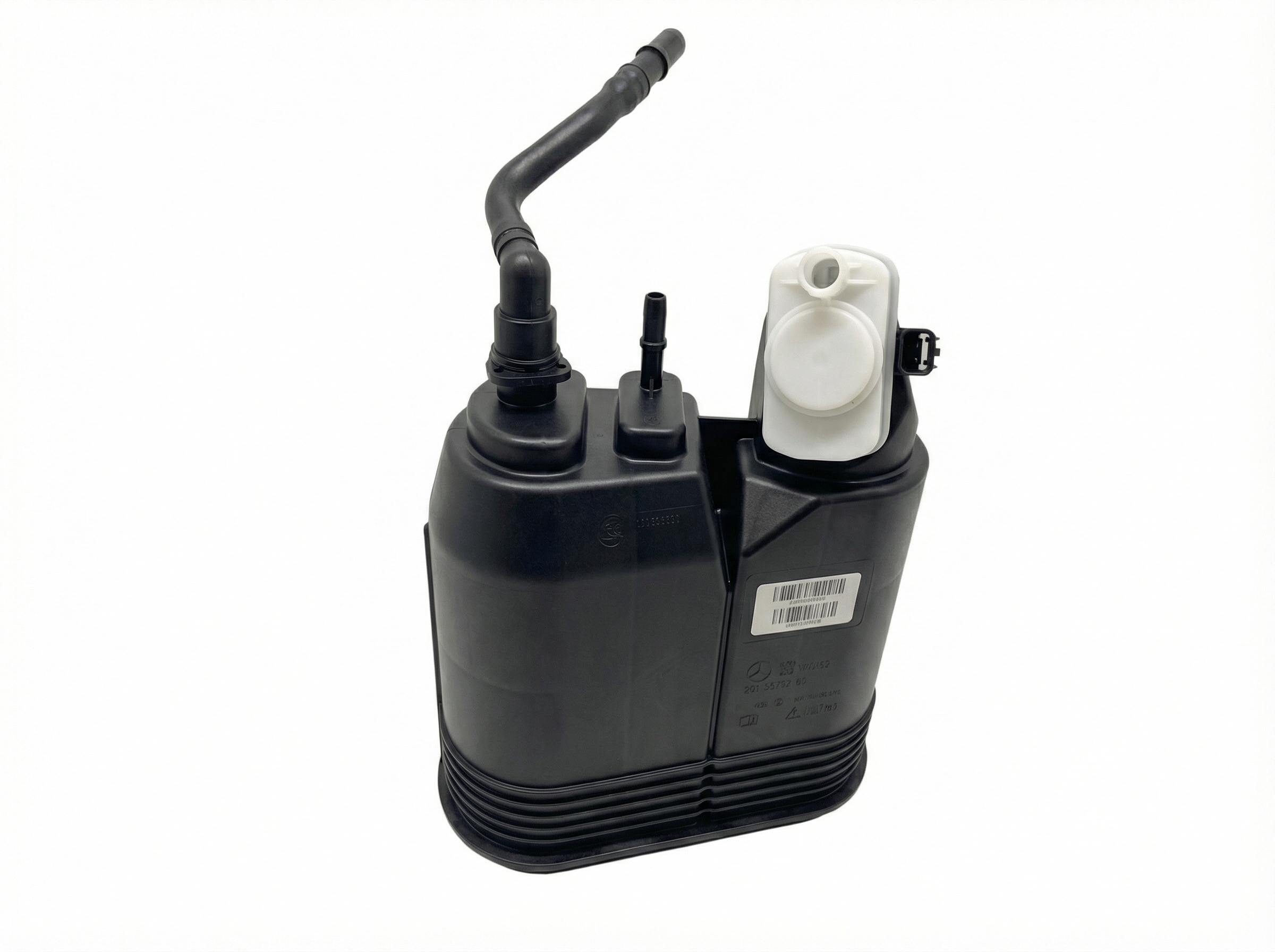
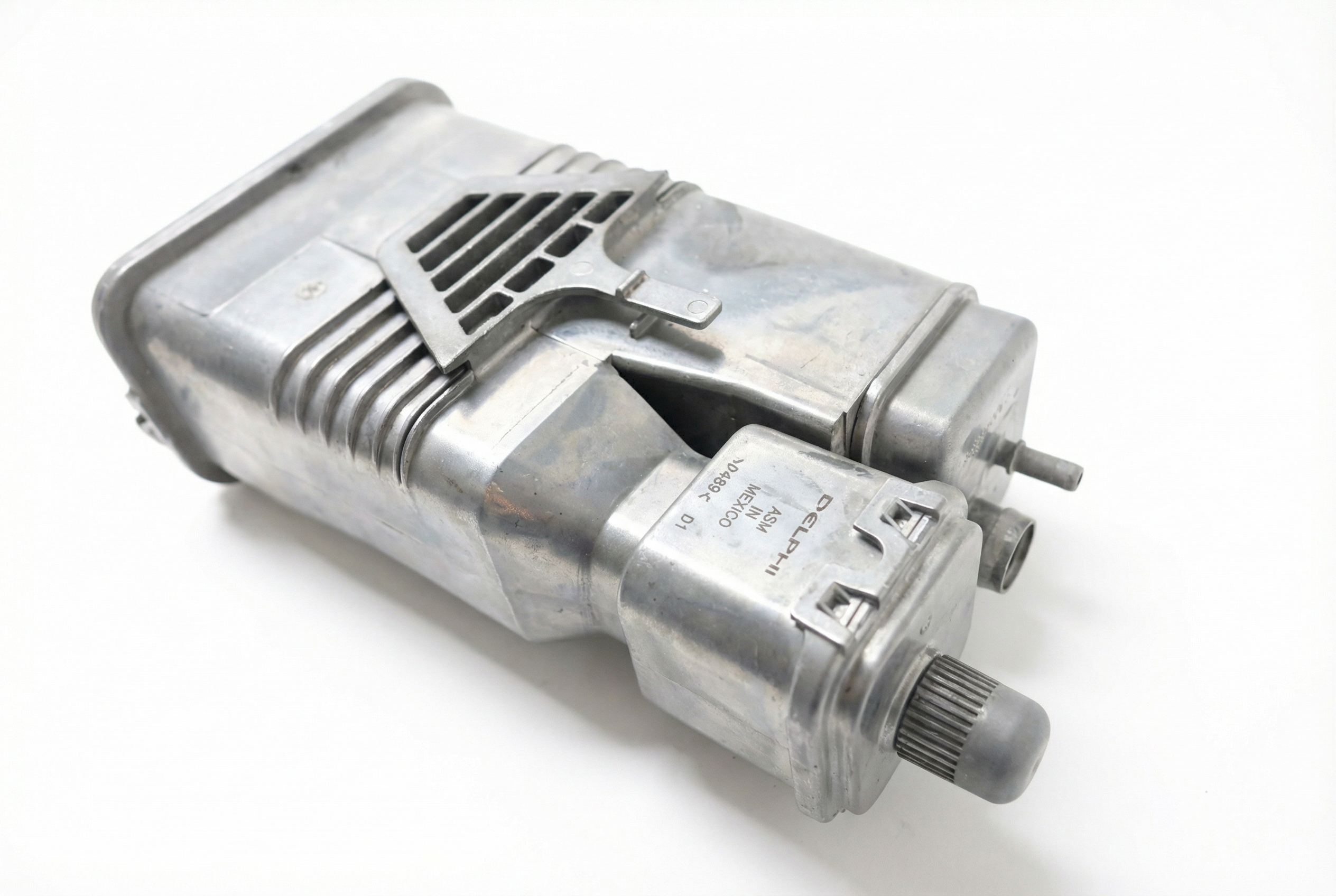
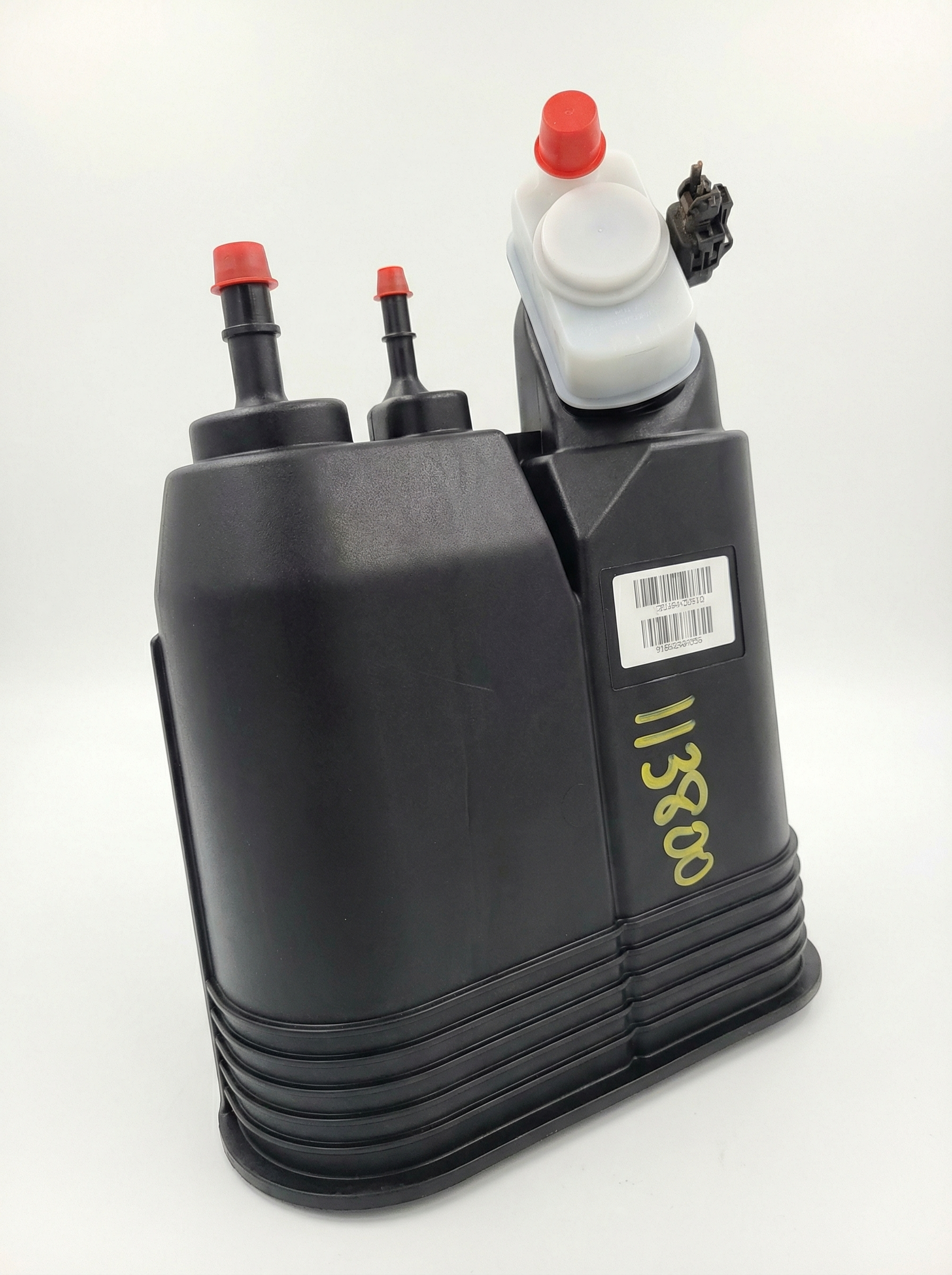
- Other possible but less common causes include the purge valve itself, the vent valve near the tank, or the charcoal canister.
What's Unique About the 2015-2020 Dodge DURANGO

For this generation of Dodge Durango and its platform-mate, the Jeep Grand Cherokee (WK2), the P0455 code is very frequently caused by a specific part failure. Dodge issued Technical Service Bulletins pointing directly to a split in the evaporative emissions purge valve hose. An owner of a 2015 model also reported this exact issue, confirming a cracked EVAP purge hose was the cause. [ODI #11204850] This known weakness means that inspecting this specific hose early in your diagnosis can save significant time and money.
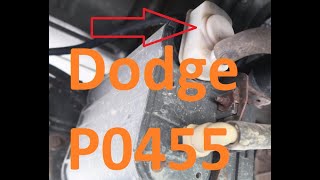
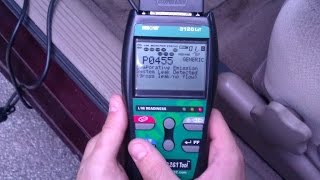
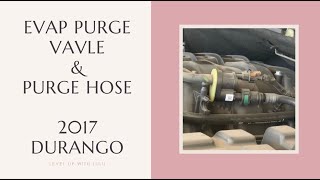
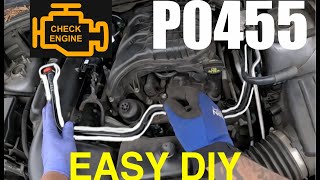
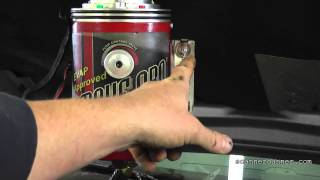
🎬 Watch: A breakdown of common P0455 causes and fixes.Diagnostic Flowchart

Tap your situation to follow the diagnostic path that matches what you're seeing on this vehicle.
Symptoms You May Notice
- Check Engine Light is on
- A noticeable fuel odor, particularly around the left rear wheel opening. [Bulletin #18-035-20, 33]
- Difficulty filling the gas tank (pump clicks off repeatedly).
- Rough idle or difficulty starting immediately after refueling, which can be caused by a purge valve stuck open.
- Remote start feature may be disabled while the check engine light is active.
- Replacing the EVAP canister when the actual leak is a simple cracked hose or a loose gas cap.
- Replacing the purge valve without first inspecting the purge hose, which is the more common failure point on this specific vehicle.
Most Likely Causes

- Cracked EVAP Purge Valve Hose 🔴 High Probability → Shop Vapor Canister This specific hose is a known failure point, as documented by Dodge in TSBs #25-002-15 REV. A and #25-002-15 REV. B. The plastic becomes brittle from engine heat and age, cracking near the connection points. An owner also confirmed this failure at 60,000 miles. [ODI #11204850]
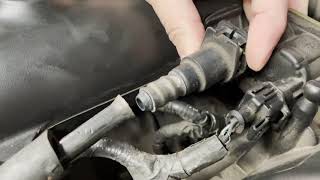
How to confirm: Visually inspect the plastic hose that connects to the EVAP purge valve under the engine cover. The cracks are often found right at the fittings where the hose connects to the purge valve or the line running down the firewall. The hose may be covered in a fabric sheath that needs to be slid back for a full inspection.
Typical fix: Replace the entire purge valve hose assembly. It is sold as a complete line with new connectors and clips. The OEM part number is 68189075AE, which supersedes previous versions 68189075AC and 68189075AD.
Est. part cost: $30-$60 - Loose or Faulty Gas Cap 🔴 High Probability → Shop Fuel Tank Cap This is the most common cause for an EVAP leak code on any vehicle. The cap seal can wear out, or it may simply not have been tightened correctly after refueling. Using a non-OEM or incorrect aftermarket gas cap can also cause sealing issues. Note: Some 2014+ models have a capless fuel filler system; for these, the issue would be a faulty seal on the filler door itself.
How to confirm: Ensure the gas cap is tightened until it clicks multiple times. Inspect the rubber seal on the cap for cracks, stiffness, or damage. If in doubt, it's an inexpensive part to replace as a first step.
Typical fix: Tighten or replace the gas cap with an OEM or high-quality aftermarket part.
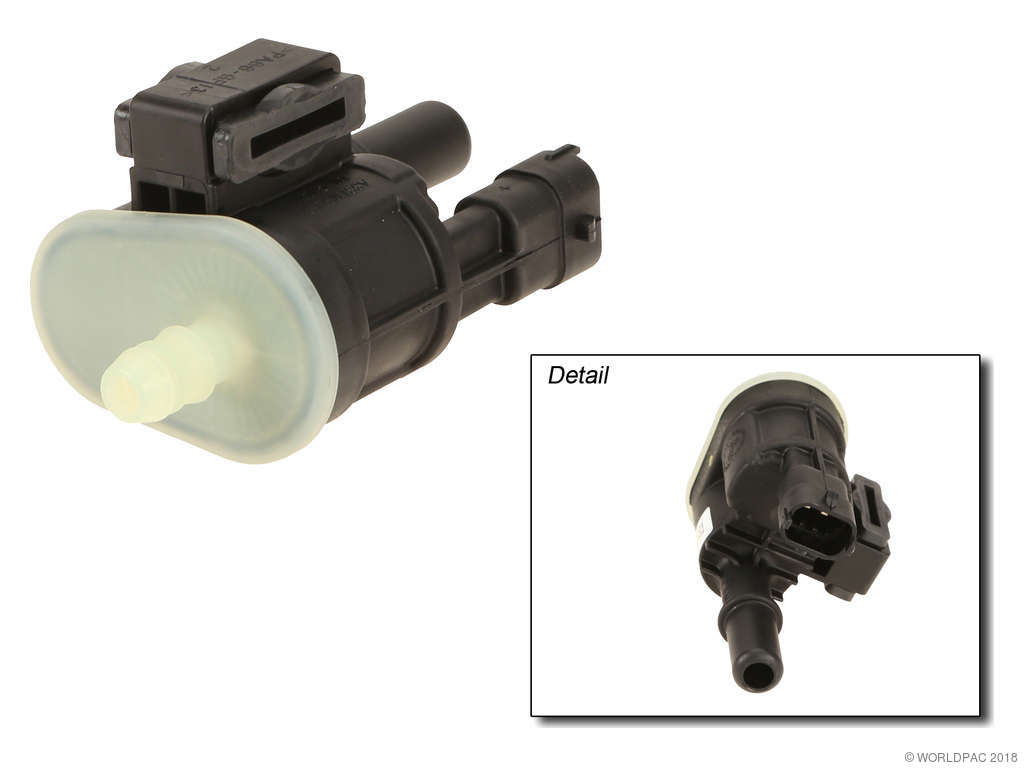
Est. part cost: $15-$35 - Faulty EVAP Purge Valve/Solenoid 🟡 Medium Probability → Shop Vapor Canister The purge valve is an electromechanical part that cycles frequently and can fail over time by sticking open or closed. While the hose is more common on this platform, the valve itself can still be the culprit.
How to confirm: The valve can get stuck open or closed. A stuck-open valve can often be diagnosed by removing it and trying to blow through it; it should be closed when no power is applied. A scan tool can also command the valve to open and close to test its function. A ticking sound from the valve when the engine is running is normal, as it is a duty-cycled solenoid.
Typical fix: Replace the purge valve. It is typically located on the top of the engine, under the plastic engine cover, making it an easy DIY job.
Est. part cost: $25-$70 - Faulty EVAP Canister Vent Valve/Solenoid ⚪ Low Probability → Shop Vapor Canister
How to confirm: This valve is normally open and closes to seal the system for testing. It can get stuck or fail electrically. A smoke test is the most reliable way to confirm if this valve is leaking when it should be closed. On some Chrysler/Dodge vehicles, this component is part of an assembly called the Evaporative System Integrity Monitor (ESIM) or Leak Detection Pump (LDP).
Typical fix: Replace the vent valve or ESIM assembly, which is usually located near the charcoal canister at the rear of the vehicle, often near the spare tire.
Est. part cost: $30-$80 - Cracked or Damaged EVAP Canister ⚪ Low Probability → Shop Vapor Canister
How to confirm: A visual inspection may reveal cracks or damage, especially from road debris. A smoke test is the definitive method to find a leak in the canister body.
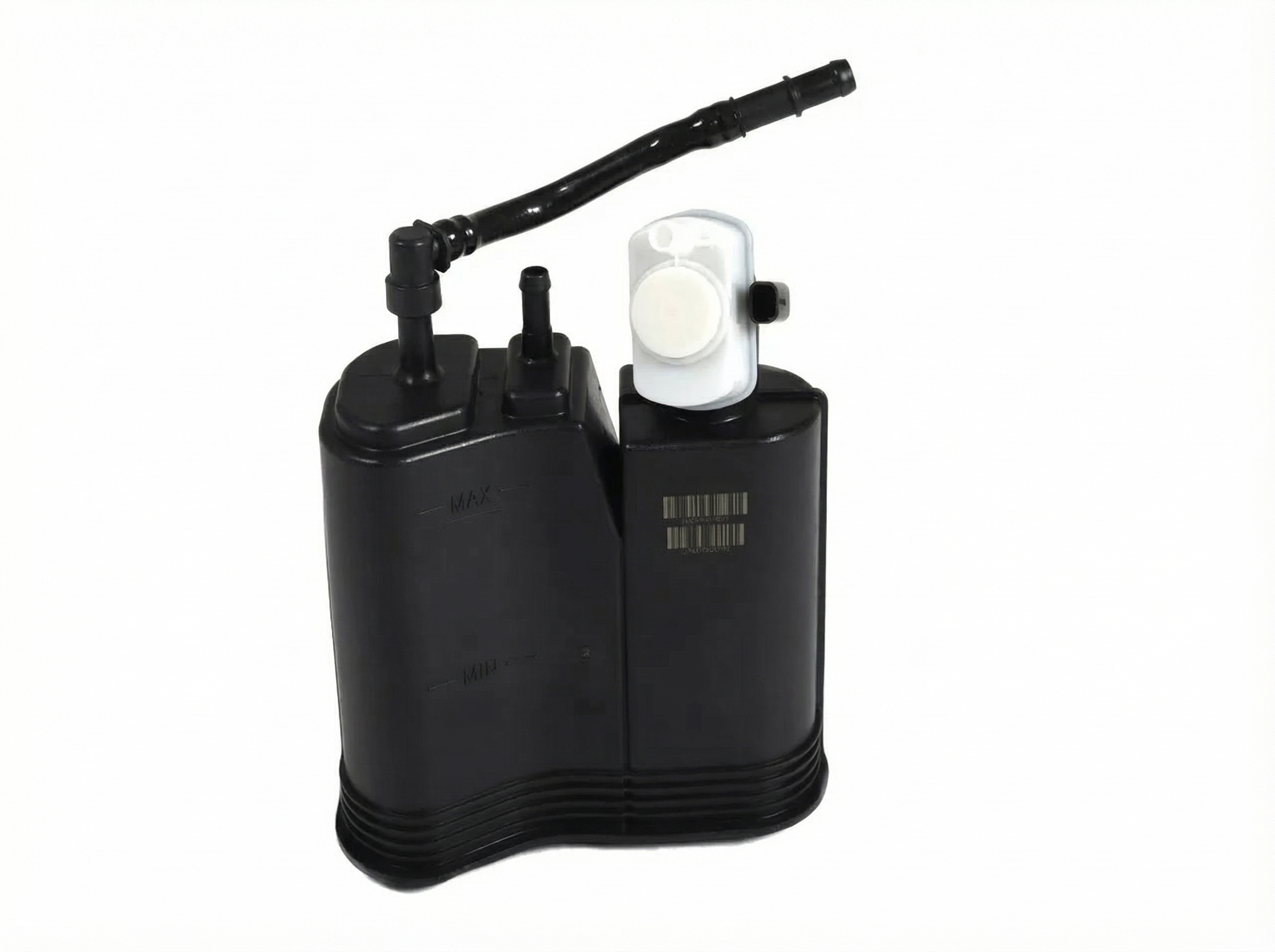
Typical fix: Replace the charcoal canister assembly. It is located near the rear driver's side wheel well, in front of the fuel tank.
Est. part cost: $150-$250
Rare But Worth Checking
- Cracked Fuel Filler Neck: → Shop Fuel Filler Neck The pipe leading from the gas cap to the fuel tank can rust or crack over time, creating a large leak that is difficult to spot without a smoke test or thorough inspection.
- Faulty ESIM (Evaporative System Integrity Monitor) Switch: This component is used on newer Chrysler/Dodge/Jeep vehicles instead of a traditional vent valve and leak detection pump. It's located on the charcoal canister and can fail, causing various EVAP codes. A smoke test or advanced scan tool is needed for diagnosis.
Diagnosis Steps

- Read the code with an OBD-II scanner to confirm P0455 is present. Note any other accompanying codes like P0456 or P0441.
- Inspect the gas cap. Remove it, check the seal for cracks, and reinstall it, ensuring it clicks several times. If you have a capless system, inspect the filler door seal for debris or damage. Clear the code and drive for a few days to see if it returns.
- Perform a thorough visual inspection of the EVAP purge valve hose located under the engine cover. This is a known failure point per TSB #25-002-15. Look for obvious cracks or breaks, especially at the connection points.
- Visually inspect all other accessible EVAP hoses and lines for cracks, damage, or loose connections between the engine bay and the fuel tank. Check lines near the charcoal canister at the rear of the vehicle.
- If no obvious leaks are found, the most effective next step is to perform a smoke test. This involves injecting pressurized smoke into the EVAP system's service port (often a green-capped port in the engine bay) and watching for where the smoke escapes. This will pinpoint the exact location of the leak, whether it's a hose, valve, the canister, or the fuel filler neck.
- Using a bi-directional scan tool, command the purge and vent valves (or ESIM) to close and check if they hold a vacuum or pressure. This can help isolate a faulty valve.
- If a valve is suspected, it can be removed and tested. The purge valve should be normally closed (no air passes through), and the vent valve is often normally open.
Parts You'll Likely Need
- EVAP Purge Valve Hose
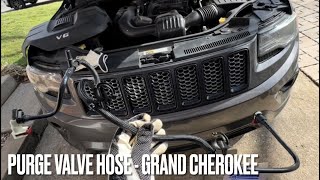
(OEM #68189075AE)— This is a documented weak point on 2015-2020 Durangos and Jeep Grand Cherokees, as cited in multiple Technical Service Bulletins and confirmed by numerous owner experiences. [Bulletin #25-002-15 REV. A, Bulletin #25-002-15 REV. B, 12, 18]
Trusted brands: Mopar, Dorman
OEM price range: $40-$60
Aftermarket price range: $25-$45 - Gas Cap
(OEM #52030377AB (Example, verify for specific year))— A loose or worn-out gas cap is the simplest and one of the most common causes of a P0455 code. Using a genuine OEM cap is often recommended to ensure a proper seal.
Trusted brands: Mopar, Stant, Duralast
OEM price range: $25-$40
Aftermarket price range: $15-$25 - EVAP Purge Valve
(OEM #4861963AA (Example, verify for specific year/engine))— This valve actively controls vapor flow and can fail by sticking open, causing a constant leak.
Trusted brands: Mopar, Standard Motor Products, Wells
OEM price range: $55
Aftermarket price range: $28-$38
Related Codes That Often Appear With This One
- P0456 — P0456 indicates a small EVAP leak. A component may be beginning to fail, creating an intermittent or small leak that can sometimes be detected as a large leak (P0455) under different conditions. Both codes are mentioned together in TSBs for the Durango and are often caused by the same cracked purge hose. [Bulletin #25-002-15 REV. B, 10, 17]
- P0441 — P0441 indicates incorrect purge flow. A stuck purge valve or a major leak in a hose can cause both a large leak (P0455) and improper flow rates. This code is also mentioned alongside P0455 in a manufacturer TSB. [Bulletin #18-035-20, 14]
Technical Service Bulletins (TSBs) & Recalls
- 18-035-20: Notes that P0455 may be set and accompanied by a fuel odor in the left rear wheel opening.
- 25-002-15 REV. B: Involves replacing the evaporative emissions purge valve hose due to a split, causing P0455 or P0456. Specifies this applies to 2015 Durango and Grand Cherokee models built between 11/16/2014 and 01/17/2015.
- 25-002-15 REV. A: An earlier revision of the above bulletin, also identifying a split purge valve hose as the cause for P0455/P0456.
Platform-Specific Known Issues
- A split in the evaporative emissions purge valve hose is a very common problem, as noted in TSB #25-002-15 REV. B. The TSB specifically applies to 2015 models built between Nov 2014 and Jan 2015, but owner reports indicate the problem is widespread across more model years.
- A fuel odor may be present in the left rear wheel opening area, which can be a clue pointing to an EVAP system leak, according to TSB #18-035-20.
- The platform-mate Jeep Grand Cherokee (WK2) from 2014-2020 experiences the identical purge hose failure, making repair guides for that vehicle equally relevant.
Mechanic-Grade Diagnostic Values
- EVAP Purge Control Solenoid Valve Resistance — expected: Roughly 30 ohms at 68°F (20°C). The resistance will be higher at colder temperatures and lower at hotter temperatures.. Failure: No reading (open circuit) or a very high resistance reading indicates a bad valve coil.
Scan Tool Commands That Help
- wiTECH or advanced aftermarket (e.g., Autel): EVAP System Test — This function commands the purge and vent solenoids (or ESIM) to seal the system, then monitors the fuel tank pressure sensor to check for a leak. It's a primary diagnostic step after a visual inspection.
- wiTECH or advanced aftermarket (e.g., Autel): Purge Solenoid Actuation — To manually command the purge solenoid open and closed to verify its mechanical function. You can check for vacuum at the intake port when commanded open and confirm it seals when commanded closed.
Wiring & Ground Locations
- G906A — Right front corner of the engine compartment, near the radiator core support.. This is a primary ground point for various components in the engine bay. A loose or corroded ground here can cause erratic behavior from sensors and solenoids, including those in the EVAP system.
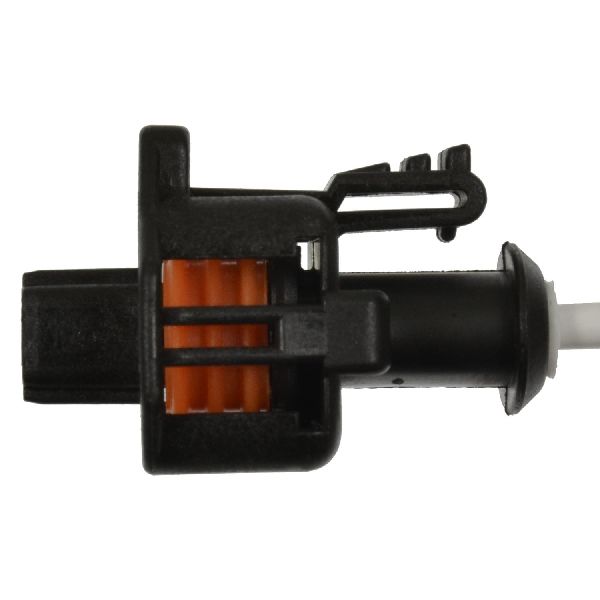
- Purge Valve Connector — On top of the engine, connected to the purge valve solenoid.. This 2-pin connector supplies power and control signals to the purge valve. One pin should have battery voltage with the key on, and the other is the ground-side control from the PCM. Checking for voltage here is a key step in diagnosing a non-responsive valve.
Real Owner Repair Stories
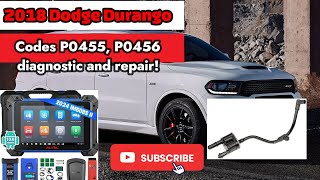
- YouTube channel JVFIX LLC (2018 Dodge Durango) — Check Engine Light with codes P0455 and P0456.
❌ Tried (didn't work) The video focuses on the diagnostic process, starting with the known common issues.
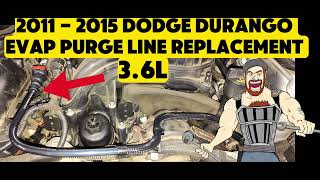
✅ What actually fixed it The video demonstrates replacing the EVAP System Integrity Monitor (ESIM), also known as the leak detection pump, located on the charcoal canister, as the solution for the EVAP codes. - YouTube channel Gearmo Auto (2011-2015 Dodge Durango 3.6L) — Check Engine Light, broken EVAP purge hose (repaired with epoxy by a previous owner).
❌ Tried (didn't work) Previous attempt to epoxy the broken hose failed.
✅ What actually fixed it Complete replacement of the EVAP purge hose assembly (Part No. 68189075AE) with a new OEM part, which resolved the issue. The video provides a detailed step-by-step replacement guide.
"I Checked Everything" — The Actual Cause
- In some cases, a smoke test may not reveal a leak, but the code persists. This can happen if the ESIM (leak detection pump) itself has failed internally. The ESIM has a switch that reports to the PCM, and if this switch is faulty, the computer may believe there is a leak even when the system is sealed. A technician confirmed that after verifying no leaks with a smoke machine, replacing the defective ESIM resolved the code.
OEM Part Supersession History
68189075AC, 68189075AD→68189075AE— Revisions to improve material durability and prevent cracking, which was the primary failure mode of the original parts.
Model Year Variations Within This Range
- 2018-2020: Vehicles in this range are equipped with a Security Gateway Module (SGW). This module prevents unauthorized access to the vehicle's network. To clear codes or perform bidirectional tests on the EVAP system, a standard OBD-II scanner is insufficient. A special bypass cable/adapter or an authenticated scan tool with proper credentials (like a modern Autel or the dealer wiTECH tool) is required to communicate with the powertrain module.
- 2014+: Many Durangos in this period transitioned to a capless fuel filler system. For these models, a 'loose gas cap' issue is instead caused by a faulty or debris-obstructed seal on the spring-loaded filler door, which can trigger a P0455 code.
Helpful Videos
Used OEM Parts in Stock
New Aftermarket Parts Available


The information in this article is provided for general reference and educational purposes only. Vehicle specifications, procedures, and part compatibility can vary by production date, trim level, and region. Always consult your vehicle's factory service manual and verify part numbers before purchasing or performing repairs. Safety-critical components such as airbags, seat belts, and braking systems should be installed by a qualified professional.
- Dodge DURANGO:
- 🧭 Diagnostic Flowchart
- 🎬 Helpful Videos
- 🛍️ Shop This Part
- What's Unique About the 2015-2020 Dodge DURANGO
- Symptoms You May Notice
- Most Likely Causes
- Rare But Worth Checking
- Diagnosis Steps
- Parts You'll Likely Need
- Related Codes That Often Appear With This One
- Technical Service Bulletins (TSBs) & Recalls
- Platform-Specific Known Issues
- Mechanic-Grade Diagnostic Values
- Scan Tool Commands That Help
- Wiring & Ground Locations
- Real Owner Repair Stories
- "I Checked Everything" — The Actual Cause
- OEM Part Supersession History
- Model Year Variations Within This Range
- 🎟️ Get 5% Off