

P0455 on 2011-2014 Ford Edge: EVAP Gross Leak Causes and Fixes
For a 2011-2014 Ford Edge, code P0455 is most often caused by a dirty or faulty capless fuel filler inlet. Start by cleaning the inlet seal with the vehicle's funnel and a lubricated rag. If that doesn't work, the next most likely culprit is a failed canister purge valve, a common and relatively inexpensive part to replace.
- Always start by thoroughly cleaning the capless fuel filler inlet; this is the most common cause and is a free fix.
- If cleaning the inlet doesn't resolve the code, the canister purge valve is the next most likely part to have failed.
- The P0455 code does not indicate a serious mechanical problem and the vehicle is safe to drive, but you will not pass an emissions test.
- A smoke test is the most reliable way to find a leak if it's not caused by the fuel inlet or one of the common valves.
What's Unique About the 2011-2014 Ford Edge
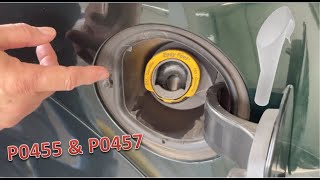
The 2011-2014 Ford Edge features the 'Easy Fuel' capless fuel filler system, which is a primary point of failure for this code. Unlike vehicles with a traditional gas cap that can be lost or improperly tightened, the Edge's spring-loaded flap and seal can accumulate dirt, dust, and fuel residue. This debris prevents the internal flap from creating a perfect seal, which the system's sensitive pressure test detects as a large leak. Many owners can resolve this code for free simply by cleaning this inlet, a unique first step compared to other vehicles.
Symptoms You May Notice
- Check Engine Light is on
- A 'Check Fuel Fill Inlet' message may appear on the dashboard.
- A faint smell of gasoline, particularly around the rear of the vehicle after it has been sitting.
- Slightly reduced fuel economy in some cases, though this is often not noticeable.
- Replacing the canister purge valve without first thoroughly cleaning the capless fuel filler inlet. Always start with the free and easy fix first.
- Replacing parts without confirming the failure. For example, replacing the purge valve when the vent solenoid is stuck open. A smoke test is the most definitive diagnostic tool if the first two common causes are ruled out.
Most Likely Causes
- Dirty or Faulty Capless Fuel Filler Inlet 🔴 High Probability The capless system's seal is exposed to road dust and fuel splashback, which can prevent the flap from sealing completely. The seal can also dry out over time.
How to confirm: Visually inspect the fuel filler opening for any debris, dirt, or corrosion on the metal flap and the rubber seal inside. The flap should spring back firmly. Often, the debris is microscopic and not easily visible.
Typical fix: Use the white plastic funnel that comes with the vehicle (often stored with the spare tire tools) to open the flap. Spray a clean rag with WD-40 or silicone lubricant and thoroughly wipe the inside of the filler neck and the seal. Insert and remove the funnel 10-15 times to work the mechanism and ensure a good seal. 🎬 Watch: How to clean the capless inlet to fix P0455. Some owners report needing to do this 2-3 times before the code is resolved.
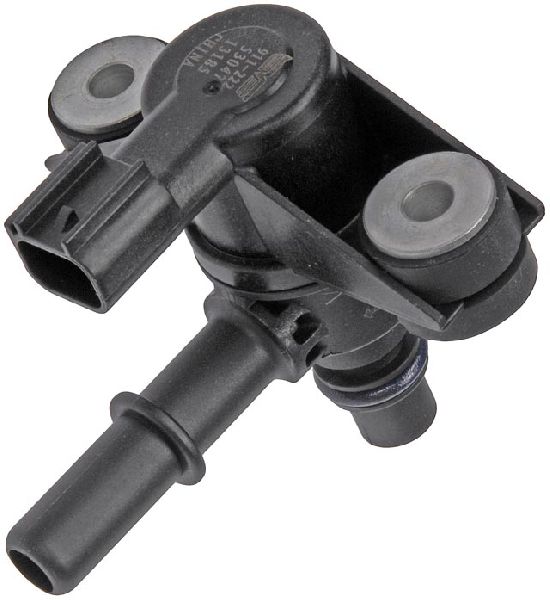
Est. part cost: $0 - Faulty Canister Purge Valve (Vapor Management Valve) 🔴 High Probability → Shop Vapor Canister This solenoid valve is a very common failure point on many Ford models. It can get stuck open, creating a permanent vacuum leak that the system detects as a large leak.
How to confirm: Locate the valve in the engine bay, typically on the intake manifold. Disconnect the electrical connector and the EVAP lines. With the engine off, try to blow through the valve; if any air passes through, it is stuck open and has failed. A professional can also command it open and closed with a scan tool to check for response.
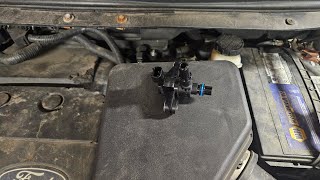
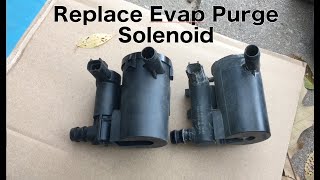
Typical fix: Replace the canister purge valve. It is typically mounted on or near the engine's intake manifold and is accessible for DIY replacement, often requiring only an 8mm or 10mm socket. 🎬 See this walkthrough for replacing the canister purge valve.
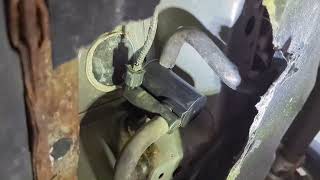
Est. part cost: $25-$65 - Faulty Canister Vent Solenoid 🟡 Medium Probability → Shop Vapor Canister Located under the vehicle near the charcoal canister, this valve is exposed to road debris, water, and salt, which can cause it to fail or get stuck open, preventing the EVAP system from sealing for its self-test.
How to confirm: A mechanic can command the valve to close with a scan tool while performing a smoke test; if smoke exits from the vent valve, it has failed. A DIY test involves applying 12V to the solenoid's pins to see if it clicks and closes. If you can blow through it when it's supposed to be closed (de-energized), it's bad.
Typical fix: Replace the canister vent solenoid. This part is located under the car, near the EVAP canister and spare tire. Access can be tight but it is a manageable DIY job. 🎬 Watch: How to locate and replace the canister vent solenoid.
Est. part cost: $30-$80 - Cracked or Disconnected EVAP Hose ⚪ Low Probability
How to confirm: A visual inspection may reveal an obviously cracked or disconnected hose, especially at connection points to the purge valve or canister. However, small cracks and pinholes are hard to see and are best found using a smoke test, which involves filling the EVAP system with low-pressure smoke and looking for where it escapes.
Typical fix: Replace the damaged section of the hose or the entire hose assembly.
Est. part cost: $10-$50
Rare But Worth Checking
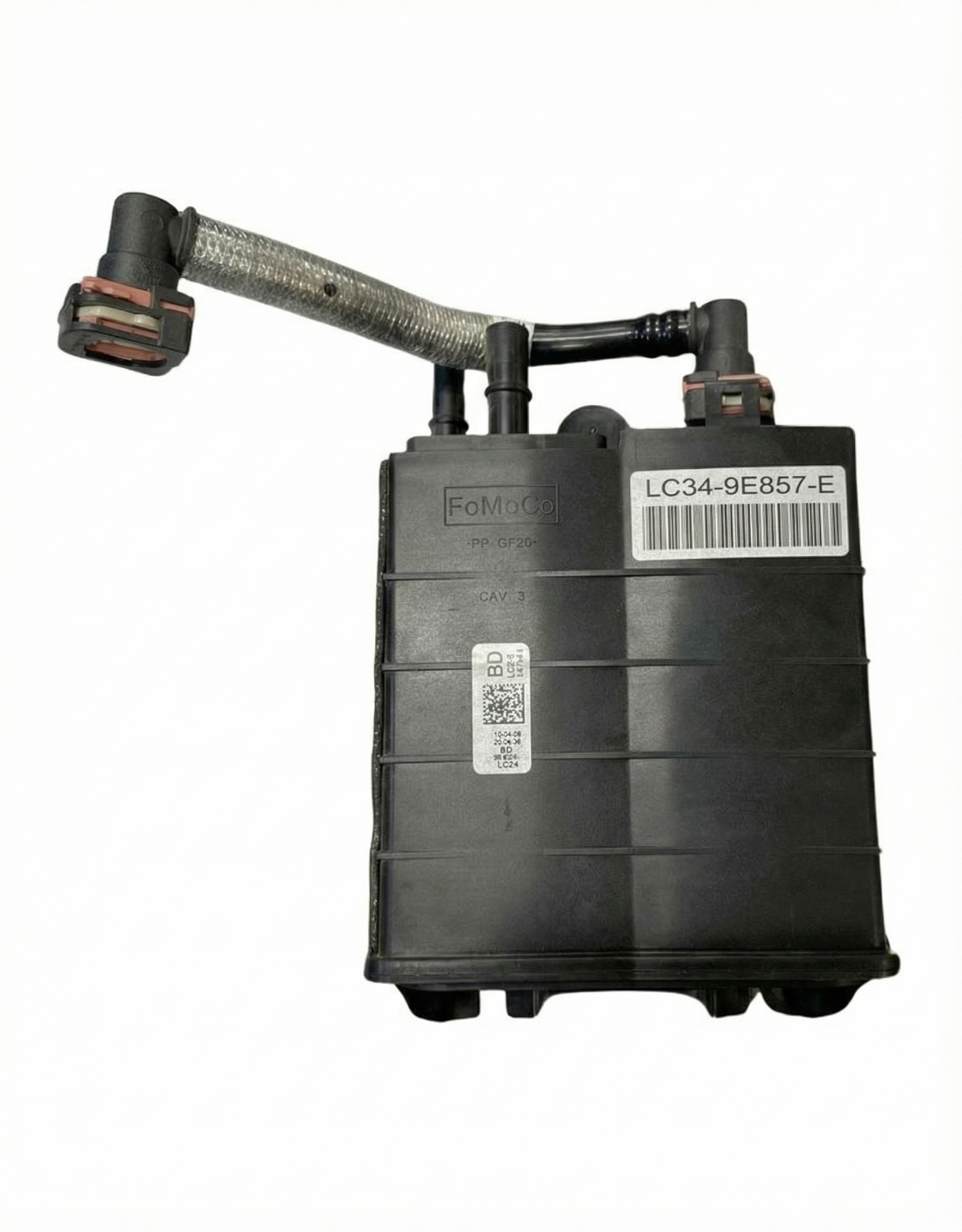
- Cracked Charcoal Canister: → Shop Vapor Canister The plastic housing of the charcoal canister can be cracked by road debris or impact, causing a large leak. This should be checked with a visual inspection, especially if you've recently driven over something. A smoke test will quickly reveal a crack.
- Damaged Fuel Filler Neck: → Shop Fuel Filler Neck If cleaning the fuel inlet doesn't solve the problem, the entire filler neck assembly could be corroded or damaged, preventing a seal. Ford TSB 12-3-5 addresses this specific issue, noting that if cleaning does not resolve the 'Check Fuel Fill Inlet' message, the filler neck assembly may need to be replaced. This is usually confirmed with a smoke test.
Diagnosis Steps
- Read the code with an OBD-II scanner to confirm P0455 is the primary code.
- Thoroughly inspect and clean the capless fuel filler inlet. Use the vehicle's funnel and a clean cloth with a lubricant like WD-40 or silicone spray to clean the seal and work the flap.
- Clear the code with the scanner. Drive the vehicle for a few days (including a mix of city/highway driving and a cold start) to allow the EVAP monitor to run its self-test.
- If the code returns, locate the canister purge valve in the engine bay. Disconnect it and try to blow through it. If air passes, the valve is stuck open and needs to be replaced.
- If the purge valve is good, visually inspect the canister vent solenoid and charcoal canister under the rear of the vehicle for any physical damage or cracks.
- If no obvious damage is found, the next step is a smoke test. This is the most effective method to find leaks in hoses, the filler neck, the canister, or other components that are not easily visible.
- Based on the smoke test results, replace the leaking component. This could be a hose, the vent solenoid, or in rare cases, the fuel filler neck or charcoal canister.
Parts You'll Likely Need
- Canister Purge Valve
(OEM #AU5Z-9C915-B (superseded by AU5Z-9C915-E))— This is a very common failure item on Ford vehicles that gets stuck open, causing a large leak.
Trusted brands: Motorcraft, Bosch, Dorman, Standard Motor Products
OEM price range: $45-$65
Aftermarket price range: $25-$45 - Canister Vent Solenoid
(OEM #9U5Z-9C915-H (superseded by 9U5Z-9C915-J))— This valve can fail and stick open due to its exposed location under the vehicle, preventing the system from sealing itself for testing.
Trusted brands: Motorcraft, Dorman
OEM price range: $50-$80
Aftermarket price range: $30-$50
Related Codes That Often Appear With This One
- P0456 — A 'small leak' code that can sometimes appear if the large leak is intermittent or on the threshold between large and small.
- P0457 — This code specifically means 'Evaporative Emission System Leak Detected (Fuel Cap Loose/Off)'. On a capless system, it points directly to an issue with the fuel filler inlet not sealing.
- P0443 — This code indicates a fault in the purge control valve's electrical circuit. If you see this with P0455, it points more strongly to an electrical issue with the purge valve (or its wiring) rather than it just being stuck open.
Technical Service Bulletins (TSBs) & Recalls
- TSB 12-3-5: Addresses the 'Check Fuel Fill Inlet' message. It instructs technicians to first clean the capless fuel filler area. If the concern persists, the TSB authorizes the replacement of the entire fuel filler pipe assembly.
Platform-Specific Known Issues
- Owner Experience: Multiple Steps Required: On FordEdgeForum.com, a user with a 2011 Edge reported getting P0455. They first cleaned the fuel inlet, which didn't fix it. They then replaced the canister purge valve, which also didn't fix it. Finally, a smoke test performed by a shop revealed a small crack in a plastic EVAP line near the charcoal canister, which was the true source of the 'large' leak. This highlights the importance of a smoke test if the two most common fixes don't work.
Mechanic-Grade Diagnostic Values
- Canister Purge Valve (Solenoid) Resistance — expected: 30 to 38 ohms (when engine is cool). Failure: A reading of infinite resistance (open circuit) or a value significantly outside the expected range indicates a failed coil in the valve.
- Canister Vent Solenoid Resistance — expected: 48 to 65 ohms. Failure: A reading outside this range indicates an electrical fault within the solenoid.
- Fuel Tank Pressure (FTP) Sensor Voltage (Key On, Engine Off) — expected: Approximately 2.5V - 2.65V. Failure: A static voltage significantly different from this range with the system at atmospheric pressure can indicate a faulty FTP sensor. If the voltage drops immediately upon starting the engine, it could point to a purge valve stuck open.
Scan Tool Commands That Help
- Ford IDS (Integrated Diagnostic System): Manual EVAP Test / Output State Control (OSC) — This function allows a technician to manually command the canister purge valve and canister vent valve open or closed. By closing the vent valve and commanding the purge valve off (its normally closed state), a technician can monitor the Fuel Tank Pressure (FTP) sensor. If the pressure drops (creates a vacuum), it confirms the purge valve is mechanically stuck open, even though it's commanded closed. This is a definitive test to isolate a faulty purge valve without a smoke machine.
Wiring & Ground Locations
- EVAP System Fuse — In the under-hood fuse box (Power Distribution Box), check fuses F69 and F70 (both typically 7.5A).. A blown fuse will prevent the canister vent solenoid from being powered, causing it to remain in its normally open state. This will prevent the EVAP system from sealing and will set a P0455 code.
- C123 — Connector for the EVAP Canister Purge Valve, located at the rear of the engine on the driver's side, near the firewall.. This is the connector to check for power, ground, and signal when diagnosing a faulty purge valve or a related circuit code like P0443.
- EVAP Canister Vent Solenoid — Under the vehicle, near the center, mounted on or next to the charcoal canister assembly.. Its location makes it susceptible to damage from road debris and corrosion, which can cause it to stick open or fail electrically.
Real Owner Repair Stories
- Reddit user in r/FordEdge (2012 Ford Edge) — Check Engine Light with code P0456 (very small leak), which is often related to P0455 causes.
❌ Tried (didn't work) Cleaning the capless fuel filler inlet with lubricant., Replacing the canister purge valve with a new Motorcraft part.
✅ What actually fixed it After replacing parts did not work, the user cleared the code with an OBD2 scanner. The light did not return after more than 100 miles, suggesting the computer needed a hard reset after the new parts were installed for the EVAP monitor to run correctly and pass.
"I Checked Everything" — The Actual Cause
- In some cases, a P0455 can be triggered by a faulty Fuel Tank Pressure (FTP) sensor that is sending incorrect data to the PCM, making it 'think' there is a large leak when the system is actually sealed. If a thorough smoke test reveals no leaks, and both the purge and vent valves test good electrically and mechanically, the FTP sensor itself should be suspected. Testing involves verifying its 5V reference, ground, and signal voltage with a multimeter.
OEM Part Supersession History
AU5Z-9C915-B→AU5Z-9C915-E— Ford often updates parts to improve reliability or address known failure modes. The -E revision is the current service part.
Heads up: AU5Z-9C915-A, -B, -C, and -D are all replaced by the -E version. They are interchangeable.
Diagnostic Flowchart
Other Known Issues on This Vehicle
Issues unrelated to this code that are worth knowing about as an owner of this generation:
- Internal Water Pump Failure (3.5L/3.7L V6) 🔴 High — Can occur as early as 50,000 miles, but becomes more common after 80,000 miles. Failure can be catastrophic. (Ref: No recall, but this is a widely documented design flaw. The pump is internal and chain-driven; when its gasket fails, it leaks coolant directly into the engine oil, leading to engine seizure.)
- Power Transfer Unit (PTU) Failure (AWD Models) 🔴 High — Failures can start around 60,000-100,000 miles. The unit is not easily serviceable and is located next to the hot exhaust, causing the fluid to break down and seals to leak. (Ref: No recall, but a known issue. Symptoms include a grinding/humming noise, a 'natural gas' or sulfur smell from cooked gear oil, and eventual loss of AWD or complete lock-up.)
- Persistent 'Door Ajar' Light 🟡 Low — Common on 2011-2013 models. A faulty sensor inside the door latch mechanism fails to register that the door is closed. (Ref: TSB 18-2013 was issued, which involves a special cleaning procedure for the switch. Often, the entire latch assembly requires replacement.)
- Brake Booster Failure 🟠 Medium — A diaphragm inside the booster can tear, causing a hissing noise when the brake pedal is pressed and increased pedal effort. (Ref: Ford issued a warranty extension (10 years/150,000 miles) for a one-time repair.)
- MyFord Touch Infotainment System Glitches 🟡 Low — Prevalent on 2011-2014 models, the system is known for freezing, unresponsiveness, and random reboots. (Ref: Multiple software updates were released, but many underlying issues persist due to hardware limitations.)
Used vs. New Parts: Buying Guide for This Vehicle
When a used part is the smart pick: For this repair, using used parts is generally not recommended for the electronic solenoids (purge and vent valves) due to their high failure rate and the unknown remaining life. However, a used fuel filler neck assembly or a charcoal canister from a low-mileage, non-corroded donor vehicle could be a cost-effective option if they are visually inspected for cracks and damage.
Donor-vehicle mileage cap: roughly under 60000 miles for the part to have meaningful remaining life.
What to inspect on the donor part:
- For filler necks, check for rust, corrosion, or damage to the sealing surface.
- For charcoal canisters, ensure the plastic housing has no cracks or signs of impact.
- For any part, check that electrical connector pins are clean and not corroded.
- Avoid parts from vehicles in regions that use heavy road salt.
OEM-only on this vehicle (don't cheap out):
- Canister Purge Valve
- Canister Vent Solenoid
Aftermarket brands forum-validated for this vehicle:
- Bosch (for Canister Purge Valve)
Brands owners have reported issues with on this vehicle:
- Forum discussions often caution against unbranded, low-cost parts from online marketplaces for EVAP solenoids, as their calibration and durability may not match OEM specifications, leading to recurring codes.
Real Owner Stories
Aggregated from forums and TSBs cited above. Mileages and costs reflect what owners reported in those sources.
2011 Ford Edge
Symptoms: The owner reported a P0455 code. They attempted to fix it by cleaning the fuel inlet and then replacing the canister purge valve, but the code remained.
What fixed it: A smoke test performed by a shop revealed a small crack in a plastic EVAP line near the charcoal canister.
Source hint: FordEdgeForum.com - Thread: 'Looking for help code P0455' (2017-05-22) and 'Owner Experience: Multiple Steps Required'
2011 Ford Edge
Symptoms: P0455 code on a vehicle with a capless fuel system.
What fixed it: Debris in the canister vent solenoid was preventing it from seating properly.
Source hint: Ford Truck Enthusiasts Forum - Thread: '2011 Ford Edge P0455 code' (2015-04-20)
Related OBD-II Codes
Frequently Asked Questions
My 2011 Ford Edge is showing a 'Check Fuel Fill Inlet' message; does a TSB cover this?
Where is the white plastic funnel located on my Ford Edge to clean the fuel inlet?
I've cleaned the fuel inlet on my 2011 Edge but P0455 won't go away. What is the next most likely part to fail?
Can a bad canister vent solenoid cause P0455 on the Ford Edge, and where is it located?
Is the P0455 code related to the 'natural gas' or sulfur smell I sometimes notice?
Does the Lincoln MKX share the same P0455 issues as the Ford Edge?
Helpful Videos
Used OEM Parts in Stock

New Aftermarket Parts Available


The information in this article is provided for general reference and educational purposes only. Vehicle specifications, procedures, and part compatibility can vary by production date, trim level, and region. Always consult your vehicle's factory service manual and verify part numbers before purchasing or performing repairs. Safety-critical components such as airbags, seat belts, and braking systems should be installed by a qualified professional.
- Ford Edge:
- 🧭 Diagnostic Flowchart
- 🎬 Helpful Videos
- 🛍️ Shop This Part
- What's Unique About the 2011-2014 Ford Edge
- Symptoms You May Notice
- Most Likely Causes
- Rare But Worth Checking
- Diagnosis Steps
- Parts You'll Likely Need
- Related Codes That Often Appear With This One
- Technical Service Bulletins (TSBs) & Recalls
- Platform-Specific Known Issues
- Mechanic-Grade Diagnostic Values
- Scan Tool Commands That Help
- Wiring & Ground Locations
- Real Owner Repair Stories
- "I Checked Everything" — The Actual Cause
- OEM Part Supersession History
- Other Known Issues on This Vehicle
- Used vs. New Parts: Buying Guide for This Vehicle
- Real Owner Stories
- 2011 Ford Edge
- 2011 Ford Edge
- Related OBD-II Codes
- Frequently Asked Questions
- 🎟️ Get 5% Off