

P0455 on 2013-2020 Ford Fusion: EVAP Large Leak Causes and Fixes
For a 2013-2020 Ford Fusion, code P0455 is most often caused by a faulty canister purge valve in the engine bay. The second most common cause is a dirty or faulty capless fuel filler neck. A new purge valve is relatively inexpensive and a common DIY fix, often resolving symptoms like a rough idle after refueling and a 'Check Fuel Fill Inlet' message.
- The P0455 code on a 2013-2020 Fusion is most likely a bad canister purge valve located in the engine bay.
- Before buying any parts, inspect and clean the capless fuel filler neck, as a poor seal there is a common cause.
- A faulty purge valve can, in some cases, lead to an engine stall. Check for open recalls on your vehicle, specifically recall 18S32.
- Symptoms can include a fuel smell, rough idle after fueling, and a 'Check Fuel Fill Inlet' message.
- This is a very common and usually straightforward issue to diagnose and fix for a DIYer with basic tools.
What's Unique About the 2013-2020 Ford Fusion
The 2013-2020 Ford Fusion uses a capless fuel filler system, which is a frequent source for this code when dirt or debris prevents the spring-loaded flap from sealing properly. Furthermore, the canister purge valve is a well-documented, common failure point on this platform, often getting stuck open. Ford issued a recall (18S32) for some vehicles because a stuck-open purge valve could cause excessive vacuum, deforming the fuel tank and potentially leading to engine stalls. The recall fix involves a PCM software update to better detect the faulty valve, and replacement of the valve if it has failed.
Symptoms You May Notice
- Check Engine Light illuminated
- "Check Fuel Fill Inlet" message on the dashboard
- A noticeable smell of gasoline, particularly around the rear of the car
- Rough idle or stalling, especially after refueling. This happens because the stuck-open purge valve allows un-metered fuel vapor into the intake, creating a rich condition.
- Slight decrease in fuel economy
- Difficulty starting the engine immediately after filling the gas tank
- Difficulty refueling (the gas pump nozzle clicks off repeatedly)
- Replacing the charcoal canister when the issue is just a simple valve or hose. A smoke test should be performed before condemning an expensive part like the canister.
- Replacing the vent valve near the tank when the much more common failure is the purge valve in the engine bay.
- Replacing the purge valve without proper diagnosis. TSB SSM 50306 notes that many returned valves were found to be working correctly, suggesting the leak was elsewhere in the system.
Most Likely Causes
- Faulty Canister Purge Valve 🔴 High Probability → Shop Vapor Canister This specific part is a widely documented failure item on this platform, often getting stuck open. There is a related recall (18S32) and a technical service message (SSM 50306) concerning this valve.
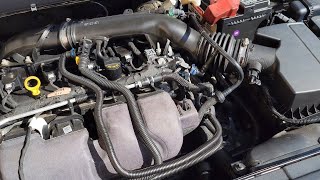
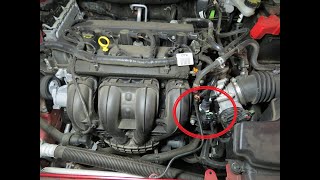
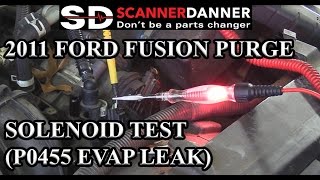
How to confirm: Remove the valve from the engine bay (it's typically mounted on the intake manifold with two 8mm bolts). With the valve disconnected electrically, try to blow through it. If air passes through, it is stuck open and needs to be replaced. A properly functioning valve is normally closed and should not allow air to pass. 🎬 Watch: A quick demonstration on how to test the purge solenoid. You can also test for vacuum at the valve's port with the engine running and the electrical connector unplugged; feeling suction indicates a stuck-open valve.
Typical fix: Replace the canister purge valve. It is located in the engine bay and is an easy part to access and replace, typically requiring only an 8mm socket. 🎬 Watch: Step-by-step guide to replacing the purge valve on 2.0L engines.
Est. part cost: $30-$70 - Dirty or Faulty Capless Fuel Filler Inlet 🟡 Medium Probability The capless design can easily get dirt, dust, or spider webs in the sealing area, preventing the flap from closing completely and creating a large leak.
How to confirm: Visually inspect the fuel filler neck for any debris or damage to the seal. The area should be clean and the spring-loaded door should move freely and seal tightly.
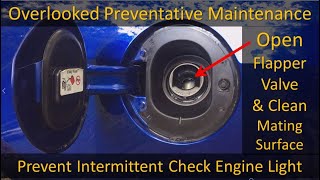
Typical fix: Use the emergency funnel that came with the vehicle to open the flap. Blow the area out with compressed air first. Then, spray a silicone lubricant on a clean rag or directly around the funnel and work it in and out 20-30 times to clean and lubricate the internal seals. Do not use harsh chemicals like brake cleaner. 🎬 See how to properly clean and lubricate your capless filler neck. If the seal is damaged, the entire filler neck assembly may need to be replaced.
Est. part cost: $0-$150 - Cracked or Disconnected EVAP Hoses ⚪ Low Probability Hoses become brittle over time with exposure to heat and elements, leading to cracks, especially at connection points.
How to confirm: A visual inspection may reveal an obvious crack or disconnected line. However, the most effective method is to have a professional perform a smoke test, which forces low-pressure smoke into the EVAP system to reveal the exact location of any leaks.
Typical fix: Replace the cracked hose or reconnect the line.
Est. part cost: $5-$50 - Faulty Canister Vent Valve/Solenoid ⚪ Low Probability → Shop Vapor Canister This valve can stick open or closed. While it fails less often than the purge valve, it's a common cause for EVAP codes in general and can cause refueling issues.
How to confirm: The vent valve is normally open and closes when the system runs a leak test. A scan tool can be used to command it closed to check for function. It is located near the charcoal canister by the fuel tank, which may require lifting the vehicle to access.
Typical fix: Replace the canister vent valve solenoid.
Est. part cost: $40-$80
Rare But Worth Checking
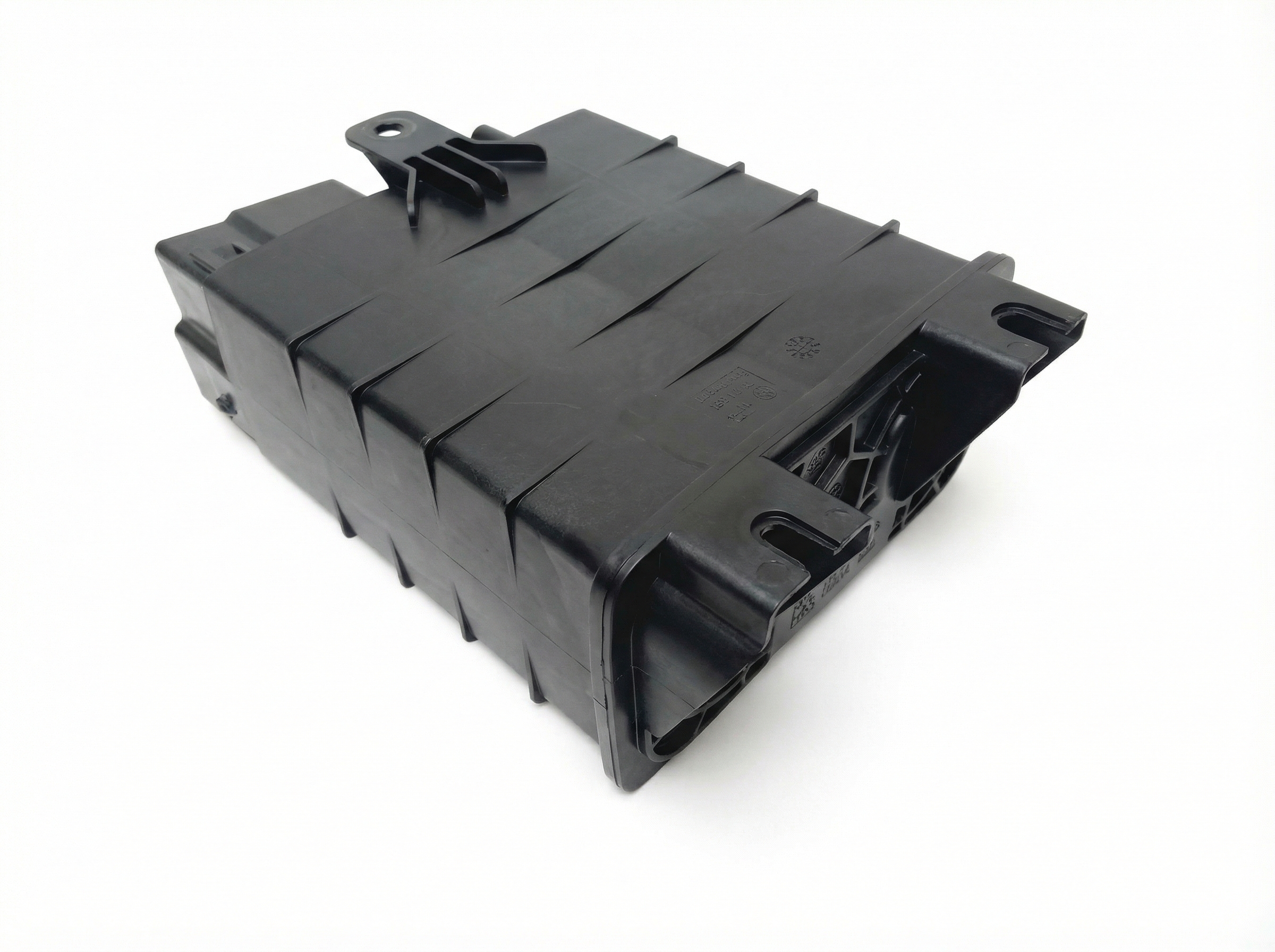
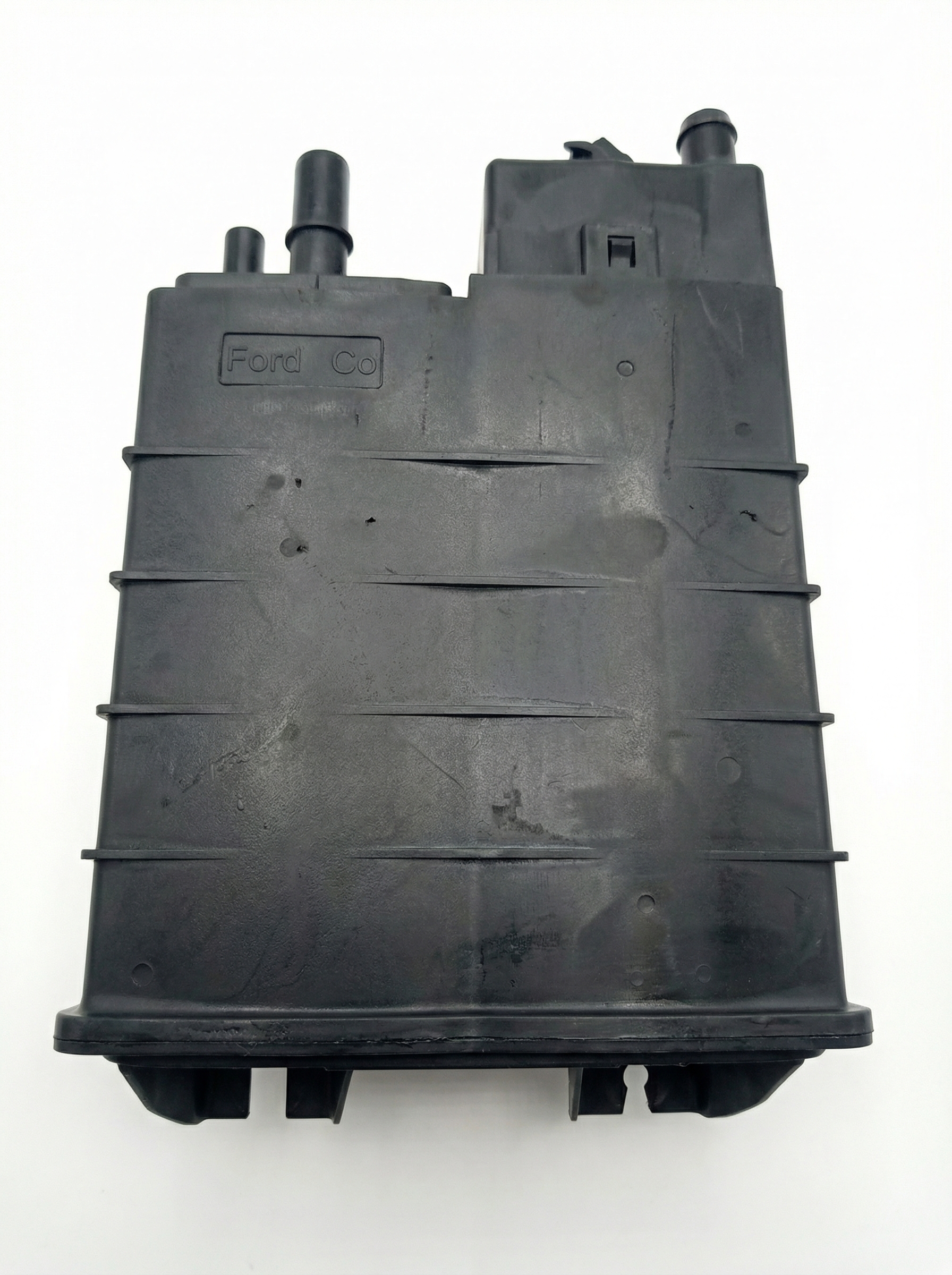
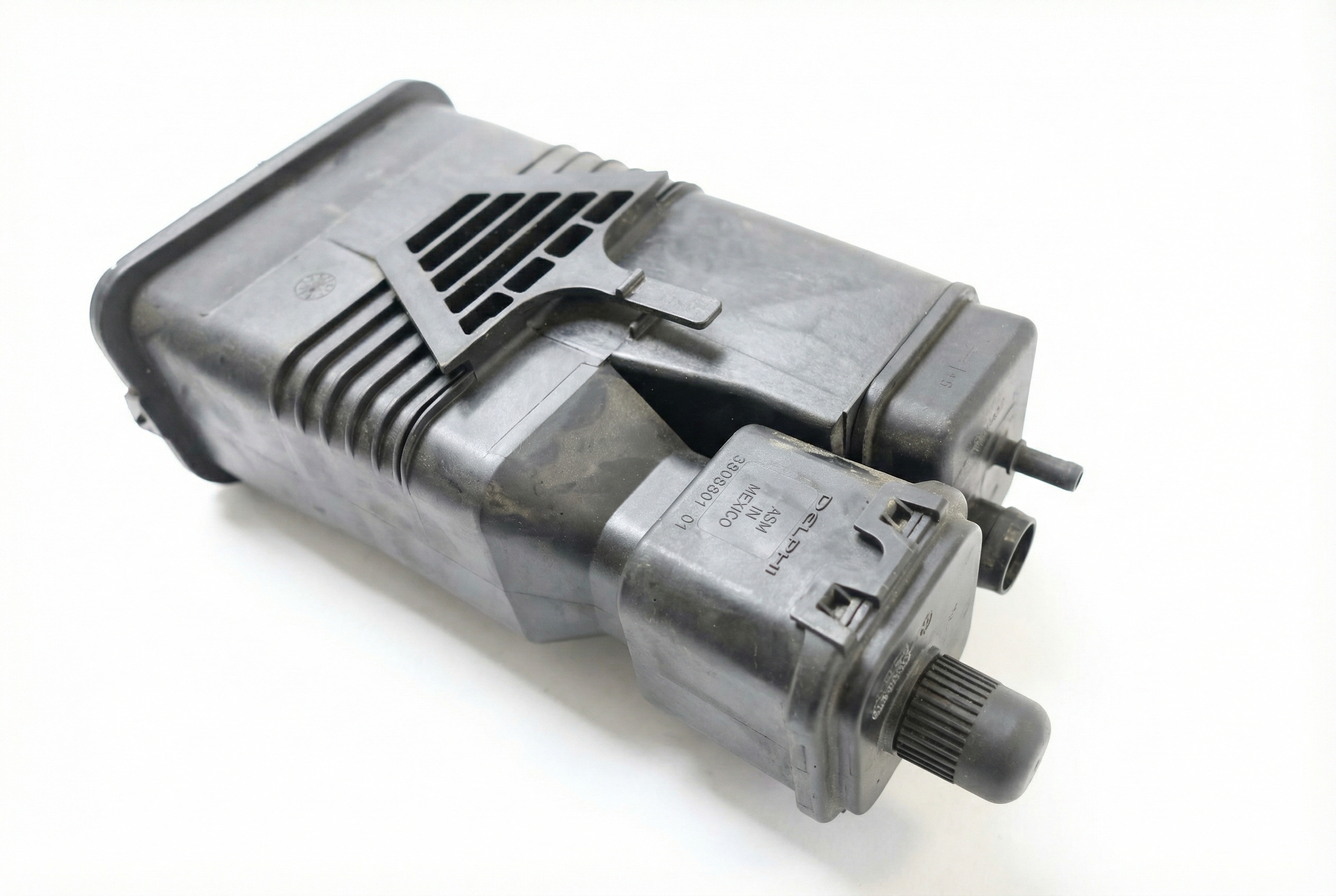
- Cracked Charcoal Canister: → Shop Vapor Canister The plastic body of the canister can develop cracks from age or impact from road debris, creating a large leak. A stuck-open purge valve can also cause raw fuel to saturate and damage the canister.
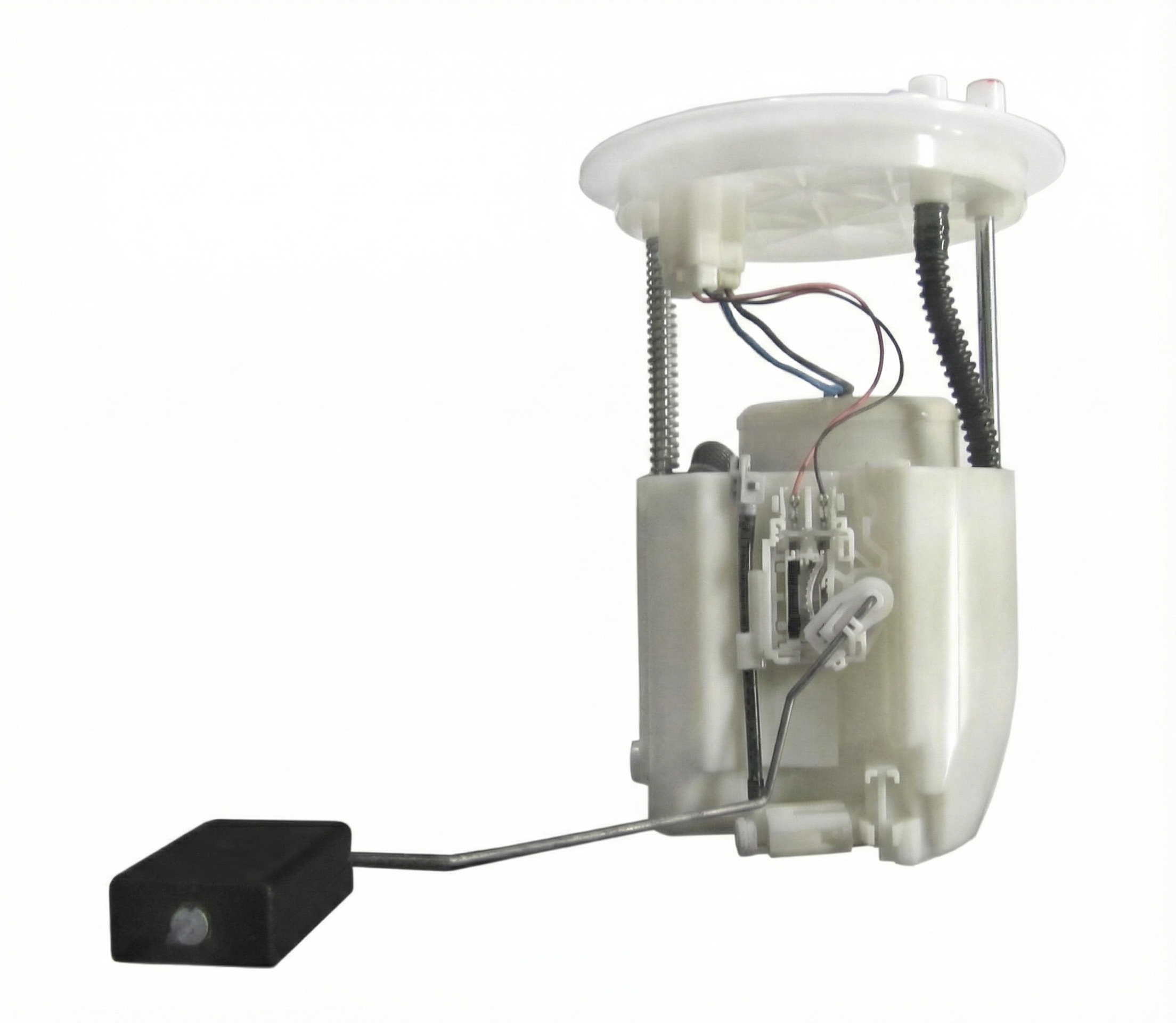
- Faulty Fuel Tank Pressure Sensor: → Shop Fuel Tank This sensor tells the computer what the pressure is in the system. If it provides false data, it can trick the computer into setting a P0455 code, even if no leak exists.
Diagnosis Steps
- Read the code with an OBD-II scanner to confirm P0455 is present.
- Visually inspect the capless fuel filler neck for debris. Clean it thoroughly using the vehicle's funnel and a cloth with silicone spray.
- Clear the code and drive the vehicle for a few days. If the code does not return, the problem is solved.
- If the code returns, locate the canister purge valve in the engine bay, usually on the intake manifold.
- With the engine off and electrical connector unplugged, disconnect the valve and attempt to blow through it. If air passes, the valve is stuck open and must be replaced.
- If the purge valve seems okay, check for related recalls like 18S32, as a PCM software update may be required.
- If the purge valve and fuel filler neck are not the cause, the next step is to perform a smoke test on the EVAP system. This will reveal any hard-to-see leaks in hoses, the charcoal canister, or the fuel tank.
- Inspect the canister vent valve (located near the fuel tank) for damage or being stuck, especially if you have trouble filling the gas tank.
- If no leaks are found, the fuel tank pressure sensor may be faulty and require testing.
Parts You'll Likely Need
- Canister Purge Valve / Solenoid
(OEM #CU5A-9G886-AA (Superseded by DG9Z-9D289-D))— This is the most common failure point for a P0455 code on this specific vehicle. It gets stuck open, creating a permanent leak.
Trusted brands: Motorcraft, Bosch, Dorman
OEM price range: $50-$80
Aftermarket price range: $25-$50 - Fuel Filler Neck — If cleaning the capless filler inlet does not solve the leak, the internal seal may be worn or damaged, requiring replacement of the entire neck assembly.
Trusted brands: Motorcraft
OEM price range: $100-$150
Aftermarket price range: $70-$120
Related Codes That Often Appear With This One
- P0456 — This code is for a 'small' EVAP leak. Sometimes a component is in the early stages of failure and may set a P0456 before it worsens and triggers a P0455.
- P0457 — This code specifically means 'Evaporative Emission System Leak Detected (Fuel Cap Loose/Off)'. On a capless system, it points directly to an issue with the fuel filler inlet seal.
- P0443 — This code indicates a problem with the purge control valve's electrical circuit, pointing directly to a potential electrical failure of the valve or its wiring, rather than just a mechanical (stuck) failure.
- P1450 — This code for 'Unable to Bleed Up Fuel Tank Vacuum' is often seen alongside P0455 and is specifically mentioned in Recall 18S32 as a result of a stuck-open purge valve causing excessive tank vacuum.
Technical Service Bulletins (TSBs) & Recalls
- SSM 50306 - Advises technicians to perform specific scan tool tests (EVAP Leak Test and CPV Check) before replacing the EVAP canister purge valve. Ford's analysis of returned parts showed many were fully functional, indicating that misdiagnosis is common and the actual leak may be elsewhere.
Platform-Specific Known Issues
- Recall 18S32 / NHTSA 18V735: Issued because a stuck-open canister purge valve (CPV) could lead to excessive vacuum in the fuel system, deforming the fuel tank, causing inaccurate fuel gauge readings, and potentially leading to an engine stall. The fix involves a PCM software update to better detect the fault and, if necessary, replacement of the CPV, charcoal canister, and/or fuel tank.
- Owner Experiences: Owners on forums frequently report that replacing the purge valve is a quick (15-30 minute) and effective fix. A user on r/fordfusion noted, 'I went out on a limb and replaced the one in the engine in my 2016 2.0 with turbo. Haven't had an issue (knock on wood)... Mine started acting up at around 75k'. This highlights the commonality and typical mileage for this failure.
Mechanic-Grade Diagnostic Values
- EVAP Canister Vent Valve Solenoid Resistance — expected: 12–80 Ohms. Failure: A reading outside of this range indicates a faulty valve solenoid.
- EVAP System Self-Test Target Vacuum — expected: Approximately -8.0 in-H2O. Failure: If the system fails to achieve this target vacuum, the PCM concludes a large leak (P0455) is present. If it exceeds this vacuum significantly, it may set a P1450.
- Fuel Tank Pressure (FTP) Sensor at KOEO (Key On, Engine Off) — expected: Near 0 PSI or 2.6-2.7 Volts. Failure: A significant deviation from zero pressure/voltage before the test starts can indicate a faulty sensor or a system that is not properly vented at rest.
Scan Tool Commands That Help
- Ford IDS (Integrated Diagnostic System): On-Board Diagnostic (OBD) II EVAP Test — This is the factory-level, automated test to command the EVAP system to seal and pull a vacuum, monitoring the FTP sensor to determine if a leak is present. It's the most direct way to confirm if the system is failing its self-test.
- High-End Generic (e.g., Autel, Snap-on) or FORScan: Active Test / Canister Vent Valve Activation — This bidirectional command allows the technician to manually command the normally-open vent valve to close. This is used to seal the system for a smoke test or to verify the electrical operation of the vent valve solenoid.
- High-End Generic (e.g., Autel, Snap-on) or FORScan: Purge/Seal (EVAP Purge Solenoid Control) — This command allows manual control of the normally-closed purge valve. A technician can command it open while blowing into the hose to confirm it's not mechanically stuck. It's also used to pull a vacuum on the system during manual testing.
Wiring & Ground Locations
- Fuse F8 (20A) — In the engine compartment fuse box (Battery Junction Box). It is the lower of two 20A fuses located under a larger relay.. This fuse provides power to the EVAP system. A blown fuse would cause a loss of power to the valves, potentially leading to circuit codes or failure to complete the EVAP monitor test.
- Canister Purge Valve Connector — On the canister purge valve, typically mounted to the intake manifold in the engine bay. It is a 2-wire connector.. This is the connection point for testing the purge valve solenoid's electrical circuit. One pin will have power (with key on) and the other is the ground-side control from the PCM.
- G101 / G107 — Located on the left front of the engine compartment.. These are primary engine compartment ground points. A poor connection at these grounds could cause intermittent electrical issues for various engine sensors and solenoids, including those in the EVAP system.
Real Owner Repair Stories
- Reddit user in r/fordfusion (2016 Ford Fusion 2.0L Turbo, 75,000 miles) — Check engine light, worse gas mileage, less power.
❌ Tried (didn't work) Initial diagnosis was uncertain between the two EVAP valves.
✅ What actually fixed it The owner replaced the canister purge valve located in the engine bay on a hunch, which resolved the issue. - Reddit user in r/fordfusion (2010 Ford Fusion with 64k miles) — P0455 Check Engine Light, car 'riding funny'.
❌ Tried (didn't work) Cleaning the capless fuel filler neck with WD-40 (Note: Silicone spray is recommended, not WD-40)., Removing the purge valve and performing a blow test; no air passed through, suggesting the valve was not stuck open at that moment.
✅ What actually fixed it The user was still in the process of diagnosing, but the key takeaway is that even though the purge valve passed the simple blow test, it is often an intermittent failure and can still be the root cause. Many technicians replace it based on the high failure rate even if it tests good on the bench. - NHTSA ODI #10466537 — An owner reported the car stalled multiple times after the check engine and wrench lights came on. While the dealer initially replaced the purge valve, the engine cut out again while driving at 70 mph on the highway.
- NHTSA ODI #10876672 — A report mentions that after stopping at an auto parts store, stored codes P0455, P0457, and P2119 were found, occurring alongside issues where the cruise control would not set.
"I Checked Everything" — The Actual Cause
- In a diagnostic video for a P0455 on a Ford, a technician performed a smoke test and found no leaks in the hoses or canister. The smoke was only seen escaping from the purge valve itself when commanded open, but the actual leak causing the code was the valve not sealing properly when closed. This highlights that a 'clean' smoke test of the lines can still be followed by a faulty, internally leaking valve.
OEM Part Supersession History
CU5A-9G886-AA (Engineering Number)→DG9Z-9D289-D (Engineering Number)— The original part had a high failure rate, often sticking open. The superseding part is a revised design to improve durability and prevent sticking.
Heads up: The service part number for CU5A-9G886-AA is often Motorcraft CX2313. The service part for DG9Z-9D289-D is Motorcraft CX2634. They are physically interchangeable, but using the older design is not recommended.
Model Year Variations Within This Range
- 2017-2020: The 2017 model year introduced a mid-cycle refresh (facelift) for the Fusion. While the fundamental EVAP system design remained the same, some part numbers for components like the purge valve may differ for specific engine options (e.g., the 1.5L engine uses part HG9Z-9D289-F). Always verify the part number by VIN.
Diagnostic Flowchart
Real Owner Stories
Aggregated from forums and TSBs cited above. Mileages and costs reflect what owners reported in those sources.
2016 Ford Fusion 2.0L Turbo — 75000 miles
Symptoms: Check engine light, worsening gas mileage, and less power.
What fixed it: Replaced the EVAP purge valve in the engine bay.
Source hint: Reddit r/fordfusion
Ford Fusion
Symptoms: Experienced codes P0455 and P1450 simultaneously.
What fixed it: Replaced the purge valve solenoid.
Source hint: Ford Fusion Forum thread titled 'P0455 & P1450'
Ford Fusion
Symptoms: Got the P0455 code but the car was driving perfectly normally. About 2 weeks after resetting it, the code came back and the car began to run poorly.
What fixed it: Took it to a shop for component replacement.
Source hint: Reddit r/MechanicAdvice
Ford Fusion
Symptoms: An owner reported a strong smell of fuel around and inside the car on more than one occasion, with the OBD II reading code P0455 (NHTSA ODI #10537121).
What fixed it: Diagnosis and repair of the EVAP system leak.
Ford Fusion
Symptoms: A driver noted the check engine warning indicator illuminated and the vehicle displayed code P0455 (NHTSA ODI #11171406).
What fixed it: Vehicle was taken to a dealership for professional diagnosis.
Related OBD-II Codes
Frequently Asked Questions
Is there a recall for the P0455 code on my 2013-2020 Ford Fusion?
Why does my Fusion stall or idle roughly right after I fill up the gas tank?
What does the 'Check Fuel Fill Inlet' message mean on my dashboard?
Should I immediately replace the canister purge valve if I get a P0455 code?
How can I test the canister purge valve on my Fusion at home?
Can a P0455 code cause my gas gauge to read incorrectly?
Helpful Videos
Used OEM Parts in Stock

New Aftermarket Parts Available


The information in this article is provided for general reference and educational purposes only. Vehicle specifications, procedures, and part compatibility can vary by production date, trim level, and region. Always consult your vehicle's factory service manual and verify part numbers before purchasing or performing repairs. Safety-critical components such as airbags, seat belts, and braking systems should be installed by a qualified professional.
- Ford Fusion:
- 🧭 Diagnostic Flowchart
- 🎬 Helpful Videos
- 🛍️ Shop This Part
- What's Unique About the 2013-2020 Ford Fusion
- Symptoms You May Notice
- Most Likely Causes
- Rare But Worth Checking
- Diagnosis Steps
- Parts You'll Likely Need
- Related Codes That Often Appear With This One
- Technical Service Bulletins (TSBs) & Recalls
- Platform-Specific Known Issues
- Mechanic-Grade Diagnostic Values
- Scan Tool Commands That Help
- Wiring & Ground Locations
- Real Owner Repair Stories
- "I Checked Everything" — The Actual Cause
- OEM Part Supersession History
- Model Year Variations Within This Range
- Real Owner Stories
- 2016 Ford Fusion 2.0L Turbo — 75000 miles
- Ford Fusion
- Ford Fusion
- Ford Fusion
- Ford Fusion
- Related OBD-II Codes
- Frequently Asked Questions
- 🎟️ Get 5% Off