

P0455 on 2017-2021 Ford Transit: EVAP Gross Leak Causes and Fixes
P0455 on a 2017-2021 Ford Transit usually indicates a large leak in the EVAP system. Before buying parts, check for a loose gas cap or debris in the capless fuel filler. Then, inspect for a kinked EVAP vent line near the fuel filler neck, a known issue on vehicles built before November 30, 2020, and covered by Ford TSB 21-2106.
- Always check your gas cap or capless fuel filler inlet first; it's the most common and cheapest fix.
- On a 2017-2021 Ford Transit, a kinked EVAP hose near the fuel filler neck is a highly probable cause for P0455, as per Ford's own service bulletin (TSB 21-2106).
- Do not replace the canister purge valve without testing it. A Ford TSB warns it is often replaced when it's not the problem.
- If a visual inspection doesn't reveal the leak, a professional smoke test is the fastest and most accurate way to find the source.
- This code does not affect vehicle safety or drivability, but it will cause you to fail an emissions test.
What's Unique About the 2017-2021 Ford TRANSIT
The Ford Transit from this era has a well-documented issue with a kinked EVAP vent hose near the fuel filler neck, which can trigger a P0455 code and cause slow fueling. Ford issued a Technical Service Bulletin (TSB 21-2106) specifically for 2017-2021 models built on or before November 30, 2020, to address this problem, making it a primary suspect. Additionally, another bulletin (SSM 50306) warns technicians that the canister purge valve is often replaced unnecessarily across many Ford models including the Transit, suggesting other causes should be thoroughly investigated first using specific scan tool tests.
Diagnostic Flowchart
Tap your situation to follow the diagnostic path that matches what you're seeing on this vehicle.
Symptoms You May Notice
- Check Engine Light is on
- A noticeable fuel odor, especially after refueling or when parked.
- Difficulty filling the fuel tank (the pump nozzle clicks off repeatedly).
- A 'Check Fuel Fill Inlet' message may appear on the dashboard.
- Replacing the EVAP canister purge valve without testing it first. Ford TSB SSM 50306 specifically warns that returned purge valves are often found to be fully functional, indicating this is a common point of misdiagnosis.
Most Likely Causes
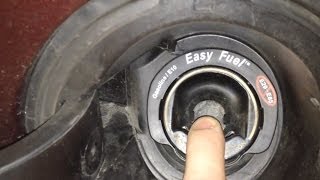
- Loose or Faulty Gas Cap / Capless Fuel Filler Inlet Issue 🔴 High Probability → Shop Fuel Tank Cap This is the most common cause for a P0455 on any vehicle. For Fords with the capless 'Easy Fuel' system, dirt, debris, or corrosion on the internal spring-loaded flap can prevent a proper seal.
How to confirm: Visually inspect the fuel filler inlet for any dirt, spider webs, or debris that could prevent the internal flap from sealing completely. Use the emergency fuel funnel provided with the vehicle to work the flap open and closed to check for smooth operation.
Typical fix: Clean the capless fuel filler inlet. Use compressed air to blow out debris, then wipe the sealing area with a clean cloth and isopropyl alcohol. Some owners recommend spraying a small amount of silicone lubricant on a cloth or the funnel to lubricate the seal and work it in. If the seal is damaged, the entire fuel filler neck may need replacement.
Est. part cost: $0-$200 - Kinked EVAP Fresh Air Vent Line 🔴 High Probability This is a known issue specifically for 2017-2021 Ford Transits built before Nov 30, 2020, as documented in Ford TSB 21-2106. The hose routing can cause it to pinch itself off.
How to confirm: Visually inspect the EVAP vent line in the area around the fuel filler neck assembly. You may need to remove the driver-side rear wheel and wheel well liner for a clear view. Look for a sharp bend or kink in the flexible rubber hose.
Typical fix: Straighten the kinked hose and secure it with a zip tie to a nearby rigid structure to prevent it from kinking again, as outlined in the TSB. If the hose is cracked or permanently deformed, it will need to be replaced.
Est. part cost: $0-$50 - Faulty Canister Purge Valve 🟡 Medium Probability → Shop Vapor Canister This valve can fail by sticking open, creating a large leak. However, Ford TSB SSM 50306 warns that this part is often misdiagnosed and should be tested before replacement.
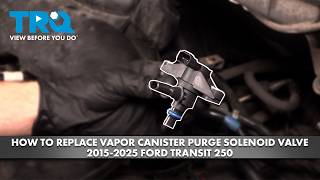
How to confirm: With the engine off, remove the valve and try to blow through it. No air should pass. A video guide for the Transit shows how to access the valve by removing the main air intake tube. 🎬 Watch: Step-by-step guide to replacing the canister purge valve. The valve is located on the driver's side of the engine. If air passes through, it is stuck open and has failed.
Typical fix: Replace the canister purge valve. This involves removing two 8mm bolts and disconnecting the electrical connector and two hoses.
Est. part cost: $40-$90 - Cracked or Disconnected EVAP Hoses 🟡 Medium Probability
How to confirm: Perform a visual inspection of all accessible EVAP lines, especially around the engine bay and near the charcoal canister under the vehicle. A smoke test is the most effective method to find hidden cracks or disconnections.
Typical fix: Replace the damaged section of the hose.
Est. part cost: $10-$30 - Faulty EVAP Vent Solenoid ⚪ Low Probability → Shop Vapor Canister
How to confirm: The vent solenoid is normally open and should close when 12V power is applied. It is typically located on or near the charcoal canister by the fuel tank. It can be tested with a capable scan tool or by applying power manually and checking for a 'click' and confirming it closes. A stuck-open vent solenoid is a common cause of P0455.
Typical fix: Replace the vent solenoid.
Est. part cost: $50-$120
Rare But Worth Checking
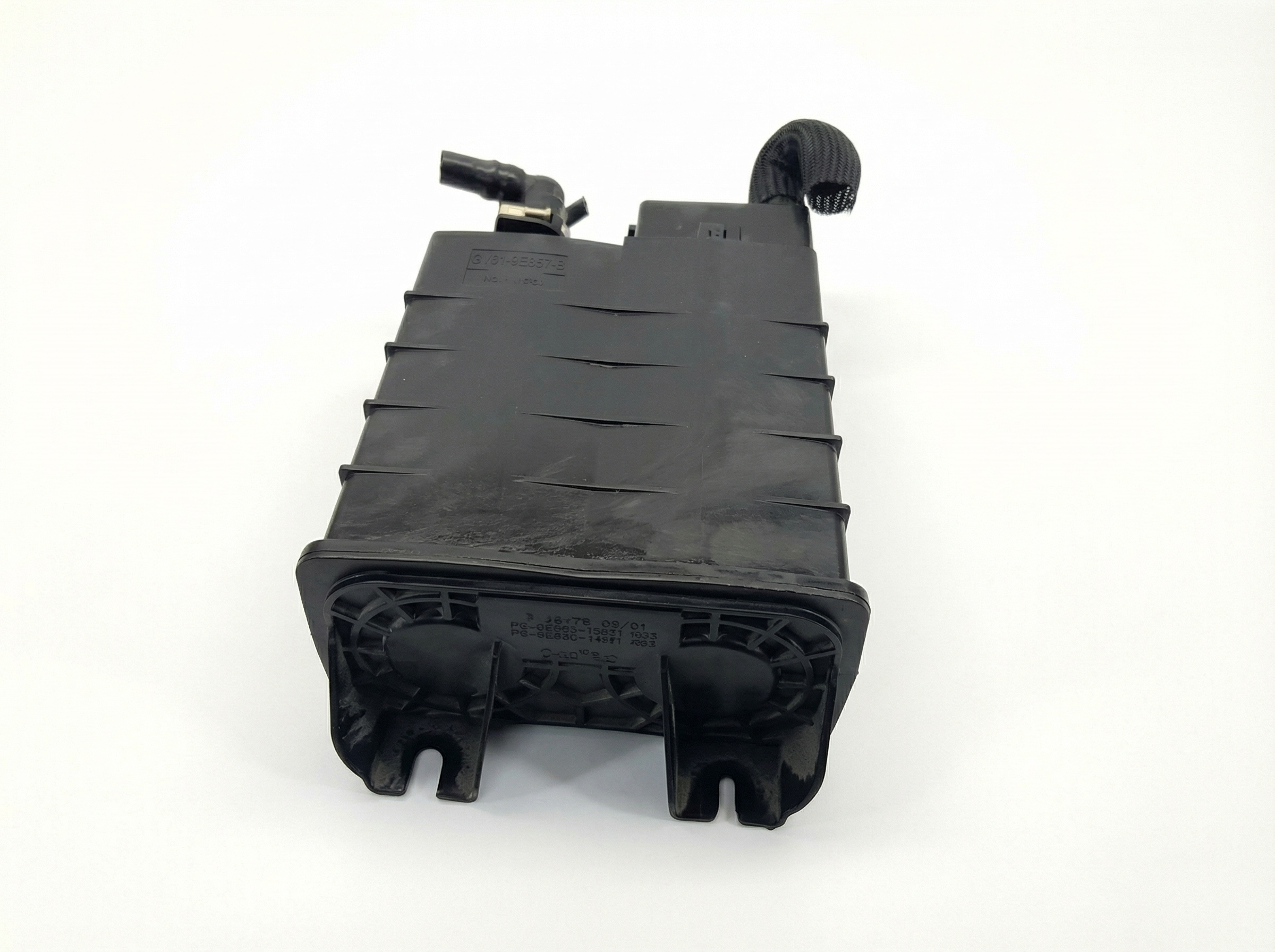
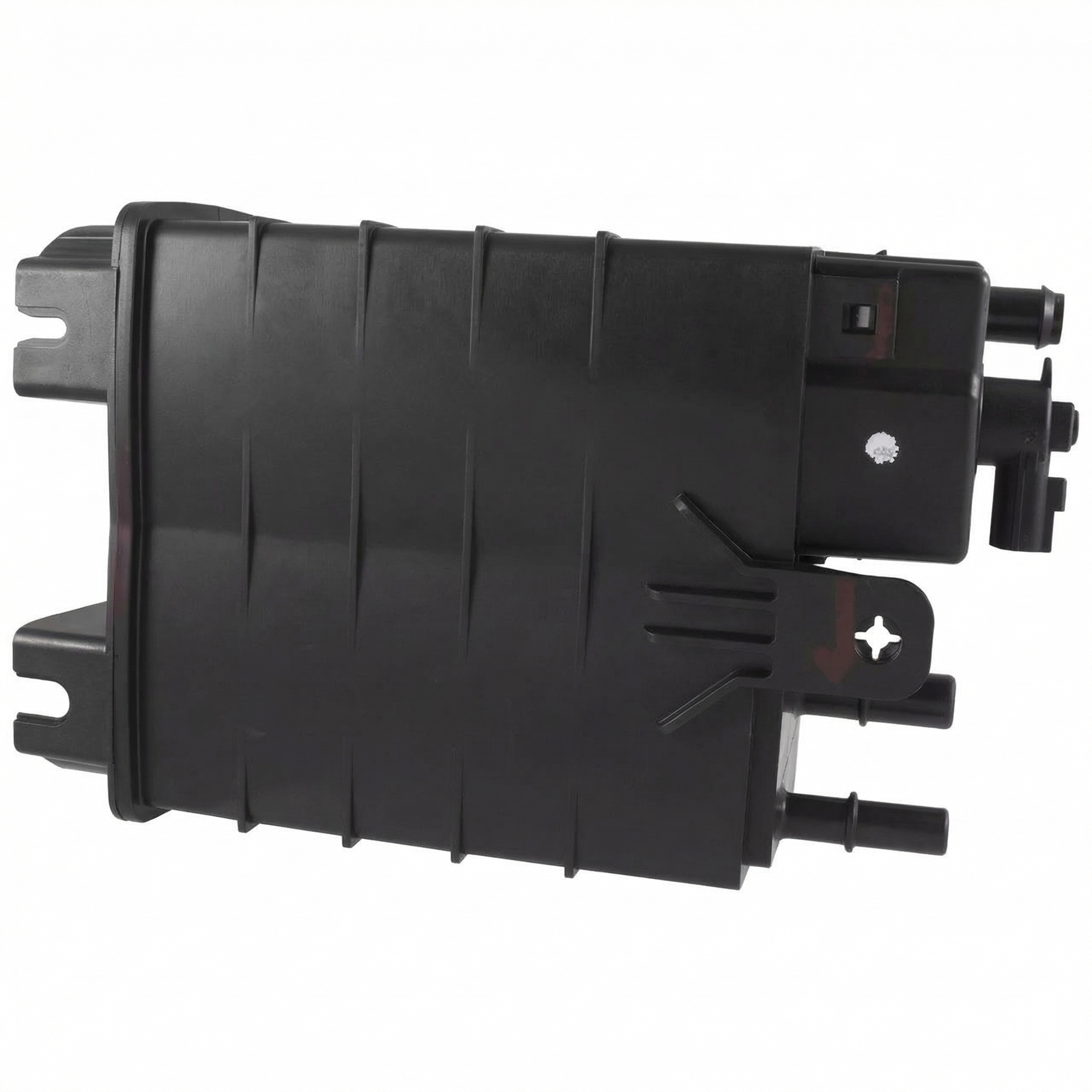
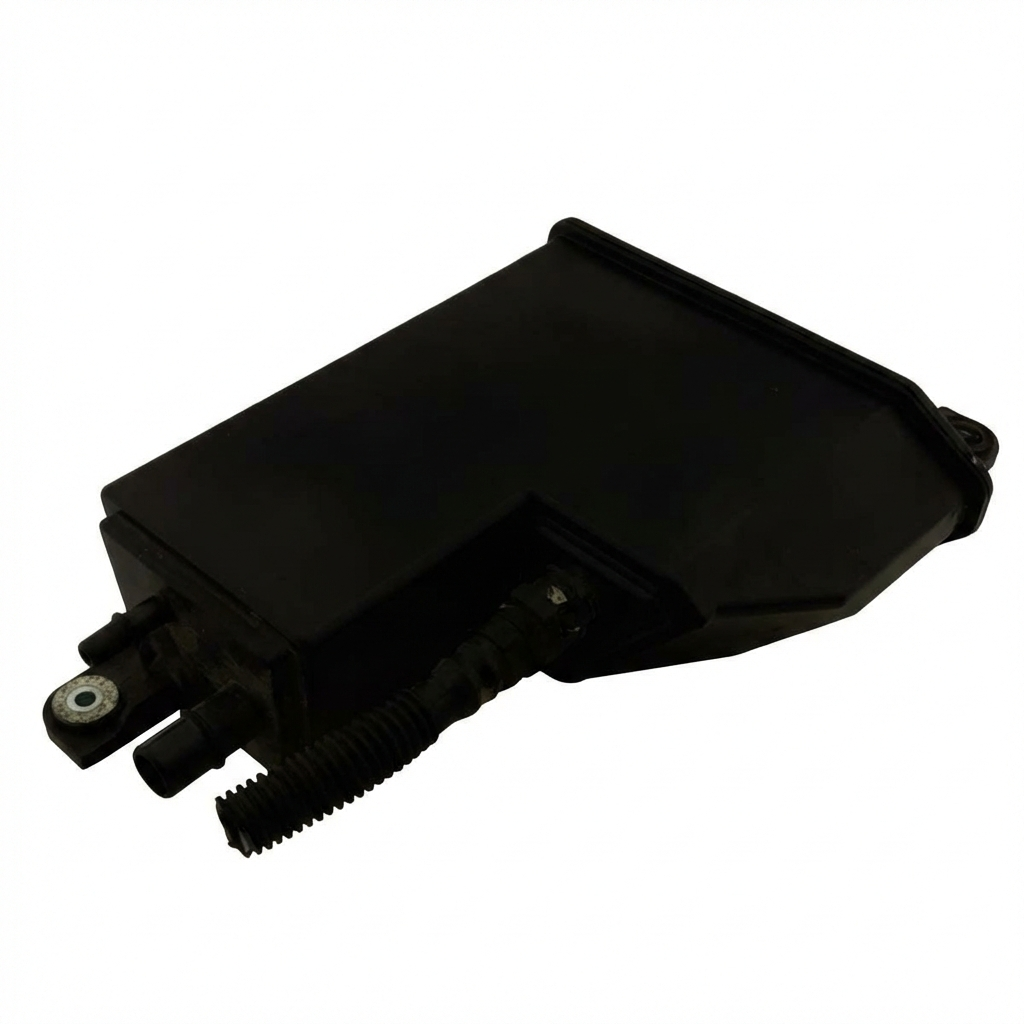
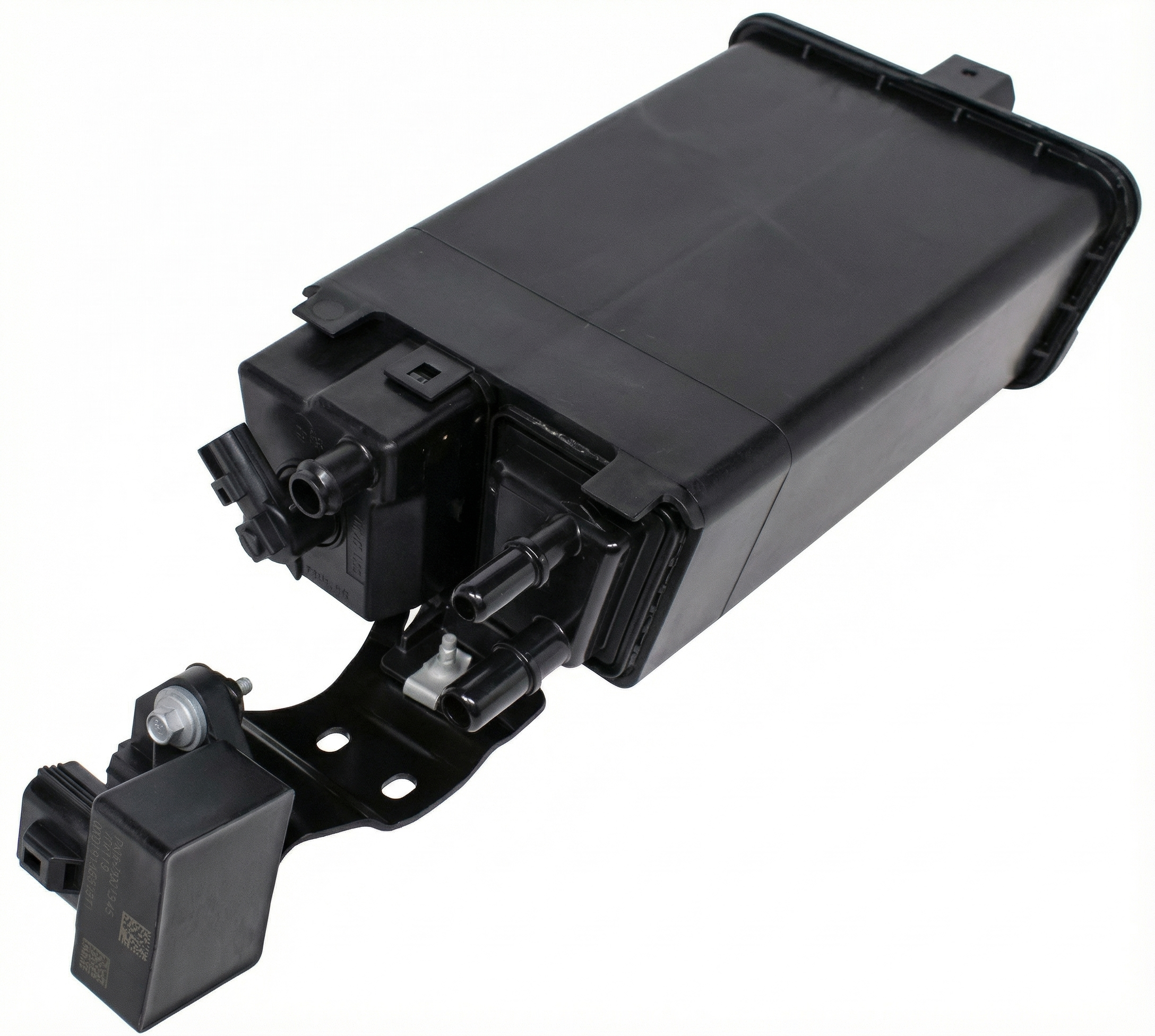
- Cracked EVAP Charcoal Canister: → Shop Vapor Canister Physical damage from road debris or age can cause the plastic housing of the canister to crack, creating a large leak.
- Leaking Fuel Filler Neck: → Shop Fuel Filler Neck Corrosion or rust on the metal filler neck can create a leak path that the EVAP system will detect as a P0455 code.
- Failed Fuel Tank Pressure (FTP) Sensor: → Shop Fuel Tank The FTP sensor reports pressure inside the fuel tank to the PCM. If the sensor provides incorrect data, the computer may falsely believe there is a large leak when there isn't one. This is usually diagnosed after a smoke test finds no leaks.
Diagnosis Steps
- Read all stored trouble codes with an OBD-II scanner.
- Inspect the capless fuel filler inlet. Check for debris and proper sealing. Use the emergency funnel to actuate the flap. Clean the sealing surface with a cloth and isopropyl alcohol, and consider lubricating the seal with a small amount of silicone spray on a rag.
- Clear the codes and perform a complete drive cycle to see if the code returns. If it was just debris in the filler neck, this may fix it.
- If the code returns, perform a thorough visual inspection of the EVAP system. For vehicles built before Nov 30, 2020, pay close attention to the fresh air vent line near the fuel filler neck for kinks, as specified in TSB 21-2106.
- Inspect all other visible EVAP hoses for obvious cracks, disconnections, or damage, particularly around the purge valve in the engine bay and the charcoal canister underneath the vehicle.
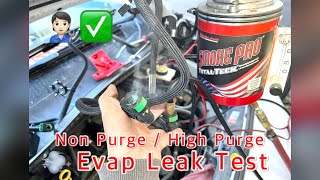
- If no visual faults are found, a smoke test is the most effective next step. 🎬 See how a professional diagnoses complex Ford EVAP system leaks. This involves injecting vaporized smoke into the EVAP system (usually via the service port) and watching for where it escapes, which will pinpoint the leak.
- Test the canister purge valve. Located on the driver's side of the engine, it should be removed and tested to see if it's stuck open (air should not pass through when unpowered).
- Test the vent solenoid/valve. It is typically located near the charcoal canister under the vehicle. It is normally open and should close when commanded by a scan tool or when 12V is applied.
Parts You'll Likely Need
- Fuel Filler Neck Funnel — Not a replacement part, but the vehicle's original emergency funnel is essential for cleaning and testing the 'Easy Fuel' capless system.
Trusted brands: Ford (included with vehicle)
OEM price range: $0
Aftermarket price range: $10 - EVAP Canister Purge Valve
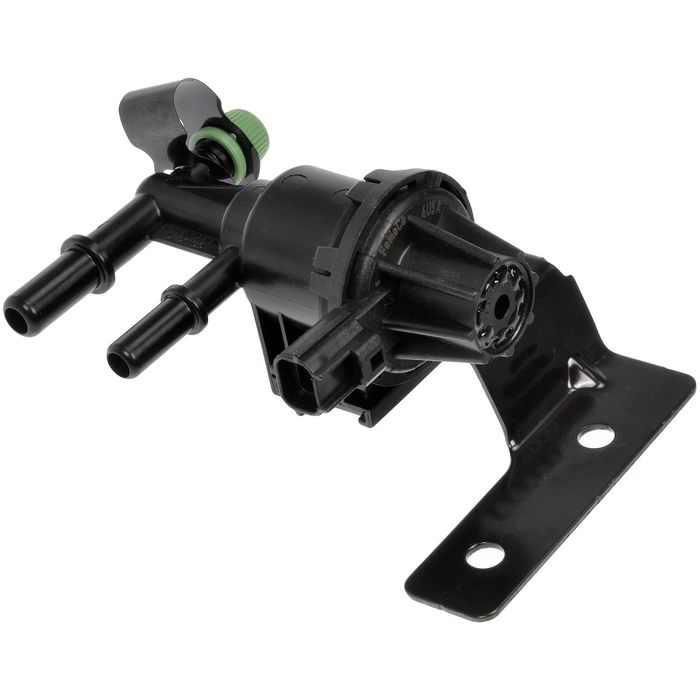
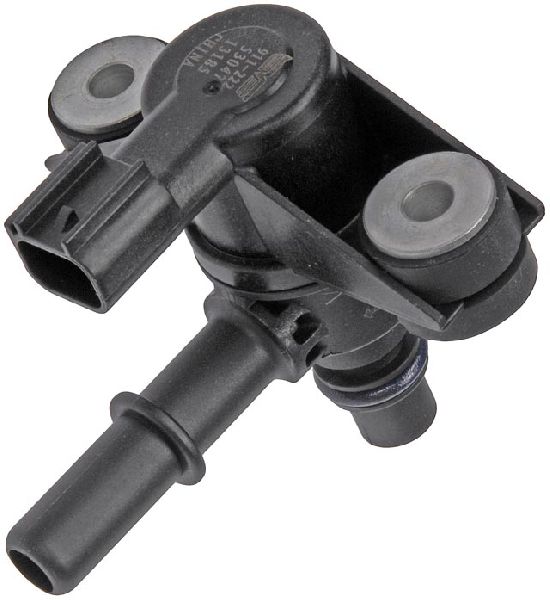
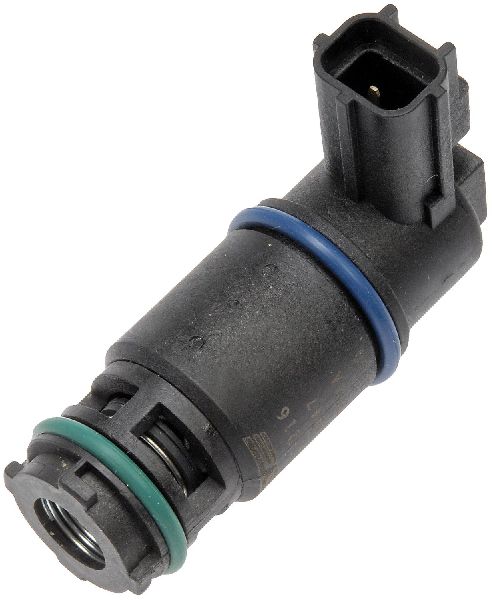
(OEM #CU5Z-9F945-A (superseded by HU5Z-9F945-A))— Can fail by sticking open, creating a large leak. However, it is often misdiagnosed per TSB SSM 50306, so testing is crucial before replacement.
Trusted brands: Motorcraft, Bosch, Dorman
OEM price range: $60-$90
Aftermarket price range: $40-$70 - EVAP Fresh Air Vent Line/Hose — This specific hose is prone to kinking on the Transit, as documented in TSB 21-2106, causing a blockage and/or leak. Often repairable with a zip tie.
Trusted brands: Motorcraft
OEM price range: $30-$60
Aftermarket price range: $20-$40
Related Codes That Often Appear With This One
- P1450 — This code means 'Unable to Bleed Up Fuel Tank Vacuum.' A kinked vent line (per TSB 21-2106) or a stuck-closed vent valve can cause both P1450 and P0455.
- P0456 — This indicates a 'Small EVAP Leak.' It can appear alongside P0455 if the system's self-tests detect different leak sizes under varying conditions, or if a small leak worsens.
- P0496 — This code means 'EVAP Flow During a Non-Purge Condition.' It often points to a purge valve that is stuck open, which can also be interpreted by the system as a large leak (P0455).
Technical Service Bulletins (TSBs) & Recalls
- SSM 50306: Warns that EVAP canister purge valves are often replaced unnecessarily for codes like P0455 across a wide range of Ford vehicles, including the Transit. It advises using the Ford FDRS scan tool to perform specific leak tests before replacing parts.
- TSB 21-2106: Identifies a kinked EVAP fresh air vent line near the fuel filler neck as a direct cause for P
Platform-Specific Known Issues
- TSB 21-2106: Ford identified that on some 2017-2021 Transit vehicles built on or before 30-Nov-2020, the EVAP fresh air vent line can become kinked. This can cause P0455 and is often accompanied by a slow fuel fill condition. The official fix is to inspect and secure the line with a zip tie to prevent the kink.
Mechanic-Grade Diagnostic Values
- Fuel Tank Pressure (FTP) Sensor Voltage (KOEO) — expected: 2.37 to 2.97 Volts with no pressure/vacuum in the tank (fuel cap open).. Failure: Voltage significantly outside this range, such as below 2.37V (P0452) or above 2.97V (P0453), indicates a sensor or wiring fault.
- EVAP Canister Purge Valve Solenoid Resistance — expected: Typically between 15 and 30 Ohms.. Failure: A reading of infinite resistance (open circuit) or zero resistance (short circuit) indicates a failed solenoid coil.
- EVAP Canister Vent Valve Solenoid Resistance — expected: Typically between 20 and 50 Ohms.. Failure: A reading outside the expected range indicates a faulty solenoid coil.
Scan Tool Commands That Help
- Ford IDS / FORScan: EVAP System Leak Test — This is a guided diagnostic function that automatically seals the EVAP system (by commanding the vent solenoid closed) and monitors the FTP sensor to check for a pressure drop, confirming if a leak is present before performing a smoke test.
- Ford IDS / FORScan: Output Test Mode (OTM) - Command CV (Canister Vent) Valve On/Off — Used to manually command the normally-open vent solenoid to close. This is necessary to seal the system for a smoke test and to verify the solenoid is functioning electrically and mechanically (an audible click should be heard).
- Ford IDS / FORScan: Output Test Mode (OTM) - Command Purge Valve On/Off — Used to manually command the normally-closed purge valve to open and close. This helps verify the valve's functionality and check for blockages or a stuck-open condition without having to remove it from the vehicle.
Wiring & Ground Locations
- Customer Connection Point (CCP) — Located in the Pre Fuse Box (PFB) within the driver's seat pedestal.. A 60A MIDI fuse in the CCP provides power to various vehicle systems, including circuits related to the Body Control Module which controls EVAP components. A poor connection or blown fuse here can cause electrical issues for the EVAP system.
- Vehicle Ground Point — A common vehicle ground point is located on the floor between the front seats.. The EVAP vent and purge solenoids require a solid ground to function correctly. A corroded or loose ground connection at this point can lead to intermittent or failed operation of EVAP components, potentially triggering fault codes.
Real Owner Repair Stories
- YouTube channel 'ADVANCED LEVEL AUTO' (2020 Ford Transit Connect 2.0L (similar EVAP system)) — Check Engine Light with a high purge flow code (related to P0455).
❌ Tried (didn't work) The owner brought the vehicle directly for diagnosis.
✅ What actually fixed it The canister purge valve was diagnosed as being stuck open using a smoke machine, which showed smoke flowing freely through the un-powered valve. Replacing the purge valve assembly resolved the issue. - Reddit user in r/FordTransitConnect (2020 Ford Transit Connect XLT 2.5L) — Rough idle after filling up with gas (a classic symptom of a stuck-open purge valve).
❌ Tried (didn't work) The user did not report trying other fixes first.
✅ What actually fixed it The user replaced the canister purge valve, which is located near the fuel tank and accessible by loosening a metal heat shield. The user noted that adding a little grease to the new valve's o-rings helped with installation.
"I Checked Everything" — The Actual Cause
- If a smoke test is performed and no leaks are found, the cause of P0455 may not be a physical leak. The next most likely culprit is a faulty Fuel Tank Pressure (FTP) sensor. The sensor may be providing incorrect data to the PCM, making it believe a large leak exists when the system is actually sealed. Diagnosis would involve checking the FTP sensor's voltage reading on a scan tool against its expected range at atmospheric pressure.
OEM Part Supersession History
CU5Z-9F945-A→HU5Z-9F945-A— This is a standard part revision by Ford. Reasons often include minor design improvements, change in manufacturer, or material updates for better durability.
Heads up: The parts are interchangeable. HU5Z-9F945-A is the correct service replacement for the original part.
Model Year Variations Within This Range
- 2017-2020 (built on or before 30-Nov-2020): These models are specifically called out in TSB 21-2106 as being prone to a kinked EVAP fresh air vent line near the fuel filler neck. Vehicles built after this date likely have revised hose routing from the factory.
Helpful Videos
Used OEM Parts in Stock
New Aftermarket Parts Available


The information in this article is provided for general reference and educational purposes only. Vehicle specifications, procedures, and part compatibility can vary by production date, trim level, and region. Always consult your vehicle's factory service manual and verify part numbers before purchasing or performing repairs. Safety-critical components such as airbags, seat belts, and braking systems should be installed by a qualified professional.
- Ford TRANSIT:
- 🧭 Diagnostic Flowchart
- 🎬 Helpful Videos
- 🛍️ Shop This Part
- What's Unique About the 2017-2021 Ford TRANSIT
- Symptoms You May Notice
- Most Likely Causes
- Rare But Worth Checking
- Diagnosis Steps
- Parts You'll Likely Need
- Related Codes That Often Appear With This One
- Technical Service Bulletins (TSBs) & Recalls
- Platform-Specific Known Issues
- Mechanic-Grade Diagnostic Values
- Scan Tool Commands That Help
- Wiring & Ground Locations
- Real Owner Repair Stories
- "I Checked Everything" — The Actual Cause
- OEM Part Supersession History
- Model Year Variations Within This Range
- 🎟️ Get 5% Off