

P0455 on 2019-2024 Genesis G70: EVAP Large Leak Causes and Fixes
On a 2019-2024 Genesis G70, code P0455 is most often caused by a loose or faulty gas cap. Before buying any parts, tighten the cap until it clicks several times, clear the code, and drive for a few days. If it returns, a new OEM gas cap (Part No. 31010-3L600) is the next logical step and costs around $25-$40.
- P0455 means your G70 has a large leak in the evaporative emissions system.
- The most common and cheapest fix is a loose or faulty gas cap. Check it first.
- Driving with P0455 is not dangerous to the engine, but you will fail an emissions test.
- If a new gas cap doesn't fix it, the next likely culprits are the canister purge valve or the canister close (vent) valve.
- A professional smoke test is the fastest way to find the leak if it's not the gas cap.
What's Unique About the 2019-2024 Genesis G70
For the 2019-2024 Genesis G70, the P0455 code follows the standard SAE definition and diagnostic logic. There are no widespread, documented systemic flaws, recalls, or Technical Service Bulletins (TSBs) from Genesis specifically for EVAP large leaks on this platform. The troubleshooting process is conventional, with the gas cap being the primary suspect, followed by common EVAP components like the purge or vent valves. The G70 shares its platform, engines, and many EVAP components with the Kia Stinger, which experiences identical causes and fixes for P0455.
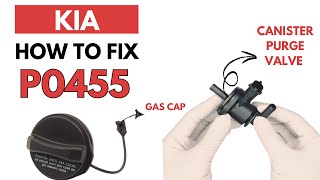
🎬 Watch: Two quick DIY methods to fix this code.Symptoms You May Notice
- Check Engine Light is on.
- A faint smell of fuel may be noticeable, particularly around the gas cap area or the rear of the vehicle.
- No noticeable impact on engine performance or drivability.
- Replacing the fuel tank pressure sensor. While possible, this sensor failing is less common than a simple leak and will often trigger other specific sensor-related codes.
- Immediately replacing the charcoal canister. The canister is expensive; it's more common for a valve or hose connected to it to fail than the canister itself.
Most Likely Causes
- Loose, Damaged, or Incorrect Gas Cap 🔴 High Probability → Shop Fuel Tank Cap This is the most common cause for a P0455 code on virtually all modern vehicles, including the G70. The rubber seal on the cap can degrade over time, or the cap may not have been tightened sufficiently after refueling.
How to confirm: Remove the gas cap and inspect the rubber O-ring or seal for any cracks, stiffness, or visible damage. Ensure it is an OEM or OEM-equivalent cap. Reinstall it, making sure to tighten it until it clicks at least three times. Clear the code and drive for 2-3 days to see if the light returns.
Typical fix: Replace the gas cap with a new, genuine Genesis part. The most commonly cited part number is 31010-3L600.
Est. part cost: $25-$40 - Faulty Canister Purge Valve (PCSV) 🟡 Medium Probability → Shop Vapor Canister The purge valve, also called a purge solenoid, controls the flow of vapors to the engine. If it becomes stuck open, it creates a permanent leak path that the system will detect during its self-test.
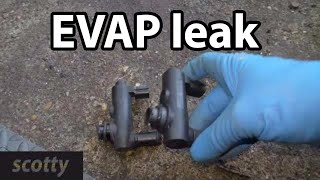
How to confirm: The valve is located in the engine bay, typically on or near the intake manifold 🎬 See this walkthrough on fixing large EVAP leaks. with two hoses and an electrical connector. With the engine off, disconnect the hose leading from the valve to the intake manifold and attempt to blow through the valve. If air passes through, the valve is stuck open and is faulty. A scan tool can also be used to command the valve to cycle while listening for an audible click.
Typical fix: Replace the canister purge valve. Part number 28910-3L000 is listed for the 2.0T, while 28910-3L270 is listed for the 3.3T.
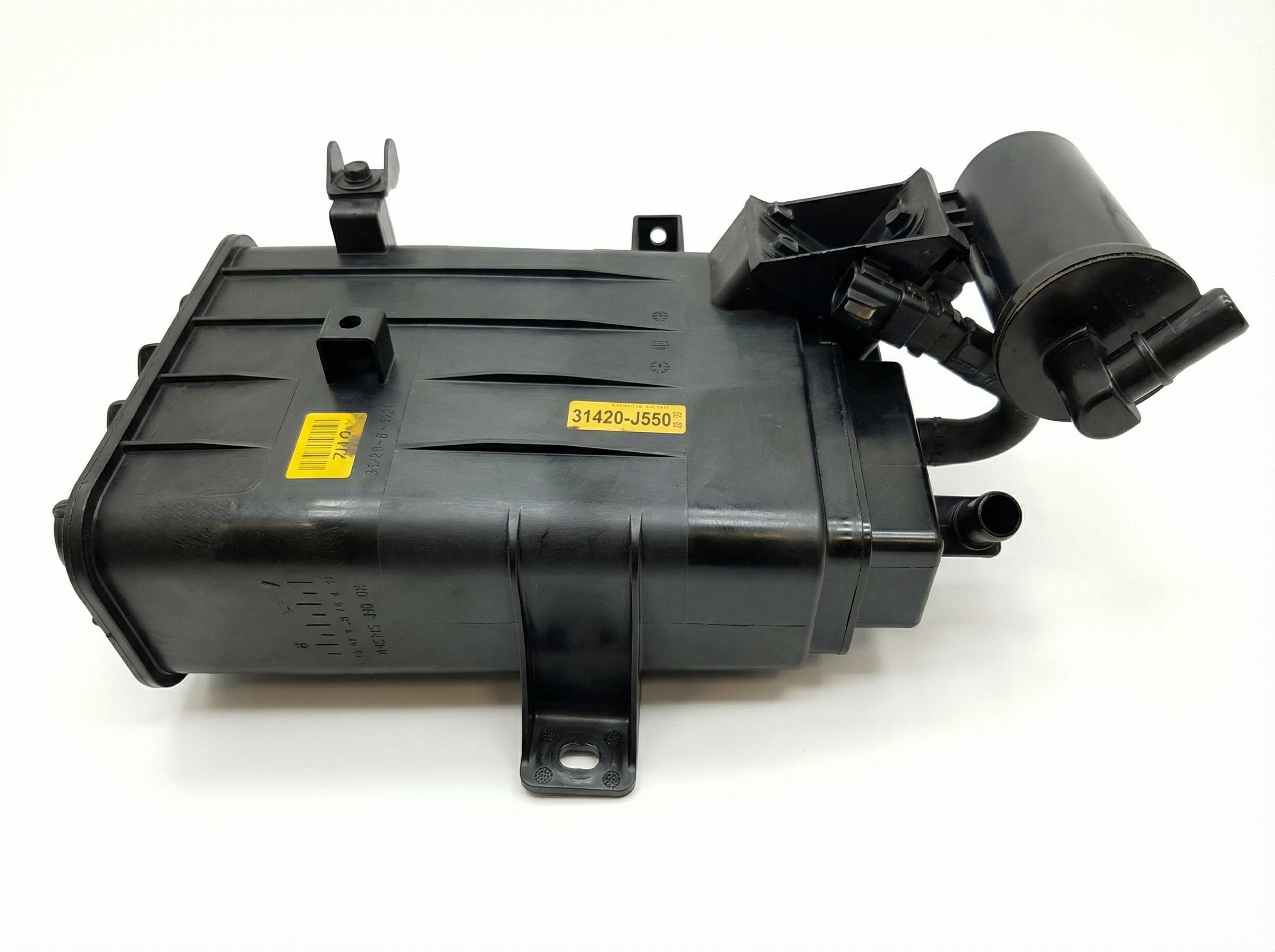
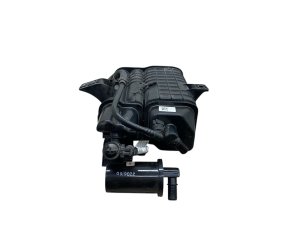
Est. part cost: $50-$90 - Faulty Canister Close Valve (CCV) / Vent Valve 🟡 Medium Probability → Shop Vapor Canister This valve is located near the charcoal canister under the car, by the fuel tank. It is normally open and must close to seal the system for testing. If it fails to close due to being stuck or an electrical issue, the system cannot seal, triggering a large leak code.
How to confirm: This is best diagnosed with a bi-directional scan tool to command the valve closed. A smoke test is the most effective confirmation; if the valve is commanded closed but smoke billows out, the valve is bad. Visual inspection for cracks or damage is also recommended.
Typical fix: Replace the canister close valve. A common part number is 31430-B1500.
Est. part cost: $100-$150 - Cracked or Disconnected EVAP Hose ⚪ Low Probability Rubber and plastic lines can become brittle with age and exposure to heat cycles, leading to cracks. Hoses can also be knocked loose during unrelated service.
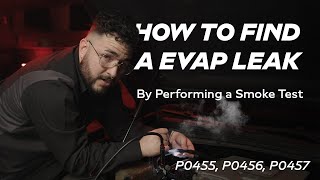
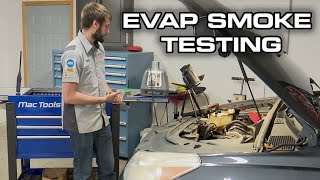
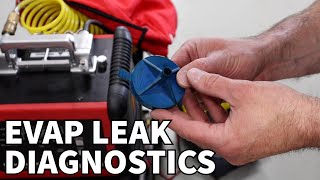
How to confirm: Visually inspect all accessible EVAP lines running from the engine bay to the charcoal canister near the fuel tank. The most definitive method is to have a professional perform a smoke test, which will force smoke through the system and reveal the exact location of any leak. 🎬 Watch: How to find leaks fast with a smoke machine.
Typical fix: Replace the cracked hose section and any brittle adjacent lines.
Est. part cost: $10-$50
Rare But Worth Checking
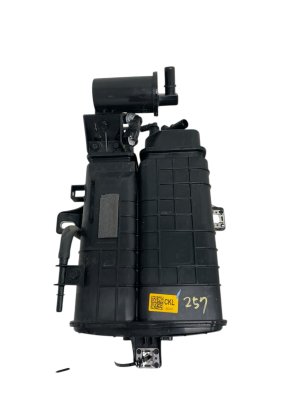
- Cracked Charcoal Canister: → Shop Vapor Canister The plastic body of the canister itself can develop a crack from road debris or age, creating a large leak. This is usually found during a smoke test.
- Damaged Fuel Filler Neck: → Shop Fuel Filler Neck Corrosion or damage to the metal pipe where the gas cap seals can prevent a proper seal, even with a new cap.
Diagnosis Steps
- Read the code with an OBD-II scanner to confirm P0455 is the primary code present.
- Inspect the gas cap. Remove it, check the seal for cracks or damage, and reinstall it, tightening until it clicks several times.
- Clear the code using the scanner.
- Drive the vehicle for 2-3 days. The EVAP monitor test runs under specific conditions (fuel level typically between 15-85%, specific ambient and engine temperatures, and after the car has sat) so it may take time for the light to return if the problem persists.
- If the light returns, purchase a new OEM gas cap (e.g., Part No. 31010-3L600), install it, clear the code, and repeat the drive cycle test.
- If the code still returns, perform a thorough visual inspection of all accessible EVAP hoses in the engine bay and under the vehicle near the fuel tank. Look for obvious cracks, damage, or disconnected fittings.
- If no visual faults are found, the next step is a professional smoke test. This is the most efficient way to find the exact source of the leak (e.g., purge valve, vent valve, hose, or canister).
Parts You'll Likely Need
- Fuel Filler Cap
(OEM #31010-3L600 (supersedes 31010-3L500))— This is the most frequent cause of a P0455 code due to a worn seal or improper tightening.
Trusted brands: Genuine Genesis
OEM price range: $25-$40
Aftermarket price range: $15-$30 - Canister Purge Valve / Solenoid
(OEM #28910-3L000 (2.0T) / 28910-3L270 (3.3T))— This valve can get stuck open, creating a constant leak path. It's a common failure point in many EVAP systems.
Trusted brands: Genuine Genesis, Bosch, Duralast
OEM price range: $50-$90
Aftermarket price range: $30-$60 - Canister Close Valve / Vent Solenoid
(OEM #31430-B1500)— This valve can fail to close, preventing the system from sealing itself for the pressure test. It is often located near the charcoal canister.
Trusted brands: Genuine Genesis
OEM price range: $100-$150
Aftermarket price range: $70-$120
Related Codes That Often Appear With This One
- P0456 — A P0456 (Small Leak) might appear if a large leak is intermittent or if there are multiple leaks of varying sizes in the system.
- P0442 — This is an older code for a medium leak, functionally similar to P0456. Seeing it with P0455 could point to an intermittent or borderline leak.
Platform-Specific Known Issues
- No widespread vehicle-specific issues related to P0455 have been documented in forums or TSBs. The diagnostic path follows standard procedure for this code on most modern vehicles.
Mechanic-Grade Diagnostic Values
- Canister Purge Valve (PCSV) or Canister Close Valve (CCV) Solenoid Resistance — expected: 15 to 30 Ohms (some sources state up to 50 Ohms). Failure: A reading far outside this range (open circuit/infinite resistance or shorted/zero resistance) indicates a faulty solenoid winding.
- Fuel Tank Pressure Sensor (FTPS) Voltage — expected: Approximately 2.5V with the key on, engine off (at atmospheric pressure). Voltage should decrease when a vacuum is applied and increase with pressure.. Failure: Voltage is stuck high (near 5V) or low (near 0V), or does not change when pressure/vacuum is applied to the system.
- Fuel Tank Pressure Sensor (FTPS) Power and Ground — expected: 5V on the reference wire and a good ground (near 0V) on the ground wire with the key on, engine off.. Failure: Missing 5V reference or a bad ground points to a wiring or ECM issue, not a faulty sensor.
Scan Tool Commands That Help
- Hyundai/Genesis GDS (or equivalent bi-directional scanner): EVAP System Leakage Test — This is an automated test function that commands the valves to seal the system and monitors pressure decay to confirm a leak.
- Hyundai/Genesis GDS (or equivalent bi-directional scanner): Actuation Test: Canister Purge Valve (PCSV) — To manually cycle the purge valve on and off. A technician can listen for a click or check for vacuum flow to confirm if the valve is operating or stuck.
- Hyundai/Genesis GDS (or equivalent bi-directional scanner): Actuation Test: Canister Close Valve (CCV) — To command the normally-open vent valve to close. This is a critical step before performing a smoke test to ensure the system is sealed for the test. If smoke escapes from the vent valve when commanded closed, the valve is faulty.
Real Owner Repair Stories
- YouTube video for a 2015 Hyundai Genesis (previous generation, similar system) (2015 Hyundai Genesis) — Check Engine Light on with code P0455.
✅ What actually fixed it Visual inspection of the gas cap revealed the rubber gasket was broken and detached from the cap. Replacing the gas cap resolved the issue. - YouTube video for a 2013 Kia Rio (related manufacturer, similar components) (2013 Kia Rio) — Check Engine Light on with code P0455 and a noticeable fuel smell.
❌ Tried (didn't work) Initially replaced the gas cap, which was also faulty, but it did not resolve the CEL.
✅ What actually fixed it The canister purge valve (solenoid) located in the engine bay was faulty. Replacing the purge valve fixed the code and eliminated the fuel smell.
Diagnostic Flowchart
Other Known Issues on This Vehicle
Issues unrelated to this code that are worth knowing about as an owner of this generation:
- Soft/Chipping Paint 🟡 Low — Common complaint across many forums, particularly on the front bumper and fenders. Owners report paint chipping more easily than on other vehicles.
- Sunroof Rattle/Creaking 🟡 Low — A very common issue, especially in warmer weather. The noise often originates from the glass panel or headliner. Dealers have performed fixes based on TSBs with mixed, sometimes temporary, success. (Ref: TSB 19-BD-001H (for older Genesis models, but principles apply))
- 3.3T Electronic Wastegate Actuator Rattle/Failure 🟠 Medium → Shop Turbocharger — A well-documented issue on the 3.3T engine, shared with the Kia Stinger. Owners report a distinct squeaking or rattling noise on shutdown or light acceleration, which can precede turbo underboost codes like P0299.
- 3.3T Left Turbo Oil Feed Pipe Leak 🔴 High — A critical failure where the oil feed line to the left turbocharger (Bank 2) can crack from heat, leaking oil onto the exhaust manifold and creating a fire risk. This can also lead to oil starvation and engine damage. (Ref: NHTSA Recall 24V-191 / Genesis Recall 019G)
- High-Pressure Fuel Pump (HPFP) Failure 🟠 Medium → Shop Fuel Pump — Some G70 and Stinger models have experienced failures of the high-pressure fuel pump, which can result in a sudden loss of power while driving. (Ref: NHTSA Recall 24V528000)
- Minor Electronic Gremlins & Interior Rattles 🟡 Low — Early model years (2019-2021) are noted in some reliability reports for minor issues like infotainment bugs, slow keyless entry response, and various interior rattles.
Used vs. New Parts: Buying Guide for This Vehicle
When a used part is the smart pick: For this repair, used parts are generally not recommended due to the low cost of new components and the potential for used parts to have the same wear-related issues. A used charcoal canister from a very low-mileage donor might be considered if the OEM part is exceptionally expensive, but it's a gamble.
Donor-vehicle mileage cap: roughly under 30000 miles for the part to have meaningful remaining life.
What to inspect on the donor part:
- For a charcoal canister, inspect the plastic housing meticulously for any hairline cracks or signs of impact from road debris.
- Check that all hose nipples and mounting tabs are intact and not brittle.
- For valves, ensure there is no corrosion on the electrical pins.
OEM-only on this vehicle (don't cheap out):
- Fuel Filler Cap: Aftermarket caps are a frequent source of EVAP codes. It is strongly recommended to use a genuine Genesis OEM cap to ensure a perfect seal.
Aftermarket brands forum-validated for this vehicle:
- Bosch (for Canister Purge Valve)
Brands owners have reported issues with on this vehicle:
- No-name or unbranded fuel caps from online marketplaces should be avoided as they often have poor quality seals.
Real Owner Stories
Aggregated from forums and TSBs cited above. Mileages and costs reflect what owners reported in those sources.
2019-2024 Genesis G70
Symptoms: The Check Engine Light appeared, but there was no noticeable impact on engine performance or drivability.
What fixed it: Checking and tightening the gas cap, which is the most common resolution for this model when P0455 appears.
Source hint: genesisg70.com / genesisforums.org
2018-2023 Kia Stinger (Platform Mate)
Symptoms: Large EVAP leak detected (P0455); owner followed diagnostic procedures identical to the G70 starting with the gas cap and moving to the purge/vent valves.
What fixed it: Replacement of the purge or vent valves after the gas cap failed to resolve the leak.
Source hint: Kia Stinger forum and video evidence
Related OBD-II Codes
Frequently Asked Questions
What is the specific Genesis part number for a replacement gas cap on my G70?
I have a G70 3.3T; which purge valve part number do I need for a P0455 fix?
Where is the Canister Close Valve (CCV) located on the G70 if I want to inspect it myself?
Could the P0455 large leak code be related to the recent recall for the 3.3T turbo oil feed pipe?
Is there a specific TSB for P0455 on the 2019-2024 Genesis G70?
How many times should I click the gas cap on my G70 to ensure the EVAP system seals?
Helpful Videos
![How to Fix KIA P0455 Engine Code in 3 Minutes [2 DIY Methods / Only $4.61]](https://img.youtube.com/vi/v3j7s1R1NhY/mqdefault.jpg)
Used OEM Parts in Stock
New Aftermarket Parts Available


The information in this article is provided for general reference and educational purposes only. Vehicle specifications, procedures, and part compatibility can vary by production date, trim level, and region. Always consult your vehicle's factory service manual and verify part numbers before purchasing or performing repairs. Safety-critical components such as airbags, seat belts, and braking systems should be installed by a qualified professional.
- Genesis G70:
- 🧭 Diagnostic Flowchart
- 🎬 Helpful Videos
- 🛍️ Shop This Part
- What's Unique About the 2019-2024 Genesis G70
- Symptoms You May Notice
- Most Likely Causes
- Rare But Worth Checking
- Diagnosis Steps
- Parts You'll Likely Need
- Related Codes That Often Appear With This One
- Platform-Specific Known Issues
- Mechanic-Grade Diagnostic Values
- Scan Tool Commands That Help
- Real Owner Repair Stories
- Other Known Issues on This Vehicle
- Used vs. New Parts: Buying Guide for This Vehicle
- Real Owner Stories
- 2019-2024 Genesis G70
- 2018-2023 Kia Stinger (Platform Mate)
- Related OBD-II Codes
- Frequently Asked Questions
- 🎟️ Get 5% Off