

P0455 on 2017-2020 Genesis G80: EVAP Large Leak Causes and Fixes
On a 2017-2020 Genesis G80, code P0455 is most often caused by a loose or faulty gas cap. Before buying any parts, check that the cap is tight and the seal is intact. This simple check resolves the issue in a high percentage of cases. If the cap is not the issue, the next most likely culprits are the canister purge valve or a cracked EVAP hose.
- P0455 means your car has a large leak in the emissions system that captures fuel vapors.
- Always check your gas cap first. Make sure it's tight and the seal isn't cracked. This is the most common and cheapest fix.
- You can safely drive the car, but you will fail an emissions test and are releasing pollutants.
- If the gas cap isn't the problem, the leak is likely a cracked hose or a faulty purge valve, which are affordable DIY repairs for many.
- If you can't find the leak visually, a professional smoke test is the quickest way to pinpoint the exact source.
What's Unique About the 2017-2020 Genesis G80
For the 2017-2020 G80, the P0455 code does not point to a widely documented, unique design flaw. Like most vehicles from its parent company, Hyundai, the EVAP system components and diagnostic logic are standard. The most common 🎬 Watch: A quick overview of diagnosing Hyundai and Genesis large leaks. real-world reports from owners of related Hyundai and Genesis vehicles point to the same culprits: the gas cap first, followed by the purge or vent valves. The absence of specific Technical Service Bulletins (TSBs) for this code on this model suggests that failures are typically due to normal wear and tear rather than a specific manufacturing defect.
Symptoms You May Notice
- Check Engine Light is on.
- A faint to strong smell of fuel, especially around the rear of the vehicle near the gas tank.
- No noticeable impact on engine performance or drivability in most cases.
- Replacing the oxygen sensors. O2 sensors are not part of the EVAP system and will not cause a P0455 code.
- Replacing the charcoal canister immediately. While the canister can fail, it's less common than a bad gas cap, purge valve, or a simple hose leak. A smoke test should be performed to condemn the canister before replacement.
Most Likely Causes
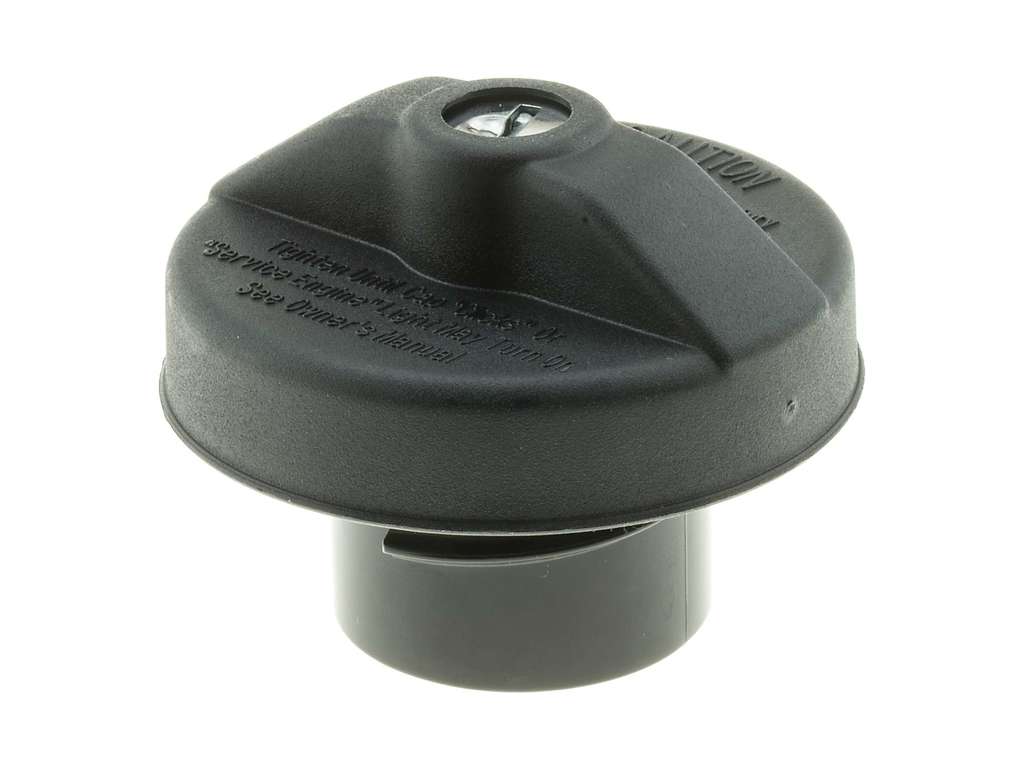
- Loose, Damaged, or Incorrect Gas Cap 🔴 High Probability → Shop Fuel Tank Cap This is the most common cause on virtually all modern vehicles, accounting for 30-40% of P0455 cases. The cap is frequently handled, and its rubber seal can crack, stiffen, or be improperly secured. Using a non-OEM cap can also cause sealing issues.
How to confirm: Remove the gas cap and inspect the rubber O-ring or seal for cracks, stiffness, or damage. Ensure you hear multiple clicks when tightening it. Clean the sealing surfaces on the cap and the fuel filler neck. If the light returns after clearing the code and driving for a few days, the cap was not the issue.
Typical fix: Tighten the cap until it clicks. If the seal is damaged, replace the gas cap with a new OEM part (Hyundai/Genesis P/N 31010-3L600 is a common fit) to ensure a proper seal.
Est. part cost: $20-$45 - Faulty Canister Purge Valve (Purge Solenoid) 🟡 Medium Probability → Shop Vapor Canister This valve is constantly working while the engine runs and can get stuck open, creating a permanent leak path from the EVAP system to the engine intake. This is a frequent failure point on many Hyundai/Genesis/Kia models.
How to confirm: The purge valve is normally closed and located in the engine bay, connected to the intake manifold. With the engine off, disconnect the valve and try to blow through it; if air passes, it's stuck open and faulty. A scan tool can also command the valve to cycle for testing or may show a related P0441 code.
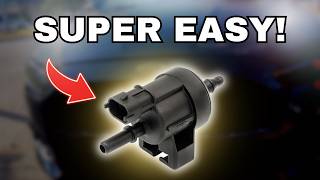
Typical fix: Replace the canister purge valve. 🎬 See this walkthrough on how to replace your purge valve like a pro.
Est. part cost: $40-$70 - Cracked or Disconnected EVAP Hose 🟡 Medium Probability Rubber and plastic hoses become brittle over time due to heat cycles in the engine bay and exposure to elements under the vehicle, leading to cracks, especially at connection points.
How to confirm: Visually inspect all accessible EVAP hoses, from the engine bay to the charcoal canister near the fuel tank. Look for obvious cracks, breaks, or loose connections. A professional smoke test is the most effective way to find a leak that isn't visually obvious.
Typical fix: Replace the cracked section of hose or reconnect a loose fitting.
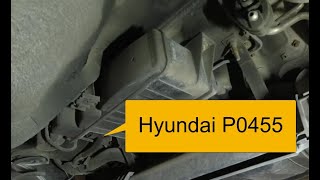
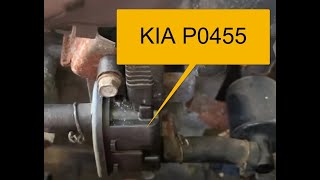
Est. part cost: $10-$50 - Faulty Canister Vent Valve (Canister Close Valve) ⚪ Low Probability → Shop Vapor Canister Located near the charcoal canister under the car, this valve is exposed to road debris and moisture, which can cause it to fail or get stuck open (it is normally open and closes to seal the system for tests).
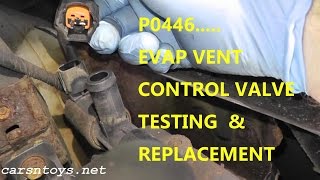
How to confirm: The vent valve is normally open. A scan tool can command it closed for testing. If it fails to close or is stuck, it needs replacement. Testing often involves applying 12V to see if the solenoid actuates and closes the valve. A related P0446 code may also be present.
Typical fix: Replace the canister vent valve/solenoid. On some Hyundai/Genesis models, this is integrated with the charcoal canister.
Est. part cost: $50-$140
Rare But Worth Checking
- Cracked Charcoal Canister: → Shop Vapor Canister The plastic canister housing can be damaged by road debris or develop stress cracks from age, creating a large leak. This is usually found during a smoke test when smoke is seen emitting from the canister body itself.
- Leaking or Rusted Fuel Filler Neck: → Shop Fuel Filler Neck In regions with road salt, the metal fuel filler neck where the gas cap seals can corrode. This rust creates an uneven surface that prevents the gas cap from sealing properly, causing a persistent P0455 code. A visual inspection will show pitting or bubbling paint. Light surface rust can sometimes be cleaned, but a heavily corroded neck needs replacement.
- Faulty Fuel Tank Pressure Sensor: → Shop Fuel Tank Though uncommon, the sensor that monitors EVAP system pressure can fail and give false readings, tricking the ECM into thinking there is a leak. This is more likely if you also see a code like P0452.
Diagnosis Steps
- Read the code with an OBD-II scanner to confirm P0455 is present and check for any other related EVAP codes (e.g., P0441, P0442, P0446).
- Inspect the gas cap. Remove it, check the seal for damage, and reinstall it, ensuring it clicks multiple times. If the seal is bad, replace the cap with an OEM part.
- Clear the code with the scanner and drive the vehicle for a few days (multiple drive cycles) to see if the Check Engine Light returns. If it doesn't, the gas cap was the issue.
- If the light returns, perform a thorough visual inspection of all EVAP hoses and lines running from the engine bay to the fuel tank. Look for any visible cracks, damage, or loose connections.
- Locate the canister purge valve in the engine bay. With the engine off, disconnect the hose and try to blow through the valve. If air passes, the valve is stuck open and must be replaced.
- If the above steps do not reveal the leak, the most effective next step is to have a professional smoke test performed. This test injects harmless, UV-dyed smoke into the EVAP system, and the leak will be revealed by where the smoke escapes. 🎬 Watch: How a professional smoke test identifies the exact leak location. This costs around $100-$150 at a shop.
- Based on the smoke test results, replace the faulty component. This could be a hose, the vent valve (canister close valve), the charcoal canister, or the fuel tank filler neck.
- After the repair, clear the code and perform a complete EVAP drive cycle to confirm the fix.
Parts You'll Likely Need
- Fuel Tank Cap
(OEM #31010-3L600)— This is the most frequent cause of a P0455 code due to a worn or damaged seal, or simply not being tightened properly. Always use an OEM cap for best results.
Trusted brands: Hyundai/Genesis OE
OEM price range: $25-$40
Aftermarket price range: $15-$25 - Canister Purge Valve / Solenoid
(OEM #28910-3F700)— This valve can get stuck open, creating a constant leak path from the EVAP system to the engine intake. It's a common failure point.
Trusted brands: Hyundai/Genesis OE, Bosch, Dorman
OEM price range: $50-$70
Aftermarket price range: $30-$50 - Canister Close Valve (Vent Valve)
(OEM #31430-B1500)— This valve, located near the vapor canister, can fail due to exposure to road elements, getting stuck open and preventing the system from sealing for its pressure test.
Trusted brands: Hyundai/Genesis OE
OEM price range: $90-$140
Aftermarket price range: $60-$90 - Vapor Canister
(OEM #31420-B1500)— Though less common, the plastic housing of the canister can crack from age or impact, causing a large leak. This part fits the 2017 G80 with 3.8L and 5.0L engines.
Trusted brands: Hyundai/Genesis OE
OEM price range: $150-$210
Related Codes That Often Appear With This One
- P0442 — P0442 is for a small EVAP leak. Sometimes a deteriorating component can cause intermittent large and small leak codes as it fails.
- P0456 — P0456 is for a very small EVAP leak. It's less common to see with P0455, but could indicate multiple leak points in the system or a component in the early stages of failure.
- P0441 — P0441 indicates incorrect purge flow, which often points directly to a faulty canister purge valve that may be stuck open or closed.
- P0446 — P0446 indicates a fault in the vent control circuit, often pointing to a problem with the canister vent valve or its wiring.
Platform-Specific Known Issues
- Frustrating Diagnosis Chase: A Hyundai owner on Reddit with a P0455 code reported replacing the purge valve, gas cap, and canister without resolving the issue. This highlights that even after replacing common culprits, a hidden leak in a hose or a faulty fuel tank pressure sensor can persist, often requiring a smoke test to finally locate.
Mechanic-Grade Diagnostic Values
- Canister Purge Valve / Solenoid Resistance — expected: 15 - 30 Ohms. Failure: A reading far outside this range, or an open circuit (infinite resistance), indicates a failed internal coil.
- Canister Close Valve (Vent Valve) Resistance — expected: 20 - 30 Ohms (or up to 50 Ohms depending on design). Failure: A reading outside the expected range for the specific part, or an open circuit, points to a bad solenoid coil.
- Fuel Tank Pressure (FTP) Sensor PID with engine running, purge valve commanded OFF, vent valve commanded ON (closed) — expected: Stable pressure, no significant drop into vacuum.. Failure: A steady drop in pressure (increase in vacuum) indicates the purge valve is mechanically stuck open, allowing engine vacuum to leak into the sealed EVAP system.
Scan Tool Commands That Help
- Hyundai GDS (or equivalent advanced scanner): Actuation Test: EVAP Purge Solenoid Valve — Used to manually command the purge valve to open and close. A technician can listen for a 'click' to confirm the solenoid is activating. It also helps verify the control circuit from the ECM is working.
- Hyundai GDS (or equivalent advanced scanner): Actuation Test: EVAP Canister Vent Valve — Used to command the normally-open vent valve to close, sealing the EVAP system. This is a critical step before performing a system leak test with a smoke machine or by monitoring the Fuel Tank Pressure sensor.
- Hyundai GDS (or equivalent advanced scanner): EVAP System Leak Test — This is an automated test sequence run by the scan tool. It will automatically close the vent valve, monitor the fuel tank pressure sensor, and report whether the system can hold pressure, confirming if a leak is present after a repair.
Model Year Variations Within This Range
- 2017 (for 5.0L engine): The Canister Purge Valve (P/N 28910-3F700) is specified for 5.0L G80 models built from January 12, 2017, onwards, suggesting a potential mid-year part change.
- 2018-2020 (for 3.8L engine): A different purge valve (P/N 28910-3L270) is listed for the 3.8L engine in these model years, indicating a part difference based on engine size.
Diagnostic Flowchart
Other Known Issues on This Vehicle
Issues unrelated to this code that are worth knowing about as an owner of this generation:
- ABS Module Electrical Short 🔴 High — Subject to a major safety recall (NHTSA 21V-490). Affects 2017-2020 G80 models. (Ref: Recall 205 / NHTSA 21V-490. An electrical short in the ABS module can cause an engine compartment fire while parked or driving. The remedy is to replace a fuse in the junction box. Owners are advised to park outdoors away from structures until the repair is completed.)
- Leaking Turbocharger Oil Feed Pipe (3.3T Engine) 🔴 High → Shop Turbocharger — Affects 2018-2020 G80 models with the 3.3L twin-turbo engine. Subject to a safety recall (NHTSA 24V-191). (Ref: Recall 019G / NHTSA 24V-191. The left turbocharger's oil feed pipe can deteriorate from heat, crack, and leak oil onto the hot exhaust manifold, creating a significant fire risk. The fix involves replacing the pipe with an improved part.)
- Sticking Fuel Door Actuator 🟡 Low — A common annoyance where the electronic actuator fails, causing the fuel door to get stuck closed or not latch properly. (Ref: No recall, but a common complaint. The actuator (Part No. 81590-B1000) can be replaced as a DIY job by accessing it through the trunk liner. An emergency release handle is located in the trunk.)
- Engine Reliability by Type 🟠 Medium — General owner consensus suggests the naturally aspirated 3.8L V6 is the most reliable due to its simpler design and long production history. The 3.3T is also considered solid, while the 5.0L V8 has been reported by some owners to have more issues.
Used vs. New Parts: Buying Guide for This Vehicle
When a used part is the smart pick: For this repair, used parts are generally not recommended. The primary failure points are rubber seals (gas cap), electromechanical valves with a finite lifespan (purge/vent valves), and plastic/rubber hoses that become brittle with age. A used part from a junkyard is likely to have similar wear and may fail soon after installation.
Donor-vehicle mileage cap: roughly under 40000 miles for the part to have meaningful remaining life.
What to inspect on the donor part:
- For a gas cap, check that the rubber seal is pliable and free of cracks.
- For hoses, ensure they are flexible and show no signs of cracking, especially at the ends.
- For valves, there is no reliable way to visually inspect their internal condition. Testing resistance with a multimeter before purchase is ideal but often impractical at a junkyard.
OEM-only on this vehicle (don't cheap out):
- Fuel Tank Cap: Aftermarket gas caps are a notorious source of EVAP codes. It is strongly recommended to use a genuine Hyundai/Genesis OEM cap (P/N 31010-3L600) to ensure a perfect seal.
- Canister Purge Valve / Vent Valve: While some aftermarket brands are reputable, the cost savings are often minimal compared to the risk of a poor-quality part failing prematurely. OEM valves are the safest bet for reliability.
Aftermarket brands forum-validated for this vehicle:
- Bosch (for Purge Valve)
Brands owners have reported issues with on this vehicle:
- Unbranded, 'white-box' parts from online marketplaces should be avoided as their quality and fitment are inconsistent and can lead to repeat repairs.
Real Owner Stories
Aggregated from forums and TSBs cited above. Mileages and costs reflect what owners reported in those sources.
2019 Genesis G80
Symptoms: Check Engine Light with a P0455 code; owner was concerned about the urgency of the repair.
What fixed it: The consensus advice was to first check the gas cap seal for cracks and ensure it is clean, or replace it with an OEM cap if the seal is compromised.
Source hint: Reddit - r/Hyundai thread titled 'How urgent to get these P0455 codes checked?'
2017-2020 Genesis G80
Symptoms: P0455 code persisted even after the owner replaced the purge valve, gas cap, and charcoal canister.
What fixed it: The issue required a professional smoke test to locate a hidden leak, potentially in a hose or the fuel tank pressure sensor.
Source hint: Vehicle_specific_issues section: 'Frustrating Diagnosis Chase' (Reddit owner report)
2017 Genesis G80 — ~100 miles
Symptoms: Check Engine Light returned immediately after the gas cap was replaced.
What fixed it: The owner was advised to check for loose vacuum lines in the engine bay and allow for a full drive cycle of up to 100 miles.
Source hint: Reddit - r/MechanicAdvice thread titled 'P0455 - Evaporative Emission System Leak Detected. Replaced Gas cap, light came back on!'
Related OBD-II Codes
Frequently Asked Questions
What is the specific OEM part number for a replacement gas cap on my Genesis G80?
Is the P0455 code an emergency that will damage my 2019 G80 engine?
How long do I need to drive my G80 after a repair for the P0455 code to clear?
Where is the canister purge valve located on the Genesis G80?
Could my P0455 code be related to the ABS module or Turbocharger oil pipe recalls?
Why is the canister vent valve a common failure point on this platform?
Helpful Videos
We Have This Part in Stock


The information in this article is provided for general reference and educational purposes only. Vehicle specifications, procedures, and part compatibility can vary by production date, trim level, and region. Always consult your vehicle's factory service manual and verify part numbers before purchasing or performing repairs. Safety-critical components such as airbags, seat belts, and braking systems should be installed by a qualified professional.
- Genesis G80:
- 🧭 Diagnostic Flowchart
- 🎬 Helpful Videos
- 🛍️ Shop This Part
- What's Unique About the 2017-2020 Genesis G80
- Symptoms You May Notice
- Most Likely Causes
- Rare But Worth Checking
- Diagnosis Steps
- Parts You'll Likely Need
- Related Codes That Often Appear With This One
- Platform-Specific Known Issues
- Mechanic-Grade Diagnostic Values
- Scan Tool Commands That Help
- Model Year Variations Within This Range
- Other Known Issues on This Vehicle
- Used vs. New Parts: Buying Guide for This Vehicle
- Real Owner Stories
- 2019 Genesis G80
- 2017-2020 Genesis G80
- 2017 Genesis G80 — ~100 miles
- Related OBD-II Codes
- Frequently Asked Questions
- 🎟️ Get 5% Off