

P0455 on 2017-2022 Genesis G90: Large EVAP Leak Causes and Fixes
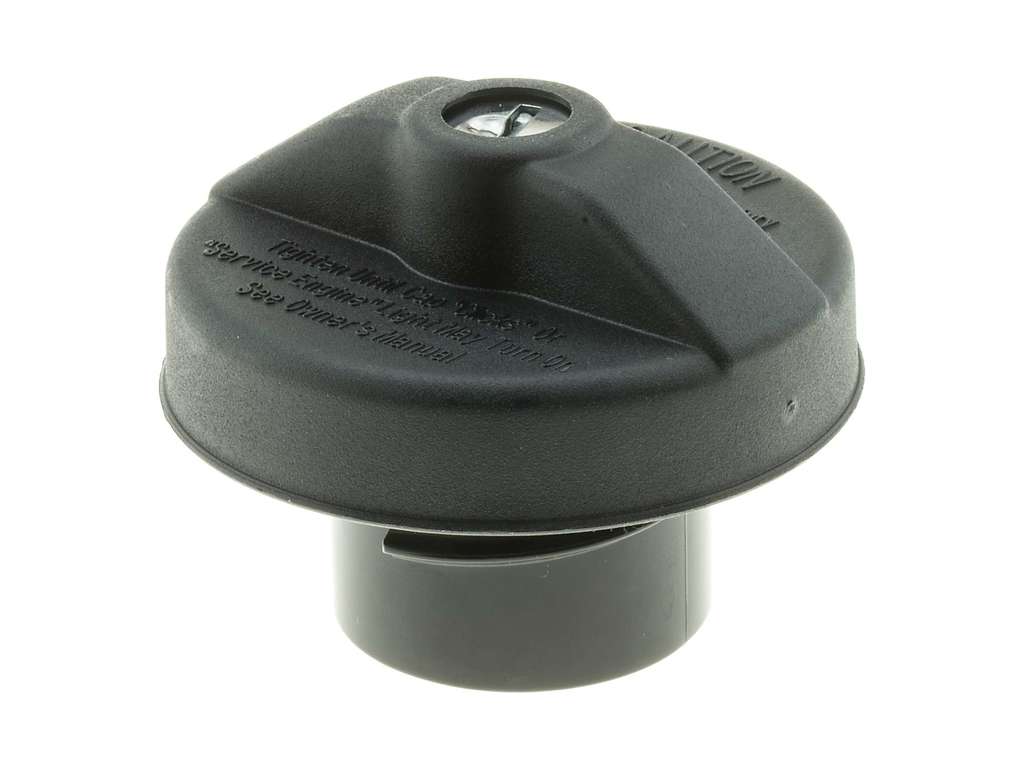
The P0455 code on a Genesis G90 most often points to a loose or faulty gas cap. Before buying any parts, tighten the cap until it clicks and clear the code. If it returns, a new OEM gas cap (Part No. 31010-3L600) is an inexpensive next step. If the cap is not the issue, the canister purge valve is the next most likely culprit.
- P0455 on a Genesis G90 means a large leak has been detected in the emissions system that contains fuel vapors.
- Always check the gas cap first. Ensure it's tight and the seal is intact before assuming a more complex problem.
- The vehicle is safe to drive, but the issue should be fixed to pass an emissions test and prevent fuel vapor pollution.
- If not the gas cap, the most likely culprits are the canister purge valve or a cracked EVAP hose.
- Be aware of part number changes if you need a charcoal canister; the part is different for 2017-2019 vs. 2020-2022 models on the 5.0L V8.
What's Unique About the 2017-2022 Genesis G90
While the causes for a P0455 code on the Genesis G90 are typical for most vehicles, there are specific part variations to be aware of. The 2017-2022 model years span a facelift that occurred in 2020. This led to different part numbers for key EVAP components like the charcoal canister, particularly for the 5.0L V8 engine. While no recalls directly address P0455, Genesis did issue a service campaign (902G) for some vehicles in specific states to install an auxiliary canister to help meet evaporative emission standards, indicating a focus on the EVAP system's integrity.
Generation note: The 2017-2022 year range covers the first generation (HI) of the Genesis G90. This generation had a significant facelift for the 2020 model year, which resulted in styling changes and some different parts. For example, the charcoal canister for the 5.0L V8 uses part number 31420-D2500 for 2017-2019 models and 31420-D2700 for 2020-2022 models.
Symptoms You May Notice
- Check Engine Light is on
- A faint to strong smell of gasoline, especially around the rear of the vehicle or gas cap area.
- Difficulty fueling (the fuel nozzle clicks off repeatedly before the tank is full), which can indicate a clogged canister or vent valve.
- Replacing the charcoal canister before performing a smoke test. The canister is expensive, and the leak is more often a cheaper component like a hose, gas cap, or purge valve.
Most Likely Causes
- Loose, Damaged, or Incorrect Gas Cap 🔴 High Probability → Shop Fuel Tank Cap This is the most common cause on all vehicles, accounting for 30-40% of P0455 cases. 🎬 Watch: Common causes and fixes for the P0455 code The rubber O-ring on the cap can dry out and crack over time, or the cap may not have been tightened properly after refueling.
How to confirm: Inspect the gas cap for any visible cracks on the seal. Remove and reinstall it, ensuring you hear it click at least once. Clear the code and drive for a few days to see if it returns. A worn cap seal is a very common failure point.
Typical fix: Replace the gas cap with a new OEM part (Part No. 31010-3L600). It is often recommended to use an OEM cap, as some aftermarket caps have been known to cause the same code.
Est. part cost: $20-$40 - Faulty Canister Purge Valve (Purge Solenoid) 🟡 Medium Probability → Shop Vapor Canister The purge valve controls the flow of fuel vapors from the canister to the engine. It can get stuck open, creating a constant leak that the system detects. This is a common failure point on many Hyundai/Genesis/Kia vehicles.
How to confirm: With the engine off, disconnect the valve (located in the engine bay) and try to blow through it. If air passes through, it is stuck open and has failed. A mechanic can also command it open and closed with a scan tool to test its function.
Typical fix: Replace the canister purge valve.
Est. part cost: $35-$135 - Cracked or Disconnected EVAP Hoses 🟡 Medium Probability Rubber and plastic hoses throughout the EVAP system can become brittle and crack with age and exposure to heat. A disconnected hose, especially a large one, creates a gross leak instantly.
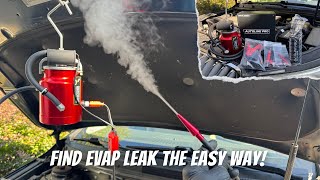
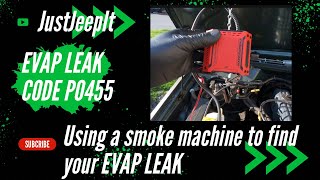
How to confirm: Visually inspect all accessible EVAP hoses, which are typically black plastic or rubber lines running from the fuel tank area towards the engine bay. Look for obvious cracks, breaks, or loose connections. A smoke test is the definitive way to find a leak in a hose. 🎬 See how to find leaks using a professional smoke machine
Typical fix: Replace the damaged section of hose or re-secure a loose clamp.
Est. part cost: $10-$50 - Failed Charcoal Canister ⚪ Low Probability → Shop Vapor Canister The plastic housing of the canister can crack from road debris impact or age. Also, consistently overfilling the fuel tank (topping off) can saturate the charcoal with liquid fuel, causing it to fail and potentially trigger other EVAP codes.
How to confirm: Visually inspect the canister (located near the fuel tank) for any physical damage or cracks. A smoke test will show smoke exiting from a crack in the canister body.
Typical fix: Replace the charcoal canister assembly.
Est. part cost: $200-$700
Rare But Worth Checking
- Faulty Canister Vent Valve: → Shop Vapor Canister This valve is normally open and closes to seal the system for testing. If it gets stuck and won't close, the system can't seal and will log a leak code. It's less common to fail than the purge valve but should be tested, especially if seen with a code like P0446.
- Cracked Fuel Tank Filler Neck: → Shop Fuel Tank Rust or damage to the metal pipe leading to the fuel tank can cause a leak where the gas cap seals, preventing a proper seal even with a good cap.
- Faulty Fuel Tank Pressure (FTP) Sensor: → Shop Fuel Tank In rare cases, the sensor that measures pressure and vacuum in the tank can fail, sending incorrect readings to the ECM and tricking it into setting a P0455 code. This failure usually sets its own specific code but can be a contributing factor.
Diagnosis Steps
- Read the code with an OBD-II scanner and note any other codes present.
- Inspect the gas cap. Ensure it is tight and the seal is not cracked or worn. If in doubt, replace it with an OEM cap (Part No. 31010-3L600), clear the codes, and drive for a few days.
- If the code returns, perform a thorough visual inspection of all visible EVAP hoses under the hood and around the fuel tank area for obvious cracks or disconnections.
- Locate and test the canister purge valve. It is a normally closed valve; if you can blow through it when it's disconnected and unpowered, it has failed and needs replacement.
- If the previous steps do not reveal the issue, the most effective next step is a professional smoke test. A machine fills the EVAP system with a harmless, visible smoke. The leak will be found wherever smoke escapes.
- Based on the smoke test results, replace the leaking component, which could be a hose, the charcoal canister, the vent valve, or the fuel tank filler neck.
- After repair, clear the code and perform a drive cycle to confirm the fix.
Parts You'll Likely Need
- Gas Cap
(OEM #31010-3L600)— This is the most frequent and simple cause of a P0455 code due to improper tightening or a worn seal.
Trusted brands: Genesis (OEM)
OEM price range: $20-$40
Aftermarket price range: $15-$30 - Canister Purge Valve
(OEM #28910-3L270)— This valve is a common failure point, often getting stuck open and creating a large vacuum leak.
Trusted brands: Genesis (OEM), Dorman
OEM price range: $100-$135
Aftermarket price range: $30-$70 - Charcoal Canister (5.0L V8, 2017-2019)
(OEM #31420-D2500)— Needed if the canister body is cracked or internally damaged. Part number is specific to pre-facelift V8 models.
Trusted brands: Genesis (OEM)
OEM price range: $250-$350 - Charcoal Canister (5.0L V8, 2020-2022)
(OEM #31420-D2700)— Needed if the canister body is cracked or internally damaged. Part number is specific to facelifted V8 models.
Trusted brands: Genesis (OEM)
OEM price range: $300-$400
Related Codes That Often Appear With This One
- P0442 — This code for a 'small leak' may appear alongside P0455 if the system has multiple leak points or if a failing component is intermittent.
- P0456 — Similar to P0442, this code for a 'very small leak' can accompany P0455, often pointing to a deteriorating gas cap seal or multiple small cracks in hoses.
- P0457 — This code specifically indicates a leak detected due to a loose or missing fuel cap, which is a primary cause of P0455.
Technical Service Bulletins (TSBs) & Recalls
- Service Campaign 902G: For certain states, dealers were instructed to install an auxiliary canister assembly between the main canister and the Canister Close Valve (CCV) to 'help prevent exceed the evaporative emission standards'. This does not directly address a P0455 leak but shows manufacturer attention to the EVAP system's performance and potential for vapor escape.
Mechanic-Grade Diagnostic Values
- Canister Purge Valve Solenoid Resistance — expected: 15 to 30 Ohms. Failure: A reading significantly outside this range indicates a faulty internal coil in the valve.
- Fuel Tank Pressure (FTP) Sensor Live Data (Scan Tool) — expected: Pressure should not drop rapidly when the purge valve is commanded OFF and the vent valve is commanded ON (closed).. Failure: A steady drop in pressure (build-up of vacuum) during this test indicates the purge valve is mechanically stuck open.
Scan Tool Commands That Help
- GDS (or advanced OBD-II scanner): EVAP System Leak Test / Active Test — This function allows the technician to manually command the purge and vent valves to seal the system. It's used to verify valve functionality and to prepare the system for a smoke test.
- GDS (or advanced OBD-II scanner): Purge Valve Control (ON/OFF) — Used to test if the purge valve is stuck open. With the engine running, command the valve OFF and the vent valve ON (closed). Monitor the Fuel Tank Pressure (FTP) sensor. If vacuum builds (pressure drops), the purge valve is leaking.
- GDS (or advanced OBD-II scanner): Vent Valve Control (ON/OFF) — Used to test if the vent valve can seal the system. Commanding the valve ON should close it, allowing the system to be pressurized for a leak test. If it fails to close, a large leak code like P0455 will be set during the ECM's self-test.
Wiring & Ground Locations
- Charcoal Canister / Vent Valve — At the rear of the vehicle, typically mounted near the fuel tank, often above the rear subframe.. This is the location for several key EVAP components. Physical damage from road debris can crack the canister, and corrosion can affect the vent valve connector, both causing a P0455.
- Canister Purge Valve — In the engine bay, usually mounted on or near the intake manifold with two hoses and an electrical connector.. This valve is a common failure point. Its location in the hot engine bay can make its plastic housing and connected rubber hoses brittle over time, leading to cracks and leaks.
Model Year Variations Within This Range
- 2017-2019 (5.0L V8): The charcoal canister used is part number 31420-D2500.
- 2020-2022 (5.0L V8): The charcoal canister was updated for the facelifted model to part number 31420-D2700.
Diagnostic Flowchart
Other Known Issues on This Vehicle
Issues unrelated to this code that are worth knowing about as an owner of this generation:
- Left Turbocharger Oil Feed Pipe Leak (3.3T Engine) 🔴 High → Shop Turbocharger — Common enough to trigger a recall (NHTSA #24V191000) affecting 2017-2022 models. The pipe can deteriorate and leak oil onto hot engine components. (Ref: Recall 24V191000 / 019G)
- Starter Solenoid Water Intrusion 🔴 High — Affects 2017-2019 models. Water can enter the starter solenoid, causing an electrical short and potential engine compartment fire, even when parked. (Ref: Recall 018G)
- Fuel Pump Failure 🔴 High → Shop Fuel Pump — A recall was issued for 2022-2023 models where the fuel pump can fail, leading to a loss of drive power. (Ref: Recall 24V282000 / 022G)
- A/C Evaporator Failure 🟠 Medium — Some owners on forums report recurring A/C issues where the system stops blowing cold air, requiring repeated evaporator replacements. One owner was told new refrigerant types may be causing premature failure. (Ref: TSB 25-01-019G-1 addresses A/C seal washers on newer models but no specific recall for this evaporator issue.)
- Panoramic Sunroof Creak/Noise 🟡 Low — A common complaint across several Genesis models, including the G90's platform mate G80. The sunroof assembly can develop creaks and rattling noises over time.
- Limited Aftermarket Parts Support 🟠 Medium — Owners report that due to the G90's low production volume, many service parts are only available through the OEM dealer network, leading to high repair costs for non-warranty work (e.g., an inner tie rod requiring a full steering rack replacement).
Used vs. New Parts: Buying Guide for This Vehicle
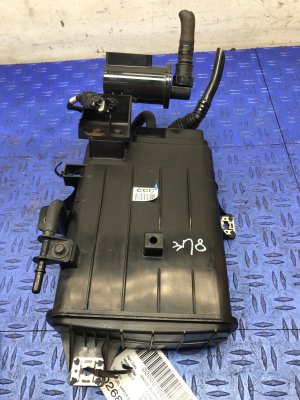
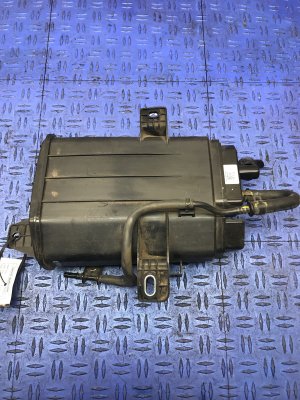
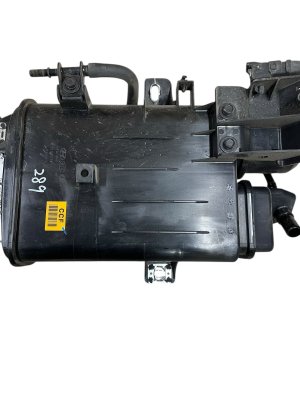
When a used part is the smart pick: A used OEM charcoal canister from a low-mileage, accident-free donor vehicle can be a good value, as new OEM units are expensive and aftermarket versions are not common for this model. Simple hoses and lines can also be sourced from a junkyard if they are in good, pliable condition.
Donor-vehicle mileage cap: roughly under 60000 miles for the part to have meaningful remaining life.
What to inspect on the donor part:
- For a charcoal canister, physically inspect the plastic body for any cracks, especially around the mounting tabs and hose ports.
- Ensure all hose connection nipples are intact and not broken or brittle.
- Check the donor vehicle's history if possible to avoid parts from flood or severe-impact vehicles.
- For hoses, bend them to check for pliability; if they are hard or show surface cracking, do not buy them.
OEM-only on this vehicle (don't cheap out):
- Gas Cap: Many owners of Hyundai/Genesis vehicles report that aftermarket gas caps fail to seal properly and cause the EVAP code to return. An OEM cap is strongly recommended.
- Canister Purge Valve / Vent Valve: While cheaper aftermarket options from brands like Dorman exist, some users report fitment issues with connectors or premature failure. For critical emissions components that require precise operation, OEM is the most reliable choice.
Aftermarket brands forum-validated for this vehicle:
- Standard Motor Products (SMP) is often cited by mechanics as a reliable alternative to OEM for electronic components like purge or vent valves if an OEM part is unavailable.
Brands owners have reported issues with on this vehicle:
- Dorman: Some users have reported issues with fitment and longevity for EVAP system components on Hyundai/Kia/Genesis vehicles.
- Unbranded/white-box parts from online marketplaces are a gamble and often fail to meet the precise sealing requirements of the EVAP system.
Real Owner Stories
Aggregated from forums and TSBs cited above. Mileages and costs reflect what owners reported in those sources.
2017-2022 Genesis G90
Symptoms: Owners report that due to low production volume, many service parts are only available through the OEM dealer network, leading to high repair costs for non-warranty work.
What fixed it: Replacing parts with OEM components sourced through the dealer network, as aftermarket support is limited.
Source hint: Reddit r/GenesisMotors thread titled 'Genesis G90 common problems'
Related OBD-II Codes
Frequently Asked Questions
Does Service Campaign 902G for the Genesis G90 fix the P0455 gross leak code?
Which gas cap part number should I use for my 2017-2022 Genesis G90 to resolve EVAP issues?
Is the P0455 code common on other Genesis or Kia models with the same engine?
Can overfilling my G90's gas tank cause the P0455 code?
Where is the canister purge valve located on the Genesis G90 for testing?
Why are repair costs for the G90 often higher than other vehicles?
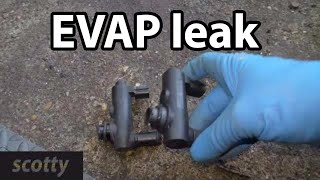
Helpful Videos
Used OEM Parts in Stock
New Aftermarket Parts Available


The information in this article is provided for general reference and educational purposes only. Vehicle specifications, procedures, and part compatibility can vary by production date, trim level, and region. Always consult your vehicle's factory service manual and verify part numbers before purchasing or performing repairs. Safety-critical components such as airbags, seat belts, and braking systems should be installed by a qualified professional.
- Genesis G90:
- 🧭 Diagnostic Flowchart
- 🎬 Helpful Videos
- 🛍️ Shop This Part
- What's Unique About the 2017-2022 Genesis G90
- Symptoms You May Notice
- Most Likely Causes
- Rare But Worth Checking
- Diagnosis Steps
- Parts You'll Likely Need
- Related Codes That Often Appear With This One
- Technical Service Bulletins (TSBs) & Recalls
- Mechanic-Grade Diagnostic Values
- Scan Tool Commands That Help
- Wiring & Ground Locations
- Model Year Variations Within This Range
- Other Known Issues on This Vehicle
- Used vs. New Parts: Buying Guide for This Vehicle
- Real Owner Stories
- 2017-2022 Genesis G90
- Related OBD-II Codes
- Frequently Asked Questions
- 🎟️ Get 5% Off