

P0455 on 2004-2011 GMC Canyon: EVAP Large Leak Causes and Fixes
The P0455 code on a 2004-2011 GMC Canyon indicates a large leak in the evaporative emissions (EVAP) system. The most common and cheapest fix is to inspect and replace the gas cap. If that doesn't solve it, the next most likely culprit is a faulty EVAP canister vent solenoid, a well-documented failure point on this platform.
- P0455 on your GMC Canyon means there's a large leak in the fuel vapor system.
- Always start with the simplest fix: check that your gas cap is tight and its seal is intact. A new gas cap is a cheap and common solution.
- If the gas cap isn't the issue, the EVAP canister vent solenoid (located near the spare tire) is the next most likely culprit on this specific truck.
- Other potential causes include a stuck-open purge valve (in the engine bay) or cracked EVAP hoses.
- While the code won't stop you from driving, it will cause an automatic failure on an emissions test.
What's Unique About the 2004-2011 Gmc CANYON
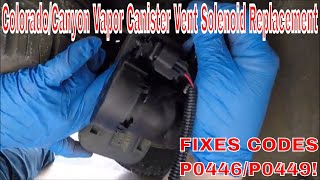
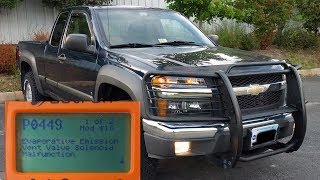
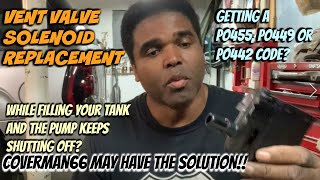
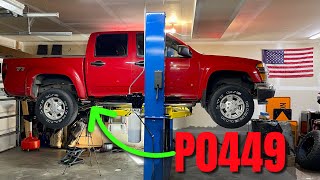
For the first-generation GMC Canyon and its platform mates (Chevy Colorado, Hummer H3), the P0455 code is frequently linked to the EVAP canister vent solenoid. This component is located near the charcoal canister by the spare tire and is a well-documented failure point for these trucks, often getting stuck open or leaking. This can cause issues with refueling, hard starts after filling the tank, and the simultaneous appearance of code P0449, which specifically points to the vent valve circuit. 🎬 See how to fix the common P0449 vent valve error. While the gas cap is always the first check, owners of this platform should pay close attention to the vent solenoid.
Diagnostic Flowchart
Tap your situation to follow the diagnostic path that matches what you're seeing on this vehicle.
Symptoms You May Notice
- Check Engine Light is on
- A noticeable smell of fuel, especially when parked or after refueling.
- Difficulty starting the engine immediately after refueling (often points to a stuck-open purge valve).
- Fuel pump nozzle clicks off repeatedly or prematurely when filling the gas tank.
- Rough idle if the purge valve is stuck open, creating a vacuum leak.
- Replacing the purge valve in the engine bay when the more common failure point on this platform is the vent valve solenoid under the truck.
- Replacing O2 sensors or other unrelated emissions components before properly diagnosing the EVAP system with a visual inspection or smoke test.
- Assuming the gas cap is good without checking the seal. A cap can click but still leak if the seal is old and hard.
Most Likely Causes
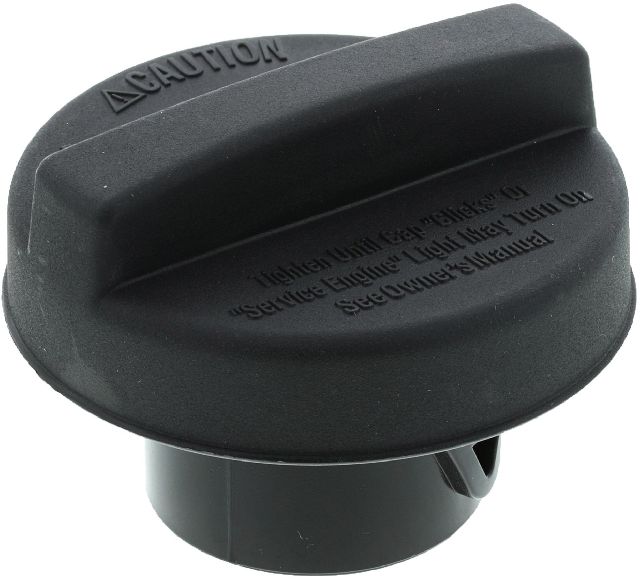
- Loose, Damaged, or Incorrect Gas Cap 🔴 High Probability → Shop Fuel Tank Cap This is the most common cause for a P0455 code on any vehicle, as the cap's seal can wear out or the cap can be left loose after refueling. Aftermarket or incorrect caps can also fail to seal properly.
How to confirm: Inspect the gas cap for cracks or damage to the rubber seal. Ensure it is tightened until it clicks at least once. A worn or stiff seal is a common failure point. If the code appeared shortly after a fill-up, this is the first thing to check.
Typical fix: Tighten or replace the gas cap.
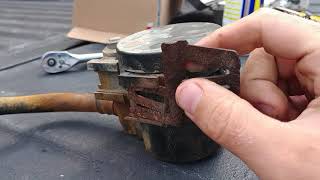
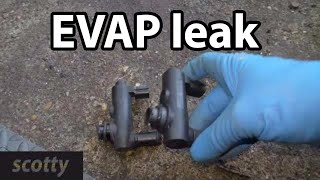
Est. part cost: $10-$25 - Faulty EVAP Canister Vent Valve Solenoid 🔴 High Probability → Shop Vapor Canister The vent solenoid on the Canyon/Colorado/H3 platform is a frequent failure point. Located under the truck near the spare tire, it is exposed to road debris and moisture, causing it to get stuck open or its wiring to corrode, preventing the EVAP system from sealing for its pressure test. In cold climates, moisture can enter the solenoid housing, freeze, and crack the plastic body open.
How to confirm: The valve is located near the charcoal canister, under the truck bed. It can be tested by applying 12V power to see if it actuates (clicks). A professional mechanic would use a scan tool to command it closed and a smoke machine to see if it's leaking. Often, this failure is accompanied by code P0449.
Typical fix: Replace the EVAP canister vent valve solenoid. It is often sold as an assembly with a new hose. Some replacement parts may require a wiring harness adapter.
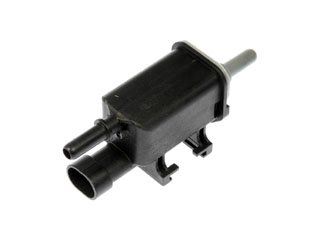
Est. part cost: $30-$100 - Faulty EVAP Purge Valve/Solenoid 🟡 Medium Probability → Shop Vapor Canister The purge valve, located in the engine bay, can get stuck open. This creates a constant vacuum leak into the engine and prevents the system from sealing properly for the self-test. This issue often triggers code P0496 as well.
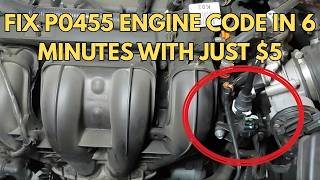
How to confirm: The purge valve is located in the engine bay, often on top of the intake manifold. Disconnect the valve and try to blow through it; if air passes through when unpowered, it is stuck open and needs to be replaced.
Typical fix: Replace the purge valve solenoid. Access can be tight on some engine configurations.
Est. part cost: $25-$70 - Cracked or Disconnected EVAP Hoses ⚪ Low Probability Rubber and plastic hoses can become brittle and crack over time due to age and exposure to the elements, especially in colder climates. Connections can also become loose.
How to confirm: Visually inspect all accessible EVAP lines running from the fuel tank, to the charcoal canister, and up to the engine bay. A smoke test is the most effective way to find a hard-to-see crack or leak.
Typical fix: Replace the cracked or broken section of hose.
Est. part cost: $5-$30
Rare But Worth Checking
- Cracked Charcoal Canister: → Shop Vapor Canister The canister itself can be damaged by road debris or develop cracks, causing a large leak. Inspect it for any visible damage while checking the vent solenoid.
- Leaking Fuel Tank or Filler Neck: → Shop Fuel Tank Rust or physical damage can cause leaks in the fuel tank or the filler neck where you insert the gas nozzle. This is more common in regions that use road salt. Some owners have reported cracks near the fuel tank pressure sensor mounting point.
- Faulty Fuel Tank Pressure Sensor (FTPS): → Shop Fuel Tank A faulty sensor can incorrectly report a large leak to the ECM when there is none. This usually triggers other codes alongside P0455, such as P0452. In some cases, the sensor may fail to register a pressure change during the EVAP test, leading to a false P0455 code.
Diagnosis Steps
- Check the gas cap. Remove it, inspect the seal for cracks or hardness, and reinstall it, ensuring it clicks several times. If the seal is suspect, replace it. This is the cheapest and most common fix.
- If the code returns, perform a thorough visual inspection of all accessible EVAP hoses and components. Look for obvious cracks, damage, or disconnected lines, particularly around the charcoal canister and the lines running to the engine.
- Locate the EVAP canister vent solenoid under the rear of the truck, usually near the spare tire. Inspect it and its wiring for damage or corrosion. Given its high failure rate on this platform, it is a primary suspect if the gas cap is good.
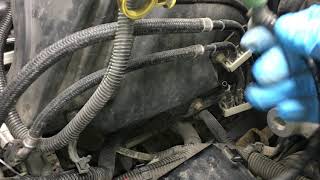
- Locate the EVAP purge valve in the engine bay. Test it to see if it's stuck open by removing it and attempting to blow through it (no air should pass when unpowered).
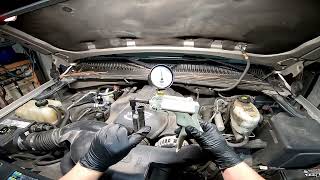
- If no obvious issues are found, the most effective diagnostic method is a smoke test. This involves injecting smoke into the EVAP system (usually via a service port) and looking for where it escapes. This can pinpoint the exact location of a hard-to-find leak in a hose, the canister, or the fuel tank filler neck.
- If the vent or purge solenoids are suspected, they can be tested with a scan tool that has bi-directional controls or by applying a 12V source to check for an audible 'click'.
Parts You'll Likely Need
- Gas Cap
(OEM #25827646)— This is the most frequent and simplest fix for a P0455 code due to a worn seal or improper tightening.
Trusted brands: ACDelco, Stant
OEM price range: $20-$30
Aftermarket price range: $10-$20 - EVAP Canister Vent Valve Solenoid
(OEM #20907779 (supercedes 10386359, 25948082))— This part is a known high-failure item on the 2004-2011 GMC Canyon and its platform mates, often getting stuck open. Note: Some replacements may require a jumper harness (p/n 19257603 or 22845506) if the connector style has been updated.
Trusted brands: ACDelco, Dorman (p/n 911-070)
OEM price range: $60-$100
Aftermarket price range: $30-$65 - EVAP Canister Purge Valve Solenoid
(OEM #12597567)— This valve can stick open, causing a constant leak that the computer detects as P0455. Often accompanied by code P0496.
Trusted brands: ACDelco (p/n 214-1680), Dorman (p/n 911-032)
OEM price range: $40-$70
Aftermarket price range: $25-$50
Related Codes That Often Appear With This One
- P0442 — This code indicates a small EVAP leak. It can appear with P0455 if the system has multiple leaks or if a large leak began as a small one.
- P0449 — This code specifically points to a fault in the EVAP vent valve solenoid circuit. It is extremely common to see P0449 alongside P0455 on these trucks, strongly indicating the vent solenoid is the root cause.
- P0496 — This code indicates 'EVAP Flow During a Non-Purge Condition,' which often points directly to a stuck-open purge valve solenoid in the engine bay.
Technical Service Bulletins (TSBs) & Recalls
- 21-NA-124: A General Motors Technical Service Bulletin providing diagnostic advice for testing EVAP system leaks related to codes P0442 and/or P0455. It advises checking line connections first, then the vent valve, then the purge valve.
Platform-Specific Known Issues
- The EVAP canister vent solenoid is a particularly common failure point on this platform, often leading to P0449 and P0455 codes. Its location under the truck makes it susceptible to rust and damage.
- Accessing the purge valve solenoid in the engine bay can be difficult; some owners find it easiest to remove the plastic engine cover for better access.
- Some replacement vent solenoids use a different electrical connector than the original factory part, requiring the purchase of a separate adapter harness (e.g., ACDelco p/n 19257603) to complete the installation without cutting wires.
Mechanic-Grade Diagnostic Values
- EVAP Canister Purge Valve Resistance — expected: 30 to 38 Ohms. Failure: A reading significantly outside this range indicates a faulty valve coil.
- EVAP Canister Vent Solenoid Resistance — expected: 48 to 65 Ohms. Failure: A reading outside this range suggests a failed solenoid coil.
- Fuel Tank Pressure (FTP) Sensor Voltage (Key On, Engine Off) — expected: ~1.5 Volts (representing atmospheric pressure). Failure: A reading significantly different from 1.5V at rest, or a reading that doesn't change when a vacuum is applied during a test, can indicate a faulty sensor.
Scan Tool Commands That Help
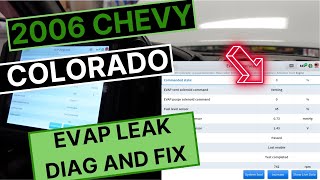
- GM Tech 2 / Professional Scan Tool: EVAP Service Bay Test — To command the vehicle's computer to run a full, automated EVAP leak test without needing to perform a drive cycle. This is useful for verifying a fix or quickly testing the system's integrity in a shop setting.
- Professional Scan Tool: Purge and Seal — This function closes the vent solenoid and commands the purge solenoid to create a vacuum in the tank, then seals the system to monitor for vacuum decay. It's a direct way to test if the system can hold a vacuum and to monitor the Fuel Tank Pressure sensor's response.
- Professional Scan Tool: Vent Solenoid On/Off Command — Used to manually command the vent solenoid closed during a smoke test. Since the vent solenoid is normally open, you must command it closed to pressurize the system and check for leaks. If smoke still escapes from the vent, the solenoid is faulty.
Wiring & Ground Locations
- SP-105 — Located on the driver's side of the engine bay, near the battery.. This is a major ground splice pack that provides the ground path for the fuel pump and fuel-level sender. A poor connection here can cause erratic fuel system behavior, though it's less likely to directly cause a P0455, it's a critical system ground to check for overall fuel system health.
- SP-106 — Located on the passenger's side of the engine bay, behind the engine airbox.. This ground splice pack serves the HVAC control module and Data Link Connector (DLC). While not directly tied to the EVAP system, a bad ground here can cause various bizarre electronic issues and is a known trouble spot on this platform.
Real Owner Repair Stories
- YouTube user 'murph' (2007 Chevy Colorado) — Check engine light with codes P0455 and P0449.
❌ Tried (didn't work) Directly diagnosed based on the P0449 code pointing to the vent valve.
✅ What actually fixed it Replaced the EVAP canister vent valve solenoid. The user noted this is a very high-failure rate part and replacing it resolved both codes. - YouTube user 'Auto Detour' (2006 Chevy Colorado ('Uncle Rusty')) — Check engine light with EVAP code P0449.
✅ What actually fixed it Replaced the EVAP canister vent solenoid. The video clearly shows the cause of failure: the plastic housing of the solenoid had split open, likely from moisture getting inside, freezing, and expanding. - GMTNation forum user 'Njg425' (2004 Trailblazer (similar GM EVAP system)) — P0455 code appeared suddenly.
❌ Tried (didn't work) Considered a fuel filler neck recall issue.
✅ What actually fixed it Replacing the gas cap due to a bad seal. This serves as a strong reminder to always check the simplest cause first. - YouTube user 'Super Lube Auto' (2010 GMC (likely Sierra, but diagnosis applies to Canyon)) — P0455 Large Leak Detected.
❌ Tried (didn't work) A scan tool 'Purge and Seal' test failed to pull a vacuum, suggesting a large leak.
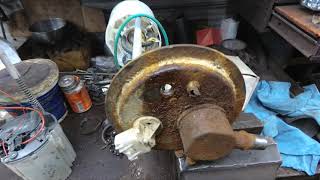
✅ What actually fixed it The Fuel Tank Pressure (FTP) sensor had failed and was not registering the pressure drop during the test, falsely triggering the P0455 code. The actual root cause was a bad sensor, not a physical leak. A separate, real leak was then found at the fuel pump outlet line during the repair.
"I Checked Everything" — The Actual Cause
- A P0455 code can be triggered even if a smoke test shows no leaks. In one documented case, the code was caused by a faulty Fuel Tank Pressure (FTP) sensor. The EVAP self-test commanded a vacuum, but the sensor failed to report the change in pressure. The Engine Control Module (ECM) interpreted this lack of change as a failure to create vacuum, logging it as a large leak. The actual problem was the sensor's inability to report data, not a physical hole in the system.
OEM Part Supersession History
10386359, 25948082→20907779— The EVAP Canister Vent Valve Solenoid was updated by GM.
Heads up: The updated part (20907779) has a different electrical connector than the original factory-installed solenoids. A wiring harness adapter (p/n 19257603 or 22845506) is required to connect the new solenoid to the original vehicle harness without cutting and splicing wires.
Helpful Videos

Used OEM Parts in Stock

New Aftermarket Parts Available


The information in this article is provided for general reference and educational purposes only. Vehicle specifications, procedures, and part compatibility can vary by production date, trim level, and region. Always consult your vehicle's factory service manual and verify part numbers before purchasing or performing repairs. Safety-critical components such as airbags, seat belts, and braking systems should be installed by a qualified professional.
- Gmc CANYON:
- 🧭 Diagnostic Flowchart
- 🎬 Helpful Videos
- 🛍️ Shop This Part
- What's Unique About the 2004-2011 Gmc CANYON
- Symptoms You May Notice
- Most Likely Causes
- Rare But Worth Checking
- Diagnosis Steps
- Parts You'll Likely Need
- Related Codes That Often Appear With This One
- Technical Service Bulletins (TSBs) & Recalls
- Platform-Specific Known Issues
- Mechanic-Grade Diagnostic Values
- Scan Tool Commands That Help
- Wiring & Ground Locations
- Real Owner Repair Stories
- "I Checked Everything" — The Actual Cause
- OEM Part Supersession History
- 🎟️ Get 5% Off