

P0455 on 2002-2006 GMC Envoy XL: EVAP Gross Leak Causes and Fixes
P0455 on a GMC Envoy XL indicates a large leak in the fuel vapor system. The most common and inexpensive fix is to tighten or replace a faulty gas cap. If that doesn't solve it, the next most likely cause is a bad EVAP vent solenoid located near the fuel tank, which costs around $25-$65 for the part. A cracked or stuck purge solenoid in the engine bay is another common culprit.
- P0455 signifies a large leak in the EVAP system, which is not critical to vehicle operation but will cause an emissions test failure.
- Always start with the simplest fix: check that the gas cap is a tight, OEM-spec part. This resolves a high percentage of cases.
- The EVAP vent solenoid near the fuel tank is the second most common failure point on the GMC Envoy XL and its platform mates due to its exposed location.
- If the cap and solenoids don't fix the issue, a smoke test is essential to find less obvious leaks like a rusted fuel filler neck or cracked hose.
What's Unique About the 2002-2006 Gmc ENVOY XL
On the GMT360 platform, which includes the GMC Envoy XL, Chevrolet Trailblazer, and Buick Rainier, the EVAP vent solenoid is notoriously prone to failure. It is mounted on a bracket near the fuel tank and spare tire, exposing it to road salt, moisture, and debris. This constant exposure often causes the valve's plastic housing to crack or the internal solenoid to get stuck open, making it a primary suspect for a P0455 code on these specific vehicles. Additionally, the fuel filler neck is susceptible to rust-through in salt-belt states, creating a large leak that is often misdiagnosed.
Diagnostic Flowchart
Tap your situation to follow the diagnostic path that matches what you're seeing on this vehicle.
Symptoms You May Notice
- Check Engine Light is on
- A noticeable fuel smell, especially after refueling or around the rear of the vehicle.
- A loose-fitting or damaged gas cap
- Difficulty refueling, where the gas pump nozzle clicks off repeatedly before the tank is full.
- Replacing the expensive charcoal canister when the problem is a much cheaper vent solenoid or hose.
- Replacing the purge valve in the engine bay when the more common failure point on this vehicle is the vent solenoid at the rear.
- Assuming the gas cap is good just because it's new. Aftermarket caps are a frequent cause of persistent P0455 codes; using an OEM ACDelco cap is highly recommended.
Most Likely Causes
- Loose, Damaged, or Incorrect Gas Cap 🔴 High Probability → Shop Fuel Tank Cap The gas cap is a frequently handled part and its seal can wear out over time, leading to an improper seal. Using non-OEM caps can also cause sealing issues, as confirmed by owners who fixed the code only after switching to an ACDelco cap.
How to confirm: Ensure the cap is tightened until it clicks at least three times. Remove the cap and inspect its rubber O-ring for cracks, stiffness, or tearing. A visual inspection may not be enough; even a new-looking aftermarket cap can leak.
Typical fix: Tighten the cap. If the seal is damaged or the code returns, replace the gas cap with a new OEM part (ACDelco GT294 / GM 15256379). This is the cheapest and most important first step.
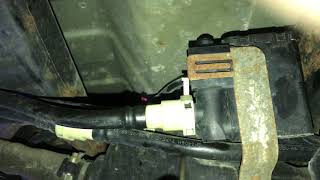
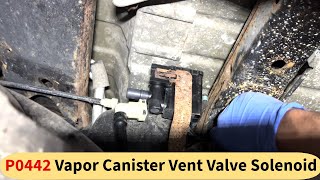
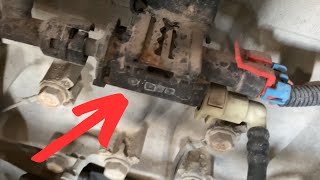
Est. part cost: $15-$30 - Faulty EVAP Vent Solenoid 🔴 High Probability → Shop Vapor Canister The vent solenoid is located near the rear axle, by the fuel tank, where it is exposed to road debris, water, and salt, causing it to fail or its electrical connector to corrode. It commonly gets stuck open, creating a permanent large leak.
How to confirm: Locate the solenoid near the fuel tank, accessible from behind the rear passenger tire. Visually inspect it and its connector for cracks and corrosion. A mechanic can command it closed with a scan tool and perform a smoke test to see if it's stuck open. Often, replacement is done based on high probability after the gas cap is ruled out.
Typical fix: Replacement of the vent solenoid. This is often a straightforward DIY job that takes less than 15 minutes with a flathead screwdriver.
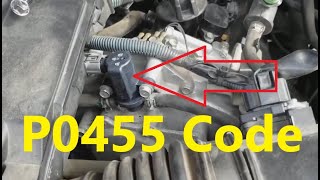
Est. part cost: $25-$65 - Faulty EVAP Purge Solenoid/Valve 🟡 Medium Probability → Shop Vapor Canister This valve, located on the engine block, can get stuck open due to age or carbon contamination, creating a vacuum leak that the system interprets as a large leak.
How to confirm: The purge valve is located in the engine bay near the intake manifold. When unpowered, it should be closed. Disconnect the hoses and try to blow through it; if air passes, it's stuck open and needs replacement. A stuck-open purge valve can sometimes cause a rough idle immediately after refueling.
Typical fix: Replacement of the purge solenoid. It is typically held by a simple bracket and is easy to access and replace.
Est. part cost: $20-$50 - Cracked or Disconnected EVAP Hose ⚪ Low Probability Rubber hoses become brittle and crack with age and exposure to heat cycles. A specific failure point noted by owners is the quick-connector on the EVAP line near the vent solenoid, which can break or not be seated properly after service.
How to confirm: Visually inspect all accessible EVAP lines between the engine, charcoal canister, and fuel tank for obvious cracks or disconnections. A smoke test is the most reliable way to find a hard-to-see leak.
Typical fix: Replace the cracked section of hose or reconnect a loose line.
Est. part cost: $5-$20
Rare But Worth Checking
- Cracked Fuel Filler Neck: → Shop Fuel Filler Neck Rust can perforate the metal filler neck where it enters the fuel tank, creating a large leak. This is more common in regions that use road salt. A smoke test will quickly reveal smoke billowing from the filler neck area. Several owners on forums have confirmed this was the ultimate fix after replacing both solenoids and the gas cap.
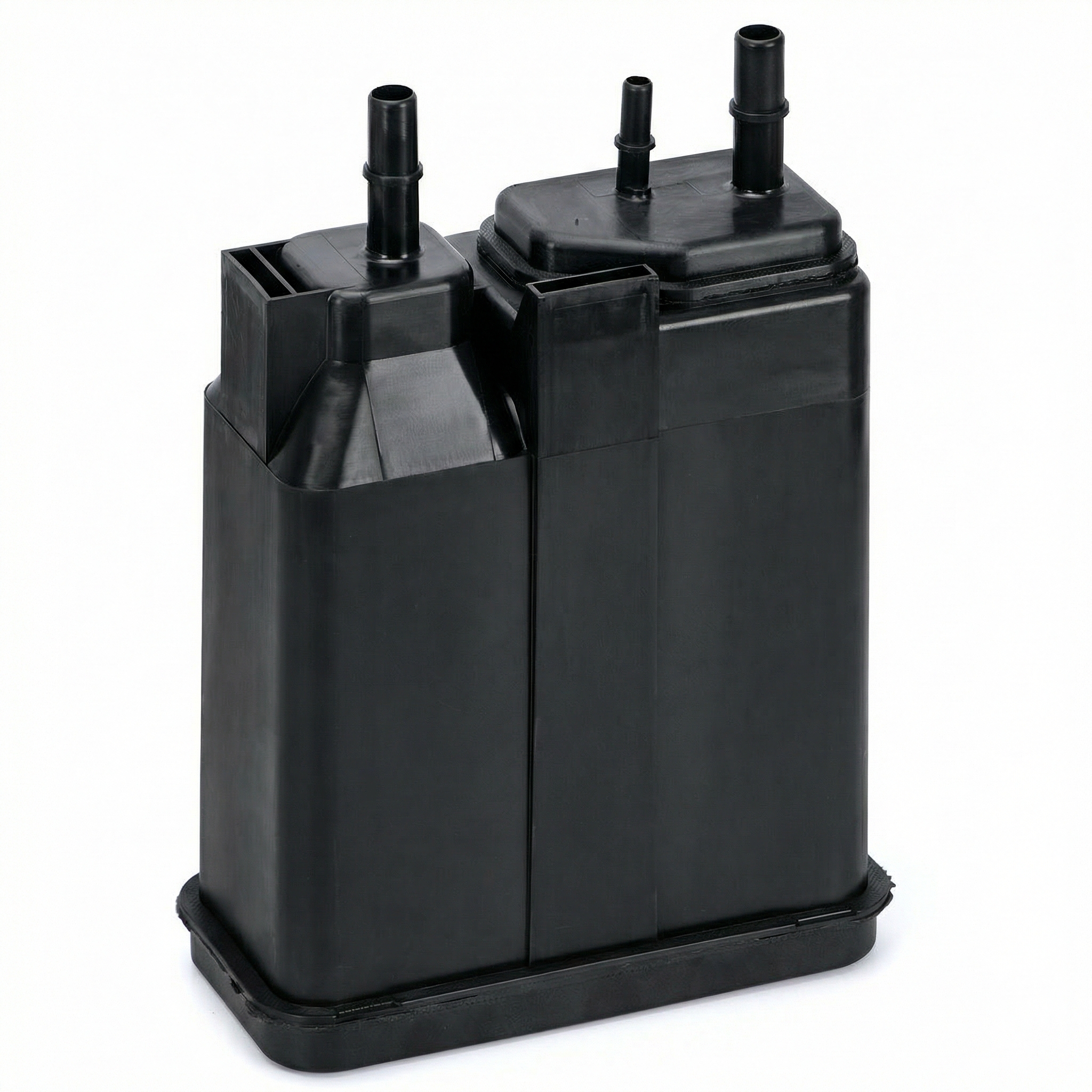
- Damaged Charcoal Canister: → Shop Vapor Canister The plastic housing of the charcoal canister can be cracked by road debris, though this is uncommon. It is located near the vent solenoid. It's often replaced unnecessarily when the vent solenoid is the real issue.
- Faulty Fuel Tank Pressure Sensor (FTPS): → Shop Fuel Tank A faulty FTPS can send incorrect readings, making the computer believe there is a large leak when there isn't one. In one documented case on GMTNation, a user fixed a persistent P0455 code by replacing this sensor after all other common parts failed to resolve the issue.
Diagnosis Steps
- Check the Gas Cap: Ensure it is an OEM cap and is tightened until it clicks multiple times. Remove it and inspect the seal for cracks or damage. Clear the code and drive for a few days. This is the most common fix.
- Visual Inspection: Check the EVAP vent solenoid (near the fuel tank, behind the rear passenger wheel) and purge solenoid (in the engine bay) for any obvious cracks or damage. Follow the EVAP hoses and look for visible cracks or disconnected lines, especially around the quick-connect fittings.
- Test the Purge Solenoid: With the engine off, disconnect the purge solenoid in the engine bay and try to blow through it. It should be closed. If air passes, it is faulty and must be replaced.
- Inspect/Replace the Vent Solenoid: The vent solenoid, located near the fuel tank, is the most likely component to fail after the gas cap. Given its high failure rate and relatively low cost, many owners choose to replace it as the next step if the gas cap is good and the purge valve tests okay.
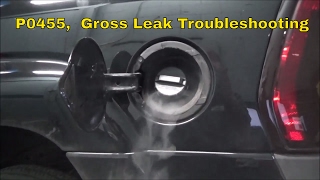
- Perform a Smoke Test: If the previous steps do not reveal the source of the leak, the most effective diagnostic method is to introduce smoke into the EVAP system via the service port. The smoke will exit from any cracks or holes, pinpointing the exact location of the large leak, which could be a rusted filler neck or a cracked hose.
Parts You'll Likely Need
- Gas Cap
(OEM #ACDelco GT294 (GM 15256379))— This is the most common cause due to wear and tear on the seal. It's the cheapest and easiest part to replace first. Using an OEM cap is critical.
Trusted brands: ACDelco
OEM price range: $20-$30
Aftermarket price range: $15-$25 - EVAP Vapor Canister Vent Solenoid
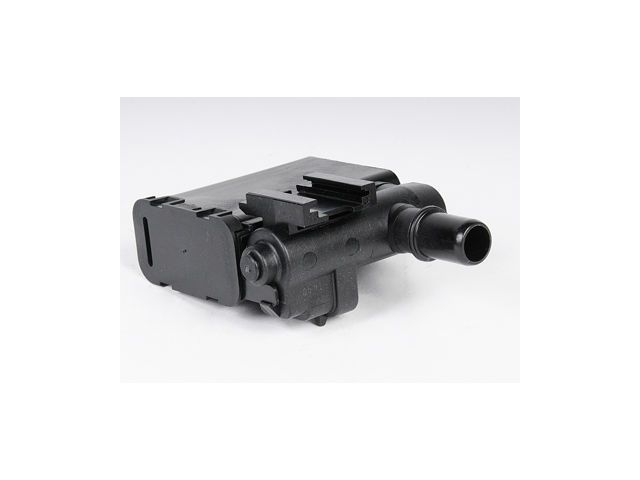
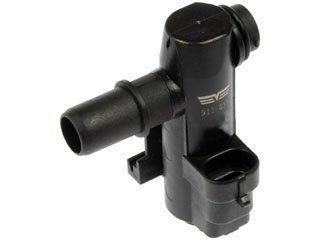
(OEM #ACDelco 214-2149 (GM 25932571))— Its exposed location on the Envoy XL makes it highly susceptible to damage and corrosion, causing it to stick open and create a large leak. This is the second most common failure part.
Trusted brands: ACDelco, Dorman (911-033), Delphi
OEM price range: $50-$65
Aftermarket price range: $25-$45 - EVAP Vapor Canister Purge Solenoid
(OEM #ACDelco 214-1680 (GM 12597567))— This valve can get stuck open, creating a constant vacuum leak within the EVAP system that the computer interprets as a large leak.
Trusted brands: ACDelco, Dorman (911-032), Bosch, SKP (SK911035), Delphi
OEM price range: $35-$50
Aftermarket price range: $20-$40
Related Codes That Often Appear With This One
- P0442 — P0442 indicates a small EVAP leak. A problem that starts as a small leak (e.g., a small crack in a hose or filler neck) can worsen over time and eventually be detected as a large leak (P0455). The official TSB for this vehicle groups these two codes together for diagnosis.
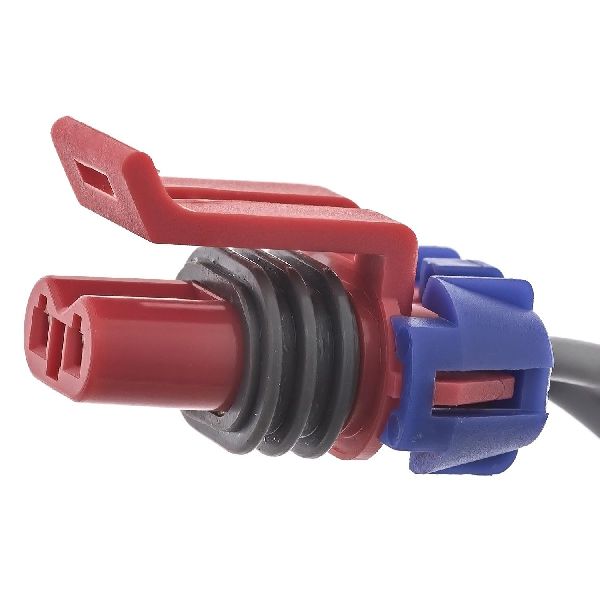
- P0449 — This code specifically points to a fault in the EVAP Vent Solenoid *control circuit*. If you have P0455 and P0449 together, it's a very strong indicator that the vent solenoid itself has failed electrically or its wiring/connector is damaged, making it the primary suspect.
Technical Service Bulletins (TSBs) & Recalls
- Bulletin #21-NA-124: Diagnostic tips for EVAP leaks causing DTCs P0442 and/or P0455. It recommends a specific diagnostic order: 1. Check all EVAP lines are seated. 2. Inspect lines for damage. 3. Investigate vent valve function. 4. Investigate purge valve function.
Platform-Specific Known Issues
- The manufacturer, General Motors, issued Technical Service Bulletin #21-NA-124 which provides diagnostic advice specifically for technicians dealing with codes P0442 and P0455. It advises checking EVAP lines and connections first, followed by the vent valve, and then the purge valve.
- Owners on GMTNation.com frequently report that a rusted-through fuel filler neck is the cause of a persistent P0455 code, especially in northern climates. This should be inspected carefully during a smoke test.
Mechanic-Grade Diagnostic Values
- EVAP Vent Solenoid Coil Resistance — expected: 20 to 30 Ohms. Failure: A reading of 0 ohms (short), infinity/OL (open), or significantly outside the expected range indicates a failed solenoid coil. A video of a working solenoid from a 2004 Envoy measured 22.6 Ohms.
- Fuel Tank Pressure (FTP) Sensor Voltage (at atmospheric pressure) — expected: 1.3 to 1.7 Volts on a Tech 2 Scan Tool. Failure: A voltage reading stuck high or low, or one that doesn't change when a vacuum/pressure is applied, points to a faulty sensor. Note that a direct multimeter reading at the signal wire may be different due to a PCM bias; one real-world example showed 1.44V at the wire corresponding to 2.73V on the scan tool.
- EVAP Purge Solenoid Power Wire Voltage — expected: Battery Voltage (approx. 12V) with key on. Failure: No voltage on the orange wire at the purge solenoid connector indicates a problem with the fuse (Fuse #26, 10A, underhood) or the wiring from the fuse block.
- EVAP Vent Solenoid Power Wire Voltage — expected: Battery Voltage (approx. 12V) with key on. Failure: No voltage on the pink wire at the vent solenoid connector points to a wiring or fuse issue.
Scan Tool Commands That Help
- Tech 2 / GDS2 (or equivalent bidirectional scanner): EVAP Purge/Seal Functional Test (also called EVAP Service Bay Test) — This is the primary professional diagnostic step after a visual inspection. It allows the technician to bypass the automatic test conditions and manually seal the EVAP system by commanding the vent solenoid closed. The technician can then command the purge solenoid to open by a specific duty cycle (%) to create a vacuum and monitor the FTP sensor's response, confirming the function of all three components and the system's ability to hold a vacuum.
Wiring & Ground Locations
- G305 — On the outside of the left (driver's side) frame rail, near the fuel tank.. This is the primary ground point for the rear-mounted EVAP components, including the vent solenoid and fuel tank pressure sensor. Corrosion or a loose connection at this point can cause intermittent or total failure of these components, leading to P0455 or other EVAP codes.
- G107 — On the lower left (driver's side) of the engine block.. This serves as a ground point for engine-mounted components, including the EVAP purge solenoid. A poor connection here could affect the purge solenoid's operation.
- FTP Sensor Connector — On the Fuel Tank Pressure sensor, located at the rear of the fuel tank on the Envoy XL.. Knowing the pinout is crucial for testing. The wires are typically: Gray (5V reference from PCM), Dark Green (Signal to PCM), and Tan (Low Reference/Ground from PCM). Probing these wires allows a technician to verify the sensor is receiving power and sending a correct signal.
- EVAP Solenoid Control Wires — At the connectors for the purge and vent solenoids.. The PCM controls the solenoids by providing a ground. The control wire for the vent solenoid is typically White, and the control wire for the purge solenoid is Dark Green with a White stripe. Testing for a ground signal on these wires with a test light while commanding the solenoid 'on' with a scan tool confirms the PCM driver and wiring integrity.
Real Owner Repair Stories
- YouTube channel 'I Fix it All Garage' (Chevrolet HHR with similar GM EVAP system) (Chevrolet HHR) — Persistent P0455 Check Engine Light.
❌ Tried (didn't work) Replacing the gas cap, Replacing the EVAP purge valve solenoid
✅ What actually fixed it The final fix was replacing the main EVAP vapor line that runs from the charcoal canister at the rear of the car to the engine bay. The line had become rotted and was leaking. - Aztek Fan Club Forum (Pontiac Aztek, a GM platform-mate) (Pontiac Aztek) — P0455 code, especially after refueling.
❌ Tried (didn't work) Replacing the gas cap, Replacing the purge solenoid
✅ What actually fixed it The problem was finally solved by replacing the EVAP vent solenoid located near the charcoal canister, which was stuck in the open position.
"I Checked Everything" — The Actual Cause
- A P0455 code can be set even if a smoke test shows no leaks. A common reason is a faulty Fuel Tank Pressure (FTP) sensor. The sensor itself doesn't leak, but it fails to report pressure changes to the computer, which interprets the lack of response as a large leak.
- Another high-value scenario is a stuck-closed EVAP purge solenoid. The PCM's diagnostic test commands the purge valve to open to draw a vacuum on the tank. If the valve fails to open, no vacuum is created, and the PCM logs this as a large leak (P0455). However, a smoke test, which pressurizes the system, will pass because the stuck-closed valve is properly sealing the system from the engine side.
When the Usual Fixes Don't Work
- While the gas cap and vent/purge solenoids are the most common causes, do not rule out the physical lines. In one documented case on a similar GM platform, after replacing both the gas cap and purge valve to no effect, the actual cause of a persistent P0455 was a rotted EVAP vapor line that ran from the rear canister to the engine. A smoke test may not always reveal a leak in this line if the crack only opens under specific vehicle flex or vibration.
OEM Part Supersession History
10382105, 15750484, 22728634→GM 25932571 (ACDelco 214-2149)— Part consolidation and design updates for the EVAP Vent Solenoid.
Heads up: One GM parts supplier notes that part number 25932571 has been redesigned and may not be correct for all vehicles it was originally listed for. It is critical to verify the correct part number with the vehicle's VIN before purchasing to avoid compatibility issues.
Model Year Variations Within This Range
- 2002-2006: The location of the EVAP vent solenoid and Fuel Tank Pressure (FTP) sensor differs between the long-wheelbase (LWB) GMC Envoy XL and the standard-wheelbase (SWB) Envoy. On the Envoy XL (LWB), these components are located at the rear of the fuel tank. On the SWB models, they are located on the top of the fuel tank, which can affect accessibility.
Helpful Videos

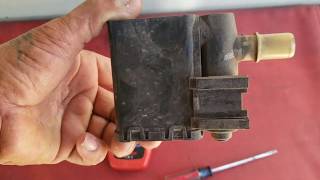
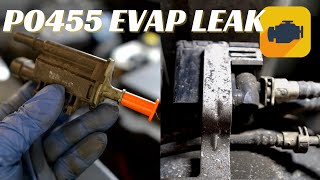
Used OEM Parts in Stock
New Aftermarket Parts Available


The information in this article is provided for general reference and educational purposes only. Vehicle specifications, procedures, and part compatibility can vary by production date, trim level, and region. Always consult your vehicle's factory service manual and verify part numbers before purchasing or performing repairs. Safety-critical components such as airbags, seat belts, and braking systems should be installed by a qualified professional.
- Gmc ENVOY XL:
- 🧭 Diagnostic Flowchart
- 🎬 Helpful Videos
- 🛍️ Shop This Part
- What's Unique About the 2002-2006 Gmc ENVOY XL
- Symptoms You May Notice
- Most Likely Causes
- Rare But Worth Checking
- Diagnosis Steps
- Parts You'll Likely Need
- Related Codes That Often Appear With This One
- Technical Service Bulletins (TSBs) & Recalls
- Platform-Specific Known Issues
- Mechanic-Grade Diagnostic Values
- Scan Tool Commands That Help
- Wiring & Ground Locations
- Real Owner Repair Stories
- "I Checked Everything" — The Actual Cause
- When the Usual Fixes Don't Work
- OEM Part Supersession History
- Model Year Variations Within This Range
- 🎟️ Get 5% Off