

P0455 on 2001-2004 GMC Jimmy: EVAP Large Leak Causes and Fixes
For a P0455 code on a 2001-2004 GMC Jimmy, the most common cause is a loose, worn, or incorrect gas cap. Always check this first. If the cap is good, the next likely culprits are a faulty EVAP vent valve near the fuel tank or a stuck-open purge valve on the engine's intake. Rust on the fuel filler neck is also a very common issue on these trucks.
- Always start with the simplest fix: inspect and tighten the gas cap. Replace it if the seal is old or cracked.
- If the gas cap isn't the issue, the EVAP vent valve (near the tank) and purge valve (on the engine) are the next most likely failures.
- A visual inspection can sometimes find the problem, but a smoke test is the most definitive way to locate a leak in a hose, the filler neck, or the canister.
- This code does not affect vehicle safety or drivability, so you can continue to drive while you schedule a repair, but you will fail an emissions test.
What's Unique About the 2001-2004 Gmc JIMMY
On the second-generation GMC Jimmy and its siblings (Chevy Blazer, Oldsmobile Bravada), the EVAP components are known to fail due to age and exposure. The vent solenoid, located under the vehicle near the fuel tank, is particularly susceptible to road debris and moisture, causing it to stick open. Additionally, the steel fuel tank filler neck and the steel lines running along the frame are highly prone to rust, especially in the 'rust belt', which can create the large leak that this code identifies. The top of the fuel pump module itself can also rust through, creating a leak.
Diagnostic Flowchart
Tap your situation to follow the diagnostic path that matches what you're seeing on this vehicle.
Symptoms You May Notice
- Check Engine Light is on
- A noticeable smell of gasoline, especially around the rear of the vehicle or when parked in a garage.
- Potentially poor fuel economy.
- In rare cases, difficulty starting after refueling if the purge valve is stuck open.
- Audible 'hissing' sound when removing the gas cap may be absent, indicating the tank is not holding pressure.
- Replacing the O2 sensors. O2 sensors are not part of the EVAP system and will not cause a P0455 code.
- Replacing the fuel pump. While the fuel tank pressure sensor may be part of the fuel pump module, the pump itself is not a cause for this specific leak code unless the module's seal or top housing is compromised by rust.
Most Likely Causes
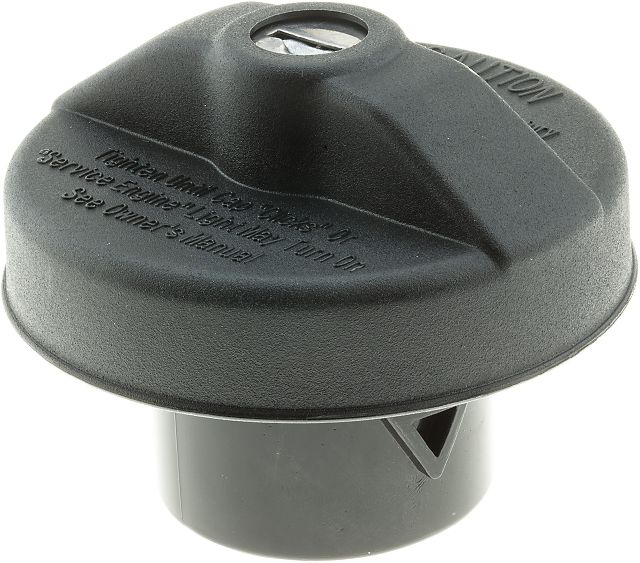
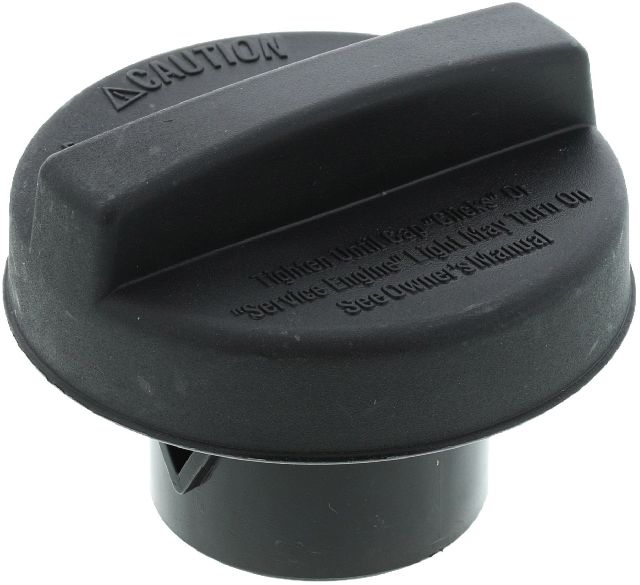
- Loose, Damaged, or Incorrect Gas Cap 🔴 High Probability → Shop Fuel Tank Cap The gas cap seal is a simple rubber O-ring that degrades over time, becoming hard and cracked. It's the most frequently disturbed part of the EVAP system and a very common failure point.
How to confirm: Inspect the gas cap for cracks or damage to the seal. Ensure it is tightened until it clicks at least once. A failing seal is a very common cause. If in doubt, it's an inexpensive part to replace as a first step.
Typical fix: Replace the gas cap with a new, quality OEM or equivalent part. An ACDelco or Stant cap is recommended.
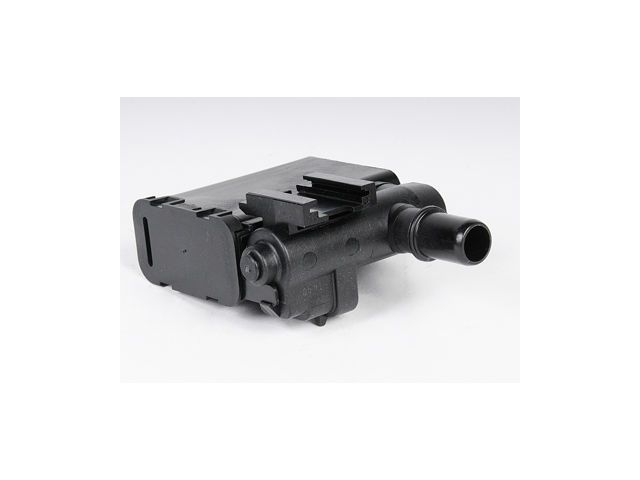
Est. part cost: $10-$30 - Faulty EVAP Vent Valve/Solenoid 🟡 Medium Probability → Shop Vapor Canister Located under the vehicle near the fuel tank, this component is exposed to road salt, water, and debris, which can cause the solenoid to fail or stick open, creating a large leak. This is a very common failure on GM trucks of this era.
How to confirm: The vent valve is normally open. With a capable scan tool, command the valve closed. If it doesn't close, or if you apply 12V directly and it doesn't actuate (click), it has failed. A smoke test will show smoke exiting the vent valve if it's stuck open.
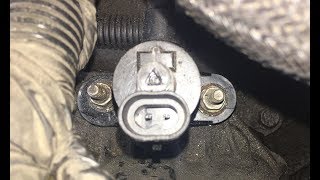
Typical fix: Replace the EVAP vent valve solenoid. It is typically mounted on a crossmember near the fuel tank or attached to the charcoal canister. 🎬 Watch: Step-by-step guide to replacing the vent valve solenoid.
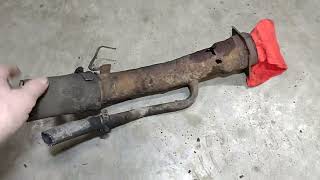
Est. part cost: $25-$60 - Rusted or Cracked Fuel Filler Neck 🟡 Medium Probability → Shop Fuel Filler Neck The steel filler neck is highly susceptible to rust in regions that use road salt, leading to perforations that cause a large EVAP leak. This is a well-documented problem on S-10 platform trucks.
How to confirm: Visually inspect the entire length of the fuel filler neck, from the gas cap down to the tank, for heavy rust, flaking metal, or visible holes. A smoke test is the most definitive way to confirm a leak here if it's not obvious.
Typical fix: Replace the fuel filler neck. This can be a DIY job but may require dropping the fuel tank slightly 🎬 See how to replace a rusted fuel filler neck yourself. for access.
Est. part cost: $60-$150 - Faulty EVAP Purge Valve/Solenoid ⚪ Low Probability → Shop Vapor Canister This valve can get stuck open, creating a constant vacuum leak into the intake manifold which the system interprets as a large leak during its test phase. It can also get stuck closed, which prevents the system from drawing a vacuum, also leading to a P0455 code.
How to confirm: The purge valve is normally closed. Remove the valve (located on the engine's intake manifold) and try to blow through it. If air passes, it's stuck open and needs replacement. You can also test it with a hand vacuum pump; it should hold a vacuum when not energized.
Typical fix: Replace the purge valve solenoid.
Est. part cost: $25-$80 - Cracked or Damaged EVAP Hoses ⚪ Low Probability Over time, the rubber and plastic hoses that make up the EVAP system can become brittle and crack, especially at connection points and fittings.
How to confirm: A visual inspection may reveal obvious cracks. The most effective method is to use an automotive smoke machine to feed low-pressure smoke into the EVAP service port and look for where the smoke escapes.
Typical fix: Replace the specific section of damaged hose.
Est. part cost: $10-$50
Rare But Worth Checking
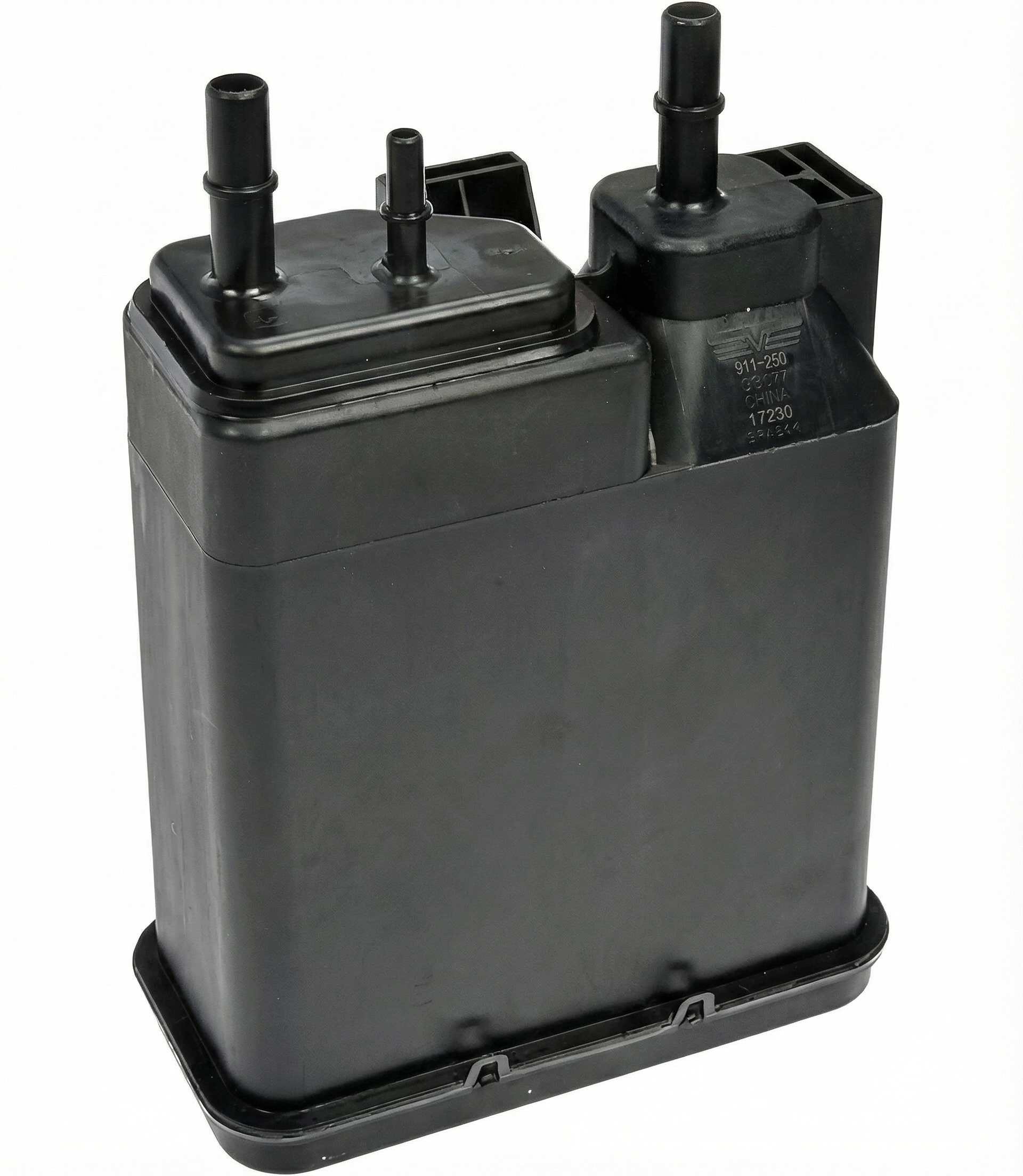
- Cracked Charcoal Canister: → Shop Vapor Canister The plastic housing of the canister can be damaged by road debris, causing a crack. This is best found with a smoke test. The canister is located near the fuel tank, often on the driver's side.
- Faulty Fuel Tank Pressure Sensor (FTPS): → Shop Fuel Tank A faulty sensor can incorrectly report a large leak to the ECM when there is none. This is less common than a physical leak, and often it will be accompanied by other pressure sensor-specific codes (like P0452). On some GM trucks, a bad sensor was the root cause, even after smoke tests showed no leaks.
- Rusted Fuel Pump Module/Lock Ring: → Shop Fuel Pump In the rust belt, it's possible for the top of the fuel pump sending unit module or the steel lock ring holding it to the tank to rust through, creating a leak. This would be visible during a smoke test or by visual inspection after lowering the tank.
Diagnosis Steps
- Check the Gas Cap: Remove, inspect the seal for cracks, and retighten it until it clicks several times. Clear the code and drive for a few days to see if it returns. If the seal looks worn, replace the cap. This is the cheapest and easiest first step.
- Visual Inspection: Inspect the EVAP purge solenoid and hoses in the engine bay for obvious cracks or disconnection. Then, safely inspect the underside of the vehicle, looking at the EVAP lines running along the frame, the charcoal canister, the fuel filler neck for rust, and the vent solenoid (near the tank) for any visible damage.
- Test the Purge Solenoid: Locate the purge solenoid on the intake manifold. Disconnect it and try to blow through it. If air passes, it is stuck open and must be replaced. If it seems stuck closed, a scan tool can command it open to verify function.
- Test the Vent Solenoid: Locate the vent solenoid near the fuel tank. It is normally open. Use a scan tool to command it shut or apply 12V power to its connector. If it doesn't click or close, it is faulty.
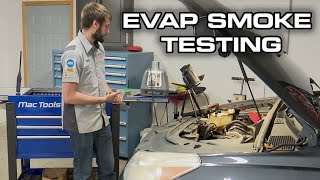
- Perform a Smoke Test: If the above steps do not reveal the issue, the most effective diagnostic step is to introduce smoke into the EVAP system via the service port. The smoke will exit from any leaks, making them easy to spot. 🎬 Watch: How to perform a smoke test to find leaks. This is the best way to find cracked hoses, a rusted filler neck, or a damaged canister.
Parts You'll Likely Need
- Gas Cap
(OEM #GT247 (ACDelco))— This is the most frequent cause of a P0455 code due to a worn seal or not being tightened properly.
Trusted brands: ACDelco, Stant
OEM price range: $20-$35
Aftermarket price range: $10-$25 - EVAP Canister Vent Valve Solenoid
(OEM #25950499 (Superseded by ACDelco 214-2149))— Its location under the vehicle makes it prone to failure from corrosion and debris, causing it to stick open.
Trusted brands: ACDelco, Dorman
OEM price range: $40-$70
Aftermarket price range: $25-$50 - EVAP Canister Purge Valve Solenoid
(OEM #1997277 (Superseded by ACDelco 214-641))— This valve can get stuck open or closed internally, causing a leak or preventing the system from testing, respectively. A hard start after refueling is a strong indicator this part has failed.
Trusted brands: ACDelco, Bosch
OEM price range: $45-$80
Aftermarket price range: $25-$50 - Fuel Filler Neck — Highly prone to rusting through in salt-belt regions, creating a large, obvious leak.
Trusted brands: Spectra Premium, Dorman
OEM price range: $100-$180
Aftermarket price range: $60-$150
Related Codes That Often Appear With This One
- P0442 — This code is for a small EVAP leak. You might see it along with P0455 if there are multiple leaks or if a large leak is intermittent.
- P0446 — This code indicates a fault in the EVAP vent control circuit. If the vent valve is electrically faulty or stuck, it can cause both a P0446 and a P0455.
- P0449 — This is another code for the EVAP vent valve/solenoid circuit. Seeing it with P0455 strongly points to the vent valve as the root cause.
Technical Service Bulletins (TSBs) & Recalls
- 21-NA-124: This service bulletin provides diagnostic tips for technicians when troubleshooting P0442 (small leak) and P0455 (large leak) codes. It advises a chronological check: 1. Inspect EVAP lines and connections. 2. Check for damage to lines. 3. Investigate vent valve function. 4. Investigate purge valve function. This confirms the standard diagnostic path.
Platform-Specific Known Issues
- The provided NHTSA TSB #21-NA-124 confirms that GM has issued diagnostic guidance for dealers on testing for EVAP leaks related to codes P0442 and P0455, indicating this is a recognized issue. [⭐ MANUFACTURER TSB — highest authority]
Mechanic-Grade Diagnostic Values
- Fuel Tank Pressure (FTP) Sensor Voltage — expected: Approximately 1.5 Volts with the gas cap on and no pressure/vacuum in the tank (at atmospheric pressure).. Failure: Voltage stuck high or low, or not changing when pressure is applied/released (e.g., removing gas cap). A reading near 0.2V or stuck at 1.5V during testing can indicate a bad sensor.
- EVAP Purge Valve Solenoid Resistance — expected: 20 to 30 Ohms across the two pins of the solenoid.. Failure: A reading significantly outside this range, or an open circuit (infinite resistance), indicates a failed coil.
- EVAP Vent Valve Solenoid Resistance — expected: 20 to 50 Ohms across the two pins of the solenoid.. Failure: An open circuit or a reading far outside the expected range points to a bad solenoid coil.
Scan Tool Commands That Help
- Tech 2 or similar professional scan tool: EVAP Service Bay Test — This is an automated test that commands the vent and purge valves to seal the system and check its ability to hold a vacuum. It's a comprehensive function to verify system integrity after a repair or to confirm a leak exists. Note: The engine coolant temperature must be below a certain threshold (e.g., 158°F) for the test to initiate.
- Tech 2 or similar professional scan tool: EVAP Purge/Seal — This function allows the technician to manually command the EVAP Vent Solenoid to close (Seal) and the EVAP Purge Solenoid to open by a specified percentage. This is used to manually create a vacuum in the tank while monitoring the Fuel Tank Pressure sensor to see if the system is responding and holding vacuum.
- Tech 2 or similar professional scan tool: Vent Solenoid Command — This is a simple bidirectional control to command the normally-open vent solenoid to close. While commanding it closed, a technician can perform a smoke test or listen for the solenoid to 'click', confirming electrical function.
Wiring & Ground Locations
- Fuel Tank Pressure (FTP) Sensor — Located on top of the fuel pump module assembly, which is on the top of the fuel tank. Access typically requires lowering or removing the fuel tank, as there is no access panel under the carpet on a GMC Jimmy.. The FTP sensor is the primary input the ECM uses to detect leaks. If the sensor itself fails or has a wiring/ground issue, it can send false data, leading the ECM to believe there is a large leak when there is not.
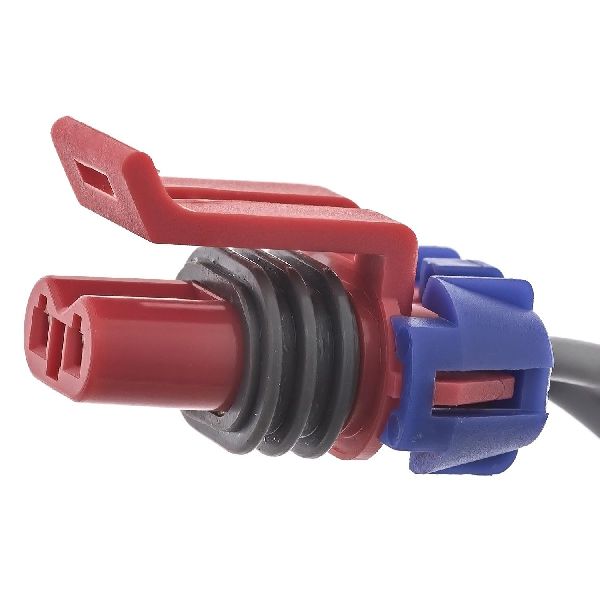
- EVAP Canister Vent Valve Solenoid Connector — Under the vehicle, near the rear axle and spare tire, attached to or near the charcoal canister. It is a 2-pin rectangular connector.. Corrosion or damage to this connector or its wiring is common due to its exposed location. A poor connection can prevent the normally-open vent valve from closing during a system test, which will instantly cause a P0455 code.
- EVAP Canister Purge Valve Solenoid Connector — On top of the engine, mounted to the intake manifold. It is an easily accessible 2-pin connector.. A wiring issue here can prevent the purge valve from opening to draw a vacuum during the test, which can be misinterpreted by the ECM as a large leak.
Real Owner Repair Stories
- BlazerForum.com user post (2001 Chevrolet Blazer (same platform)) — Persistent P0442 (small leak) code and a faint fuel smell.
❌ Tried (didn't work) Replaced gas cap with OEM part, Replaced EVAP vent solenoid, Replaced EVAP purge solenoid, Smoke test showed no obvious leaks
✅ What actually fixed it The owner dropped the fuel tank and discovered the metal top plate of the fuel pump sending unit had rusted through. This created a leak on top of the tank that was not visible from underneath and was hard to find with a smoke test. Replacing the entire fuel pump module assembly resolved the code.
"I Checked Everything" — The Actual Cause
- In some cases on the S-10/Jimmy/Blazer platform, the system can pass a smoke test but still set a P0455. This can happen if the EVAP Purge Valve on the intake manifold is stuck closed. When the ECM runs its self-test, it commands the purge valve to open to draw a vacuum on the tank. If the valve is stuck closed, no vacuum is created. The ECM sees no change in the Fuel Tank Pressure sensor reading and incorrectly assumes there must be a massive leak preventing a vacuum from forming, setting the P0455 code. A technician confirmed this by commanding the purge valve on with a scan tool and finding no vacuum at the hose, then tapping the valve with a screwdriver, which freed it and allowed vacuum to pull, showing the valve was mechanically stuck.
- A faulty Fuel Tank Pressure (FTP) sensor can also be the cause when a smoke test shows no leaks. If the sensor's internal diaphragm is compromised or it is electrically faulty, it may report a static pressure reading to the ECM. When the ECM attempts to run the EVAP test, it sees no change in pressure and logs a large leak code, even though the system is perfectly sealed.
OEM Part Supersession History
25950499 (and others)→ACDelco 214-2149— This is the common service replacement for the EVAP Canister Vent Valve Solenoid for this vehicle range.
Heads up: While 214-2149 is the primary replacement, some earlier original parts may have had slightly different hose or bracket configurations. Always visually match the new part to the old one before installation to ensure a perfect fit.
Helpful Videos
Used OEM Parts in Stock
New Aftermarket Parts Available


The information in this article is provided for general reference and educational purposes only. Vehicle specifications, procedures, and part compatibility can vary by production date, trim level, and region. Always consult your vehicle's factory service manual and verify part numbers before purchasing or performing repairs. Safety-critical components such as airbags, seat belts, and braking systems should be installed by a qualified professional.
- Gmc JIMMY:
- 🧭 Diagnostic Flowchart
- 🎬 Helpful Videos
- 🛍️ Shop This Part
- What's Unique About the 2001-2004 Gmc JIMMY
- Symptoms You May Notice
- Most Likely Causes
- Rare But Worth Checking
- Diagnosis Steps
- Parts You'll Likely Need
- Related Codes That Often Appear With This One
- Technical Service Bulletins (TSBs) & Recalls
- Platform-Specific Known Issues
- Mechanic-Grade Diagnostic Values
- Scan Tool Commands That Help
- Wiring & Ground Locations
- Real Owner Repair Stories
- "I Checked Everything" — The Actual Cause
- OEM Part Supersession History
- 🎟️ Get 5% Off