

P0455 on 2001-2005 GMC Safari: EVAP Large Leak Causes and Fixes
For a 2001-2005 GMC Safari, a P0455 code almost always means a large leak in the EVAP system, most commonly caused by a loose or faulty gas cap. If the cap is secure, the next most likely culprits are the EVAP vent or purge solenoids, or a rusted fuel filler neck. A new gas cap costs about $15-$35, while solenoids can range from $25 to $75.
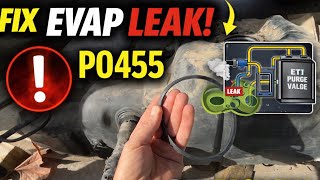
- P0455 on a GMC Safari means the fuel vapor (EVAP) system has a large leak.
- Always check the gas cap first. Make sure it's tight and the seal is intact. This is the most common and cheapest fix.
- If the gas cap isn't the issue, the EVAP vent solenoid (on the frame rail) or purge solenoid (on the engine) are the next most likely failures.
- A smoke test is the fastest and most accurate professional method to locate the source of the leak.
- This code will not stop the van from running, but it will cause an automatic failure on an emissions test.
What's Unique About the 2001-2005 Gmc SAFARI
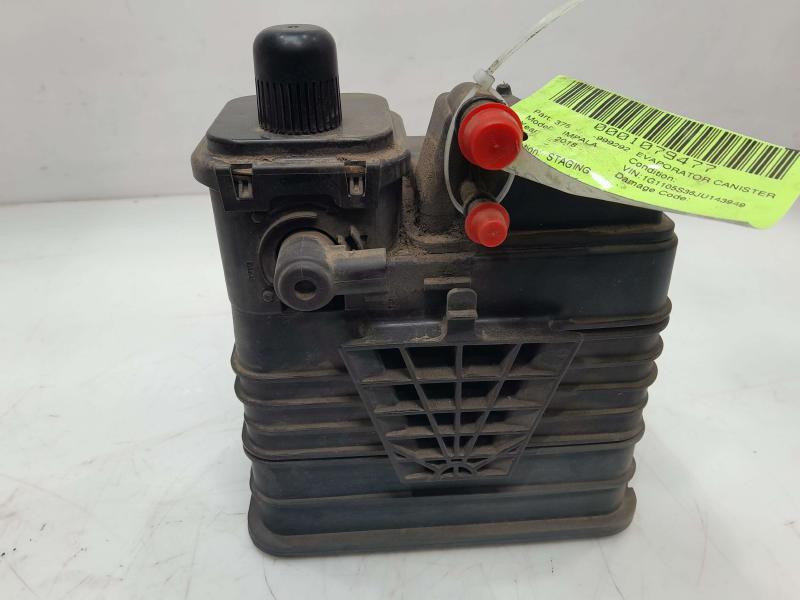
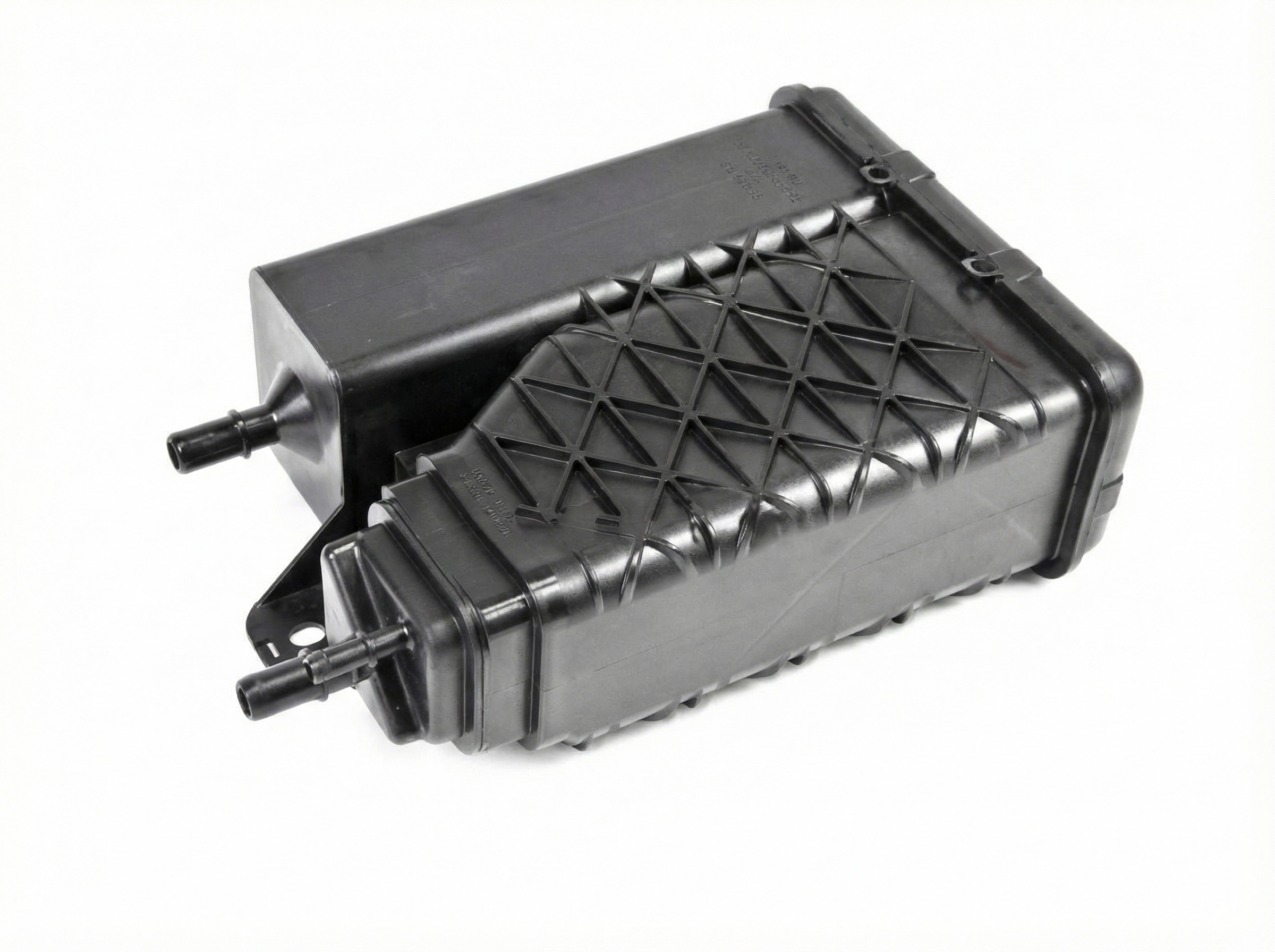
The GMC Safari and its Chevrolet Astro twin are built on a truck-style frame. This design places the EVAP canister and associated lines along the driver's side frame rail, just ahead of the rear axle. This location can expose the components to road debris, moisture, and salt in rust-belt regions, potentially leading to cracked hoses, rusted filler necks, or damage to the vent solenoid, which is often attached to the canister.
Diagnostic Flowchart
Tap your situation to follow the diagnostic path that matches what you're seeing on this vehicle.
Symptoms You May Notice
- Check Engine Light is on
- A noticeable smell of gasoline, especially near the rear of the vehicle or when parked in a garage.
- Difficulty filling the fuel tank (gas pump clicks off repeatedly), which can indicate a blocked vent solenoid
- Replacing the fuel tank pressure sensor before performing a smoke test. A sensor is less likely to fail than a mechanical part like a valve or a hose.
- Replacing the charcoal canister when the actual fault is the much cheaper, attached vent solenoid.
- Assuming P0455 always means a physical leak to the atmosphere. It can also be caused by a stuck-closed purge solenoid that prevents the system from pulling a vacuum for its test, which the ECU interprets as a failure to seal.
Most Likely Causes
- Loose, Damaged, or Incorrect Gas Cap 🔴 High Probability → Shop Fuel Tank Cap The gas cap is the most frequently removed and re-installed part of the emissions system, making human error (not tightening it) or simple wear-and-tear on the seal very common.
How to confirm: Ensure the gas cap is tightened until it clicks several times. Inspect the rubber O-ring on the cap for cracks, brittleness, or damage. If the seal looks bad, it's a likely culprit. Also inspect the sealing surface on the filler neck itself for corrosion that could prevent a good seal.
Typical fix: Tighten or replace the gas cap.
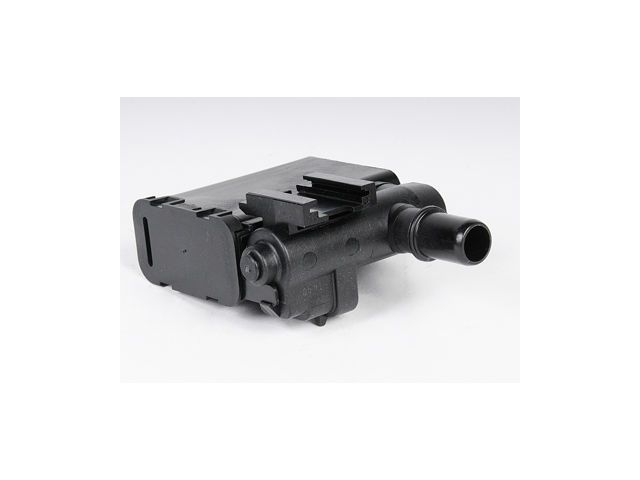
Est. part cost: $15-$35 - Failed EVAP Vent Solenoid 🟡 Medium Probability → Shop Vapor Canister Located on the frame rail near the EVAP canister, this solenoid is exposed to the elements. It can get stuck open due to dirt or internal failure, causing a large leak.
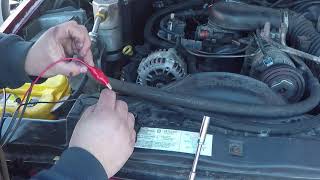
How to confirm: A scan tool can command the valve to close. Without a scan tool, you can apply 12V power to the solenoid's terminals; you should hear a distinct click as it actuates. If it doesn't click, or if it's stuck open (air passes through freely when de-energized), it has failed.
Typical fix: Replace the EVAP vent solenoid. It is often attached to the EVAP canister.
Est. part cost: $25-$75 - Failed EVAP Purge Solenoid/Valve 🟡 Medium Probability → Shop Vapor Canister This valve is located on top of the engine and can fail by getting stuck open, creating a constant vacuum leak. It can also fail by being stuck *closed*, which prevents the system from pulling a vacuum during its self-test, causing the ECU to incorrectly log a P0455 large leak code.
How to confirm: The purge valve is normally closed. Disconnect the valve and try to blow through it. If air passes through, it is stuck open and needs to be replaced. If a scan tool shows the valve is being commanded open but no vacuum is being pulled on the fuel tank pressure sensor, it may be stuck closed.
Typical fix: Replace the purge solenoid.
Est. part cost: $25-$60 - Rusted or Damaged Fuel Filler Neck 🟡 Medium Probability → Shop Fuel Filler Neck In areas with road salt, the metal fuel filler neck can rust through, creating a large leak in the EVAP system. This is a well-documented issue on these vans. The corrosion can happen on the pipe itself or on the rim where the gas cap seals.
How to confirm: Visually inspect the entire filler neck, from the gas cap opening down to where it connects to the tank, for signs of heavy rust or holes. A smoke test will quickly show a leak in this area. One owner reported sanding a corroded sealing surface smooth as a temporary fix.
Typical fix: Replace the fuel filler neck.
Est. part cost: $60-$150 - Cracked or Disconnected EVAP Hoses ⚪ Low Probability Over time, the rubber and plastic hoses in the EVAP system can become brittle and crack, especially those exposed under the vehicle. A user on GMTNation reported that after a filler neck replacement, the code returned because a shop failed to properly connect a vent hose to the new pipe.
How to confirm: Perform a visual inspection of all lines running from the gas tank to the canister and from the canister to the purge valve in the engine bay. The most definitive method is a smoke test, which will force smoke through the system and reveal the exact location of any leaks.
Typical fix: Replace the cracked section of hose or properly secure the connection.
Est. part cost: $10-$50
Rare But Worth Checking
- Cracked EVAP (Charcoal) Canister: → Shop Vapor Canister The plastic housing of the canister itself can crack from age or impact from road debris, causing a large leak. This is usually found during a smoke test.
- Faulty Fuel Tank Pressure (FTP) Sensor: → Shop Fuel Tank A faulty sensor can incorrectly report a leak to the ECM when one doesn't exist. This is less common and often accompanied by other sensor-specific codes. One owner reported this as the final cause after a smoke test revealed no leaks.
Diagnosis Steps
- Check the Gas Cap: This is the most common cause. Remove the cap, inspect the seal for damage, and reinstall it, making sure it clicks at least three times. Also inspect the filler neck's sealing surface for rust or debris. Clear the code and drive for a few days to see if it returns.
- Visual Inspection (per TSB #21-NA-124): Before testing components, visually inspect all EVAP lines and connections for obvious cracks, damage, or loose fittings. On the Safari, pay close attention to the hoses and canister on the driver's side frame rail and the purge solenoid on the engine.
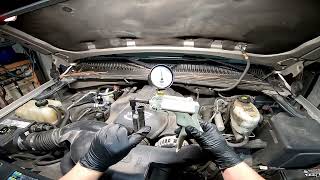
- Perform a Smoke Test: This is the most effective way to find a physical leak. A smoke machine is connected to the EVAP service port, and low-pressure smoke is forced into the system. Smoke will exit from any leak, making it easy to spot the source, whether it's a hose, the filler neck, a solenoid, or the canister.
- Test the Vent Solenoid: Per TSB #21-NA-124, this is a primary suspect after a visual inspection. The vent solenoid near the canister is normally open. When 12V is applied with a scan tool or power probe, it should click shut. If it doesn't, it has failed.
- Test the Purge Solenoid: Locate the purge solenoid on the engine intake. With the engine off, disconnect the hose running to the canister and try to blow through the solenoid. If air passes, it's stuck open. If a scan tool confirms it's not pulling vacuum when commanded, it may be stuck closed, which can also cause a P0455.
Parts You'll Likely Need
- Fuel Cap
(OEM #ACDelco GT330)— This is the most frequent cause of P0455 due to improper tightening or a worn-out seal.
Trusted brands: ACDelco, Stant
OEM price range: $25-$35
Aftermarket price range: $15-$25 - EVAP Canister Vent Solenoid
(OEM #ACDelco 214-2149)— Its exposed location under the van makes it prone to failure from dirt and moisture, causing it to stick open.
Trusted brands: ACDelco, Dorman, Delphi
OEM price range: $50-$80
Aftermarket price range: $25-$50 - EVAP Canister Purge Solenoid
(OEM #ACDelco 214-2317 (Verify by VIN))— Located in the engine bay, this valve can fail and get stuck open or closed, creating a large leak condition or a false large leak code.
Trusted brands: ACDelco, Bosch, Dorman
OEM price range: $40-$65
Aftermarket price range: $25-$45 - Fuel Filler Neck — Commonly rusts through in salt-belt states, creating a large, definitive leak that a gas cap replacement won't fix.
Trusted brands: Dorman, Spectra Premium, Lil-Packaging
OEM price range: $100-$180
Aftermarket price range: $60-$150
Related Codes That Often Appear With This One
- P0442 — P0442 is for a small EVAP leak. A problem that starts as a small leak (e.g., a small crack in a hose or a deteriorating gas cap seal) can worsen over time, eventually triggering the P0455 large leak code. The official GM TSB for this issue groups these two codes together.
- P0446 — This code specifically points to a fault in the EVAP vent control circuit. A failed vent solenoid can cause both a P0446 and a P0455.
Technical Service Bulletins (TSBs) & Recalls
- Bulletin #21-NA-124: Provides diagnostic tips for testing EVAP system leaks related to DTCs P0442 and P0455.
Platform-Specific Known Issues
- The official GM Technical Service Bulletin #21-NA-124 provides diagnostic advice specifically for finding EVAP leaks that cause P0455 and P0442 on these vehicles.
- The EVAP canister and vent solenoid are mounted to the driver's side frame rail, not on top of the fuel tank, making access for replacement relatively straightforward compared to other vehicles.
Mechanic-Grade Diagnostic Values
- EVAP Vent Solenoid Coil Resistance — expected: 20 - 50 Ohms. Failure: A reading of infinite Ohms (open circuit) or near-zero Ohms (short circuit).
- Fuel Tank Pressure (FTP) Sensor Voltage (Key-On, Engine-Off) — expected: ~1.5 Volts. Failure: A voltage significantly different from 1.5V indicates a sensor or wiring issue. This value represents atmospheric pressure.
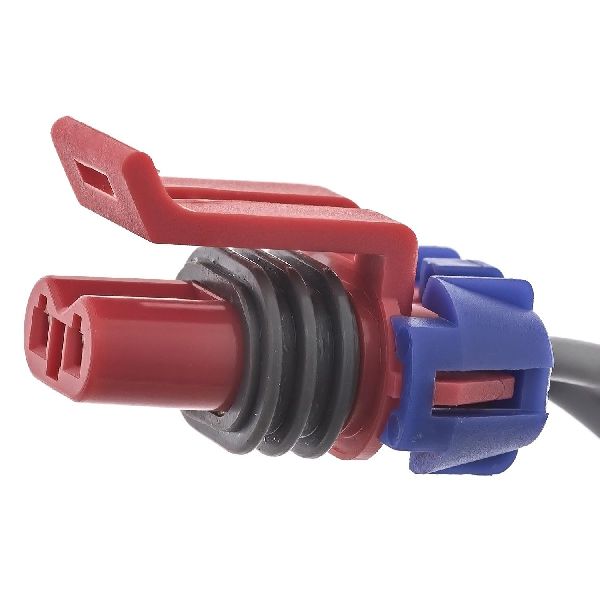
- EVAP Vent Solenoid Connector Voltage — expected: 12 Volts on one wire with ignition key on.. Failure: Absence of 12V suggests a wiring or fuse issue upstream of the solenoid. The PCM controls the ground side to activate the solenoid.
Scan Tool Commands That Help
- Tech 2 / GDS2 or equivalent: EVAP Service Bay Test — This is a comprehensive, automated test to verify the entire system's integrity. It commands the vent valve closed, opens the purge valve to apply engine vacuum, and monitors the FTP sensor to confirm the system can hold a vacuum. It provides a 'Test Passed' or 'Test Failed' result, making it a definitive diagnostic step after visual checks.
- Tech 2 / GDS2 or equivalent: Vent Solenoid Control (On/Off) — Use this to manually command the normally-open vent solenoid to close. You should hear a click from the solenoid under the vehicle. This is essential for isolating the system for a smoke test and for verifying the solenoid's electrical function.
- Tech 2 / GDS2 or equivalent: Purge Solenoid Control (%) — Use this to command the normally-closed purge solenoid to open by a certain percentage. This verifies the solenoid's function and allows engine vacuum to enter the EVAP system during testing.
Wiring & Ground Locations
- G108 — Under the vehicle, located next to the EVAP vent valve on the frame rail. Another source for a 2003 model places it on the lower left side of the evaporative housing.. This is a critical ground for the fuel pump and potentially the EVAP vent solenoid circuit. A corroded or loose ground here can cause intermittent or total failure of the vent solenoid, leading to EVAP codes.
- EVAP Purge Solenoid Location — On top of the engine, mounted near the MAP sensor.. Correctly locating this component is necessary for testing, as it is a common failure point and distinct from the vent solenoid located under the vehicle.
- EVAP Vent Solenoid Location — Underside of the vehicle on the driver's side frame rail, near the fuel filter and attached to the EVAP canister.. This component's exposed location makes it and its wiring susceptible to corrosion and damage, which is a primary cause of P0455.
Real Owner Repair Stories
- YouTube user 'astro van P0455 fix' (2003 Chevrolet Astro) — P0455 Check Engine Light returned after clearing.
❌ Tried (didn't work) Replaced the EVAP purge valve ($45)., Replaced the EVAP vent solenoid ($35).
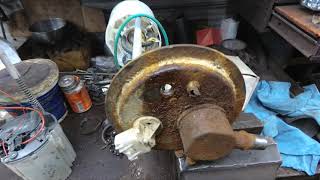
✅ What actually fixed it After the light returned, a smoke test showed a leak from the top of the fuel tank. After dropping the tank, the fuel pump gasket was found to be kinked and damaged. Replacing the fuel pump gasket was the final fix. - YouTube user 'P0455 Code Chevy Problem Solved' (2007 Chevrolet Express Van (similar GM EVAP system)) — Intermittent P0455 code for 6 months.
❌ Tried (didn't work) Initial diagnosis pointed to common EVAP components.
✅ What actually fixed it The canister vent valve was seized and would not close when 12V power was applied (no click). Replacing the faulty canister vent valve resolved the P0455 code.
"I Checked Everything" — The Actual Cause
- While no specific stories were found where a smoke test was clean, a common scenario that would produce a P0455 without a physical leak is a stuck-closed EVAP purge solenoid. The diagnostic test fails because the system cannot draw a vacuum, which the ECU interprets as a large leak, even though the system is fully sealed. A smoke test in this case would show no leaks.
OEM Part Supersession History
ACDelco 214-2149 (Vent Solenoid)→N/A— N/A
Heads up: This part is cross-referenced by aftermarket brands under different numbers, such as Dorman 911-033 and Standard Ignition CVS6. Always verify fitment by VIN, as variations exist.
Model Year Variations Within This Range
- 2001-2005: The EVAP Vapor Canister is different for Rear-Wheel Drive (RWD) and All-Wheel Drive (AWD) models. The parts are not interchangeable. For example, GM part number 17113683 is for RWD models only. Ordering the wrong canister will result in fitment issues.
- 2003-2005: In 2003, the vans were updated with larger 16-inch, 6-lug wheels and four-wheel disc brakes, replacing the 15-inch, 5-lug wheels and rear drum brakes of the 2001-2002 models. While this doesn't directly impact the EVAP system, it is a significant mid-generation chassis change to be aware of when sourcing other parts.
Helpful Videos
Used OEM Parts in Stock
New Aftermarket Parts Available


The information in this article is provided for general reference and educational purposes only. Vehicle specifications, procedures, and part compatibility can vary by production date, trim level, and region. Always consult your vehicle's factory service manual and verify part numbers before purchasing or performing repairs. Safety-critical components such as airbags, seat belts, and braking systems should be installed by a qualified professional.
- Gmc SAFARI:
- 🧭 Diagnostic Flowchart
- 🎬 Helpful Videos
- 🛍️ Shop This Part
- What's Unique About the 2001-2005 Gmc SAFARI
- Symptoms You May Notice
- Most Likely Causes
- Rare But Worth Checking
- Diagnosis Steps
- Parts You'll Likely Need
- Related Codes That Often Appear With This One
- Technical Service Bulletins (TSBs) & Recalls
- Platform-Specific Known Issues
- Mechanic-Grade Diagnostic Values
- Scan Tool Commands That Help
- Wiring & Ground Locations
- Real Owner Repair Stories
- "I Checked Everything" — The Actual Cause
- OEM Part Supersession History
- Model Year Variations Within This Range
- 🎟️ Get 5% Off