

P0455 GMC Safari (2000-2004): Causes and Fixes for a Large EVAP Leak
For a 2000-2004 GMC Safari, a P0455 code is most often caused by a loose or worn-out gas cap. If the cap is secure, the next most likely causes are a rusted fuel filler neck, a cracked EVAP hose, or a faulty EVAP vent valve located near the fuel tank and spare tire.
- Always check the gas cap first; it's the simplest and most common fix for P0455.
- If the gas cap is good, inspect the fuel filler neck for rust, as this is a very common failure point on these vans.
- The EVAP vent solenoid, located under the van, is the next most likely part to fail due to its exposure to the elements.
- A smoke test is the most reliable way to find the exact location of a leak if it's not immediately obvious.
What's Unique About the 2000-2004 Gmc SAFARI (GMC)
The GMC Safari and its twin, the Chevrolet Astro, are prone to specific failures due to their age and design. The fuel filler neck is made of steel and is highly susceptible to rust, especially in regions that use road salt, which prevents the gas cap from sealing properly. This is a well-documented issue on Astro/Safari forums. Additionally, the EVAP vent solenoid is mounted under the vehicle near the spare tire, exposing it to road debris and moisture, which leads to frequent failures.
Diagnostic Flowchart
Tap your situation to follow the diagnostic path that matches what you're seeing on this vehicle.
Symptoms You May Notice
- Check Engine Light is on
- A noticeable smell of gasoline, especially around the rear of the vehicle.
- Difficulty filling the fuel tank (gas pump clicks off repeatedly), which can be a sign of a clogged canister or a failed EVAP vent valve.
- The gas cap does not feel like it tightens securely or 'clicks' into place.
- Replacing the purge valve when the vent valve is the actual problem.
- Replacing the charcoal canister when a simple hose or the gas cap is the real issue.
- Replacing the gas cap multiple times without inspecting the fuel filler neck for rust, which is the actual sealing surface.
Most Likely Causes
- Loose, Damaged, or Incorrect Gas Cap 🔴 High Probability → Shop Fuel Tank Cap This is the most common cause for P0455 on any vehicle. The seal on the cap can wear out, crack, or stiffen over time, or the cap may not have been tightened correctly after refueling. Using an incorrect aftermarket cap can also cause this code.
How to confirm: Ensure the gas cap clicks at least three times when tightened. Inspect the rubber seal on the cap for cracks, stiffness, or damage. A new gas cap is a cheap and easy first step.
Typical fix: Tighten the existing cap. If the seal is bad or the cap is damaged, replace it with a quality OEM or aftermarket part.
Est. part cost: $10-$25 - Rusted or Damaged Fuel Filler Neck 🔴 High Probability → Shop Fuel Filler Neck Extremely common in 'Rust Belt' states, the steel filler neck corrodes where the gas cap seals, creating an uneven, pitted surface that allows vapors to escape regardless of how new the gas cap is. Many owners on forums report this as the ultimate culprit after replacing other parts.
How to confirm: Remove the gas cap and visually inspect the metal lip of the filler neck for rust, pitting, or deformities. Run a finger along the sealing surface to feel for roughness. A smoke test will show smoke billowing from the gas cap area if the neck is the problem.
Typical fix: The filler neck must be replaced if it is rusted through. Minor surface rust can sometimes be cleaned with a Scotch-Brite pad as a temporary fix, but the code often returns. Aftermarket replacements are widely available.
Est. part cost: $50-$150 - Failed EVAP Vent Valve/Solenoid 🟡 Medium Probability → Shop Vapor Canister Located under the van on the driver's side frame rail near the fuel tank, this valve is exposed to road salt and water, causing it to fail and get stuck open, creating a large leak. If P0449 is also present, this part is almost certainly the cause.
How to confirm: The valve is normally open and should close when voltage is applied. A scan tool can command it closed for testing. A smoke test is the most effective method; if smoke exits the vent valve when it's commanded closed, it has failed. You can also remove it and try to blow through it; if air passes freely without power applied, it's likely stuck open.
Typical fix: Replace the EVAP vent valve solenoid. It is often a DIY-friendly job, though the quick-disconnect hoses can be stubborn to remove.
Est. part cost: $25-$60 - Cracked or Disconnected EVAP Hoses ⚪ Low Probability After 20+ years, the rubber and plastic hoses in the EVAP system become brittle and can crack, especially at connection points near the charcoal canister and purge valve. A YouTube user on the channel DadVanture documented finding a disconnected hose on the gas tank of his 2004 Astro after a long search.
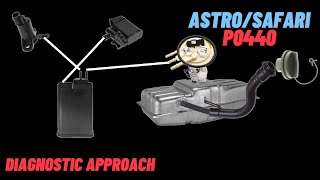
How to confirm: Visually inspect all accessible EVAP lines for cracks, breaks, or loose connections. A smoke test will quickly reveal 🎬 Watch: Troubleshooting P0440 and EVAP leaks on an Astro the location of any hose leaks.
Typical fix: Replace the cracked section of hose or the entire line. Sometimes a simple reconnection is all that is needed.
Est. part cost: $5-$30
Rare But Worth Checking
- Stuck-Closed EVAP Purge Valve: → Shop Vapor Canister A stuck-closed purge valve can trick the computer. During a self-test, the ECM opens the purge valve to draw a vacuum. If it's stuck shut, no vacuum is created, and the computer incorrectly logs a P0455 for a large leak, even though the system is perfectly sealed. Tapping it with a screwdriver can sometimes temporarily unstick it.
- Cracked EVAP Charcoal Canister: → Shop Vapor Canister The canister itself, located near the vent valve, can develop cracks from age or road debris impact, creating a large leak. This is less common than the vent valve failing.
- Leaking Fuel Tank or Fuel Pump Module Seal: → Shop Fuel Pump Less common, but rust can perforate the top of the fuel tank or the fuel pump mounting area, causing a leak. A faulty fuel tank pressure sensor can also cause a false P0455 code by not registering a pressure change during the EVAP test.
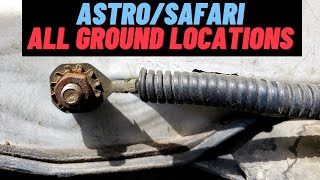
- Broken or Chafed Wiring to Vent Solenoid: A video on a 2003 Astro van with P0449 and P0455 showed the root cause to be a broken power wire to the vent solenoid where the harness had chafed against a metal bracket. 🎬 See this guide for all ground and wiring locations This prevents the valve from closing during the test, mimicking a large leak.
Diagnosis Steps
- Check the gas cap. Ensure it is tight and the seal is in good condition. Clear the code and drive for a few days to see if it returns. This is the cheapest and easiest first step.
- If the code returns, perform a thorough visual and tactile inspection of the fuel filler neck for any signs of rust, flaking, or damage that would prevent a good seal.
- Visually inspect all accessible EVAP hoses and lines running from the fuel tank to the engine bay. Look for obvious cracks, damage, or loose connections, particularly around the charcoal canister and valves.
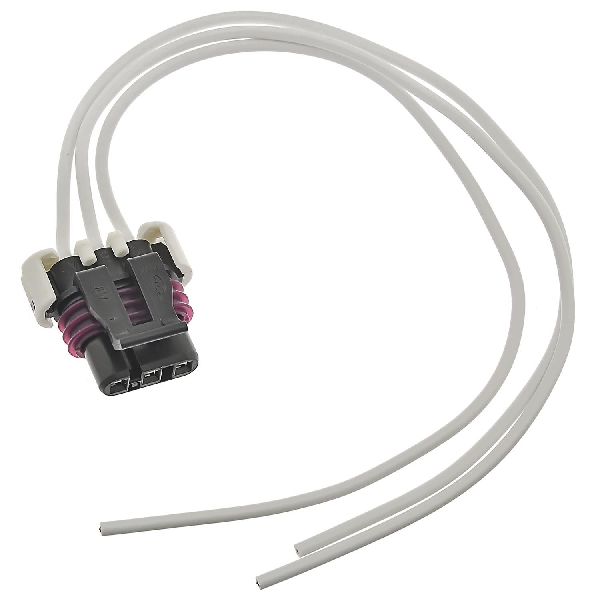
- Locate the EVAP vent solenoid under the vehicle, near the fuel filter on the driver's side frame rail. Check its electrical connection for corrosion or damage. Inspect the wiring harness for any signs of chafing.
- The most definitive diagnostic step is to perform a smoke test. A smoke machine injects low-pressure smoke into the EVAP system via the service port. The leak will be revealed by the escaping smoke. This is the best way to find cracked hoses or a bad filler neck seal.
- If a smoke test shows no leaks, the issue could be a component that is not functioning correctly. Test the purge valve (on the engine) and vent valve (near the tank) using a scan tool to command them open and closed. Check for a stuck-closed purge valve or a stuck-open vent valve.
Parts You'll Likely Need
- Gas Cap
(OEM #GT291)— This is the most frequent and least expensive fix for a P0455 code, typically due to a worn-out seal.
Trusted brands: ACDelco, Stant
OEM price range: $20-$30
Aftermarket price range: $10-$20 - EVAP Vapor Canister Vent Valve Solenoid
(OEM #25950499)— Its location under the vehicle makes it highly prone to failure from road salt and debris, causing it to stick open and create a large leak. This part is also referenced by ACDelco part number 214-1680 and Dorman part number 911-033.
Trusted brands: ACDelco, Dorman, Delphi
OEM price range: $40-$60
Aftermarket price range: $25-$45 - Fuel Tank Filler Neck — A very common failure point on Safari/Astro vans in rust-prone areas. Corrosion prevents the gas cap from sealing, causing a persistent P0455 code. Aftermarket parts are common for this repair.
Trusted brands: Dorman (p/n 577-903), Spectra Premium (p/n FN677)
OEM price range: $120-$180
Aftermarket price range: $50-$100
Related Codes That Often Appear With This One
- P0442 — This code indicates a small EVAP leak. It can appear if there are multiple leaks of different sizes or if a large leak is intermittent. The TSB for this vehicle mentions both codes can be set by the same root causes.
- P0440 — This is a general EVAP system fault code that often accompanies more specific leak codes like P0455.
- P0449 — This code points to a fault in the EVAP vent control circuit. If seen with P0455, it strongly suggests the vent valve or its wiring is the culprit.
Technical Service Bulletins (TSBs) & Recalls
- 21-NA-124: Provides diagnostic tips for testing EVAP system leaks that cause P0442 and P0455 codes. It advises technicians to check seven critical connection points in the EVAP system for proper seating or damage before replacing parts. It also notes that a stuck-open vent valve or stuck-closed purge valve can cause P0455.
- 02-06-04-037J: While not specific to the Safari, this is a well-known GM TSB regarding EVAP codes and difficult-to-diagnose leaks, providing advanced diagnostic strategies that can be relevant.
Platform-Specific Known Issues
- Real Owner Experience: Chasing the Leak: In a YouTube video titled 'astro van P0455 fix', the owner of a 2004 Astro details his journey. He first replaced the purge solenoid and the vent valve, but the Check Engine Light returned. He then bought a smoke machine and discovered the leak was from a poor seal between his new gas cap and the heavily rusted fuel filler neck. The final fix was replacing the fuel filler neck.
Mechanic-Grade Diagnostic Values
- EVAP Canister Vent Solenoid Coil Resistance — expected: 20 to 50 Ohms. Failure: A reading of infinite resistance (open circuit) or zero resistance (short circuit) indicates a failed solenoid coil.
- EVAP Canister Purge Valve Resistance — expected: 30 to 38 Ohms (when engine is cool). Failure: Readings outside this range suggest the purge valve's coil is bad.
- Fuel Tank Pressure (FTP) Sensor Voltage (Gas Cap Off) — expected: 1.3 to 1.7 Volts. Failure: A voltage reading that is stuck low (e.g., 0.2V) or high (e.g., 5V) when the system is open to atmospheric pressure points to a faulty sensor or wiring issue.
Scan Tool Commands That Help
- Tech2 / GDS2 or equivalent: EVAP Service Bay Test — This function runs an automated, on-demand test of the entire EVAP system. It commands the vent valve closed and the purge valve open to check if the system can achieve and hold a vacuum, which helps confirm the presence of a leak.
- Tech2 / GDS2 or equivalent: EVAP Purge/Seal — This command allows a technician to manually close the vent valve and command the purge valve ON or OFF while monitoring the Fuel Tank Pressure (FTP) sensor. It is used to isolate and test the function of individual components and see if the system holds vacuum.
- Tech2 / GDS2 or equivalent: EVAP Vent Solenoid Control — This bidirectional control allows the technician to command the vent solenoid closed. It's used during a smoke test to seal the system or to verify the solenoid is responding to commands and not stuck open.
Wiring & Ground Locations
- G103 — On the lower right-front side of the engine block, serving as the main battery-to-engine block ground.. A poor engine ground can cause erratic voltage and sensor readings for all engine-mounted components, including the PCM which controls the EVAP system.
- G105 — On one of the thermostat housing nuts on the top of the engine.. This ground is critical as it provides the ground path for the Powertrain Control Module (PCM), which operates the entire EVAP system. A bad ground here can cause numerous, difficult-to-diagnose EVAP codes.
- G108 — Under the vehicle on the frame rail, next to the EVAP vent valve.. This ground specifically serves the fuel pump. While not directly tied to the vent/purge solenoids, issues here can affect overall fuel system signals that the PCM uses as part of its diagnostic logic.
- Purge Valve Connector — On top of the intake manifold, connected to the purge valve solenoid.. The two pins should be checked for 12V power (Key On) and a pulsing ground signal from the PCM when the purge is commanded ON. Corrosion or damage here will cause purge circuit faults.
- Vent Valve Connector — Under the vehicle on the driver's side frame rail, connected to the vent valve solenoid.. This connector is highly exposed to moisture and road salt. The wiring and pins should be inspected for corrosion or physical damage, which are common failure points that prevent the valve from closing.
Real Owner Repair Stories
- Chevrolet Forum user (Chevrolet Tahoe (similar GM platform)) — P0455 code, hard starting after refueling, and gas pump nozzle clicking off repeatedly.
❌ Tried (didn't work) Replacing the gas cap (light returned)., Replacing the purge solenoid (light returned).
✅ What actually fixed it The user eventually replaced the charcoal canister, which resolved the fueling issues and the P0455 code, though the fix was only temporary, suggesting an intermittent underlying issue or multiple failure points.
"I Checked Everything" — The Actual Cause
- A smoke test may show no leaks, but the P0455 code can still be set if the EVAP purge valve is stuck closed. The computer interprets the system's inability to draw a vacuum during the self-test as a large leak, when in fact it's a blockage.
- A faulty Fuel Tank Pressure (FTP) sensor can fail to report the change in vacuum to the computer during the EVAP test. Even if the system is perfectly sealed and a vacuum is being pulled, the computer sees no change from the sensor and incorrectly flags a P0455 large leak.
OEM Part Supersession History
Unknown→25950499 (GM)— Standard part evolution and consolidation across multiple vehicle platforms.
Heads up: Part number 25950499 is the widely recognized replacement for the EVAP vent valve on 2000-2004 Safari/Astro vans and many other GM vehicles of the era.
Model Year Variations Within This Range
- 1997 (for reference): A detailed video for a 1997 Safari shows the fuel pump ground (G108) located under the vehicle next to the EVAP vent valve. While this is for an earlier model, its proximity to the vent valve makes it a relevant location to check for corrosion on the 2000-2004 models as well, as ground locations often remain consistent.
Helpful Videos
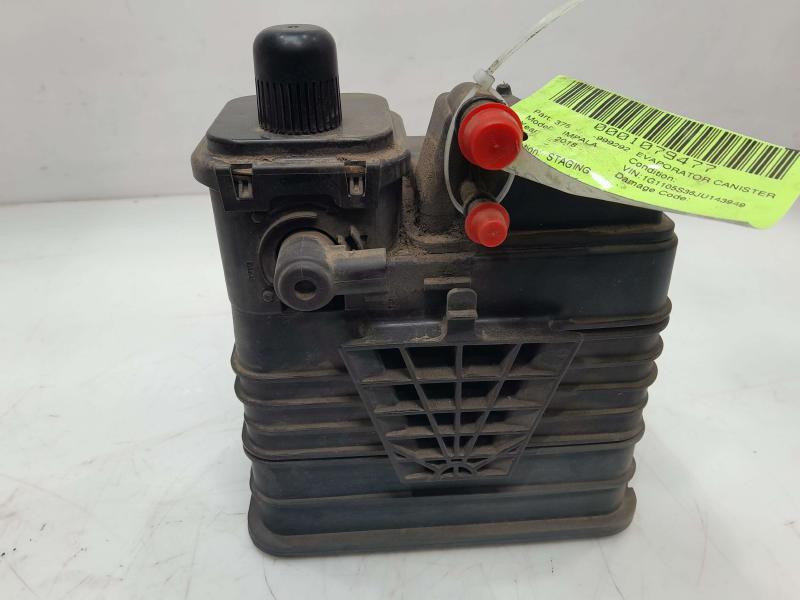
Used OEM Parts in Stock
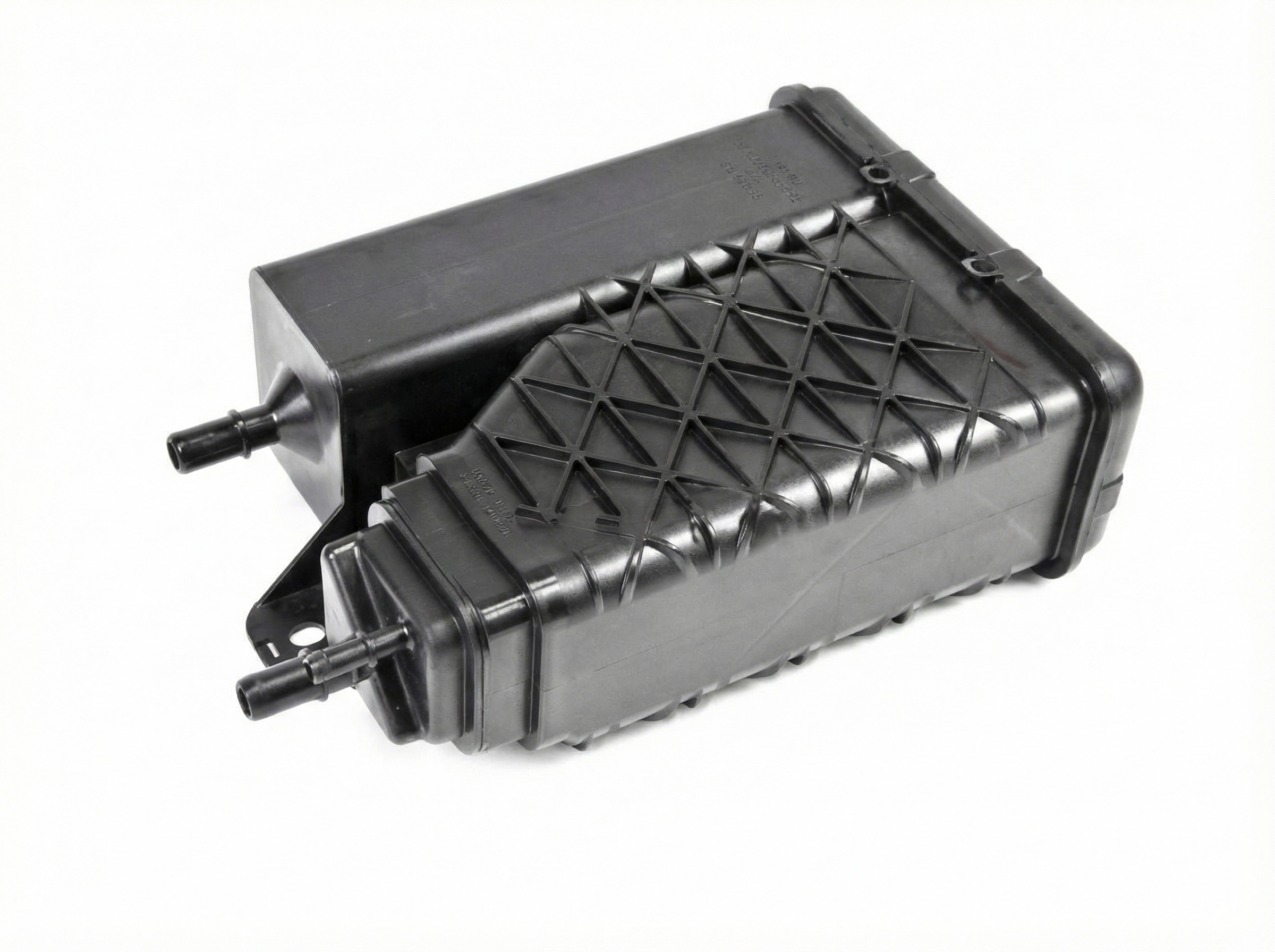
New Aftermarket Parts Available


The information in this article is provided for general reference and educational purposes only. Vehicle specifications, procedures, and part compatibility can vary by production date, trim level, and region. Always consult your vehicle's factory service manual and verify part numbers before purchasing or performing repairs. Safety-critical components such as airbags, seat belts, and braking systems should be installed by a qualified professional.
- Gmc SAFARI (GMC):
- 🧭 Diagnostic Flowchart
- 🎬 Helpful Videos
- 🛍️ Shop This Part
- What's Unique About the 2000-2004 Gmc SAFARI (GMC)
- Symptoms You May Notice
- Most Likely Causes
- Rare But Worth Checking
- Diagnosis Steps
- Parts You'll Likely Need
- Related Codes That Often Appear With This One
- Technical Service Bulletins (TSBs) & Recalls
- Platform-Specific Known Issues
- Mechanic-Grade Diagnostic Values
- Scan Tool Commands That Help
- Wiring & Ground Locations
- Real Owner Repair Stories
- "I Checked Everything" — The Actual Cause
- OEM Part Supersession History
- Model Year Variations Within This Range
- 🎟️ Get 5% Off