

P0455 on 2003-2010 GMC Savana 1500: EVAP Gross Leak Causes and Fixes
For a 2003-2010 GMC Savana, code P0455 is most often caused by a loose or faulty gas cap. If that's not the issue, the next most likely culprits are a failed EVAP vent solenoid near the fuel tank or a rusted fuel filler neck. A new gas cap is under $25, while valve replacement can cost $30-$150.
- Always check the gas cap first for code P0455; ensure it's tight and the seal is intact. This is the most common and cheapest fix.
- If the gas cap is not the problem, the EVAP vent solenoid (under the van by the spare tire) is the next most likely part to fail due to its exposure to the elements.
- For vehicles in the Rust Belt, carefully inspect the fuel filler neck for corrosion, as this is a known failure point that prevents the gas cap from sealing.
- While you can replace parts based on probability, a smoke test is the most definitive way to locate the exact source of a large EVAP leak before spending money on parts.
What's Unique About the 2003-2010 Gmc SAVANA 1500
On workhorse vans like the GMC Savana, the EVAP system components are often exposed to harsh conditions. The fuel filler neck is particularly susceptible to rust, especially in regions where roads are salted, which can prevent the gas cap from sealing properly and cause a large leak. Additionally, the EVAP vent solenoid is typically mounted under the van near the spare tire, making it vulnerable to road debris, moisture, and corrosion. This exposure often leads to it getting stuck open—a very common failure on these GM vans that prevents the system from sealing for its test.
Diagnostic Flowchart
Tap your situation to follow the diagnostic path that matches what you're seeing on this vehicle.
Generation note: This range covers the second generation of the GMC Savana, which received a significant facelift in 2003 with new front-end styling and engine options. However, the fundamental design of the EVAP system and the common failure points for code P0455 remain consistent across these model years and are shared with its platform-mate, the Chevrolet Express.
🎬 Watch: A complete walkthrough of P0455 causes on these GM vans.Symptoms You May Notice
- Check Engine Light is on
- Possible faint fuel smell, especially around the rear of the vehicle
- Difficulty starting immediately after refueling (if the purge valve is stuck open)
- Slight decrease in fuel economy.
- Replacing the fuel tank pressure sensor. While this sensor can fail, it is more likely to trigger other specific codes (like P0452) and is not a common cause for a P0455 leak code, unless a smoke test has already confirmed no leak exists.
- Replacing the charcoal canister when only a valve is bad. The canister itself is just a storage box; it's the valves attached to it that typically fail. A smoke test can confirm if the canister itself is cracked.
Most Likely Causes
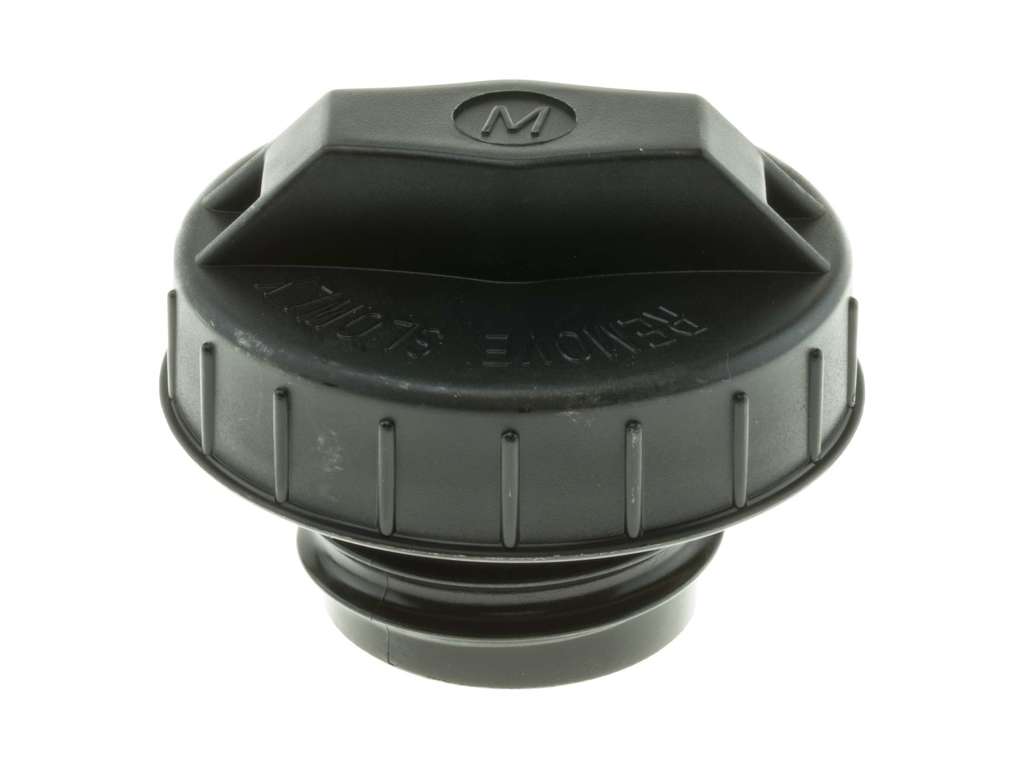
- Loose, Damaged, or Incorrect Gas Cap 🔴 High Probability → Shop Fuel Tank Cap This is the most common cause for any vehicle, accounting for over 50% of P0455 cases. A worn-out seal or a cap that isn't tightened until it clicks will fail the system's pressure test. GM also issued a bulletin (PI0873) for some models noting the cap's tether can get caught under the seal, preventing it from seating properly.
How to confirm: Inspect the gas cap for cracks or a worn, brittle rubber seal. Ensure it is the correct cap for the vehicle and is tightened at least 1-3 clicks. Explicitly check that the plastic tether is not caught under the cap.
Typical fix: Tighten or replace the gas cap.
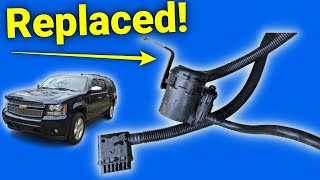
Est. part cost: $15-$30 - Failed EVAP Vent Solenoid/Valve 🟡 Medium Probability → Shop Vapor Canister Located under the van near the charcoal canister and often above the spare tire, this valve is exposed to road salt, water, and dirt. This exposure causes it to corrode and get stuck in the open position, preventing the EVAP system from sealing for its self-test.
How to confirm: The valve is normally open. With a capable scan tool, command the valve closed and see if it holds a vacuum during a smoke test. Alternatively, remove the valve and apply 12V power; it should click closed. If it's stuck open or doesn't actuate, it needs replacement. This code is often paired with P0449, which points directly to an electrical fault in this circuit.
Typical fix: Replace the EVAP vent solenoid. It's often sold as a kit with a new filter box. Dropping the spare tire is usually required for access.
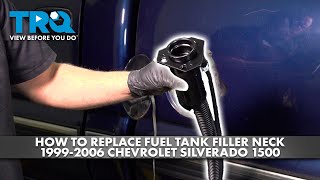
Est. part cost: $30-$100 - Rusted or Damaged Fuel Filler Neck 🟡 Medium Probability → Shop Fuel Filler Neck Common in the Rust Belt, the metal filler neck where the gas cap seals can corrode and develop pits or holes. This prevents even a new gas cap from creating a proper seal, causing a large leak. Owners on forums have confirmed replacing a rusted neck to solve the code. 🎬 Watch: How to replace a rusted fuel filler neck.
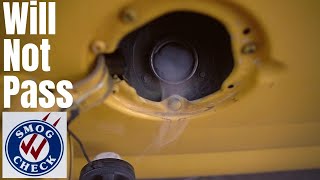
How to confirm: Visually inspect the rim of the filler neck for rust, bubbling paint, or pitting. Run your finger along the sealing surface to feel for imperfections. A smoke test will show smoke billowing from the gas cap area if the neck is the source of the leak.
Typical fix: Replace the fuel filler neck.
Est. part cost: $70-$200 - Failed EVAP Purge Solenoid/Valve ⚪ Low Probability → Shop Vapor Canister This valve is located in the engine bay, typically on the intake manifold, and can get stuck open or closed. While it can cause P0455, it's more commonly associated with code P0496 (EVAP Flow During a Non-Purge Condition) and symptoms like hard starting after refueling. A stuck-closed purge valve can also cause P0455 because the system cannot pull a vacuum for the test, which the ECU misinterprets as a large leak.
How to confirm: The valve is normally closed. Disconnect the hose from the intake manifold side and check for vacuum with the engine running at idle. There should be no vacuum. If there is, the valve is stuck open. You can also remove it and try to blow through it; air should not pass.
Typical fix: Replace the purge solenoid.
Est. part cost: $25-$75
Rare But Worth Checking
- Cracked EVAP Charcoal Canister: → Shop Vapor Canister The plastic canister housing, located near the fuel tank, can be damaged by road debris or become brittle with age, causing a large crack and a leak. This is usually found with a smoke test after other common causes are ruled out.
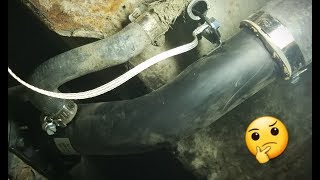
- Cracked or Disconnected EVAP Hoses: The rubber or plastic lines running from the tank to the canister and up to the engine can become brittle and crack, or get disconnected. A thorough visual inspection and smoke test are the best ways to find such a leak. A forum user reported a P0455 was caused by a hose left disconnected after a previous repair.
- Leaking Fuel Tank or Fuel Pump Module Seal: → Shop Fuel Pump In areas with heavy road salt use, the top of the fuel tank or the metal locking ring for the fuel pump assembly can rust through, creating a significant leak. This is a more serious and expensive repair, often confirmed with a smoke test.
- Faulty Fuel Tank Pressure (FTP) Sensor: → Shop Fuel Tank In some cases, there is no physical leak. A faulty FTP sensor may fail to report pressure changes to the ECM during the test. The ECM interprets this lack of change as a large leak and sets P0455. This is often diagnosed after a smoke test shows the system is perfectly sealed.
Diagnosis Steps
- Check the gas cap. Remove it, inspect the seal for cracks, and clean it. Check that the tether is not binding. Reinstall it and ensure it clicks several times. Clear the code and drive for a few days to see if it returns.
- If the code returns, perform a thorough visual inspection of the EVAP system. Look for any obvious cracks or disconnected hoses, especially around the charcoal canister and along the frame rail.
- Inspect the fuel filler neck for any signs of rust or corrosion that would prevent the gas cap from sealing.
- Locate the EVAP vent solenoid under the van, usually near the spare tire. Check its electrical connector and hoses for damage or corrosion. Consider removing it and testing its function by applying 12V power to see if it clicks closed.
- Locate the EVAP purge solenoid in the engine bay and inspect its connections. Test it by checking for vacuum at idle or by removing it and attempting to blow through it (it should be closed).
- If no visual issues are found, the most effective diagnostic method is a smoke test. A mechanic will inject low-pressure smoke with UV dye into the EVAP system. The smoke will escape from the location of the leak, making it easy to pinpoint whether it's a hose, the filler neck, a valve, the canister, or even the top of the fuel tank.
Parts You'll Likely Need
- Gas Cap
(OEM #ACDelco GT330 (or GT281/GT294, verify by VIN))— This is the most frequent cause due to a worn seal or improper tightening. It's the cheapest and easiest part to replace first.
Trusted brands: ACDelco, Stant, Gates
OEM price range: $20-$30
Aftermarket price range: $15-$25 - EVAP Vent Valve / Solenoid
(OEM #ACDelco 214-2149 (Supersedes 25932571))— Its exposed location under the van makes it highly prone to failure from corrosion and debris, causing it to stick open.
Trusted brands: ACDelco, Dorman (911-021), Standard Motor Products (CVS6)
OEM price range: $50-$100
Aftermarket price range: $30-$80
Related Codes That Often Appear With This One
- P0442 — This code indicates a small EVAP leak. A component may be starting to fail and initially set a P0442 before the leak worsens and triggers a P0455. The official GM TSB #21-NA-124 addresses both codes together, outlining a diagnostic procedure for both small and large leaks.
- P0449 — This code points specifically to an electrical fault in the EVAP vent valve circuit. If you see P0449 and P0455 together, it strongly suggests the vent valve or its wiring is the problem, simplifying diagnosis.
- P0496 — This code indicates 'EVAP Flow During a Non-Purge Condition,' which almost always means the purge solenoid is stuck open. Seeing this with P0455 and experiencing hard starts after fueling makes the purge solenoid the prime suspect.
Technical Service Bulletins (TSBs) & Recalls
- TSB #21-NA-124: Dated May 2021, this bulletin provides diagnostic tips for dealers when encountering P0442 (small leak) and/or P0455 (large leak). It advises a chronological investigation starting with EVAP line connections, then checking for damage, and finally testing the vent and purge valves.
- TSB #PI0873: This older Preliminary Information bulletin notes that the gas cap tether can get caught under the cap's seal, preventing it from seating correctly and causing a large leak code.
Platform-Specific Known Issues
- GM issued Technical Service Bulletin (TSB) #21-NA-124, which provides updated diagnostic tips for finding EVAP leaks that cause codes P0442 and P0455.
Mechanic-Grade Diagnostic Values
- Fuel Tank Pressure (FTP) Sensor Voltage (Key On, Engine Off, Gas Cap Off) — expected: ~1.5 Volts. Failure: A reading significantly different from 1.5V, or a voltage that is stuck and does not change when vacuum is applied during a test, indicates a faulty sensor.
- EVAP Vent Valve / Solenoid Coil Resistance — expected: 20 to 30 Ohms. Failure: A reading of infinite resistance (open circuit) or near-zero resistance (short circuit) indicates the solenoid coil has failed.
- EVAP Vent Solenoid Power Supply Wire (at solenoid connector) — expected: 12 Volts (Battery Voltage) on the Pink wire with key on. Failure: No voltage on the Pink wire indicates a blown fuse (typically 15A) or a break in the power supply wire.
- EVAP System Test Preconditions (for Scan Tool) — expected: Engine Coolant Temp < 158°F (70°C), Fuel Level between 15-85%. Failure: If these conditions are not met, the scan tool's automated 'EVAP Service Bay Test' will be denied and will not run.
Scan Tool Commands That Help
- Tech 2 / GDS2 (or equivalent professional scanner): EVAP Service Bay Test — This is a guided functional test used to verify the entire EVAP system's integrity. It commands the vent valve closed and the purge valve open to pull a vacuum, then seals the system to monitor for vacuum decay, watching the FTP sensor voltage. It's the primary software-based method to diagnose P0455 after a visual inspection.
- Tech 2 / GDS2 (or equivalent professional scanner): Vent Solenoid Command (On/Off or Open/Close) — Used during a smoke test to manually close the normally-open vent valve, sealing the system. If smoke pours out of the vent valve when it is commanded closed, the valve is faulty.
- Tech 2 / GDS2 (or equivalent professional scanner): Purge Solenoid Command (% or On/Off) — Used to test the function of the normally-closed purge valve. With the engine running, commanding the purge valve open should cause a change in engine RPM and FTP sensor voltage. If the command is sent but no vacuum is pulled at the valve, it is stuck closed.
Wiring & Ground Locations
- EVAP Vent Solenoid Connector — Under the van, near the charcoal canister, often above or in front of the spare tire.. This connector is exposed to the elements. The Pink wire should have 12V power with the key on. The White wire is the control wire, which the ECM grounds to close the valve. Checking for power here is a key step in diagnosing a P0449 or a non-responsive vent valve.
- EVAP System Ground — The ground for the rear EVAP components is typically a bolt on the steel frame rail near the component itself.. A rusty or loose frame ground can cause intermittent or failed operation of the vent solenoid, leading to P0449 and P0455 codes. When testing the vent solenoid circuit, ensuring the test light or multimeter has a clean connection to the frame is critical for an accurate reading.
- EVAP Test Port — In the engine bay, often marked with a green cap, connected to the EVAP purge lines.. This is the designated service port for connecting a smoke machine to test the EVAP system for leaks without having to disconnect any factory hoses.
Real Owner Repair Stories
- YouTube channel 'Homie Hektor' (2007 Chevrolet Express (similar system)) — P0455 code, could not pass emissions test.
❌ Tried (didn't work) Initial smoke test did not reveal a leak because the faulty component was stuck in a closed position.
✅ What actually fixed it The EVAP purge valve was stuck closed. A technician used a scan tool to command the purge valve open during a test and noticed the fuel tank pressure did not change. A test light confirmed the ECM was sending the signal, proving the valve itself was bad. Replacing the purge valve resolved the P0455 code. - GMTNation forum user 'Petnatcar' (2005 GM Van (specific model not stated, but platform-relevant)) — Persistent P0455 code.
❌ Tried (didn't work) Replacing the gas cap., Replacing the rusted fuel filler pipe., Replacing the purge valve.
✅ What actually fixed it A follow-up smoke test revealed the leak source. A small vent hose with a snap-on connector was not properly re-attached to the new filler pipe during the initial repair. Correctly connecting the hose finally fixed the code.
"I Checked Everything" — The Actual Cause
- A stuck-closed EVAP purge solenoid. The ECM attempts to run its self-test by opening the purge valve to draw engine vacuum into the fuel tank. If the valve fails to open, no vacuum is created. The Fuel Tank Pressure (FTP) sensor reports no change, which the ECM incorrectly interprets as a massive leak (P0455), even though the system is perfectly sealed and will pass a standard smoke test.
- A faulty Fuel Tank Pressure (FTP) sensor. If the system is sealed and a vacuum is successfully pulled, but the FTP sensor is electrically faulty and fails to report the pressure change (e.g., its voltage remains stuck at 1.5V), the ECM will assume the test failed and set a P0455 code. The system holds pressure perfectly, but the bad sensor makes it appear as if there's a large leak.
OEM Part Supersession History
GM 25932571→ACDelco 214-2149— Standard part lifecycle update. The new part is the current service replacement.
Heads up: This part is the EVAP Vent Solenoid and appears to be compatible across the entire 2003-2010 model year range for Savana/Express vans.
Model Year Variations Within This Range
- 2003-2007 vs 2008-2010: The EVAP Purge Valve part number may differ. Some guides list part number 12581282 for earlier models (up to 2007/2008), while later models may use a different part (e.g., 214-2317, though this is less confirmed for the Savana). It is critical to verify the correct purge valve part number with the vehicle's VIN before purchasing.
Helpful Videos
We Have This Part in Stock


The information in this article is provided for general reference and educational purposes only. Vehicle specifications, procedures, and part compatibility can vary by production date, trim level, and region. Always consult your vehicle's factory service manual and verify part numbers before purchasing or performing repairs. Safety-critical components such as airbags, seat belts, and braking systems should be installed by a qualified professional.
- Gmc SAVANA 1500:
- 🧭 Diagnostic Flowchart
- 🎬 Helpful Videos
- 🛍️ Shop This Part
- What's Unique About the 2003-2010 Gmc SAVANA 1500
- Symptoms You May Notice
- Most Likely Causes
- Rare But Worth Checking
- Diagnosis Steps
- Parts You'll Likely Need
- Related Codes That Often Appear With This One
- Technical Service Bulletins (TSBs) & Recalls
- Platform-Specific Known Issues
- Mechanic-Grade Diagnostic Values
- Scan Tool Commands That Help
- Wiring & Ground Locations
- Real Owner Repair Stories
- "I Checked Everything" — The Actual Cause
- OEM Part Supersession History
- Model Year Variations Within This Range
- 🎟️ Get 5% Off