

P0455 on 2010-2014 GMC Savana: EVAP Large Leak Causes and Fixes
On a 2010-2014 Savana, P0455 is almost always caused by a loose, faulty, or binding gas cap. A GM service bulletin specifically notes the cap's tether can get caught, preventing a good seal. If the cap isn't the issue, the next most likely causes are the EVAP vent solenoid under the van near the fuel tank, which gets stuck due to road debris, or the purge solenoid on the engine, which can cause hard starting after refueling if it fails.
- Start with the simplest fix: check your gas cap. Make sure it's tight and the tether isn't caught under it.
- A P0455 code will not stop you from driving, but it will cause you to fail an emissions test.
- If the gas cap is not the problem, the EVAP vent solenoid (under the van) or purge solenoid (on the engine) are the next most likely culprits.
- A smoke test is the most reliable way to find a leak if the cause is not immediately obvious.
What's Unique About the 2010-2014 Gmc SAVANA
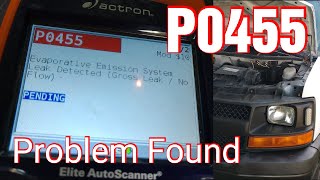
For the GMC Savana and its twin, the Chevrolet Express, the P0455 code is often simpler than it sounds. General Motors issued a specific Preliminary Information Bulletin (PI0873) for the 2013 model year, which is highly relevant to this entire generation. It highlights that the fuel cap tether can bind or get caught under the cap's seal, preventing it from seating properly and directly causing a P0455 code. 🎬 Watch: How to solve the P0455 code on a Chevy. This makes meticulously checking the gas cap and its tether the most important first step on these vans before suspecting other parts.
Diagnostic Flowchart
Tap your situation to follow the diagnostic path that matches what you're seeing on this vehicle.
Symptoms You May Notice
- Check Engine Light is illuminated
- A distinct smell of gasoline near the fuel tank area or around the vehicle, especially when parked in an enclosed space like a garage.
- Difficulty starting the engine immediately after refueling. This can happen if the purge valve is stuck open, allowing excess fuel vapors into the intake manifold.
- Fuel pump nozzle clicks off repeatedly when trying to fill the gas tank. This can be a symptom of a stuck-closed or clogged EVAP vent valve, which prevents air from escaping the tank as fuel enters.
- Immediately replacing the expensive charcoal canister without performing a smoke test to confirm it is the source of the leak.
- Replacing the purge or vent valve without testing them first. A simple check (blowing through the purge valve, or using a scan tool for the vent valve) can confirm if the part has actually failed.
- Assuming a large leak exists when the actual fault is a stuck-closed purge valve or a bad fuel tank pressure sensor, which prevents the system from pulling a vacuum during its self-test.
Most Likely Causes
- Loose, Damaged, or Improperly Installed Gas Cap 🔴 High Probability → Shop Fuel Tank Cap A GM Technical Service Bulletin (PI0873) specifically calls out the fuel cap tether binding and preventing a proper seal on these vans. The plastic tether can easily get caught between the cap and the filler neck.
How to confirm: Ensure the gas cap is tightened until it clicks at least 1-3 times. Remove the cap and inspect its rubber O-ring seal for cracks, hardening, or damage. Explicitly check that the plastic tether is not caught under the cap, preventing it from seating correctly.
Typical fix: Tighten or replace the gas cap. If the tether is the issue, reposition it. A new OEM or quality aftermarket gas cap is an inexpensive and very common fix.
Est. part cost: $15-$40 - Failed EVAP Vent Solenoid 🟡 Medium Probability → Shop Vapor Canister Located under the vehicle near the charcoal canister (just forward of the gas tank), this part is exposed to road grime, moisture, and debris, making it a common failure point on GM trucks and vans. The valve can get stuck open or closed due to internal corrosion or dirt ingress.
How to confirm: The solenoid is normally open. A scan tool can command it closed for testing. A common failure is the valve getting stuck open or seized, preventing it from closing during the EVAP test. A smoke test will show smoke billowing out of a stuck-open vent valve. May also be accompanied by code P0449, which points directly to this component's circuit.
Typical fix: Replace the EVAP vent solenoid assembly. This part is typically found near the spare tire, mounted to a bracket near the charcoal canister.
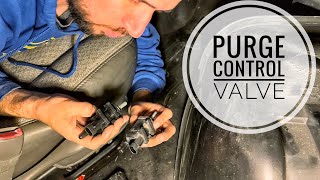
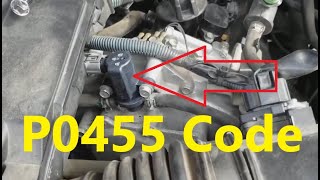
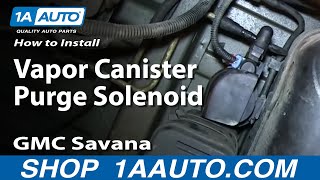
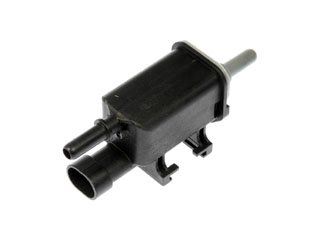
Est. part cost: $40-$100 - Failed EVAP Purge Solenoid/Valve 🟡 Medium Probability → Shop Vapor Canister This is another common failure item on many GM vehicles. It is located on top of the engine's intake manifold and is relatively easy to access.
How to confirm: The valve should be normally closed when the engine is off. Disconnect the valve and try to blow through it; if air passes, it is stuck open and has failed. A stuck-open purge valve can also cause a rough idle or hard starting after refueling because it creates a constant vacuum leak.
Typical fix: Replace the purge solenoid. This is often a simple, 10-minute repair on top of the engine requiring minimal tools.
Est. part cost: $25-$60 - Cracked or Disconnected EVAP Hoses ⚪ Low Probability Over time, the plastic and rubber hoses in the EVAP system can become brittle and crack, especially those exposed to engine heat or underbody elements. The connections at the purge solenoid and canister are common places for leaks to develop.
How to confirm: A visual inspection may reveal obvious cracks or disconnected lines. A smoke test is the most effective method, as it will force smoke out of any small cracks or loose connections, making them easy to identify.
Typical fix: Replace the damaged section of hose or reconnect the line. Small cracks can sometimes be sealed, but replacement is recommended for long-term reliability.
Est. part cost: $10-$50
Rare But Worth Checking
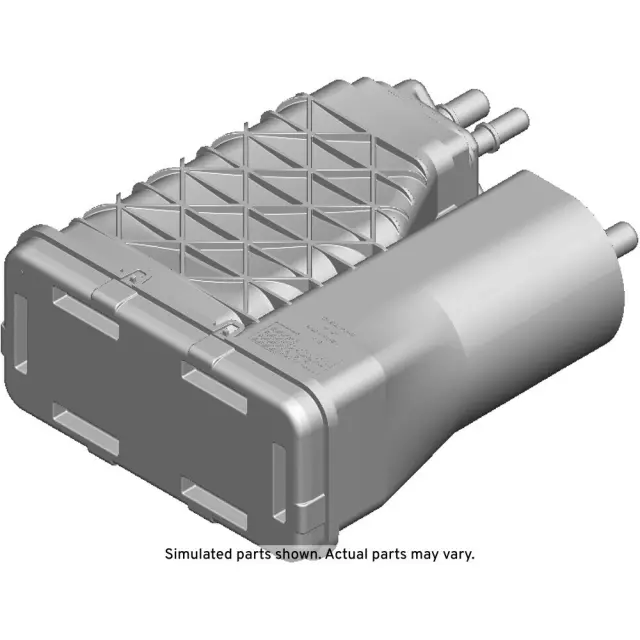
- Cracked Charcoal Canister: → Shop Vapor Canister The plastic housing of the charcoal canister can be cracked by road debris, creating a large leak. This is less common but should be considered if other components check out. A smoke test will clearly show smoke exiting the canister housing if it's cracked.
- Damaged Fuel Filler Neck: → Shop Fuel Filler Neck Rust or damage to the metal filler neck where the gas cap seals can prevent a proper seal, even with a new cap. Run your finger along the sealing surface to feel for any pitting or corrosion that could compromise the seal.
- Failed Fuel Tank Pressure Sensor: → Shop Fuel Tank In some cases, the leak isn't real. A faulty Fuel Tank Pressure (FTP) sensor can fail to report pressure changes to the ECM. The ECM interprets this lack of change during a test cycle as a massive leak, triggering P0455. This is often a more complex diagnosis requiring a scan tool to monitor sensor voltage.
Diagnosis Steps
- Read the code with an OBD-II scanner to confirm P0455 is present.
- Inspect the gas cap. This is the #1 cause. Ensure it is tight and clicks when secured. Remove it and check the rubber seal for cracks. Verify the tether is not caught underneath it. If in doubt, a new gas cap is a cheap first step.
- Perform a thorough visual inspection of all accessible EVAP hoses and lines, from the engine bay to the fuel tank, looking for obvious cracks, damage, or disconnections.
- Locate the purge solenoid on the engine's intake manifold. Disconnect it and attempt to blow through it. If air passes, the valve is stuck open and needs to be replaced.
- If the above steps do not reveal the issue, the most effective next step is a smoke test. A mechanic will connect a smoke machine to the EVAP test port. The smoke will fill the system and reveal the exact location of any leak. 🎬 Watch: Common causes and fixes for large EVAP leaks.
- During the smoke test, pay close attention to the vent solenoid (under the van by the tank), the charcoal canister, and the fuel filler neck.
- If no smoke leak is found, use a bidirectional scan tool to command the vent solenoid closed and the purge solenoid open to verify their function and check for a response from the fuel tank pressure sensor. A non-responsive sensor or a purge valve that doesn't pull vacuum when commanded open points to a faulty component rather than a physical leak.
Parts You'll Likely Need
- Fuel Tank Cap
(OEM #ACDelco GT294 (Verify by VIN))— This is the most frequent cause of P0455, often due to not being tightened properly, a worn seal, or a binding tether as noted in GM service bulletin PI0873.
Trusted brands: ACDelco, Motorad, Stant
OEM price range: $25-$40
Aftermarket price range: $15-$25 - Vapor Canister Vent Solenoid
(OEM #ACDelco 23481121 (Verify by VIN, may be part of a kit))— This component is a common failure point on GM trucks and vans due to its location under the vehicle, where it's exposed to the elements and can seize.
Trusted brands: ACDelco, Dorman (e.g., 911-064), Standard Motor Products (SMP)
OEM price range: $70-$120
Aftermarket price range: $40-$80 - Vapor Canister Purge Solenoid
(OEM #ACDelco 12690512 (Verify by VIN))— A common failure item that can get stuck open, creating a large leak and often causing hard starts after fueling. It's located on the engine for easy access.
Trusted brands: ACDelco, Bosch, Standard Motor Products (SMP)
OEM price range: $40-$70
Aftermarket price range: $25-$50
Related Codes That Often Appear With This One
- P0442 — This code indicates a small EVAP leak. It can appear alongside P0455 if the system has intermittent or multiple leaks of different sizes. The TSBs provided mention both codes appearing for the same root causes, especially the gas cap tether issue.
- P0449 — This code specifically points to a fault in the EVAP vent solenoid valve control circuit. If you see P0455 and P0449 together, the vent solenoid is almost certainly the culprit, either electrically or mechanically.
- P0496 — This code indicates 'EVAP Flow During a Non-Purge Condition,' which almost always means the purge solenoid is stuck open. If you see this with P0455 and experience hard starts after fueling, the purge solenoid is the prime suspect.
Technical Service Bulletins (TSBs) & Recalls
- 21-NA-124: Provides diagnostic tips for EVAP leaks related to codes P0442 and/or P0455.
- PI0873: Cites the fuel cap tether binding as a specific cause for P0442 and/or P0455.
Platform-Specific Known Issues
- Bulletin #PI0873 specifically notes that the fuel cap tether can get caught or bind, preventing the cap from sealing correctly and triggering codes P0442 and/or P0455. Always check the tether's position when tightening the cap.
- The platform-mate Chevrolet Express vans (2010-2014) experience the exact same P0455 failure patterns, including the gas cap tether, vent solenoid, and purge solenoid issues.
Mechanic-Grade Diagnostic Values
- Fuel Tank Pressure (FTP) Sensor Voltage — expected: Approximately 1.5V with the gas cap off (atmospheric pressure). Voltage should decrease as vacuum is applied and increase as pressure is applied.. Failure: A voltage signal that is stuck high (e.g., near 5V, may set P0453) or low (e.g., near 0V, may set P0452), or does not change when the system is sealed and vacuum is applied during a scan tool test, can falsely trigger a P0455.
Scan Tool Commands That Help
- GM Tech2 / GDS2 or equivalent professional scanner: EVAP Service Bay Test (or Purge/Seal) — This is a crucial diagnostic step after a visual inspection and gas cap check. The function commands the vent valve to close (seal) and then allows the technician to incrementally open the purge valve to apply engine vacuum to the system. By monitoring the FTP sensor's reaction, a technician can confirm if the system holds a vacuum, verifying the integrity of the seals, hoses, and components without a smoke machine. A failure in this test confirms a leak.
Wiring & Ground Locations
- G400 — On the inner left (driver's side) rear frame rail.. This is a primary ground point for components located at the rear of the vehicle. A corroded or loose G400 can cause intermittent or total failure of the EVAP Vent Solenoid and the Fuel Tank Pressure sensor, leading to false codes or erratic behavior.
- G102 / G103 — On the rear of the cylinder heads (left and right side of the engine).. These are major engine grounds. The EVAP Purge Solenoid, being mounted on the engine, relies on a solid engine ground. While less likely to be the sole cause, a poor connection here can contribute to various engine management issues, including erratic solenoid operation.
Real Owner Repair Stories
- YouTube video on a 2007 Chevy Express 2500 (2007 Chevrolet Express 2500 w/ 4.8L V8) — Intermittent P0455 code for six months.
❌ Tried (didn't work) The owner did not list prior failed attempts, but went directly to testing components.
✅ What actually fixed it The EVAP vent valve was seized and would not close when commanded by the scan tool. Banging on it did not free it up. Replacing the vent valve (solenoid) fixed the problem. - YouTube video on a GM Truck/SUV (GM Truck/SUV (specific model not stated, but process is identical for Savana)) — Couldn't put gas in the truck; pump would shut off constantly.
❌ Tried (didn't work) Replaced the rear EVAP vent solenoid., Replaced the charcoal canister.
✅ What actually fixed it The EVAP lines running on top of the fuel tank were completely clogged with charcoal pellets from the old, disintegrated canister. The tank had to be dropped to access and blow out the clogged lines with compressed air.
"I Checked Everything" — The Actual Cause
- If a comprehensive smoke test reveals no leaks, the fault may not be a physical leak but an electrical one. The most likely culprit in this scenario is a faulty Fuel Tank Pressure (FTP) sensor. The sensor may be electrically sound enough not to set its own specific code (like P0452/P0453) but fails to accurately report the small pressure changes during the EVAP monitor test. The ECM interprets the lack of a pressure change as a massive, instantaneous leak, setting P0455. Diagnosis requires a scan tool to watch the live sensor voltage during a manually commanded Purge/Seal test to see if it responds correctly.
OEM Part Supersession History
ACDelco 20995786, 22869433 (Vent Solenoid/Valve Assembly)→ACDelco 23103933 (Verify by VIN)— Part consolidation and design updates.
Heads up: Older part numbers may have been for the solenoid only, while newer numbers are often for a kit that includes the solenoid, a new hose, and sometimes a new bracket. It is critical to check compatibility by VIN as the harness connector or hose routing may have changed.ACDelco 12610560 (Purge Solenoid)→ACDelco 12690512 (Verify by VIN)— Updated internal design for improved durability.
Heads up: The physical form factor and connectors are generally the same, making them interchangeable. The newer part number is the recommended service replacement.
Model Year Variations Within This Range
- 2010-2014: While the function is identical, the exact location of the EVAP Purge Solenoid can differ based on the specific V8 engine (4.8L, 5.3L, 6.0L) and model year. On most, it is easily accessible on top of the intake manifold behind the alternator. However, on some configurations, it may be located on the driver's side frame rail, requiring a different access approach.
Helpful Videos
Used OEM Parts in Stock

New Aftermarket Parts Available


The information in this article is provided for general reference and educational purposes only. Vehicle specifications, procedures, and part compatibility can vary by production date, trim level, and region. Always consult your vehicle's factory service manual and verify part numbers before purchasing or performing repairs. Safety-critical components such as airbags, seat belts, and braking systems should be installed by a qualified professional.
- Gmc SAVANA:
- 🧭 Diagnostic Flowchart
- 🎬 Helpful Videos
- 🛍️ Shop This Part
- What's Unique About the 2010-2014 Gmc SAVANA
- Symptoms You May Notice
- Most Likely Causes
- Rare But Worth Checking
- Diagnosis Steps
- Parts You'll Likely Need
- Related Codes That Often Appear With This One
- Technical Service Bulletins (TSBs) & Recalls
- Platform-Specific Known Issues
- Mechanic-Grade Diagnostic Values
- Scan Tool Commands That Help
- Wiring & Ground Locations
- Real Owner Repair Stories
- "I Checked Everything" — The Actual Cause
- OEM Part Supersession History
- Model Year Variations Within This Range
- 🎟️ Get 5% Off