

P0455 on 2015-2019 GMC Savana: EVAP Gross Leak Causes and Fixes
The P0455 code on a 2015-2019 GMC Savana indicates a large leak in the evaporative emissions (EVAP) system. The most common and easiest fix is to check for a loose or faulty gas cap. If that's not the issue, suspect a failed EVAP vent or purge solenoid, which are common failure points on these vans.
- Always check the gas cap first for a P0455 code. It's the most common and cheapest fix.
- If the gas cap isn't the issue, the next most likely culprits on a Savana are the EVAP purge valve (on the engine) or the vent solenoid (under the van).
- The vent solenoid's location under the vehicle makes it prone to failure from road debris and corrosion.
- While you can drive the vehicle, the issue must be repaired to pass an emissions test and prevent fuel vapors from polluting the atmosphere.
What's Unique About the 2015-2019 Gmc SAVANA
On the GMC Savana, a workhorse van, the EVAP components are subject to significant wear and exposure to road grime, especially the vent solenoid located underneath the vehicle near the fuel tank and charcoal canister. This exposure is a common reason for component failure, as dirt and dust can clog the valve. GM has issued a Technical Service Bulletin (TSB #21-NA-124) that provides diagnostic tips for EVAP leaks causing P0455, indicating this is a recognized issue on these platforms. The steel fuel filler neck is also a known weak point, prone to rusting through and causing a large leak.
Diagnostic Flowchart
Tap your situation to follow the diagnostic path that matches what you're seeing on this vehicle.
Symptoms You May Notice
- Check Engine Light is on
- A noticeable fuel smell, especially around the rear of the van
- Difficulty refueling (gas pump nozzle clicks off repeatedly) if the vent solenoid is stuck closed
- A 'whoosh' sound when opening the gas cap
- Rough idle or difficulty starting after filling the gas tank, which can point to a purge valve stuck open.
- Replacing the fuel tank pressure sensor. While possible, sensor failure is less common than mechanical failures like valves or a bad gas cap seal for this specific code.
- Repeatedly replacing the gas cap when the actual leak is a rusted fuel filler neck that prevents any cap from sealing properly.
Most Likely Causes
- Loose, Damaged, or Incorrect Gas Cap 🔴 High Probability → Shop Fuel Tank Cap As a frequently used service vehicle, the gas cap is opened and closed often, leading to wear on the seal. It can also be easily left loose, forgotten, or replaced with a non-compliant aftermarket cap.
How to confirm: Inspect the gas cap for cracks or a worn, brittle seal. Ensure it is tightened until it clicks at least once. A visual inspection of the fuel filler neck sealing surface for rust or damage is also critical. If in doubt, it's an inexpensive part to replace.
Typical fix: Tighten or replace the gas cap with an OEM or equivalent part.
Est. part cost: $15-$40 - Faulty EVAP Vent Solenoid/Valve 🟡 Medium Probability → Shop Vapor Canister The vent solenoid is located under the van near the spare tire, exposed to road debris, moisture, and corrosion, which can cause it to stick open or fail electronically. Dust and dirt from job sites or unpaved roads are a major cause of failure for these valves on work vans.
How to confirm: The valve is normally open. A scan tool can command it closed to check for function. You can also apply 12V power to it and listen for a click; if it clicks, try blowing through it to confirm it has sealed. Visual inspection may reveal cracks or heavy corrosion.
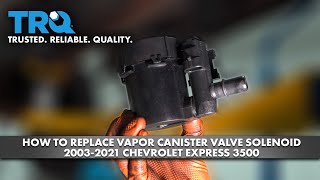
Typical fix: Replace the EVAP vent solenoid. 🎬 Watch: Step-by-step guide to replacing the vent solenoid. It is typically located near the charcoal canister by the fuel tank.
Est. part cost: $30-$70 - Faulty EVAP Canister Purge Valve/Solenoid 🟡 Medium Probability → Shop Vapor Canister This valve can get stuck open, creating a constant vacuum leak, or stuck closed. A stuck-closed purge valve will prevent the system from drawing a vacuum during its self-test, which the ECM interprets as a gross leak.
How to confirm: The valve is normally closed. With the engine off, remove the valve and try to blow through it; if air passes, it's stuck open and faulty. With the engine running, a scan tool can command it to open, and you should hear a clicking sound and see a change in fuel tank pressure.
Typical fix: Replace the purge valve. 🎬 See how to quickly swap out a faulty purge valve. It is usually located on the engine's intake manifold.
Est. part cost: $25-$60 - Cracked or Disconnected EVAP Hoses ⚪ Low Probability Rubber and plastic hoses can become brittle and crack over time due to age and heat cycles. Connections can also become loose, especially if other work has been performed nearby.
How to confirm: Visually inspect all accessible EVAP lines between the fuel tank, charcoal canister, and engine for obvious cracks or damage. A smoke test is the most effective way to find hard-to-see leaks. Pay close attention to connections at the valves and canister.
Typical fix: Replace the damaged section of hose or reconnect it securely.
Est. part cost: $10-$50
Rare But Worth Checking
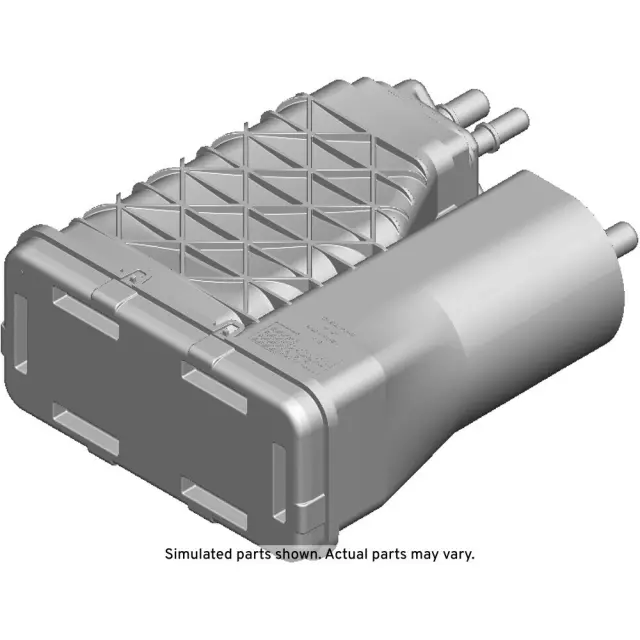
- Cracked EVAP (Charcoal) Canister: → Shop Vapor Canister The plastic housing of the canister can crack from road debris impact or age, creating a large leak. This is usually found during a smoke test.
- Damaged or Rusted Fuel Filler Neck: → Shop Fuel Filler Neck Rust or damage to the metal filler neck where the gas cap seals can prevent a proper seal, causing a leak code. This is a known issue on GM trucks and vans, with owners on forums reporting having to replace the entire filler neck assembly to resolve the code.
- Faulty Fuel Tank Pressure (FTP) Sensor: → Shop Fuel Tank A faulty FTP sensor can fail to register the change in pressure when the EVAP test runs, causing the computer to incorrectly assume there is a large leak. This is less common than other causes but can happen.
Diagnosis Steps
- Check the Gas Cap: This is the most common cause. Ensure the gas cap is tight and clicks when secured. Inspect the cap's seal for any cracks or damage. Also, inspect the lip of the fuel filler neck for rust or deformities that would prevent a seal. If it looks worn, replace it with a genuine OEM cap.
- Visual Inspection: Inspect all visible EVAP hoses and lines running from the fuel tank to the engine. Look for obvious cracks, breaks, or loose connections. Pay special attention to the lines around the purge and vent solenoids.
- Inspect the EVAP Purge Valve: Locate the purge valve on the engine intake manifold. With the engine off, it should be closed. A quick test is to remove it and see if you can blow air through it. If you can, it's stuck open and needs replacement.
- Inspect the EVAP Vent Solenoid: Locate the vent solenoid near the charcoal canister under the vehicle, often above the spare tire. Check its electrical connector for corrosion or damage. You can test its function by applying 12V power and listening for a click. These are prone to failure from their exposed location and are often replaced if the gas cap and purge valve are good.
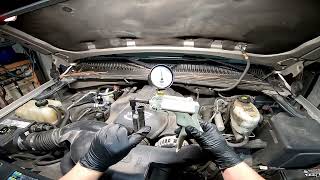
- Perform a Smoke Test: If the leak source is not obvious, the most effective diagnostic method is to use an automotive smoke machine. This involves feeding low-pressure smoke into the EVAP system (usually via the service port or a disconnected hose) and watching for where it escapes. 🎬 Watch: How to find a large leak using a smoke test. This will pinpoint the exact location of the leak, whether it's a hose, the canister, or the filler neck.
- Clear Codes and Retest: After any repair, clear the DTC with a scan tool and drive the vehicle through several drive cycles to allow the EVAP monitor to run and confirm the fix.
Parts You'll Likely Need
- EVAP Canister Purge Valve
(OEM #12690512)— This valve can stick open or closed, leading to EVAP system codes. A stuck-closed valve can be misread by the computer as a large leak because no vacuum is generated during the test. This part number is superseded by 12737252.
Trusted brands: ACDelco, Dorman, Standard Motor Products
OEM price range: $30-$50
Aftermarket price range: $20-$40 - EVAP Canister Vent Solenoid
(OEM #25932571)— Its location under the van makes it highly susceptible to failure from dirt and moisture, causing it to stick open and create a large leak. The ACDelco service part number is 214-2149.
Trusted brands: ACDelco, Dorman, Standard Motor Products
OEM price range: $40-$60
Aftermarket price range: $30-$50 - Fuel Cap
(OEM #22921366)— The seal on the gas cap is the most common failure point in the EVAP system, causing a large leak if it's worn, damaged, or not tightened correctly. Using a non-OEM cap can also cause issues.
Trusted brands: ACDelco, Stant, Gates
OEM price range: $20-$40
Aftermarket price range: $15-$25
Related Codes That Often Appear With This One
- P0442 — P0442 indicates a small EVAP leak. Sometimes a component is beginning to fail and may initially set a P0442 before worsening and triggering a P0455. Both codes are mentioned in the same GM service bulletin.
- P0449 — P0449 specifically points to a fault in the EVAP vent solenoid valve control circuit. If the solenoid fails electrically, it can cause a P0455 if it's stuck open.
- P0446 — This code indicates a restriction in the EVAP vent system. A TSB for dusty environments notes that dust can clog the vent solenoid, causing P0446 along with P0455.
Technical Service Bulletins (TSBs) & Recalls
- 21-NA-124: Diagnostic tips/steps on testing for possible EVAP leaks in the system to correct a customer concern of an MIL Illuminated with DTCs P0442 and/or P0455 Set.
- GM Service Bulletin (uncited number): Addresses dust intrusion into the EVAP system in severe environments, causing various EVAP codes including P0455.
Platform-Specific Known Issues
- GM Technical Service Bulletin #21-NA-124 was issued to provide technicians with diagnostic advice for finding EVAP leaks that cause codes P0442 and P0455, acknowledging that locating the source can be difficult on these vehicles.
Mechanic-Grade Diagnostic Values
- Fuel Tank Pressure (FTP) Sensor Voltage — expected: ~1.5 Volts with key on, engine off, and gas cap removed (system at atmospheric pressure).. Failure: Voltage is stuck at a specific value and does not change when vacuum is applied, or is significantly different from 1.5V at atmospheric pressure.
- EVAP Vent Valve Solenoid Resistance — expected: 20-50 ohms across the two pins.. Failure: A reading far outside this range, or infinite resistance (open circuit), indicates a failed solenoid coil.
- EVAP Purge Valve Solenoid Resistance — expected: Approximately 30-38 ohms (value from similar GM platform).. Failure: A reading significantly outside this range suggests a faulty solenoid coil.
- Fuel Pressure (Pump Running) — expected: 345-690 kPa (50-100 psi) when commanded ON with a scan tool.. Failure: Pressure below the specified range can indicate a weak pump or leak, while pressure above the range can indicate a regulator issue.
Hidden / Shadow Codes Worth Checking
- Mode 6, Test ID for EVAP Gross Leak: Mode 6 data provides the raw results from the ECM's self-tests. For P0455, a technician can view the specific test result for the large leak monitor. It will show a measured value (e.g., pressure decay rate) compared against the minimum and maximum allowable thresholds. A failing value here confirms the monitor is detecting a gross leak. (see via A professional-grade scan tool capable of displaying Mode $06 data is required.)
Scan Tool Commands That Help
- GDS2 / Tech2 (or equivalent professional scanner): EVAP Service Bay Test — This is a guided diagnostic function that automatically seals the EVAP system by closing the vent valve and then commands the purge valve to create a vacuum, while monitoring the FTP sensor. It allows a technician to test the entire system's integrity from the driver's seat.
- Bidirectional Scan Tool: EVAP Purge Solenoid Control (% or On/Off) — Used to manually command the purge valve open to check if it is functioning. While commanding it open, a technician can check for vacuum at the valve's port to confirm it's not stuck closed.
- Bidirectional Scan Tool: EVAP Vent Solenoid Control (On/Off) — Used to command the normally-open vent valve to close, sealing the system for a smoke test. This is critical for preventing smoke from simply exiting the vent and allowing the system to be pressurized to find leaks.
Real Owner Repair Stories
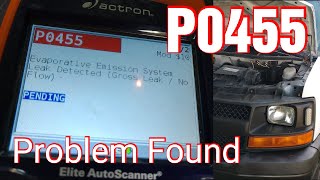
- YouTube channel 'P0455 Code Chevy Problem Solved' (2007 Chevy Express 2500 4.8L (same platform)) — Intermittent P0455 code for 6 months.
❌ Tried (didn't work) The owner suspected the gas cap or purge valve initially.
✅ What actually fixed it The canister vent valve was seized and would not actuate when 12V power was applied during a bench test. Replacing the canister vent valve resolved the code. - YouTube channel 'Homie Hektor' (Chevrolet Express Van (year not specified, but similar platform)) — P0455 code.
❌ Tried (didn't work) Initial checks of gas cap and visual inspection.
✅ What actually fixed it The EVAP purge valve was stuck closed. Using a scan tool's bidirectional control, the technician commanded the purge valve to open but observed no change in FTP sensor voltage and confirmed no vacuum was being pulled through the valve. Replacing the purge valve fixed the issue. - Comment on YouTube video 'How To Fix Large Evap Leaks On Your Car P0455' (Not specified, but GM vehicle.) — P0455 code.
❌ Tried (didn't work) Replacing the EVAP solenoids.
✅ What actually fixed it The fuel filler neck was rusted through, creating a large leak that prevented the gas cap from sealing. Replacing the fuel filler neck finally resolved the code.
"I Checked Everything" — The Actual Cause
- A common scenario is for a smoke test to show no leaks, yet the P0455 code persists. This often points to a non-leak failure that the ECM interprets as a leak. The two most likely causes are a faulty EVAP Canister Purge Valve that is stuck closed, or a faulty Fuel Tank Pressure (FTP) sensor. If the purge valve is stuck closed, it cannot draw a vacuum on the tank during the self-test. The FTP sensor sees no change in pressure and the ECM logs a P0455 for 'Gross Leak/No Flow'. Similarly, if the FTP sensor itself is faulty and not reporting pressure changes, the ECM will assume a large leak is present even if the system is perfectly sealed.
OEM Part Supersession History
12690512→12737252— Standard part evolution and consolidation.
Heads up: Part number 12737252 also replaces older part numbers 12610560 and 12661763.25932571→N/A (Still current service part number)— N/A
Heads up: This part number is a replacement for several older numbers, including 10382105, 15750484, and 22728634.
Model Year Variations Within This Range
- 2015-2019: No significant variations in the core EVAP system design, common causes, or diagnostic procedures have been identified within this model year range for the GMC Savana. The platform remained largely consistent.
Helpful Videos
Used OEM Parts in Stock

New Aftermarket Parts Available


The information in this article is provided for general reference and educational purposes only. Vehicle specifications, procedures, and part compatibility can vary by production date, trim level, and region. Always consult your vehicle's factory service manual and verify part numbers before purchasing or performing repairs. Safety-critical components such as airbags, seat belts, and braking systems should be installed by a qualified professional.
- Gmc SAVANA:
- 🧭 Diagnostic Flowchart
- 🎬 Helpful Videos
- 🛍️ Shop This Part
- What's Unique About the 2015-2019 Gmc SAVANA
- Symptoms You May Notice
- Most Likely Causes
- Rare But Worth Checking
- Diagnosis Steps
- Parts You'll Likely Need
- Related Codes That Often Appear With This One
- Technical Service Bulletins (TSBs) & Recalls
- Platform-Specific Known Issues
- Mechanic-Grade Diagnostic Values
- Hidden / Shadow Codes Worth Checking
- Scan Tool Commands That Help
- Real Owner Repair Stories
- "I Checked Everything" — The Actual Cause
- OEM Part Supersession History
- Model Year Variations Within This Range
- 🎟️ Get 5% Off