

P0455 on 2000-2007 GMC Sierra 2500: EVAP Large Leak Causes & Fixes
For a P0455 code on a 2000-2007 GMC Sierra 2500, the problem is almost always a loose gas cap or a failed EVAP canister vent solenoid located near the fuel tank. Check the gas cap first, as it's a free fix. If that doesn't solve it, the vent solenoid is the next most likely culprit, costing around $25-$60 for the part. If both P0455 and P0449 are present, the vent solenoid is almost certainly the cause.
- Start with the simplest fix: ensure your gas cap is tight and its seal is in good condition. This resolves the P0455 code a significant amount of the time.
- If the gas cap isn't the issue, the EVAP vent solenoid located near the fuel tank is the next most likely culprit on these trucks.
- Do not confuse the vent solenoid (by the tank) with the purge solenoid (on the engine); they are different parts that fail for different reasons.
- This code does not indicate a mechanical problem with the engine and is safe to drive with, but it will prevent you from passing an emissions inspection.
- For hard-to-find leaks, a professional smoke test is the fastest and most accurate diagnostic method.
What's Unique About the 2000-2007 Gmc SIERRA 2500
On this generation of GMC Sierra, the EVAP system components are known for specific failure patterns. The EVAP canister vent solenoid, located under the truck near the spare tire, is highly exposed to road debris, water, and salt, leading to frequent failures. Owners often find this part cracked or stuck open with dirt. Additionally, the 2007 model year is a split between two generations, the GMT800 ('Classic') and the newer GMT900, which can have slightly different part designs and locations for these common failure items.
Diagnostic Flowchart
Tap your situation to follow the diagnostic path that matches what you're seeing on this vehicle.
Generation note: This range covers two generations. The 2000-2006 models and the 2007 'Classic' models are the first generation (GMT800). The new body style introduced in 2007 is the second generation (GMT900). While the P0455 code has the same meaning for both, the exact shape and mounting of EVAP components like the vent and purge solenoids may differ slightly. Always verify the part for your specific year and model.
Symptoms You May Notice
- Check Engine Light is on
- A "Tighten Gas Cap" message may appear on the driver information center.
- A faint smell of fuel, especially around the rear of the truck near the gas tank or filler neck.
- Potentially no noticeable symptoms other than the Check Engine Light.
- Replacing the purge solenoid on the engine when the vent solenoid by the tank is the actual cause. These are two different parts with different functions, and owners frequently confuse them.
- Immediately assuming a complex leak exists before properly checking that the gas cap is tight 🎬 Watch: Simple checks to perform before buying any parts. and the correct part for the vehicle.
- Replacing parts without confirming the failure. For example, replacing the vent solenoid without testing if it clicks with 12V power or holds a vacuum.
Most Likely Causes
- Loose, Damaged, or Incorrect Gas Cap 🔴 High Probability → Shop Fuel Tank Cap The gas cap is the most frequently removed and re-installed part of the emissions system, making human error (not tightening it enough) or simple wear-and-tear on the seal very common. An aged, cracked rubber seal is a primary culprit.
How to confirm: Ensure the gas cap is tightened until it clicks at least once. Inspect the rubber O-ring seal on the cap for cracks, stiffness, or damage. A new, correct-spec cap is a cheap and effective diagnostic step. Many forum users recommend using an OEM ACDelco cap, as some aftermarket caps do not seal as reliably.
Typical fix: Tighten or replace the gas cap.
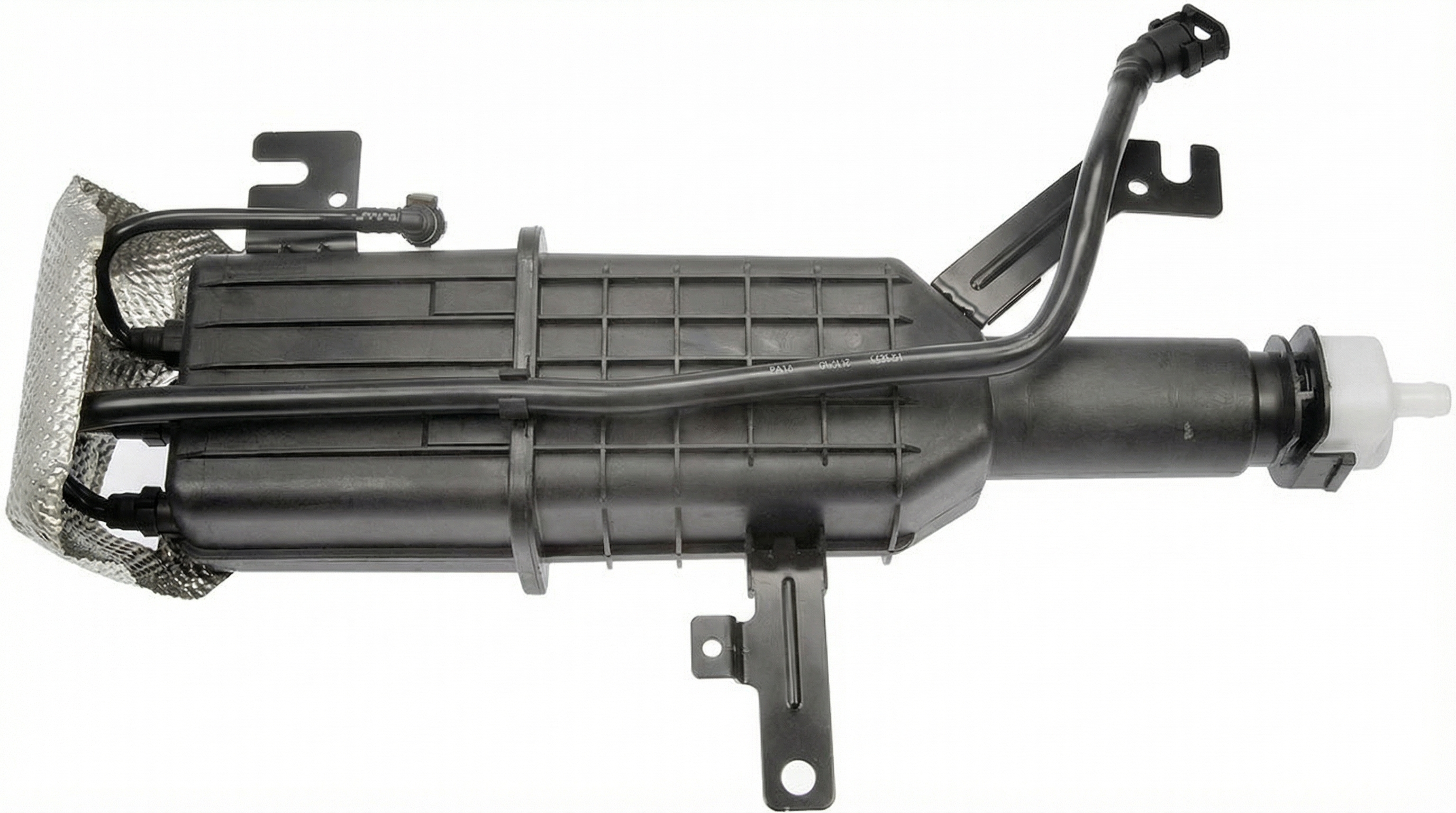
Est. part cost: $15-$30 - Failed EVAP Canister Vent Solenoid 🔴 High Probability → Shop Vapor Canister The vent solenoid is mounted under the truck by the charcoal canister, where it is exposed to road grime, water, and corrosion. The plastic housing can crack, or the valve can get stuck open due to dirt and debris, causing a large leak that the system detects during its self-test.
How to confirm: Visually inspect the solenoid for cracks. With a capable scan tool, command the valve closed and see if the system can hold pressure/vacuum. A smoke test will show smoke billowing out of a failed vent solenoid when it's commanded closed. You can also apply 12V directly to the solenoid's pins; a healthy solenoid will make an audible 'click'. If it doesn't click, it's failed electrically.
Typical fix: Replace the EVAP canister vent solenoid. The replacement part is often a two-piece design that requires a short length of hose to connect 🎬 See this quick fix for common vent solenoid codes. the new valve to the filter box.
Est. part cost: $25-$60 - Failed EVAP Purge Solenoid/Valve 🟡 Medium Probability → Shop Vapor Canister Located on the engine's intake manifold, this valve can get stuck open, creating a constant vacuum leak. Less commonly, it can get stuck closed or become clogged, which prevents the system from drawing a vacuum during its test. The computer misinterprets this inability to draw vacuum as a large leak.
How to confirm: The purge valve should be normally closed. With the engine off, disconnect the hose leading from the valve to the canister and try to blow through it. If air passes, it's stuck open and needs replacement. You can also test it with a power probe or scan tool to see if it clicks and opens on command.
Typical fix: Replace the purge solenoid on the intake manifold. 🎬 Watch: Step-by-step guide to replacing the engine purge valve.
Est. part cost: $20-$50 - Cracked or Disconnected EVAP Hoses ⚪ Low Probability Over time, the rubber and plastic lines that make up the EVAP system can become brittle and crack, especially at connection points or bends. A cracked vacuum line near the PCV valve can also cause this code.
How to confirm: Perform a thorough visual inspection of all EVAP lines running from the engine bay to the fuel tank. A smoke test is the most effective way to find a cracked hose if it's not obvious visually. Pay close attention to rubber elbows and connectors.
Typical fix: Replace the cracked section of hose or re-secure the connection.
Est. part cost: $5-$25
Rare But Worth Checking
- Rusted Fuel Filler Neck: → Shop Fuel Filler Neck In areas with heavy road salt use, the metal fuel filler neck can rust through, creating a leak that prevents the gas cap from sealing the system properly. This is a well-documented issue on GMT800 trucks.
- Cracked Charcoal Canister: → Shop Vapor Canister Physical damage from road debris or age can cause the plastic housing of the charcoal canister to crack, resulting in a large leak. This is usually obvious during a visual inspection or will be the source of smoke during a smoke test.
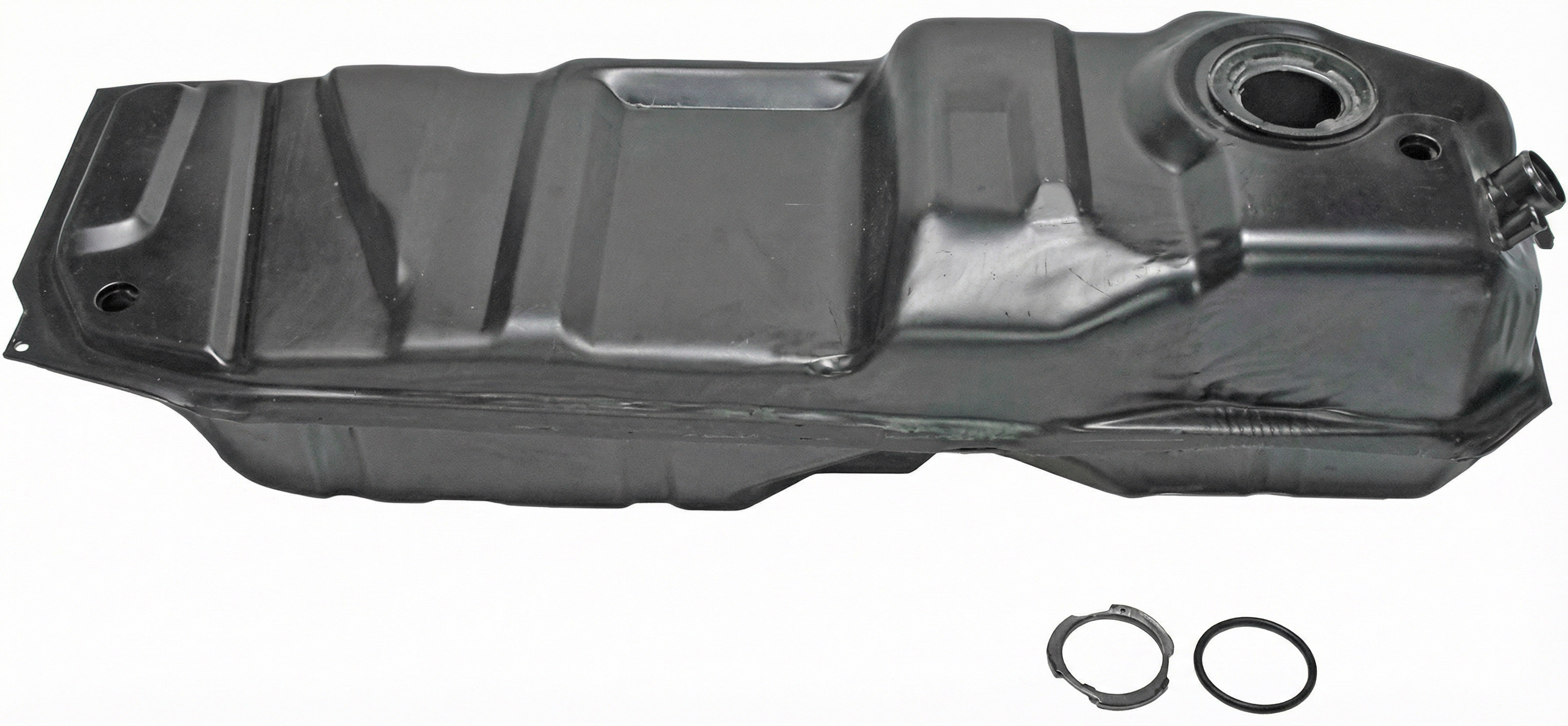
- Leaking Fuel Tank or Fuel Pump Seal: → Shop Fuel Pump A leak at the seal where the fuel pump module mounts to the top of the fuel tank can also cause a P0455 code. This is often found with a smoke test and requires either dropping the tank or lifting the truck bed for access. Rust can also perforate the top of the fuel pump module itself.
Diagnosis Steps
- Check the Gas Cap: This is the most common cause. Remove the cap, inspect the seal for damage, and reinstall it, making sure it clicks several times. Clear the code and drive for a few days to see if it returns. Consider replacing with an OEM cap if the seal is suspect.
- Visual Inspection: Look under the truck near the spare tire for the EVAP canister and vent solenoid. Inspect the solenoid and surrounding hoses for any obvious cracks or damage. Also inspect the fuel filler neck for significant rust or pitting where the cap seals.
- Test the EVAP Vent Solenoid: This valve, located by the tank, is normally open. Using a scan tool with bidirectional controls, command the valve to close. If you can't hear it click, or if it doesn't seal the system (confirmed with a hand vacuum pump or smoke test), it has failed. Alternatively, apply 12V power directly to its pins to check for a click.
- Test the EVAP Purge Solenoid: This valve, located on the engine, is normally closed. Disconnect it and try to blow through it. If air passes, it's stuck open. If it's not stuck open, use a scan tool to command it open while the engine is running to see if it pulls a vacuum on the system.
- Perform a Smoke Test: If the cause is not yet found, a smoke test is the definitive diagnostic step. A machine injects low-pressure smoke into the EVAP service port (often marked with a green cap in the engine bay). The leak will be revealed by the escaping smoke. Check all lines, the canister, the filler neck, and the top of the fuel tank.
Parts You'll Likely Need
- Gas Cap
(OEM #ACDelco GT330)— This is the most common failure point due to frequent use and wear on the seal. It's the first thing to check and replace.
Trusted brands: ACDelco (OEM), Stant
OEM price range: $20-$30
Aftermarket price range: $15-$25 - EVAP Canister Vent Solenoid Valve
(OEM #ACDelco 214-2149 (GM 25932571))— Its exposed location under the truck makes it highly susceptible to damage from the elements, causing it to crack or stick open. This is arguably the second most common cause after the gas cap.
Trusted brands: ACDelco (OEM), Dorman, Standard Motor Products (SMP)
OEM price range: $40-$70
Aftermarket price range: $25-$60 - EVAP Canister Purge Solenoid Valve
(OEM #ACDelco 214-1680 (GM 12597567))— This valve on the engine can get stuck open or closed, causing the EVAP system test to fail.
Trusted brands: ACDelco (OEM), Dorman, Standard Motor Products (SMP)
OEM price range: $30-$50
Aftermarket price range: $20-$40
Related Codes That Often Appear With This One
- P0442 — P0442 is for a small EVAP leak. Sometimes a deteriorating component can cause an intermittent or borderline leak that triggers both codes at different times. The official GM TSB #21-NA-124 covers diagnosing both codes together.
- P0449 — P0449 specifically indicates a fault in the EVAP vent solenoid control circuit. If you have both P0455 and P0449, the vent solenoid is almost certainly the problem, either due to an electrical failure (bad wiring, connector) or a mechanical one (stuck valve).
Technical Service Bulletins (TSBs) & Recalls
- Bulletin #21-NA-124: Provides diagnostic tips for dealers when troubleshooting EVAP leak codes P0442 and P0455, indicating this is a recognized issue.
Platform-Specific Known Issues
- PCV Hose Vacuum Leak: In a 2005 Tahoe, a user with a P0455 code performed a smoke test which revealed no EVAP leaks. The actual cause was a cracked vacuum elbow at the PCV valve on the engine. This prevented the EVAP system from achieving vacuum during its self-test, which the computer interpreted as a large leak. This is a crucial, often overlooked diagnostic step if common EVAP parts check out.
- Improper Filler Neck Installation: A user on GMTNation chased a P0455 for months, replacing the gas cap and a rusted filler pipe. After a second smoke test, the shop discovered they had not properly connected a small vent hose to the new filler pipe during the initial repair, causing the persistent leak code.
- Purge Valve Stuck Closed: → Shop Vapor Canister A detailed YouTube diagnosis of a P0455 on a GM truck demonstrated that while a stuck-open purge valve is a common cause of leaks, a valve that is stuck *closed* can also trigger the code. The ECU commands the purge valve open to draw a vacuum on the tank; if the valve fails to open, no vacuum is created, and the system logs a large leak fault because it cannot perform the test.
Mechanic-Grade Diagnostic Values
- EVAP Purge Solenoid Resistance — expected: 20-30 Ohms at room temperature. One real-world test showed 36 Ohms at ~55-60°F.. Failure: An infinite reading (OL) indicates an open coil, while a very low reading indicates a short. A reading far outside the expected range suggests a faulty solenoid.
- EVAP Vent Solenoid Power Feed Voltage — expected: 10-12 Volts with Key On, Engine Off.. Failure: No voltage indicates a problem with the fuse or wiring leading to the solenoid.
- Fuel Tank Pressure (FTP) Sensor Voltage (KOEO) — expected: Approximately 1.5 Volts at normal atmospheric pressure (system open).. Failure: A voltage that is stuck high or low, or does not change when the system is sealed and a vacuum is applied, points to a faulty sensor or wiring.
Hidden / Shadow Codes Worth Checking
- Scan Tool PID: 'EVAP vent solenoid short to ground or open': → Shop Vapor Canister This is not a DTC, but a specific data parameter on some GM-capable scan tools. It directly reflects what the ECU's driver circuit is seeing. It will read 'Yes' or 'Fault' if the computer detects low voltage on the control circuit when it expects to see 12V (i.e., when the solenoid is commanded off). (see via A professional-grade bidirectional scan tool (like a Tech 2 or high-end Autel) viewing live engine data.)
Scan Tool Commands That Help
- Tech 2 / GDS2 or equivalent: EVAP Service Bay Test — To force the vehicle's computer to run the entire EVAP monitor self-test in the shop, without needing to perform a full, lengthy drive cycle. This is used to verify a fix is complete.
- Tech 2 / GDS2 or equivalent: Output Controls > EVAP Vent Solenoid — To manually command the vent solenoid closed (it is normally open). This seals the system for a smoke test or to check if the Fuel Tank Pressure sensor reading changes. You should hear an audible click from the solenoid.
- Tech 2 / GDS2 or equivalent: Output Controls > EVAP Purge Solenoid — To manually open the purge valve (it is normally closed) to see if it is capable of drawing a vacuum on the system. While commanding it on, you can watch the Fuel Tank Pressure sensor voltage drop or feel for vacuum at the disconnected canister hose.
Wiring & Ground Locations
- Fuel Pump Ground — On the chassis frame rail, typically below the driver's side door area on GMT800 trucks.. A poor ground for the fuel pump module can cause erratic behavior of the integrated Fuel Tank Pressure (FTP) sensor, leading to false leak codes. The entire fuel pump sending unit assembly must be properly grounded.
- G104 — Located on the left rear of the engine block.. This is a primary engine-to-chassis ground point. While not directly for the EVAP system, poor engine grounding can cause a host of unpredictable electrical issues with sensors and solenoids controlled by the ECM.
- Vent Solenoid Power Wire — In the harness connector at the EVAP vent solenoid near the fuel tank.. The wire color for the 12V power feed changed mid-generation. For 1999-2002 models, it is typically a Pink wire. For 2003-2006 models, it is an Orange wire. Knowing this is critical for electrical testing.
Real Owner Repair Stories
- YouTube channel 'MotorCityMechanic' (GM Vehicle (Chevrolet)) — P0455 Gross EVAP Leak code, new gas cap already installed.
❌ Tried (didn't work) Replacing the gas cap.
✅ What actually fixed it The EVAP purge solenoid on the engine was stuck closed. The computer commanded the EVAP test, but because the purge solenoid failed to open, no vacuum was pulled on the tank. The computer's logic interpreted this lack of vacuum change as a massive leak, triggering the P0455 code. Replacing the purge solenoid resolved the issue.
"I Checked Everything" — The Actual Cause
- A stuck-closed EVAP purge solenoid. A smoke test will show no leaks because the system is perfectly sealed. However, when the ECM runs its self-test, it commands the purge solenoid to open to draw a vacuum on the fuel tank. If the solenoid is electrically good (clicks) but mechanically stuck closed, it cannot pull a vacuum. The Fuel Tank Pressure sensor reports no change in pressure, which the ECM logic interprets as a large leak, setting P0455.
- A faulty Fuel Tank Pressure (FTP) sensor. The system may be perfectly sealed and both solenoids may function correctly, but if the FTP sensor is stuck at its baseline reading (e.g., 1.5V), it will not report the change in pressure (vacuum) to the ECM during the test. The ECM sees no pressure change and falsely flags a large leak.
Model Year Variations Within This Range
- 2000-2006: The 12V power feed wire to the EVAP canister vent solenoid has a different color. On 1999-2002 models, the wire is Pink (PNK). On 2003-2006 models, the wire is Orange (ORG). This is critical for accurate electrical diagnosis at the solenoid connector.
- 2007: The 2007 model year includes both the GMT800 ('Classic') and the new GMT900 body styles. The EVAP systems are substantially different. While the code's meaning is the same, the physical location, shape, and part numbers for the vent solenoid, canister, and hoses are not interchangeable between the two generations.
Helpful Videos
We Have This Part in Stock


The information in this article is provided for general reference and educational purposes only. Vehicle specifications, procedures, and part compatibility can vary by production date, trim level, and region. Always consult your vehicle's factory service manual and verify part numbers before purchasing or performing repairs. Safety-critical components such as airbags, seat belts, and braking systems should be installed by a qualified professional.
- Gmc SIERRA 2500:
- 🧭 Diagnostic Flowchart
- 🎬 Helpful Videos
- 🛍️ Shop This Part
- What's Unique About the 2000-2007 Gmc SIERRA 2500
- Symptoms You May Notice
- Most Likely Causes
- Rare But Worth Checking
- Diagnosis Steps
- Parts You'll Likely Need
- Related Codes That Often Appear With This One
- Technical Service Bulletins (TSBs) & Recalls
- Platform-Specific Known Issues
- Mechanic-Grade Diagnostic Values
- Hidden / Shadow Codes Worth Checking
- Scan Tool Commands That Help
- Wiring & Ground Locations
- Real Owner Repair Stories
- "I Checked Everything" — The Actual Cause
- Model Year Variations Within This Range
- 🎟️ Get 5% Off