

P0455 on 2008-2010 GMC Sierra 2500: EVAP Large Leak Causes and Fixes
For a P0455 code on a 2008-2010 GMC Sierra 2500, the most likely cause is a loose or faulty gas cap. If that's not it, suspect the EVAP Purge Solenoid on the engine or the Vent Valve near the fuel tank. A new gas cap is under $25, while the valves cost between $25 and $75 each for aftermarket parts.
- Always check the gas cap first. Make sure it's tight and the seal is intact. This is the #1 cause.
- If the gas cap is good, the next most likely culprits are the EVAP purge valve (on the engine) or the EVAP vent valve (by the tank).
- A "large leak" code doesn't always mean there's a hole. A stuck valve that prevents the system test from running correctly can also trigger P0455.
- A smoke test is the best method to find a physical leak in a hose, the canister, or the fuel tank area.
- You can safely drive with this code, but you will not pass an emissions inspection until it is fixed.
What's Unique About the 2008-2010 Gmc SIERRA 2500
On this generation of GMC Sierra (GMT900), the P0455 code is frequently caused by one of two specific solenoid valves failing. The EVAP Vent Valve is located under the truck near the fuel tank, where it's exposed to road salt and moisture, causing it to fail or its filter to clog. Separately, the EVAP Purge Valve on the engine can stick closed; the truck's computer interprets the resulting inability to draw a vacuum as a large leak, even if no physical leak exists. This can be misleading, as owners may search for a physical leak when the root cause is a failed solenoid.
Diagnostic Flowchart
Tap your situation to follow the diagnostic path that matches what you're seeing on this vehicle.
Symptoms You May Notice
- Check Engine Light is on
- A faint smell of fuel, particularly around the rear of the truck or near the gas cap.
- A "Tighten Gas Cap" message may appear on the driver information center
- Difficulty starting the vehicle, especially after refueling (uncommon).
- Rough idle (uncommon).
- Replacing the charcoal canister when the actual problem is a much cheaper vent or purge valve.
- Searching endlessly for a physical leak with a smoke machine when the problem is a purge valve that is stuck closed and not allowing the test to run.
- Replacing parts without confirming the failure. For example, replacing the vent valve when a smoke test would have shown a cracked hose on top of the tank.
Most Likely Causes
- Loose, Damaged, or Incorrect Gas Cap 🔴 High Probability → Shop Fuel Tank Cap This is the most common cause for any vehicle, as the seal can wear out or the cap can be left loose after refueling.
How to confirm: Ensure the gas cap is tight (clicks at least three times). Inspect the rubber O-ring on the cap for cracks, tearing, or signs of dry rot. Ensure you are using an OEM or equivalent quality cap, as cheap aftermarket caps are a known source of issues.
Typical fix: Tighten or replace the gas cap. An ACDelco GT295 is a common replacement part.
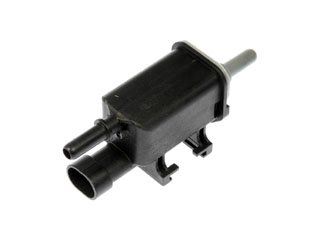
Est. part cost: $15-$35 - Failed EVAP Purge Solenoid/Valve 🔴 High Probability → Shop Vapor Canister This is a very common failure item on GM trucks. It can get stuck closed, which the ECM misinterprets as a large leak because no vacuum can be drawn during the system test. It can also get stuck open, creating a constant vacuum leak.
How to confirm: The valve is located on the intake manifold. With the engine off, try blowing through it; it should be closed and not allow air to pass. With the engine running, disconnect the EVAP line from the valve; there should be no vacuum present at idle unless commanded by a scan tool. A scan tool can be used to cycle the valve, which should produce an audible click.
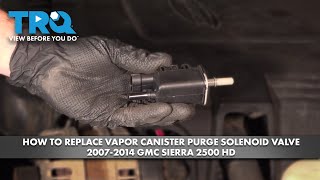
Typical fix: Replace the purge solenoid valve. The common OEM part number is GM 12690512, which has been superseded by 12737252. 🎬 Watch: How to replace the purge solenoid valve yourself.
Est. part cost: $25-$75 - Failed EVAP Vent Solenoid/Valve 🟡 Medium Probability → Shop Vapor Canister The valve is mounted under the truck near the charcoal canister, making it highly susceptible to corrosion and damage from road debris and weather, which can cause it to stick open.
How to confirm: The vent valve is normally open. A scan tool can command it closed. If it fails to close, the system cannot seal and will fail the leak test. A smoke test will show smoke exiting the vent valve if it's stuck open when commanded closed.
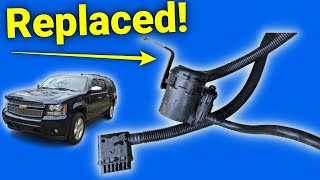
Typical fix: Replace the vent solenoid valve. The OEM part number is GM 23481275. 🎬 Watch: Step-by-step guide to replacing the vent valve. Many owners upgrade to a kit that relocates the valve's filter to a cleaner location to prevent future clogging.
Est. part cost: $30-$80 - Cracked or Disconnected EVAP Hoses 🟡 Medium Probability The plastic and rubber lines that make up the EVAP system become brittle over time and can crack, especially at connection points or on top of the fuel tank where they are exposed to stress and weather.
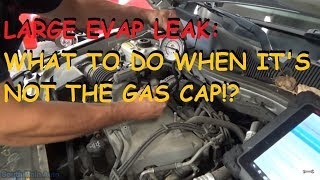
How to confirm: A visual inspection may reveal obvious cracks or disconnected lines, particularly on top of the fuel tank. The most effective method is to use a smoke machine, which fills the EVAP system with a visible vapor, making it easy to spot leaks. 🎬 See how a smoke test reveals a gross EVAP leak.
Typical fix: Replace the damaged section of hose or the entire line assembly.
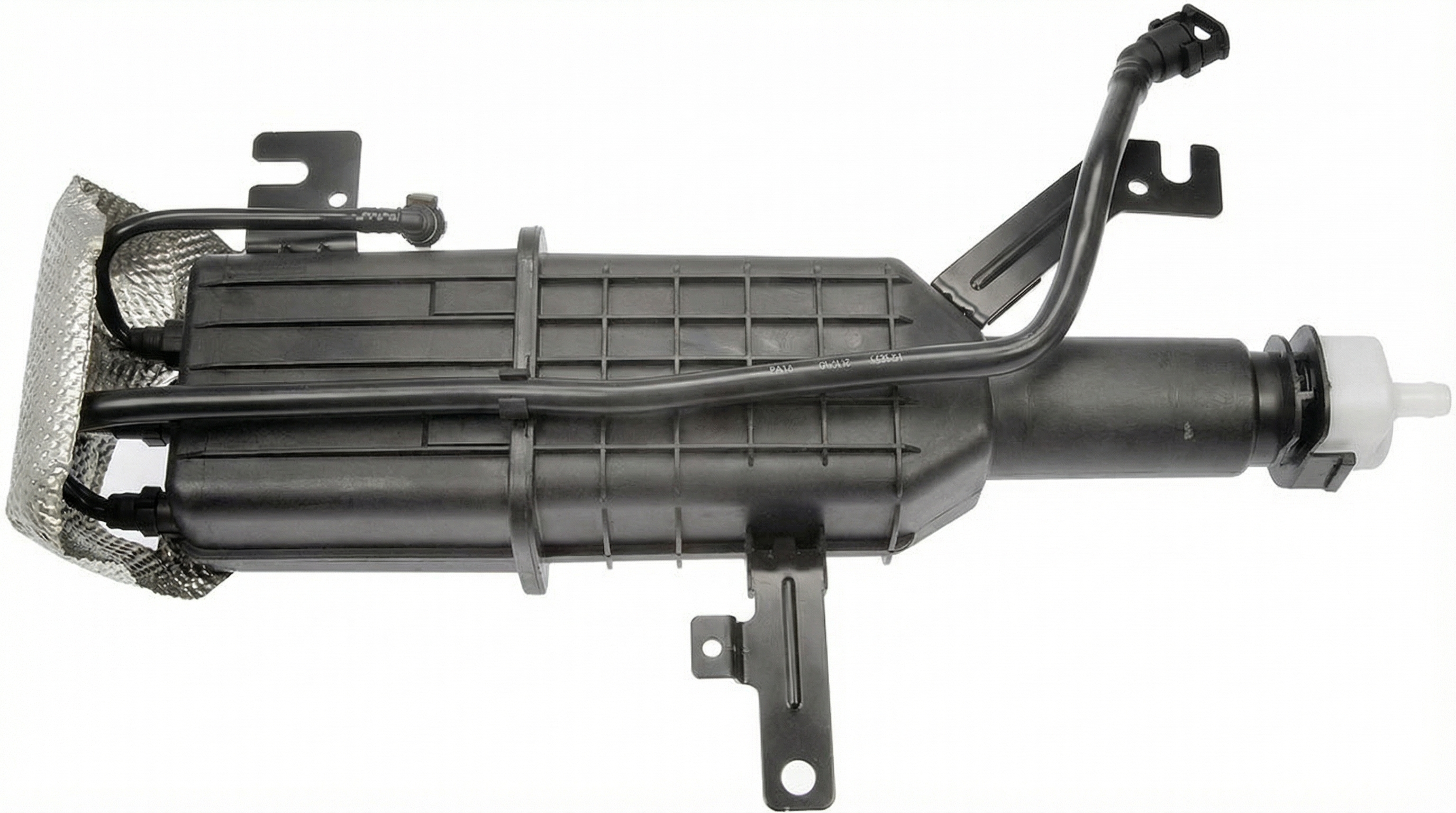
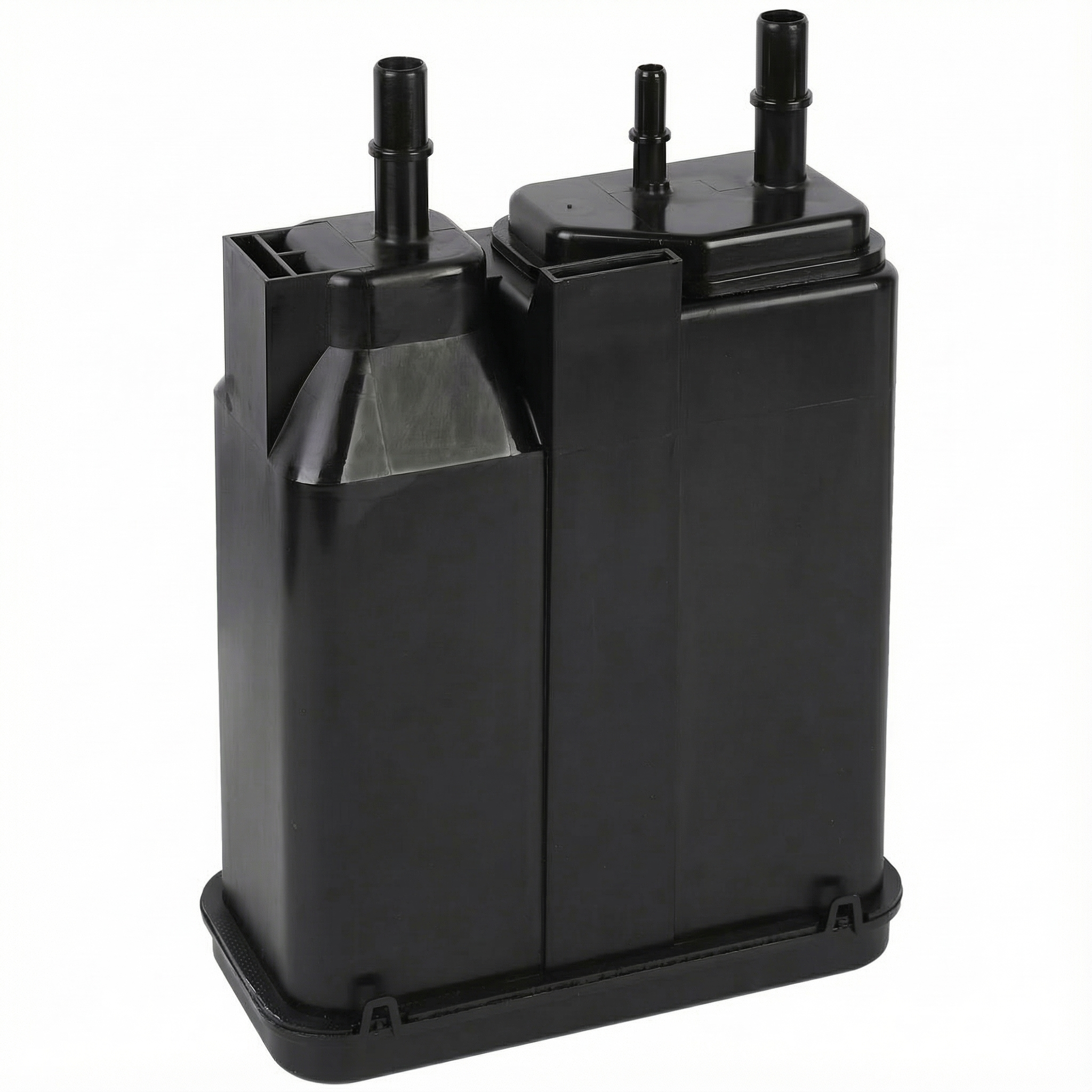
Est. part cost: $10-$100 - Cracked Charcoal Canister ⚪ Low Probability → Shop Vapor Canister The canister is a plastic box located under the vehicle, usually near the fuel tank, and can be damaged by road debris or impacts. It can also become saturated with fuel if the tank is habitually overfilled.
How to confirm: Visually inspect the canister for any cracks or physical damage. A smoke test will show smoke billowing from a cracked canister. If the canister is fuel-saturated, you may notice a strong fuel smell or find charcoal pellets in the EVAP lines.
Typical fix: Replace the charcoal canister.
Est. part cost: $150-$250
Rare But Worth Checking
- Leaking Fuel Pump Module or Seal: → Shop Fuel Pump The top of the fuel tank can rust, causing leaks around the fuel pump module's mounting flange or fittings. A video of a 2007 Sierra showed a smoke test revealing a leak from a broken plastic piece on top of the fuel pump. Another owner of a 2010 model found the P0455 was caused by a leaking fuel pump outlet pipe, which required replacing the entire fuel pump assembly.
- Rusted Fuel Filler Neck: → Shop Fuel Filler Neck In areas where road salt is used, the metal fuel filler neck can rust through, creating a large leak in the system. A smoke test is the best way to confirm a leak in this area.
- Faulty Fuel Tank Pressure (FTP) Sensor: → Shop Fuel Tank A faulty sensor can send incorrect data to the ECM, causing it to believe there is a leak even when none exists. One technician diagnosed a P0455 on a 2010 GMC that was ultimately caused by a failed FTP sensor that was not registering a pressure change during the purge cycle. On these trucks, the sensor is part of the fuel pump module assembly, making replacement more involved.
Diagnosis Steps
- Check the Gas Cap: This is the simplest and most common fix. Ensure the cap is tight and clicks several times. Inspect the seal for any cracks or damage. If in doubt, replace it with an OEM-spec cap like an ACDelco GT295.
- Visual Inspection: Look under the truck near the fuel tank and along the frame rail for any obviously cracked, disconnected, or damaged EVAP hoses or the charcoal canister itself. Pay close attention to the lines running over the top of the fuel tank.
- Check Fuses: Inspect the EVAP system fuses in the under-hood fuse box to ensure they are not blown.
- Test the Purge Valve: Locate the purge valve on the engine's intake manifold. With the engine off, remove the valve and try to blow through it; it should be closed. With the engine running, use a scan tool to command it open and closed (from 0% to 100%), checking for an audible click and for vacuum to be applied/removed from the intake side.
- Test the Vent Valve: Locate the vent valve near the canister under the truck. It is normally open. Use a scan tool to command it closed and listen for a click. If it doesn't close, the system can't seal.
- Perform a Smoke Test: This is the most definitive way to find a physical leak. A smoke machine is connected to the EVAP service port (a green-capped port in the engine bay). The vent valve is commanded closed with a scan tool, and you look for smoke escaping from any cracked hoses, the canister, the filler neck, the top of the fuel tank, or the gas cap.
- Check Fuel Tank Pressure Sensor: Using a scan tool, monitor the Fuel Tank Pressure (FTP) sensor reading. The voltage should be around 1.5V with the system open. When commanding the purge valve open, the pressure should drop into the negative range. If the reading is stuck or irrational, the sensor may be faulty.
Parts You'll Likely Need
- Gas Cap
(OEM #ACDelco GT295)— This is the most frequent cause of P0455 due to a worn seal or not being tightened properly.
Trusted brands: ACDelco, Stant, Gates
OEM price range: $20-$35
Aftermarket price range: $15-$25 - Vapor Canister Purge Solenoid/Valve
(OEM #12690512 (superseded by 12737252))— A very common failure point on GM trucks. It gets stuck open or closed, leading to this code. It is located on the engine for easy access.
Trusted brands: ACDelco, Bosch, Delphi
OEM price range: $50-$100
Aftermarket price range: $25-$75 - Vapor Canister Vent Solenoid/Valve
(OEM #23481275)— Located under the truck, this valve is prone to failure from road debris and corrosion, often getting stuck open and causing a large leak code.
Trusted brands: ACDelco, Dorman, Standard Motor Products
OEM price range: $60-$110
Aftermarket price range: $30-$80
Related Codes That Often Appear With This One
- P0442 — P0442 is for a small EVAP leak. If a component is beginning to fail, it might first cause a small leak code before it worsens and triggers the large leak code P0455. The official GM TSB 21-NA-124 groups these two codes together as part of the same diagnostic procedure.
- P0449 — This code specifically points to a fault in the EVAP Vent Valve Solenoid control circuit. If you have P0455 and P0449 together, the vent valve is almost certainly the problem.
Technical Service Bulletins (TSBs) & Recalls
- 21-NA-124
Platform-Specific Known Issues
- A GM Technical Service Bulletin (TSB #21-NA-124) exists to provide technicians with diagnostic tips for finding EVAP leaks that cause P0455 and P0442, indicating this is a recognized issue by the manufacturer. [⭐ MANUFACTURER TSB — highest authority]
Mechanic-Grade Diagnostic Values
- Fuel Tank Pressure (FTP) Sensor Voltage — expected: Approximately 1.5 Volts with the gas cap off and the system at atmospheric pressure.. Failure: A reading that is stuck high or low and does not change when vacuum is applied to the system. A reading that does not drop into the negative range during a commanded purge cycle.
Scan Tool Commands That Help
- Tech 2 / GDS2 or equivalent: EVAP Service Bay Test — This is an automated test that runs the vehicle's onboard EVAP leak test. It commands the vent and purge solenoids to seal the system and draw a vacuum, then monitors the FTP sensor to see if the vacuum holds. It's a fast way to confirm if a leak is present, but may be denied if engine temperature is too high (above ~158°F).
- Tech 2 / GDS2 or equivalent: Purge/Seal — This function allows the technician to manually control the EVAP solenoids. You can close the vent valve and then command the purge valve on to see if the system can pull a vacuum, watching the FTP sensor data. This is crucial for determining if the purge valve is stuck closed (no vacuum builds) or if there's a large physical leak.
- Tech 2 / GDS2 or equivalent: EVAP Vent Solenoid Commanded State (On/Off) — This command is essential for performing a smoke test. The normally open vent valve must be commanded closed to seal the system. If smoke is injected and it immediately exits the vent valve area, the valve is confirmed to be faulty and not closing.
- Tech 2 / GDS2 or equivalent: EVAP Purge Solenoid Commanded PWM (%) — This allows you to incrementally open the purge valve from 0% to 100%. This can test the valve's range of motion and confirm with a test light that the ECM is sending the control signal to the valve's connector.
Wiring & Ground Locations
- EVAP Fuses — In the main under-hood fuse block on the driver's side. Specifically, Fuse #4 and Fuse #5 (both 15A) control the EVAP system.. A blown fuse will disable the vent and/or purge solenoids, preventing them from operating. The ECM may interpret this inability to seal the system or draw a vacuum as a large leak.
- G305 — A frame ground located under the vehicle to the rear of the driver's side B-pillar, near the third body mount.. This is a primary frame ground in the vicinity of the charcoal canister and vent valve. Corrosion or a loose connection at this point can cause erratic or failed operation of the vent solenoid, which is a common cause of P0455.
- Firewall Ground Straps — Braided straps connecting the engine block/cylinder heads to the vehicle's firewall.. While not directly for the EVAP system, these main grounds ensure a stable reference for all engine sensors and solenoids, including the purge solenoid. A corroded or broken strap can cause unpredictable electrical issues across multiple systems.
Real Owner Repair Stories
- YouTube video from 'ScannerDanner' (2010 GMC Truck (model not specified but same platform)) — P0455 Large Leak Detected code.
❌ Tried (didn't work) A smoke test was performed on the EVAP system from the service port, and no leaks were found., A second smoke test was performed directly at the fuel filler neck, and still no leaks were found.
✅ What actually fixed it The Fuel Tank Pressure (FTP) sensor was faulty. During a scan tool's 'Purge/Seal' test, the engine sound changed (indicating the purge valve was opening and pulling a vacuum), but the FTP sensor data on the scan tool did not change. The technician concluded the sensor was not registering the pressure change, causing the ECM to incorrectly assume a large leak. The FTP sensor is part of the fuel pump module on these trucks, so the fuel pump assembly was replaced.
"I Checked Everything" — The Actual Cause
- In one documented case on a 2010 GMC truck, the P0455 code was present despite the system passing a smoke test with no visible leaks. The technician used a scan tool to command the purge valve to open and could hear the engine load change, indicating a vacuum was being pulled. However, the Fuel Tank Pressure (FTP) sensor's reading on the scan tool did not change. The root cause was a faulty FTP sensor that was not reporting the change in pressure to the computer, leading the computer to falsely conclude there was a massive leak. The fix required replacing the fuel pump module, as the FTP sensor is integrated into it.
OEM Part Supersession History
12690512→12737252— This is the Vapor Canister Purge Solenoid/Valve. Part supersessions are common for design improvements, cost reduction, or manufacturer changes. No specific reason is publicly documented, but it is a direct replacement.
Helpful Videos
Used OEM Parts in Stock

New Aftermarket Parts Available


The information in this article is provided for general reference and educational purposes only. Vehicle specifications, procedures, and part compatibility can vary by production date, trim level, and region. Always consult your vehicle's factory service manual and verify part numbers before purchasing or performing repairs. Safety-critical components such as airbags, seat belts, and braking systems should be installed by a qualified professional.
- Gmc SIERRA 2500:
- 🧭 Diagnostic Flowchart
- 🎬 Helpful Videos
- 🛍️ Shop This Part
- What's Unique About the 2008-2010 Gmc SIERRA 2500
- Symptoms You May Notice
- Most Likely Causes
- Rare But Worth Checking
- Diagnosis Steps
- Parts You'll Likely Need
- Related Codes That Often Appear With This One
- Technical Service Bulletins (TSBs) & Recalls
- Platform-Specific Known Issues
- Mechanic-Grade Diagnostic Values
- Scan Tool Commands That Help
- Wiring & Ground Locations
- Real Owner Repair Stories
- "I Checked Everything" — The Actual Cause
- OEM Part Supersession History
- 🎟️ Get 5% Off