

P0455 on 2007-2011 Honda CR-V: EVAP Large Leak Causes and Fixes
For a 2007-2011 Honda CR-V, the P0455 code is most often caused by a loose or faulty gas cap. Before buying any parts, tighten the cap until it clicks and clear the code. If it returns, a new genuine OEM Honda gas cap (part #17670-T3W-A01) costs about $30-$40 and is the highest probability fix. Using cheaper, aftermarket caps is a common cause of repeat failures.
- Always start with the simplest fix: ensure your gas cap is tight. If the seal looks old, spend the $30-$40 on a new OEM cap before attempting any other repairs.
- This code does not indicate a mechanical problem that will leave you stranded; it is safe to drive while you diagnose the issue.
- If a new gas cap doesn't solve the problem, the next most likely culprit is the EVAP purge valve located in the engine bay, which is an accessible DIY repair.
- A professional smoke test is the fastest and most accurate way to find the leak if it's not the gas cap or purge valve.
What's Unique About the 2007-2011 Honda CR-V
On this generation of Honda CR-V, the P0455 code is exceptionally common and frequently traces back to simple, inexpensive parts. While the code is generic, owner experiences and mechanic reports for this specific vehicle point overwhelmingly to the gas cap seal failing over time or the canister purge valve sticking. Unlike some vehicles where filler neck corrosion is a primary concern, the CR-V's issues are more often related to these two specific components. Many owners report that only a genuine Honda OEM gas cap will reliably solve the issue, as aftermarket caps often fail to seal properly.
Symptoms You May Notice
- Check Engine Light is on
- A faint smell of gasoline, particularly around the rear of the vehicle or in the garage after being parked.
- A "CHECK FUEL CAP" message may appear on the multi-information display before the Check Engine Light illuminates.
- Replacing the charcoal canister when only the vent valve attached to it has failed.
- Replacing the fuel tank pressure sensor, which rarely fails for this code and would typically set its own specific sensor-related DTC.
- Repeatedly replacing an OEM gas cap with cheap aftermarket caps, leading to the code returning.
Most Likely Causes
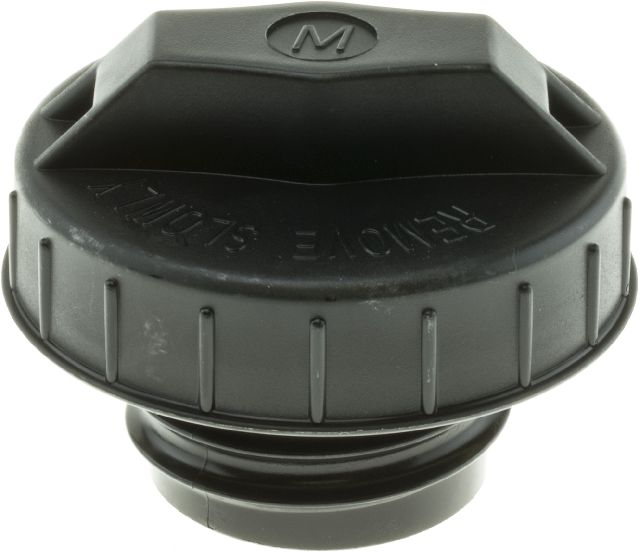
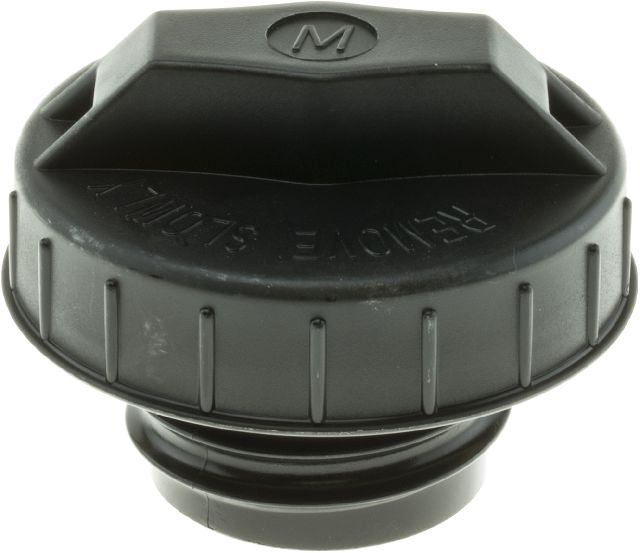
- Loose or Faulty Gas Cap 🔴 High Probability → Shop Fuel Tank Cap The rubber O-ring seal on the gas cap degrades over time, losing its ability to create a perfect seal. This is the most common failure point for any EVAP system and is widely reported by CR-V owners. Aftermarket gas caps are a frequent source of repeat P0455 codes, as their seals may not meet OEM specifications or sit flush on the filler neck, even if they click.
How to confirm: First, ensure the cap is tightened until it clicks at least once. Inspect the rubber seal for cracks, stiffness, or damage. Check that the tether is not caught under the seal. If the light returns after tightening and clearing the code, the cap is the most likely culprit.
Typical fix: Replace the gas cap with a new, genuine OEM Honda part (17670-T3W-A01). Many forum users and mechanics strongly advise against aftermarket caps for this specific issue.
Est. part cost: $25-$45 - Faulty EVAP Canister Purge Valve 🟡 Medium Probability → Shop Vapor Canister This solenoid valve, located in the engine bay, can get stuck open, creating a permanent leak path from the EVAP system to the engine intake manifold. It's a common failure point on many Honda models from this era. A manufacturer report for the Civic (NHTSA ODI #11442825) highlights that an EVAP stuck open condition can trigger both P0455 and P0456 codes.
How to confirm: Remove the valve from the intake manifold. With no power applied, you should not be able to blow air through it. If air passes through, it is stuck open and must be replaced. This part may also trigger a P0497 (Low Purge Flow) code.
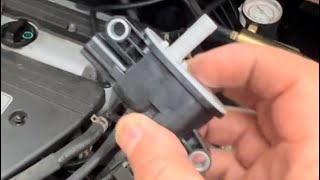
Typical fix: Replace the canister purge valve. It is mounted on the intake manifold with two 10mm nuts and is accessible for DIY replacement. 🎬 Watch: Step-by-step guide to replacing the purge valve. Be careful not to drop the nuts or washers.
Est. part cost: $50-$90 - Faulty EVAP Canister Vent Valve (Vent Solenoid) ⚪ Low Probability → Shop Vapor Canister Located under the vehicle near the charcoal canister, this valve is exposed to road debris and moisture, which can cause it to fail or get stuck. It is a less frequent, but known, cause of P0455.
How to confirm: The vent valve is normally open. When 12V power is applied to its terminals, it should click and close. If it doesn't operate or is stuck, it requires replacement. A smoke test is the most effective way to confirm a leak at the valve or the canister itself.
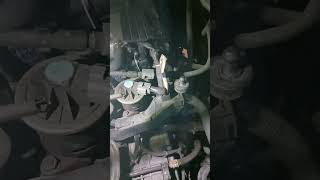
Typical fix: Replace the vent valve. This requires safely lifting the vehicle to access the component, which is attached to the EVAP canister near the rear subframe. 🎬 Watch: Locate the EVAP canister and vent valve underneath.
Est. part cost: $100-$240 - Cracked or Disconnected EVAP Hoses ⚪ Low Probability Over time, the rubber and plastic hoses that connect the EVAP system components can become brittle and crack, especially those exposed to engine heat or underbody elements.
How to confirm: Perform a thorough visual inspection of all EVAP lines from the engine bay to the canister. A smoke test is the most reliable method to pinpoint a cracked hose that isn't obvious visually.
Typical fix: Replace the specific section of the cracked hose. Small clamps may also need to be replaced.
Est. part cost: $10-$50
Rare But Worth Checking
- Cracked Charcoal Canister: → Shop Vapor Canister The canister itself can be cracked, usually from an impact with road debris. A visual inspection or smoke test will reveal a leak from the canister body.
- Leaking Fuel Filler Neck: → Shop Fuel Filler Neck While more common in rust-prone areas, the metal neck where the gas cap seals can corrode or crack, preventing a proper seal. A smoke test is the best way to identify a leak in this area. Manufacturer Bulletin #ATS170206 notes that if a leak is detected from the filler neck, technicians should investigate the specific sealing components rather than automatically replacing the entire fuel fill pipe.
Diagnosis Steps
- Read the code with an OBD-II scanner to confirm P0455 is the primary code.
- Inspect the gas cap. Remove it, check the seal for cracks or damage, and retighten it until it clicks several times. Ensure the tether is not caught underneath.
- Clear the code with the scanner and drive for a few days to see if it returns. The EVAP monitor runs under specific conditions (fuel level between 15-85%, moderate ambient temperature). If the light returns, proceed to the next step.
- Purchase and install a new, genuine Honda OEM gas cap (part #17670-T3W-A01). This is the most cost-effective and highest-probability fix. Clear the code and drive again.
- If the code returns, perform a visual inspection of the EVAP hoses in the engine bay, especially around the purge valve, for any obvious cracks or disconnections.
- Test the EVAP canister purge valve in the engine bay. Disconnect it and try to blow through it. If air passes, it's stuck open and must be replaced.
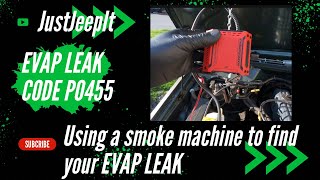
- If the above steps do not reveal the issue, the next step is a professional smoke test. A machine fills the EVAP system with visible vapor, which will escape from the location of the leak, making it easy to identify. 🎬 See how a smoke test pinpointed this exact leak. This is the most effective way to find leaks in hoses, the canister, the vent valve, or the filler neck.
Parts You'll Likely Need
- Fuel Tank Cap
(OEM #17670-T3W-A01)— This is the most frequent failure point. The seal wears out, causing a large leak. Using an OEM cap is critical for a proper fit on Honda vehicles. This part number supersedes older versions like 17670-SNA-A02.
Trusted brands: Honda (Genuine OEM)
OEM price range: $30-$45
Aftermarket price range: $15-$30 - EVAP Canister Purge Valve
(OEM #36162-RRA-A01)— The second most common cause. This valve gets stuck open, creating a constant leak. It's located in the engine bay and is relatively easy to replace.
Trusted brands: Honda (Genuine OEM), Dorman, Standard Motor Products
OEM price range: $60-$90
Aftermarket price range: $35-$65 - EVAP Canister Vent Valve
(OEM #17311-SWA-A01)— This valve is located under the vehicle and can fail due to exposure to the elements. It's less common than the purge valve but a known issue.
Trusted brands: Honda (Genuine OEM), Dorman
OEM price range: $200-$240
Aftermarket price range: $80-$120 - EVAP Charcoal Canister
(OEM #17011-SWA-A01)— Replaced only if it is physically cracked (usually from road debris) and confirmed to be the source of the leak via a smoke test.
Related Codes That Often Appear With This One
- P0456 — A P0456 (Very Small Leak) might appear alongside a P0455 if the system has multiple leaks of different sizes or if a component is failing intermittently.
- P0497 — This code for 'EVAP System Low Purge Flow' specifically points towards a problem with the canister purge valve, which is also a common cause of P0455.
Technical Service Bulletins (TSBs) & Recalls
- While no specific TSB for P0455 on this CR-V is widely cited, Honda TSB 13-097 for other models recommends replacing the gas cap with the updated part 17670-T3W-A01, indicating a known issue with older cap designs.
- A manufacturer Service Bulletin dated 2014-02-18 for this model line notes that the MIL may come on with DTC P0455 and/or P0456 set, often because the fuel fill cap is loose or has a sticking seal.
- Bulletin #ATS170206 for other Honda models (Ridgeline) advises that if a P0455 or P0456 is set due to a leak from the filler neck, technicians should look for specific component failures rather than replacing the entire fuel fill pipe.
Platform-Specific Known Issues
- Many owners on forums like CRVOwnersClub and Reddit report that after trying cheaper aftermarket gas caps, the P0455 code would return. The issue was only permanently resolved by purchasing a genuine OEM Honda gas cap from a dealer.
Mechanic-Grade Diagnostic Values
- EVAP Canister Purge Valve Solenoid Resistance — expected: 20 - 30 Ohms at room temperature. Failure: A reading of infinite Ohms (open circuit) or near zero Ohms (short circuit) indicates a failed solenoid coil.
- EVAP Canister Vent Valve (Solenoid) Resistance — expected: 25 - 30 Ohms at room temperature. Failure: A reading significantly outside this range indicates a faulty solenoid winding.
- Fuel Tank Pressure (FTP) Sensor Voltage (Key On, Engine Off, Gas Cap Off) — expected: Approximately 0.3 V. Failure: A voltage that is significantly different or does not change when vacuum/pressure is applied may indicate a faulty sensor.
Scan Tool Commands That Help
- Honda HDS (or equivalent professional scanner): EVAP FUNCTION TEST / EVAP SERVICE BAY TEST — This is a PCM-controlled test that automatically actuates the purge and vent valves to seal the system and monitors the FTP sensor to check for leaks. It's a comprehensive way to verify system integrity after a repair or as a first step before manual testing. The engine coolant must be below ~158°F to run this test.
- Bidirectional Scan Tool: EVAP Purge Valve Command (On/Off) & EVAP Vent Valve Command (On/Off) — This allows for manual diagnosis of individual components. To test for a stuck-open purge valve, command the vent valve ON (closed) and the purge valve OFF (closed). If the FTP sensor shows vacuum building in the tank, it proves the purge valve is leaking vacuum from the intake manifold into the sealed EVAP system.
Wiring & Ground Locations
- G101 — On the left side of the engine, typically bolted to the thermostat housing or water pipe housing.. This is a primary power and logic ground for the PCM. A poor connection here can cause erratic behavior of the entire engine management system, including the EVAP monitors, leading to false codes or stalling.
- G401 — Under the left side of the dashboard, near the kick panel.. This is a major interior ground point. While less likely to directly cause an EVAP code, it grounds various modules that communicate with the PCM and a poor connection can cause bizarre electrical issues.
- PCM Connector B, Pin 21 (B21) — At the Powertrain Control Module (PCM) located in the left side of the engine compartment.. This is the specific control wire from the PCM to the EVAP Canister Purge Valve. A technician can test for continuity or a short on this wire between the PCM and the purge valve connector to rule out a wiring fault.
- EVAP Canister Vent Valve Connector — Under the rear of the vehicle, attached to the charcoal canister.. This 2-pin connector provides power and ground control to the vent valve. It is exposed to road salt and moisture, making it a potential point of failure due to corrosion. Aftermarket pigtail connectors are available for repair.
Real Owner Repair Stories
- NHTSA ODI #11488601 — An owner reported that after a diagnosis of P0455, they tightened the fuel tank cap as recommended, but the check engine light remained on, necessitating further professional inspection.
- Reddit user @Juno_Malone (2013 Honda CR-V LX, ~80k miles) — Check Engine Light with code P0455.
❌ Tried (didn't work) Taking it to the dealer, who quoted $100-$400 for diagnosis and repair.
✅ What actually fixed it The owner decided to first try replacing the gas cap. They specifically chose to spend more on a genuine Honda OEM part from Amazon based on reviews. After installing the new OEM cap and driving for a couple of days, the Check Engine Light turned off. - YouTube channel "CUDA Garage" (Nissan vehicle (demonstrates a universal issue)) — P0455 code returned after a shop replaced the original gas cap with an aftermarket one.
❌ Tried (didn't work) Using a new, aftermarket gas cap.
✅ What actually fixed it A smoke test revealed that the new aftermarket cap was leaking, even though it clicked shut. A close visual inspection showed it was not sitting flush against the filler neck, leaving a gap. Replacing it with a more expensive, but correctly fitting, OEM factory cap created a proper seal and resolved the leak.
"I Checked Everything" — The Actual Cause
- If a smoke test is performed correctly and shows no visible leaks, the P0455 code is not being caused by a physical crack or hole in a hose or component. The fault is almost certainly with a component that is failing to operate correctly. The top two suspects are: 1) A faulty Fuel Tank Pressure (FTP) sensor that is sending incorrect voltage readings to the PCM, tricking it into thinking there is a leak. 2) An EVAP purge or vent valve that is mechanically stuck in the closed position. This will not create a leak for smoke to escape, but it will prevent the system from functioning correctly during its self-test, causing the test to fail and the code to be set.
OEM Part Supersession History
17670-SNA-A02, 17670-SJA-A02, 17670-TR0-A11→17670-T3W-A01— Updated design to improve sealing and longevity. This is a common update across many Honda models from the era.
Diagnostic Flowchart
Other Known Issues on This Vehicle
Issues unrelated to this code that are worth knowing about as an owner of this generation:
- VTC Actuator Rattle on Cold Start 🟠 Medium — Very common. A loud, grinding rattle for 1-2 seconds on a cold engine start. Caused by a faulty Variable Timing Control (VTC) actuator. If left unfixed, it can cause premature timing chain stretch. (Ref: Honda issued TSBs for other models with the same engine (e.g., Accord), but the issue is well-documented on the CR-V. The revised actuator part is 14310-R5A-305.)
- A/C Compressor Clutch Failure / 'Black Death' 🔴 High — Common. The A/C may blow warm air or make grinding noises. In severe cases, the compressor self-destructs ('Black Death'), sending metal shavings through the entire A/C system, requiring a very expensive replacement of multiple components. (Ref: Honda TSB 12-072 acknowledged the issue and extended the warranty on the A/C compressor clutch to 7 years/100,000 miles, though this has now expired for all vehicles.)
- Power Door Lock Actuator Failure 🟡 Low — Extremely common. Actuators for individual doors will fail, causing them to not lock or unlock with the remote or master switch. Often, when one fails, others will follow over time. (Ref: TSBs 14-083 and 14-084 were issued, and a class-action lawsuit resulted in a warranty extension, which has since expired. This confirms a widespread defect.)
Used vs. New Parts: Buying Guide for This Vehicle
When a used part is the smart pick: For purely structural, non-electronic parts like the charcoal canister body or the fuel filler neck, a used part from a low-mileage, rust-free donor vehicle is a cost-effective option. Inspect carefully for any cracks or corrosion before purchase.
Donor-vehicle mileage cap: roughly under 80000 miles for the part to have meaningful remaining life.
What to inspect on the donor part:
- For a charcoal canister, ensure there are no visible cracks, especially around the hose ports.
- For a filler neck, check for any rust, pitting, or warping on the sealing surface where the gas cap sits.
- Verify the donor vehicle is from a dry, non-salt-belt region to minimize the risk of corrosion-related failures.
OEM-only on this vehicle (don't cheap out):
- Fuel Cap: This is the most critical part to buy as a new, genuine Honda OEM component. Aftermarket caps are widely reported to have sealing issues on this vehicle, leading to repeat P0455 codes.
Aftermarket brands forum-validated for this vehicle:
- Dorman
- Standard Motor Products (SMP)
Brands owners have reported issues with on this vehicle:
- No-name, unbranded gas caps from online marketplaces are a common source of problems.
Real Owner Stories
Aggregated from forums and TSBs cited above. Mileages and costs reflect what owners reported in those sources.
2013 Honda CR-V
Symptoms: The vehicle threw a P0455 code for a large EVAP leak. A repair shop provided a high estimate for the repair.
What fixed it: Replacing the gas cap with a genuine Honda part resolved the code.
Source hint: reddit.com/r/crv
2011 Honda Accord 2.4L
Symptoms: P0455 code present; owner was advised on the difficulty of the purge valve hardware.
What fixed it: Replacing the purge valve (after checking the gas cap), while being careful not to drop the mounting nuts into the engine bay.
Source hint: reddit.com/r/Honda
Related OBD-II Codes
Frequently Asked Questions
Can I use an aftermarket gas cap from an auto parts store to fix the P0455 code on my CR-V?
Is there a specific Honda TSB for the gas cap issue on the 2007-2011 CR-V?
My CR-V is showing a 'CHECK FUEL CAP' message. Is this related to P0455?
Where is the EVAP canister purge valve located on the 2007-2011 CR-V?
What should I be careful of when replacing the purge valve myself?
How can I tell if my CR-V's purge valve is actually bad?
Helpful Videos

Used OEM Parts in Stock
New Aftermarket Parts Available


The information in this article is provided for general reference and educational purposes only. Vehicle specifications, procedures, and part compatibility can vary by production date, trim level, and region. Always consult your vehicle's factory service manual and verify part numbers before purchasing or performing repairs. Safety-critical components such as airbags, seat belts, and braking systems should be installed by a qualified professional.
- Honda CR-V:
- 🧭 Diagnostic Flowchart
- 🎬 Helpful Videos
- 🛍️ Shop This Part
- What's Unique About the 2007-2011 Honda CR-V
- Symptoms You May Notice
- Most Likely Causes
- Rare But Worth Checking
- Diagnosis Steps
- Parts You'll Likely Need
- Related Codes That Often Appear With This One
- Technical Service Bulletins (TSBs) & Recalls
- Platform-Specific Known Issues
- Mechanic-Grade Diagnostic Values
- Scan Tool Commands That Help
- Wiring & Ground Locations
- Real Owner Repair Stories
- "I Checked Everything" — The Actual Cause
- OEM Part Supersession History
- Other Known Issues on This Vehicle
- Used vs. New Parts: Buying Guide for This Vehicle
- Real Owner Stories
- 2013 Honda CR-V
- 2011 Honda Accord 2.4L
- Related OBD-II Codes
- Frequently Asked Questions
- 🎟️ Get 5% Off