

P0455 on 2006-2011 Hyundai Accent: EVAP Large Leak Causes and Fixes
For a 2006-2011 Hyundai Accent, code P0455 is most often caused by a loose or faulty gas cap. Before buying parts, tighten the cap until it clicks and inspect its seal. If that doesn't work, the next most likely cause is a failed canister purge valve in the engine bay, a very common issue on this model that can cause stalling after refueling. If neither is the cause, the canister close valve at the rear is the next suspect.
- Always check the gas cap first for code P0455. Ensure it's tight and the seal is not cracked. This is the simplest and most common fix.
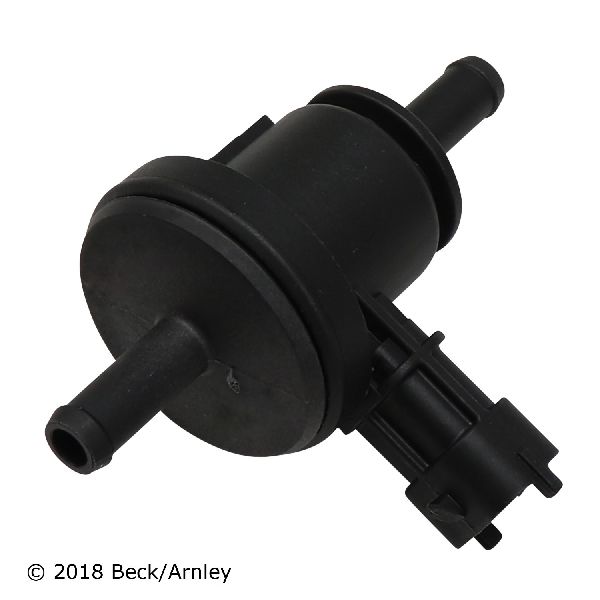
- If the gas cap is good, the canister purge valve (Part No. 28910-26900) in the engine bay is the next most likely culprit on a 2006-2011 Accent.
- A key symptom of a bad purge valve is difficulty starting the car right after getting gas.
- Driving with P0455 is not dangerous to the engine, but it will cause you to fail an emissions test.
- A smoke test is the most accurate way for a mechanic to find a leak if it is not an obvious component like the gas cap or purge valve.
What's Unique About the 2006-2011 Hyundai Accent
The third-generation Hyundai Accent (2006-2011, code-named MC) and its 1.6L Alpha II G4ED engine are known for specific EVAP system component failures. While a loose gas cap is always the first suspect for any car with a P0455, the canister purge valve on this specific Accent model has a high failure rate. This valve can get stuck open, which not only causes this leak code but can also lead to a distinct symptom of the engine struggling to start or stalling immediately after refueling.
Symptoms You May Notice
- Check Engine Light is on
- A noticeable smell of gasoline, especially around the rear of the vehicle or after filling up.
- Difficulty starting the engine, stalling, or rough idle immediately after refueling (strong indicator of a stuck-open purge valve).
- Slight 'hiccup' or 'stutter' in the idle when sitting at stoplights, which can feel similar to a slight misfire.
- Replacing the charcoal canister when a much cheaper valve or hose is the actual problem.
- Assuming the code is a sensor failure. P0455 indicates a physical leak, not necessarily a bad sensor, though a faulty fuel tank pressure sensor can rarely cause this code.
- Replacing the purge valve when the canister close valve is the issue, or vice-versa.
Most Likely Causes
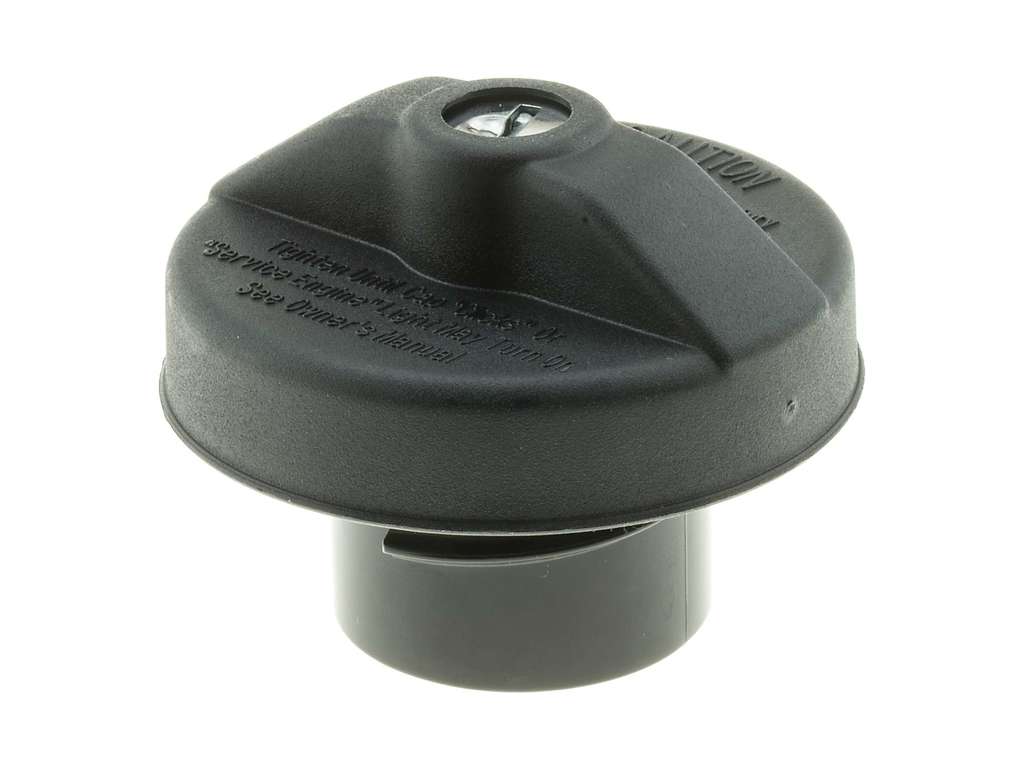
- Loose, Damaged, or Incorrect Gas Cap 🔴 High Probability → Shop Fuel Tank Cap
How to confirm: Remove the gas cap and inspect the rubber seal for cracks, brittleness, or damage. Ensure you are tightening it until it clicks at least once. Clear the code and see if it returns after a few drive cycles. A new OEM cap is a cheap and often effective first step.
Typical fix: Replace the gas cap. It is highly recommended to use an OEM or high-quality aftermarket cap, as poorly-made caps can fail to seal properly and cause the code to persist.
Est. part cost: $15-$30 - Faulty Canister Purge Valve / Solenoid 🔴 High Probability → Shop Vapor Canister This specific part is a well-documented common failure item on the 2006-2011 Accent and its sibling, the Kia Rio. It is known to get stuck open.
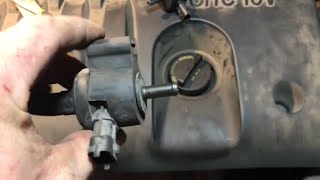
How to confirm: Locate the valve on the intake manifold in the engine bay. With the engine off, disconnect the valve's hoses. Try to blow air through it. If air passes through, the valve is stuck open and is defective. You can also test it by applying 12V to the terminals to see if it clicks.
Typical fix: Replace the canister purge valve. This is a simple repair that typically requires only pliers to move the hose clamps and can be done in under 30 minutes. 🎬 See this step-by-step walkthrough for replacing the purge valve solenoid.
Est. part cost: $40-$85 - Faulty Canister Vent Valve / Solenoid (Canister Close Valve) 🟡 Medium Probability → Shop Vapor Canister This valve is exposed to the elements at the rear of the vehicle, making it susceptible to rust, dirt intrusion, and damage over time.
How to confirm: Locate the valve attached to or near the charcoal canister at the rear of the car, near the spare tire well. Visually inspect for heavy rust or damage. A definitive test involves applying 12V power to the terminals to see if the solenoid clicks. If it doesn't, it's likely failed. It is a normally-open valve, so it should allow air to pass when unpowered.
Typical fix: Replace the canister vent valve. Access may require safely raising the rear of the vehicle.
Est. part cost: $35-$90 - Cracked or Disconnected EVAP Hoses ⚪ Low Probability Rubber hoses become brittle with age and exposure to engine heat and the elements, leading to cracks.
How to confirm: Visually inspect all accessible EVAP lines, from the engine bay to the charcoal canister in the rear. Look for brittle, cracked, or disconnected rubber hoses. A smoke test is the most effective way to find a hard-to-see leak.
Typical fix: Replace the damaged section of hose and secure it with new clamps.
Est. part cost: $5-$20
Rare But Worth Checking
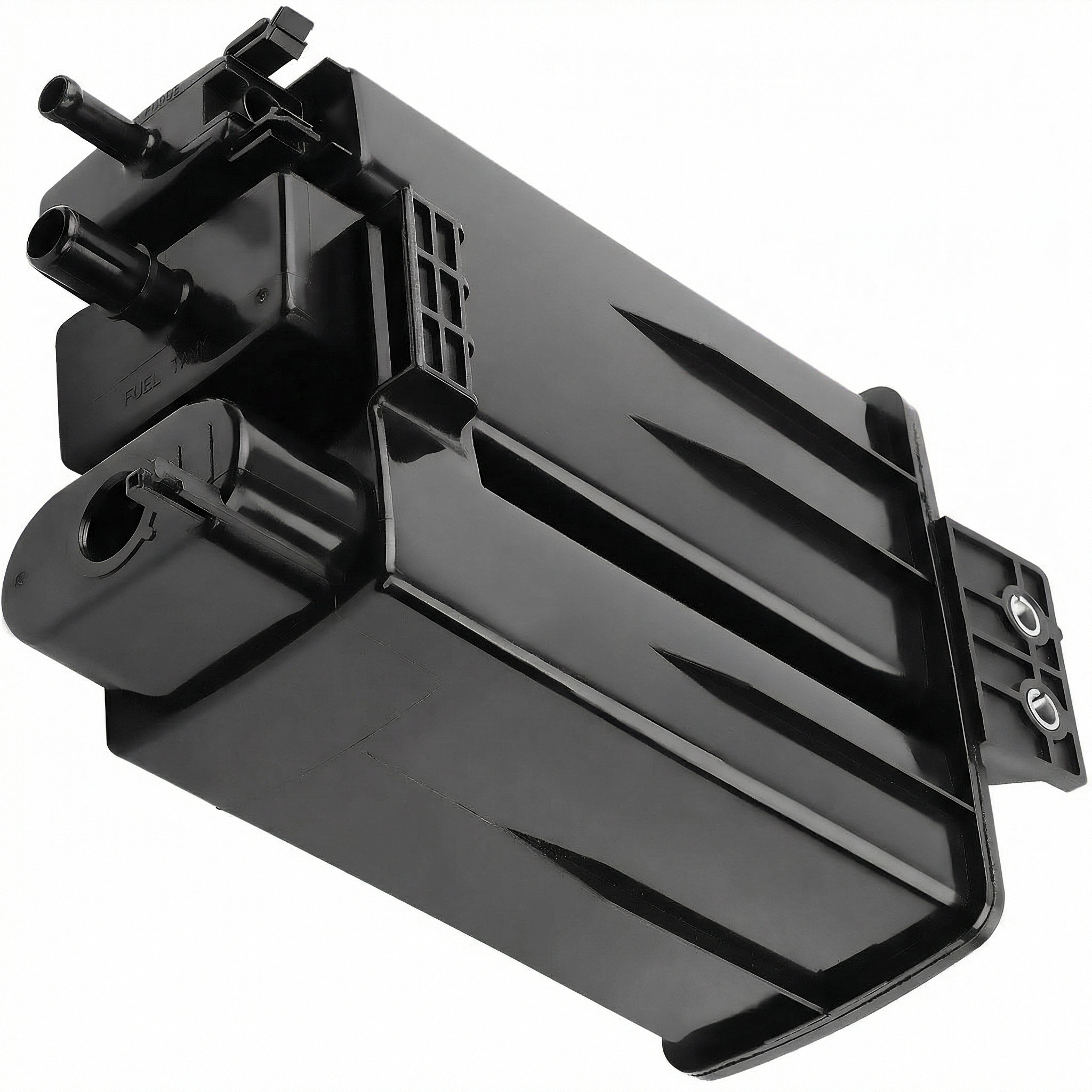
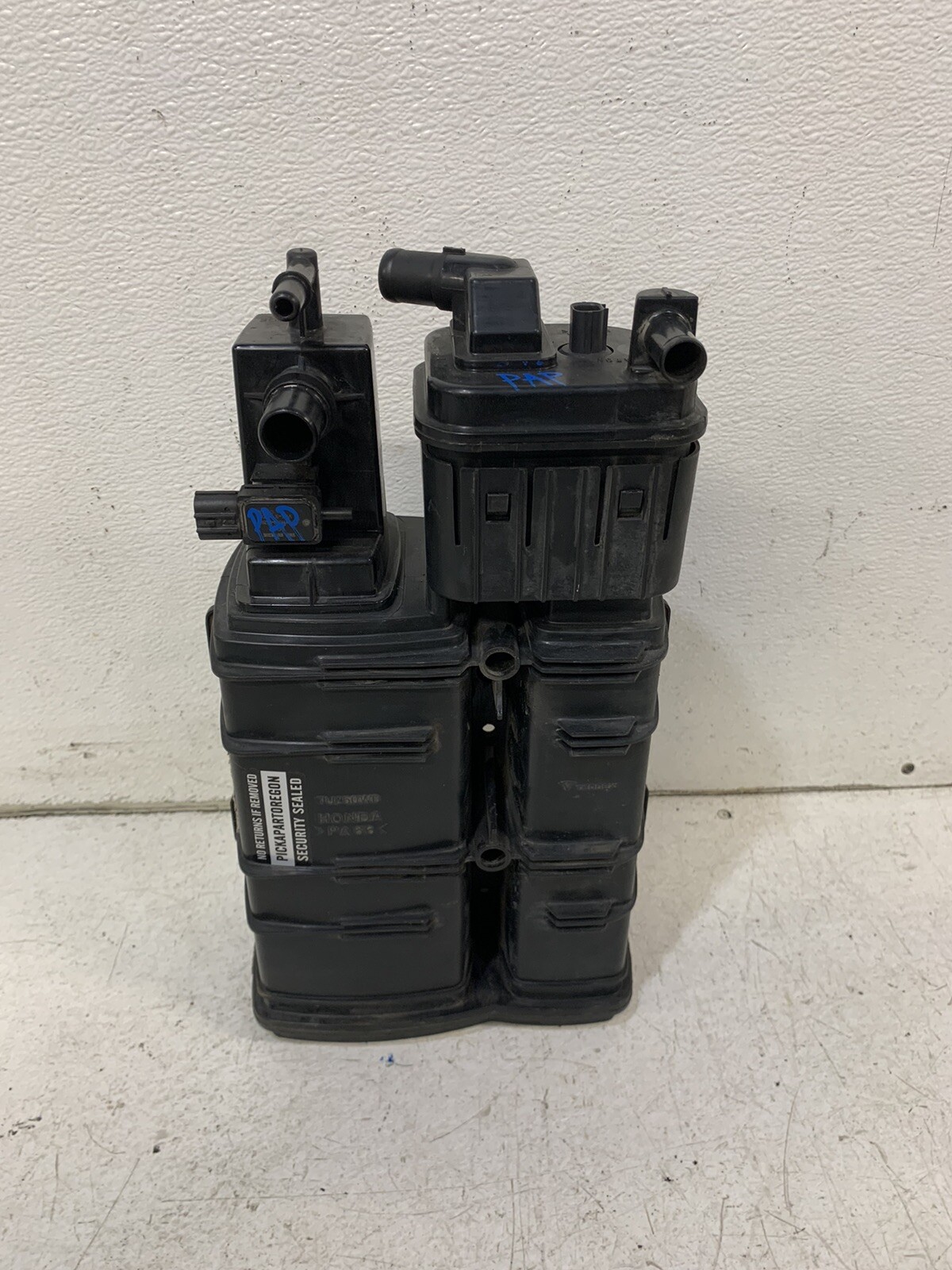
- Cracked Charcoal Canister: → Shop Vapor Canister The plastic housing of the canister can become brittle and crack over time, creating a large leak. In some cases, the internal charcoal bag can rupture, sending charcoal granules through the EVAP lines and clogging the vent and purge valves.
- Damaged Fuel Filler Neck: → Shop Fuel Filler Neck Rust or physical damage can create a hole in the metal pipe leading from the gas cap to the tank, preventing the system from sealing. This can be found with a smoke test where smoke exits near the filler door.
Diagnosis Steps
- Read the code with an OBD-II scanner and check for any other related EVAP codes.
- Inspect the gas cap. Ensure it is tight. Remove it and check the rubber O-ring for cracks or wear. If in doubt, it's an inexpensive first replacement.
- Clear the code and drive for a few days to see if it returns. The EVAP monitor may take several drive cycles to run its test.
- Locate the canister purge valve in the engine bay. With the engine off, disconnect its hoses and attempt to blow through it. If air passes, it is stuck open and must be replaced.
- Visually inspect all visible EVAP hoses under the hood and at the rear of the car near the fuel tank for obvious cracks, rot, or disconnections.
- If no issues are found, the next step is to inspect the canister vent valve (canister close valve) located at the rear of the vehicle for damage or test its operation with a 12V source.
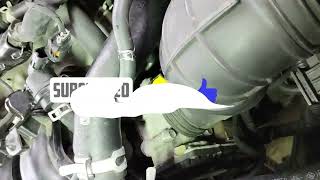
- If the leak source is still not found, a smoke test is the most reliable method. This involves injecting pressurized smoke into the EVAP system (often through the purge valve line) to visually identify where it escapes. 🎬 Watch: How to use a smoke machine to find an EVAP leak.
Parts You'll Likely Need
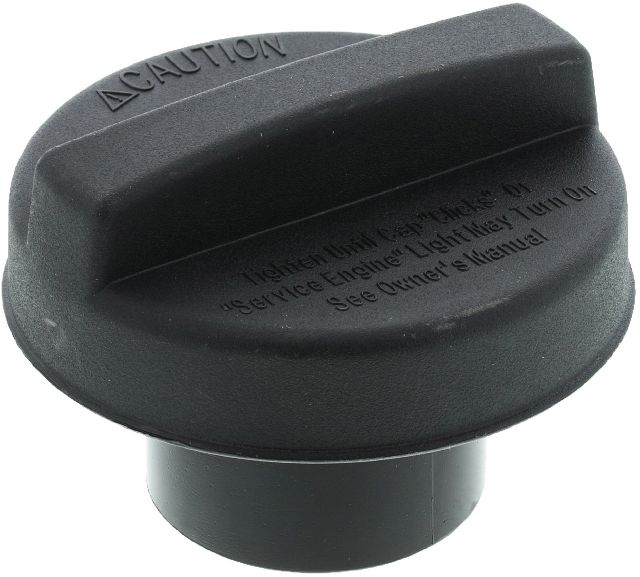
- Fuel Filler Cap
(OEM #31010-3L600)— This is the most frequent cause of P0455. The seal wears out over time, causing a large leak.
Trusted brands: Hyundai (OEM), Carquest, Gates, Stant
OEM price range: $20-$30
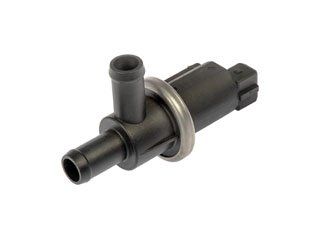
Aftermarket price range: $15-$25 - Canister Purge Valve (Solenoid)
(OEM #28910-26900)— A very common failure point on this specific Accent model, often getting stuck open.
Trusted brands: Hyundai (OEM), Bosch, Dorman (911-808), Standard Motor Products (CP545)
OEM price range: $60-$85
Aftermarket price range: $40-$70 - Canister Vent Valve (Solenoid)
(OEM #31430-29200)— Located at the rear of the car, this valve can fail due to exposure to the elements, getting stuck open or closed.
Trusted brands: Hyundai (OEM), Dorman, Standard Motor Products (VS160), Wells (2M1393)
OEM price range: $50-$120
Aftermarket price range: $35-$90
Related Codes That Often Appear With This One
- P0441 — Indicates incorrect purge flow, often pointing directly to a faulty canister purge valve.
- P0496 — Indicates high purge flow, which is a very strong sign that the canister purge valve is stuck open.
- P0456 — Indicates a small EVAP leak. Sometimes a large leak can initially be detected as a small one, or multiple leaks of different sizes may be present.
Platform-Specific Known Issues
- source — An owner on Reddit with a 2007 Accent at 80,000 miles reported a P0455 code accompanied by a 'hiccup' or 'stutter' at idle. This highlights the common failure of the purge valve and the specific symptoms it can cause on this platform.
- source — A technician on Hyundai-Forums.com noted that a ruptured charcoal canister can force charcoal debris into the canister close valve (CCV), causing it to stick open and trigger a P0455. This is a good example of a cascading failure within the EVAP system.
Technical Service Bulletins (TSBs) & Recalls
- TSB Bulletin #5NP-R8G4T-07 — A manufacturer service bulletin notes that vehicles may experience a check engine warning light with DTC P0455 (Large Leak), P0456 (Very Small Leak), or P0449 (Canister Closed Valve) found stored in the Engine Control Module.
Mechanic-Grade Diagnostic Values
- Canister Purge Solenoid Valve (PCSV) Coil Resistance — expected: 16.0 Ω at 20°C (68°F). Failure: A reading significantly higher (open circuit) or lower (shorted circuit) than the specification indicates a failed solenoid coil.
- Fuel Tank Pressure Sensor (FTPS) Signal Voltage — expected: Signal value will vary between approximately -2mmHg to 2 mmHg depending on engine speed (e.g., ~0 mmHg at 1400 rpm, ~-2 mmHg at 4000 rpm).. Failure: A static, unresponsive, or out-of-range voltage reading when engine conditions change can indicate a faulty sensor.
Scan Tool Commands That Help
- Hyundai GDS (Global Diagnostic System): EVAP System Leak Test — This is the factory-level forced test to check the integrity of the entire EVAP system. The scan tool commands the vent valve to close and the purge valve to open, then monitors the fuel tank pressure sensor to see if the system can build and hold a vacuum. Failure of this test confirms a leak is present.
- Hyundai GDS (or advanced bidirectional scanner): Purge Control Solenoid Valve (PCSV) Actuation — This command allows the technician to manually open and close the purge valve while the engine is off. This can be used to verify the valve's mechanical operation (listening for a click) and to check for flow when commanded open and no flow when commanded closed.
- Hyundai GDS (or advanced bidirectional scanner): Canister Close Valve (CCV) Actuation — This command forces the normally-open vent valve to close. It's used to seal the system for a leak test and to confirm the valve itself is not stuck. If the valve is commanded closed and a smoke test still shows smoke exiting the vent, the valve is faulty.
Wiring & Ground Locations
- Purge Control Solenoid Valve (PCSV) Connector — At the right rear of the engine on the intake manifold, on the valve itself.. This 2-pin connector is where voltage and resistance tests are performed. One pin receives ~12V power from the main relay with key-on, and the other is the control wire grounded by the ECM to activate the valve. A bad connection here will prevent the valve from operating.
- ECM (Engine Control Module) — Located in the left rear of the engine compartment.. The ECM provides the ground signal to control the purge valve. While rare, a failed driver circuit in the ECM could prevent the valve from operating, though this would typically set a circuit code (like P0444/P0445) rather than a leak code.
- Canister Close Valve (CCV) Connector — Under the rear of the vehicle, attached to or near the charcoal canister by the fuel tank.. A poor connection or damaged wiring at this connector can prevent the CCV from closing when the ECM runs its leak test. An inability to close the valve creates a large, permanent leak path to the atmosphere, directly causing a P0455.
Real Owner Repair Stories
- YouTube - SMOKE MACHINE (2016 Hyundai Accent) — P0455 code active.
✅ What actually fixed it A smoke test revealed a leak coming from the fuel filler neck. The filler neck was replaced with a used part from a junkyard, which resolved the issue. - Reddit r/MechanicAdvice (2007 Hyundai Accent, 80k miles) — P0455 code, 'hiccup' or 'stutter' at idle.
❌ Tried (didn't work) Visual inspection by owner's father (hobby mechanic)., Smoke test performed by a shop, which found no leaks., Clearing the code (it returned).
✅ What actually fixed it The user did not post a final resolution, but the symptoms strongly point to an intermittently sticking purge valve, which is a common failure not always caught by a static smoke test. - YouTube - How to fix code P0455, P0444 (2010-2017 Hyundai Accent (video shows this range)) — P0455 and P0444 codes.
❌ Tried (didn't work) Customer had already replaced the gas cap, but the check engine light returned.
✅ What actually fixed it The technician diagnosed and replaced a faulty canister purge valve. The video demonstrates testing the old valve with a vacuum pump, showing it failed to hold a vacuum, confirming it was stuck open.
"I Checked Everything" — The Actual Cause
- In a case reported on Reddit for a 2007 Accent, a professional smoke test came back clean, yet the P0455 code and stuttering symptoms persisted. This scenario often points to an intermittent failure, most commonly the canister purge valve sticking open only under certain conditions (e.g., when warm), which a single smoke test might miss. Another possibility is a faulty Canister Close Valve that functions correctly during the test but fails to seal intermittently during real-world driving.
OEM Part Supersession History
28910-22040→28910-26900— Standard part evolution and consolidation for use across multiple Hyundai/Kia platforms. The 28910-26900 is the correct service part for the 2006-2011 Accent.
Heads up: The Dorman aftermarket part 911-800 is often confused but is for different applications and will not fit or function correctly; the correct Dorman equivalent is 911-808.31430-29100→31430-29200— The newer part features minor internal seal and spring modifications to reduce sticking issues that were common in the older units.
Diagnostic Flowchart
Other Known Issues on This Vehicle
Issues unrelated to this code that are worth knowing about as an owner of this generation:
- Faulty Stop Lamp Switch 🟠 Medium — Extremely common, subject to a massive recall. (Ref: Hyundai Recall Campaign 110 (NHTSA #13V113000). The recall was expanded multiple times.)
- Ignition Coil Failure 🟠 Medium — Common issue leading to engine misfires and rough idling as the vehicle ages.
- Timing Belt Replacement Interval 🔴 High — The G4ED is an interference engine. The timing belt requires replacement every 60,000-90,000 miles. Failure to do so will result in catastrophic engine damage.
- Automatic Transmission Rough Shifting 🟡 Low — Some owners report hesitation or rough shifting, which can sometimes be addressed with fluid changes or solenoid replacement.
- Hydraulic Lifter Tick 🟡 Low — The engine can develop a 'ticking' noise from the hydraulic lifters, especially at higher mileage (100k+ miles). It is often benign but can be annoying.
Used vs. New Parts: Buying Guide for This Vehicle
When a used part is the smart pick: For this vehicle, used parts can be a cost-effective option for mechanical and structural components like the fuel filler neck or the plastic charcoal canister body. These parts have a low failure rate from wear and can be visually inspected for cracks or rust before purchase.
Donor-vehicle mileage cap: roughly under 120000 miles for the part to have meaningful remaining life.
What to inspect on the donor part:
- For filler necks, check for heavy rust, especially around the mounting flange and where it meets the hose.
- For charcoal canisters, inspect the plastic body for any cracks or signs of physical impact. Ensure all hose nipples are intact.
- For hoses, squeeze them to check for brittleness or mushiness. They should be firm but flexible.
OEM-only on this vehicle (don't cheap out):
- Fuel Filler Cap: This is the most critical part to buy OEM. Many forum and owner reports indicate that aftermarket gas caps, even from reputable brands, often fail to create a proper seal on Hyundai vehicles, causing the P0455 code to persist or return quickly.
Aftermarket brands forum-validated for this vehicle:
- Dorman (911-808 for Purge Valve): Dorman is a widely available and generally accepted aftermarket replacement for the purge valve, with many owners reporting successful repairs.
- Standard Motor Products (CP545 for Purge Valve): SMP is a reputable brand that offers an OE-matched replacement part.
Brands owners have reported issues with on this vehicle:
- Unbranded/"White Box" Gas Caps: Avoid generic, no-name gas caps from online marketplaces, as they are the most likely to have sealing issues.
Real Owner Stories
Aggregated from forums and TSBs cited above. Mileages and costs reflect what owners reported in those sources.
2007 Hyundai Accent — 80000 miles
Symptoms: A 'hiccup' or 'stutter' in the idle when sitting at stoplights, which became more frequent and also occurred during acceleration, followed by the check engine light.
What fixed it: A shop performed a smoke test and checked the gas cap but could not replicate the symptoms or find the leak; the user reported the purge valve is a common failure for these symptoms.
Source hint: Reddit r/MechanicAdvice thread titled '2007 Hyundai Accent 80k mileage code P0455'
2006-2011 Hyundai Accent
Symptoms: The check engine light would clear but return immediately after the next fuel fill-up.
What fixed it: The owner confirmed this pointed to a persistent leak not related to a simple loose gas cap.
Source hint: Reddit r/Hyundai
2006-2011 Hyundai Accent
Symptoms: P0455 code triggered by a valve stuck open due to debris.
What fixed it: Addressing a ruptured charcoal canister that forced charcoal debris into the canister close valve (CCV).
Source hint: Hyundai-Forums.com
Related OBD-II Codes
Frequently Asked Questions
Is there a recall for the EVAP system or P0455 on my 2006-2011 Hyundai Accent?
Why does my Accent struggle to start only after I fill up the gas tank?
I replaced my gas cap but the P0455 code is still there. What should I check next?
Can a bad charcoal canister cause the vent valve to fail on this model?
Where is the canister vent valve located on the 2006-2011 Accent?
Does the Kia Rio share this same EVAP issue?
Helpful Videos


Used OEM Parts in Stock
New Aftermarket Parts Available


The information in this article is provided for general reference and educational purposes only. Vehicle specifications, procedures, and part compatibility can vary by production date, trim level, and region. Always consult your vehicle's factory service manual and verify part numbers before purchasing or performing repairs. Safety-critical components such as airbags, seat belts, and braking systems should be installed by a qualified professional.
- Hyundai Accent:
- 🧭 Diagnostic Flowchart
- 🎬 Helpful Videos
- 🛍️ Shop This Part
- What's Unique About the 2006-2011 Hyundai Accent
- Symptoms You May Notice
- Most Likely Causes
- Rare But Worth Checking
- Diagnosis Steps
- Parts You'll Likely Need
- Related Codes That Often Appear With This One
- Platform-Specific Known Issues
- Technical Service Bulletins (TSBs) & Recalls
- Mechanic-Grade Diagnostic Values
- Scan Tool Commands That Help
- Wiring & Ground Locations
- Real Owner Repair Stories
- "I Checked Everything" — The Actual Cause
- OEM Part Supersession History
- Other Known Issues on This Vehicle
- Used vs. New Parts: Buying Guide for This Vehicle
- Real Owner Stories
- 2007 Hyundai Accent — 80000 miles
- 2006-2011 Hyundai Accent
- 2006-2011 Hyundai Accent
- Related OBD-II Codes
- Frequently Asked Questions
- 🎟️ Get 5% Off