

P0455 on 2012-2016 Hyundai Accent: EVAP Large Leak Causes and Fixes
For a 2012-2016 Hyundai Accent, a P0455 code is most often caused by a loose or faulty gas cap. Before buying any parts, check that the cap is tight and the seal is not cracked. If the cap is bad, a new one costs about $10-$25.
- Always start with the simplest fix: check that your gas cap is tight and its seal is intact. This resolves P0455 more than half the time.
- If a new gas cap doesn't fix the issue, the next most likely culprits are the canister purge valve (in the engine bay) or the canister vent valve (at the rear of the car).
- A professional smoke test is the fastest and most accurate way to find a leak if it's not one of the common components.
- While you can drive with this code, you will not pass an emissions test until it is resolved.
What's Unique About the 2012-2016 Hyundai ACCENT
The 2012-2016 Hyundai Accent (fourth generation, RB) has a straightforward EVAP system, but owners report that a sequence of part failures can occur. If the charcoal canister fails, it can send charcoal pellets through the lines, clogging and damaging both the purge valve and the vent valve. This makes it important to diagnose the root cause rather than just replacing the first part that seems faulty. Additionally, rusted hose clamps on the EVAP lines near the canister are a known failure point on these vehicles, which can cause a P0455 or P0456 code.
Diagnostic Flowchart
Tap your situation to follow the diagnostic path that matches what you're seeing on this vehicle.
Symptoms You May Notice
- Check Engine Light is on
- A noticeable fuel smell, especially after refueling or near the rear of the car.
- Slightly reduced fuel economy (uncommon).
- Difficulty starting the car right after getting gas (if the purge valve is stuck open).
- Replacing the purge valve or vent valve when the actual problem is a bad gas cap.
- Replacing the charcoal canister when a less expensive valve or hose is the culprit.
Most Likely Causes
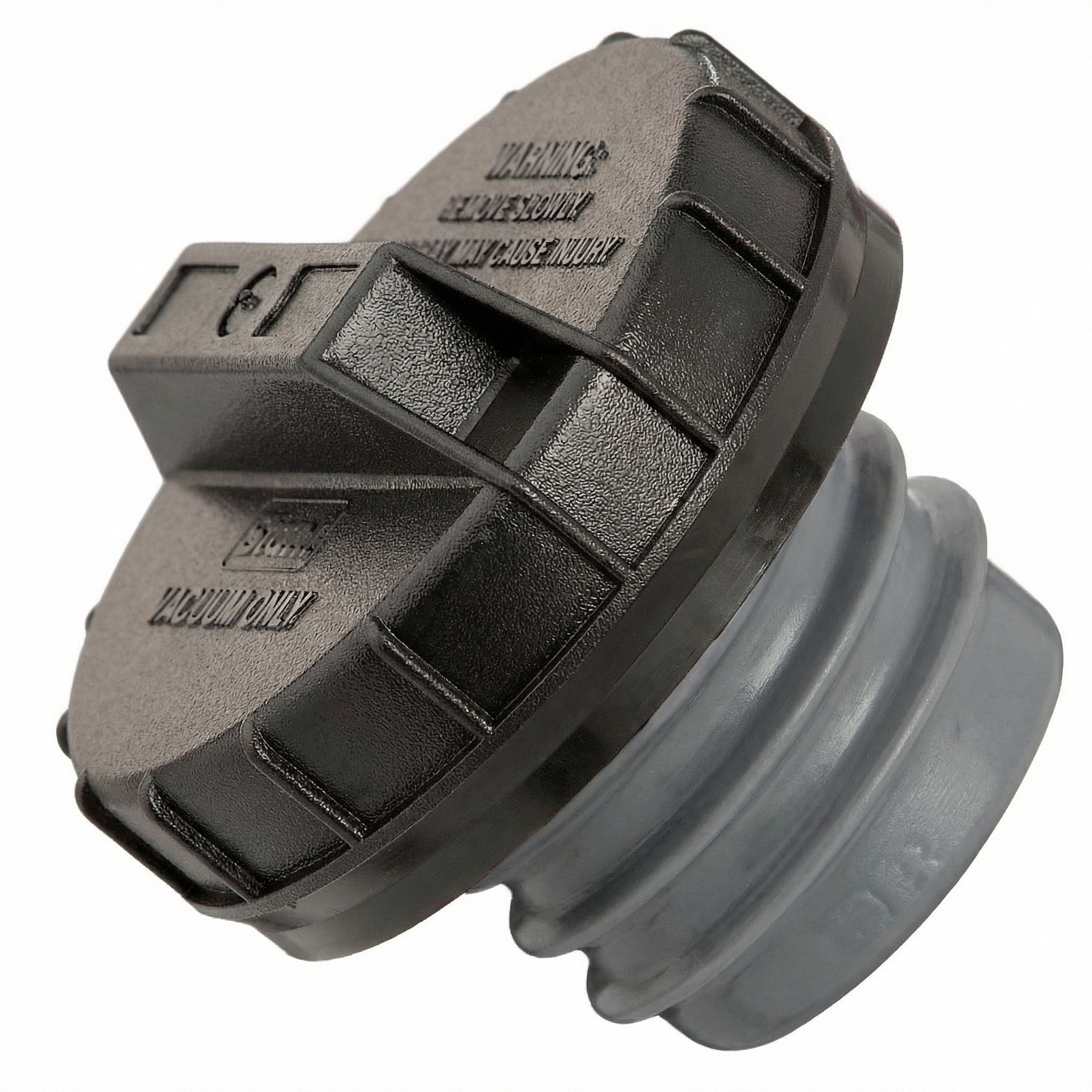
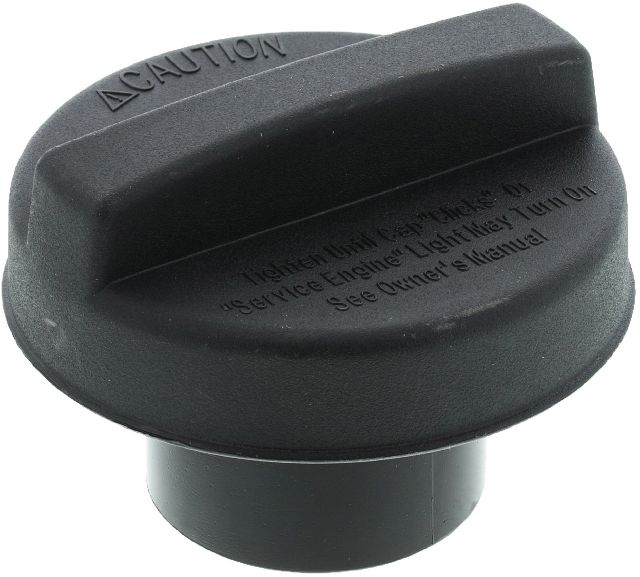
- Loose, Damaged, or Incorrect Gas Cap 🔴 High Probability → Shop Fuel Tank Cap This is the most common cause for a P0455 code on any vehicle, as the cap is frequently removed and its seal can wear out over time.
How to confirm: Inspect the gas cap to ensure it is tightened until it clicks. Check the rubber seal for cracks, stiffness, or damage. Ensure you are using an OEM or equivalent cap, as some aftermarket caps do not seal properly.
Typical fix: Tighten or replace the gas cap.
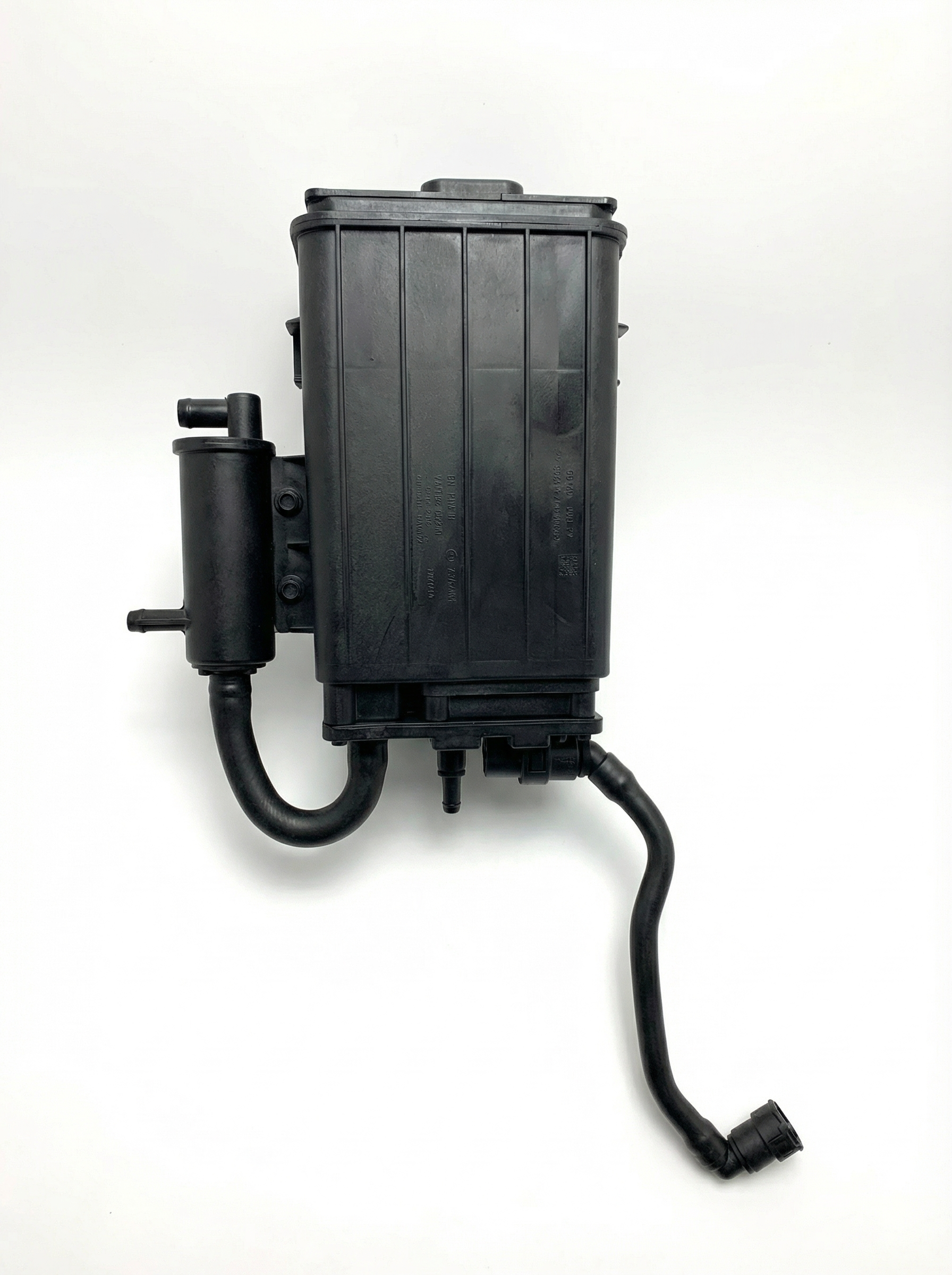
Est. part cost: $10-$25 - Faulty Canister Purge Valve (or Purge Solenoid) 🟡 Medium Probability → Shop Vapor Canister This valve can get stuck open, creating a constant vacuum leak. It can also become clogged with charcoal particles if the canister has failed.
How to confirm: The purge valve is located in the engine bay. With the engine off, you can remove it and try to blow through it. If air passes through, the valve is stuck open and is faulty. You can also test its function by applying 12V to its terminals to see if it clicks open and closed.
Typical fix: Replace the canister purge valve.
Est. part cost: $25-$60 - Faulty Canister Close Valve (CCV) / Vent Valve 🟡 Medium Probability → Shop Vapor Canister This valve is located near the charcoal canister at the rear of the vehicle. It is normally open and closes during the EVAP system test. If it gets stuck open or fails to close on command, the system cannot seal and will report a large leak.
How to confirm: The valve can be tested with a scan tool that can command it to close. A more direct method is to apply 12V to its terminals and listen for a click. If it doesn't operate or is stuck, it needs replacement.
Typical fix: Replace the canister vent valve.
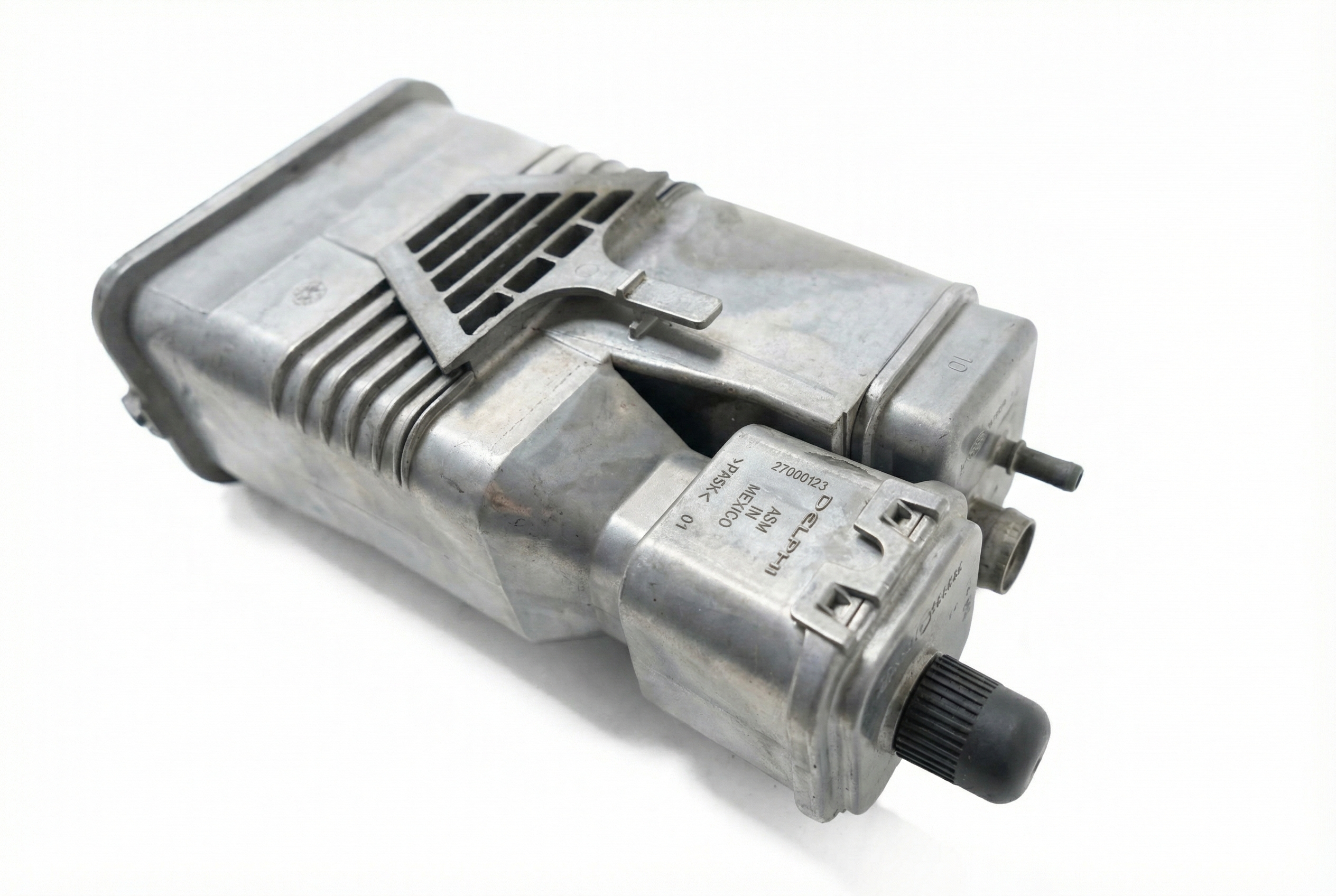
Est. part cost: $35-$70 - Cracked or Damaged Charcoal Canister ⚪ Low Probability → Shop Vapor Canister The plastic housing of the canister can develop cracks from age, road debris, or impact, creating a large leak.
How to confirm: Visually inspect the charcoal canister, located near the fuel tank, for any visible cracks or damage. A smoke test is the most effective way to confirm a leak from the canister body.
Typical fix: Replace the charcoal canister.
Est. part cost: $250-$350 - Cracked or Disconnected EVAP Hoses ⚪ Low Probability Rubber hoses can become brittle and crack over time, especially in harsh climates. A disconnected hose or a hose with a rusted-out clamp will immediately cause a large leak code.
How to confirm: Visually inspect all accessible EVAP lines between the engine, charcoal canister, and fuel tank. Pay close attention to the hose clamps near the canister. A smoke test is the best method to find a hard-to-see crack in a hose.
Typical fix: Replace the damaged section of hose or clamp.
Est. part cost: $5-$30
Rare But Worth Checking
- Damaged Fuel Filler Neck: → Shop Fuel Filler Neck Rust or damage to the filler neck can prevent the gas cap from sealing properly, causing a persistent P0455 code even with a new cap. A smoke test will often reveal smoke escaping from the filler neck area if this is the cause.
- Faulty Fuel Tank Pressure Sensor: → Shop Fuel Tank In rare cases, the sensor that monitors EVAP system pressure can fail and incorrectly report a leak when there isn't one. This is usually diagnosed after all other possibilities have been ruled out.
Diagnosis Steps
- Check the Gas Cap: Ensure it is tight and clicks several times. Remove it and inspect the seal for cracks or damage. Clear the code and drive for a few days to see if it returns.
- Visual Inspection: Look over the EVAP hoses in the engine bay and under the car near the fuel tank for obvious cracks, disconnections, or damage. Pay special attention to the metal hose clamps on the lines connected to the charcoal canister, as they are known to rust through.
- Test the Purge Valve: Locate the purge valve in the engine bay. Disconnect it and attempt to blow through it. If air passes, it's stuck open and needs to be replaced.
- Test the Vent Valve: Locate the vent valve near the charcoal canister. Use a scan tool to command it closed or apply 12V power to it. If it doesn't click or seal, it is faulty.
- Perform a Smoke Test: If the leak source is still not found, the most effective method is to use an EVAP smoke machine. This involves feeding low-pressure smoke into the system and watching for where it escapes. This will definitively identify leaks in hoses, the canister, the filler neck, or the fuel tank.
Parts You'll Likely Need
- Gas Cap
(OEM #31010-3L600)— This is the most frequent failure point and the easiest and cheapest part to replace.
Trusted brands: Genuine Hyundai, Gates
OEM price range: $20-$30
Aftermarket price range: $10-$20 - Canister Purge Valve / Solenoid
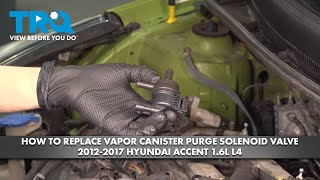
(OEM #28910-26900)— This valve is a common failure item that gets stuck open, causing a large leak. It is located in the engine bay and is relatively easy to replace. 🎬 See this step-by-step walkthrough for replacing the purge solenoid.
Trusted brands: Bosch, Dorman, Standard Motor Products
OEM price range: $50-$70
Aftermarket price range: $25-$50 - Canister Close Valve / Vent Solenoid
(OEM #31433-1R500)— Located near the rear charcoal canister, this valve can get stuck open, preventing the system from sealing for its pressure test.
Trusted brands: Dorman, Standard Motor Products, API
OEM price range: $60-$80
Aftermarket price range: $35-$60
Related Codes That Often Appear With This One
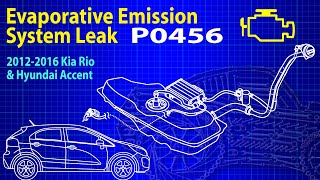
- P0456 — A P0456 (Very Small Leak) might appear intermittently before a component fails completely and causes a P0455 (Large Leak). A rusted hose clamp, for example, might start as a small leak before breaking entirely. 🎬 Watch: Diagnosing a P0456 small leak on this Accent model.
- P0449 — This code specifically points to a fault in the EVAP vent valve/solenoid circuit, which is a common cause of the P0455 leak code. The TSB #5NP-R8G4T-07 mentions these codes appearing together.
Technical Service Bulletins (TSBs) & Recalls
- Bulletin #5NP-R8G4T-07: Notes that P0455 may be found with other EVAP codes like P0456 and P0449, related to the canister close valve.
Mechanic-Grade Diagnostic Values
- Canister Purge Valve (Solenoid) Coil Resistance — expected: Approximately 15 to 36 Ohms at room temperature.. Failure: A reading of infinite resistance (open circuit) or very low resistance (short circuit) indicates a faulty solenoid coil.
- Canister Purge Valve Connector Voltage (Key On) — expected: One pin should have battery voltage (approx. 12V), the other is the ground control from the ECM.. Failure: Absence of voltage could indicate a wiring or fuse issue.
Scan Tool Commands That Help
- Hyundai GDS or equivalent professional scan tool: EVAP System Leakage Test (Forced Actuation) — This function allows a technician to manually command the Canister Close Valve (CCV) to shut and the Purge Solenoid (PCSV) to seal the system. The scan tool then monitors the Fuel Tank Pressure Sensor to see if the system holds vacuum. This is a critical step before a smoke test to confirm if the leak is from a valve not sealing electronically or a physical leak elsewhere. 🎬 Watch: How to find a P0455 leak using a smoke machine.
Wiring & Ground Locations
- Purge Control Solenoid Valve (PCSV) Connector — On top of the engine, near the intake manifold, under the plastic engine cover.. This 2-pin connector provides power and control to the purge valve. Checking for battery voltage at one pin (with key on) is a primary electrical diagnostic step.
- Canister Close Valve (CCV) Connector — Under the rear of the vehicle, mounted on or near the charcoal canister, which is typically located near the fuel tank.. This connector provides power to the vent valve, which must close to seal the system for a leak test. A bad connection or wiring here can cause a P0449 and lead to a P0455 because the system can't seal.
Real Owner Repair Stories
- YouTube - Evaporative Emission System Leak P0456 Kia Rio & Hyundai Accent 2012-2016 (2015 Kia Rio (platform sibling to Accent)) — Check Engine Light with code P0456 (small leak), which can precede a P0455.
❌ Tried (didn't work) Checked the gas cap and filler neck, which were in good condition.
✅ What actually fixed it A visual inspection underneath the car revealed a completely rusted-through steel hose clamp on the vent hose connected to the charcoal canister. Replacing the clamp resolved the leak. - YouTube - 2016 Hyundai Accent EVAP Leak Diagnosis & Repair | P0455 Code (2016 Hyundai Accent) — Check Engine Light with code P0455.
❌ Tried (didn't work) Replacing the gas cap did not fix the issue.
✅ What actually fixed it A smoke test revealed smoke leaking from behind the gas cap area. The leak was traced to a crack in the fuel filler neck itself. The filler neck was replaced with a used part, which fixed the leak.
"I Checked Everything" — The Actual Cause
- In some cases, a P0455 can be triggered even if a smoke test is clean. This can happen if the Fuel Tank Pressure (FTP) sensor is faulty and sending incorrect readings to the computer, making it 'think' there is a leak when the system is actually sealed. This is a rare cause and is typically diagnosed after all other components have been verified as working correctly.
Model Year Variations Within This Range
- 2012-2014: The vapor canister part number is listed for models built up to 12/31/2014, suggesting a potential change for the 2015 model year, though the core function remains the same.
Helpful Videos
Used OEM Parts in Stock

New Aftermarket Parts Available


The information in this article is provided for general reference and educational purposes only. Vehicle specifications, procedures, and part compatibility can vary by production date, trim level, and region. Always consult your vehicle's factory service manual and verify part numbers before purchasing or performing repairs. Safety-critical components such as airbags, seat belts, and braking systems should be installed by a qualified professional.
- Hyundai ACCENT:
- 🧭 Diagnostic Flowchart
- 🎬 Helpful Videos
- 🛍️ Shop This Part
- What's Unique About the 2012-2016 Hyundai ACCENT
- Symptoms You May Notice
- Most Likely Causes
- Rare But Worth Checking
- Diagnosis Steps
- Parts You'll Likely Need
- Related Codes That Often Appear With This One
- Technical Service Bulletins (TSBs) & Recalls
- Mechanic-Grade Diagnostic Values
- Scan Tool Commands That Help
- Wiring & Ground Locations
- Real Owner Repair Stories
- "I Checked Everything" — The Actual Cause
- Model Year Variations Within This Range
- 🎟️ Get 5% Off