

P0455 on 2011-2016 Hyundai Elantra: EVAP Large Leak Causes and Fixes
For a 2011-2016 Hyundai Elantra with a 1.8L engine, code P0455 is most often caused by a loose or faulty gas cap. Always check this first. If the light returns, the next most common failure is the canister purge valve, which is an easy DIY replacement located on the engine. If neither of those is the cause, the canister close valve at the rear of the car is the next likely culprit.
- Always check your gas cap first for code P0455. Make sure it's tight and the seal is intact.
- If the gas cap isn't the problem, the canister purge valve (Part No. 28910-2E000) is the next most likely cause and is an easy DIY replacement located on the side of the engine.
- Driving with P0455 will not harm your engine, but you will fail an emissions test and are releasing excess pollutants.
- A smoke test is the best diagnostic method if the problem isn't the gas cap or purge valve.
What's Unique About the 2011-2016 Hyundai Elantra
On the fifth-generation (2011-2016) Elantra, the most common failures beyond a simple loose gas cap are the canister purge valve and the canister close valve. Unlike some other vehicles, the purge valve on the 1.8L Nu engine is conveniently located on the driver's side of the engine, making it very easy to access and replace for a DIY repair. Owners frequently report that replacing the purge valve (Part No. 28910-2E000) resolves the P0455 code after the gas cap has been ruled out. The canister close valve, located on the charcoal canister near the rear axle, is also a frequent failure point, often due to corrosion from road salt in colder climates.
Symptoms You May Notice
- Check Engine Light is on.
- A faint to strong smell of gasoline may be present, especially around the fuel tank area or filler neck.
- In rare cases, if the purge valve is stuck wide open, it can create a vacuum leak large enough to cause a rough idle or difficulty starting immediately after refueling.
- Difficulty refueling where the gas pump nozzle shuts off repeatedly before the tank is full can be a symptom of a blocked vent path, often related to the canister close valve or charcoal canister.
- Replacing the charcoal canister when the actual problem is a much cheaper and simpler component like the canister close valve or a cracked hose attached to it.
- Immediately replacing sensors without first checking the gas cap and performing a visual inspection or smoke test.
- Using an aftermarket gas cap which fails to seal properly, leading to a repeat P0455 code and unnecessary further diagnosis.
Most Likely Causes
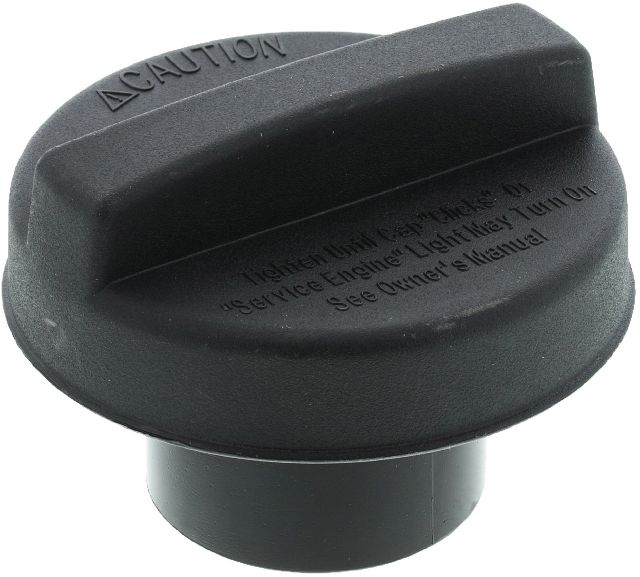
- Loose or Faulty Gas Cap 🔴 High Probability → Shop Fuel Tank Cap This is the most common cause for any vehicle, as the cap can be forgotten, improperly tightened, or the seal can wear out. Many owners report that only a genuine OEM Hyundai cap will solve the problem, as some aftermarket caps fail to seal correctly.
How to confirm: Remove the gas cap, inspect the rubber seal for cracks, hardness, or debris. Reinstall the cap, ensuring it clicks at least three times. Clear the code and drive for a few days. If the code does not return, the issue is solved. A warped or rusted fuel filler neck can also prevent a good seal.
Typical fix: Tighten or replace the gas cap. It is highly recommended to use an OEM (Original Equipment Manufacturer) cap, part number 31010-3L600.
Est. part cost: $20-$40 - Faulty Canister Purge Valve (Purge Solenoid) 🔴 High Probability → Shop Vapor Canister The purge valve is a very common failure point on many Hyundai models of this era, including the Elantra. It often gets stuck open, creating a constant leak path that the ECU detects during its vacuum test.
How to confirm: The purge valve is a normally-closed valve. With the engine off, disconnect the hoses from the valve and try to blow through it. If air passes through, the valve is stuck open and is faulty. The valve is located on the driver's side of the engine, making it easy to access.
Typical fix: Replace the canister purge valve. This is a simple repair involving disconnecting two hoses and an electrical connector. The OEM part number is 28910-2E000. 🎬 Watch: A quick walkthrough on replacing the 1.8L purge valve.
Est. part cost: $30-$60 - Faulty Canister Close Valve (Vent Valve/Solenoid) 🟡 Medium Probability → Shop Vapor Canister This valve is located at the rear of the car on the charcoal canister, exposing it to road salt and debris. Corrosion can cause it to stick open, preventing the EVAP system from sealing properly for the leak test. A manufacturer service bulletin for other models, TSB Bulletin #5NP-Q7J2C-07, notes that P0455 and P0449 (Canister Closed Valve) codes are often found stored together in the ECM.
How to confirm: This valve is normally open and closes when voltage is applied. Diagnosis often requires a capable scan tool to command the valve closed while performing a smoke test. A smoke test is the most effective way to confirm a leak at the vent valve or canister area. You can also visually inspect it for cracks or heavy corrosion.
Typical fix: Replace the canister close valve, which is mounted on the charcoal canister assembly near the rear axle. The OEM part number is 31430-3X000, which has been superseded by 31430-1Y000.
Est. part cost: $50-$120 - Cracked or Disconnected EVAP Hose ⚪ Low Probability
How to confirm: Visually inspect all accessible EVAP hoses in the engine bay (around the purge valve) and at the rear of the car (around the charcoal canister) for cracks, brittleness, or loose connections. A professional smoke test is the most reliable method to find a hard-to-see cracked hose.
Typical fix: Replace the damaged section of the hose and secure the clamps.
Est. part cost: $10-$40
Rare But Worth Checking
- Cracked Charcoal Canister: → Shop Vapor Canister While not common, road debris or age can cause the plastic housing of the charcoal canister to crack, creating a large leak. This is usually found with a smoke test and can be an expensive repair. 🎬 Watch this guide to replacing a cracked charcoal canister. On the sister platform Kia Forte, corrosion of the steel fittings on the canister has been known to crack the plastic housing.
- Damaged Fuel Filler Neck: → Shop Fuel Filler Neck Rust or physical damage to the metal fuel filler neck can prevent even a new gas cap from sealing properly, causing a persistent P0455 code. This should be visually inspected when checking the gas cap. A technician fixed a similar P0442 small leak code by cleaning rust from the filler neck sealing surface with a Scotch-Brite pad.
- Faulty Fuel Tank Pressure Sensor: → Shop Fuel Tank In very rare cases, the sensor that reports pressure data to the computer can fail. TSB Bulletin #21-FL-002H notes that salt particulate deposits can form inside the sensor, leading to P0455 and P0442 codes, particularly in coastal areas subject to marine layer clouds as described in TSB Bulletin #21-01-035H.
Diagnosis Steps
- Read the code with an OBD-II scanner to confirm P0455 is present.
- Inspect the Gas Cap: Remove the gas cap. Check for any cracks in the rubber O-ring seal. Ensure it's the correct type for the vehicle, preferably OEM.
- Tighten the Gas Cap: Reinstall the cap and tighten it until it clicks at least three times. Clear the code and drive for a few days. If the code does not return, the issue is solved.
- Visual Inspection (Engine Bay): If the code returns, visually inspect the EVAP hoses in the engine bay, particularly those connected to the purge valve on the driver's side of the engine, for any obvious cracks or disconnections.
- Test the Purge Valve: Locate the purge valve on the driver's side of the engine. Disconnect the hoses from the valve. With the engine off, attempt to blow through the valve. If air passes through, it is stuck open and must be replaced.
- Visual Inspection (Rear): Visually inspect the charcoal canister (located at the rear of the vehicle, near the spare tire well) and its associated hoses and the canister close valve for any visible damage, heavy rust, or cracks.
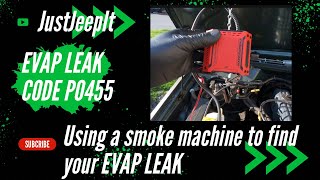
- Perform a Smoke Test: If the leak is not obvious, the most effective next step is to perform a smoke test. This involves injecting pressurized smoke into the EVAP system to quickly and accurately pinpoint the source of the leak. 🎬 See how a smoke test quickly finds hidden EVAP leaks. This is the definitive way to find cracked hoses, a faulty canister close valve, or a cracked charcoal canister.
Parts You'll Likely Need
- Gas Cap
(OEM #31010-3L600)— This is the most frequent cause. The seal wears out or the cap isn't tightened properly. Using an OEM cap is highly recommended as aftermarket versions are a common source of repeat codes.
Trusted brands: Hyundai (OEM)
OEM price range: $25-$40
Aftermarket price range: $15-$25 - Canister Purge Valve / Purge Solenoid
(OEM #28910-2E000)— A very common failure point on this Elantra model. It gets stuck open, creating a permanent large leak that the system detects.
Trusted brands: Hyundai (OEM), Dorman, Standard Motor Products
OEM price range: $45-$60
Aftermarket price range: $30-$50 - Canister Close Valve / Vent Valve
(OEM #31430-3X000)— This valve on the charcoal canister is also prone to failure, often from corrosion, preventing the system from sealing during its self-test. Note: This part number may be superseded by 31430-1Y000.
Trusted brands: Hyundai (OEM), Dorman
OEM price range: $80-$120
Aftermarket price range: $50-$80
Related Codes That Often Appear With This One
- P0441 — Incorrect Purge Flow. This code can appear with P0455 if the purge valve is stuck open, causing both a large leak and improper flow characteristics.
- P0456 — EVAP System Small Leak Detected. While less common to see together, an intermittent issue with a valve or a developing crack could initially be detected as a small leak before becoming a large one. TSB Bulletin #5NP-Z2J3V-04 notes that P0455, P0456, and P0442 are frequently stored together.
- P0442 — EVAP System Medium Leak Detected. Similar to P0456, this can be a precursor to a large leak or indicate an intermittent fault.
Technical Service Bulletins (TSBs) & Recalls
- TSB 17-ST-002: Details the service procedure for replacing the flexible steering coupler, a common non-related issue on this platform.
- TSB 22-EM-007H (related to TXXK Warranty Extension): Addresses piston slap noise in the 1.8L Nu engine and extends warranty coverage for the engine long block in affected vehicles.
- TSB Bulletin #21-FL-002H: Notes that salt particulate deposits can form inside the Natural Vacuum Leak Detection (NVLD) sensor, leading to P0455 large leak codes.
- TSB Bulletin #21-01-035H: Highlights that EVAP leakage codes like P0455 primarily occur in coastal areas subject to marine layer clouds.
Platform-Specific Known Issues
- A user on Reddit with a P0455 code that persisted after replacing the purge valve, gas cap, and canister highlights how frustrating the diagnosis can be without a smoke test to find the final leak source.
- On hyundai-forums.com, a technician noted that in their experience, a common failure mode is the charcoal bag inside the canister rupturing, which sends charcoal bits
Mechanic-Grade Diagnostic Values
- Canister Purge Valve (PCSV) coil resistance — expected: 22.0 - 26.0 Ω at 20°C (68°F). Failure: A reading outside this range, or infinite resistance (OL), indicates a faulty coil.
- Canister Close Valve / Leak Detection Pump winding resistance — expected: Between 4 and 50 Ω. Failure: A reading of infinite resistance (Open Loop / 'OL') indicates a broken internal motor winding.
- Fuel Tank Pressure Sensor voltage (at sensor or ECM) — expected: Approximately 2.5V with the gas cap off (atmospheric pressure). Failure: A voltage that is stuck high (near 5V) or low (near 0V) and does not change when pressure is applied/released.
Scan Tool Commands That Help
- Hyundai GDS (Global Diagnostic System) or equivalent professional scanner: Evap. Leakage Test — This is a guided, automated test that commands the various EVAP solenoids and monitors the fuel tank pressure sensor to confirm if the system can seal and hold pressure, verifying a repair without waiting for a full drive cycle.
- Hyundai GDS or bidirectional scanner: Canister Close Valve (CCV) On/Off — To manually close the vent valve to seal the EVAP system. This is essential when performing a smoke test to ensure the smoke is contained within the system to find the leak.
- Hyundai GDS: Resetting Adaptive Values — After replacing an EVAP system component, it may be necessary to reset the PCM's learned values to ensure the system runs its self-tests correctly with the new part.
Wiring & Ground Locations
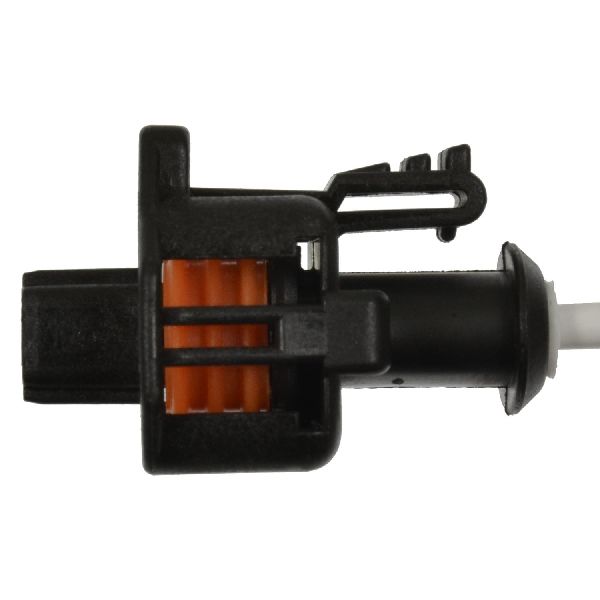
- Canister Purge Valve (PCSV) — On the driver's side of the 1.8L engine, mounted to a small metal bracket.. This is a primary failure point. Its location makes it easy to access for testing voltage at its 2-pin connector and for replacement.
- Canister Close Valve (CCV) — At the rear of the vehicle, mounted on or near the charcoal canister, which is near the spare tire well. Access may require removing the driver's side rear wheel and fender liner.. This component is exposed to road debris and corrosion. Its location makes wiring damage a possibility that should be checked during diagnosis.
- Fuel Tank Pressure Sensor Wires (at ECM) — A technician video identifies the wires for testing as Red (5V reference), Blue/Black (ground), and Green/Orange (signal).. Allows for testing the sensor's circuit from the ECM connector if the sensor itself is difficult to access at the fuel tank.
- Ground Gf01 / Gf03 / Gf04 — Located at the left 'B' pillar and left/right 'C' pillars respectively.. While not explicitly tied to the EVAP system in the search results, these are major chassis ground points. A corroded or loose ground can cause erratic behavior in any nearby electronic component, including the CCV or fuel pump module.
Real Owner Repair Stories
- Reddit user, r/DIYAutoRepair (2010 Hyundai Elantra (similar platform) with 260,000 miles) — Persistent P0455 code for 7 months.
❌ Tried (didn't work) Replacing the gas cap, Replacing the air intake hose, Replacing the purge valve, Replacing the fuel filler neck (after a smoke test indicated a leak there)
✅ What actually fixed it The issue remained unresolved after multiple part replacements. The mechanic's final, unconfirmed diagnosis was a bad catalytic converter. This story serves as a caution that even after replacing all common EVAP parts, the root cause can be elusive and require extensive diagnostics. - Reddit user, r/mechanicadvice (2007 Hyundai Elantra (older but relevant issue)) — P0455 code returned after replacing gas cap. Key symptom was the gas pump nozzle shutting off constantly during refueling.
❌ Tried (didn't work) Tightening the original gas cap, Replacing the gas cap with a new one
✅ What actually fixed it The user was advised by others that the refueling issue strongly points to a vent path blockage, likely a stuck-open or clogged Canister Close Valve (Vent Valve) or a saturated charcoal canister, not just a simple leak. The resolution was to investigate the vent system components at the rear of the car. - NHTSA ODI #11531219 — An owner reported that a "Fix Finder" report showed error code P0455. Although the vehicle appeared to reset itself over a weekend, it later lost all power and required towing to a dealership.
"I Checked Everything" — The Actual Cause
- A technician diagnosing a P0442 (small leak) on a Hyundai Elantra performed a smoke test and found no visible leaks. The actual cause was rust buildup on the sealing surface of the fuel filler neck where the gas cap O-ring sits. Cleaning the rust off with a Scotch-Brite pad created a proper seal and fixed the leak. This is a highly relevant scenario for a P0455 as well, as significant rust could easily create a large leak.
OEM Part Supersession History
31430-3X000→31430-1Y000— Part update or consolidation by the manufacturer.
Heads up: The new part number (31430-1Y000) should be used when replacing the original. While the old number may still be found, it's best practice to order the latest revision.
Model Year Variations Within This Range
- 2011-2016: The canister purge valve (PCSV) location changed for the 2011 model year. On pre-2011 models, it was often located behind the engine. For the 2011-2016 generation, it is conveniently located on the driver's side of the engine, making access much easier.
- 2014-2015: Some parts databases show different Canister Close Valve assemblies for Elantras 'Built in U.S.A.' versus those built elsewhere during these years. This suggests a mid-cycle production change that could affect part selection.
Diagnostic Flowchart
Other Known Issues on This Vehicle
Issues unrelated to this code that are worth knowing about as an owner of this generation:
- Engine Ticking / Piston Slap 🔴 High — Common on the 1.8L Nu engine, especially on cold starts. Can lead to oil consumption and eventual engine failure. Onset can be as early as 70,000 miles. (Ref: Hyundai issued warranty extension TXXK (related to TSB 22-EM-007H) for the engine long block in certain vehicles, particularly those in cold weather states.)
- Worn Steering Coupler 🟠 Medium — Extremely common. The flexible rubber coupler in the motor-driven power steering (MDPS) disintegrates over time, causing a clicking or clunking noise in the steering wheel. (Ref: Hyundai issued warranty extension TXX7 (related to TSB 17-ST-002) covering the coupler for 10 years/100,000 miles. The part itself is cheap, but labor can be significant.)
- Front Coil Spring Corrosion 🔴 High — Primarily affects vehicles in salt-belt states. Road salt can cause the front coil springs to corrode and fracture, potentially puncturing a tire. (Ref: NHTSA Recall 15V629000 was issued for some 2011 Elantra models to address this issue.)
- Premature Brake Wear 🟡 Low — Some owners report faster-than-expected wear on brake pads and rotors, sometimes under 30,000 miles. This is often attributed to the original pad material.
- Suspension Noises (Sway Bar Links) 🟡 Low — Clunking or knocking sounds when driving over bumps are often caused by worn front sway bar end links or bushings. This is a relatively common and inexpensive repair.
Used vs. New Parts: Buying Guide for This Vehicle
When a used part is the smart pick: For purely mechanical/structural parts like the fuel filler neck or the plastic charcoal canister housing, a used part from a low-mileage, non-corroded donor vehicle can be a cost-effective option. Inspect thoroughly for cracks or rust before purchase.
Donor-vehicle mileage cap: roughly under 80000 miles for the part to have meaningful remaining life.
What to inspect on the donor part:
- For filler necks, check for a smooth, rust-free sealing surface.
- For charcoal canisters, inspect the plastic body for cracks, especially around the hose fittings.
- Avoid parts from regions with heavy road salt use, as corrosion is a primary failure mode for rear-mounted components.
OEM-only on this vehicle (don't cheap out):
- Gas Cap: Strongly recommended. Aftermarket gas caps are a very common cause of repeat P0455 codes on this vehicle due to improper sealing.
Aftermarket brands forum-validated for this vehicle:
- Dorman
- Standard Motor Products (SMP)
Brands owners have reported issues with on this vehicle:
- No-name, unbranded electronic parts (valves, sensors) from online marketplaces are a significant gamble. While some may work, failure rates are high.
Real Owner Stories
Aggregated from forums and TSBs cited above. Mileages and costs reflect what owners reported in those sources.
2011-2016 Hyundai Elantra 1.8L
Symptoms: The owner replaced the purge valve, gas cap, and charcoal canister, but the P0455 code persisted.
What fixed it: A professional smoke test was required to find the final source of the leak after common parts failed to solve it.
Source hint: reddit.com /r/Hyundai thread titled 'How urgent to get these p0455 codes checked?'
2011-2016 Hyundai Elantra 1.8L
Symptoms: The canister close valve was jammed, preventing the system from sealing.
What fixed it: Replacing the close valve; a technician noted the failure was caused by charcoal bits from a ruptured bag inside the canister jamming the valve.
Source hint: hyundai-forums.com thread titled 'code po455'
NHTSA Reported Incident
Symptoms: An owner reported that a "Fix Finder" report showed error code P0455. The vehicle appeared to reset itself over a weekend, but subsequently lost all power.
What fixed it: The vehicle had to be towed to a dealership for diagnostic work after the power loss occurred.
Source hint: NHTSA ODI #11531219
Related OBD-II Codes
Frequently Asked Questions
Which gas cap should I buy for my 2011-2016 Hyundai Elantra to fix a P0455 code?
Where is the purge valve located on the Elantra, and how can I test it?
Does TSB 22-EM-007H relate to my EVAP system leak?
Why does the gas pump nozzle keep clicking off when I try to fill up my Elantra?
Is there a specific part number for the canister close valve if mine is corroded?
Can a steering wheel clunking noise be related to the P0455 code?
Helpful Videos
Used OEM Parts in Stock
New Aftermarket Parts Available


The information in this article is provided for general reference and educational purposes only. Vehicle specifications, procedures, and part compatibility can vary by production date, trim level, and region. Always consult your vehicle's factory service manual and verify part numbers before purchasing or performing repairs. Safety-critical components such as airbags, seat belts, and braking systems should be installed by a qualified professional.
- Hyundai Elantra:
- 🧭 Diagnostic Flowchart
- 🎬 Helpful Videos
- 🛍️ Shop This Part
- What's Unique About the 2011-2016 Hyundai Elantra
- Symptoms You May Notice
- Most Likely Causes
- Rare But Worth Checking
- Diagnosis Steps
- Parts You'll Likely Need
- Related Codes That Often Appear With This One
- Technical Service Bulletins (TSBs) & Recalls
- Platform-Specific Known Issues
- Mechanic-Grade Diagnostic Values
- Scan Tool Commands That Help
- Wiring & Ground Locations
- Real Owner Repair Stories
- "I Checked Everything" — The Actual Cause
- OEM Part Supersession History
- Model Year Variations Within This Range
- Other Known Issues on This Vehicle
- Used vs. New Parts: Buying Guide for This Vehicle
- Real Owner Stories
- 2011-2016 Hyundai Elantra 1.8L
- 2011-2016 Hyundai Elantra 1.8L
- NHTSA Reported Incident
- Related OBD-II Codes
- Frequently Asked Questions
- 🎟️ Get 5% Off