

P0455 on 2007-2012 Hyundai Santa Fe: EVAP Large Leak Causes and Fixes
For a 2007-2012 Hyundai Santa Fe, a P0455 code is most often caused by a loose or worn-out gas cap. If that's not the issue, the next most likely culprit is a faulty canister purge valve, which can be difficult to access on V6 models. A new gas cap costs about $15-$30, while a purge valve fix can range from $150 to over $500.
- Always check the gas cap first for code P0455. Make sure it's tight and the seal is in good condition.
- If the gas cap isn't the problem, the canister purge valve is the next most likely failure, but be aware it is difficult to access on V6 models.
- A smoke test is the most effective professional method to find the exact location of a leak if it's not an obvious component.
- You can continue to drive the vehicle with this code, but you will not pass an emissions test until it is fixed.
What's Unique About the 2007-2012 Hyundai Santa Fe
The 2007-2012 Santa Fe (CM generation) is particularly known for issues with the canister purge valve (PCSV). On the popular 2.7L and 3.3L V6 engines (2007-2009), this valve is located on the back of the intake manifold, making it notoriously difficult to access and replace. While the part itself isn't overly expensive, the labor to reach it can be significant, leading many owners to first thoroughly check the gas cap and other, more accessible components. Multiple owner accounts describe the frustration of accessing the rear-mounted valve, often requiring removal of the air intake assembly to gain clearance. For the facelifted 2010-2012 models with 2.4L and 3.5L engines, the purge valve was moved to a more accessible location on or near the top of the intake manifold.
Symptoms You May Notice
- Check Engine Light is on
- A faint smell of fuel, particularly around the rear of the vehicle or near the gas cap.
- Difficulty starting the engine immediately after refueling (if the purge valve is stuck open).
- Slight decrease in fuel economy.
- Replacing the oxygen (O2) sensors. O2 sensors are not part of the EVAP system and will not cause a P0455 code.
- Replacing the fuel pump. While a faulty fuel pump O-ring seal installed during a fuel pump replacement can cause this code, the pump itself is not the issue.
Most Likely Causes
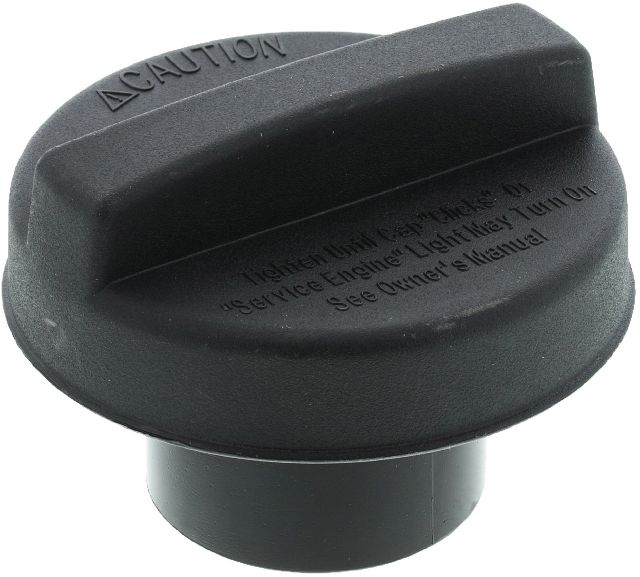
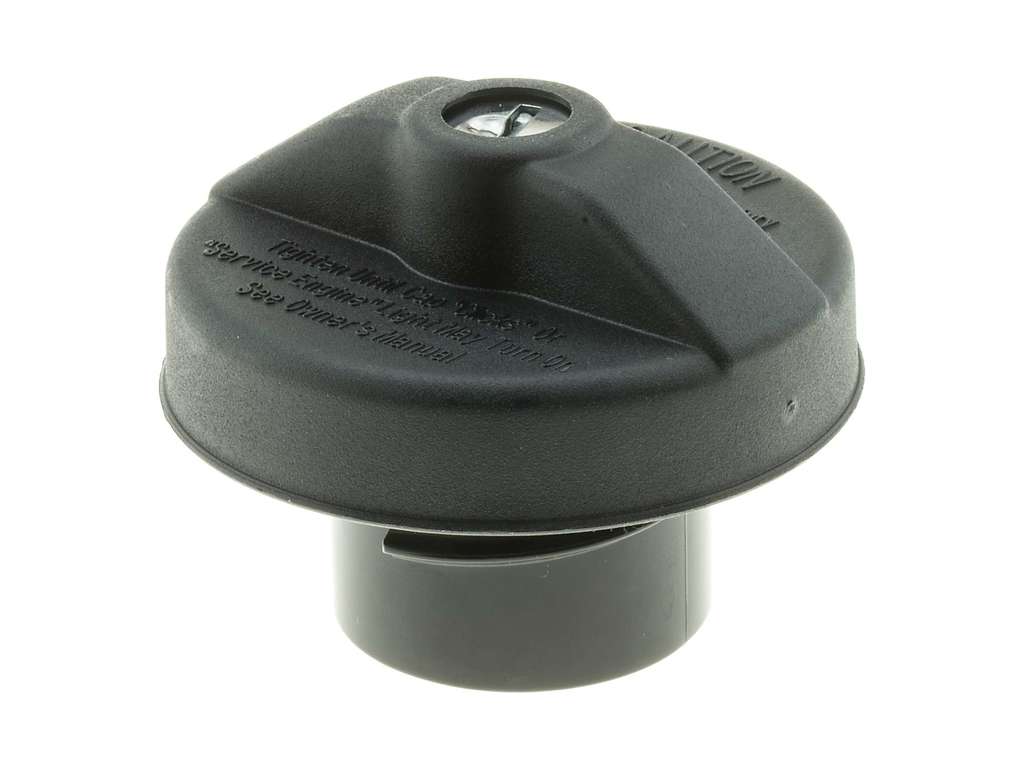
- Loose, Damaged, or Incorrect Gas Cap 🔴 High Probability → Shop Fuel Tank Cap This is the most common cause for a P0455 code on any vehicle, as the cap's seal can wear out over time or it can simply be left loose after refueling. It is crucial to use an OEM or high-quality aftermarket cap, as some cheaper third-party caps do not seal correctly and will perpetuate the code.
How to confirm: Inspect the gas cap for any visible cracks in the rubber O-ring or plastic. Ensure it is tightened until it clicks at least once. If the seal looks worn or brittle, replacement is recommended as a first step. Clean both the cap's seal and the filler neck surface before reinstalling.
Typical fix: Clean the cap and filler neck sealing surfaces. If the seal is bad, replace the gas cap with a genuine OEM part to ensure a proper seal.
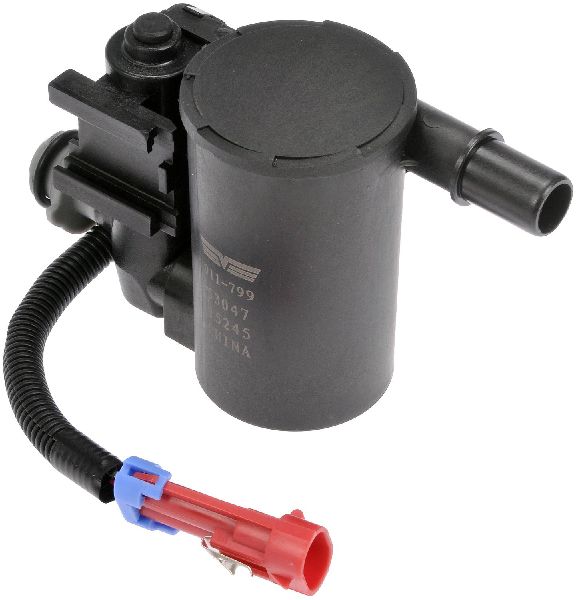
Est. part cost: $15-$35 - Faulty Canister Purge Valve (PCSV) 🟡 Medium Probability → Shop Vapor Canister The purge valve is a common failure item. On the 2007-2009 V6 engines, it can get stuck open or closed, but its main issue is the difficult-to-access location on the rear of the intake manifold, which makes for a time-consuming repair. On 2010-2012 models, the location is more accessible but the part can still fail.
How to confirm: The valve is a normally-closed valve. Remove it and try to blow through it; if air passes, it's stuck open and faulty. A scan tool can also be used to command it open and closed while checking for vacuum or to monitor fuel tank pressure during a test.
Typical fix: Replace the canister purge valve. Access is difficult on 2007-2009 V6 models and may require removing the air intake assembly. Long, angled needle-nose pliers are often essential for removing the hose clamps in the tight space. On 2010-2012 models, the valve is more easily accessible in the engine bay.
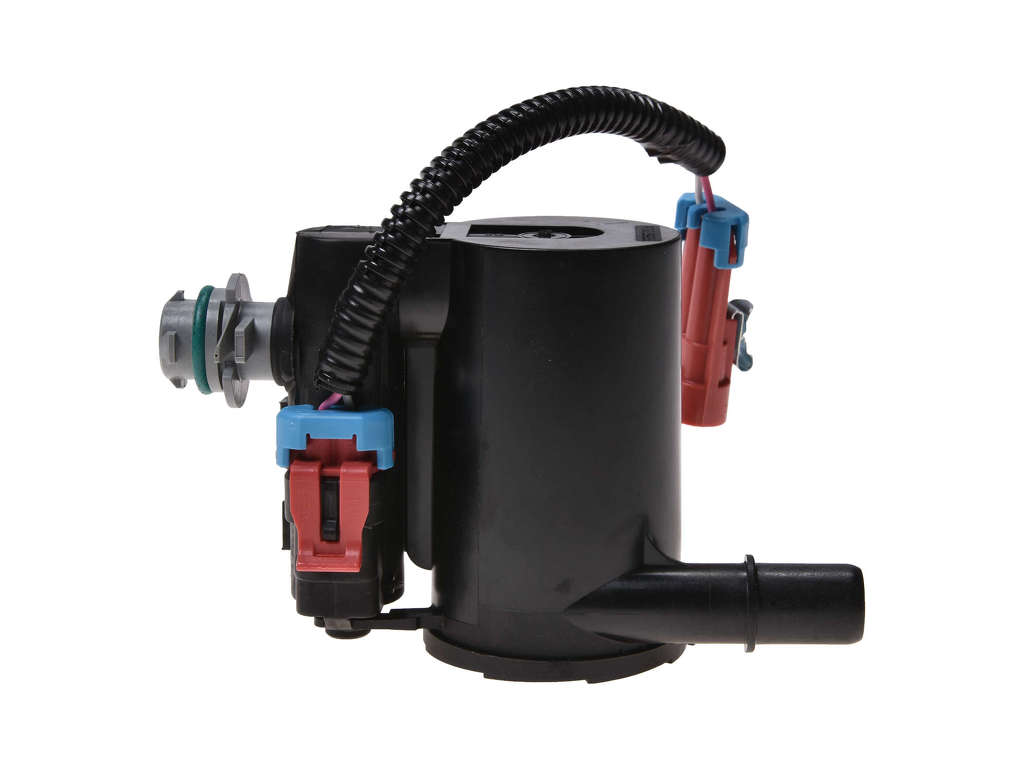
Est. part cost: $45-$85 - Faulty Canister Close Valve (CCV) / Vent Solenoid ⚪ Low Probability → Shop Vapor Canister This valve is located under the vehicle near the charcoal canister and is exposed to road debris and moisture, which can cause it to fail or stick.
How to confirm: The CCV is a normally-open valve. A scan tool can command it to close to test its function. A visual inspection may reveal cracks in the valve body or damage to the wiring. You can also apply 12v power to the solenoid to see if it actuates (it should click closed).
Typical fix: Replace the canister close valve. It is typically mounted on or near the charcoal canister assembly, located near the fuel tank.
Est. part cost: $50-$110 - Cracked or Disconnected EVAP Hoses ⚪ Low Probability Over time, the rubber hoses in the EVAP system can become brittle and crack, especially the connections at the purge valve, canister, and fuel tank. The small hose between the purge valve and the intake manifold is a known point of failure due to engine heat and vibration.
How to confirm: A visual inspection can sometimes reveal obvious cracks or disconnected lines. The most effective method is a smoke test, where a machine fills the EVAP system with low-pressure smoke, making any leaks easy to see.
Typical fix: Replace the cracked section of hose or reconnect any loose lines. Hoses are typically inexpensive.
Est. part cost: $10-$40
Rare But Worth Checking
- Cracked Charcoal Canister: → Shop Vapor Canister The canister itself can develop cracks from age or physical impact. This is an expensive part, so all other possibilities should be ruled out first. A smoke test is the best way to confirm a cracked canister.
- Damaged Fuel Filler Neck: → Shop Fuel Filler Neck Rust or damage to the metal filler neck where the gas cap seals can prevent a proper seal, causing a large leak code. Inspect this area carefully when checking the gas cap.
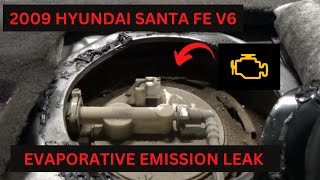
- Faulty Fuel Tank Pressure Sensor: → Shop Fuel Tank Rarely, the fuel tank pressure sensor itself can fail, sending incorrect data to the ECM. This sensor is often part of the fuel pump assembly, making it a more involved repair. 🎬 Watch how a faulty fuel sending unit seal causes leaks. Manufacturer Bulletin #21-FL-002H notes that salt particulate deposits can form inside the Natural Vacuum Leak Detection (NVLD) sensor, causing EVAP leakage codes like P0455.
Diagnosis Steps
- Check the Gas Cap: Remove, inspect the seal for cracks, and reinstall it, ensuring it clicks several times. Clear the code and drive for a few days to see if it returns. If the seal is damaged, replace the cap with an OEM part.
- Visual Inspection: Visually inspect all accessible EVAP hoses in the engine bay and under the vehicle for obvious cracks, disconnections, or damage. Pay close attention to the hoses connected to the purge valve and charcoal canister.
- Test the Canister Purge Valve (PCSV): Locate the valve. On 2007-2009 V6 models, it's on the rear of the intake manifold. On 2010-2012 models, it's on the top side of the intake manifold. With the engine off, disconnect the hoses and attempt to blow through it. If air passes, the valve is stuck open and must be replaced.
- Perform a Smoke Test: This is the most reliable way to find leaks. A smoke machine is connected to the EVAP service port, and the system is filled with visible smoke. Smoke will exit from any cracks in hoses, the canister, the filler neck, or seals.
- Test the Canister Close Valve (CCV): Using a capable scan tool, command the CCV to close. If the valve does not respond or seal, it is faulty and needs replacement. Alternatively, you can apply 12V directly to its pins to test for actuation; it should click closed.
Parts You'll Likely Need
- Fuel Filler Cap
(OEM #31010-3L600)— This is the most frequent and cheapest fix. The seal wears out, causing a large leak. Using a genuine OEM cap is highly recommended.
Trusted brands: Hyundai (OEM), Gates, Stant
OEM price range: $25-$35
Aftermarket price range: $15-$25 - Canister Purge Valve / Solenoid (PCSV)
(OEM #28910-3C100 (2007-09 3.3L V6) / 28910-3E100 (2007-09 2.7L V6) / 28910-3C200 (2010-12 3.5L V6) / 28910-2E000 (2010-12 2.4L I4))— A very common failure point on this platform. It gets stuck, causing a constant leak path to the engine intake.
Trusted brands: Hyundai (OEM), Dorman, Standard Motor Products (SMP)
OEM price range: $60-$85
Aftermarket price range: $45-$70 - Canister Close Valve / Vent Solenoid (CCV)
(OEM #31453-3Q500)— This valve, located near the rear of the car, can fail due to exposure to the elements, getting stuck open and causing a leak during the system's self-test.
Trusted brands: Hyundai (OEM), Dorman, Standard Motor Products
OEM price range: $90-$110
Aftermarket price range: $50-$75
Related Codes That Often Appear With This One
- P0441 — Incorrect Purge Flow. This code often appears with P0455 when the canister purge valve is stuck open or closed, causing both a leak and a flow problem.
- P0456 — EVAP System Leak Detected (Very Small Leak). Sometimes a component is failing intermittently, causing the computer to detect different-sized leaks at different times.
- P0442 — EVAP System Leak Detected (Small Leak). Similar to P0456, this can appear alongside P0455 if a leak is intermittent or worsening over time.
Technical Service Bulletins (TSBs) & Recalls
- TSB 02-30-001: A general Hyundai technical service bulletin regarding EVAP system diagnosis, not specific to P0455 on this model but provides context for dealer-level diagnostics.
- Kia Tech Tip TIOSl: While for a Kia Sorento, this document specifically addresses P0455 and points directly to testing the Purge Solenoid Valve (PSV) as the primary repair step after checking the gas cap, which is relevant to the Santa Fe platform mate.
- Bulletin #5NP-Z2J3V-04: A manufacturer service bulletin notes that vehicles may experience a check engine warning light ON with DTC P0455 stored in the Engine Control Module.
- Bulletin #21-01-035H: This bulletin notes that EVAP leakage conditions primarily occur in California coastal areas that are subject to marine layer cloud conditions.
- Bulletin #5NP-Q7J2C-07: This manufacturer bulletin describes vehicles experiencing a check engine warning light with DTC P0455 (Large leak) and P0456 (Very Small Leak) stored.
Platform-Specific Known Issues
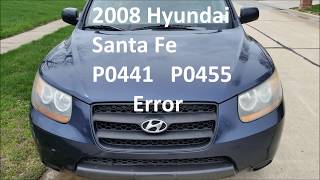
- Purge Valve Location on V6 Models: → Shop Vapor Canister As mentioned, the purge valve on the 2007-2009 3.3L and 2.7L V6 engines is on the rear of the intake manifold. A DIY video for a 2008 Santa Fe shows the difficulty, with the owner spending significant time fighting with clamps in a tight space, ultimately recommending long, angled pliers.
- Owner Experience: Gas Cap vs. Purge Valve: → Shop Vapor Canister A common story on forums involves an owner replacing the gas cap, clearing the code, and having it return a week later. The second attempt often involves replacing the difficult-to-access purge valve, which permanently solves the problem. This highlights the importance of not giving up after the gas cap fix fails.
Mechanic-Grade Diagnostic Values
- Canister Purge Valve (PCSV) or Canister Close Valve (CCV) Solenoid Resistance — expected: 15-40 Ohms (General specification, not Hyundai-specific). Failure: A reading of OL (Open Loop/infinite resistance) or 0 Ohms (short circuit) indicates a failed solenoid coil.
- Fuel Tank Pressure Sensor (FTPS) Reading at Idle (from 2006 Service Manual) — expected: Approx. 0 mmHg at 1400 rpm, Approx. -2 mmHg at 4000 rpm. Failure: Sensor voltage that does not change with engine speed or is stuck at an extreme value may indicate a faulty sensor.
Scan Tool Commands That Help
- Hyundai GDS (Global Diagnostic System) or equivalent pro-level scanner: EVAP. LEAKAGE TEST — This is an automated, on-demand test routine that the ECM runs to verify the integrity of the entire EVAP system. It provides a pass/fail result and is the factory-prescribed way to test the system after a repair.
- Hyundai GDS (Global Diagnostic System) or equivalent pro-level scanner: Actuation Test: EVAP PURGE VALVE — This bidirectional command allows the technician to manually open and close the Canister Purge Valve (PCSV) to check for a response. A technician can listen for a click or monitor system vacuum to confirm if the valve is functioning electrically and mechanically.
- Hyundai GDS (Global Diagnostic System) or equivalent pro-level scanner: Actuation Test: CANISTER SHUT OFF VALVE (CCV) — This command manually closes the normally-open Canister Close Valve (CCV). This is a critical step before performing a smoke test to ensure the system is sealed. It's also used to verify the CCV is not stuck.
Wiring & Ground Locations
- Canister Close Valve (CCV) — Beneath the center of the vehicle, mounted on or near the charcoal canister which is above the driveshaft/rear axle area.. This valve must close to seal the system for the leak test. Its exposed location makes it and its wiring vulnerable to corrosion and damage.
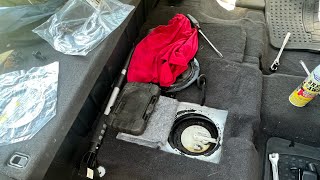
- Fuel Tank Pressure Sensor (FTPS) — Above the fuel tank, beneath the rear seat. Access is typically through a panel under the rear seat cushion.. This sensor is the primary source of information for the ECM to determine if the system is holding vacuum. A faulty sensor can mimic a leak.
- G52 (Ground) — Located in the left rear of the engine compartment.. This is a key ground point for multiple engine control components. A poor connection here could cause erratic behavior from EVAP solenoids or sensors.
- G02 (Ground) — At the base of the right kick panel, inside the passenger cabin.. This is an interior body ground. While less likely to be the primary cause, it can affect modules that control or receive data from the EVAP system.
"I Checked Everything" — The Actual Cause
- In some cases, a P0455 code can appear after work has been done on the fuel tank, such as replacing a fuel pump or fuel level sensor. If a smoke test reveals no leaks in the hoses or valves, the cause can be a pinched, damaged, or improperly seated O-ring for the fuel pump assembly locking ring. This creates a large leak directly at the top of the fuel tank that can be difficult to spot.
OEM Part Supersession History
31430-0W000→31453-3Q500— Part consolidation and potential design improvement.
Heads up: The newer part number is the recommended replacement for the entire 2007-2012 range.
Model Year Variations Within This Range
- 2007-2009: These models used the 2.7L V6 and 3.3L V6 engines. The Canister Purge Valve (PCSV) is notoriously located on the rear of the intake manifold, making it difficult to access. Part numbers are 28910-3E100 (2.7L) and 28910-3C100 (3.3L).
- 2010-2012: These facelifted models used the 2.4L I4 and 3.5L V6 engines. The Canister Purge Valve (PCSV) was moved to a much more accessible location on or near the top of the intake manifold. Part numbers are different: 28910-2E000 for the 2.4L and 28910-3C200 for the 3.5L.
Diagnostic Flowchart
Other Known Issues on This Vehicle
Issues unrelated to this code that are worth knowing about as an owner of this generation:
- Leaking Valve Cover Gaskets 🟠 Medium — Very common, especially on the 3.3L V6. The front gasket often leaks oil directly onto the alternator, causing premature alternator failure.
- Faulty Fuel Level Sending Unit 🟠 Medium → Shop Fuel Tank Sending Unit — Widespread on 2007-2009 models. Causes erratic or incorrect fuel gauge readings. The gauge may show empty after a fill-up or fluctuate randomly. (Ref: NHTSA Campaign ID: 09V122000 (Recall for some 2007-2008 models))
- Engine Stalling (Theta II & Lambda V6) 🔴 High — Affects both 4-cylinder and V6 models, leading to class-action lawsuits. Engines can stall unexpectedly while driving. (Ref: Multiple recalls and settlements exist, including NHTSA Campaign ID: 14V415000.)
- Premature Suspension Wear 🟡 Low — Ball joints, tie rods, and control arm bushings can wear out faster than expected, leading to suspension noise and alignment problems.
- Failing Crankshaft Position Sensor 🟠 Medium — A common failure that can cause no-start conditions or stalling while driving. Often presents with a check engine light.
Used vs. New Parts: Buying Guide for This Vehicle
When a used part is the smart pick: For expensive components like the charcoal canister, a used part from a low-mileage, non-corroded donor vehicle can be a cost-effective option. Ensure there are no visible cracks or damage before purchasing.
Donor-vehicle mileage cap: roughly under 80000 miles for the part to have meaningful remaining life.
What to inspect on the donor part:
- Check for excessive rust or corrosion on electrical connectors and metal housings.
- Inspect plastic components for brittleness or visible cracks.
- For canisters, ensure hose ports are intact and not broken off.
- Ask for the donor vehicle's mileage and check for signs of physical impact.
OEM-only on this vehicle (don't cheap out):
- Fuel Filler Cap: Aftermarket caps are a very common source of repeat P0455 codes due to improper sealing. It is strongly recommended to use a genuine Hyundai (OEM) cap to avoid misdiagnosis.
Aftermarket brands forum-validated for this vehicle:
- Dorman
- Standard Motor Products (SMP)
Brands owners have reported issues with on this vehicle:
- No-name, unbranded gas caps from online marketplaces are frequently cited as failing to seal properly.
Real Owner Stories
Aggregated from forums and TSBs cited above. Mileages and costs reflect what owners reported in those sources.
2008 Hyundai Santa Fe V6
Symptoms: The owner spent significant time fighting with hose clamps in a very tight space on the rear of the intake manifold to replace a component.
What fixed it: Replacing the EVAP Canister Fuel Purge Valve.
Cost: $0-$400
Source hint: YouTube video by user 'STEM_SAVING' titled 'DIY 2008 Hyundai Santa Fe EVAP Canister Fuel Purge Valve Repair P0441 P0455'
2007-2012 Hyundai Santa Fe
Symptoms: The owner replaced the gas cap and cleared the code, but the Check Engine Light returned one week later.
What fixed it: Replacing the difficult-to-access purge valve.
Source hint: vehicle_specific_issues: Owner Experience: Gas Cap vs. Purge Valve
2007-2012 Hyundai Santa Fe
Symptoms: Large EVAP leak code P0455.
What fixed it: The user eventually replaced the purge control valve after an initial attempt with the gas cap.
Source hint: hyundai-forums.com thread titled 'P0455 - Large EVAP leak'
Documented NHTSA Reports
Hyundai Owner Report
Symptoms: An owner reported that a Fix Finder report showed Error code P0455. The vehicle later lost all power and required towing to a dealership.
Source: NHTSA ODI #11531219
Related OBD-II Codes
Frequently Asked Questions
Is there a specific Hyundai TSB for EVAP issues that applies to my Santa Fe?
I replaced my gas cap but the P0455 code came back a week later. What should I check next on my Santa Fe?
Can I use a cheap universal gas cap to fix this code?
Where is the purge valve located on a 2011 Santa Fe compared to the 2008 model?
Is the P0455 code an urgent safety issue for my Santa Fe?
How can I test if the purge valve is actually bad before buying a new one?
Helpful Videos
We Have This Part in Stock


The information in this article is provided for general reference and educational purposes only. Vehicle specifications, procedures, and part compatibility can vary by production date, trim level, and region. Always consult your vehicle's factory service manual and verify part numbers before purchasing or performing repairs. Safety-critical components such as airbags, seat belts, and braking systems should be installed by a qualified professional.
- Hyundai Santa Fe:
- 🧭 Diagnostic Flowchart
- 🎬 Helpful Videos
- 🛍️ Shop This Part
- What's Unique About the 2007-2012 Hyundai Santa Fe
- Symptoms You May Notice
- Most Likely Causes
- Rare But Worth Checking
- Diagnosis Steps
- Parts You'll Likely Need
- Related Codes That Often Appear With This One
- Technical Service Bulletins (TSBs) & Recalls
- Platform-Specific Known Issues
- Mechanic-Grade Diagnostic Values
- Scan Tool Commands That Help
- Wiring & Ground Locations
- "I Checked Everything" — The Actual Cause
- OEM Part Supersession History
- Model Year Variations Within This Range
- Other Known Issues on This Vehicle
- Used vs. New Parts: Buying Guide for This Vehicle
- Real Owner Stories
- 2008 Hyundai Santa Fe V6
- 2007-2012 Hyundai Santa Fe
- 2007-2012 Hyundai Santa Fe
- Documented NHTSA Reports
- Hyundai Owner Report
- Related OBD-II Codes
- Frequently Asked Questions
- 🎟️ Get 5% Off