

P0455 on 2016-2021 Hyundai Tucson: EVAP Large Leak Causes and Fixes
This code means a large leak is detected in the evaporative emissions (EVAP) system. The most common cause is a loose or faulty gas cap. A new OEM gas cap costs around $25-$50 and is the first thing you should check or replace. If that doesn't work, the purge control valve is the next most likely culprit.
- P0455 is a non-critical code indicating a large leak in the emissions vapor system; your car is safe to drive.
- Always check the gas cap first. Ensure it is tight and the seal is intact. Replacing it with an OEM part is an inexpensive and highly effective first step.
- The 2016-2021 Tucson spans two generations (2016-2020 and 2021). Verify your model year before buying parts, as they are not interchangeable.
- If a new gas cap doesn't fix the issue, the next most likely culprits are the purge valve in the engine bay or a cracked EVAP hose.
- A professional smoke test is the most efficient way to find a leak that isn't obvious from a visual inspection.
What's Unique About the 2016-2021 Hyundai Tucson
For the Hyundai Tucson, the P0455 code doesn't point to a unique systemic flaw but rather the usual suspects in an EVAP system. However, the 2016-2021 model years span two different generations of the Tucson, which use different parts for the EVAP system. It's crucial to identify the correct generation (3rd Gen: 2016-2020, 4th Gen: 2021) before ordering components like the gas cap or purge valve, as the part numbers are not interchangeable. The platform-mate Kia Sportage is known to have issues with cracked charcoal canisters due to bracket corrosion in salt-belt states, a potential issue for Tucson owners as well.
Generation note: The specified vehicle range covers two generations: the Third Generation (TL), sold from 2016-2020, and the first model year of the Fourth Generation (NX4), sold in 2021. Key EVAP system components like the gas cap and purge valve are different between these two generations, so verifying your vehicle's model year is essential before purchasing parts.
Symptoms You May Notice
- Check Engine Light is illuminated
- A faint smell of gasoline, potentially near the fuel filler area or when the vehicle is garaged.
- No noticeable impact on engine performance or drivability.
- Replacing the oxygen (O2) sensors
- Replacing the catalytic converter
- Assuming a fuel injector or fuel pump issue due to the 'fuel' smell
Most Likely Causes
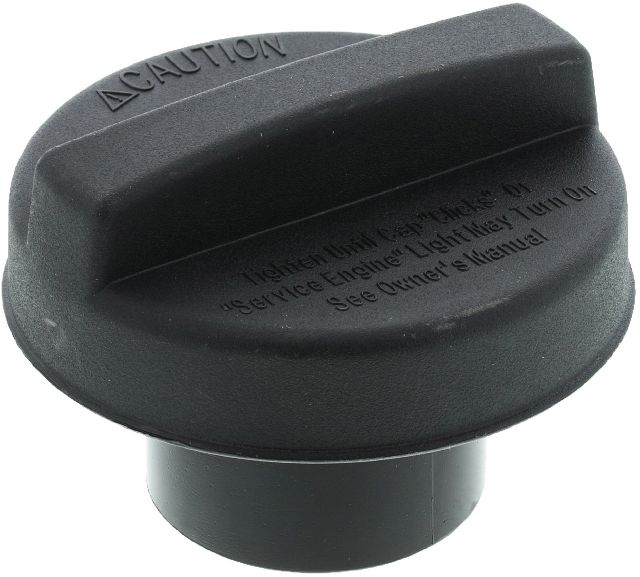
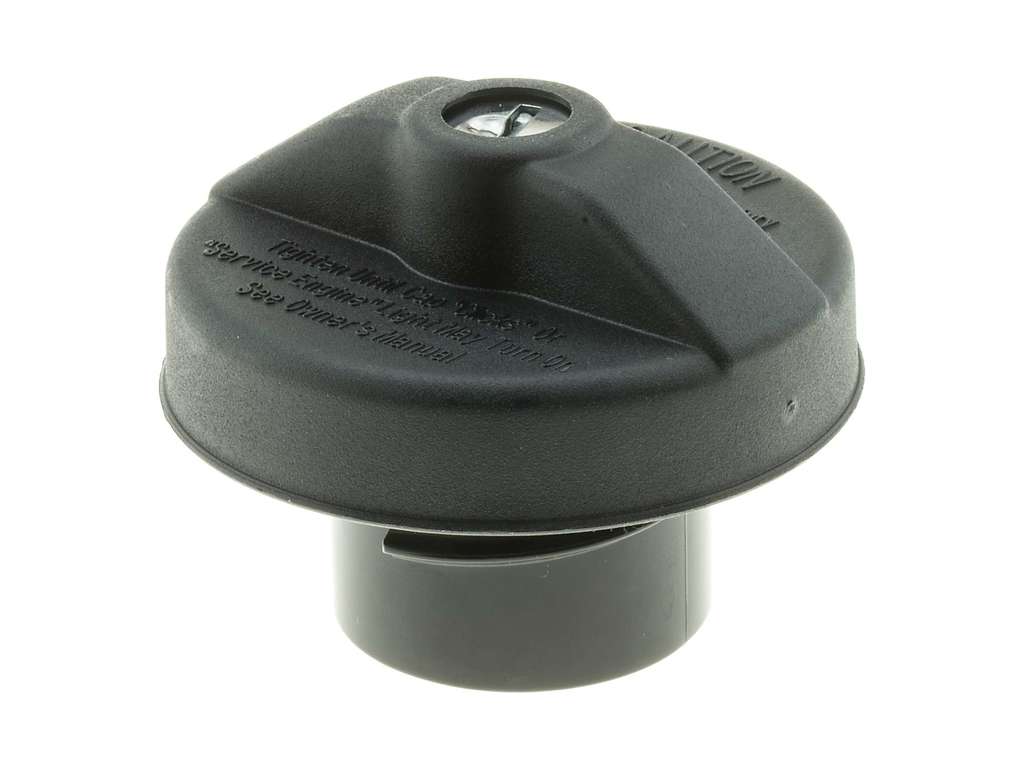
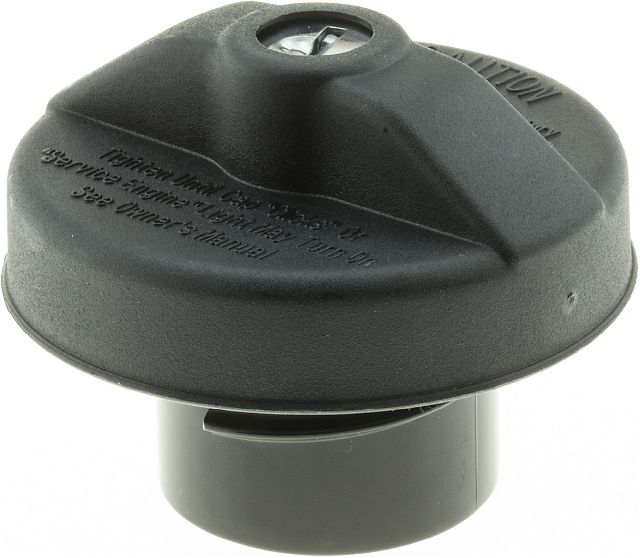
- Loose, Damaged, or Incorrect Gas Cap 🔴 High Probability → Shop Fuel Tank Cap This is the most common cause for a P0455 code on any vehicle, including the Tucson. The rubber seal on the cap can degrade over time, or the cap may not have been tightened properly after refueling.
How to confirm: Remove the gas cap and inspect the rubber O-ring for cracks, tears, or brittleness. Ensure it is tightened until it clicks at least once. If the seal is damaged or the cap is from the aftermarket and not sealing correctly, it needs replacement. Using a non-OEM cap is a frequent cause of this code returning.
Typical fix: Replace the gas cap with a genuine OEM part.
Est. part cost: $25-$50 - Failed Canister Purge Control Solenoid Valve (PCSV) 🟡 Medium Probability → Shop Vapor Canister Purge Solenoid The purge valve is an electromechanical part that cycles thousands of times and can fail by getting stuck open or closed. When stuck open, it creates a leak that the system detects during its self-test.
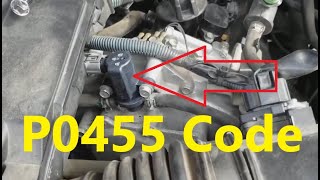
How to confirm: The purge valve is typically located in the engine bay near the intake manifold. With the engine off, you can remove the valve and try to blow through it. If air passes through, the valve is stuck open and has failed. A mechanic can also command it open and closed with a scan tool to test its function.
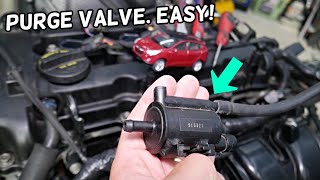
Typical fix: Replace the purge control solenoid valve. 🎬 Watch: How to locate and replace the purge control valve
Est. part cost: $50-$100 - Cracked or Disconnected EVAP Hose 🟡 Medium Probability Rubber hoses become brittle with age and exposure to heat cycles in the engine bay and under the vehicle. A crack or disconnection in any of the vapor lines between the tank, charcoal canister, and purge valve will cause a large leak.
How to confirm: Visually inspect all accessible EVAP hoses for obvious cracks, breaks, or loose connections. A professional diagnosis often uses a smoke machine, which fills the EVAP system with a visible vapor to pinpoint the exact location of the leak.
Typical fix: Replace the damaged section of hose or reconnect a loose fitting.
Est. part cost: $10-$40 - Failed Canister Close Valve (CCV) / Vent Valve ⚪ Low Probability → Shop Vapor Canister This valve, located near the charcoal canister at the rear of the vehicle, is responsible for sealing the EVAP system during testing. It can get stuck open, especially if exposed to road salt and debris, which is a known issue on the related Kia Sportage.
How to confirm: Diagnosis typically requires a bi-directional scan tool to command the valve closed and check if it holds a vacuum. It can also be removed and tested for function.
Typical fix: Replace the canister close valve/vent solenoid.
Est. part cost: $70-$120
Rare But Worth Checking
- Cracked Charcoal Canister: → Shop Vapor Canister The charcoal canister is a plastic box filled with activated carbon, usually located near the fuel tank. While durable, it can be damaged by road debris or a severe impact. On the platform-mate Kia Sportage, Kia issued a TSB related to the canister's mounting bracket corroding and causing the canister itself to crack.
- Damaged Fuel Filler Neck: → Shop Fuel Filler Neck Rust or physical damage to the metal pipe leading from the gas cap to the fuel tank can prevent the gas cap from sealing properly, causing a persistent P0455 code even with a new cap. The sealing surface where the cap sits must be clean and free of deformities.
- Faulty Fuel Tank Pressure Sensor: → Shop Fuel Tank In some cases, the leak is not real. A faulty fuel tank pressure sensor can send incorrect data to the ECM, making it believe there is a large leak when the system is perfectly sealed. This is less common and usually considered after all other components have been checked.
- Natural Vacuum Leak Detection (NVLD) Sensor Contamination: → Shop Evaporative Emissions System Leak Detection Pump Manufacturer service bulletin #21-FL-002H notes that salt particulate deposits can form inside the NVLD sensor, which may cause a check engine light for P0455. This condition is primarily observed in coastal areas subject to marine layer clouds.
Diagnosis Steps
- Read the code with an OBD-II scanner to confirm P0455 is the primary code.
- Inspect the gas cap. Remove it, check the seal for damage, and reinstall it, ensuring it clicks several times. If in doubt, replace it with an OEM cap, as aftermarket caps are a known source of issues.
- Clear the code and drive for a few days to see if it returns. Many EVAP tests only run under specific conditions (e.g., fuel level between 15% and 85%, stable ambient temperatures).
- If the code returns, perform a thorough visual inspection of all accessible EVAP hoses in the engine bay and under the vehicle, looking for obvious cracks or disconnections.
- Locate the purge control solenoid valve (PCSV) in the engine bay. With the engine off, disconnect it and attempt to blow through it. If air passes, it is stuck open and must be replaced.
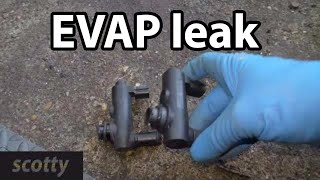
- If the gas cap, hoses, and purge valve appear to be in good condition, the next step is a professional smoke test. This involves injecting harmless, visible smoke into the EVAP system to quickly and accurately find the source of the leak. 🎬 Watch: A mechanic's guide to fixing large EVAP leaks
- Based on the smoke test results, the leak could be from the canister close valve (vent valve), the charcoal canister itself, the fuel filler neck, or a less obvious hose connection.
Parts You'll Likely Need
- Fuel Filler Cap (2016-2020)
(OEM #31010-3L600)— This is the most frequent cause of P0455. The seal wears out over time. Fits the 3rd generation Tucson.
Trusted brands: Hyundai (Genuine OEM)
OEM price range: $25-$35
Aftermarket price range: $15-$25 - Fuel Filler Cap (2021)
(OEM #31010-R5000)— The most common fix for P0455 on the 4th generation Tucson. This generation uses a different cap from the previous one.
Trusted brands: Hyundai (Genuine OEM)
OEM price range: $45-$65
Aftermarket price range: $20-$35 - Purge Control Solenoid Valve
(OEM #28910-2E000)— A common failure point that gets stuck open. Part number 28910-2E000 is a widely used purge valve for many 2016-2020 Tucson models with the 2.0L engine. It often supersedes or is used interchangeably with 28910-25100. Always verify fitment with your VIN.
Trusted brands: Hyundai (Genuine OEM), Dorman, Standard Motor Products
OEM price range: $60-$85
Aftermarket price range: $30-$60
Related Codes That Often Appear With This One
- P0456 — Indicates a 'very small leak.' If a large leak (P0455) and a small leak are detected at different times, it could point to an intermittent sealing issue, like a purge valve that is beginning to fail or a gas cap that isn't always tightened correctly. Manufacturer bulletin #5NP-Z2J3V-04 confirms these codes often appear together in the Engine Control Module.
- P0442 — Indicates a 'small leak.' Similar to P0456, seeing this with P0455 might suggest a component that is failing intermittently or a leak that is changing in size depending on conditions. Bulletin #21-01-035H notes that these EVAP leakage related DTCs can be stored simultaneously.
- P0449 — Canister Closed Valve circuit issues; as noted in Bulletin #5NP-Q7J2C-07, this code may be found stored alongside P0455 and P0456.
Technical Service Bulletins (TSBs) & Recalls
- Kia TSB #SC135 (for platform-mate Sportage): Notes that corrosion at the charcoal canister's mounting bracket can cause the canister body to crack, creating a large leak. This is relevant for Tucson owners in regions with heavy road salt usage.
- Hyundai Bulletin #21-FL-002H: States that salt particulate deposits can form inside the Natural Vacuum Leak Detection (NVLD) sensor, leading to P0455, P0442, or P0456 codes, particularly in coastal environments.
- Hyundai Bulletin #21-01-035H: Highlights that EVAP leakage codes like P0455 primarily occur in California coastal areas subject to marine layer clouds, which can affect system sensors.
Mechanic-Grade Diagnostic Values
- Canister Purge Control Solenoid Valve (PCSV) resistance — expected: Approximately 29.1 Ω for a new OEM valve (P/N 28910-2E000).. Failure: Significantly higher or lower resistance, or wild fluctuations. Used valves have been measured with inconsistent readings from 12Ω to 47Ω, indicating internal degradation.
- Fuel Tank Pressure Sensor (FTPS) signal — expected: The sensor reports pressure/vacuum to the ECM. The ECM expects to see the system pull down to a target vacuum (e.g., voltage reading of 0.8V on some systems) during the EVAP self-test.. Failure: If the sensor is faulty, it may send incorrect data, making the ECM believe there is a leak when there isn't one. The code may set because the target vacuum is never 'seen' by the ECM, even if the system is sealed.
Scan Tool Commands That Help
- Professional Scan Tool (e.g., Hyundai GDS): EVAP System Purge/Seal — This function is used to manually seal the EVAP system by closing the vent valve, allowing a technician to monitor pressure decay or perform a vacuum test without waiting for the vehicle's automatic test cycle.
- Professional Scan Tool (e.g., Hyundai GDS): Command EVAP Canister Purge Solenoid Valve to a specific duty cycle (e.g., 30%) — After sealing the system, a technician can command the purge valve to open by a specific percentage to check if the system draws a vacuum as expected, confirming the purge valve's functionality and the integrity of the line to the engine.
- Bidirectional Scan Tool: Vent Valve Control (Open/Close) — Used to manually command the canister close valve (vent valve) closed to seal the system for a smoke test or vacuum test. It can also be used to confirm the valve clicks and functions electronically.
Wiring & Ground Locations
- Engine Compartment Fuse Box — Located on the left side of the engine compartment.. This panel contains fuses and relays that may provide power to EVAP system components like the purge control solenoid valve (PCSV).
- Instrument Panel Fuse Box — Located on the driver's side of the dashboard, behind a cover.. This panel may contain fuses related to the Engine Control Module (ECM) and other in-cabin systems that interface with the EVAP diagnostic process.
- Canister Close Valve (CCV) / Vent Valve — Located underneath the vehicle, mounted near or on the charcoal canister, which is typically under the rear floor on the driver's (LH) side.. This component is exposed to road debris and moisture, making its wiring connector a potential point of failure due to corrosion or damage.
"I Checked Everything" — The Actual Cause
- In some cases, a P0455 code can set even if a smoke test reveals no leaks. The code may not indicate a physical leak, but rather that the EVAP system was unable to achieve its target vacuum level during a self-test. This can be caused by a faulty Fuel Tank Pressure (FTP) sensor providing incorrect readings to the computer, or a restriction in an EVAP line that prevents vacuum from building properly. In this scenario, a technician's focus should shift from finding a leak to testing the sensor's accuracy and checking for blockages in the vapor lines.
OEM Part Supersession History
31453-3K700→31453-3K500— Part revision or manufacturer change.
Heads up: This Canister Close Valve part number applies to older Tucson models (up to 2014) but serves as an example of how EVAP part numbers are frequently updated. Always verify the correct part number for your specific VIN.
Model Year Variations Within This Range
- 2019-2021: Later models in the 3rd generation (TL) may use a different Purge Control Valve, such as P/N 29010-03AA0, compared to the 28910-2E000 used on earlier models. This highlights the need to verify fitment by VIN, even within the same generation.
- 2021: The 2021 model year is the first of the 4th Generation (NX4) and uses a different Fuel Tank Pressure Sensor (P/N 31435-P4800) than the previous generation.
Diagnostic Flowchart
Other Known Issues on This Vehicle
Issues unrelated to this code that are worth knowing about as an owner of this generation:
- Engine Failure / Fire Risk (Theta II GDI) 🔴 High — Affects certain 2017 models with specific engines. Caused by premature connecting rod bearing wear, which can lead to engine seizure and, in some cases, fire if the rod punctures the block. (Ref: Hyundai Safety Recall 162 / NHTSA 17V-226. Dealers inspect the engine and may replace it, as well as install a Knock Sensor Detection System (KSDS).)
- 7-Speed Dual-Clutch Transmission (DCT) Hesitation/Failure 🟠 Medium — Common on 2016 models equipped with the 7-speed DCT. Owners report hesitation, shuddering, or a complete loss of acceleration from a stop. The issue is often intermittent and can be worse in hot weather. (Ref: Hyundai Recall 149. The fix involves a software update to the Transmission Control Module (TCM). Some owners report needing clutch actuator or full transmission replacements.)
- ABS Module Fire Risk 🔴 High — Affects 2016-2021 models. The Anti-lock Brake System (ABS) module can corrode internally, causing an electrical short that can lead to an engine compartment fire, even when the vehicle is turned off. (Ref: Hyundai Recall 195. Owners are advised to park their vehicles outside and away from structures until the recall is performed. The fix involves replacing the HECU fuse and, for some years, a software update.)
- Oil Pan Leaks 🟡 Low — While a recall was issued for earlier 2011-2013 models, oil pan leaks from the seal between the pan and engine block can still occur on later models, potentially leading to oil starvation and engine damage if not addressed. (Ref: Recall for earlier models (NHTSA 19V-063), but the issue can still be a point of failure to monitor.)
Used vs. New Parts: Buying Guide for This Vehicle
When a used part is the smart pick: Used parts can be a cost-effective choice for non-electronic, mechanical components like the charcoal canister (if visually inspected for cracks and damage), mounting brackets, or undamaged sections of hard plastic vapor lines.
Donor-vehicle mileage cap: roughly under 80000 miles for the part to have meaningful remaining life.
What to inspect on the donor part:
- For charcoal canisters, ensure the plastic housing has no cracks, especially around mounting points.
- Inspect all hose ports for cracks or damage.
- If possible, source parts from vehicles in dry climates to minimize rust and corrosion on associated metal components like brackets or valves.
OEM-only on this vehicle (don't cheap out):
- Fuel Filler Cap: Aftermarket gas caps are a very common cause of recurring P0455 codes due to improper sealing. It is strongly recommended to use a genuine OEM cap.
- Fuel Tank Pressure Sensor (FTPS): As a critical sensor for the diagnostic, an OEM part ensures accurate readings. A faulty aftermarket sensor can cause the code to return even if no leak exists.
Aftermarket brands forum-validated for this vehicle:
- Dorman
- Standard Motor Products (SMP)
Brands owners have reported issues with on this vehicle:
- Unbranded, no-name gas caps from online marketplaces are frequently reported as problematic.
Real Owner Stories
Aggregated from forums and TSBs cited above. Mileages and costs reflect what owners reported in those sources.
2019 Hyundai Tucson
Symptoms: Check engine light with P0455 code; owner was concerned about the urgency of the repair.
What fixed it: The source describes a persistent issue where the owner replaced the purge valve, gas cap, and canister over two years, highlighting that the code can be difficult to resolve.
Source hint: Reddit: How urgent to get these P0455 codes checked?
2016-2021 Hyundai Tucson
Symptoms: Flashing engine light, followed by codes for knock sensor and camshaft position, then eventually a P0455 large EVAP leak and U0109.
What fixed it: Initial repairs included replacing the knock sensor and fuel injector, though the P0455 appeared subsequently as part of a chain of issues.
Source hint: r/MechanicAdvice
Documented NHTSA Reports
Hyundai Diagnostic Experience
Symptoms: A Fix Finder report showed Error code P0455. The vehicle reset itself over a weekend, but subsequently lost all power and required towing to a dealership.
Source hint: NHTSA ODI #11531219
Related OBD-II Codes
Frequently Asked Questions
Is there a TSB for the charcoal canister on my Tucson like there is for the Kia Sportage?
Can I use an aftermarket gas cap to fix the P0455 code on my 2016-2021 Tucson?
Where is the Purge Control Solenoid Valve (PCSV) located on this model?
Is the P0455 code an emergency that will leave me stranded?
Why does the P0455 code keep returning even after I tighten the gas cap?
Are there any other major recalls I should be aware of while fixing this EVAP code?
Helpful Videos
We Have This Part in Stock


The information in this article is provided for general reference and educational purposes only. Vehicle specifications, procedures, and part compatibility can vary by production date, trim level, and region. Always consult your vehicle's factory service manual and verify part numbers before purchasing or performing repairs. Safety-critical components such as airbags, seat belts, and braking systems should be installed by a qualified professional.
- Hyundai Tucson:
- 🧭 Diagnostic Flowchart
- 🎬 Helpful Videos
- 🛍️ Shop This Part
- What's Unique About the 2016-2021 Hyundai Tucson
- Symptoms You May Notice
- Most Likely Causes
- Rare But Worth Checking
- Diagnosis Steps
- Parts You'll Likely Need
- Related Codes That Often Appear With This One
- Technical Service Bulletins (TSBs) & Recalls
- Mechanic-Grade Diagnostic Values
- Scan Tool Commands That Help
- Wiring & Ground Locations
- "I Checked Everything" — The Actual Cause
- OEM Part Supersession History
- Model Year Variations Within This Range
- Other Known Issues on This Vehicle
- Used vs. New Parts: Buying Guide for This Vehicle
- Real Owner Stories
- 2019 Hyundai Tucson
- 2016-2021 Hyundai Tucson
- Documented NHTSA Reports
- Hyundai Diagnostic Experience
- Related OBD-II Codes
- Frequently Asked Questions
- 🎟️ Get 5% Off