

P0455 on 2012-2016 Hyundai Veloster: EVAP Large Leak Causes and Fixes
For a 2012-2016 Hyundai Veloster, a P0455 code almost always indicates a large leak in the evaporative emissions system. The most common and cheapest fix is checking for a loose or faulty gas cap. If that's not the issue, the next most likely culprit is a failed canister purge valve, a relatively simple DIY replacement part costing between $25 and $85. A cracked charcoal canister is also a known issue, covered by a warranty extension from Hyundai.
- Always start with the gas cap. Ensure it's tight and the seal is in good condition before buying any parts.
- If the gas cap isn't the problem, the canister purge valve is the next most likely and affordable part to replace.
- Use an OEM gas cap if a replacement is needed; aftermarket caps are a frequent source of new EVAP problems.
- Do not 'top off' your fuel tank, as this can flood the charcoal canister with liquid fuel and cause expensive damage.
- If simple fixes don't work, a professional smoke test is the most effective way to find the exact source of the leak, saving you from replacing unnecessary parts.
What's Unique About the 2012-2016 Hyundai VELOSTER
The first-generation Hyundai Veloster (2012-2017) is specifically mentioned in multiple manufacturer Technical Service Bulletins (TSBs) for this and related EVAP codes. Hyundai issued a warranty extension for cracked charcoal canisters on these models due to a known defect. Additionally, TSB #5NP-Q7J2C-07 involves an ECM software update for some 2016 models to prevent false P0455 codes, indicating Hyundai recognized a pattern of issues on this platform. Owner forums for the Veloster frequently point to the canister purge valve as a common failure point after ruling out the gas cap.
Diagnostic Flowchart
Tap your situation to follow the diagnostic path that matches what you're seeing on this vehicle.
Symptoms You May Notice
- Check Engine Light is on
- A faint to strong smell of fuel, especially around the rear of the car or near the fuel cap.
- Difficulty starting the engine right after refueling (in some cases).
- Rough idle if the purge valve is stuck open.
- Slightly decreased fuel mileage as unburned vapors escape.
- Replacing the charcoal canister when only a valve or hose has failed. The canister itself is often durable unless physically damaged or saturated with fuel. However, on the Veloster, a cracked canister is a known issue.
- Using a cheap aftermarket gas cap, which may not seal properly and can cause the same code to return.
- Replacing parts without confirming the leak location with a smoke test, leading to unnecessary expense.
Most Likely Causes
- Loose, Damaged, or Incorrect Gas Cap 🔴 High Probability → Shop Fuel Tank Cap This is the most common cause for a P0455 on any vehicle due to user error (not tightening it until it clicks) or the seal wearing out. It is highly recommended to use an OEM cap, as many owners report that aftermarket caps fail to seal properly and cause the code to return.
How to confirm: Ensure the gas cap is tightened until it clicks at least once. Inspect the rubber O-ring on the cap for cracks, stiffness, or damage. A visual inspection of the fuel filler neck for rust or debris is also recommended.
Typical fix: Tighten or replace the gas cap. 🎬 See how one owner fixed their P0455 code. Use a genuine OEM cap from Hyundai for the best results.
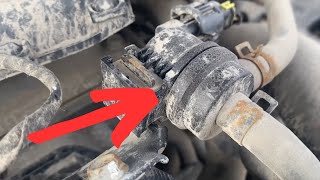
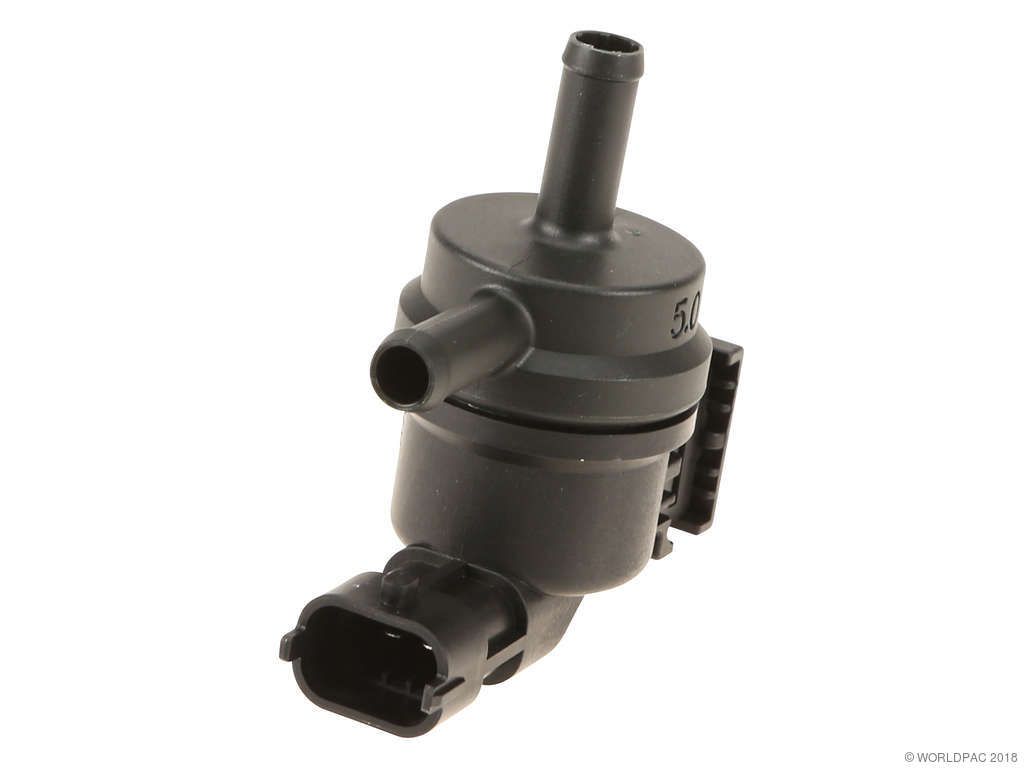
Est. part cost: $20-$45 - Faulty Canister Purge Valve (PCSV) 🟡 Medium Probability → Shop Vapor Canister The purge valve is a frequently discussed failure point in owner forums and videos for this generation of Veloster and its platform mates. It can get stuck open, causing a constant leak condition.
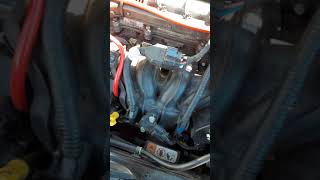
How to confirm: The valve is located on top of the engine near the intake manifold. With the engine off, remove the valve and try to blow through it; if air passes, it's stuck open and faulty. Some owners have had temporary success cleaning the valve with silicone spray, but replacement is the permanent fix.
Typical fix: Replacement of the canister purge valve. This is a simple repair involving disconnecting two hoses and an electrical connector.
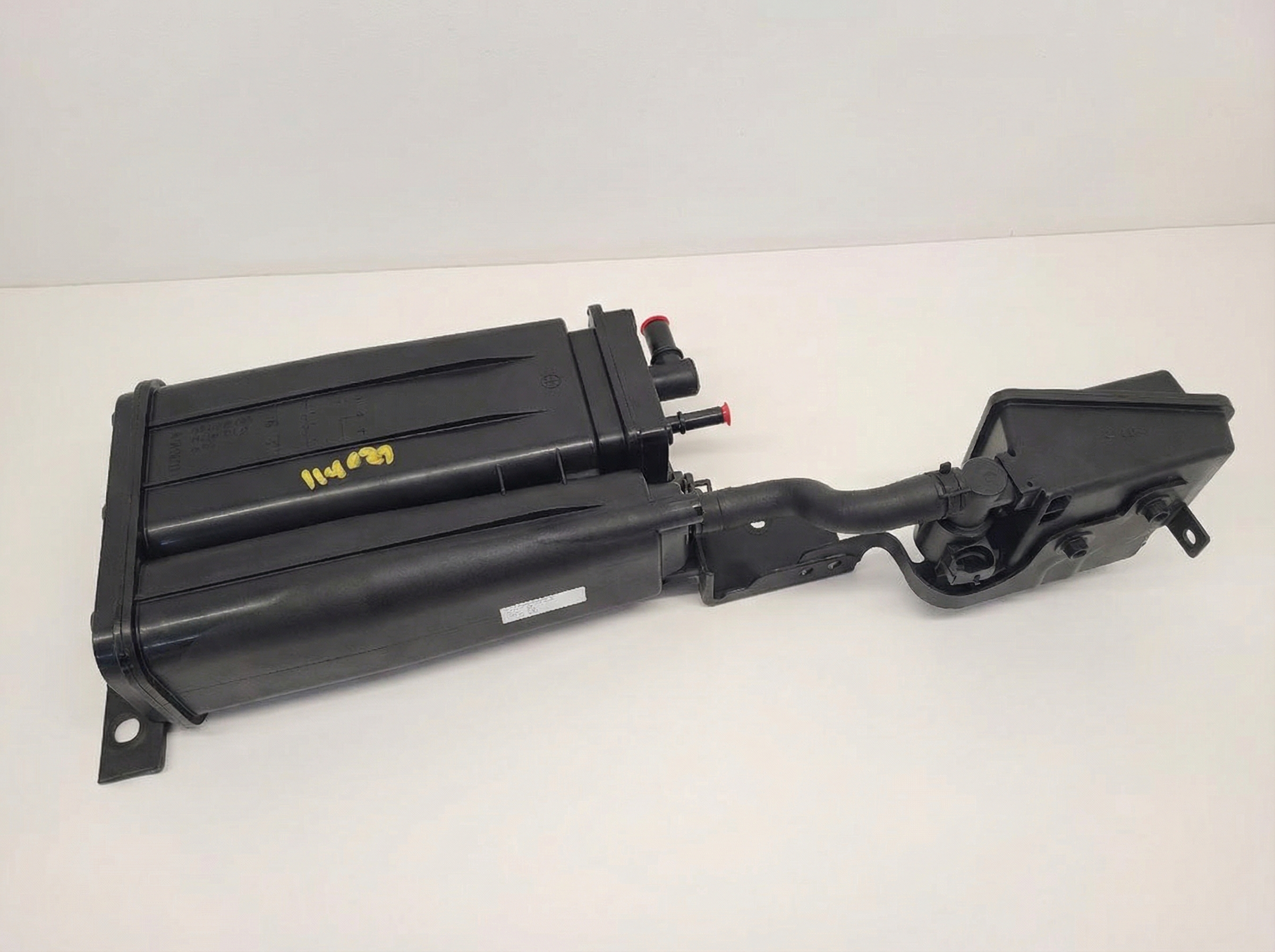
Est. part cost: $25-$85 - Cracked Charcoal Canister 🟡 Medium Probability → Shop Vapor Canister Hyundai acknowledged a defect causing the charcoal canister to crack, prompting a warranty extension to 10 years/120,000 miles for 2012-2016 Velosters. This is a significant and documented issue for this specific vehicle. Overfilling the fuel tank can also saturate the canister with raw fuel, causing it to fail.
How to confirm: A visual inspection may reveal cracks in the black plastic housing of the canister, which is located near the rear driver's side of the vehicle. The definitive method is a smoke test, which will show smoke billowing from the crack.
Typical fix: Replacement of the charcoal canister assembly. Check with a Hyundai dealer to see if your vehicle is covered under the warranty extension (Service Campaign 948).
Est. part cost: $200-$350 - Faulty Canister Close Valve (CCV) / Vent Valve ⚪ Low Probability → Shop Vapor Canister This valve is typically integrated into the charcoal canister assembly on the Veloster. While the valve itself can fail, it's less common than the purge valve or a cracked canister. Failure often requires replacing the entire canister assembly.
How to confirm: The valve should be normally open and close when voltage is applied. Testing requires accessing the valve (near the driver's side rear wheel) and applying power to see if it actuates. A smoke test is the most effective way to confirm a CCV failure.
Typical fix: Replace the entire charcoal canister assembly, as the valve is often not sold separately for this model.
Est. part cost: $200-$350 (for the full assembly) - Cracked or Disconnected EVAP Hoses ⚪ Low Probability Rubber hoses become brittle and crack over time due to heat and age. This is a general vehicle issue, not specific to the Veloster, but a large leak code often points to a hose that has completely broken or disconnected.
How to confirm: Visually inspect all accessible EVAP lines running from the fuel tank area to the charcoal canister and up to the purge valve in the engine bay. The definitive method is a smoke test, where a machine fills the EVAP system with low-pressure smoke to reveal the exact location of any leaks.
Typical fix: Replace the cracked or broken section of hose.
Est. part cost: $10-$50
Rare But Worth Checking
- Cracked or Rusted Fuel Filler Neck: → Shop Fuel Filler Neck Rust or physical damage can cause a leak in the fuel filler neck, which is part of the sealed EVAP system. This is more common in regions that use road salt. A smoke test is the best way to identify this issue, as smoke will be seen escaping from around the filler neck area.
- Leaking Fuel Tank or Fuel Pump Gasket: → Shop Fuel Pump Rust or physical damage can cause a leak in the fuel tank itself. More commonly, the gasket for the fuel pump assembly on top of the tank can degrade and fail, creating a large leak. This is usually found only with a smoke test.
Diagnosis Steps
- Read the code with an OBD-II scanner to confirm P0455 is present.
- Inspect the gas cap. Remove it, check the seal for cracks, and clean it. Reinstall it and ensure it clicks several times. Clear the code and drive for a few days to see if it returns.
- If the code returns, perform a visual inspection of all visible EVAP hoses in the engine bay and around the fuel tank for obvious cracks or disconnections.
- Locate the canister purge valve on the engine. With the engine off, disconnect it and test if you can blow through it. If air passes, it has failed and needs replacement.
- Check for any applicable warranty extensions. Contact a Hyundai dealer with your VIN to check the status of Service Campaign 948 regarding the charcoal canister.
- If the simple checks don't reveal the issue, a professional smoke test is the most effective next step. This involves injecting smoke into the EVAP system to pinpoint the exact source of the leak, which could be the canister, the close valve, the filler neck, or a pinhole in a line.
Parts You'll Likely Need
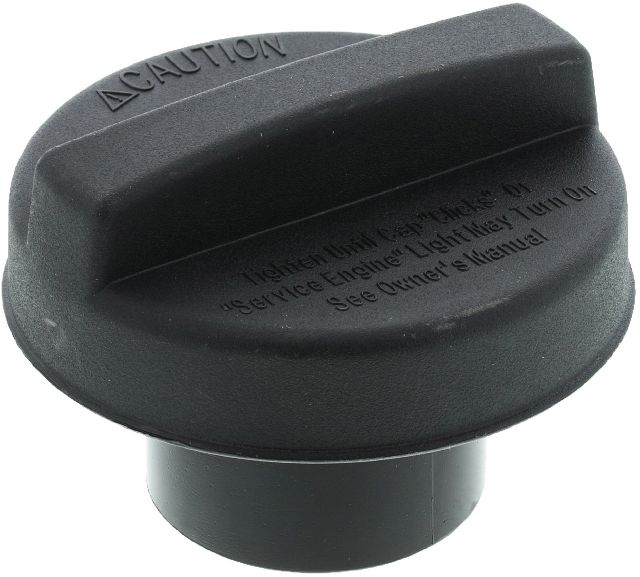
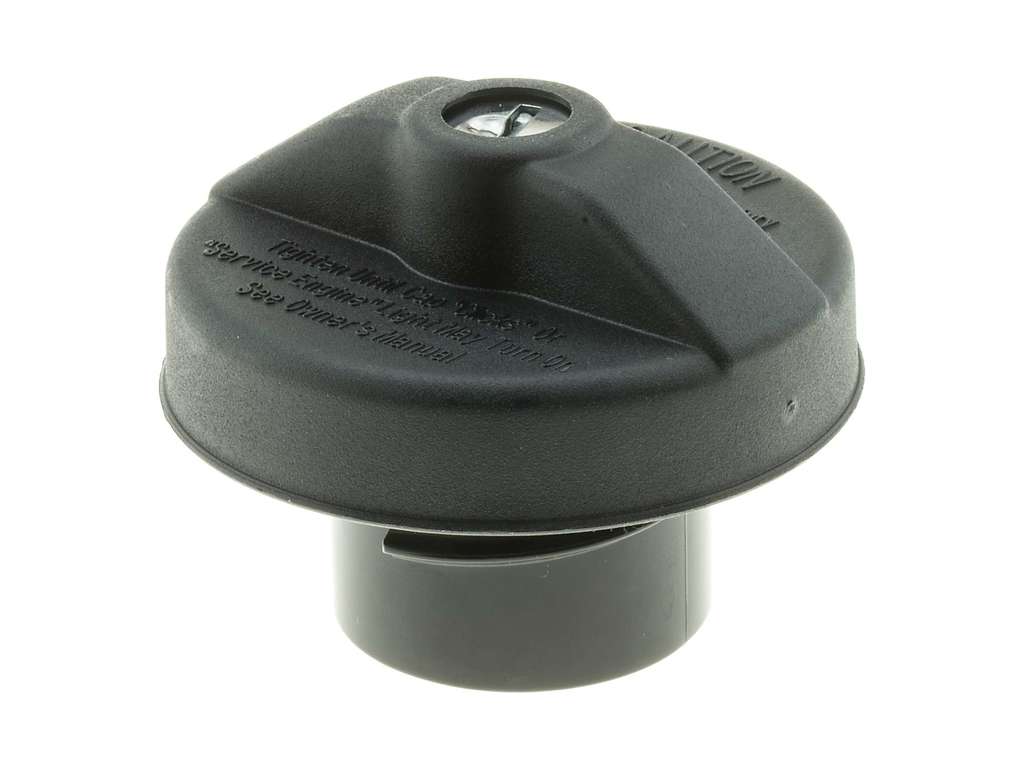
- Gas Cap
(OEM #31010-3L600)— This is the simplest and most frequent cause of a P0455 code due to a worn seal or not being tightened properly. Using an OEM cap is strongly advised.
Trusted brands: Hyundai (OEM)
OEM price range: $20-$45
Aftermarket price range: $15-$25 - Canister Purge Valve / Purge Control Solenoid Valve
(OEM #28910-26900)— A very common failure point on Hyundai/Kia vehicles of this era, including the Veloster. It gets stuck open, causing a large leak condition.
Trusted brands: Hyundai (OEM), Bosch, Dorman
OEM price range: $50-$85
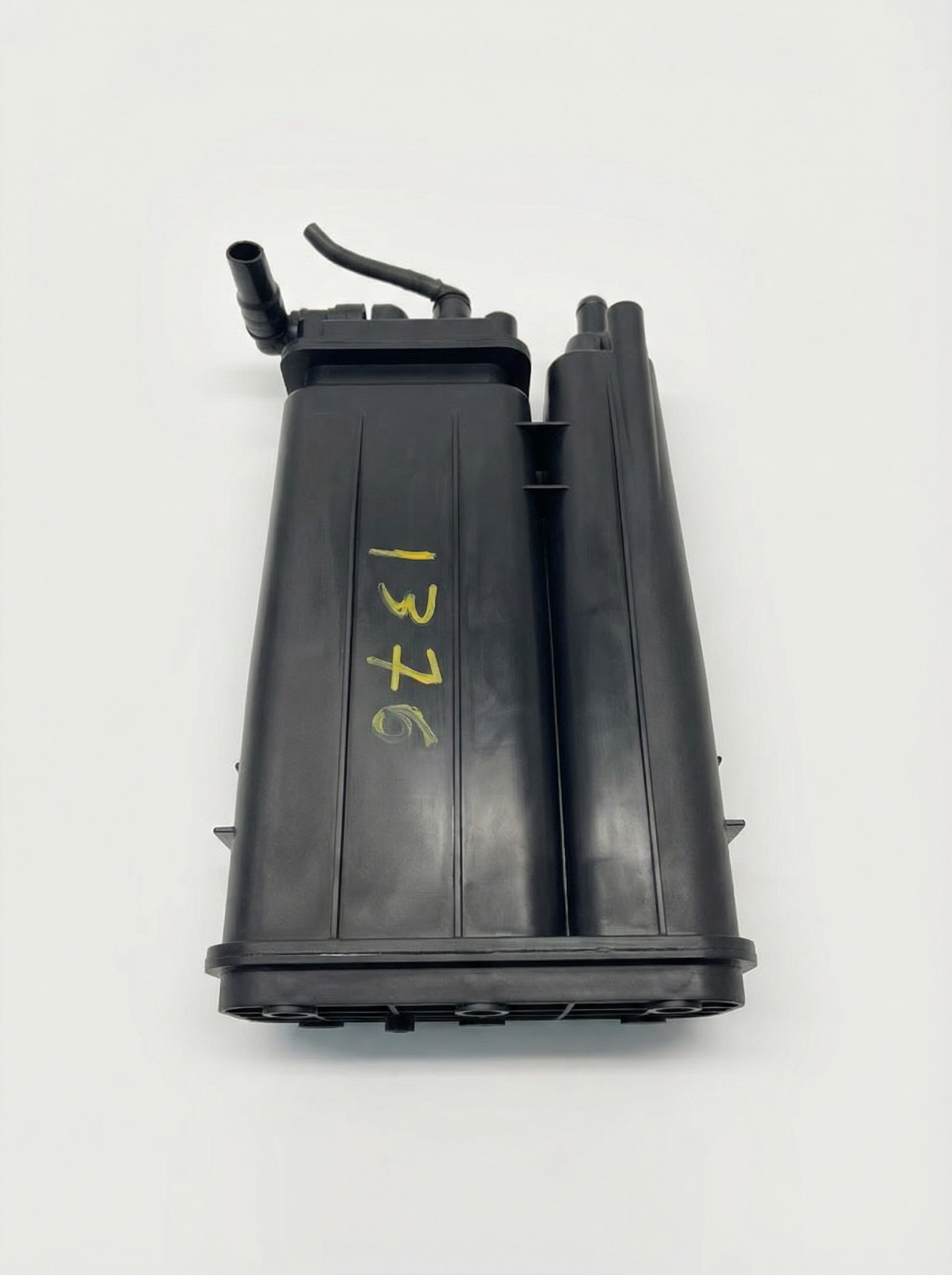
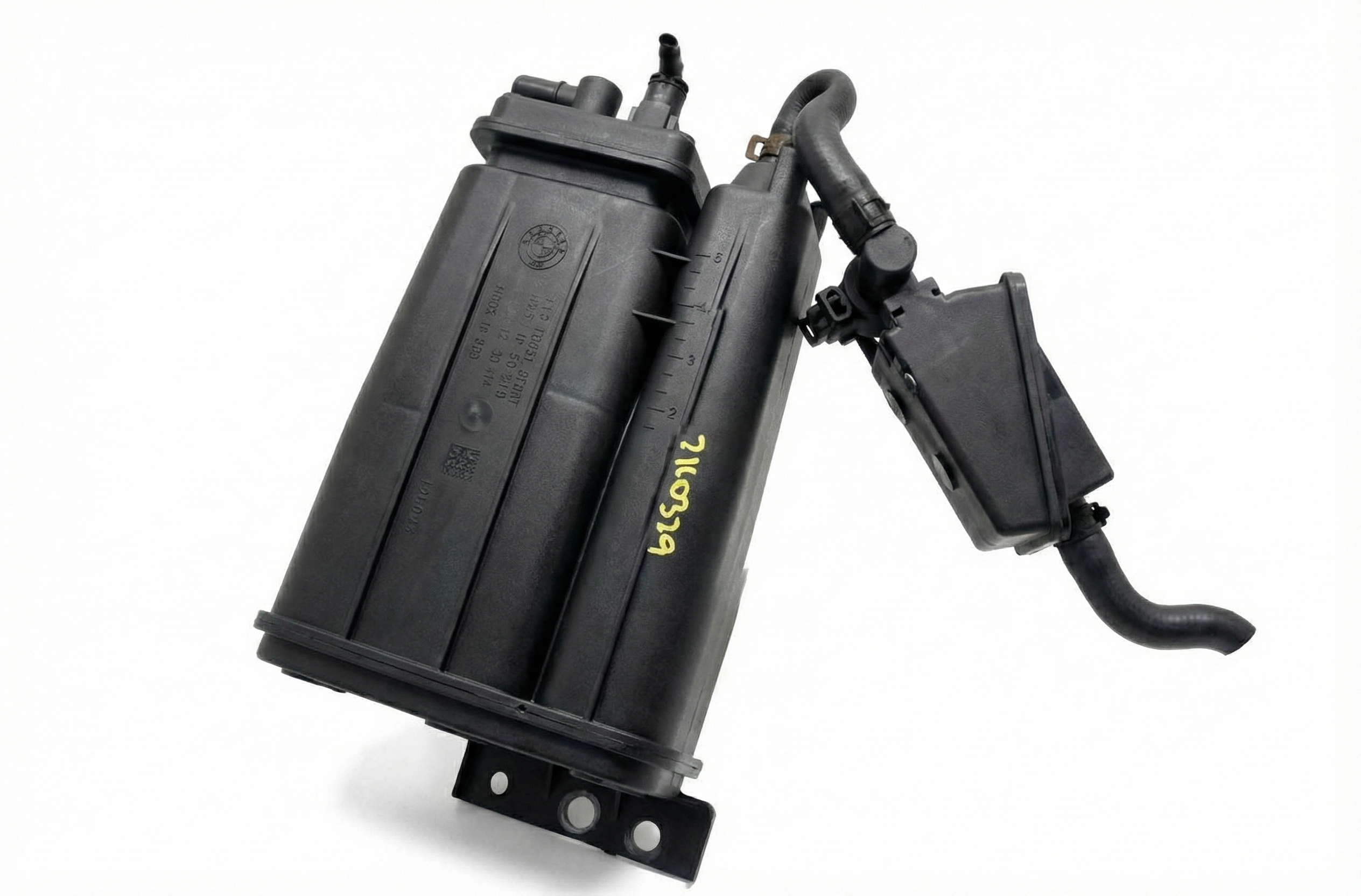
Aftermarket price range: $25-$60 - Charcoal Canister Assembly
(OEM #31420-2V000 (Non-Turbo), 31420-2V500 (Turbo))— A known failure point for the 2012-2016 Veloster, with Hyundai issuing a warranty extension for cracking. This assembly typically includes the canister close valve (CCV).
Trusted brands: Hyundai (OEM)
OEM price range: $200-$350
Aftermarket price range: N/A
Related Codes That Often Appear With This One
- P0442 — This code indicates a 'small' EVAP leak. It can appear alongside P0455 if the system has multiple leaks of different sizes or if a large leak is intermittent.
- P0456 — This code for a 'very small' EVAP leak is also mentioned in Hyundai TSB #5NP-Q7J2C-07 alongside P0455, suggesting they share common failure points and diagnostic logic.
Technical Service Bulletins (TSBs) & Recalls
- Service Campaign 948 / TSB 19-FL-003H: Extends the warranty on the charcoal canister to 10 years/120,000 miles for certain 2012-2016 Velosters due to cracking.
- 5NP-Q7J2C-07: Recommends an ECM software update for some 2016 Velosters to correct the sensitivity of the EVAP leak detection system, which could falsely trigger P0455.
- 5NP-Z2J3V-04: A general Hyundai bulletin acknowledging that P0455, P0442, and P0456 codes are common across various models and share diagnostic paths.
Platform-Specific Known Issues
- Warranty Extension for Cracked Charcoal Canister (Campaign 948): → Shop Vapor Canister Hyundai extended the warranty for the evaporative canister on 2012-2016 Velosters to 10 years or 120,000 miles. This was in response to canisters cracking, particularly in regions using road salt. Owners should check with a dealer to see if their vehicle is eligible for a free replacement.
- TSB #5NP-Q7J2C-07 - ECM Software Update: For some 2016 Veloster models, Hyundai released a software update for the Engine Control Module (ECM) to improve the logic for detecting EVAP leaks. This could prevent false P0455, P0456, or P0449 codes from being set. A dealer can check if this update is applicable and has been performed.
Mechanic-Grade Diagnostic Values
- Purge Control Solenoid Valve (PCSV) Coil Resistance — expected: 22.0 - 26.0 Ω (at 20°C/68°F). Failure: A reading outside this range indicates a faulty coil in the valve.
- Canister Close Valve (CCV) Coil Resistance — expected: 19.5 - 22.5 Ω (at 20°C/68°F). Failure: A reading outside this range indicates a faulty coil in the valve.
- Fuel Tank Pressure Sensor (FTPS) Output Voltage — expected: Approximately 2.5V at atmospheric pressure (0 kPa), varying between 0.5V and 4.5V depending on vacuum or pressure in the tank.. Failure: Voltage that is stuck high or low, or does not change when the system is tested, points to a faulty sensor.
Scan Tool Commands That Help
- Hyundai GDS (Global Diagnostic System) or equivalent professional scanner: EVAP Leakage Test — This is a guided test that commands the EVAP system's valves to seal the system. It allows a technician to monitor the Fuel Tank Pressure Sensor for a pressure drop or to perform a smoke test without having to manually command each component.
- Hyundai GDS (or equivalent): Canister Vent Valve ON/OFF — This bidirectional control is used to manually close the normally-open vent valve to seal the system for a smoke test. A technician will command the valve 'ON' (closed) and then introduce smoke to see where it escapes.
- Hyundai GDS (or equivalent): Reset Adaptive Values — After replacing a major component like the purge valve, resetting the engine's learned fuel trim adaptations can be beneficial. A stuck-open purge valve can cause long-term fuel trim adjustments that should be cleared.
Wiring & Ground Locations
- Purge Control Solenoid Valve (PCSV) — On the engine, typically at the left rear, near the intake manifold.. This is the location for visual inspection, testing continuity, and checking for voltage at its connector.
- Canister Close Valve (CCV) — Behind the fuel tank, often attached to or near the charcoal canister assembly.. This location is necessary for visual inspection and testing the valve's operation and wiring, which often requires lifting the vehicle.
- Fuel Tank Pressure Sensor (FTPS) — On the fuel tank, typically part of the fuel pump assembly located under the rear seat cushion.. Accessing this sensor for testing requires removing the rear seat and the fuel pump access panel.
- Ground Gf06 — Located at the left 'B' pillar (the pillar between the front and rear doors).. A poor ground at this location could potentially affect various electronic systems, including modules that control or monitor the EVAP system. Verifying ground integrity is a key step in diagnosing electrical faults.
Real Owner Repair Stories
- YouTube user 'N.A.K.' (2013 Hyundai Veloster Turbo) — Check Engine Light with code P0455.
❌ Tried (didn't work) The owner had previously replaced the purge control solenoid valve, but the code returned on the new part after about a year.
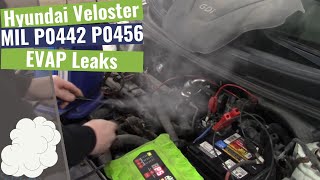
✅ What actually fixed it The owner sprayed silicone lubricant into the ports of the sticking purge valve. This temporarily fixed the issue, indicating the valve was mechanically sticking rather than electrically failed, and the code did not return immediately after. - YouTube channel 'South Main Auto LLC' (Hyundai Veloster (specific year not stated, but first generation)) — Check Engine Light with EVAP leak codes P0456 & P0442 (small leaks, but the failure is identical for P0455).
❌ Tried (didn't work) Initial visual inspection did not reveal the leak source.
✅ What actually fixed it A smoke test revealed smoke leaking from the charcoal canister itself. The plastic had cracked around the metal inserts where the mounting bolts go through, a common failure in rust-belt states due to swelling from corrosion. The fix was to replace the entire charcoal canister assembly. - Reddit user on r/veloster (2013 Hyundai Veloster NAV, 150,000+ miles) — Initially P0455, which later changed to P0442 (small leak) after clearing.
❌ Tried (didn't work) Replacing the gas cap multiple times, including with a genuine OEM cap from the dealership., Cleaning the fuel filler neck area.
✅ What actually fixed it The thread did not have a final confirmed fix from the original poster, but the symptoms and failed attempts strongly point to the known charcoal canister failure. A smoke test incorrectly identified the leak at the gas cap, likely due to the system's vent path routing near the filler neck, leading to a misdiagnosis. The actual cause was almost certainly the cracked canister, for which the vehicle was no longer under the extended warranty due to high mileage.
"I Checked Everything" — The Actual Cause
- In some cases, a smoke test may not reveal any leaks, yet the P0455 code persists. This can happen if the leak is intermittent or if the fault is not with a physical leak but with the sensor that monitors the system. A faulty Fuel Tank Pressure Sensor (FTPS) can send incorrect data to the ECM, making it believe there is a large leak when the system is actually sealed. Technicians may miss this by focusing solely on finding a physical smoke leak.
When the Usual Fixes Don't Work
- While replacing the gas cap is the most common advice, multiple owner stories confirm that this often does not fix the P0455 code on the Veloster. In one case, even a new OEM gas cap failed to resolve the issue, and a smoke test misleadingly pointed to the cap area. The true culprit is frequently the canister purge valve sticking or, more significantly for this platform, a cracked charcoal canister, which is a known defect acknowledged by Hyundai.
Model Year Variations Within This Range
- 2012-2016: The charcoal canister is different for Turbo and Non-Turbo models. The Non-Turbo uses part number 31420-2V000, while the Turbo model uses 31420-2V500. They are not interchangeable.
- 2016: A specific Technical Service Bulletin (TSB #5NP-Q7J2C-07) was issued for some 2016 models involving an ECM software update to improve EVAP leak detection logic. This suggests the factory software on earlier models may be more sensitive or have different test parameters than an updated 2016 model.
Helpful Videos

Used OEM Parts in Stock
New Aftermarket Parts Available


The information in this article is provided for general reference and educational purposes only. Vehicle specifications, procedures, and part compatibility can vary by production date, trim level, and region. Always consult your vehicle's factory service manual and verify part numbers before purchasing or performing repairs. Safety-critical components such as airbags, seat belts, and braking systems should be installed by a qualified professional.
- Hyundai VELOSTER:
- 🧭 Diagnostic Flowchart
- 🎬 Helpful Videos
- 🛍️ Shop This Part
- What's Unique About the 2012-2016 Hyundai VELOSTER
- Symptoms You May Notice
- Most Likely Causes
- Rare But Worth Checking
- Diagnosis Steps
- Parts You'll Likely Need
- Related Codes That Often Appear With This One
- Technical Service Bulletins (TSBs) & Recalls
- Platform-Specific Known Issues
- Mechanic-Grade Diagnostic Values
- Scan Tool Commands That Help
- Wiring & Ground Locations
- Real Owner Repair Stories
- "I Checked Everything" — The Actual Cause
- When the Usual Fixes Don't Work
- Model Year Variations Within This Range
- 🎟️ Get 5% Off