

P0455 on 2009-2013 Infiniti FX50: EVAP Gross Leak Causes and Fixes
For a 2009-2013 Infiniti FX50, a P0455 code most often means you have a loose gas cap or a faulty EVAP vent control valve. Always check that the gas cap is tight and clicks before buying any parts. If the cap is not the issue, the vent valve, located behind the rear passenger wheel, is the next most likely culprit, costing between $30 and $100 for the part. A symptom of a bad vent valve can also be the fuel pump nozzle clicking off repeatedly during refueling.
- Always check your gas cap first. Make sure it's tight and the seal is intact before attempting any other repairs.
- If the gas cap isn't the problem, the EVAP canister vent control valve (located at the rear of the car) is the next most likely culprit, not the purge valve in the engine bay.
- This code will not stop you from driving the car, but it will cause an automatic failure on an emissions test.
- Using an OEM (original equipment manufacturer) gas cap is highly recommended, as some aftermarket caps may not seal correctly.
What's Unique About the 2009-2013 Infiniti FX50
The 2009-2013 Infiniti FX50, part of the S51 generation, shares its EVAP system design with many other Nissan and Infiniti models. Because of this, common failure points are well-documented. Infiniti has issued multiple Technical Service Bulletins (TSBs) for this code, frequently pointing to a loose fuel filler cap as the primary cause. However, owner forums and mechanic experiences show that the EVAP canister vent control valve is an extremely common failure point, often getting stuck open due to rust or debris from its exposed location near the rear wheel.
Diagnostic Flowchart
Tap your situation to follow the diagnostic path that matches what you're seeing on this vehicle.
Symptoms You May Notice
- Check Engine Light is on
- A faint smell of fuel, particularly around the rear of the vehicle.
- Difficulty filling the fuel tank (the pump may click off prematurely).
- A 'Loose Fuel Cap' warning message on the instrument cluster, even if the cap is tight.
- Replacing the purge valve in the engine bay when the more common failure is the vent control valve at the rear of the vehicle.
- Replacing other EVAP components before confirming the gas cap is an OEM part and is properly tightened.
Most Likely Causes
- Loose or Faulty Fuel Cap 🔴 High Probability → Shop Fuel Tank Cap Infiniti TSB #ITB09012F specifically calls out a loose fuel fill cap as a likely cause for P0455 on 2007-2011 models. This is the simplest and most common reason for the code, and the first thing that should be checked.
How to confirm: Ensure the cap is tightened until it clicks several times. Inspect the cap's seal for cracks or damage. If the light returns after tightening, a new OEM cap is a cheap and effective diagnostic step. Many owners report that aftermarket caps do not seal as well as OEM.
Typical fix: Tighten or replace the fuel cap.
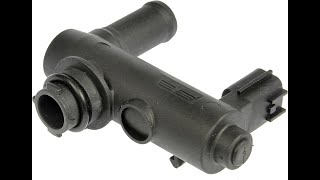
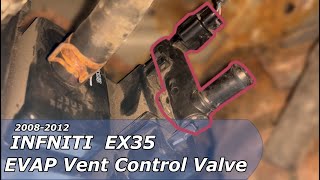
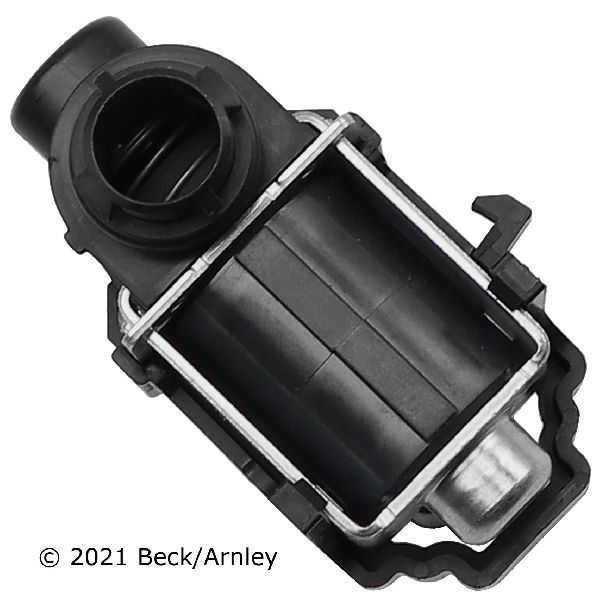
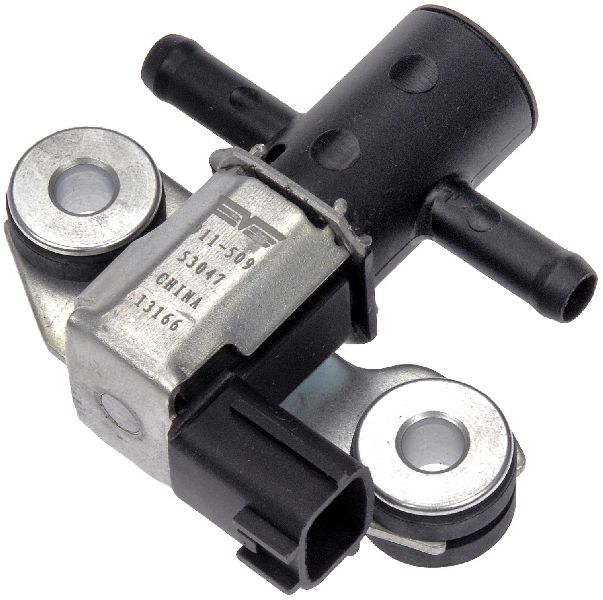
Est. part cost: $25-$50 - Faulty EVAP Canister Vent Control Valve 🔴 High Probability → Shop Vapor Canister Vent Valve This valve is located near the rear passenger-side wheel and is exposed to the elements. It is extremely common for the internal plunger to rust and become stuck open, causing a permanent large leak. This is a widely reported failure on many Infiniti platforms, with numerous forum threads and videos documenting the issue. A stuck-open valve can also cause refueling issues where the pump clicks off constantly.
How to confirm: The valve can be removed and tested. It is a normally open valve. When 12V is applied to its pins, it should click audibly and close, blocking airflow. If it's visibly rusted, won't close with power, or is stuck open (as seen in many YouTube repair videos), it has failed. Often, a new gas cap fails to fix the code, pointing strongly to this valve.
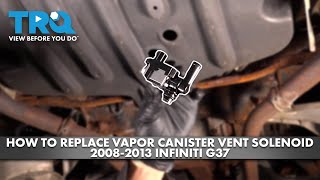
Typical fix: Replace the EVAP canister vent control valve. The part is located on the charcoal canister, accessible after removing the plastic shield in the rear passenger-side wheel well. It twists about 120 degrees to unlock from the canister. 🎬 Watch: Step-by-step guide to replacing the vent control valve.
Est. part cost: $30-$100 - Cracked or Disconnected EVAP Hoses 🟡 Medium Probability Rubber hoses can become brittle and crack over time due to age and heat cycles. The connections at the purge valve in the engine bay and the canister in the rear are common places to check.
How to confirm: Visually inspect all accessible EVAP lines running from the engine bay to the charcoal canister in the rear. A smoke test is the most effective way to find a leak in the hose system.
Typical fix: Replace the damaged section of hose.
Est. part cost: $10-$40 - Faulty EVAP Canister Purge Valve/Solenoid ⚪ Low Probability → Shop Vapor Canister While less common than the vent valve, the purge valve (located in the engine bay) can fail, typically by getting stuck open or closed.
How to confirm: This is a normally closed valve. With the engine off, disconnect the electrical connector and the hose leading from the charcoal canister, then start the engine. If you feel vacuum at the valve's inlet port, it's stuck open and needs replacement. You can also remove the valve and try to blow through it; if air passes, it's stuck open.
Typical fix: Replace the purge valve.
Est. part cost: $50-$125
Rare But Worth Checking
- Cracked Charcoal Canister: → Shop Vapor Canister The plastic housing of the canister can develop cracks from road debris or stress, creating a large leak. This is usually found during a smoke test.
- Leaking Fuel Filler Neck: → Shop Fuel Filler Neck Rust or corrosion on the metal filler neck where the gas cap seals can prevent a proper seal, even with a new cap. This is more common in areas with heavy road salt usage.
Diagnosis Steps
- Check the Fuel Cap: Ensure it is an OEM or equivalent cap and is tightened until it clicks at least once. Clear the code and drive to see if it returns. This is the first step recommended by Infiniti TSBs.
- Visual Inspection: Inspect all visible EVAP hoses in the engine bay and around the charcoal canister for obvious cracks, disconnections, or damage.
- Inspect and Test the EVAP Vent Control Valve: Locate the valve on the charcoal canister behind the rear passenger wheel well. You may need to remove a plastic shield held by 10mm bolts. Check for visible rust or damage. Test its operation with a 12V power source; the valve should click and close. 🎬 See how to bench test the valve for proper operation. If it's stuck open, it needs replacement. Applying a thin layer of dielectric grease to the new valve's O-ring is recommended during installation.
- Inspect the Purge Valve: Locate the purge valve in the engine bay. With the engine off, disconnect it and check if it's stuck open by attempting to blow through it.
- Perform a Smoke Test: If the leak source is not obvious, the most definitive method is to use an automotive smoke machine. This involves feeding low-pressure smoke into the EVAP system's service port and watching where it escapes. This is the best way to find cracked hoses, a leaking canister, or a bad filler neck seal.
Parts You'll Likely Need
- Fuel Tank Cap
(OEM #17251-1NM0D)— This is the most common cause, as cited by Infiniti's own service bulletins. The seal wears out over time, and aftermarket caps are often a source of leaks.
Trusted brands: Infiniti (OEM), Gates
OEM price range: $35-$50
Aftermarket price range: $15-$30 - EVAP Canister Vent Control Valve
(OEM #14935-JF00B (Superseded by 14935-JF01C, 14935-JF02C))— This part is a very frequent failure point on Nissan/Infiniti vehicles due to its location and design, often getting stuck open from rust. Note that this part number has been superseded multiple times; using the latest version is recommended.
Trusted brands: Infiniti (OEM), Dorman (911-503), Standard Motor Products (CVS67), SKP
OEM price range: $80-$120
Aftermarket price range: $30-$70
Related Codes That Often Appear With This One
- P0442 — This indicates a small EVAP leak. It can appear alongside P0455 if the system has multiple leaks or if a failing component is causing intermittent issues.
- P0456 — This indicates a very small EVAP leak. Like P0442, it can be triggered by similar failing components and is often mentioned in the same TSBs.
Technical Service Bulletins (TSBs) & Recalls
- ITB09012F: Service Information - EVAP leak DTCs (P0442, P0455, P0456) may be caused by a loose fuel fill cap.
- ITB13-044J: EVAP LEAK DTC P0442, P0455, P0456 INFORMATION
- ITB13-044g: ALL MODEL YEAR 2012 AND NEWER INFINITI VEHICLES; EVAP LEAK DTC P0442, P0455, P0456 INFORMATION
Platform-Specific Known Issues
- Owner Experience: The Gas Cap is Not Always the Fix: → Shop Fuel Tank Cap A user on the Infiniti Scene forum with P0455 detailed their experience. They first replaced the OEM gas cap, but the light returned ~500 miles later. They then replaced the EVAP Canister Vent Control Valve (Part #14935-JF00B at the time). The repair took about 45 minutes, involving removal of the rear passenger-side wheel well liner and dropping the canister via 10mm bolts. After replacement, the check engine light did not return, confirming the vent valve was the true culprit. 🎬 Watch this walkthrough of a similar Infiniti vent valve repair. They also noted that difficulty filling the gas tank, a symptom they had, was resolved after the fix.
- TSB ITB09012F: Specifically notes that for 2007-2011 Infiniti vehicles, EVAP codes P0442, P0455, and P0456 may be caused by a loose fuel filler cap, and advises proper diagnosis starting with this check.
- TSB ITB13-044J & ITB13-044g: General information bulletins for 2012 and newer models regarding these same EVAP leak codes, reinforcing the focus on proper diagnosis starting with the fuel cap and providing diagnostic flowcharts.
Mechanic-Grade Diagnostic Values
- EVAP Canister Purge Valve Solenoid Resistance — expected: 15 to 30 Ohms. Failure: A reading far outside this range indicates a damaged internal circuit.
- EVAP Canister Vent Control Valve Solenoid Resistance — expected: 20 to 50 Ohms. Failure: A reading outside this range suggests the solenoid coil is faulty.
Scan Tool Commands That Help
- Nissan CONSULT-III plus or equivalent bidirectional scan tool: EVAP System Leak Check (Active Test) — This function is used to command the EVAP vent control valve to close, allowing the technician to pressurize the system with a tool like the J-42909 and monitor for pressure decay over time, confirming a leak without a smoke machine.
- Nissan CONSULT-III plus or equivalent bidirectional scan tool: Purge and Vent Solenoid Actuation Test — This command allows a technician to manually open and close the purge and vent valves to verify their mechanical and electrical operation. A lack of an audible click or change in system pressure indicates a faulty component.
Wiring & Ground Locations
- ECM (Engine Control Module) — Located behind the glove box.. The ECM is the computer that receives signals from EVAP system sensors (like the Fuel Tank Pressure Sensor) and controls the actuators (Purge and Vent Valves). A fault in its wiring or the module itself, though rare, could cause EVAP codes.
- BCM (Body Control Module) — Located in the passenger kick panel area.. The BCM manages various body functions and communicates with the ECM. On some models, it can be involved in triggering instrument cluster warnings like the 'Loose Fuel Cap' message.
- EVAP Canister Purge Volume Control Solenoid Valve — Wiring diagrams show this component located in the engine bay, with wiring running to the IPDM E/R (Intelligent Power Distribution Module Engine Room) and the ECM.. This is the purge valve located in the engine bay. Knowing its wiring path is crucial for diagnosing electrical faults (opens, shorts) in its circuit.
- EVAP Control System Pressure Sensor — Wiring diagrams place this sensor in the rear of the vehicle, with wiring connected to the ECM.. This sensor reports fuel tank pressure to the ECM. A wiring issue between this sensor and the ECM could lead to false P0455 codes.
Real Owner Repair Stories
- Infiniti Scene Forum User 'g0ldm4g3' (2006 FX35 (S50 generation, but documents a highly relevant and common Nissan/Infiniti issue)) — P0455 code, difficulty refueling (pump clicks off prematurely).
❌ Tried (didn't work) Replacing the OEM fuel filler cap.
✅ What actually fixed it Replacing the EVAP Canister Vent Control Valve (Part #14935-JF00B). The user noted the repair took about 45 minutes and solved both the check engine light and the refueling problem. - YouTube video by '2004 Pathfinder' (2004 Nissan Pathfinder) — P0455 (EVAP Gross Leak)
❌ Tried (didn't work) The video mentions a dealer visit where the charcoal canister, vent valve, and purge valve were all replaced, indicating a complex diagnosis.
✅ What actually fixed it The video uses this as an example to demonstrate DIY fixes, focusing on the gas cap and purge valve as the most common starting points for a home mechanic.
When the Usual Fixes Don't Work
- While the most common causes are the gas cap and vent control valve, a forum user with a P0455 on an '07 FX35 reported that replacing the gas cap did not fix the issue. Their next step was to test and likely replace the EVAP canister vent control valve, reinforcing the diagnostic path where the gas cap is the first, but not always final, step.
OEM Part Supersession History
14935-AM60B→14935-JF00A, then 14935-JF00B, then 14935-JF01C, and finally 14935-JF02C.— Part has been updated multiple times by the manufacturer to improve reliability.
Heads up: Forum posts and part supplier data confirm that 14935-JF00B was a valid replacement for earlier models and has since been replaced by newer revisions. It is critical to use the latest available part number (e.g., 14935-JF02C) to ensure you get the most robust version.
Helpful Videos
We Have This Part in Stock


The information in this article is provided for general reference and educational purposes only. Vehicle specifications, procedures, and part compatibility can vary by production date, trim level, and region. Always consult your vehicle's factory service manual and verify part numbers before purchasing or performing repairs. Safety-critical components such as airbags, seat belts, and braking systems should be installed by a qualified professional.
- Infiniti FX50:
- 🧭 Diagnostic Flowchart
- 🎬 Helpful Videos
- 🛍️ Shop This Part
- What's Unique About the 2009-2013 Infiniti FX50
- Symptoms You May Notice
- Most Likely Causes
- Rare But Worth Checking
- Diagnosis Steps
- Parts You'll Likely Need
- Related Codes That Often Appear With This One
- Technical Service Bulletins (TSBs) & Recalls
- Platform-Specific Known Issues
- Mechanic-Grade Diagnostic Values
- Scan Tool Commands That Help
- Wiring & Ground Locations
- Real Owner Repair Stories
- When the Usual Fixes Don't Work
- OEM Part Supersession History
- 🎟️ Get 5% Off