

P0455 on 2003-2007 Infiniti G35: EVAP Gross Leak Causes and Fixes
For a P0455 code on a 2003-2007 Infiniti G35, the issue is most often a loose gas cap or a failed EVAP canister vent control valve. Always check the gas cap first, preferably replacing it with an OEM part. If that doesn't fix it, the vent valve, located at the rear of the car on the charcoal canister, is the next likely culprit. This part is a known weak point and costs between $40 and $100.
- Always check the gas cap first for code P0455. Ensure it's tight and the seal is intact. Use an OEM replacement if needed.
- The EVAP canister vent control valve, located at the rear of the car, is the second most likely and a very common point of failure for this code on a G35.
- If you own a 2003-2004 G35, check if the fuel filler hose recall (05V555000) was performed, as a cracked hose is a known cause.
- A smoke test is the most reliable way to diagnose the exact location of the leak if it's not the gas cap or the common vent valve.
- This code does not affect engine safety or performance, but it will cause an automatic failure on an emissions test.
What's Unique About the 2003-2007 Infiniti G35
On the G35 platform and its Nissan/Infiniti contemporaries, while a loose gas cap is a common trigger for P0455, the EVAP canister vent control valve is a notoriously common failure point. This valve is located under the car by the rear passenger wheel, where it is exposed to road debris and moisture, causing its internal plunger to rust and stick open. This design flaw led Nissan/Infiniti to revise the part multiple times. Additionally, early V35 models (2003-2004) were subject to a specific recall (NHTSA ID: 05V555000) for a cracking fuel filler hose that can also cause this code.
Generation note: This range covers the first generation (V35; 2003-2006 Sedan, 2003-2007 Coupe) and the start of the second generation (V36; 2007 Sedan). The most common causes, like the gas cap and vent valve, apply to both generations. However, a notable recall for a faulty fuel filler hose only applies to 2003-2004 V35 models.
Symptoms You May Notice
- Check Engine Light is on
- Possible faint fuel smell, though often no smell is present.
- Difficulty refueling (gas pump clicks off prematurely), which can sometimes occur after a vent valve replacement as noted by some owners. This symptom was also reported by owners whose issue was ultimately resolved by replacing the vent control valve.
- Replacing the purge valve in the engine bay when the more common failure is the vent valve at the rear of the car.
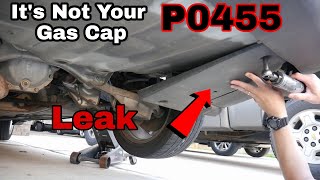
- Immediately assuming a complex leak exists before thoroughly checking that the gas cap is an OEM part and is properly tightened. 🎬 See how to quickly check your gas cap and codes.
- Replacing the gas cap multiple times without considering the vent control valve, which is the next most likely culprit.
Most Likely Causes
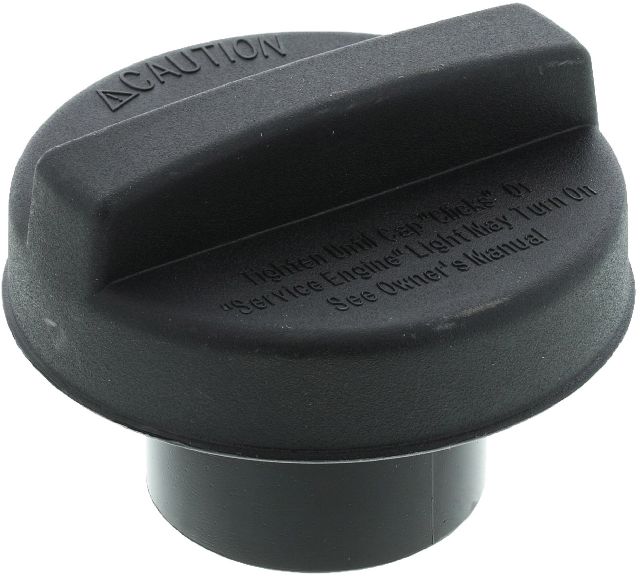
- Loose, Damaged, or Incorrect Gas Cap 🔴 High Probability → Shop Fuel Tank Cap This is the most frequent and simplest cause for any vehicle, often due to user error (not tightening until it clicks) or a worn-out seal. Many owners report that only an OEM cap will solve the problem.
How to confirm: Ensure the gas cap is tightened until it clicks at least once. Inspect the cap's rubber O-ring for cracks, stiffness, or damage. If the tether is caught under the cap, it can prevent a proper seal. Many forum users report that even if the cap looks fine, replacing it with a new OEM part is a necessary diagnostic step.
Typical fix: Tighten or replace the gas cap. It is highly recommended to use an OEM (Original Equipment Manufacturer) cap, as some aftermarket caps do not seal correctly.
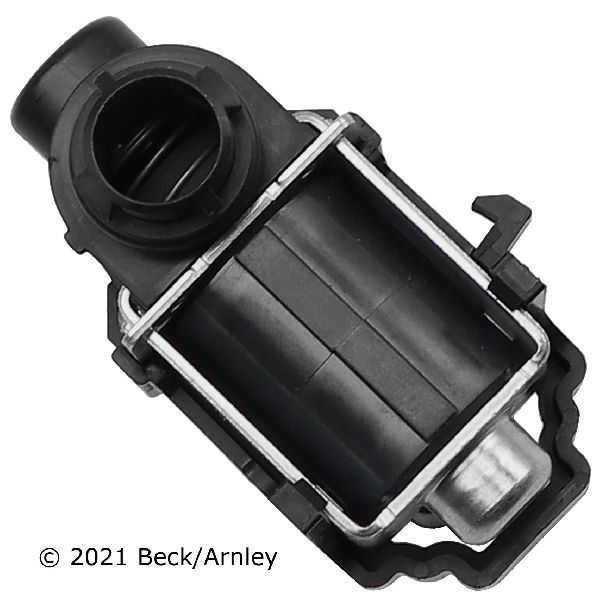
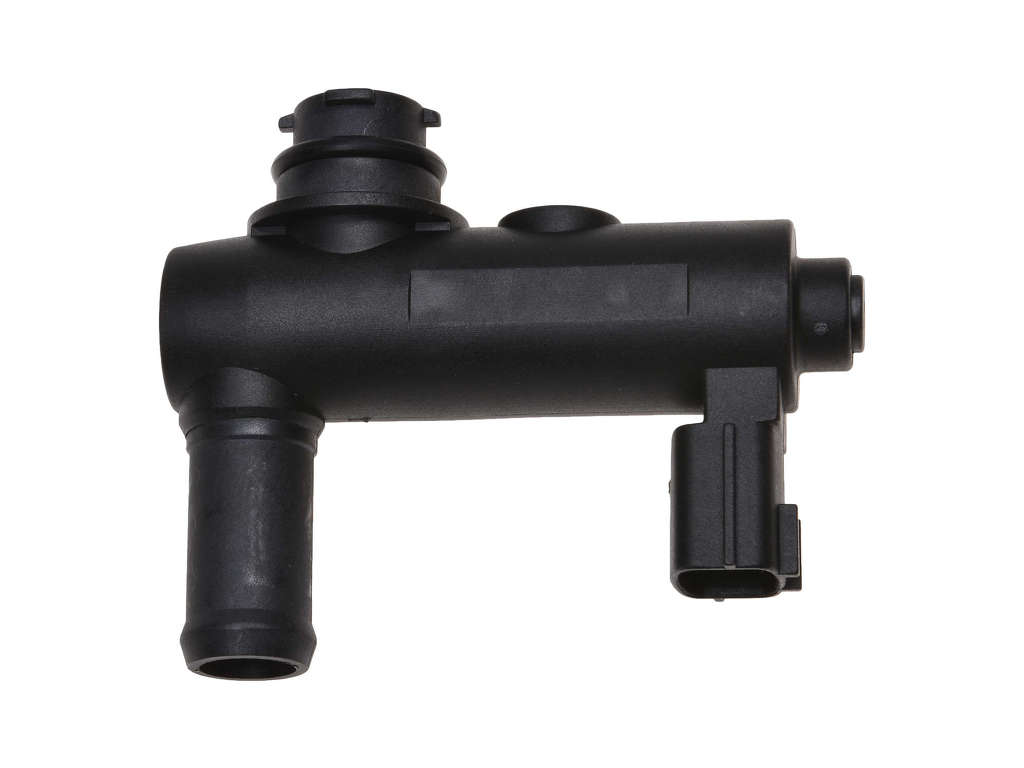
Est. part cost: $25-$40 - Faulty EVAP Canister Vent Control Valve 🔴 High Probability → Shop Vapor Canister Vent Valve This part is a well-documented, common failure item on Nissan and Infiniti vehicles of this era. Its location under the rear of the car exposes it to dirt and moisture, causing it to stick open and create a permanent large leak. The manufacturer has superseded the part number multiple times, indicating a known weakness.
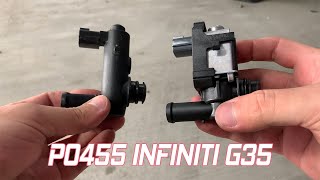
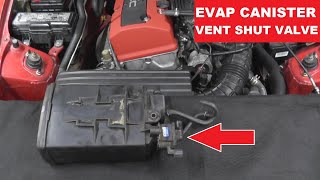
How to confirm: After ruling out the gas cap, this is the next logical part to inspect. The valve is normally open; with 12V applied to its terminals, it should close and hold air. 🎬 Watch: How to test and replace the vent shut valve. A definitive test is a smoke test, as smoke will pour out of the valve if it's stuck open. Visually, the old part may show signs of rust or debris inside.
Typical fix: Replace the EVAP canister vent control valve and its O-ring. The valve is located on the charcoal canister, behind the rear passenger-side wheel. 🎬 Watch: A detailed diagnosis and replacement of the vent valve. The job typically requires 10mm and 13mm sockets.
Est. part cost: $40-$100 - Cracked Fuel Filler Hose (2003-2004 models) 🟡 Medium Probability A recall (NHTSA ID: 05V555000, Infiniti Campaign ITB06-006b) was issued for 2003-2004 G35s because the fuel filler hose could crack from ozone exposure, causing a fuel leak and triggering EVAP codes.
How to confirm: Visually inspect the large rubber hose that connects the gas cap opening to the fuel tank. Look for cracks, especially around bends. A smell of fuel during refueling is a strong indicator. A smoke test will clearly show smoke leaking from the hose.
Typical fix: Replace the fuel filler hose. Check with an Infiniti dealer using your VIN to see if the recall work was performed.
Est. part cost: $50-$120 - Faulty EVAP Purge Volume Control Valve/Solenoid ⚪ Low Probability This valve can stick open, creating a constant vacuum leak into the intake manifold and preventing the EVAP system from sealing for its test. While less common for P0455 than the vent valve, it is a known failure point.
How to confirm: The valve is located in the engine bay, near the intake manifold. It is a normally closed valve. To test, remove the hose leading from the charcoal canister and start the engine. There should be no vacuum felt at the port when the engine is cold. If there is vacuum, the valve is stuck open.
Typical fix: Replace the purge volume control valve. One owner on G35Driver.com reported this fixed their P0455 after two new gas caps did not.
Est. part cost: $100-$150
Rare But Worth Checking
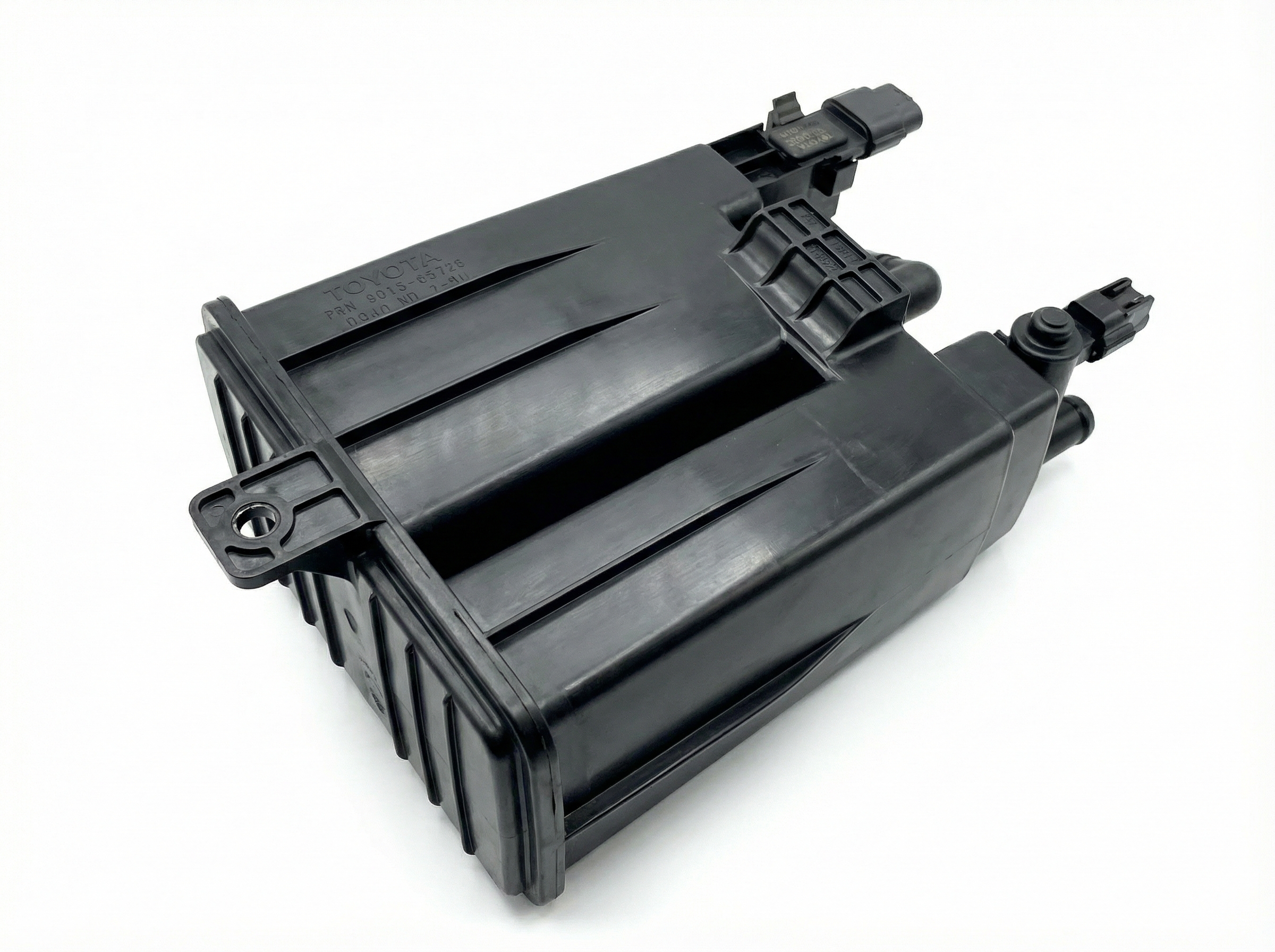
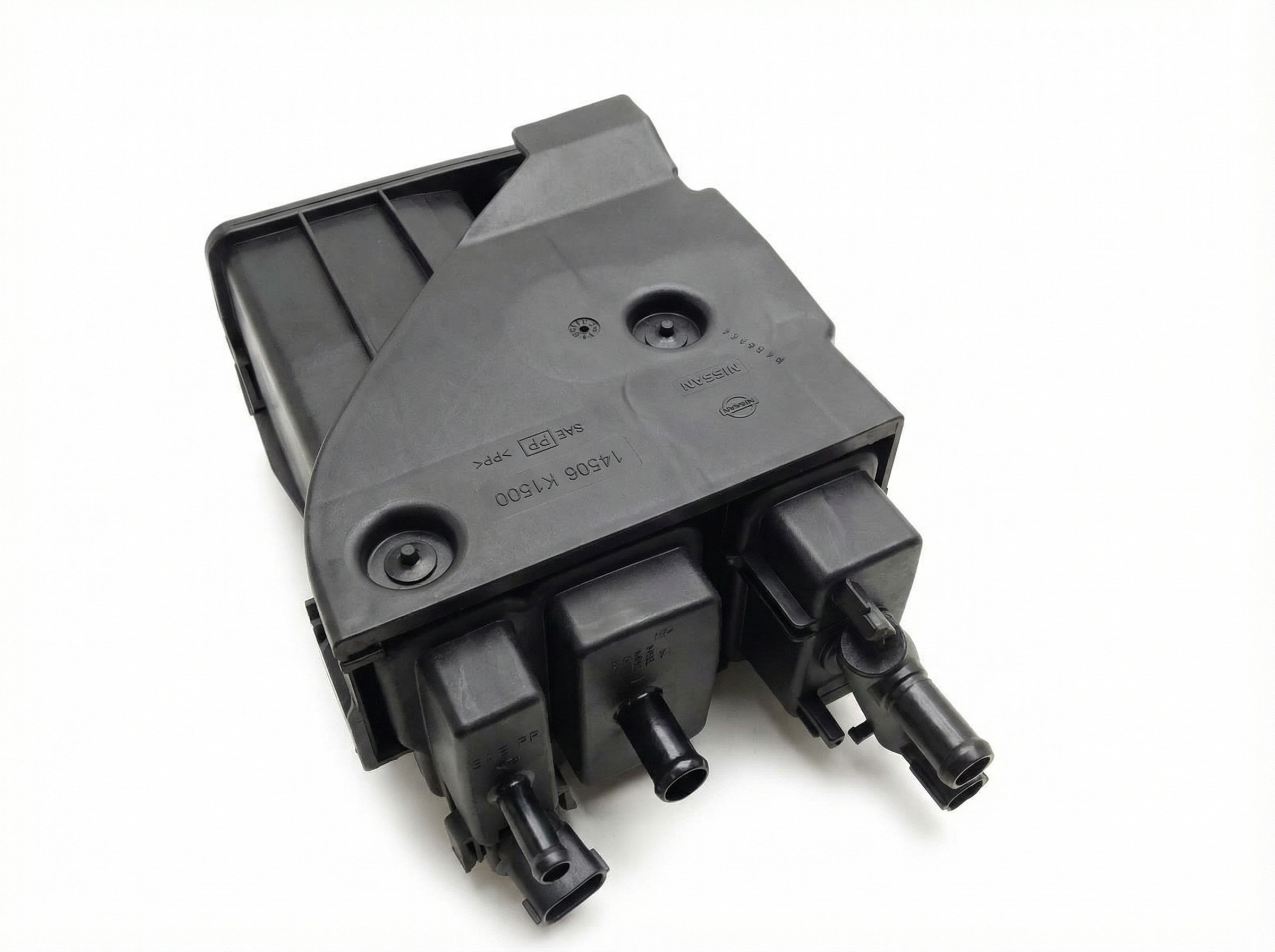
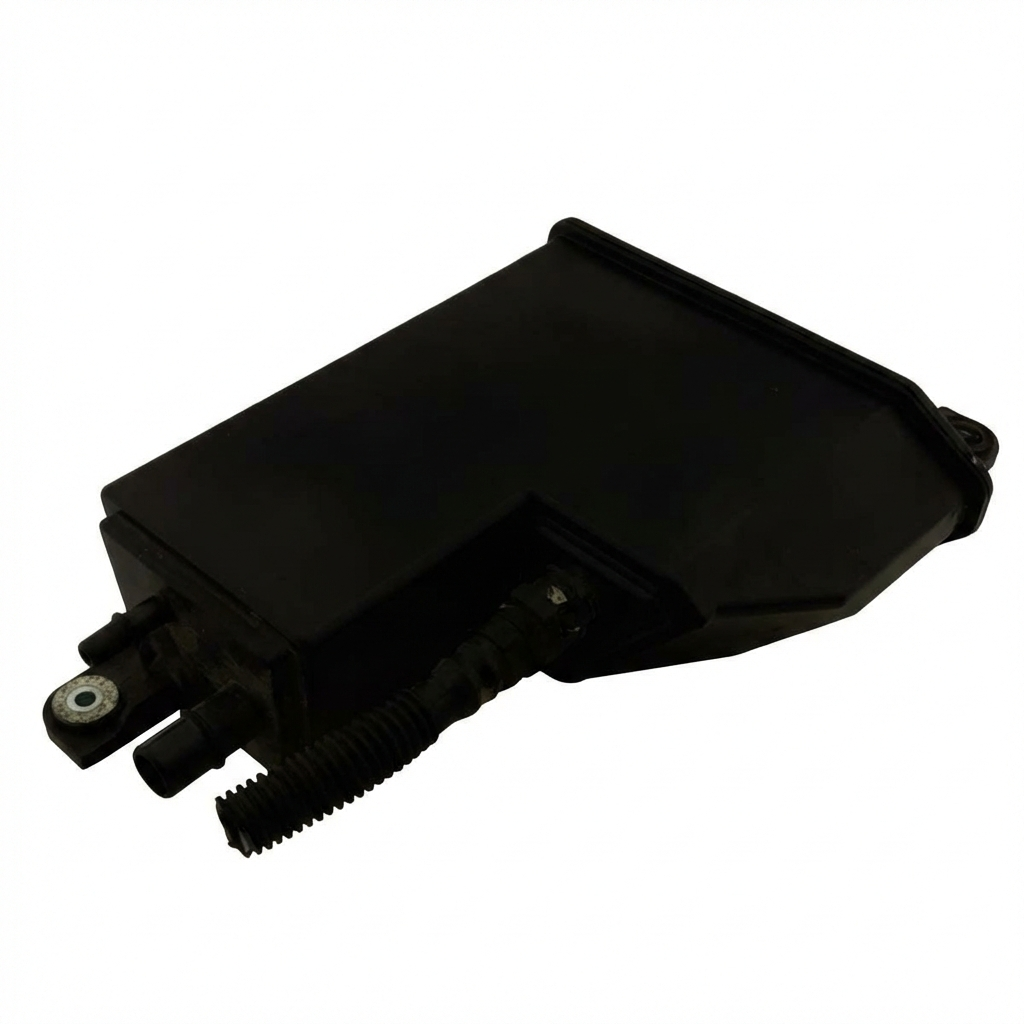
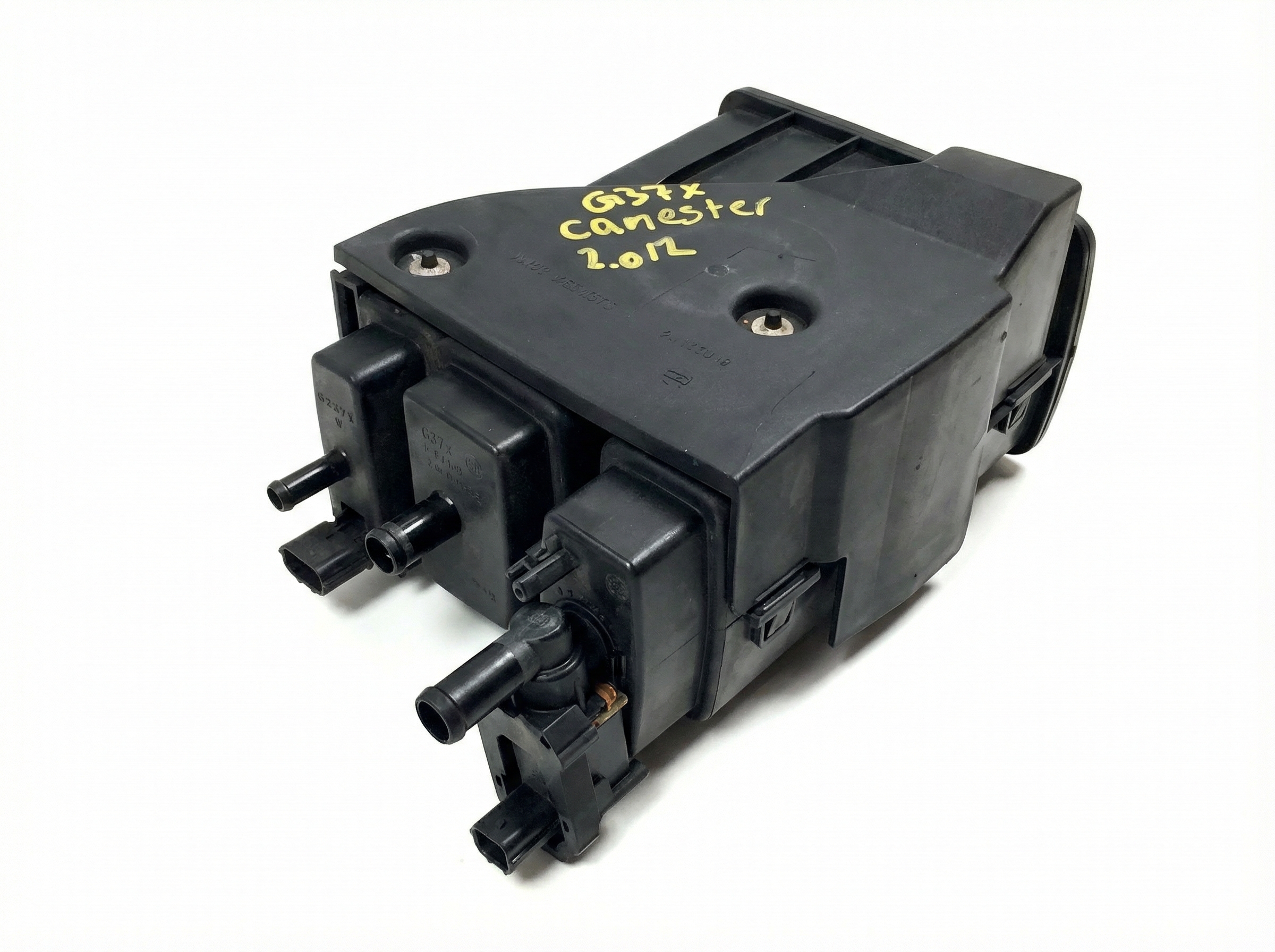
- Cracked or Damaged Charcoal Canister: → Shop Vapor Canister The plastic housing of the canister itself can develop cracks from age, road debris, or impact, creating a large leak. This is often discovered during a smoke test.
- Leaking Fuel Tank or Fuel Pump Seal: → Shop Fuel Pump Less common, but rust or damage to the fuel tank or a degraded fuel pump O-ring/seal can cause a large EVAP leak. Rust around the filler neck is also a possibility in areas with road salt. One user on a forum suggested checking the rubber ring on the fuel pump.
- Cracked or disconnected EVAP hoses: The rubber and plastic lines that make up the EVAP system can become brittle and crack over time, or a connection can come loose. A visual inspection and smoke test are the best ways to find such a leak.
Diagnosis Steps
- Read the code with an OBD-II scanner to confirm P0455 is present.
- Inspect the gas cap. Ensure it is tight and clicks. Check the rubber seal for cracks or damage. Even if it looks good, consider replacing it with a new OEM cap as the first step, as this is a very common and inexpensive fix.
- Clear the code and drive for a few days. If the light returns, the gas cap was not the issue.
- Visually inspect the EVAP hoses running from the engine bay to the rear of the car for any obvious cracks, disconnections, or damage.
- For 2003-2004 models, specifically inspect the fuel filler neck hose for cracks, per recall 05V555000.
- The most effective next step is a smoke test. A mechanic will introduce low-pressure smoke into the EVAP system via the service port (often a green cap). The leak will be wherever smoke escapes.
- If a smoke machine is not available, the EVAP canister vent control valve is the most probable component to replace. It is located on the charcoal canister at the rear of the car, accessible by removing a plastic undertray with 10mm bolts.
- If the vent valve and gas cap are confirmed good, test the purge valve/solenoid in the engine bay. Check if it's stuck open by removing the inlet hose and feeling for vacuum with the engine running.
Parts You'll Likely Need
- EVAP Canister Vent Control Valve
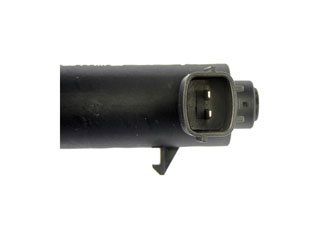
(OEM #14935-JF01C (latest), supersedes 14935-JF00A, 14935-JF00B, 14935-JF00C, 14935-AM60B)— This is the most common point of failure on the G35 for code P0455 after the gas cap. The original part is known to fail due to corrosion and debris, and this is the latest revised version from Nissan/Infiniti.
Trusted brands: Infiniti/Nissan (OEM), Dorman (e.g., 911-503), Standard Motor Products
OEM price range: $80-$110
Aftermarket price range: $40-$70 - Fuel Cap
(OEM #17251-79960)— A worn seal on the gas cap is the simplest and a very common cause for a large EVAP leak. Using an OEM cap is critical for a proper seal, as many owners report issues with aftermarket caps.
Trusted brands: Infiniti (OEM)
OEM price range: $25-$40
Aftermarket price range: $15-$25 - EVAP Purge Volume Control Valve
(OEM #14930-JK20B (Varies by year/engine))— This valve can stick open, causing a leak. It is a secondary, but still possible, cause of P0455. Part number varies by year/engine (DE vs HR).
Trusted brands: Infiniti (OEM), Hitachi
Related Codes That Often Appear With This One
- P0456 — A P0456 (Small Leak) might appear intermittently before a component like a valve seal or hose crack worsens and creates a large leak, triggering P0455.
- P0447 — This code indicates an 'EVAP Vent Control Circuit Open' and can appear with P0455 if the vent valve's electrical connector is not fully seated after replacement, or if the valve's internal solenoid has failed electrically. One owner experienced this after a DIY replacement and resolved it by properly seating the connector.
- P0420 / P0430 — In some cases, a significant vacuum leak from the EVAP system (like a stuck-open purge valve) can affect the air-fuel mixture enough to trigger catalytic converter efficiency codes, though these may be temporary 'pending' codes.
Technical Service Bulletins (TSBs) & Recalls
- ITB06-006b: This is the technical service bulletin that details the fuel filler hose voluntary recall campaign (NHTSA 05V555000), explaining that cracked fuel vapor hoses can cause the malfunction indicator lamp to come on.
- Bulletin #ITB09012F: This manufacturer bulletin notes that if one or more EVAP leak DTCs (P0442, P0455, P0456) are stored, a loose fuel fill cap may be the cause.
- Bulletin #ITB13-044J: Provides updated service information regarding EVAP leak diagnostic codes P0442, P0455, and P0456.
- Bulletin #ITB13-044g: An additional manufacturer reference providing information on EVAP leak codes P0442, P0455, and P0456 for Infiniti vehicles.
Platform-Specific Known Issues
- Recall 05V555000 / ITB06-006b: Cracked Fuel Filler Hose: Affects 2003-2004 G35 models. The fuel filler hose may crack and cause a fuel leak or an EVAP code like P0455. Owners should verify with a dealer if this recall has been performed on their vehicle.
- Corroded/Sticking EVAP Canister Vent Valve: → Shop Vapor Canister The vent valve's location under the rear of the car makes it highly susceptible to rust and debris, causing it to stick open. This is not a recall but is widely acknowledged by owners and mechanics as the most common mechanical failure for P0455 on this platform.
Mechanic-Grade Diagnostic Values
- EVAP Canister Vent Control Valve Solenoid Resistance — expected: Approximately 15-16 Ohms. Failure: A reading significantly higher or lower than the expected range, or an open circuit (infinite resistance), indicates a failed solenoid coil.
- EVAP Fuel Tank Pressure (FTP) Sensor Voltage — expected: Typically around 2.5V at atmospheric pressure (system not sealed). Voltage should decrease as vacuum is applied and increase as pressure is applied.. Failure: Voltage that is stuck high (near 5V) or low (near 0V) regardless of pressure changes, or does not change when the system is sealed and tested, points to a faulty sensor. Codes like P0452 (low input) or P0453 (high input) often accompany a failed sensor.
Scan Tool Commands That Help
- Infiniti CONSULT-II / CONSULT-III: EVAP System Self-Test (Work Support Menu) — This function allows a technician to command the onboard diagnostic sequence for the EVAP system to run on demand. It will close the vent valve, operate the purge solenoid, and monitor the fuel tank pressure sensor to confirm the system's integrity after a repair, without waiting for the normal drive cycle conditions to be met.
- Professional Bidirectional Scan Tool: Vent Valve Control (On/Off) — This command allows the technician to manually close the normally-open vent valve. This is a critical step during a smoke test. By commanding the valve closed, you can check if the valve itself is sealing properly (no smoke should escape from it) and test the rest of the system for leaks. If smoke still pours from the vent valve when commanded closed, the valve is faulty.
Wiring & Ground Locations
- E17 — On the right side of the engine compartment.. This is a major grounding point in the engine bay. A poor connection here could potentially affect various engine control components, including those related to the EVAP system.
- E43 — On the left front side of the engine compartment.. Another primary engine bay ground point. The main engine-to-chassis ground strap often connects near here, and a bad connection can cause a host of electrical issues.
- M30 and M66 — Behind the instrument cluster (M30) and behind the right side of the dash (M66).. These are interior ground points that serve the ECM and BCM. The ECM, located behind the glove box, controls the EVAP purge and vent valves, so a solid ground is critical for its operation.
- EVAP Canister Vent Control Valve Connector — On the EVAP canister at the rear of the vehicle, passenger side.. This is the electrical connection for the most commonly failed part. A loose or corroded connection here will cause the valve to not operate, triggering a circuit code (like P0447) and preventing the system from sealing, which can lead to P0455.
Real Owner Repair Stories
- Infiniti Scene forum user (Infiniti FX (similar EVAP system to G35)) — Check Engine Light with code P0455. Also, difficulty refueling where the gas pump would shut off prematurely.
❌ Tried (didn't work) Replacing the gas cap with a new OEM part.
✅ What actually fixed it Replacing the EVAP canister vent control valve with the updated part number (14935-JF00B). After replacement, the refueling issue was resolved and the check engine light did not return after 5,500 miles. - G35Driver forum user 'sonors' (2008 Infiniti G35 Journey Sedan, 99k miles) — Recurring P0455 code. Also experienced intermittent issues with the gas pump nozzle shutting off before the tank was full.
❌ Tried (didn't work) Mechanic replaced gas cap., Owner replaced gas cap again with a new OEM part.
✅ What actually fixed it Replacing the canister purge valve (user likely meant the vent control valve, given the location and symptoms described) located on the canister at the rear of the car. This fixed both the P0455 code and the refueling problem. - YouTube channel 'Gears & Queers' (2007 Infiniti G35 Sedan (V36)) — Intermittent P0455 Check Engine Light.
❌ Tried (didn't work) Initial replacement of the vent control valve did not fix the issue immediately.
✅ What actually fixed it The initial replacement of the EVAP canister vent control valve (Part No. 14935-JF01C) was correct, but the electrical connector was not fully seated. This caused a new code, P0447 (Vent Control Circuit Open), to appear alongside the original P0455. The final fix was ensuring the connector was securely clicked into place, which cleared both codes.
"I Checked Everything" — The Actual Cause
- A smoke test may show no leaks if the issue is a faulty Fuel Tank Pressure (FTP) sensor. The sensor itself could be providing an incorrect reading to the ECM, making the computer believe there is a large leak when the system is actually sealed. In this scenario, the sensor is the point of failure, not a physical leak that smoke would reveal. This would often be accompanied by sensor-specific codes like P0452 or P0453.
When the Usual Fixes Don't Work
- In multiple owner accounts, replacing the gas cap—even with a new OEM part—did not resolve a recurring P0455 code. The light would often disappear for a short time (days or weeks) before returning. The final fix in these cases was almost always the EVAP canister vent control valve located at the rear of the car, confirming it as the most common failure point after the gas cap has been ruled out.
OEM Part Supersession History
14935-AM600, 14935-AM60A, 14935-AM60B→14935-JF00A, then 14935-JF00B, and finally 14935-JF01C— The original design of the EVAP Canister Vent Control Valve was prone to failure from rust and debris. Nissan/Infiniti released multiple revisions to improve its durability and resistance to sticking.
Heads up: The newest part (14935-JF01C) may look physically different and more substantial than the original part it replaces, but it is the correct, backward-compatible, and most robust version.
Model Year Variations Within This Range
- 2003-2004: These model years were subject to recall NHTSA ID: 05V555000 for a cracking fuel filler hose. This specific issue is a more likely cause on these earlier models compared to later years.
- 2007: The 2007 model year includes both the first generation (V35) coupe and the second generation (V36) sedan. While they share the same common failure points for P0455 like the vent valve, the physical removal and access to components like the charcoal canister and undertrays may differ slightly due to the different chassis.
- 2005-2007 (VQ35DE Rev-Up) vs 2007+ (VQ35HR): While the fundamental EVAP system operation is the same, some part numbers for components like the purge valve located in the engine bay may differ between the VQ35DE and the later VQ35HR engines. The primary P0455 culprit, the rear vent valve, is largely the same.
Diagnostic Flowchart
Real Owner Stories
Aggregated from forums and TSBs cited above. Mileages and costs reflect what owners reported in those sources.
Infiniti G35 (V36)
Symptoms: Large evap leak P0455 persisted even after replacing the gas cap twice. Owner also noted difficulty filling the gas tank.
What fixed it: Replaced the canister purge valve.
Cost: $0-$30
Source hint: G35Driver.com - 'Large evap leak P0455 even after new gas cap' (2021-2022)
Infiniti FX (Platform Mate)
Symptoms: P0455 code present. An OEM gas cap did not fix the issue. After the final repair, experienced temporary issues with the gas pump shutting off prematurely.
What fixed it: Replaced the vent control valve with the updated part number (14935-JF00B).
Source hint: InfinitiScene.com - 'Engine Code p0455' (2015)
Infiniti G35 (V36)
Symptoms: P0455 code triggered by a stuck-open canister vent valve.
What fixed it: Replaced the canister vent valve with the correct, updated part design (14935-JF01C).
Source hint: YouTube - 'FIXING P0455 Infiniti G35 | CANISTER Vent Valve' by Gears & Queers (2020)
Related OBD-II Codes
Frequently Asked Questions
Does the fuel filler hose recall (ITB06-006b) apply to my 2006 Infiniti G35?
I replaced the gas cap on my G35 but P0455 came back. What is the most likely mechanical failure?
Why does the gas pump keep clicking off prematurely when I try to refuel my G35?
What is the correct updated part number for the G35 EVAP canister vent control valve?
Can a faulty purge valve cause a P0455 on my G35?
Should I buy an aftermarket gas cap to fix my P0455 code?
Helpful Videos
Used OEM Parts in Stock

New Aftermarket Parts Available


The information in this article is provided for general reference and educational purposes only. Vehicle specifications, procedures, and part compatibility can vary by production date, trim level, and region. Always consult your vehicle's factory service manual and verify part numbers before purchasing or performing repairs. Safety-critical components such as airbags, seat belts, and braking systems should be installed by a qualified professional.
- Infiniti G35:
- 🧭 Diagnostic Flowchart
- 🎬 Helpful Videos
- 🛍️ Shop This Part
- What's Unique About the 2003-2007 Infiniti G35
- Symptoms You May Notice
- Most Likely Causes
- Rare But Worth Checking
- Diagnosis Steps
- Parts You'll Likely Need
- Related Codes That Often Appear With This One
- Technical Service Bulletins (TSBs) & Recalls
- Platform-Specific Known Issues
- Mechanic-Grade Diagnostic Values
- Scan Tool Commands That Help
- Wiring & Ground Locations
- Real Owner Repair Stories
- "I Checked Everything" — The Actual Cause
- When the Usual Fixes Don't Work
- OEM Part Supersession History
- Model Year Variations Within This Range
- Real Owner Stories
- Infiniti G35 (V36)
- Infiniti FX (Platform Mate)
- Infiniti G35 (V36)
- Related OBD-II Codes
- Frequently Asked Questions
- 🎟️ Get 5% Off