

P0455 on 2012-2013 Infiniti M37: EVAP Gross Leak Causes and Fixes
P0455 on a 2012-2013 Infiniti M37 indicates a large leak in the EVAP system. The most common causes are a loose gas cap or a failed EVAP vent control valve located near the fuel tank. A new gas cap is about $25-$40, while the more likely vent valve costs around $50-$120 for the part. Do not 'top off' your fuel tank, as this can flood the charcoal canister and cause EVAP problems.
- P0455 on your M37 means a large EVAP leak. This will not affect how the car drives but will cause it to fail an emissions test.
- Always check the gas cap first. Ensure it is tight with several clicks. If the seal is old or cracked, replace it—it's the cheapest and easiest potential fix.
- If the gas cap is not the issue, the most likely culprit is the EVAP canister vent control valve located at the rear of the car by the fuel tank.
- A smoke test is the most reliable professional method to accurately pinpoint the source of the leak before you start replacing parts.
- Do not overfill the fuel tank. Topping off after the pump clicks can flood the charcoal canister and lead to EVAP system problems.
What's Unique About the 2012-2013 Infiniti M37
While P0455 is a generic code, on many Nissan and Infiniti vehicles of this era, including the M37 with the VQ37VHR engine, the EVAP canister vent control valve is a very common failure point. This valve is located at the rear of the car, exposed to road debris and moisture, which causes the internal plunger to rust and stick open, creating the large leak that triggers the code. Infiniti has issued several service bulletins, like ITB13-044J, regarding the diagnosis of this and other EVAP codes, which outlines a specific diagnostic procedure and warns that simple test drives are not effective for confirming the issue.
Diagnostic Flowchart
Tap your situation to follow the diagnostic path that matches what you're seeing on this vehicle.
Symptoms You May Notice
- Check Engine Light is on
- A faint fuel odor may be noticeable, especially near the rear of the car
- A "Loose Fuel Cap" warning may appear on the dash
- Difficulty refueling (fuel pump nozzle clicks off prematurely before the tank is full)
- Replacing the EVAP purge valve in the engine bay when the much more common failure is the vent control valve at the rear of the car.
- Replacing other EVAP components before verifying the gas cap is tight and its seal is in good condition.
- Assuming the charcoal canister is bad when it is only the serviceable vent valve attached to it that has failed.
Most Likely Causes
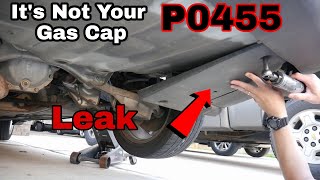
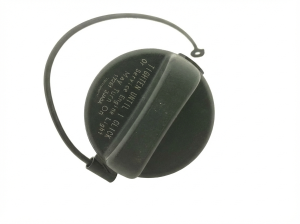
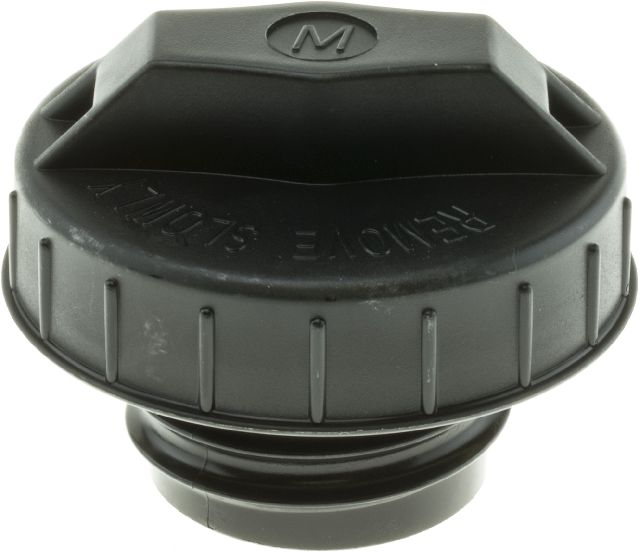
- Loose or Faulty Gas Cap 🔴 High Probability → Shop Fuel Tank Cap This is the most common and simplest cause for a P0455 code on any vehicle. Infiniti TSB ITB13-044J specifically notes that a loose cap is a primary cause to investigate. 🎬 Watch: Common causes and fixes for the P0455 code. The cap's rubber seal can degrade over time, or the tether can get caught under the cap, preventing a proper seal.
How to confirm: Ensure the gas cap is tightened until it clicks multiple times. Inspect the rubber O-ring on the cap for cracks, stiffness, or debris. If the seal looks compromised, it's an inexpensive first step to replace it.
Typical fix: Tighten or replace the fuel filler cap. Using an OEM cap is often recommended for best fit.
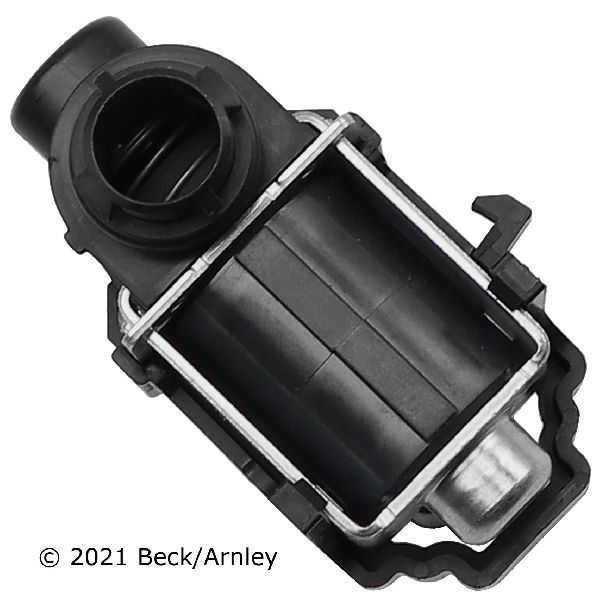
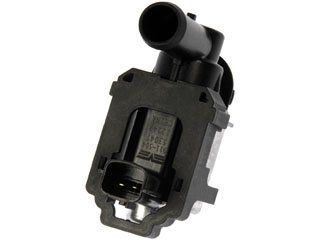
Est. part cost: $25-$40 - Failed EVAP Canister Vent Control Valve 🔴 High Probability → Shop Vapor Canister Vent Valve This is a well-documented high-failure item on Nissan and Infiniti platforms. Its location on the charcoal canister at the rear of the vehicle exposes it to dirt and moisture, causing the internal plunger to rust and get stuck open, creating a permanent large leak. The part has been superseded by Nissan/Infiniti multiple times, indicating revisions to improve durability.
How to confirm: A smoke test will show smoke exiting the valve. The valve can also be removed and tested. Visually inspect the inside of the valve port for rust, a common sign of failure. Apply 12V power to the terminals; a healthy valve will make an audible click. If you can blow through it when it should be closed (unpowered), it has failed.
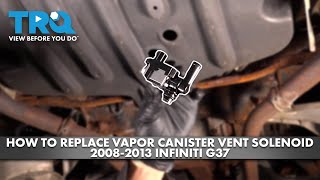
Typical fix: Replace the EVAP canister vent control valve. It is located on the charcoal canister at the rear of the vehicle, typically behind a plastic undertray, and twists to lock into place. 🎬 See this walkthrough on replacing the vent solenoid.
Est. part cost: $50-$120 - Cracked or Disconnected EVAP Hose 🟡 Medium Probability Rubber hoses can become brittle and crack with age and exposure to the elements. A disconnected or broken line creates an instant large leak.
How to confirm: A visual inspection of all EVAP lines between the engine and the fuel tank may reveal an obvious break. A smoke test is the most effective way to find a less obvious crack or a disconnected fitting.
Typical fix: Replace the cracked section of hose or reconnect the separated line.
Est. part cost: $10-$50 - Failed EVAP Canister Purge Valve ⚪ Low Probability → Shop Vapor Canister This valve, located in the engine bay, can fail, but it is less common for it to cause a large leak compared to the vent valve at the rear.
How to confirm: With the engine off, attempt to blow through the valve. If air passes through, it is stuck open and has failed. A scan tool can also be used to command the valve and listen for a clicking sound.
Typical fix: Replace the purge valve.
Est. part cost: $60-$160
Rare But Worth Checking
- Cracked Charcoal Canister: → Shop Vapor Canister The plastic body of the canister itself can crack due to impact from road debris or age, creating a large leak. This is usually found during a smoke test.
- Leaking Fuel Tank or Filler Neck: → Shop Fuel Tank Rust or physical damage can compromise the fuel tank or the filler neck where the gas cap seals, causing a P0455 code. This is less common but possible, especially on older vehicles or those from rust-prone areas.
- Leaking Fuel Pump / Sender Unit O-ring: → Shop Fuel Pump The large O-ring that seals the fuel pump assembly or the secondary fuel level sender to the top of the gas tank can fail or be improperly seated, creating a large leak. This is more likely if the fuel pump has been recently serviced.
Diagnosis Steps
- Check the gas cap. Remove it, inspect the seal for damage, and reinstall it, tightening until it clicks several times. Clear the code and drive to see if it returns.
- Perform a thorough visual inspection of all accessible EVAP hoses and connections from the engine bay to the fuel tank area. Look for obvious cracks, breaks, or loose fittings.
- The most effective diagnostic step is to perform a smoke test. A smoke machine is connected to the EVAP system's service port, filling the system with visible smoke. The source of the leak will be where the smoke escapes.
- Pay close attention to the EVAP vent control valve on the charcoal canister at the rear of the vehicle during the smoke test, as this is the most probable leak source.
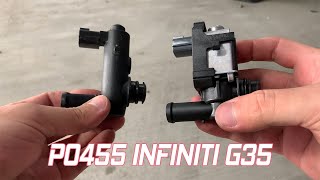
- If the vent valve is suspected, remove it and test it. Inspect for internal rust. Apply 12V from the car battery or a 9V battery to its electrical pins. You should hear a solid 'click' as it actuates. If it doesn't click, or if you can blow air through it when it's supposed to be closed, it needs to be replaced. 🎬 Watch: How to test and fix the canister vent valve.
- As a preventative measure, avoid 'topping off' your fuel tank after the pump automatically stops. Overfilling can saturate the charcoal canister with liquid fuel, leading to EVAP system codes.
- Once the leak is found, replace the faulty component.
Parts You'll Likely Need
- Gas Cap
(OEM #17251-1LA0A)— This is the most common and easiest fix. The seal wears out over time, causing a leak.
Trusted brands: Infiniti, Gates, Stant, Motorad
OEM price range: $30-$40
Aftermarket price range: $15-$25 - EVAP Canister Vent Control Valve
(OEM #14935-JF00D (or 14935-JF02C, supersedes 14935-JF00B, 14935-JF00A))— This is a very common failure point on this platform due to its location under the car, leading to contamination and the internal valve sticking open. The part has been updated several times by the manufacturer.
Trusted brands: Nissan/Infiniti (OEM), Dorman (e.g., 911-503), Hitachi, Standard Motor Products
OEM price range: $90-$120
Aftermarket price range: $50-$80
Related Codes That Often Appear With This One
- P0456 — A P0456 (Very Small Leak) may appear if the leak is intermittent or on the borderline between leak sizes. Owners often report having both codes appear at different times from the same root cause.
- P0442 — A P0442 (Small Leak) can be seen for similar reasons as P0456, as the computer tries to classify the size of the leak it's detecting. The official Infiniti TSB groups these three codes together for diagnosis.
Technical Service Bulletins (TSBs) & Recalls
- ITB13-044J: EVAP LEAK DTC P0442, P0455, P0456 INFORMATION
- ITB13-044g: ALL MODEL YEAR 2012 AND NEWER INFINITI VEHICLES; EVAP LEAK DTC P0442, P0455, P0456 INFORMATION
Platform-Specific Known Issues
- Infiniti has released multiple Technical Service Bulletins (TSBs), including ITB13-044J and ITB13-044g, that provide diagnostic guidance for EVAP codes P0442, P0455, and P0456 on all 2012 and newer models. These bulletins emphasize checking the gas cap first and then following a specific diagnostic flow chart, noting that a simple test drive is insufficient for diagnosis.
Mechanic-Grade Diagnostic Values
- EVAP Canister Purge Volume Control Solenoid Valve Coil Resistance — expected: Approximately 30-36 Ohms at room temperature.. Failure: An open circuit (infinite resistance) or a reading far outside the expected range indicates a failed coil.
- Fuel Tank Pressure (FTP) Sensor Voltage — expected: Approximately 1.3V to 1.7V with the key on, engine off (atmospheric pressure). An ideal value is often cited as 1.5V.. Failure: A reading stuck high (near 5V) or low (near 0V) regardless of tank pressure indicates a faulty sensor or wiring issue.
- EVAP Canister Purge Volume Control Solenoid Valve Power Supply — expected: Battery voltage (~12V) should be present at the harness connector with the key on.. Failure: No voltage suggests a wiring issue, blown fuse, or a problem with the power distribution module (IPDM E/R).
Scan Tool Commands That Help
- Infiniti CONSULT-III / CONSULT-III plus: Work Support & Active Test — The dealer-level scan tool can be used to command the EVAP vent and purge valves to open or close manually. This allows a technician to verify valve functionality without removing them and is crucial for performing a smoke test correctly by sealing the system on command.
- Infiniti CONSULT-III / CONSULT-III plus: Idle Air Volume Learn (IAVL) — This procedure may be required after performing certain repairs or clearing DTCs to reset the engine's base idle settings. While not directly for the EVAP system, it's a common post-repair step when working on engine management components.
Wiring & Ground Locations
- Driver Side Fuse Box (J/B) — Located inside the cabin, behind a panel on the left side of the driver's footwell (kick panel).. Contains fuses for various electronic components. A fuse related to the ECU or emissions systems could be located here and should be checked if there is no power at a component like the purge valve.
- Engine Bay Fuse/Relay Box (IPDM E/R) — Located in the engine compartment, typically near the battery.. The Intelligent Power Distribution Module Engine Room (IPDM E/R) contains critical fuses and relays that supply power to engine and emissions components, including the EVAP purge and vent valves. A failure here can cut power to the system.
- EVAP System Ground Points — While a single 'EVAP ground' is not specified, grounds for related systems like the 'fuel level sensor unit & fuel pump' are shared with other components and are located on the chassis near the component.. A poor ground connection for the fuel tank pressure sensor or EVAP valves can cause erratic readings or failure to operate, leading to false codes. Check for clean, tight ground connections near the fuel tank and in the engine bay.
Real Owner Repair Stories
- InfinitiScene.com forum user (Infiniti FX (similar platform/components)) — Check Engine Light with code P0455.
❌ Tried (didn't work) Replacing the gas cap.
✅ What actually fixed it Replacing the EVAP canister vent control valve (part no. 14935-JF00B) located on the charcoal canister at the rear of the vehicle. The owner also noted difficulty refueling (premature pump shut-off) which resolved after the fix. - MyG37.com forum user 'criledo' (Infiniti G37 and Nissan Armada (both exhibiting P0455/P0456)) — Service Engine Soon light with codes P0455 and P0456.
❌ Tried (didn't work) Initially, the owner did nothing due to the complexity and number of potential causes.
✅ What actually fixed it The owner was advised that 'topping off' the fuel tank can flood the EVAP system. After stopping the habit of adding more fuel after the pump clicks off, the check engine light turned off on its own in both vehicles after two tanks of gas.
"I Checked Everything" — The Actual Cause
- In cases where a comprehensive smoke test reveals no leaks, the Fuel Tank Pressure (FTP) sensor itself should be suspected. The sensor can fail and send incorrect voltage signals to the ECU, making the computer believe there is a large leak when the system is perfectly sealed. A technician can verify this by monitoring the sensor's voltage via a scan tool; if the voltage is stuck high or low and doesn't change when the gas cap is removed, the sensor is likely the culprit.
When the Usual Fixes Don't Work
- While the EVAP vent control valve is the most common mechanical failure for P0455 on this platform, owners should not overlook simple user-induced issues. A forum report confirmed that the code can be triggered solely by the habit of 'topping off' the fuel tank. This floods the charcoal canister and lines with liquid fuel, which the system interprets as a fault. Before purchasing any parts, it is advised to ensure the gas cap is tight and to drive through two full tanks of fuel without topping off to see if the code clears on its own.
OEM Part Supersession History
14935-AM60B (Vent Control Valve)→14935-JF00A, 14935-JF00B, 14935-JF00C, 14935-JF00D, 14935-JF00E— Revisions to improve durability and prevent the internal plunger from sticking due to corrosion and debris.
Heads up: Later versions are generally backward compatible and recommended over older stock.14935-AM600 (Purge Valve)→14935-AM60A, 14935-AM60B, 14935-JF00A, 14935-JF00B, 14935-JF00E, 14935-JF01C, 14935-JF02C— Multiple revisions over the years to improve reliability and prevent sticking or electrical failure.
Helpful Videos
Used OEM Parts in Stock


New Aftermarket Parts Available


The information in this article is provided for general reference and educational purposes only. Vehicle specifications, procedures, and part compatibility can vary by production date, trim level, and region. Always consult your vehicle's factory service manual and verify part numbers before purchasing or performing repairs. Safety-critical components such as airbags, seat belts, and braking systems should be installed by a qualified professional.
- Infiniti M37:
- 🧭 Diagnostic Flowchart
- 🎬 Helpful Videos
- 🛍️ Shop This Part
- What's Unique About the 2012-2013 Infiniti M37
- Symptoms You May Notice
- Most Likely Causes
- Rare But Worth Checking
- Diagnosis Steps
- Parts You'll Likely Need
- Related Codes That Often Appear With This One
- Technical Service Bulletins (TSBs) & Recalls
- Platform-Specific Known Issues
- Mechanic-Grade Diagnostic Values
- Scan Tool Commands That Help
- Wiring & Ground Locations
- Real Owner Repair Stories
- "I Checked Everything" — The Actual Cause
- When the Usual Fixes Don't Work
- OEM Part Supersession History
- 🎟️ Get 5% Off