

P0455 on 2020-2021 Jeep Gladiator: EVAP Large Leak Causes and Fixes
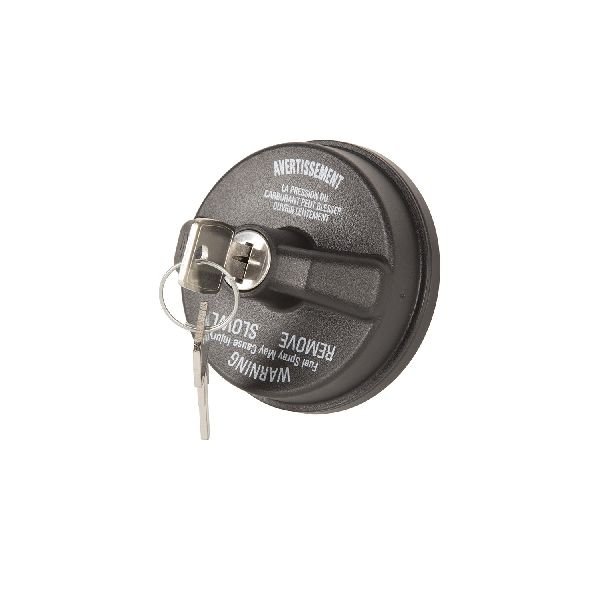
On a 2020-2021 Jeep Gladiator, code P0455 is almost always caused by a loose or faulty gas cap. Before buying any parts, tighten the cap until it clicks several times. If the light returns, a new OEM Mopar gas cap (Part No. 68339342AC) is the next step and costs around $25-$40. The vehicle's 'GasCap' dashboard message is a strong indicator of this common issue. DIY difficulty is 1/5.
- Always check the gas cap first for a P0455 code; it's the easiest and most likely fix.
- The "GasCap" message on your Gladiator's dash is a strong indicator the cap is the problem.
- If you replace the gas cap, use an OEM Mopar part for the best chance of a proper seal.
- The Check Engine Light may not turn off immediately after tightening the cap; it can take a few days of normal driving for the system to re-test.
- If the cap isn't the issue, a smoke test is the most reliable way to find the source of the leak.
What's Unique About the 2020-2021 Jeep GLADIATOR
The Jeep Gladiator (JT), which shares its platform with the Wrangler (JL), has a specific dashboard message that often accompanies this code. Drivers may see the word "GasCap" appear in the odometer display even before the main Check Engine Light illuminates. This is a helpful, built-in diagnostic feature that points directly to the most common cause. 🎬 Watch: How to handle the GasCap message on your dashboard. While the underlying EVAP components are common across many vehicles, this explicit warning is a key characteristic of this platform.
Diagnostic Flowchart
Tap your situation to follow the diagnostic path that matches what you're seeing on this vehicle.
Symptoms You May Notice
- Check Engine Light is on.
- A "GasCap" message appears on the instrument cluster display.
- A faint smell of fuel may be noticeable around the rear of the vehicle, particularly near the fuel cap.
- Replacing the purge valve or other components before checking the gas cap. Always start with the simplest and most common solution, especially given the 'GasCap' warning message on this vehicle.
Most Likely Causes
- Loose, Damaged, or Incorrect Gas Cap 🔴 High Probability → Shop Fuel Tank Cap This is the most frequent cause for any EVAP code. The Gladiator's specific "GasCap" dash message highlights how often this occurs. Seals can wear out, or the cap may not have been tightened enough after refueling. Aftermarket caps are a known source of issues; an OEM Mopar cap is strongly recommended.
How to confirm: Remove the gas cap and inspect the rubber O-ring for cracks or debris. Reinstall it and turn it until it clicks at least three times. Clear the code. If it returns, the cap itself is likely faulty.
Typical fix: Tighten or replace the gas cap. Using an OEM Mopar cap (Part No. 68339342AC) is highly recommended as some aftermarket caps do not seal correctly.
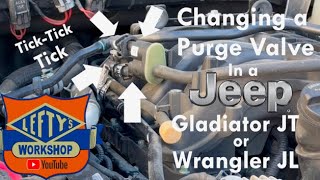
Est. part cost: $25-$40 - Faulty EVAP Purge Valve 🟡 Medium Probability → Shop Vapor Canister The purge valve (or solenoid) is an electromechanical part that cycles frequently and can wear out, sometimes sticking open and creating a large leak path. It is located in the engine bay on the 3.6L Pentastar engine. 🎬 See this walkthrough on how to change the purge valve.
How to confirm: The purge valve is located in the engine bay, typically with black plastic lines connected to it. With the engine off, you can disconnect the hose leading to the intake manifold and try to blow through it. It should be closed and allow no air to pass. A stuck-open valve will allow air to flow freely.
Typical fix: Replace the EVAP purge valve assembly. An example OEM part number for a similar 3.6L application is 68189075AE.
Est. part cost: $30-$70 - Cracked or Disconnected EVAP Hoses 🟡 Medium Probability The hard plastic EVAP lines, especially in the engine bay, can become brittle from heat cycles and crack. Off-roading can also potentially damage lines under the vehicle near the fuel tank and charcoal canister.
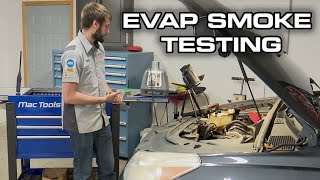
How to confirm: Visually inspect all accessible EVAP lines from the engine bay to the charcoal canister near the fuel tank. Pay close attention to connections and elbows. The definitive method is to use a smoke machine, which fills the system with vaporous smoke to reveal the exact location of any leaks. 🎬 Watch: How to perform a smoke test to find leaks.
Typical fix: Replace the damaged section of hose or the entire hose assembly.
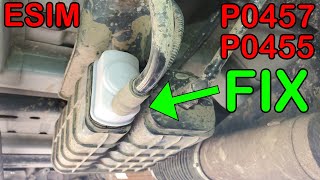
Est. part cost: $15-$100 - Faulty EVAP System Integrity Monitor (ESIM) ⚪ Low Probability → Shop Evaporative Emissions System Leak Detection Pump This component, also known as a leak detection pump, is located on the charcoal canister and is responsible for sealing the system for the leak test. It's a known failure point on many Jeep models, including the Wrangler platform-mate. It can fail electrically or mechanically, get stuck, or have its wiring damaged.
How to confirm: On the Gladiator/Wrangler JL, the ESIM is attached to the charcoal canister, which is located inside the passenger-side rear wheel well, behind the fender liner. Diagnosis typically involves a bi-directional scan tool to command the valve, followed by a smoke test. A failed ESIM is a common cause if a new gas cap doesn't solve the issue.
Typical fix: Replace the ESIM assembly. The part is often white and twists into the canister. An example Mopar part number for this component on related vehicles is 04861963AD (which supersedes 4861963AA).
Est. part cost: $50-$150
Rare But Worth Checking
- Cracked Charcoal Canister: → Shop Vapor Canister The canister is a plastic box filled with charcoal media. It can be cracked by road debris during on- or off-road driving, creating a large leak. On the Gladiator, it is located in the passenger-side rear wheel well, making it somewhat vulnerable.
- Damaged Fuel Filler Neck: → Shop Fuel Filler Neck The metal or plastic neck where the gas cap screws in can become corroded or damaged, preventing the cap from creating a proper seal even if the cap itself is new. One owner of a related vehicle reported a snapped breather tube on the filler neck causing the code.
Diagnosis Steps
- Check for the "GasCap" message on the dashboard. This is your primary clue.
- Inspect the gas cap. Ensure it is tight and clicks several times. Check the cap's seal for any cracks, stiffness, or debris. Clean the seal and the fuel filler neck surface.
- If the cap looks old or damaged, replace it with a new OEM Mopar part (No. 68339342AC). Avoid aftermarket caps as they are a common source of sealing problems.
- Clear the trouble code with an OBD-II scanner. The EVAP monitor only runs under specific conditions (e.g., fuel level between 15-85%, stable ambient temperatures), so it may take several days of normal driving for the light to turn off on its own or for the test to re-run.
- If the code returns, perform a detailed visual inspection of all EVAP hoses and connections under the hood and running back to the fuel tank. Look for anything that is cracked, disconnected, or appears damaged.
- Locate the EVAP purge solenoid in the engine bay. Test it to ensure it is not stuck open by attempting to blow through it with the engine off.
- If no obvious issues are found, the most effective diagnostic method is a smoke test. A mechanic will inject pressurized smoke into the EVAP service port and look for where it escapes, pinpointing the leak.
- Based on the smoke test results, replace the leaking hose, valve, or component. Pay special attention to the ESIM on the charcoal canister if no other leaks are found.
Parts You'll Likely Need
- Fuel Tank Cap
(OEM #68339342AC)— This is the most common failure point for code P0455. The seal wears out or the cap is not tightened properly. Using an OEM cap is critical.
Trusted brands: Mopar
OEM price range: $25-$40
Aftermarket price range: $15-$30 - EVAP Purge Valve / Solenoid
(OEM #68189075AE (example for 3.6L))— This valve is the second most likely component to fail. It can get stuck open, creating a permanent large leak in the system.
Trusted brands: Mopar, Standard Motor Products
OEM price range: $50-$80
Aftermarket price range: $30-$60 - Evaporative System Integrity Monitor (ESIM)
(OEM #04861963AD)— Also called a leak detection pump, this part on the charcoal canister frequently fails on Jeep platforms, causing persistent EVAP codes when the gas cap is not the issue.
Trusted brands: Mopar
OEM price range: $50-$100
Aftermarket price range: $30-$60
Related Codes That Often Appear With This One
- P0456 — P0456 indicates a 'small' EVAP leak. Sometimes a deteriorating component, like a failing ESIM or a cracked hose, can cause intermittent large and small leak codes as it fails.
- P0457 — This code specifically means 'EVAP System Leak Detected (Fuel Cap Loose/Off)'. It is a more specific version of P0455 and is often triggered by the exact same cause.
Technical Service Bulletins (TSBs) & Recalls
- 14-005-22 REV. B: Supersedes previous versions and calls for updating the fuel filler cap on some 2021 models to prevent EVAP leak codes, including P0455. It applies to specific vehicles built between June and October 2021.
- S2025000004: Mentions customer complaints of a MIL lamp on, with technicians finding DTC P0455 EVAP System Large Leak detected.
Platform-Specific Known Issues
- The presence of a dedicated "GasCap" warning message on the instrument cluster is a key feature for this platform, often appearing before the Check Engine Light.
- TSB 14-005-22 REV. B specifically involves updating the fuel filler cap to an improved version for certain 2021 Gladiators to prevent EVAP leak codes like P0455 and P0456.
- The charcoal canister and its attached ESIM are located within the passenger-side rear wheel well, requiring removal of the fender liner for access, which is different from older Jeep models where it was more exposed underneath.
Mechanic-Grade Diagnostic Values
- EVAP Purge Solenoid Coil Resistance — expected: 20-30 Ohms. Failure: Infinite resistance (open circuit) or zero resistance (short circuit).
- Fuel Tank Pressure (FTP) Sensor Voltage (Key ON, Engine OFF) — expected: ~1.4-1.8 Volts. Failure: Voltage significantly outside this range, or not changing when a vacuum is applied, may indicate a faulty sensor.
- ESIM Switch Voltage (Key ON, Engine OFF) — expected: On some Chrysler/Jeep systems, this may be a 5-volt reference signal.. Failure: A corroded wire or faulty switch can prevent the voltage from dropping to 0 when the system pulls a vacuum, preventing the test from completing.
Scan Tool Commands That Help
- wiTECH (or advanced aftermarket): EVAP System Leak Test / Small Leak Verification Test (SLVT) — This is a dealer-level function that forces the EVAP monitor to run on demand. It commands the purge and vent valves to seal the system, pulls a vacuum, and monitors pressure decay to confirm if a leak is present after a repair, without waiting for a multi-day drive cycle.
- wiTECH (or advanced aftermarket): Purge Valve Actuation — Allows the technician to manually command the purge valve open and closed to check its mechanical and electrical operation, confirming if it's stuck open (causing a leak) or stuck closed.
Wiring & Ground Locations
- Engine Bay Ground Bridge — Next to the battery on the passenger side fender, featuring multiple ground studs.. The EVAP Purge Solenoid and other engine bay sensors rely on this ground. Corrosion or a loose connection here can cause erratic solenoid behavior, mimicking a failed part.
- Frame Rail Grounds — On the frame rails, often located above the spare tire area.. The ESIM, charcoal canister, and vent valve are located at the rear of the Gladiator and may use these grounds. A compromised frame ground can cause intermittent failures of these components.
- Fuel Tank Pressure Sensor Harness — The wiring harness connecting to the fuel tank pressure sensor, which is part of the fuel pump module on top of the fuel tank.. Corrosion on this specific harness has been reported on a 2020 Gladiator, causing recurring EVAP codes even after replacing the sensor itself.
Real Owner Repair Stories
- JeepGladiatorForum.com (2020 Jeep Gladiator with 6,500 miles) — Check Engine Light on.
❌ Tried (didn't work) The fuel tank pressure sensor and tube (Mopar 68335037AC) was replaced, but the light came back on about two months later.
✅ What actually fixed it The dealership found that the pressure sensor wiring harness was corroded and required replacement. The owner noted the vehicle was always garaged, suggesting a potential part quality issue.
OEM Part Supersession History
4861963AA, 4861963AB, 4861963AC→04861963AD— Standard part revision and improvement over time for the Evaporative System Integrity Monitor (ESIM).
Heads up: The ESIM design uses weights and a switch, not a solenoid, to detect pressure differences. Ensure the replacement part is a compatible design. The 'AD' revision is the most current and widely used service part.Unknown (Original Fuel Cap on early 2021 models)→Updated Fuel Filler Cap (per TSB)— The original cap design was prone to causing EVAP leak codes (P0455, P0456).
Heads up: TSB 14-005-22 REV. B applies to 2021 Gladiators built between June 1, 2021, and October 6, 2021, and specifies replacing the original cap with an improved version to resolve the issue.
Model Year Variations Within This Range
- 2021 (built between 06/01/2021 and 10/06/2021): A specific batch of 2021 Gladiators are subject to TSB 14-005-22 REV. B, which calls for replacing the fuel filler cap with an improved version to prevent P0455/P0456 codes. This does not apply to 2020 models or 2021 models outside this build window.
Helpful Videos
Used OEM Parts in Stock
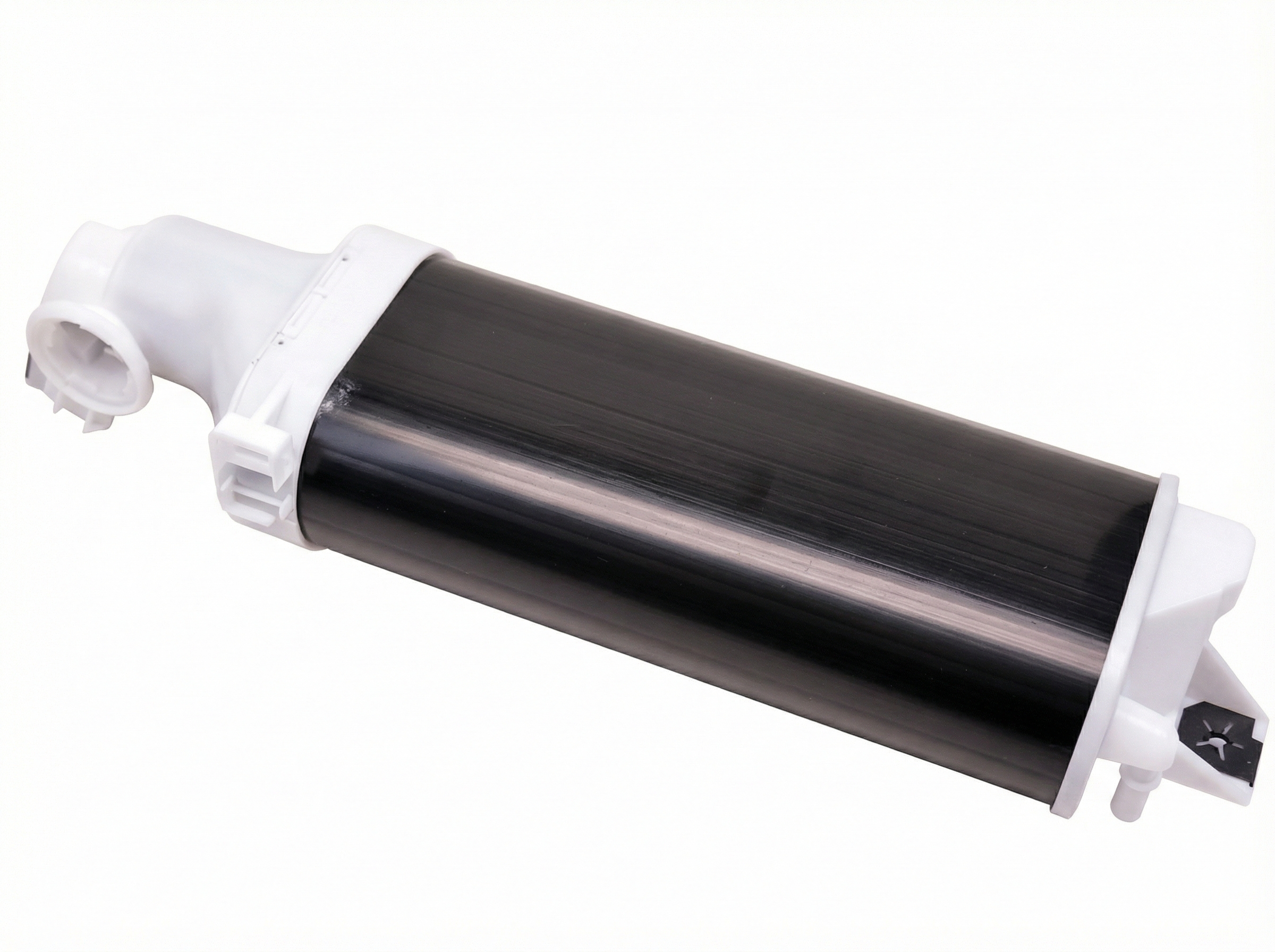
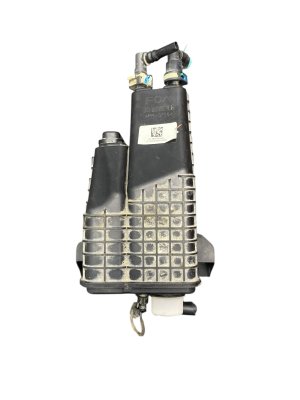
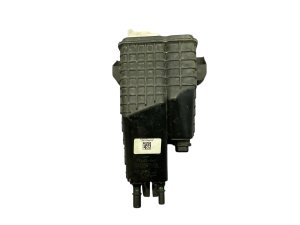
New Aftermarket Parts Available

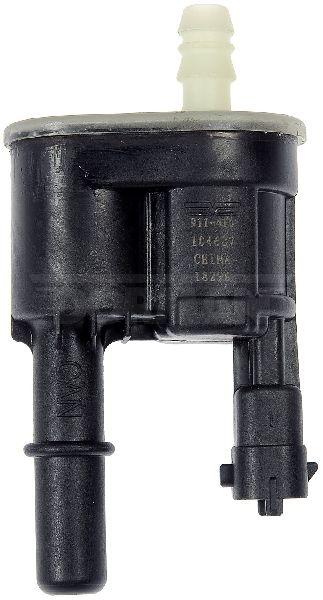

The information in this article is provided for general reference and educational purposes only. Vehicle specifications, procedures, and part compatibility can vary by production date, trim level, and region. Always consult your vehicle's factory service manual and verify part numbers before purchasing or performing repairs. Safety-critical components such as airbags, seat belts, and braking systems should be installed by a qualified professional.
- Jeep GLADIATOR:
- 🧭 Diagnostic Flowchart
- 🎬 Helpful Videos
- 🛍️ Shop This Part
- What's Unique About the 2020-2021 Jeep GLADIATOR
- Symptoms You May Notice
- Most Likely Causes
- Rare But Worth Checking
- Diagnosis Steps
- Parts You'll Likely Need
- Related Codes That Often Appear With This One
- Technical Service Bulletins (TSBs) & Recalls
- Platform-Specific Known Issues
- Mechanic-Grade Diagnostic Values
- Scan Tool Commands That Help
- Wiring & Ground Locations
- Real Owner Repair Stories
- OEM Part Supersession History
- Model Year Variations Within This Range
- 🎟️ Get 5% Off