

P0455 on 2015-2018 Jeep Renegade: EVAP Large Leak Causes and Fixes
For a 2015-2018 Jeep Renegade, a P0455 code is most often caused by a loose gas cap. If the cap is tight, the next most likely culprit is a faulty EVAP leak detection pump (ESIM) or its O-ring, located near the rear passenger wheel. This is a common failure point on this specific vehicle, often confirmed by a smoke test. A cracked fuel filler neck is another known, albeit less frequent, cause.
- Always start with the simplest fix: check that your gas cap is tight and its seal is intact.
- For the 2015-2018 Renegade, the EVAP leak detection pump (by the rear passenger wheel) is a very common failure point for code P0455.
- A smoke test is the most reliable way to diagnose the exact location of the leak, saving time and money on replacing incorrect parts.
- Avoid topping off your fuel tank, as this can saturate the charcoal canister and lead to EVAP system problems.
- If no physical leak can be found, the issue might be electronic and require a PCM software update from a dealer. [TSB #1804421]
What's Unique About the 2015-2018 Jeep RENEGADE

While a loose gas cap is a universal cause for P0455, the 2015-2018 Renegade has specific weak points. The EVAP leak detection pump (also called an ESIM module), located on the charcoal canister by the rear passenger wheel, is a frequent source of this leak. This is often due to a failed or flattened O-ring that seals the pump to the canister. Additionally, some owners have reported issues with cracked or corroded fuel filler necks that prevent the gas cap from sealing properly. Finally, several Technical Service Bulletins (TSBs) group P0455 with other codes, suggesting that in some cases, a powertrain control module (PCM) software update may be part of the solution if no physical leak is found. [TSB #1804421, TSB #18-061-16 REV. C]
Diagnostic Flowchart

Tap your situation to follow the diagnostic path that matches what you're seeing on this vehicle.
Symptoms You May Notice

- Check Engine Light is on.
- A noticeable smell of raw fuel, especially around the rear of the vehicle or near the gas cap.
- Difficulty filling the fuel tank (the gas pump nozzle clicks off repeatedly).
- A hissing sound from the fuel tank area when opening the gas cap.
- In some cases, rough idle or difficulty starting if the purge valve is stuck open.
- The word "Gascap" may appear on the odometer display in some cases, even if the cap is not the issue.
- Replacing the purge valve when the actual leak is at the leak detection pump O-ring.
- Replacing the charcoal canister when it's only a cracked hose connected to it or a faulty ESIM mounted on it.
- Replacing the gas cap when the fuel filler neck itself is rusted and unable to form a seal.
Most Likely Causes

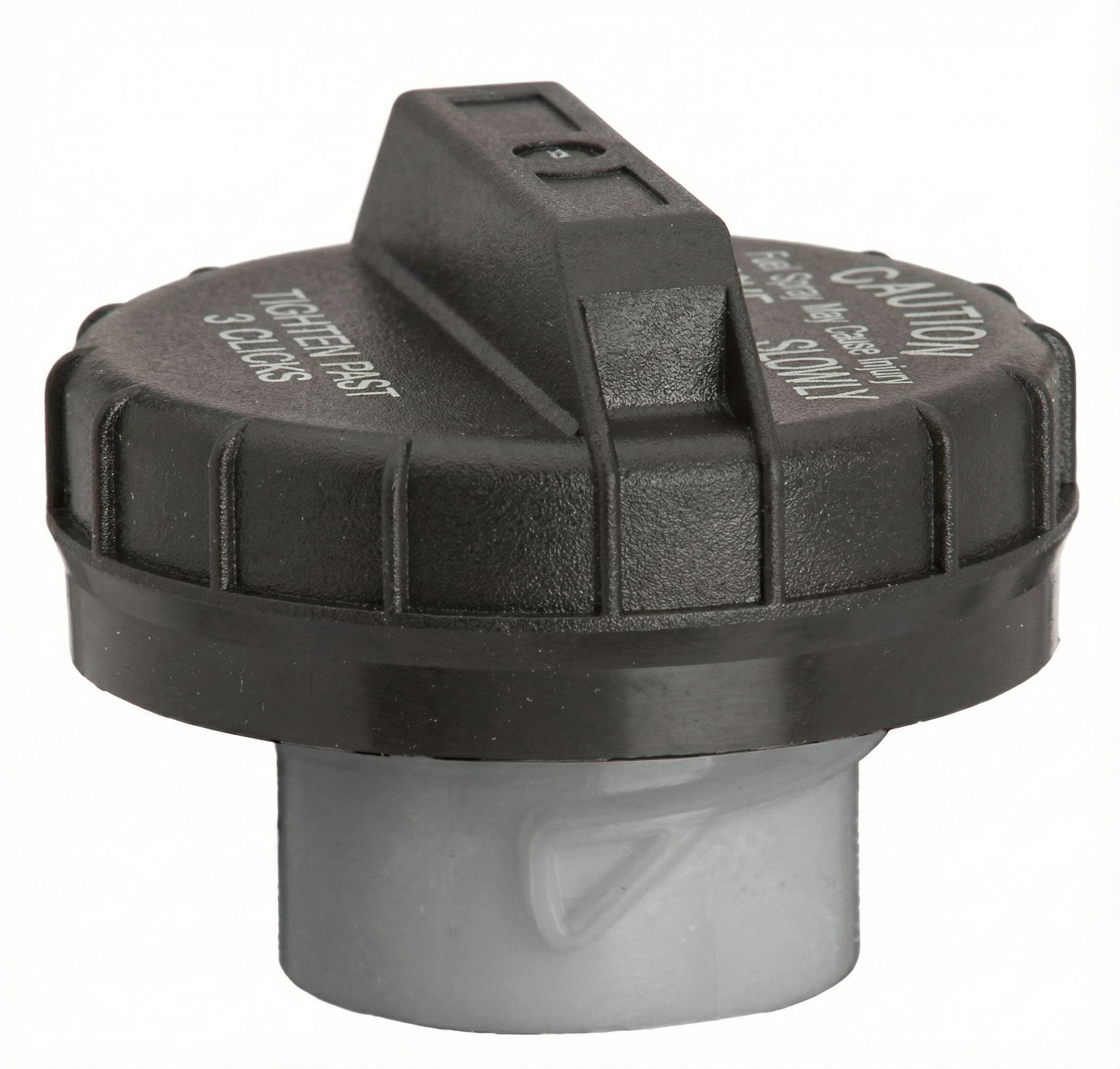
- Loose or Faulty Gas Cap 🔴 High Probability → Shop Fuel Tank Cap This is the most common cause for P0455 on any vehicle due to user error (not tightening enough) or simple wear of the cap's seal over time.
How to confirm: Ensure the gas cap is tightened until it clicks at least once. Inspect the rubber seal on the cap for cracks, stiffness, or damage.
Typical fix: Tighten or replace the gas cap.
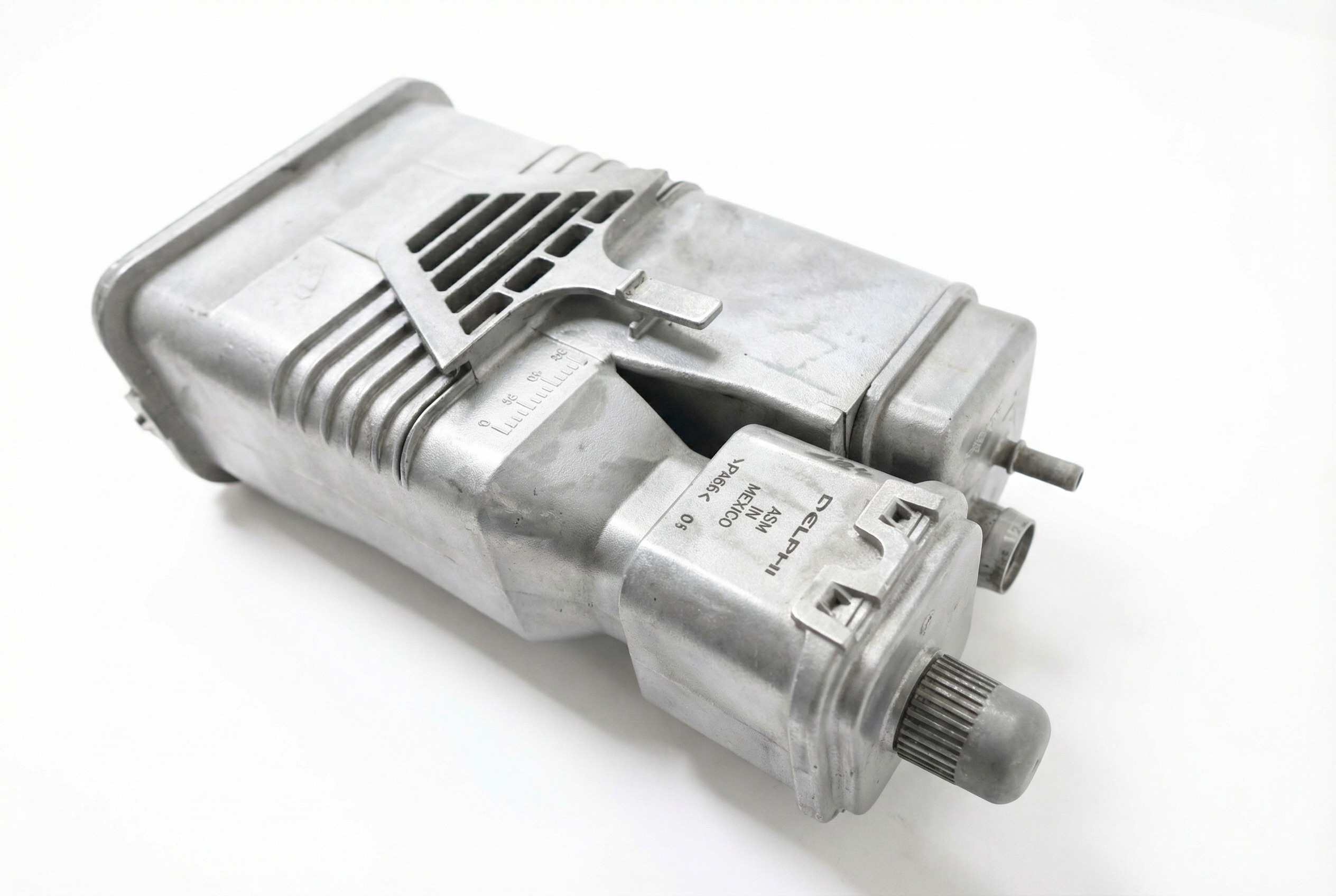
Est. part cost: $15-$45 - Faulty EVAP Leak Detection Pump (ESIM) or O-Ring 🔴 High Probability → Shop Vapor Canister This specific component, located on the charcoal canister, is a well-documented failure point on the Renegade and its platform mate, the Fiat 500X. The O-ring that seals the pump to the canister often degrades, flattens, and leaks, which is the most common point of failure.
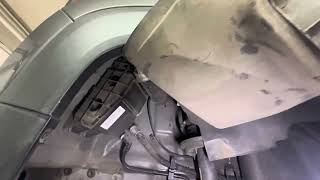
How to confirm: A smoke test is the most effective method, as smoke will be seen escaping from the pump or its seal. Visually inspect the pump and its O-ring for degradation. The pump is located behind the rear passenger-side wheel well liner. 🎬 Watch: How to replace the leak detection valve and O-ring.
Typical fix: Replace the leak detection pump and its O-ring. This is a relatively simple replacement (15-20 minutes) once the wheel liner is partially removed. Often, just replacing the O-ring and cleaning the surface is sufficient.
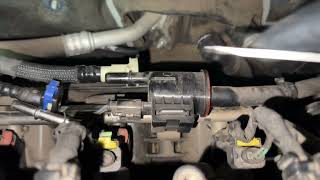
Est. part cost: $40-$90 - Faulty EVAP Purge Valve 🟡 Medium Probability → Shop Vapor Canister The purge valve can become stuck open, creating a permanent vacuum leak that the system detects as a large leak.
How to confirm: Remove the valve from the engine bay. With the vehicle off, try to blow through it. If air passes through, the valve is stuck open and has failed. This failure often, but not always, triggers other codes like P0441.
Typical fix: Replace the purge valve solenoid. 🎬 See this step-by-step guide for replacing the purge valve.
Est. part cost: $35-$75 - Cracked or Damaged Fuel Filler Neck 🟡 Medium Probability → Shop Fuel Filler Neck Corrosion or physical damage can cause cracks or pinholes in the metal tube leading to the gas tank, preventing the gas cap from creating a proper seal. This is a known issue on several Jeep models.
How to confirm: Visually inspect the entire length of the filler neck for rust, cracks, or holes, particularly around the sealing surface for the gas cap. A smoke test will clearly show leaks from this area.
Typical fix: Replace the fuel filler neck assembly.
Est. part cost: $100-$210 - Cracked or Disconnected EVAP Hoses ⚪ Low Probability Rubber and plastic hoses can become brittle and crack over time due to heat and age, especially at connection points or T-fittings.
How to confirm: Visually inspect all EVAP lines running from the gas tank, to the charcoal canister, and to the purge valve in the engine bay. A smoke test is the most reliable way to find a small crack.
Typical fix: Replace the damaged section of hose.
Est. part cost: $10-$30 - Damaged EVAP (Charcoal) Canister ⚪ Low Probability → Shop Vapor Canister The canister can be damaged by road debris or become internally saturated and ineffective if the fuel tank is consistently overfilled ('topped off'). A Reddit user reported needing to replace the canister as part of a larger repair effort.
How to confirm: Inspect the canister (located near the fuel tank) for physical cracks or damage. If you have issues filling the tank and a strong fuel smell, the canister may be saturated.
Typical fix: Replace the charcoal canister.
Est. part cost: $150-$250
Rare But Worth Checking
- Powertrain Control Module (PCM) Software: Official Jeep TSB #18-061-16 REV. C indicates that a group of EVAP codes for the 2016 Renegade 2.4L, including P0455, can sometimes be resolved with a PCM software update. This should be considered by a dealer if no physical leak can be found after thorough testing. [TSB #1804421, TSB #18-061-16 REV. C]
Diagnosis Steps
- Check the gas cap. Remove it, inspect the seal for damage, and reinstall it, aensuring it clicks several times. Clear the code and drive for a few days to see if it returns.
- If the code returns, perform a thorough visual inspection of all accessible EVAP hoses and components in the engine bay and under the vehicle near the fuel tank. Look for obvious cracks, damage, or loose connections.
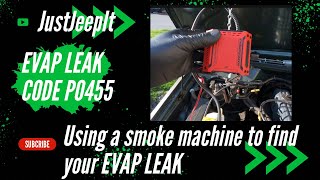
- The most effective next step is a smoke test. A mechanic (or DIYer with the right tool) will introduce pressurized smoke into the EVAP system and look for where it escapes. 🎬 Watch: How to find an EVAP leak with a smoke tester.
- During the smoke test, pay close attention to the EVAP leak detection pump (ESIM) and its O-ring seal on the charcoal canister. To access it, remove the rear passenger-side wheel, then remove the few screws and plastic nuts holding the rear half of the wheel well liner. This is the most common Renegade failure point.
- Also, check the fuel filler neck for escaping smoke, especially around the top where the cap seals.
- If no leak is found with a smoke test, test the purge valve for proper operation. Remove it and try to blow through it; if air passes, it's stuck open and needs replacement.
- If all physical components test good and no leaks are found, consult a dealership or qualified shop about checking for and applying any available PCM software updates related to TSB #18-061-16 REV. C or similar bulletins.
Parts You'll Likely Need
- Gas Cap
(OEM #52030387AB)— This is the most frequent and easiest first step for a P0455 code.
Trusted brands: Mopar, Duralast, Stant
OEM price range: $30-$45
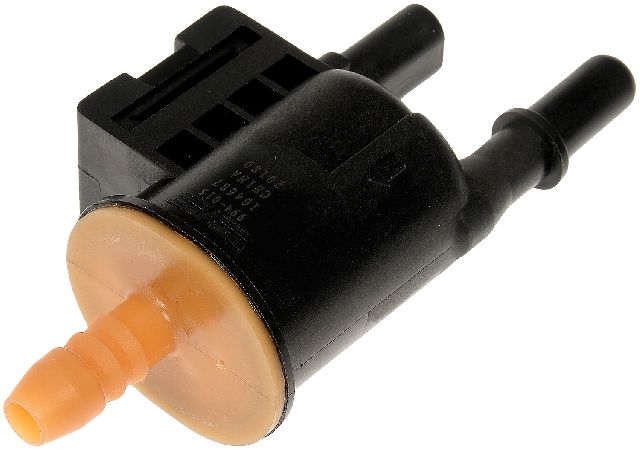
Aftermarket price range: $15-$25 - EVAP Leak Detection Pump (ESIM)
(OEM #4861962AD)— This is a documented common failure point specific to the Jeep Renegade, often due to a bad O-ring seal. The part number is widely used across many Chrysler/Dodge/Jeep vehicles.
Trusted brands: Mopar, Dorman (911-402), Standard Motor Products
OEM price range: $60-$90
Aftermarket price range: $35-$70 - Vapor Canister Purge Valve
(OEM #04627182AA)— A stuck-open purge valve is a common cause of a large EVAP leak across many vehicles.
Trusted brands: Mopar, Dorman, Bosch
OEM price range: $50-$75
Aftermarket price range: $30-$50 - Fuel Filler Neck
(OEM #68604043AB)— Prone to corrosion, which prevents the gas cap from sealing correctly. This is a known issue on several Jeep models.
Trusted brands: Mopar, Spectra Premium
OEM price range: $150-$210
Aftermarket price range: $100-$160
Related Codes That Often Appear With This One
- P0456 — P0456 is 'EVAP System Small Leak Detected'. It is extremely common to see P0455 and P0456 together on the Renegade. A single fault, like a failing ESIM O-ring, can be interpreted differently by the ECU on different drive cycles.
- P0440 — P0440 is a 'General EVAP System Failure'. It's a less specific code that often appears alongside more precise leak codes like P0455, and is included in the same TSBs recommending a potential software update. [TSB #18-061-16 REV. C]
- P0441 — P0441 indicates 'Incorrect Purge Flow'. This can be triggered if the purge valve is stuck open or closed, which can also be the root cause of the P0455 leak code. [TSB #1804421]
Technical Service Bulletins (TSBs) & Recalls
- 1804421
- 18-061-16 REV. C
Platform-Specific Known Issues
- ESIM O-Ring Failure: The most commonly reported unique failure for the Renegade is not the EVAP Leak Detection Pump (ESIM) itself, but the small O-ring that seals it to the charcoal canister. This O-ring becomes flattened, brittle, or cracked over time, creating a leak that triggers P0455 and/or P0456. Many owners fix the issue by just replacing the O-ring, though replacing the entire ESIM module (which includes a new O-ring) is the standard repair.
- Fuel Filler Neck Corrosion: → Shop Fuel Filler Neck The metal fuel filler neck is prone to rust and corrosion, especially in the area where the gas cap seals. This prevents a proper seal, causing a large leak code. Owners in forums for similar Jeep models have reported sanding the rust off and applying a sealant as a temporary fix, but replacement is often necessary for a permanent solution.
Scan Tool Commands That Help
- wiTECH (Dealer Tool): EVAP Leak Test — This is the dealer-level, software-driven command to force the vehicle's EVAP system into a self-test cycle. It can be used to confirm if a repair has been successful without waiting for multiple natural drive cycles. It can also help differentiate between large and small leaks by monitoring system pressure bleed-down rates.
Wiring & Ground Locations
- Purge Valve Connector — On the purge valve itself, located in the engine bay, often near the throttle body on the 2.4L engine.. A damaged connector or wiring at this point can prevent the purge valve from closing, creating a constant leak path that mimics a large physical leak and sets P0455. A wiring diagram for the 2017 Renegade 2.4L shows this as part of the engine performance circuit.
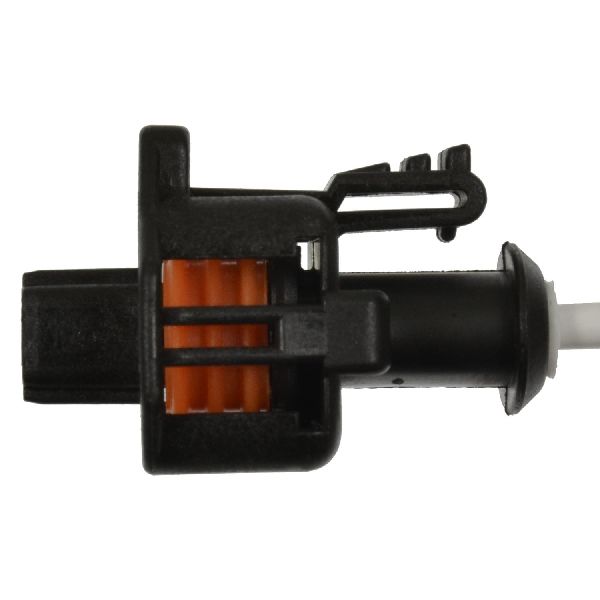
- ESIM Connector — On the EVAP Leak Detection Pump (ESIM), located on the charcoal canister behind the rear passenger-side wheel well liner.. Corrosion or damage to this connector or its wiring can cause the ESIM to report incorrect pressure readings or fail to operate, leading the PCM to misinterpret the system's status and set a P0455 code.
- Main Engine/Chassis Ground — There are multiple grounds. A key one is the negative battery cable to the chassis. Another critical ground runs from the back of the cylinder head to the firewall.. A poor ground connection can cause erratic behavior in any sensor or solenoid, including the fuel tank pressure sensor, purge valve, and ESIM. While not a direct cause of a physical leak, a bad ground can lead to false P0455 codes by providing incorrect data to the PCM.
Real Owner Repair Stories
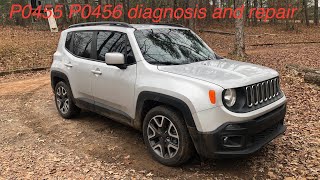
- YouTube user 'Shadetree Street Cars' (2018 Jeep Renegade Latitude) — Check Engine Light with codes P0455 (large leak) and P0456 (small leak).
❌ Tried (didn't work) Initially suspected and inspected the O-ring on the ESIM, which appeared flattened., Replaced just the O-ring, but the light came back on after two days.
✅ What actually fixed it Replacing the entire EVAP Leak Detection Pump (ESIM) assembly. The owner confirmed the vehicle passed an emissions test after this repair, solving both codes. - Reddit user 'Professional-Tart-38' on r/JeepPatriot (2011 Jeep Patriot 2.0L (Platform shares many EVAP components)) — Check Engine Light with codes P0455, P0456, and P0457.
❌ Tried (didn't work) Replacing the gas cap (worked for one week, then light returned)., Replacing the purge valve.
✅ What actually fixed it Replacing the EVAP emission detector (ESIM). The user reported the Dorman part #310-215 fixed the issue. - Reddit user on r/JeepRenegade (Jeep Renegade (year not specified)) — Persistent EVAP check engine light.
❌ Tried (didn't work) Replaced the ESIM., Replaced the purge valve.
✅ What actually fixed it Found cracked hoses connected to the purge valve, likely due to engine heat. Taping the cracked sections of the hoses with electrical tape as a temporary fix resolved the EVAP code and allowed the system to complete a successful test cycle.
"I Checked Everything" — The Actual Cause
- In cases where a smoke test reveals no visible leaks, the issue can be intermittent or related to a component that fails only under specific conditions (e.g., temperature, vacuum). One such cause is a faulty purge valve that is not fully stuck open but fails to seal properly under vacuum, which a low-pressure smoke test might not reveal. Another possibility, as noted in TSB #18-061-16 REV. C, is that the issue is not a physical leak at all, but a software logic fault within the PCM, requiring a dealer update. [TSB #18-061-16 REV. C]
OEM Part Supersession History
4861962AA, 4861962AB, 4861962AC→4861962AD— Part revision and consolidation by the manufacturer.
Heads up: The part is widely used across many 2007-2024 Chrysler, Dodge, Jeep, and Ram vehicles. The latest revision, 4861962AD, is the correct service replacement for the earlier versions.
Model Year Variations Within This Range
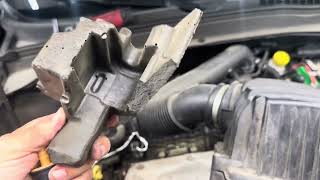
- 2015-2018: The primary difference affecting this code is the engine choice: the 2.4L Tigershark MultiAir or the 1.4L Turbo MultiAir. While the overall EVAP system function is the same, the physical location and part numbers for components like the purge valve are different. The purge valve on the 2.4L is located near the throttle body under a foam cover, whereas its location on the 1.4L is different due to the turbocharger plumbing.
Helpful Videos
Used OEM Parts in Stock
New Aftermarket Parts Available


The information in this article is provided for general reference and educational purposes only. Vehicle specifications, procedures, and part compatibility can vary by production date, trim level, and region. Always consult your vehicle's factory service manual and verify part numbers before purchasing or performing repairs. Safety-critical components such as airbags, seat belts, and braking systems should be installed by a qualified professional.
- Jeep RENEGADE:
- 🧭 Diagnostic Flowchart
- 🎬 Helpful Videos
- 🛍️ Shop This Part
- What's Unique About the 2015-2018 Jeep RENEGADE
- Symptoms You May Notice
- Most Likely Causes
- Rare But Worth Checking
- Diagnosis Steps
- Parts You'll Likely Need
- Related Codes That Often Appear With This One
- Technical Service Bulletins (TSBs) & Recalls
- Platform-Specific Known Issues
- Scan Tool Commands That Help
- Wiring & Ground Locations
- Real Owner Repair Stories
- "I Checked Everything" — The Actual Cause
- OEM Part Supersession History
- Model Year Variations Within This Range
- 🎟️ Get 5% Off