

P0455 on 2021-2024 Kia K5: EVAP Gross Leak Causes and Fixes
For the 2021-2024 Kia K5, a P0455 code is most often caused by a loose or faulty gas cap. However, a critical safety recall (SC356) for the 1.6L Turbo engine involves a faulty check valve that can cause this code and lead to serious fuel tank damage. Always check for recall completion first, as this is a known fire risk.
- First, check your gas cap. A loose or worn-out cap is the most common cause of code P0455.
- If you have a 1.6L Turbo engine, immediately check if your vehicle is affected by Kia Safety Recall SC356. A dealer must perform this free repair to prevent a serious fire risk.
- If the gas cap is good and the recall doesn't apply or is complete, the next most likely culprit is a stuck-open purge valve.
- A professional smoke test is the fastest way to find the source of a leak if it's not one of the common, easily replaceable parts.
What's Unique About the 2021-2024 Kia K5
For the 2021-2024 Kia K5 equipped with the 1.6L Turbo engine, the P0455 code must be taken very seriously due to a specific factory issue. Kia issued a safety recall (NHTSA ID: 25V794, Kia ID: SC356) for a purge control system check valve whose material can deteriorate over time. This defect can allow pressurized air from the intake manifold to flow backward into the fuel tank, causing it to expand and potentially contact hot exhaust components. This can create a fire risk from a melted, leaking tank. Therefore, this code is not just a simple emissions issue on these specific K5 models; it's a primary warning sign for a potentially hazardous defect.
🎬 Watch: News report on the Kia K5 fuel tank fire recallSymptoms You May Notice
- Check Engine Light is on
- A noticeable smell of fuel, especially around the gas cap or rear of the car.
- A 'whoosh' sound when opening the gas cap may be absent
- In relation to the recall, a popping sound from the fuel tank area may be heard as it expands and contracts.
- In some cases related to the recall, the engine may run rough.
- Replacing the O2 sensor. The EVAP system is separate from the exhaust and oxygen sensors.
- Immediately replacing the charcoal canister. While it can fail, it's less common than a bad gas cap or purge valve and is more expensive. Always diagnose simpler components first.
Most Likely Causes
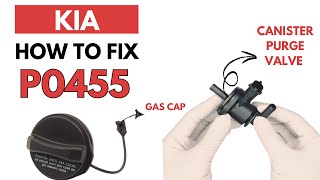
- Loose or Faulty Gas Cap 🔴 High Probability → Shop Fuel Tank Cap This is the most common cause for P0455 on all vehicles, as the cap seal can degrade or be left loose after refueling.
How to confirm: Check if the gas cap is tight. Inspect the rubber O-ring on the cap for cracks, stiffness, or damage. A missing cap is an obvious cause.
Typical fix: Tighten the cap until it clicks. If the seal is damaged, replace the gas cap with a genuine OEM part to ensure a proper seal.
Est. part cost: $20-$40 - Faulty Purge Control System Check Valve (1.6L Turbo Only) 🔴 High Probability Subject to Kia Safety Recall SC356. The original valve material can deteriorate, causing it to fail and allow pressurized air into the fuel tank.
How to confirm: A Kia dealer can check your VIN to see if the recall applies and has been completed. A formal diagnosis was preceded by owner complaints of fuel smell and visible leaks from a melted tank.
Typical fix: The recall procedure involves replacing the check valve with an improved design, inspecting the fuel tank for damage (and replacing it if necessary), and updating the ECU software. This is performed by a Kia dealer free of charge.
Est. part cost: $0 (under recall) - Faulty Canister Purge Valve (Solenoid) 🟡 Medium Probability → Shop Vapor Canister
How to confirm: The purge valve is normally closed. With the engine off, remove the valve and try to blow through it. If air passes through, it is stuck open and needs to be replaced. A scan tool can also be used to command the valve to open and close while checking for flow.
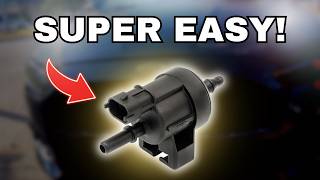
Typical fix: Replacement of the purge valve. 🎬 See this pro walkthrough on how to replace a purge valve It is typically located in the engine bay, connected to the intake manifold.
Est. part cost: $40-$80 - Cracked or Disconnected EVAP Hose ⚪ Low Probability
How to confirm: Visually inspect all EVAP hoses between the engine, charcoal canister, and fuel tank for cracks, loose connections, or damage. A smoke test is the most effective way to find a leak; a mechanic introduces smoke into the EVAP system and looks for where it escapes. 🎬 Watch: How to find an EVAP leak using a smoke tester
Typical fix: Replace the damaged hose section or reconnect a loose hose.
Est. part cost: $10-$50
Rare But Worth Checking
- Cracked Charcoal Canister: → Shop Vapor Canister The canister body can develop cracks over time, especially if the vehicle is driven on rough roads. Physical impact can also cause damage.
- Faulty EVAP Vent Valve/Solenoid: → Shop Vapor Canister This valve, located near the charcoal canister, is normally open but closes during system self-tests. If it fails to close, the system cannot be sealed, and a P0455 code will be set. Manufacturer Bulletin #TSBFUE040 notes that some Kia vehicles may exhibit P0455 and P0456 due to the Canister Close Valve (CCV) being stuck open.
- Damaged Fuel Filler Neck: → Shop Fuel Filler Neck Rust or damage to the metal tube where the gas cap screws on can prevent a proper seal, causing a large leak.
Diagnosis Steps
- Check the Gas Cap: Ensure it is tight and clicks. Remove it and inspect the seal for any cracks or damage. If in doubt, it's an inexpensive first part to replace.
- Check for Recalls (1.6L Turbo): Immediately check if your vehicle is part of Kia Safety Recall SC356 or the related service campaign SC288. A Kia dealer can do this with your VIN. If the recall is open, have the dealer perform the required service free of charge.
- Visual Inspection: Look over the accessible EVAP hoses in the engine bay and near the rear of the vehicle for any obvious cracks, disconnections, or damage.
- Test the Purge Valve: Locate the purge valve in the engine bay. With the engine off, disconnect it and try to blow through it. If air passes, it's faulty and needs replacement.
- Perform a Smoke Test: If the above steps do not reveal the issue, the most reliable method to find the leak is a smoke test. Manufacturer Bulletin #PS469 suggests a manual EVAP test if the MIL is on for P0455 but automated self-tests result in "No Trouble Found" (NTF).
- Inspect Vent Valve and Charcoal Canister: If the smoke test points to the rear of the vehicle, inspect the vent valve (for being stuck open) and the charcoal canister (for cracks).
Parts You'll Likely Need
- Fuel Cap
(OEM #31010-L1000)— This is the most frequent cause of a P0455 code and the easiest and cheapest part to replace.
Trusted brands: Genuine Kia
OEM price range: $25-$40
Aftermarket price range: $15-$30 - Vapor Canister Purge Valve
(OEM #28910-2J301)— This valve can get stuck open, creating a permanent large leak in the EVAP system.
Trusted brands: Genuine Kia/Hyundai
OEM price range: $50-$90
Aftermarket price range: $30-$60 - Purge Control System Check Valve — This is the specific part identified in the safety recall for 1.6L Turbo models. It is replaced by the dealer under the recall campaign SC356.
Trusted brands: Genuine Kia (improved design)
OEM price range: $0
Aftermarket price range: $0
Related Codes That Often Appear With This One
- P0456 — P0456 indicates a 'very small leak'. You might see this code if a larger leak (P0455) is intermittent or if a component is in the early stages of failure.
- P0442 — P0442 indicates a 'small leak'. Similar to P0456, it represents a different leak size threshold and can appear for similar root causes.
- P0451 — P0451 indicates an issue with the EVAP Pressure Sensor's performance. TSB SC288, a precursor to the main recall, specifically uses the presence of DTC P0451 as a key diagnostic step to check for the fuel tank swelling issue.
- P0420 — While related to the catalytic converter, NHTSA ODI #11594618 and #11519719 show that P0420 can sometimes appear alongside P0455 during diagnostic scans.
Technical Service Bulletins (TSBs) & Recalls
- Kia Safety Recall SC356 / NHTSA 25V794 - Purge Control System Check Valve Replacement
- Kia Voluntary Emissions Service Campaign SC288 - Fuel Tank and/or PCSV Check Valve Inspection/Replacement + ECU SW Upgrade
- Manufacturer Bulletin #TSBFUE040 - Addresses P0455 and P0456 caused by a Canister Close Valve (CCV) stuck open.
- Manufacturer Bulletin #PS469 - Provides guidance for manual EVAP emissions testing for hard-to-find leaks when P0455 is present.
Platform-Specific Known Issues
- Safety Recall SC356 (NHTSA 25V794): Affects 2021-2024 Kia K5 models with the 1.6L Turbo engine. A faulty purge control system check valve can deteriorate, allowing pressurized air into the fuel tank. This can cause the tank to expand and melt if it contacts the exhaust, leading to a fuel leak and fire risk. The Check Engine Light (potentially with code P0455) is a primary warning sign.
- Voluntary Emissions Service Campaign SC288: A related campaign for the same 1.6L T-GDI models that also involves inspection/replacement of the PCSV check valve and fuel tank, plus an ECU software upgrade. This campaign notes symptoms can include CEL illumination, rough running, and/or an inability to refuel.
Scan Tool Commands That Help
- Kia GDS / KDS or compatible advanced scanner: Active Test: EVAP Purge Solenoid Valve — To functionally test the canister purge valve. A technician can command the valve to open and close while monitoring fuel tank pressure or short-term fuel trims to see if it is operating correctly or stuck.
- Kia GDS / KDS or compatible advanced scanner: Active Test: EVAP Canister Vent Valve — To test the normally-open vent valve. A technician will command the valve to close to seal the EVAP system for a pressure or vacuum test. If the system cannot seal when the vent valve is commanded closed, the valve may be faulty or stuck open.
- Kia GDS / KDS: Resetting Adaptive Values — After replacing a major engine management component like a purge valve, it can be beneficial to reset the ECU's learned adaptive values to ensure it relearns fuel control with the new, correctly functioning part.
Wiring & Ground Locations
- Canister Purge Valve Connector — In the engine bay, connected to the purge valve solenoid, which is typically mounted on or near the intake manifold.. This is a 2-wire electrical connector. A poor connection, corrosion, or damaged wiring at this point can prevent the purge valve from being commanded by the ECU, potentially causing it to remain open or closed at the wrong time, leading to EVAP codes. The circuit is protected by a fuse, often in the engine bay fuse box.
Real Owner Repair Stories
- Reddit user on r/KiaNiro (2019 Kia Niro HEV (platform shares some EVAP components)) — Intermittent P0455 Check Engine Light that would turn on for weeks, then off for a few days.
❌ Tried (didn't work) Replaced OEM fuel cap, Replaced purge control valve, Replaced vent valve, Replaced filler neck, Multiple smoke tests performed by the dealer
NHTSA ODI #11594618 similarly notes that possible causes for P0455 might include a failing battery, alternator, or damaged electrical wiring.
✅ What actually fixed it The owner identified a parasitic battery drain from aftermarket USB accessories. Disconnecting these accessories caused the P0455 code to disappear. - YouTube channel 'Epic Help' (2013 Kia Rio) — P0455 code, strong gas smell from the front of the vehicle.
❌ Tried (didn't work) Initially diagnosed as only the purge valve, but the gas cap was also found to be faulty.
NHTSA ODI #11519719 describes a situation where a dealer suggested a gas cap was not installed properly and cleared the P0455 code, only for the light to return later.
✅ What actually fixed it The problem was fully resolved by replacing both the vapor canister purge valve and the gas cap. - NHTSA ODI #10150202 — An owner reported that after the check engine light came on, the dealer identified P0442 (gas cap not sealing) and P0455 (canister not sealing). The dealer replaced both the gas cap and the canister to resolve the issue.
"I Checked Everything" — The Actual Cause
- In one documented case on a related Kia model, multiple smoke tests performed by a dealership found no leaks. The owner had already replaced the gas cap, purge valve, vent valve, and filler neck to no avail. The root cause was ultimately traced to a low 12V battery condition caused by a parasitic draw from aftermarket USB devices. Removing the devices resolved the P0455 code, indicating that low system voltage can trigger false EVAP error codes even when no physical leak exists.
OEM Part Supersession History
Not specified→28910-2J301— Standard part for 2021-2024 Kia K5 models.
Heads up: This part (28910-2J301) is listed for the K5 and also fits some 2021-2023 Hyundai Elantra and Kona models, indicating it's a common component across the Hyundai/Kia platform for this era.
Diagnostic Flowchart
Other Known Issues on This Vehicle
Issues unrelated to this code that are worth knowing about as an owner of this generation:
- 8-Speed Dual-Clutch Transmission (DCT) Failure 🔴 High — Affects 2.5L Turbo models (GT trim). Can occur at low mileage, leading to a complete loss of motive power. Multiple owner reports and a recall (SC250) have been issued. (Ref: Recall: SC250 / NHTSA 22V-760)
- Sticky/Stiff Steering 🟠 Medium — Owners report the steering wheel becomes stiff or 'sticky' at highway speeds, requiring constant correction to stay centered, increasing crash risk. This may be related to the Rack-Mounted Motor Driven Power Steering (R-MDPS) system. (Ref: Recall: SC213 / NHTSA 21V-447 (Software update for R-MDPS))
- Potential for Engine Oil Consumption 🟠 Medium — While not as widespread as on previous 'Theta II' engines, some owners of the 1.6T Gamma-II and 2.5T Theta-III engines report oil consumption between changes. Kia has a Knock Sensor Detection System (KSDS) software update (SC200) intended to detect bearing wear early. (Ref: TSB: SC200 (KSDS Update))
- Infotainment System Glitches 🟡 Low — Common complaints include the infotainment screen freezing, going blank, or losing wireless Apple CarPlay/Android Auto connection, often requiring a system reset.
Used vs. New Parts: Buying Guide for This Vehicle
When a used part is the smart pick: For this repair, using a used part is generally not recommended for electronic components like valves and sensors. The primary causes are a faulty gas cap, a recalled check valve (which must be new from the dealer), or a stuck purge valve. Given the relatively low cost of a new purge valve and the critical nature of the recall part, new OEM parts are the smart choice.
Donor-vehicle mileage cap: roughly under 40000 miles for the part to have meaningful remaining life.
What to inspect on the donor part:
- If considering a used hose, inspect thoroughly for any signs of dry rot, cracking, or brittleness.
- For a charcoal canister, ensure there are no visible cracks on the housing and that all ports are intact.
- Avoid any electronic parts (valves, sensors) from a vehicle with flood or fire damage.
OEM-only on this vehicle (don't cheap out):
- Fuel Cap: While aftermarket caps are available, many owners and technicians report that only genuine OEM caps provide a reliable, long-lasting seal to prevent recurring EVAP codes.
- Purge Control System Check Valve: This is a recall item for the 1.6T engine and must be the new, improved part installed by a Kia dealer.
- Canister Purge Valve: While some aftermarket options exist, OEM is recommended for guaranteed fitment and electronic compatibility to avoid further issues.
Brands owners have reported issues with on this vehicle:
- Generic/unbranded gas caps from online marketplaces are frequently cited as failing to seal properly and causing EVAP codes to return.
Real Owner Stories
Aggregated from forums and TSBs cited above. Mileages and costs reflect what owners reported in those sources.
2021-2024 Kia K5 1.6L Turbo
Symptoms: Received a recall notice regarding a faulty purge control system check valve; the remedy involves a full R&R of the check valve and a fuel tank inspection.
What fixed it: A full R&R (remove and replace) of the check valve and a fuel tank inspection performed by the dealer.
Source hint: reddit.com/r/KiaK5 - Thread titled 'Well I finally got the notice'
2021-2024 Kia K5 1.6L T-GDI
Symptoms: Check Engine Light (CEL) illumination, engine running rough, and an inability to refuel the vehicle.
What fixed it: Inspection/replacement of the PCSV check valve and fuel tank, plus an ECU software upgrade.
Source hint: Kia Voluntary Emissions Service Campaign SC288 - Fuel Tank and/or PCSV Check Valve Inspection/Replacement + ECU SW Upgrade
Related OBD-II Codes
Frequently Asked Questions
Does Kia Safety Recall SC356 apply to my 2021-2024 Kia K5?
I hear a popping sound from the rear of my K5 and have a P0455 code; is this dangerous?
What is the difference between Recall SC356 and Service Campaign SC288?
Will Kia cover the cost of replacing the fuel tank if it was damaged by the EVAP system failure?
Can a loose gas cap really trigger a 'Large Leak' P0455 code on a newer K5?
My K5 is running rough and won't let me pump gas easily; is this related to P0455?
Helpful Videos


![How to Fix KIA P0455 Engine Code in 3 Minutes [2 DIY Methods / Only $4.61]](https://img.youtube.com/vi/v3j7s1R1NhY/mqdefault.jpg)
Used OEM Parts in Stock
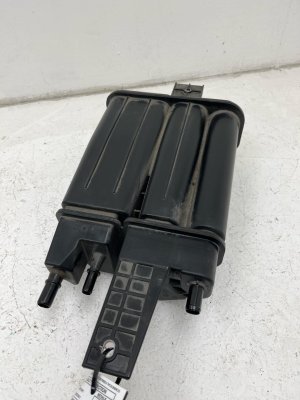
New Aftermarket Parts Available


The information in this article is provided for general reference and educational purposes only. Vehicle specifications, procedures, and part compatibility can vary by production date, trim level, and region. Always consult your vehicle's factory service manual and verify part numbers before purchasing or performing repairs. Safety-critical components such as airbags, seat belts, and braking systems should be installed by a qualified professional.
- Kia K5:
- 🧭 Diagnostic Flowchart
- 🎬 Helpful Videos
- 🛍️ Shop This Part
- What's Unique About the 2021-2024 Kia K5
- Symptoms You May Notice
- Most Likely Causes
- Rare But Worth Checking
- Diagnosis Steps
- Parts You'll Likely Need
- Related Codes That Often Appear With This One
- Technical Service Bulletins (TSBs) & Recalls
- Platform-Specific Known Issues
- Scan Tool Commands That Help
- Wiring & Ground Locations
- Real Owner Repair Stories
- "I Checked Everything" — The Actual Cause
- OEM Part Supersession History
- Other Known Issues on This Vehicle
- Used vs. New Parts: Buying Guide for This Vehicle
- Real Owner Stories
- 2021-2024 Kia K5 1.6L Turbo
- 2021-2024 Kia K5 1.6L T-GDI
- Related OBD-II Codes
- Frequently Asked Questions
- 🎟️ Get 5% Off