

P0455 on 2006-2014 Kia Sedona: EVAP Gross Leak Causes and Fixes
For a 2006-2014 Kia Sedona, P0455 most often means a loose gas cap. If that's not it, the next most likely cause, especially in rust-belt states, is a cracked charcoal canister, a known issue covered by Kia Service Campaign SC135. Replacing the gas cap costs ~$25, while a canister replacement can be $200-$400.
- Always check your gas cap first for code P0455. Make sure it's tight and the seal is intact.
- For the 2006-2014 Sedona, a cracked charcoal canister is a very common cause, especially if you live in an area where road salt is used. Check for Kia Service Campaign SC135.
- Do not immediately replace parts. A visual inspection and/or a smoke test are the best ways to find the actual source of the large leak.
- Replacing the gas cap is a simple, cheap first step. Using an official OEM cap is recommended for the best seal.
- This code will not stop you from driving the car, but it will cause an automatic failure on an emissions test.
What's Unique About the 2006-2014 Kia Sedona
The second-generation (VQ) Kia Sedona has a known weakness specifically addressed by Kia Service Campaign SC135. For vehicles sold or registered in 'salt belt' states, the charcoal canister is prone to cracking near its mounting brackets due to prolonged exposure to road salt, causing a large EVAP leak and triggering code P0455. While a loose gas cap is always the first suspect, this canister issue is a very common and vehicle-specific problem that owners should be aware of. This issue is also common on the Sedona's platform-mate, the Hyundai Entourage.
Symptoms You May Notice
- Check Engine Light is on
- A noticeable smell of gasoline, especially around the rear of the vehicle or near the fuel tank area.
- A whooshing sound when removing the gas cap may be absent
- Replacing the purge valve (PCSV) when the canister close valve (CCV) is the actual problem. The CCV is more exposed to the elements and often fails first.
- Replacing other EVAP components without first checking for the cracked charcoal canister issue described in TSB SC135, especially on vehicles from salt-belt states.
Most Likely Causes
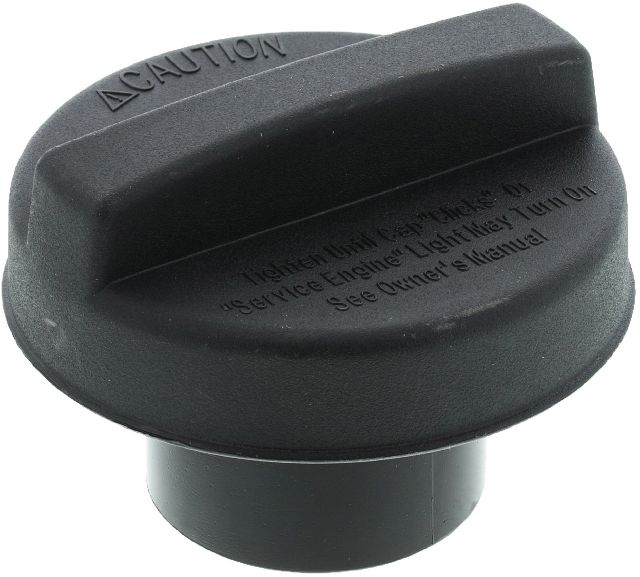
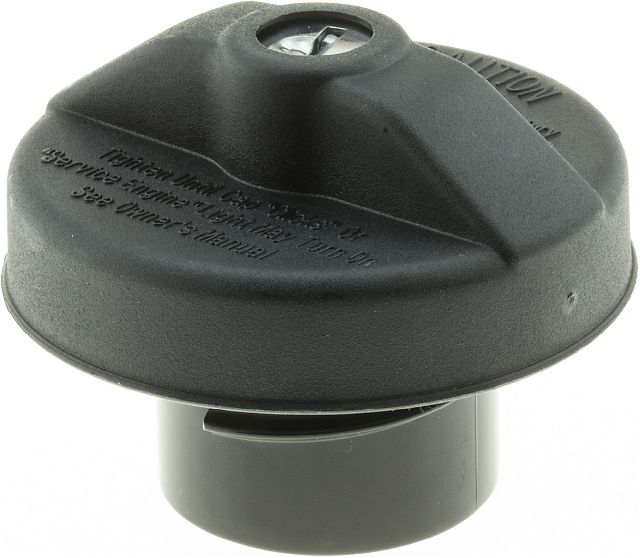
- Loose, Damaged, or Incorrect Gas Cap 🔴 High Probability → Shop Fuel Tank Cap This is the most common cause for a P0455 on any vehicle due to user error (not tightening) or simple wear of the cap's seal.
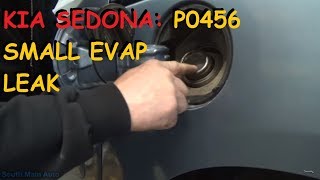
How to confirm: Ensure the gas cap is tightened until it clicks at least once. Inspect the rubber O-ring on the cap for cracks, stiffness, or damage. If it looks worn, it's suspect. Using a non-OEM cap can also cause sealing issues.
Typical fix: Tighten or replace the gas cap. It is highly recommended to use an OEM part from Kia (Part No. 31010-3L600).
Est. part cost: $15-$35 - Cracked Charcoal Canister 🔴 High Probability → Shop Vapor Canister Kia issued Service Campaign SC135 for 2009-2014 Sedonas in salt-belt states due to canisters cracking near the mounting points, causing a P0455 leak. Road salt and corrosion accelerate this failure. This is a widely reported failure in owner forums.
How to confirm: Visually inspect the charcoal canister, located near the fuel tank, for any visible cracks, especially around the mounting brackets and hose ports. A smoke test will definitively show a leak from the canister body.
Typical fix: Replace the charcoal canister assembly. The TSB advises inspecting and, if no crack is found, replacing the bracket with an improved part. If a crack is present, the entire canister must be replaced. 🎬 Watch this walkthrough on replacing a cracked charcoal canister. The OEM part number is 31420-4D500 (or the superseding part 31420-4D500-SJ1).
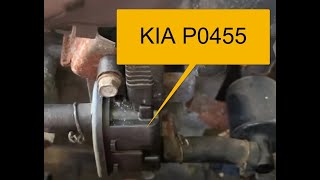
Est. part cost: $200-$400 - Faulty Canister Close Valve (CCV) 🟡 Medium Probability → Shop Vapor Canister Also known as the vent valve, this component is exposed to the elements under the car and can fail by getting stuck open, which the computer interprets as a large leak. It is often replaced along with the charcoal canister.
How to confirm: The CCV is normally open. With a capable scan tool, command the valve closed and see if it holds a vacuum or pressure. Alternatively, you can remove the valve and apply 12V power to its terminals; it should click shut. If it doesn't close or is stuck open without power, it has failed.
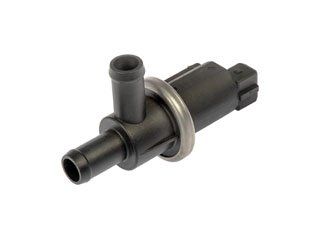
Typical fix: Replace the canister close valve. It is often mounted directly on the charcoal canister. A common part number is 911-803 (Dorman).
Est. part cost: $40-$80 - Faulty Purge Control Solenoid Valve (PCSV) ⚪ Low Probability → Shop Vapor Canister Purge Solenoid This valve is located in the engine bay and is less exposed than the CCV, but can still fail by getting stuck open.
How to confirm: The PCSV is normally closed. Disconnect the hose leading to the intake manifold and check for vacuum with the engine running. There should be no vacuum at idle. If you can blow through the valve when it's disconnected, it is stuck open and has failed.
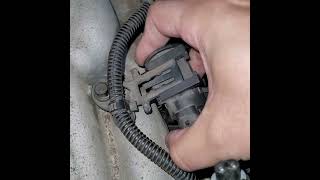
Typical fix: Replace the purge control solenoid valve. A common OEM part number is 28910-3C200. 🎬 Watch this quick video to locate the purge valve.
Est. part cost: $30-$70 - Cracked or Disconnected EVAP Hoses ⚪ Low Probability Rubber hoses become brittle with age and can crack. A large hose becoming completely disconnected would also trigger a gross leak code.
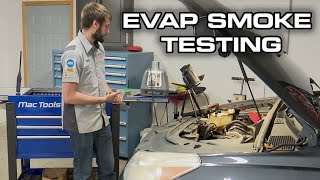
How to confirm: Visually inspect all accessible EVAP lines from the engine bay to the charcoal canister. The ultimate diagnostic tool is a smoke test, which will force smoke through the system and reveal the exact location of any leak. 🎬 See how to perform a professional EVAP smoke test.
Typical fix: Replace the cracked section of hose or reconnect the disconnected line.
Est. part cost: $5-$50
Rare But Worth Checking
- Cracked Fuel Filler Neck: → Shop Fuel Filler Neck Rust can perforate the metal tube that leads from the gas cap to the tank, creating a large, un-sealable leak. This is more common in regions where road salt is used. A smoke test is the best way to confirm this.
Diagnosis Steps
- Read the code with an OBD-II scanner to confirm P0455 is present.
- Inspect the gas cap. Ensure it is tight and the seal is not cracked or worn. Tighten it and clear the code. Drive for a few days to see if the light returns. If it does, consider replacing the cap with an OEM part first as it's the cheapest and most common fix.
- Visually inspect the charcoal canister under the vehicle, near the fuel tank. Pay close attention to the mounting points for cracks, as noted in Kia's Service Campaign SC135.
- Inspect all visible EVAP hoses for obvious cracks, disconnections, or rot.
- If no obvious visual faults are found, the most effective next step is to perform a smoke test. This involves feeding low-pressure smoke into the EVAP service port and looking for where the smoke escapes. This will pinpoint the leak, whether it's a hose, the canister, the CCV, or the filler neck.
- If a smoke machine is not available, you can test individual components. Test the Canister Close Valve (CCV) by applying 12V to see if it closes. Test the Purge Control Solenoid Valve (PCSV) to ensure it is closed when no power is applied.
- Once the leaking component is identified, replace it, clear the code, and perform a drive cycle to confirm the fix.
Parts You'll Likely Need
- Gas Cap
(OEM #310103L600)— This is the most frequent cause of P0455 and the easiest part to replace. A worn seal prevents the system from holding pressure.
Trusted brands: Kia (OEM)
OEM price range: $20-$35
Aftermarket price range: $15-$25 - Charcoal Canister
(OEM #31420-4D500, 31420-4D500-SJ1)— A known failure point on this specific vehicle, especially in salt-belt states, as documented in Kia Service Campaign SC135. Cracks form near the mounting points.
Trusted brands: Kia (OEM), Standard Motor Products, Dorman
OEM price range: $250-$400
Aftermarket price range: $180-$300 - Canister Close Valve
(OEM #31430-1Y000)— This valve gets stuck open, preventing the EVAP system from sealing for its pressure test. It's a common failure point on many vehicles due to its exposed location.
Trusted brands: Kia (OEM), Standard Motor Products, Dorman
OEM price range: $60-$90
Aftermarket price range: $40-$70 - Purge Control Solenoid Valve
(OEM #28910-3C200)— Located in the engine bay, this valve can fail stuck open, creating a constant vacuum leak into the intake that the system detects as a gross leak.
Trusted brands: Kia (OEM), Bosch, Delphi
OEM price range: $50-$80
Aftermarket price range: $30-$60
Related Codes That Often Appear With This One
- P0442 — This code is for a 'small' EVAP leak. Sometimes a deteriorating component, like a developing crack in the charcoal canister, can cause intermittent P0442 and P0455 codes before failing completely.
Technical Service Bulletins (TSBs) & Recalls
- SC135 / WTY009: 'EVAPORATIVE CANISTER INSPECTION AND/OR REPLACEMENT' - Details the tendency for the charcoal canister to crack on Sedonas (and other Kia models) in salt-belt states, causing P0442 or P0455. The campaign involves inspecting the canister, replacing the bracket if no leak is found, or replacing the entire canister assembly if a crack is found. The warranty was also extended for this part.
- TSB Bulletin #TSB-SC135R1: This bulletin notes that vehicles in one of twenty-eight salt belt states may experience a leak detection warning of the evaporative emission systems along with DTCs P0442 or P0455.
Platform-Specific Known Issues
- Kia Service Campaign SC135 addresses a known issue where the charcoal canister can crack on 2009-2014 Sedonas registered in salt-belt states, directly causing a P0455 code. The campaign involves inspecting the canister and replacing it or its bracket.
- A user on kia-forums.com with a 2006 Sedona reported chasing a P0455 code. After replacing the gas cap and purge valve with no success, a smoke test revealed a crack in the charcoal canister, which solved the problem once replaced. This mirrors the issue described in SC135.
Mechanic-Grade Diagnostic Values
- Canister Close Valve (CCV) resistance — expected: A specific resistance value should be present (typically 15-30 Ohms for similar solenoids), not an open or short circuit.. Failure: Infinite resistance (open circuit) or zero resistance (short circuit) indicates a failed coil.
- Purge Control Solenoid Valve (PCSV) resistance — expected: Approximately 15-30 Ohms between the two electrical terminals.. Failure: A reading significantly outside this range, or showing an open/short circuit, points to a faulty solenoid coil.
Scan Tool Commands That Help
- Kia GDS or equivalent professional scan tool: EVAP System Active Test: Purge Valve Control — With the engine running at idle, command the purge valve (PCSV) to open. A change in engine RPM or short-term fuel trim indicates the valve is functioning mechanically. It should hold vacuum when commanded closed.
- Kia GDS or equivalent professional scan tool: EVAP System Active Test: Vent Valve Control — This command forces the canister close valve (CCV) to close. The CCV is normally open. This is used to seal the system for a smoke test or to check if the valve is mechanically stuck. If you command it closed and smoke still escapes from the vent port, the valve is faulty.
Wiring & Ground Locations
- Charcoal Canister / CCV Assembly — Under the vehicle, directly below the driver's seat area. It is typically protected by a plastic cover held on by 10mm bolts.. This is the physical location for inspecting the canister for cracks (per TSB SC135) and for accessing the Canister Close Valve (CCV) for testing or replacement.
- Purge Control Solenoid Valve (PCSV) — In the engine bay, on top of the engine, typically under the plastic engine cover. It has one electrical connector and two vacuum hoses.. This is the location for testing the PCSV. A stuck-open PCSV is a common cause of EVAP codes.
- Instrument Panel Module (IPM) Fuse Box — Under the driver's side dashboard.. This is the likely source of power and fuses for the EVAP system solenoids. A blown fuse could disable a valve, although this would typically set a circuit code (e.g., P0444/P0445) rather than a leak code.
Real Owner Repair Stories
- YouTube user 'Fix It All' (2008 Kia Sedona (for a P0441 code, but diagnosis is relevant)) — Check Engine Light with an EVAP code.
❌ Tried (didn't work) The user notes that both the gas cap and the purge valve are common culprits and often replaced together.
✅ What actually fixed it The video demonstrates the replacement of the Purge Control Solenoid Valve (PCSV) located on top of the engine. The user states that after replacing the gas cap, this is the next logical step and that this repair should resolve the code.
"I Checked Everything" — The Actual Cause
- In rare cases where a comprehensive smoke test reveals no leaks and both the purge and vent valves test functional, the root cause can be a faulty Fuel Tank Pressure Sensor (FTPS). The sensor incorrectly reports a pressure drop (a leak) to the ECM when no physical leak exists. Technicians often miss this because they trust the sensor's data and focus exclusively on finding a physical breach in the system.
OEM Part Supersession History
31420-4D500→31420-4D500-SJ1— Likely an updated design to improve durability or address the cracking issue outlined in TSB SC135.
Heads up: The new part number is a direct replacement for the old one.
Model Year Variations Within This Range
- 2009-2014: These model years are specifically called out in Kia Service Campaign SC135 for the cracking charcoal canister issue, particularly in salt-belt states. While older models (2006-2008) can experience the same failure, the campaign and warranty extension were targeted at the later years.
- 2006-2010 vs 2011-2014: In 2011, the engine was changed from a 3.8L V6 to a 3.5L V6, and the transmission from a 5-speed to a 6-speed automatic. While the general location of EVAP components remained the same, some specific routings or part fitments in the engine bay could differ.
- 2013: The Kia Sedona was not sold for the 2013 model year. It took a one-year hiatus and returned for 2014 with a minor styling refresh.
Diagnostic Flowchart
Other Known Issues on This Vehicle
Issues unrelated to this code that are worth knowing about as an owner of this generation:
- Front Lower Control Arm Corrosion 🔴 High — Common in salt-belt states, leading to multiple recalls. Can cause noise, vibration, and eventual breakage, resulting in loss of vehicle control. (Ref: Recalls SC100 and SC133 (NHTSA #16V387000).)
- Secondary Hood Latch Corrosion 🔴 High — Widespread, affecting 2006-2014 models. The latch can bind and fail to engage, creating a risk of the hood opening while driving if the primary latch is released. (Ref: Recall NHTSA #16V363000.)
- ABS Module Electrical Short 🔴 High — Affects 2006-2010 models. Moisture can enter the ABS module, causing an electrical short and potential for an engine compartment fire, even when the vehicle is off. (Ref: Recall NHTSA #20V102000.)
- Cracked Fuel Rail 🔴 High — Affects 2011-2012 models. Heat in the engine compartment can cause the fuel rail to crack, leading to a fuel leak and increasing the risk of fire. (Ref: Recall NHTSA #20V088000.)
- Sticking Power Sliding Door Latches 🟡 Low — Common issue where road dirt and grime buildup can cause the latches to stick, preventing the door from closing or opening properly. (Ref: Service Action SA121.)
Used vs. New Parts: Buying Guide for This Vehicle
When a used part is the smart pick: A used charcoal canister assembly can be a cost-effective option, but ONLY if sourced from a donor vehicle located in a dry, non-rust-belt state. This minimizes the risk of acquiring a canister that is already brittle or cracked from road salt exposure.
Donor-vehicle mileage cap: roughly under 100000 miles for the part to have meaningful remaining life.
What to inspect on the donor part:
- Before purchasing, thoroughly inspect the used canister for any hairline cracks, especially around the plastic mounting tabs and hose ports.
- Confirm the donor vehicle's history (e.g., via VIN) to ensure it did not originate from a 'salt-belt' state.
- Ensure all hose connection points are intact and not broken or brittle.
OEM-only on this vehicle (don't cheap out):
- Gas Cap: It is strongly recommended to use an OEM Kia gas cap. Aftermarket gas caps are a very common cause of EVAP codes because their seals often do not meet the precise pressure requirements of the system.
Aftermarket brands forum-validated for this vehicle:
- Dorman
- Standard Motor Products (SMP)
Brands owners have reported issues with on this vehicle:
- Unbranded or 'white-box' gas caps from online marketplaces.
Real Owner Stories
Aggregated from forums and TSBs cited above. Mileages and costs reflect what owners reported in those sources.
2006 Kia Sedona
Symptoms: The owner was chasing a P0455 large leak code. They replaced the gas cap and the purge valve, but the Check Engine Light remained on.
What fixed it: A smoke test revealed a crack in the charcoal canister. Replacing the canister assembly resolved the code.
Source hint: kia-forums.com thread titled 'P0455 code on 2006 Sedona'
Related OBD-II Codes
Frequently Asked Questions
Is there a specific recall or service campaign for the charcoal canister on my 2012 Kia Sedona?
What is the recommended replacement gas cap for a 2006-2014 Sedona to fix a P0455?
My 2006 Sedona has a P0455 code but the gas cap is tight. What should I check next?
Where is the Canister Close Valve (CCV) located on this vehicle?
Can a faulty Purge Control Solenoid Valve cause a P0455 on my Sedona?
Does the Hyundai Entourage suffer from the same P0455 issues as the Sedona?
Helpful Videos
We Have This Part in Stock


The information in this article is provided for general reference and educational purposes only. Vehicle specifications, procedures, and part compatibility can vary by production date, trim level, and region. Always consult your vehicle's factory service manual and verify part numbers before purchasing or performing repairs. Safety-critical components such as airbags, seat belts, and braking systems should be installed by a qualified professional.
- Kia Sedona:
- 🧭 Diagnostic Flowchart
- 🎬 Helpful Videos
- 🛍️ Shop This Part
- What's Unique About the 2006-2014 Kia Sedona
- Symptoms You May Notice
- Most Likely Causes
- Rare But Worth Checking
- Diagnosis Steps
- Parts You'll Likely Need
- Related Codes That Often Appear With This One
- Technical Service Bulletins (TSBs) & Recalls
- Platform-Specific Known Issues
- Mechanic-Grade Diagnostic Values
- Scan Tool Commands That Help
- Wiring & Ground Locations
- Real Owner Repair Stories
- "I Checked Everything" — The Actual Cause
- OEM Part Supersession History
- Model Year Variations Within This Range
- Other Known Issues on This Vehicle
- Used vs. New Parts: Buying Guide for This Vehicle
- Real Owner Stories
- 2006 Kia Sedona
- Related OBD-II Codes
- Frequently Asked Questions
- 🎟️ Get 5% Off